
Brand mention tools track what people say about your company across social media, news sites, forums, review platforms, and, as of 2026, AI search engines like ChatGPT, Perplexity, and Gemini. The category now includes traditional social listening platforms, AI visibility tools that track citations in LLM answers, and tools that combine both.
Choosing the right one depends on whether you need traditional listening, AI visibility tracking, or both.
The landscape has shifted significantly since 2024. Monitoring your brand on X and Reddit still matters, but a growing share of brand discovery now happens inside AI-generated responses.
According to a 2024 Gartner forecast, traditional search engine volume is expected to drop 25% by 2026 as consumers shift toward AI-powered answer engines. That means brand mention tools built exclusively for social media leave a critical blind spot.
This article breaks down what brand mention tools actually do in 2026, which categories exist, how to evaluate them for your specific needs, and where AI visibility tracking fits into the picture.
Key Takeaways
- Brand mention tools now span two distinct categories: traditional social/web monitoring and AI search visibility tracking.
- Social listening platforms like Sprout Social, Hootsuite, and Brandwatch excel at real-time sentiment analysis and crisis detection across social channels.
- AI visibility tools like Ahrefs Brand Radar and Peec AI track whether your brand appears in responses from ChatGPT, Perplexity, Gemini, and Google AI Overviews.
- Most B2B brands in 2026 need both types, traditional monitoring alone misses how AI models represent your brand to potential buyers.
- Evaluation criteria differ by tool category: social tools prioritize channel coverage and sentiment accuracy, while AI tools prioritize prompt tracking breadth and citation source analysis.
- Your monitoring stack should align with where your buyers actually discover brands, and increasingly, that includes AI search.
What are brand mention tools?
A brand mention tool is software that detects, collects, and analyzes references to your company name, products, or key personnel across digital channels. These tools scan sources like social media platforms, news outlets, blogs, forums, review sites, and, in newer tools, AI-generated responses.
The core function is straightforward: alert you when someone talks about your brand, then help you understand the context. Is the mention positive, negative, or neutral?
Is it from an influential source? Does it require a response?
What has changed since 2024-2025 is the scope of “where people talk about your brand.” Conversations that once happened exclusively on social media and forums now also occur inside AI search engines.
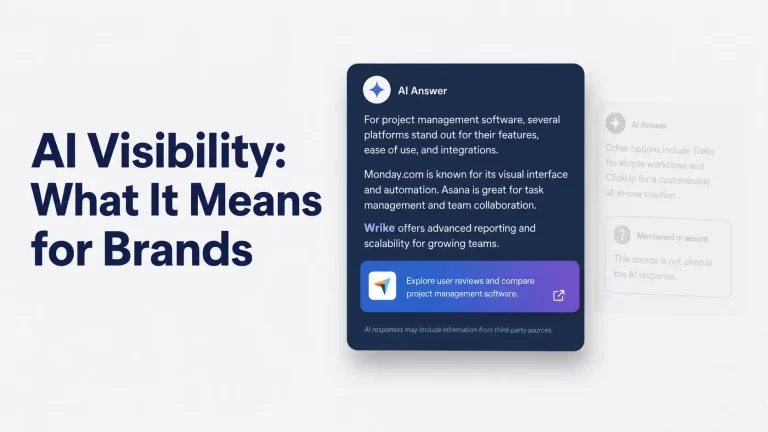
When a potential customer asks ChatGPT “What’s the best project management tool for remote teams?” the AI’s response functions as a brand mention, or a conspicuous absence of one.
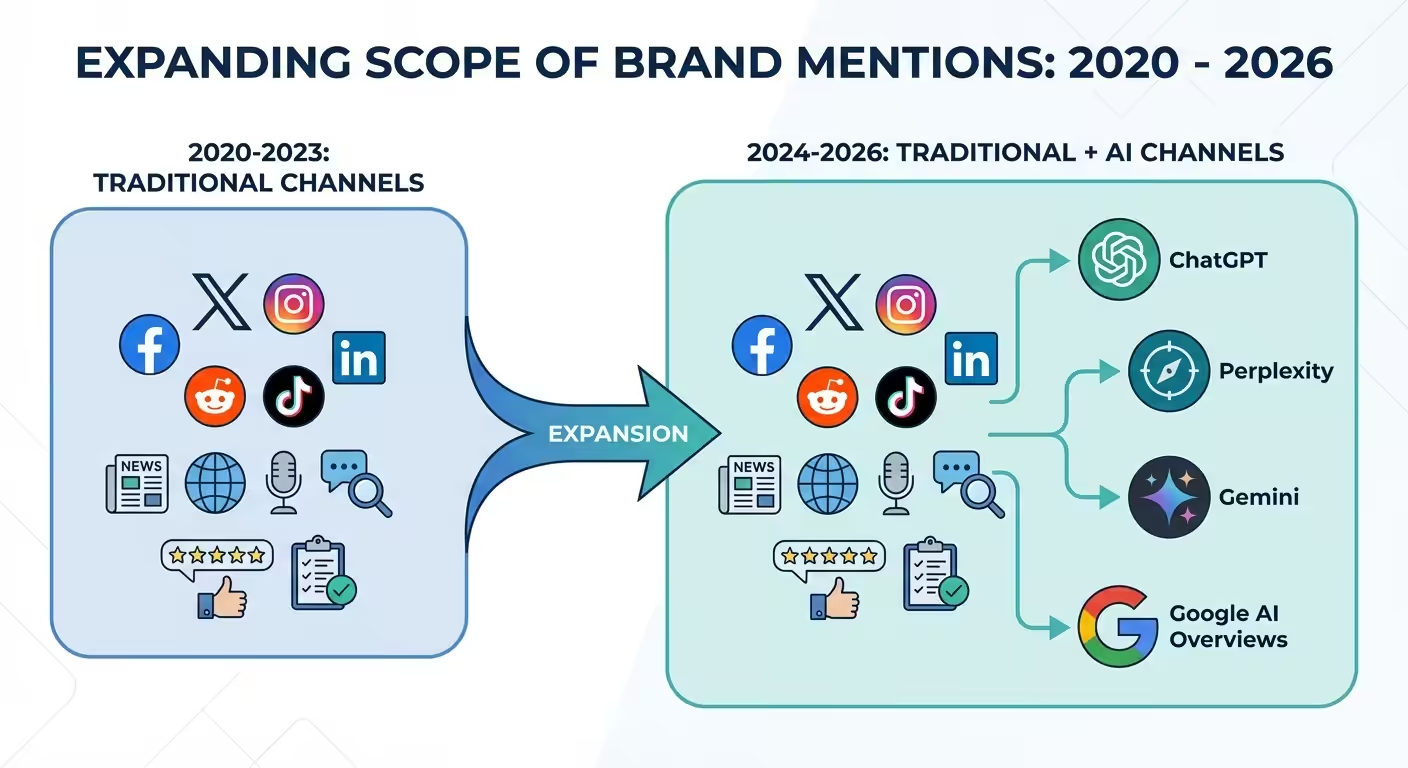
This expansion means brand mention tools in 2026 fall into two functional categories:
- Traditional social and web monitoring tools: Track mentions across social networks, news, blogs, forums, and review sites. Examples: Sprout Social, Brandwatch, Mention, Hootsuite, Alertmouse.
- AI visibility tracking tools: Monitor whether and how your brand appears in AI-generated responses. Examples: Ahrefs Brand Radar, Peec AI.
Some platforms are beginning to bridge both categories, but most still specialize in one or the other. Understanding which type you need, or whether you need both, is the first decision to make.
Traditional Brand Mention Tools: Social and Web Monitoring
Traditional brand mention tools have been the backbone of brand reputation monitoring for over a decade. They scan social platforms, web pages, and news sources to surface mentions of your brand in real time.
These tools solve a specific problem: you can’t manually track every conversation about your company across dozens of channels. Even a mid-sized B2B brand generates hundreds of mentions per week across X, LinkedIn, Reddit, industry forums, and news sites.
What traditional tools do well
- Real-time social monitoring: Detect mentions within minutes across platforms like X, LinkedIn, Instagram, Reddit, Facebook, and TikTok.
- Sentiment analysis: Classify mentions as positive, negative, or neutral using natural language processing.
- Crisis detection: Alert you when negative mention volume spikes, signaling a potential reputation issue.
- Competitive benchmarking: Compare your share-of-voice measurement against competitors across the same channels.
- Influencer identification: Surface high-authority accounts discussing your brand for potential outreach.
- Reporting and analytics: Generate dashboards tracking mention volume, sentiment trends, and geographic distribution over time.
Leading traditional brand mention tools in 2026
The market for social and web monitoring is mature. Here are the most widely used platforms and what differentiates each one.
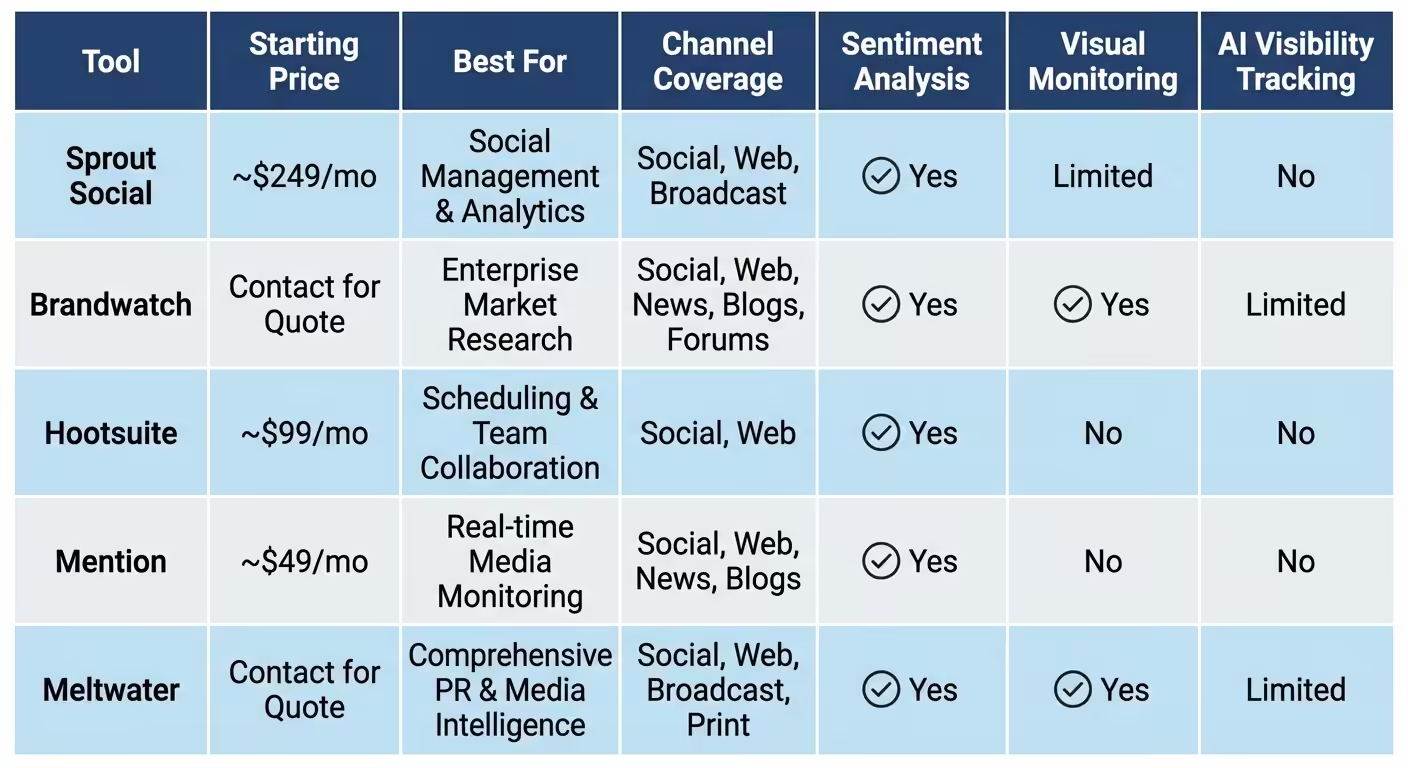
Sprout Social combines social media management with built-in listening. Its strength is workflow integration, you can detect a mention, analyze sentiment, and respond from the same platform.
Pricing starts at $199/month per seat for plans that include monitoring. Best suited for mid-market and enterprise social media teams managing multiple brand accounts.
Brandwatch is built for enterprise-scale analysis. It monitors text and visual mentions (logo detection in images and videos), processes data from hundreds of thousands of sources, and provides AI-powered trend analysis.
Pricing is custom and typically starts above £500/month. Best for large consumer brands with global monitoring needs.
Hootsuite offers social listening powered by Talkwalker technology, integrated into its broader social media management platform. Plans with listening features start at $149/month per user. The platform covers 30+ social networks and includes brand sentiment tracking and competitive benchmarking.
Mention focuses on real-time monitoring and accessibility. It tracks brand mentions across social media, news, blogs, and forums with customizable alerts.
It worked well for smaller teams that needed straightforward mention tracking without enterprise complexity. It’s no longer sold on its own, though: since July 2026 new buyers are pointed to Agorapulse Listening.
Meltwater provides broad media monitoring across online, social, print, TV, radio, and podcasts. Its strength is global coverage across 120+ countries.
Pricing is custom and skews toward enterprise budgets. Particularly useful for PR teams and brands with significant traditional media presence.
Google Alerts remains a free, zero-setup option for basic web monitoring. You enter keywords, and Google emails you when new pages mention those terms.
The limitations are significant, no social media coverage, no sentiment analysis, delayed notifications, and no dashboard. But as a free supplement to paid tools, it still has a place in most monitoring stacks.
Alertmouse, co-founded by Rand Fishkin (founder of Moz and SparkToro), focuses on email-based alerts for brand mentions. It was built to improve on Google Alerts’ reliability and speed.
Plans start at $10/month. Its simplicity is its advantage, set up alerts and receive reliable notifications without a complex dashboard.
Where traditional tools fall short
Traditional brand mention tools were designed for a world where brand conversations happened on indexable web pages and social media feeds. They work within that scope.
But they don’t track how AI models represent your brand. When ChatGPT recommends your competitor instead of you, Sprout Social won’t alert you. When Perplexity cites a specific article as the source for a brand recommendation, Brandwatch won’t surface that insight.
This isn’t a failure of these tools, it’s a scope limitation. AI search operates differently from social media, and it requires a different category of monitoring. That’s where AI visibility tools come in.
AI Visibility Tools: Tracking Brand Mentions in AI Search
For a dedicated comparison of eight AI-monitoring platforms (side-by-side on pricing, model coverage, and reporting), see our ChatGPT monitoring tool roundup.
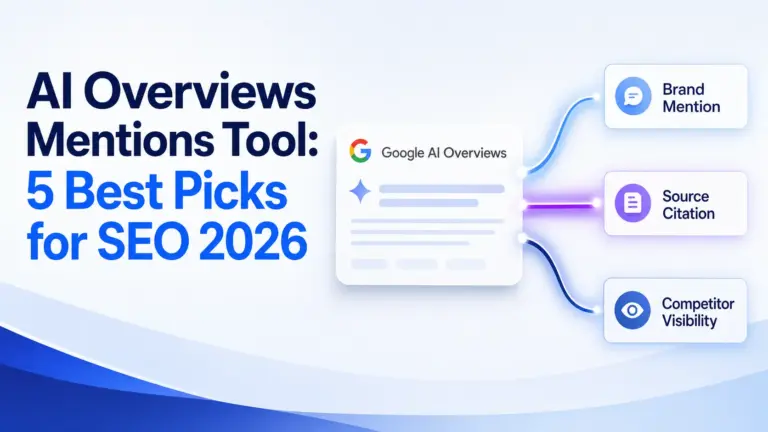
AI visibility tracking tools monitor whether your brand appears in responses generated by AI search engines, including ChatGPT, Perplexity, Gemini, Google AI Overviews, and Microsoft Copilot. This is a fundamentally different type of brand mention than a social media post or news article.
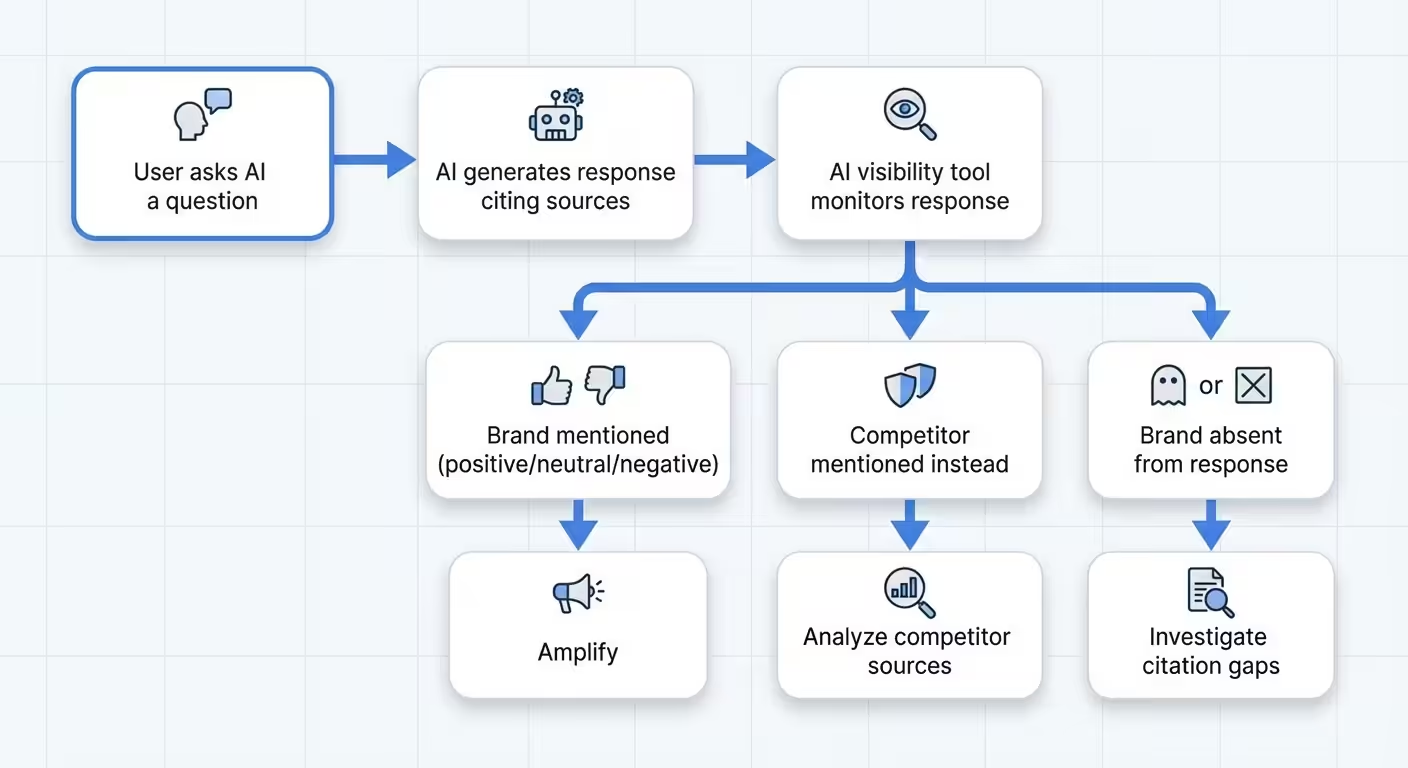
When an AI model responds to a query like “best CRM for B2B startups,” it draws from training data and, in many cases, retrieves information in real time from indexed web sources. The brands it mentions (or omits) in that response shape buyer perception before the buyer ever visits a website.
As of 2026, this is no longer a theoretical concern. A 2024 SparkToro study found that 58.5% of US Google searches ended without a click to any website, a figure that has likely increased as AI Overviews expanded. AI-generated answers are replacing the click-through behavior that traditional SEO and monitoring tools were built around.
AI visibility tools address this by tracking a different set of metrics:
- AI mention frequency: How often your brand appears in AI-generated responses for relevant queries.
- Citation source analysis: Which web sources AI models cite when they mention (or fail to mention) your brand.
- Competitor AI share of voice: How your AI mention rate compares to competitors for the same queries.
- Sentiment in AI responses: Whether AI models describe your brand positively, neutrally, or negatively.
- Prompt-level tracking: Monitoring specific prompts or query categories to see how responses change over time.
Leading AI visibility tracking tools in 2026
Ahrefs Brand Radar draws on more than 451 million prompts a month to track how brands appear across ChatGPT, Perplexity, Gemini, Copilot, Google AI Overviews and AI Mode. It’s an add-on to Ahrefs’ core SEO platform, starting at $199/month on top of base Ahrefs plans (from $129/month). The depth of its query database is its primary differentiator.
Learn more about how Ahrefs tracks brand mentions.
Peec AI provides AI search monitoring at a lower price point. It tracks brand mentions in ChatGPT, Perplexity, and AI Overviews, with plans starting at approximately $95/month.
Its chat-based interface simplifies navigation, and it offers prompt-level tracking without requiring the enterprise budget that Brand Radar demands. It’s a practical option for SMBs entering AI visibility monitoring.
Additional tools worth evaluating for AI visibility analytics include SE Ranking AI Results Tracker and Surfer AI Tracker, both of which offer AI search monitoring alongside traditional SEO features.
What AI visibility tools don’t cover
AI visibility tools are narrowly focused. They generally don’t provide:
- Social media mention tracking or engagement workflows
- Review site monitoring
- Crisis detection across traditional media
- Content publishing or social media management
This is why most B2B marketing teams in 2026 need both categories, traditional monitoring for social and web, plus AI visibility tracking for the growing share of brand discovery happening inside AI-generated responses.
How to Choose the Right Brand Mention Tools for Your Needs
The number of options can feel overwhelming. A structured evaluation process prevents you from either overspending on features you don’t need or underinvesting in critical coverage gaps. Our guide on choosing a brand monitoring tool walks through that process step by step.
| Comparison point | Traditional social & web monitoring | AI search visibility tracking |
|---|---|---|
| What it monitors | Mentions across social media, news sites, blogs, forums, and review platforms | Whether your brand appears in AI-generated answers and citations |
| Example tools | Sprout Social, Hootsuite, Brandwatch | Ahrefs Brand Radar, Peec AI |
| Where it covers | Channels like X and Reddit | ChatGPT, Perplexity, Gemini, and Google AI Overviews |
| Core strength | Real-time sentiment analysis and crisis detection | Tracking how LLMs represent and cite your brand to buyers |
| What to prioritize when evaluating | Channel coverage and sentiment accuracy | Prompt tracking breadth and citation source analysis |
| Best for | Catching what people publicly say about your brand | Closing the AI-answer blind spot that social-only tools miss |
Step 1: Define what you’re monitoring and why
Start with your business objectives, not tool features. Common monitoring goals include:
- Reputation protection: Catching negative mentions quickly to prevent escalation. Prioritize tools with real-time alerts and sentiment analysis.
- Competitive intelligence: Understanding how your share of voice compares to competitors across social, web, and AI channels.
- AI discoverability: Determining whether AI models recommend your brand for relevant queries. This requires AI search tracking capabilities.
- Campaign measurement: Tracking how specific marketing initiatives affect mention volume and sentiment.
- Customer feedback: Gathering unfiltered product opinions from forums, review sites, and social discussions.
Your goals determine which tool category matters most. A social-only tool won’t solve your problem regardless of how sophisticated its sentiment analysis is, if AI visibility is a priority.
Step 2: Map your channels
Where do your buyers actually talk about brands like yours? B2B SaaS brands may find that LinkedIn, Reddit, G2, and AI search engines are more relevant than Instagram or TikTok. Consumer brands may need visual monitoring across Instagram and YouTube.
Match your channel priorities to tool coverage. Not every platform monitors every channel equally well.
Step 3: Evaluate based on category-specific criteria
For traditional social and web monitoring tools, evaluate:
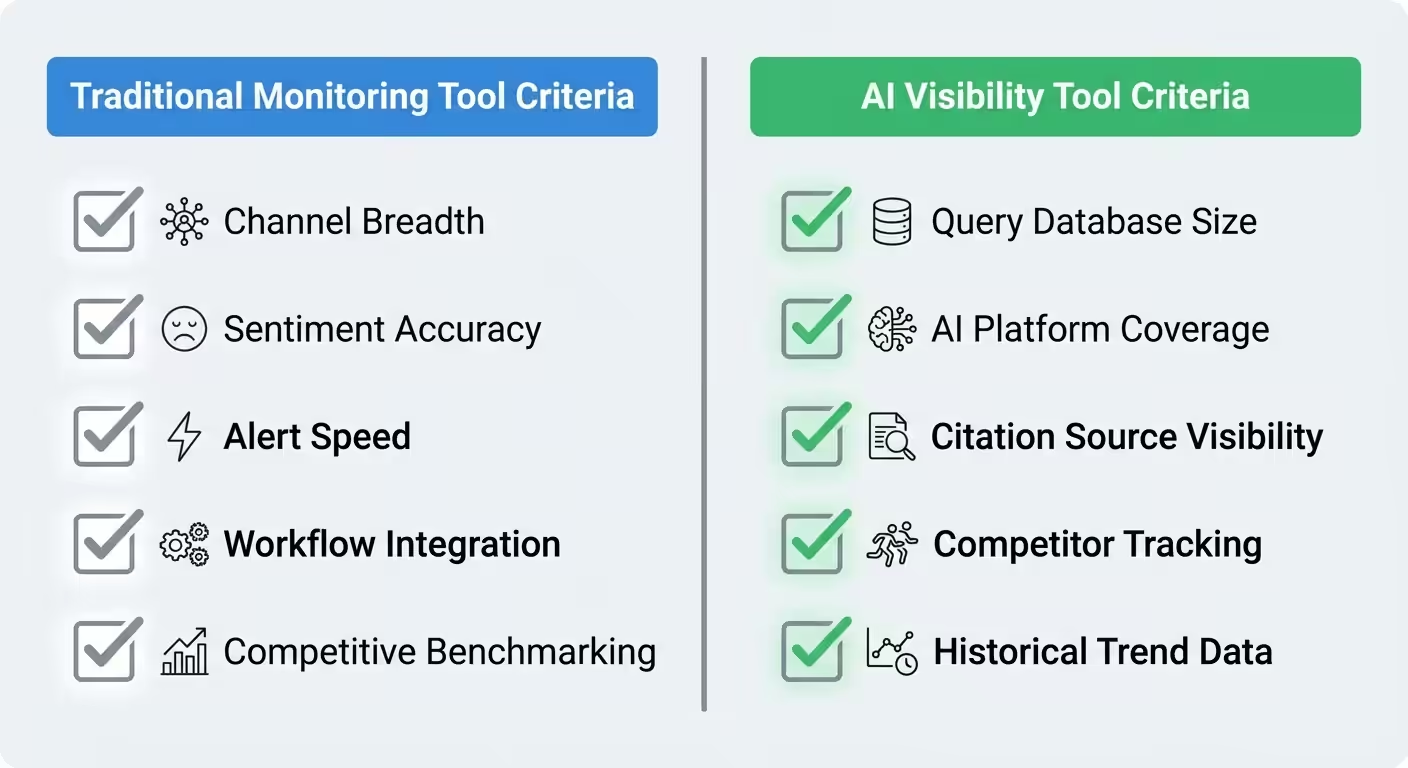
- Channel breadth, How many social platforms, news sources, and forums does it cover?
- Sentiment accuracy, Does the AI correctly classify tone, especially for industry-specific language?
- Alert speed, How quickly do you receive notifications after a mention is published?
- Workflow integration, Can you respond to mentions directly from the tool? Does it integrate with Slack, CRM, or email?
- Competitive benchmarking, Can you track competitor mentions alongside your own?
For AI visibility tracking tools, evaluate:
- Query database size, How many prompts does the tool monitor? Larger databases provide more reliable trend data.
- AI platform coverage, Does it track ChatGPT, Perplexity, Gemini, AI Overviews, and Copilot, or only a subset?
- Citation source visibility, Can you see which web pages AI models cite when mentioning your brand?
- Competitor tracking, Can you compare your AI visibility against specific competitors?
- Historical trend data, How far back does the tool retain data for tracking changes over time?
Step 4: Align budget to monitoring maturity
Not every team needs enterprise-level tooling on day one. A practical progression:
- Early stage (under $100/month): Google Alerts + Alertmouse for basic web and email monitoring. Add a free-tier tool like Gumloop for custom monitoring workflows.
- Growth stage ($200 to $500/month): A dedicated social monitoring tool (Brand24 or Sprout Social Essentials) paired with an AI visibility tool (Peec AI).
- Scale stage ($500 to $2,000+/month): Enterprise social listening (Brandwatch or Sprout Social Professional) combined with comprehensive AI tracking (Ahrefs Brand Radar). Explore full-service brand monitoring if your team lacks bandwidth for in-house management.
Why AI Brand Mentions Require a Different Monitoring Approach
Tracking brand mentions in AI search isn’t simply an extension of social listening. The mechanics are fundamentally different, and understanding those differences determines whether your monitoring efforts produce useful insights.
AI mentions aren’t real-time conversations
A social media mention is a discrete event, someone published a post at a specific time on a specific platform. You can respond to it, amplify it, or flag it.
An AI brand mention is a recurring pattern. When ChatGPT mentions your brand in response to a query, that response may be generated thousands of times for different users asking similar questions.
There is no single “post” to respond to, there is a model behavior that either includes or excludes your brand across an entire category of queries.
This means how AI models cite brands requires tracking patterns over time, not individual events. The question isn’t “Did someone mention us?” it’s “Does the model consistently recommend us for relevant queries, and is that pattern strengthening or weakening?”
The sources that matter are different
Social mentions come from people. AI mentions come from models trained on data. The inputs that shape brand presence in AI search results include:
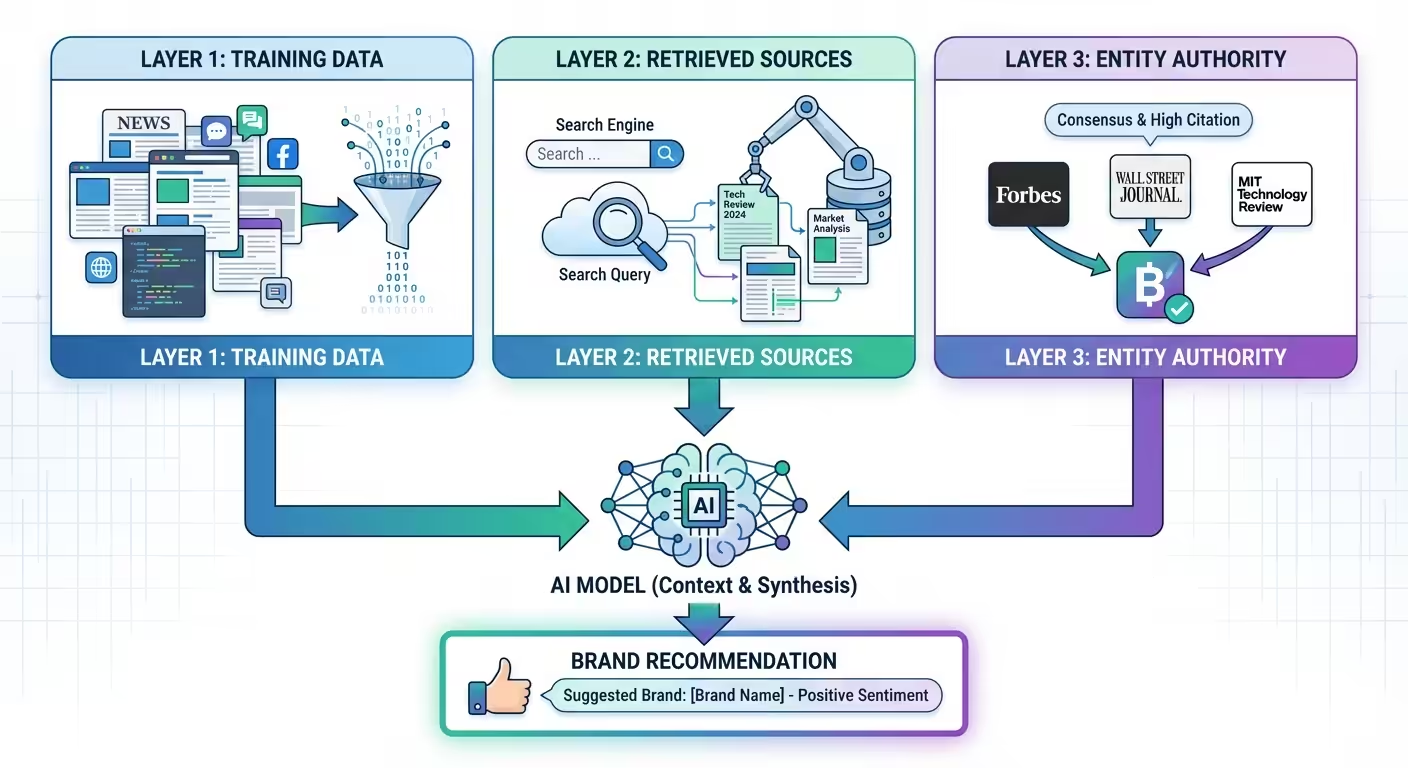
- Training data: The corpus of web content AI models learned from during pre-training. This data shapes foundational brand-category associations.
- Retrieved sources: For models with real-time retrieval (Perplexity, ChatGPT with browsing, Gemini), the web pages they pull from during response generation directly influence brand mentions.
- Entity authority signals: How consistently your brand is associated with a specific category across high-authority editorial sources. This is what agencies focused on AI brand mention strategy work to build.
A brand mention on high-authority publications can influence AI recommendations because LLMs learn brand-category associations from their training data. This is why simply tracking social sentiment doesn’t give you the full picture of how AI models perceive your brand.
Improving AI mentions requires content strategy, not engagement tactics
When you find a negative social mention, you respond directly. When you discover your brand is absent from AI search results, the fix is structural, not conversational.
Improving AI visibility requires building consistent brand mentions across authoritative editorial sources that AI models reference during training and retrieval. This is a content and placement strategy, not a social media response workflow.
In our own campaigns, the brands with consistent editorial mentions on authoritative category publications produce measurably stronger AI recommendation rates than brands relying on owned content alone. The difference has never been volume. It’s the topical coherence and source quality of the publications where mentions appear.
Building a Complete Brand Mention Monitoring Stack
A comprehensive monitoring stack in 2026 combines traditional social/web tools with AI visibility tracking. Here is a practical framework for assembling yours.
Layer 1: Real-time social and web monitoring
This layer covers the channels where people actively discuss your brand. Choose one primary tool based on your team size and budget:
- Teams of 1-3: Brand24 or Hootsuite standard plan.
- Teams of 4-10: Sprout Social or Hootsuite Advanced.
- Enterprise: Brandwatch, Meltwater, or Sprout Social with full listening capabilities.
Configure alerts for your brand name (including misspellings and abbreviations), product names, key executive names, and primary competitors. Set up sentiment analysis filters to prioritize negative mentions that require immediate response.
Layer 2: AI search visibility tracking
This layer monitors how AI models represent your brand. Add one AI visibility tool based on your needs:
- Budget-conscious teams: Peec AI ($95/month) for essential ChatGPT, Perplexity, and AI Overview tracking.
- SEO-integrated teams: Ahrefs Brand Radar ($199/month add-on) if you already use Ahrefs for SEO and want consolidated data.
- Supplementary alerts: Alertmouse ($10/month) for simple email notifications when your brand appears on new web pages that AI models may reference.
Track prompts relevant to your core category. For example, a B2B SaaS CRM company should monitor queries like “best CRM for startups,” “CRM comparison 2026,” and “what CRM does [competitor] compete with.” Review which sources AI models cite, this tells you where to focus content placement efforts.
For detailed guidance, see how to check whether AI mentions your brand.
Layer 3: Reporting and analysis
Combine data from both layers into a unified brand mentions report. Track these metrics monthly:
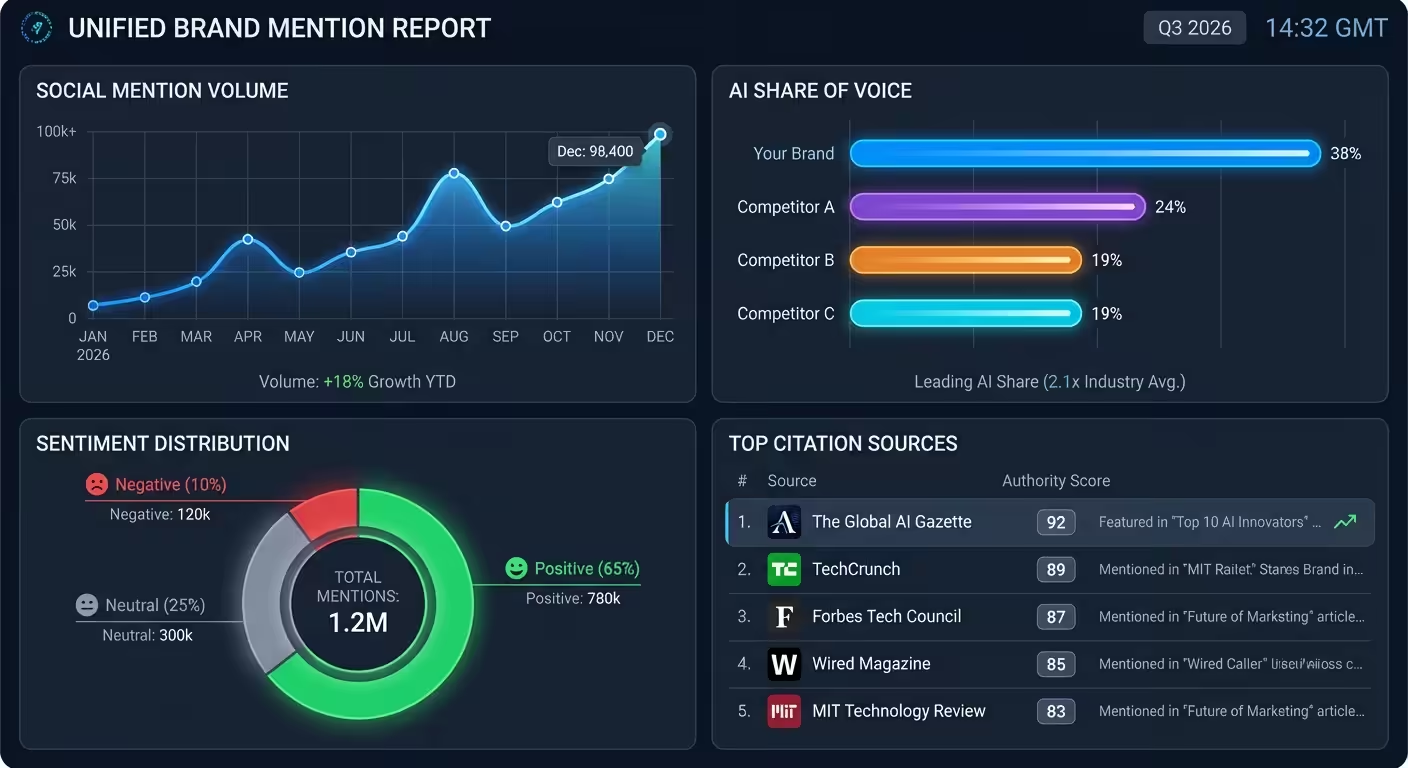
- Total mention volume: Across social, web, and AI channels combined.
- Sentiment distribution: Percentage of positive, neutral, and negative mentions by channel.
- AI share of voice: Your AI mention frequency compared to top 3 competitors for category queries.
- Citation source quality: Authority level of publications where your brand is mentioned that AI models reference.
- Trend direction: Whether mention volume and sentiment are improving, stable, or declining across each channel.
Common Mistakes When Choosing Brand Mention Tools
The tool-stack mistake we see teams make most: they pick the tool with the broadest feature list. Broadest coverage rarely wins in practice.
The practical move is to pick the tool that nails your top two use cases (say, AI-mention tracking and sentiment) and accept narrower coverage elsewhere. Deep use of two tools beats shallow use of five.
After working with hundreds of B2B brands on monitoring strategies, several patterns consistently lead to wasted budget or missed insights.
Mistake 1: Treating social monitoring as complete brand monitoring. Social listening tools cover an important slice of brand conversations, but they miss AI search entirely. Social-only monitoring gives you an incomplete picture, if your buyers use ChatGPT or Perplexity to research solutions.
Mistake 2: Buying enterprise tools before you have a monitoring process. A $800/month platform is wasted if no one on your team reviews the data weekly. Start with affordable tools, establish a review cadence, and upgrade when you have clear evidence that additional features will change your decisions.
Mistake 3: Monitoring only your own brand. Competitive monitoring is equally important. Tracking competitor mentions, especially across AI search platforms, reveals gaps in your positioning and surfaces opportunities to differentiate.
Mistake 4: Ignoring citation sources in AI visibility data. Knowing that ChatGPT mentions your competitor is useful. Knowing which specific articles ChatGPT cites when making that recommendation is actionable.
Prioritize tools that show citation sources, not just mention counts.
Mistake 5: Setting up tools and never refining keywords. Your brand evolves. New products launch.
Competitors rebrand. Review and update your monitoring keywords quarterly to ensure coverage remains accurate.
What Changed in Brand Mention Tracking Since 2024
The brand mention tool market has evolved rapidly. Here are the most significant shifts affecting how B2B brands approach monitoring as of 2026:
AI search became a primary discovery channel. Two years ago, AI-generated answers were novel. Now they’re routine.
A significant portion of B2B buyers now use AI search engines alongside (or instead of) traditional Google searches for vendor research. This made AI visibility tracking a requirement, not a nice-to-have.
Social listening tools added AI features. Platforms like Sprout Social and Hootsuite now incorporate AI-powered insight summarization and trend prediction. Hootsuite also sells an LLM Insights add-on that tracks how AI assistants describe a brand, but most social tools still don’t track brand mentions inside AI-generated responses.
The concept of “brand mentions for SEO” expanded. Historically, brand mentions supported SEO through implied link signals and entity recognition. In 2026, brand mentions on authoritative editorial sources directly influence whether AI models include your brand in generated responses.
The impact of brand mentions on AI search visibility is now a measurable, trackable metric.
Unlinked mentions gained new strategic value. Unlinked mentions, references to your company without a hyperlink, have always carried some SEO weight. In the context of AI training data, they carry even more.
AI models don’t need a hyperlink to associate your brand with a category. They need consistent, contextual references across trusted sources.
New tool entrants disrupted the market. Ahrefs Brand Radar and Peec AI gave marketers AI-specific monitoring options that didn’t exist two years ago. Alertmouse, launched in 2025 by Rand Fishkin and two co-founders, rebuilt the Google Alerts idea.
2026 Data: The Mention-to-Visibility Correlation
Ahrefs’ 75,000-brand study found branded web mentions correlate with AI search visibility at 0.66 to 0.71. In its AI Overviews analysis, the top 25% of brands by web mentions averaged over 10 times more AI Overview mentions than the next quartile. This is the strongest available evidence that mention tracking tools and mention building work are complementary, not substitutes.
A tool stack that monitors mentions without a parallel plan to earn more of them measures a number it cannot move. That is the gap done-for-you brand mention building is designed to close.
Frequently Asked Questions
Do I need separate tools for social monitoring and AI visibility tracking?
In most cases, yes. As of 2026, traditional social listening platforms and AI visibility tools serve different functions and monitor different channels. Some platforms are beginning to add crossover features, but no single tool comprehensively covers both social media monitoring and AI search response tracking. A practical approach is pairing one tool from each category.
How often should I check brand mention data?
Set up real-time alerts for crisis detection, you need to know immediately if negative mentions spike. For strategic analysis, review social mention data weekly and AI visibility data monthly. AI model responses change more slowly than social conversations, so monthly tracking provides sufficient granularity for trend identification.
Can brand mention tools tell me why AI models do not recommend my brand?
AI visibility tools can show you that your brand is absent from responses for specific queries, and the better ones (like Ahrefs Brand Radar) show which sources AI models cite instead. They can’t directly explain model reasoning.
However, by analyzing the citation sources behind competitor recommendations, you can identify what types of content and publications influence AI responses in your category. From there, you can build a strategy to strengthen your brand’s presence in those sources.
Are free brand mention tools sufficient for B2B companies?
Free tools like Google Alerts and Alertmouse’s free tier provide a useful starting point for basic web monitoring. They’re insufficient as a primary monitoring solution for B2B companies with active marketing programs. They lack sentiment analysis, competitive benchmarking, AI visibility tracking, and the reporting capabilities needed to inform strategic decisions.
Use them as supplements, not replacements.
How do brand mentions in AI search differ from traditional brand mentions?
Traditional brand mentions are discrete, public events, a specific post, article, or review published at a known time on a known platform. AI brand mentions are model behaviors, recurring patterns in how AI systems represent your brand across thousands of generated responses.
Improving traditional mentions requires engagement and outreach. Improving AI mentions requires building consistent entity authority across high-quality editorial sources that AI models use as training data or retrieval sources.
Where Brand Mention Monitoring Goes From Here
The separation between “social monitoring” and “AI visibility tracking” is likely temporary. As AI search continues to absorb a larger share of brand discovery, monitoring tools will converge into unified platforms that track brand perception across every surface, social feeds, news sites, review platforms, and AI-generated responses.
For B2B brands making decisions right now, the practical path is clear: choose a traditional monitoring tool that fits your team size and budget, add an AI visibility tracking tool, and build a consistent reporting process that combines insights from both.
If you want a concrete baseline for where your brand currently appears across AI search platforms before choosing tools, book a short strategy call. We’ll run 25 category-relevant prompts across ChatGPT, Perplexity, Gemini, and Google AI Overviews so you can see which tools your gaps actually justify.
The brands that build monitoring habits now, across both traditional and AI channels, will compound their visibility advantage as AI search becomes the default way buyers discover and evaluate solutions.
Researched and drafted with AI assistance, reviewed and edited by the BrandMentions editorial team.