
Most “top rated SEO platform for B2B” lists rank tools by feature count and starting price. That ranking is wrong for B2B.
A platform that wins for an ecommerce blog can fail a B2B revenue team, because B2B search runs on low-volume keywords, multi-stakeholder buying committees, and a citation layer that now includes ChatGPT, Perplexity, and Google AI Overviews.
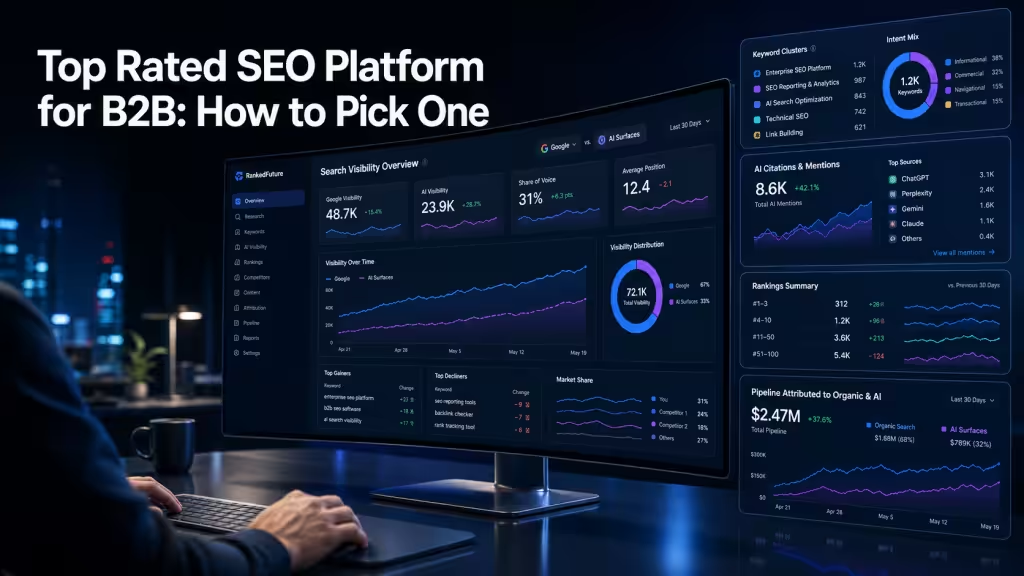
The top rated SEO platform for B2B in 2026 is the one that surfaces high-intent keywords, tracks AI citations alongside Google rankings, and ties organic work to pipeline rather than sessions. This guide shows you how to evaluate that, and where the popular contenders actually fit.
What “Top Rated” Should Mean for a B2B Buyer
G2 stars and listicle rankings answer the wrong question. They tell you what the average user thinks. You’re not the average user.
B2B SEO has a different physics than consumer SEO. Sales cycles run 6 to 12 months. A keyword with 90 monthly searches can outproduce one with 9,000 if it pulls in three decision-makers from your target accounts.
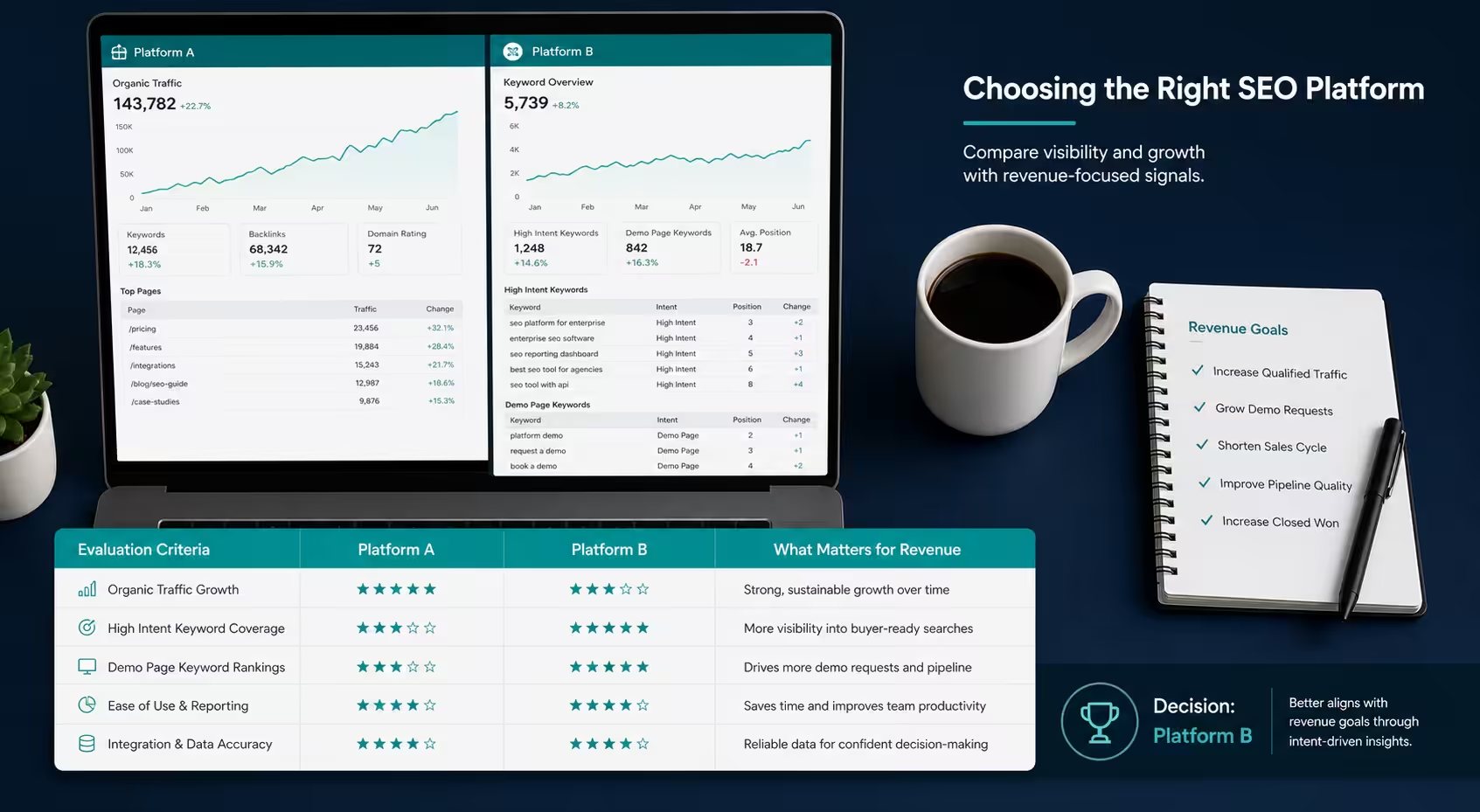
So “top rated” for a B2B revenue team means something specific. The platform earns its rating by helping you do four things.
- Find low-volume, high-intent keywords your buyers actually type.
- Map competitor visibility across both Google and AI surfaces.
- Build content briefs that reflect technical product depth, not generic SERP averages.
- Connect ranking movement to pipeline, not vanity sessions.
If a platform tops every chart but fails on two of those four, it’s the wrong tool for your situation. The rest of this guide is built around that frame.
The Five Evaluation Criteria That Actually Predict B2B Fit
Use these five criteria as your scoring rubric. Score each platform 1 to 5. A platform under 18 out of 25 is the wrong choice for B2B, no matter how it ranks on review sites.
1. Keyword Discovery Built for Low Volume
B2B keywords are thin. “Enterprise contract lifecycle management software” gets 70 searches a month in the United States. That’s a high-intent term worth more than most volume-fat queries in the same category.
A B2B-fit platform shows keyword data accurately at that scale. It doesn’t round 70 to “less than 100” and call it noise. It surfaces question-style variants, comparison terms, and decision-stage phrasing.
Test it: pull a niche term from your category and check whether the platform gives you intent signals or just a volume number.
2. Competitive Intelligence Across Surfaces
Tracking only Google rankings in 2026 misses half the buying journey. B2B buyers cross-check vendors in ChatGPT, Perplexity, and Google AI Overviews before they request a demo.
Your platform should track competitive visibility on social platforms at least one AI surface. If it only tracks blue-link positions, you’re building a strategy with one eye closed.
3. Content Briefing That Respects Product Depth
Most content optimization tools grade your draft against the average of the top 10 SERP results. For B2B technical content, the average is usually thin marketing fluff. Matching it makes your content thinner.
A B2B-fit platform lets you weight competitor pages, filter by author expertise, or override the “average” model entirely. If it forces SERP-average matching, your product pages will read like the SERP, which means they’ll convert like the SERP.
4. Pipeline Attribution, Not Just Sessions
The platform must connect, at minimum, to your CRM or a conversion event that maps to a sales-qualified lead. Without that, you’re tracking traffic. Traffic is not pipeline.
Integrations with HubSpot, Salesforce, or a clean GA4-to-CRM bridge count. A standalone “rank tracker plus dashboard” doesn’t, no matter what its rating page claims.
5. Workflow Fit for Lean B2B Teams
Most B2B marketing teams run with 2 to 6 people. Platforms designed for 30-seat enterprise marketing departments slow them down with permissions, multi-step approval flows, and dashboards no one opens.
Look for a platform that one operator can drive on a Tuesday morning without opening three other tabs. Setup time matters. So does the daily workflow.
The Most-Recommended Platforms, Scored Against B2B Reality
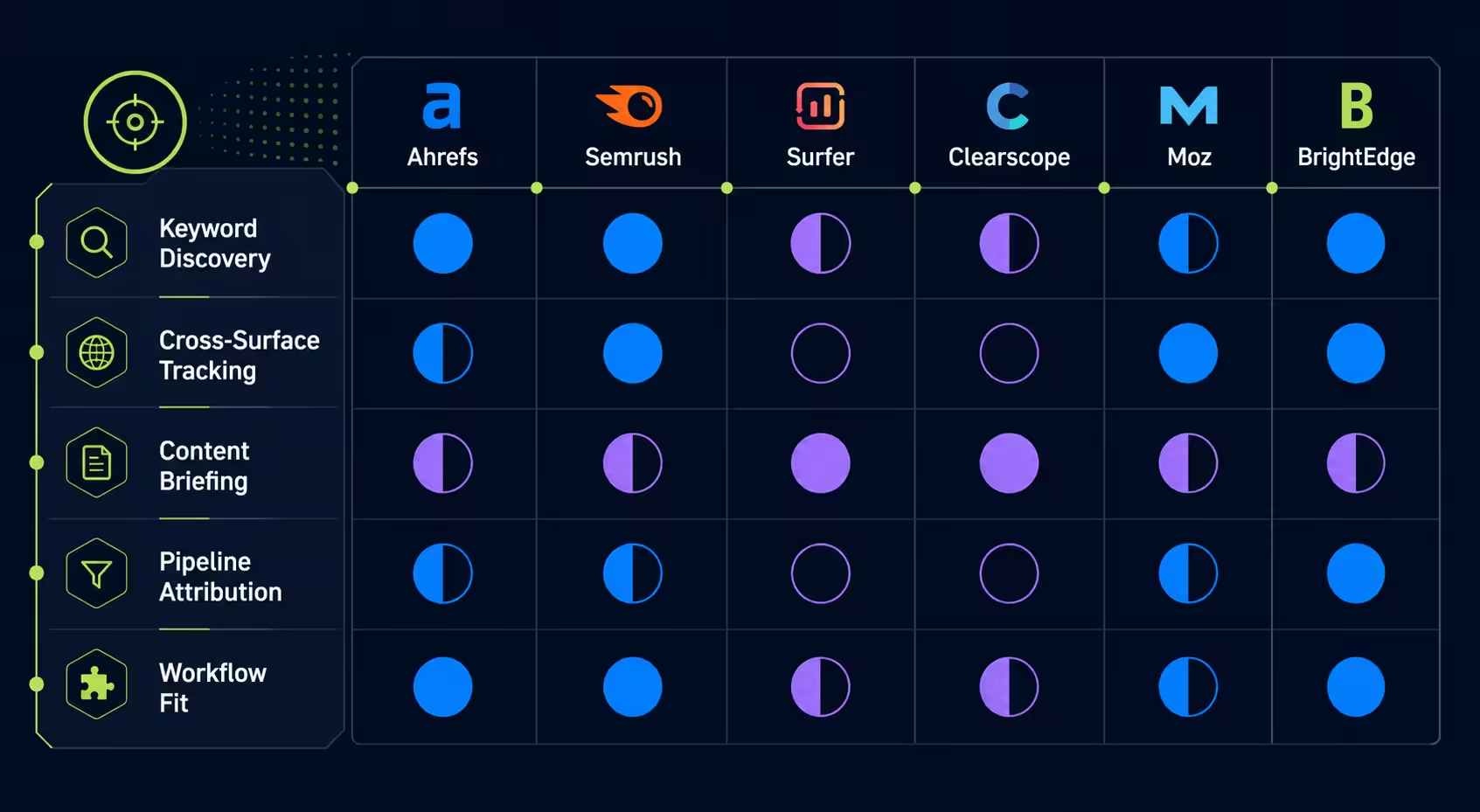
Here’s where the popular contenders land when you apply the five criteria above. None of them is perfect for every B2B context. Each has a sharp use case and a sharp failure mode.
| Platform | Strongest For | Weakest For | Best Fit Stage |
|---|---|---|---|
| Ahrefs | Backlink depth, competitor research, content gap analysis | Native AI surface tracking, pipeline attribution | Growth-stage B2B with a content lead |
| Semrush | All-in-one breadth, position tracking, PPC overlap | Brief depth, AI citation coverage | Multi-channel teams with paid plus organic |
| Surfer | Content optimization workflow, draft grading | Discovery, off-page intelligence | Teams that already know their keyword list |
| Clearscope | Editorial-grade content briefs, expert content | Technical SEO, off-page, AI surfaces | Content-first B2B SaaS with strong editors |
| Moz Pro | Domain authority research, on-page audits | Brief depth, AI surface tracking | Smaller teams new to structured SEO |
| BrightEdge | Enterprise reporting, executive dashboards | Lean-team speed, learning curve | Enterprise B2B with dedicated SEO headcount |
None of these natively handle AI citation tracking the way a B2B revenue team needs in 2026. That gap is real, and it’s the most common blind spot in current platform selection.
The Question Most Review Sites Skip: How Does It Handle AI Search?
Here’s the part the listicles miss. B2B buyers now run vendor research through ChatGPT, Perplexity, Gemini, Google AI Mode, and Bing Copilot before the first call. If your brand isn’t cited there, you’re invisible at the discovery stage, regardless of where you rank in blue links.
Most “top rated” SEO platforms were built for a world where Google rankings were the only signal that mattered. They’ve added AI dashboards as bolt-ons. The depth varies wildly.
When evaluating, ask three concrete questions.
- Does the platform query LLMs directly and log brand mentions, or does it only estimate AI Overview presence?
- Does it show you which sources AI models cite for your category, so you know which publications to pitch?
- Does it track share of AI voice over time, not just at a single point?
Most platforms answer “partly” to question one and “no” to questions two and three. That’s a gap. If AI citation is part of your B2B visibility strategy, you’ll need a dedicated AI visibility analytics tool alongside your traditional SEO platform.
Why a Single Platform Rarely Covers Both
Traditional SEO platforms are built on web crawl data. AI visibility tracking is built on LLM query logs and source-list analysis. These are different data layers with different update cadences.
Companies stitching them together end up with shallow versions of both. For most B2B teams in 2026 the answer is a two-tool stack: one traditional SEO platform plus one AI citation tracker.
That’s not a problem. It’s a reality of the current category split.
How to Match a Platform to Your B2B Stage
Stage matters more than feature count. Here’s how to pick based on where your team actually is.
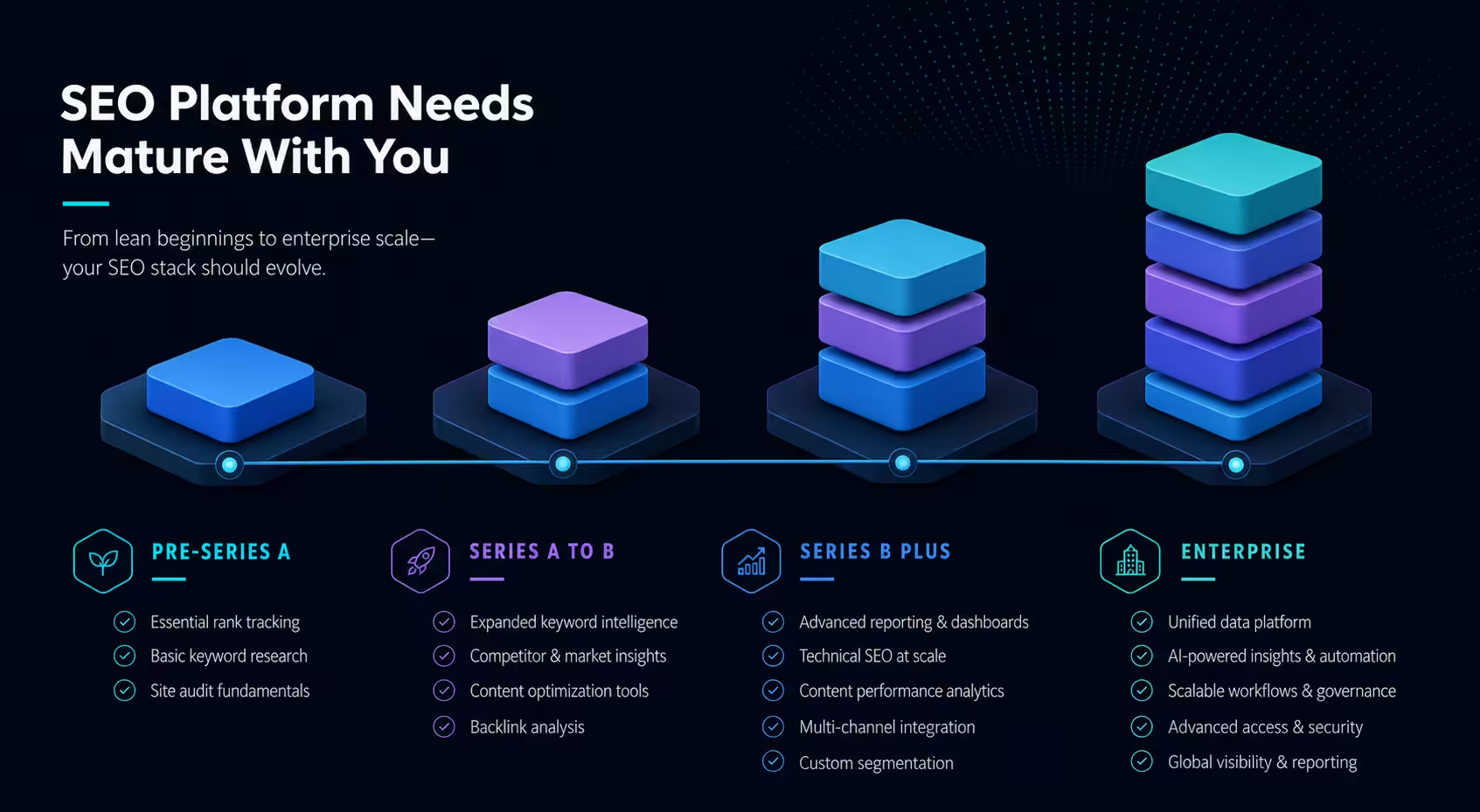
| Your Situation | Platform Pattern That Fits |
|---|---|
| Pre-Series A, one marketer, no content engine yet | Free baseline (Google Search Console) plus a single paid tool for keyword research. Ahrefs Lite or Semrush Pro. |
| Series A to B, building content velocity | One all-in-one platform plus a dedicated content optimization tool. Ahrefs or Semrush plus Surfer or Clearscope. |
| Series B+, AI citations are now strategic | One all-in-one platform, one content optimization tool, one AI citation tracker. Three-tool stack with clear ownership. |
| Enterprise with dedicated SEO team | Enterprise platform (BrightEdge or similar) plus AI visibility layer plus content workflow tooling. |
The stage match matters because tool capability you can’t operate is tool capability you don’t have. A two-person team running BrightEdge will get less out of it than the same team running Ahrefs.
Red Flags in Platform Pitches
Sales conversations with platform vendors follow patterns. Some of those patterns hide weakness behind feature breadth. Watch for these.
- The demo opens with a backlink graph, not your keywords. Translation: discovery isn’t their strength for your category.
- The AI search dashboard is a slide, not a live screen. Translation: the feature was announced, not shipped.
- The case studies all show traffic lifts, no revenue or pipeline metrics. Translation: their customers don’t measure pipeline.
- The platform requires a dedicated SEO specialist to operate. Translation: your generalist marketer won’t use it.
- Pricing scales by domain or seat in ways that punish multi-product B2B portfolios. Translation: hidden cost growth.
None of these is a deal-breaker on its own. Two or more together usually means the platform is wrong for your B2B context, even if it sits at the top of independent rankings.
The Practitioner Take After Watching Teams Switch
From watching B2B teams switch platforms across the BrandMentions client base, the pattern is consistent. Teams don’t usually leave a platform because the data was bad. They leave because the workflow didn’t fit how their team actually operates.
A senior content lead at a Series B SaaS company once put it this way during a strategy call: “We had every feature. We used four of them.” That team switched to a lighter platform plus a dedicated AI citation tracker and shipped more content in the next quarter than the previous six combined.
The lesson holds. Pick the platform whose daily workflow matches your team’s daily workflow.
Pay for features you’ll use. Skip the rest.
And if AI visibility is part of your 2026 plan, don’t expect one platform to cover both surfaces well. The category hasn’t consolidated yet. Generative engine optimization tools live in a different layer than traditional SEO platforms, and the strongest B2B teams run them in parallel.
Frequently Asked Questions
What makes B2B SEO different from regular SEO?
B2B SEO targets low-volume, high-intent keywords across long buying cycles with multiple stakeholders. Sales cycles run 6 to 12 months, content speaks to several decision-makers (a champion, a budget holder, a technical evaluator), and success is measured in pipeline rather than traffic.
The platform you choose has to support that depth, not just rank a single keyword.
Is the top rated SEO platform for B2B always Ahrefs or Semrush?
Not always. Ahrefs and Semrush are the most-recommended all-in-one tools, and both are strong for B2B keyword research and competitive intelligence.
But “top rated” depends on your stage. A two-person team at a seed-stage SaaS often gets more value from Ahrefs Lite plus Google Search Console than from a full Semrush Business plan they won’t fully use.
Do I need a separate tool for AI search visibility?
For most B2B teams in 2026, yes. Traditional SEO platforms track Google rankings well.
AI citation tracking across ChatGPT, Perplexity, Gemini, and AI Overviews runs on a different data layer and requires a dedicated tool. Running both in parallel is the current practitioner-standard setup for B2B teams that take AI visibility seriously.
How much should a B2B company budget for an SEO platform?
A lean B2B team typically spends $130 to $250 per month on a primary platform. A growth-stage team running content optimization on top of that adds $80 to $200.
An enterprise-grade stack with AI visibility tracking can run $1,500 to $5,000 per month combined. The right number is whatever fits your stage and gets used daily.
Can I run B2B SEO with just free tools?
For very early stages, yes. Google Search Console plus Google Analytics 4 gives you performance data, query data, and conversion tracking at zero cost.
The limit comes when you need competitor research, content briefing, or backlink intelligence. At that point, one paid platform becomes the use point.
What’s the fastest way to test whether a platform fits my B2B context?
Run a 14-day trial focused on one real workflow: pick five high-intent keywords from your category, build a content brief in the platform, check whether the keyword data, competitor data, and brief output match what you’d hand to a writer. If you’d ship that brief, the platform fits. If you’d rewrite it, keep shopping.
The Honest Take
Most B2B teams over-buy on platforms and under-invest in the operator who runs them. A $400 per month tool used well beats a $4,000 per month enterprise platform used at 20 percent capacity.
Pick the platform your team will actually drive every Tuesday morning. Then build the AI citation layer alongside it, because that’s where your next decade of buyer research is already happening.
Book a strategy call to see where your brand currently shows up in AI search before you commit to your next platform.