
Your best-performing influencer just signed an exclusive deal with a competitor. You didn’t see it coming because you treated that relationship like a transaction, a brief, a payment, a “thanks for posting.” That’s not influencer relationship management. That’s procurement with a creative brief attached.
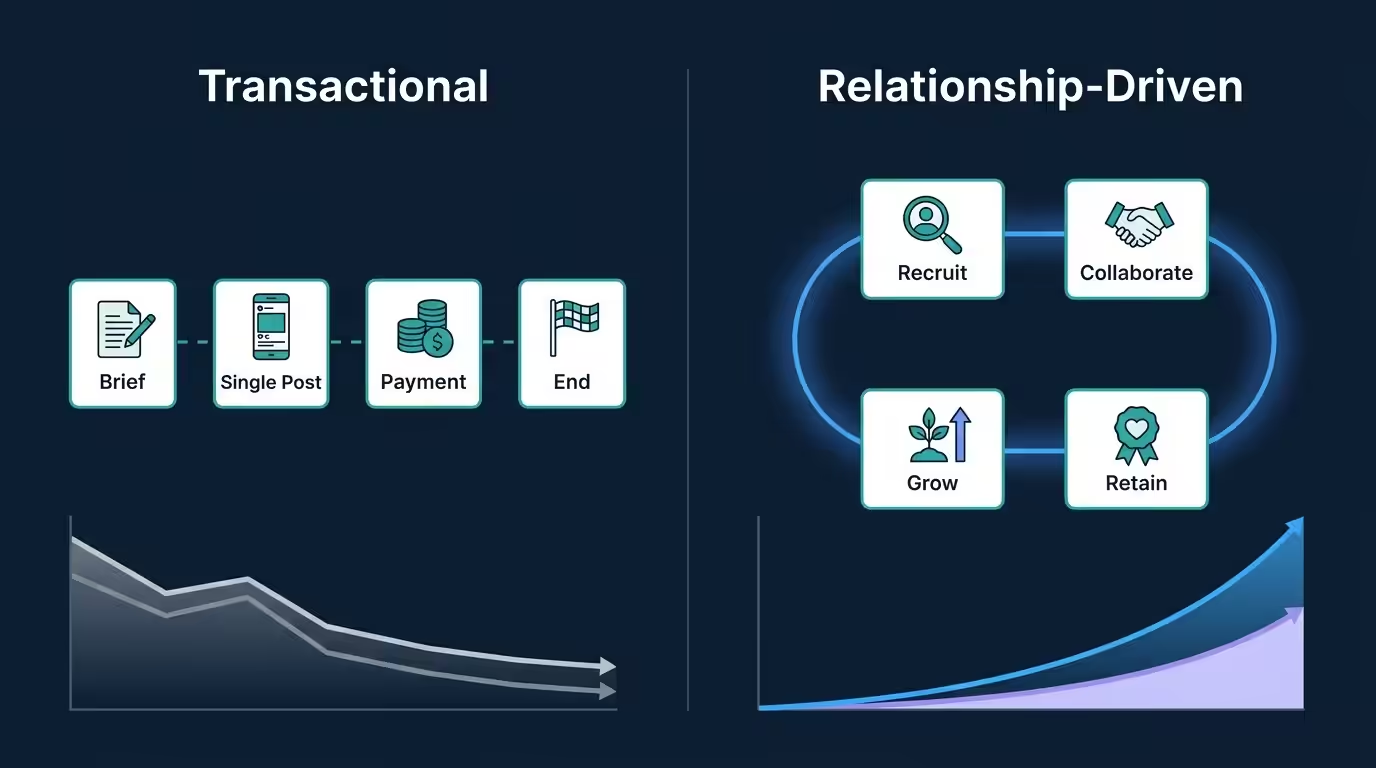
Influencer relationship management (IRM) is the system brands use to recruit, communicate with, and retain creators as long-term partners, not one-off content vendors. It covers everything from first outreach to ongoing collaboration, performance tracking, and relationship health. The brands doing this well aren’t just running campaigns. They’re building a roster of creators who genuinely advocate for the product because the relationship gives them reasons to stay.
And here’s what most IRM guides won’t tell you: the operational side, contracts, payments, communication cadence, matters more than the “build authentic connections” advice everyone repeats. Relationships fall apart because of slow payments and unclear briefs, not because a brand forgot to send a birthday card.
Influencer relationship management is the system brands use to recruit, communicate with, and retain creators as long-term partners, covering outreach, contracts, communication, performance tracking, and relationship health across the full lifecycle of the partnership.
What You’ll Learn
- Why the operational mechanics of IRM, payments, briefs, communication cadence, matter more than “being authentic”
- A five-stage IRM framework that covers the full creator lifecycle from discovery through long-term retention
- The specific metrics that measure relationship health, not just campaign performance
- How to choose IRM software based on what actually breaks at scale (spoiler: it’s communication and payments)
- What creator-side expectations look like in 2026, based on Sprout Social’s 2025 Influencer Marketing Report, including that 71% of influencers offer lower rates for long-term partnerships
What IRM Actually Covers (and What It Doesn’t)
IRM gets confused with two things it isn’t. It’s not influencer marketing strategy, that’s the “why” and “what.” IRM is the “how”, the operational infrastructure that makes influencer partnerships function day to day.
It’s also not just a CRM with influencer contacts in it. A standard CRM tracks leads and customers. An IRM system tracks creator relationships across a different set of variables: content deliverables, usage rights, payment schedules, communication history, performance by campaign, and relationship tenure.
The scope of IRM includes:
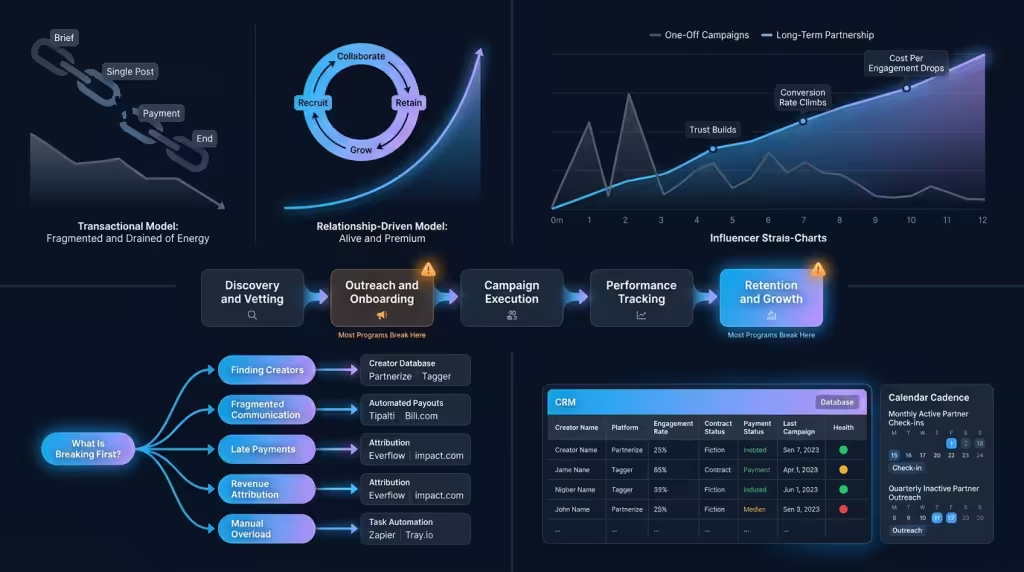
- Discovery and vetting, finding creators who fit your brand, audience, and budget
- Outreach and onboarding, first contact through signed agreement
- Campaign execution, briefs, content review, approvals, publishing
- Communication management, ongoing check-ins, feedback loops, conflict resolution
- Performance tracking, measuring results by creator, campaign, and channel
- Retention and growth, renewals, rate negotiations, expanding the relationship
What IRM doesn’t cover: your overall influencer marketing strategy, your content calendar, your paid media amplification plan, or your brand positioning. Those feed into IRM. They aren’t IRM.
Why Long-Term Partnerships Outperform One-Off Campaigns
The math here is straightforward. One-off influencer posts carry high per-engagement costs because you’re paying for the creator’s audience access without any compounding benefit. The audience sees your brand once, maybe twice. Recognition barely registers.
Long-term partnerships flip that equation. Repeated mentions from the same creator build familiarity. The audience starts associating the creator’s credibility with your brand. Conversion rates climb because the recommendation feels earned, not bought.
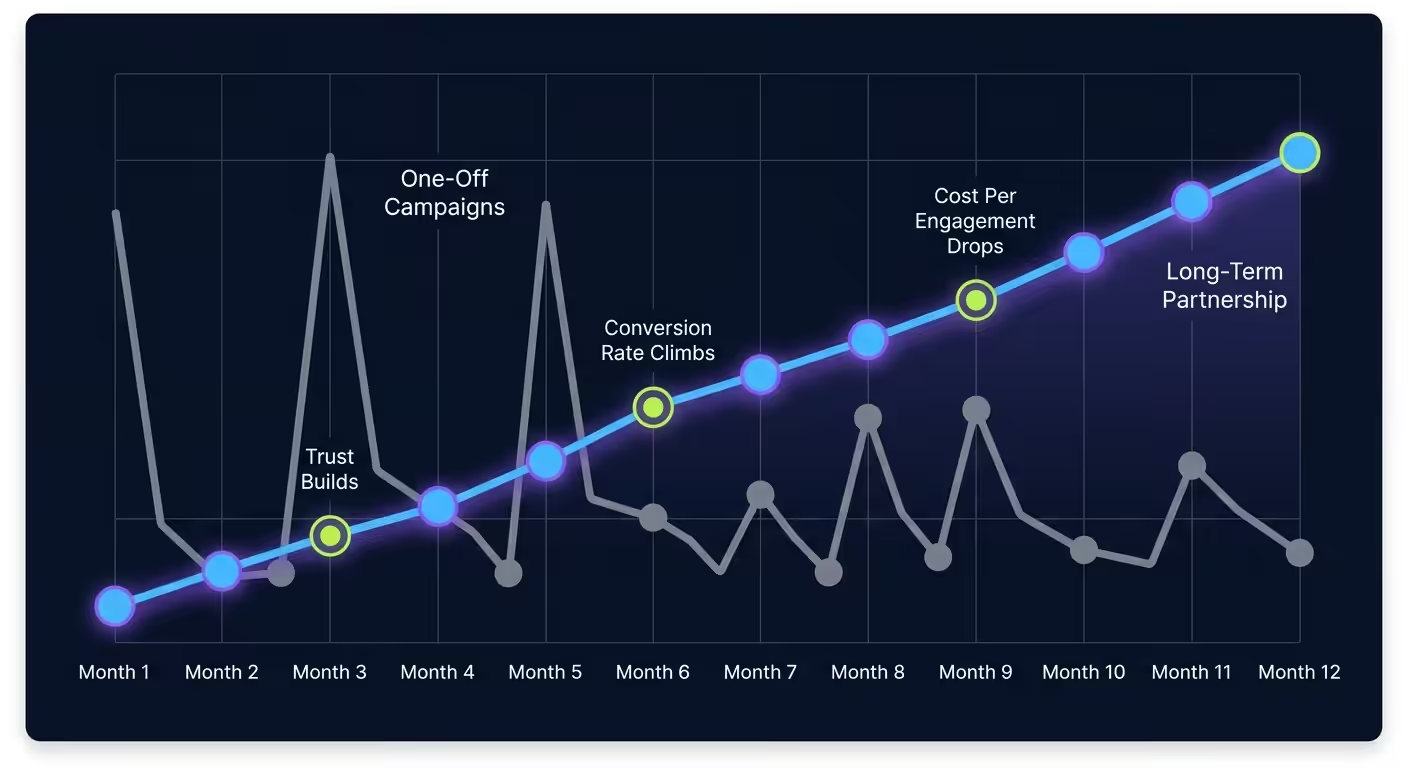
According to Sprout Social’s 2025 research, 47% of consumers expect influencer posts to feel genuine even when sponsored, and half make at least one monthly purchase based on an influencer’s recommendation. Repeated creator endorsements satisfy both conditions, they feel more genuine and they stay top of mind.
There’s a cost advantage too. That same research found 71% of influencers offer lower rates for long-term partnerships and multi-post agreements. You’re getting better performance at a lower per-post cost. The only reason more brands don’t do this is because their IRM systems can’t support it, they don’t have the infrastructure to manage ongoing relationships at scale.
The Five Stages of an IRM Program
Every IRM breakdown I’ve seen follows roughly the same lifecycle. The difference between teams that retain creators and teams that churn through them is how much rigor they bring to each stage, especially stages 2 and 5, which most brands barely invest in.
Stage 1: Discovery and Vetting
Finding influencers is the easy part. Every platform has a search tool. The hard part is vetting, confirming that a creator’s audience is real, their engagement is organic, their content style fits your brand, and their past partnerships won’t create conflicts.
Follower count is the worst predictor of partnership quality. Engagement rate matters more, but even that’s gameable. What you actually want to evaluate:
- Audience overlap with your buyer persona, demographics, interests, geography
- Content consistency, does their organic content align with how you’d want your brand represented?
- Engagement authenticity, are the comments real conversations or spam bots?
- Past brand partnerships, did they work with competitors? How did those posts perform?
- Responsiveness, how quickly do they reply during outreach? This predicts communication quality later
Skip creators who’ve posted for five competing brands in the last six months. That’s not an influencer, that’s a billboard.
Stage 2: Outreach and Onboarding
This is where most brand-creator relationships die before they start. Bad outreach templates, vague briefs, and unclear compensation kill more potential partnerships than budget constraints do.
Your outreach message needs three things: why you chose them specifically (not a generic flattery line), what you’re proposing, and what the creator gets out of it. That’s it. Don’t write a novel. Don’t send a 12-page brand deck as a first touch.
Onboarding is the part teams skip entirely, and then wonder why the first deliverable misses the mark. A proper onboarding process includes:
- A signed contract covering deliverables, timelines, usage rights, exclusivity terms, and payment schedule
- A creative brief that defines brand guidelines and gives the creator explicit room to interpret
- Access to product samples, brand assets, or any resources they’ll need
- A single point of contact, not a rotating cast of brand managers
- Payment terms stated in writing before any content is created
Sprout Social’s data shows 35% of influencers want earlier involvement in creative brainstorming, and 30% want involvement in product development. The onboarding phase is where you set that expectation, or lose the opportunity.
Stage 3: Campaign Execution
Execution is the most documented stage and the one that needs the least explanation. Brief goes out, content gets created, brand reviews it, creator publishes. The mechanics are well understood.
What breaks here isn’t process, it’s micromanagement. Brands that rewrite creator scripts, demand pixel-perfect brand guideline compliance, or require four rounds of revisions are training their best creators to decline the next campaign. Give clear boundaries. Then get out of the way.
One operational detail that matters more than most teams realize: approval turnaround time. If a creator submits content and waits five days for feedback, they’ve already mentally moved on to their next brand deal. Set a 48-hour maximum response window for content reviews. Put it in the contract.
Stage 4: Performance Tracking
Most IRM guides tell you to track engagement, reach, impressions, and conversions. That’s table stakes. The metrics that actually predict whether a creator partnership is worth renewing go deeper.
| Metric Category | What to Track | Why It Matters for IRM |
|---|---|---|
| Engagement Quality | Comment sentiment, save rate, share rate | Likes are vanity. Saves and shares signal real audience interest. |
| Conversion Attribution | UTM-tracked clicks, affiliate code usage, post-view site visits | Proves bottom-line impact for renewal negotiations |
| Content Efficiency | Revisions per deliverable, time from brief to publish | Low-revision creators are worth more than high-engagement ones who need 6 rounds of edits |
| Relationship Health | Response time, proactive communication, willingness to go beyond brief | Predicts retention and future campaign quality |
| Audience Growth | Creator’s follower growth rate, audience quality over time | A creator whose audience is growing brings increasing value to your partnership |
The “content efficiency” row is the one nobody talks about. I’ve seen brands celebrate a creator who drove 50,000 impressions while ignoring that it took three weeks and five revision cycles to get the post live. Meanwhile, another creator drove 15,000 impressions with zero revisions in four days. The second creator is more valuable for long-term IRM, and most tracking systems don’t surface that.
Stage 5: Retention and Growth
This is the stage that separates IRM from influencer campaign management. Campaign management ends after Stage 4. IRM asks: how do we keep this creator in our ecosystem for the next 12 months?
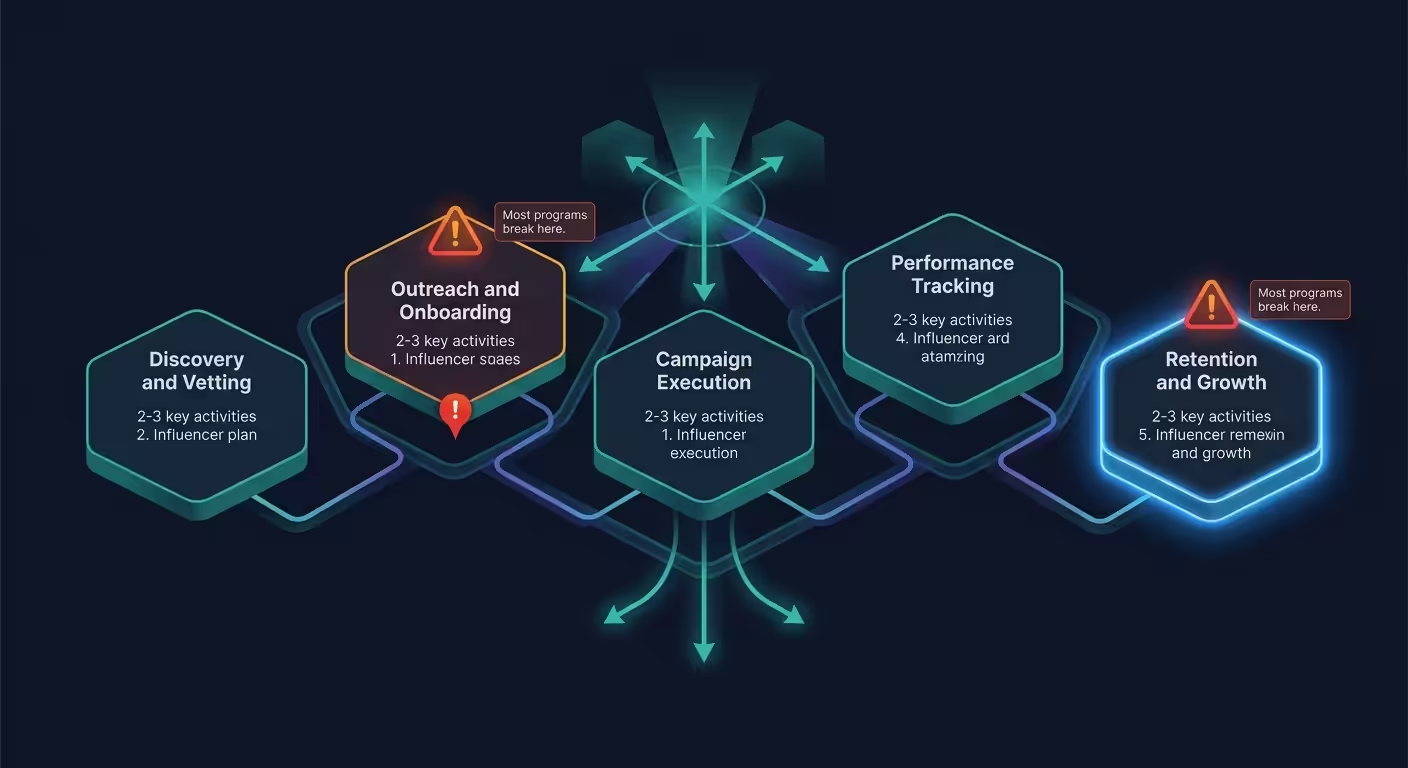
Retention isn’t about grand gestures. It’s about consistency in three areas:
Pay on time. Late payments are the number-one reason creators leave brand partnerships. Not creative disagreements, not low engagement, not strategy misalignment. Late payments. Set up automated payment processing and never let a creator chase an invoice.
Communicate between campaigns. If you only reach out when you need content, creators learn they’re a vendor, not a partner. Send product updates, share how their content performed, ask for input on upcoming launches. The effort is minimal. The signal is massive.
Increase value over time. Raise rates after successful campaigns. Offer exclusivity bonuses. Invite top creators to events, product development sessions, or advisory boards. Give them reasons to turn down your competitors.
Measuring Relationship Health, Not Just Campaign Performance
Campaign metrics tell you how a post performed. Relationship metrics tell you whether the partnership is sustainable. Most brands track the first and ignore the second, then act surprised when their top creators stop responding to briefs.
Relationship health isn’t a single score. It’s a pattern across several signals:
- Response latency trend: Is the creator responding faster or slower over time? Slowing responses are the earliest indicator of disengagement.
- Brief acceptance rate: What percentage of campaign invitations does the creator accept? A declining rate means they’re prioritizing other brands.
- Content quality trajectory: Is the creator’s work for your brand getting better, plateauing, or declining? Quality decline often signals creative fatigue with your product.
- Unprompted advocacy: Does the creator mention your brand organically, outside of paid campaigns? This is the gold standard of relationship strength.
Build a simple traffic-light system: green (active, engaged, improving), amber (responsive but showing signs of plateauing), red (slow responses, declining acceptance, quality drop). Review monthly. Any creator who’s been amber for two consecutive months needs a direct conversation, not another campaign brief.
What Actually Breaks When You Scale Without IRM Software
Teams managing five creators can run IRM through spreadsheets and email. It’s messy, but it works. At 20 creators, the cracks show. At 50, everything breaks.
The breaking points are predictable. I’ve seen the same pattern across dozens of growing influencer programs:
Communication fragments. Creator conversations split across email, Instagram DMs, WhatsApp, and Slack. Nobody knows the full history. A new team member joins and has zero context on a creator who’s been with the brand for eight months.
Payment tracking fails. Someone forgets to process an invoice. The creator follows up twice, doesn’t hear back, and takes a competitor deal. You find out when they post for a rival brand.
Content rights get murky. A creator’s post from six months ago is perfect for a paid ad. But nobody documented the usage rights in the original agreement. Now you’re negotiating retroactively, or risking a legal issue.
Performance data lives in silos. Campaign results sit in separate platform dashboards. Nobody can answer “which creators drove the most revenue this quarter” without manually pulling data from four sources.
IRM software doesn’t solve relationship problems. What it solves is the operational chaos that creates relationship problems.
Choosing IRM Software Based on What Breaks First
Every IRM platform pitches discovery, management, and analytics. The features that matter most depend on where your program is breaking.
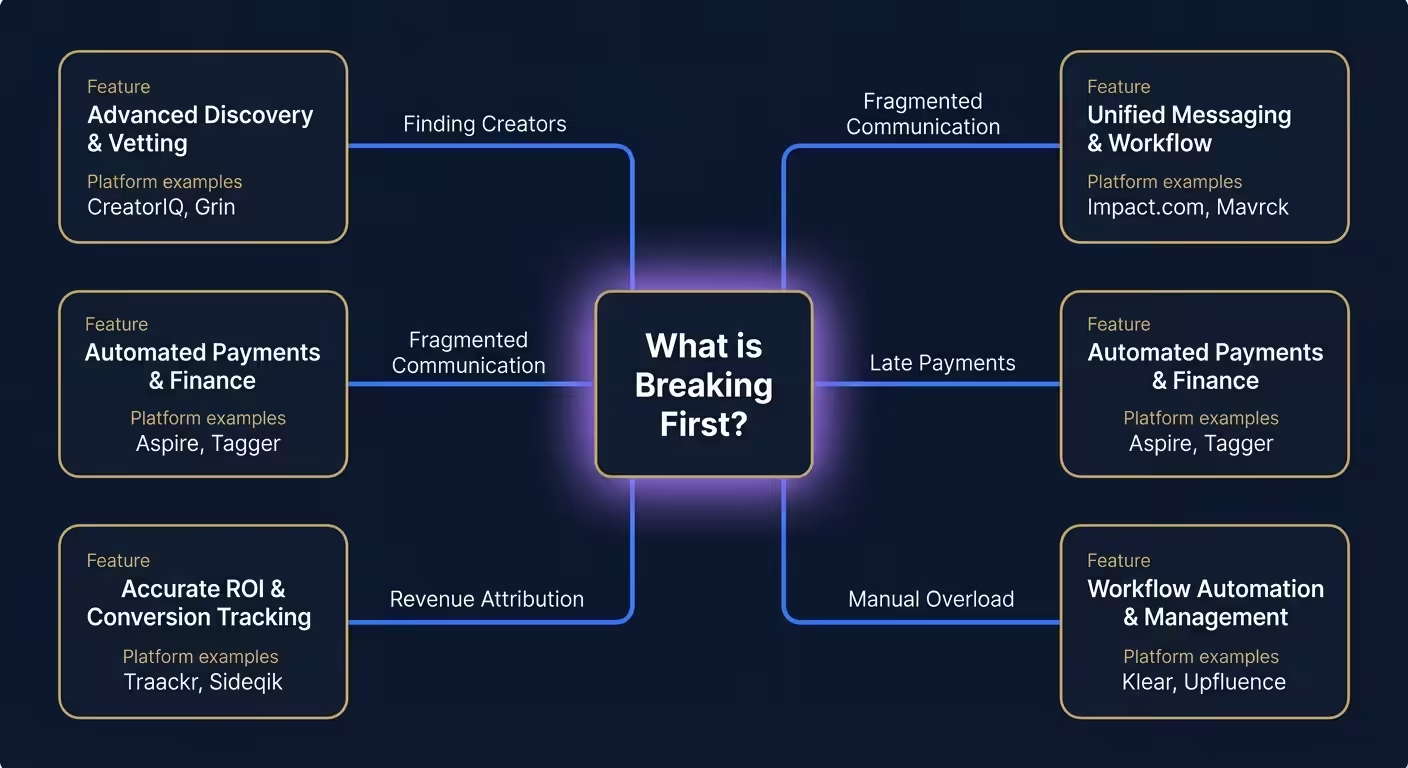
| Your Primary Pain Point | Feature That Actually Fixes It | Platforms Strong Here |
|---|---|---|
| Can’t find the right creators | Advanced audience demographic filtering, lookalike discovery | CreatorIQ, Modash, Influencity |
| Communication is fragmented | Centralized inbox with full conversation history per creator | Aspire, Grin, Insense |
| Payments are inconsistent | Automated payment processing with contract-linked triggers | Grin, Aspire, CreatorIQ |
| Can’t attribute revenue to creators | Native affiliate tracking, UTM management, ecommerce integrations | Grin, Aspire, Upfluence |
| Too many creators to manage manually | Automated matchmaking, fulfillment, and campaign workflows | Statusphere, CreatorIQ |
| Content rights are unclear | Digital contracts with embedded usage rights and e-signatures | Grin, Aspire |
Don’t buy the platform with the most features. Buy the one that fixes your specific bottleneck. A team drowning in fragmented DMs doesn’t need a better discovery engine, they need a centralized inbox. A team that can’t prove ROI doesn’t need better outreach templates, they need attribution tracking.
And here’s a practical reality check: most mid-market teams don’t need a full-suite IRM platform. If you’re managing under 30 creators, a combination of a project management tool (Notion, Asana), a shared inbox, and a spreadsheet tracker will handle 80% of the workflow. Software becomes necessary when the manual workarounds start costing you creators.
The Creator’s Side: What Influencers Actually Want From Brand Partnerships in 2026
Most IRM content is written entirely from the brand’s perspective. That’s a mistake. The creator’s experience determines whether your program retains its best performers or watches them leave.
Here’s what creators consistently say they want, and what they’ll leave over:
Creative freedom with clear boundaries. Creators don’t want to read a word-for-word script. They also don’t want a vague “just make something cool.” The sweet spot: a brief that defines the message, the required disclosures, and the absolute do-nots, then lets the creator handle everything else. Research suggests 77% of influencers are more likely to maintain long-term relationships with brands that give them creative latitude.
Fair compensation that increases with tenure. A creator who’s worked with you for a year, delivered consistent results, and grown their audience by 30% shouldn’t be offered the same rate as a new recruit. Flat-rate stagnation signals that you don’t value the relationship’s growth.
Transparency about performance. Share campaign results with your creators. Not just “the post did well”, actual numbers. Impressions, clicks, conversions. Creators are running businesses. They need data to optimize, to prove their own value to other partners, and to feel like they’re collaborating with you, not performing for you.
Reliable operations. Payments arrive on schedule. Briefs arrive with enough lead time. Review feedback comes within 48 hours. Product samples ship before the content deadline. These sound basic. They’re the things creators complain about most.
A creator who feels respected, compensated fairly, and operationally supported will turn down higher-paying competitor offers. (Yes, really.) The relationship becomes an asset they don’t want to lose either.
See where AI answers put your brand
Twenty minutes with a senior strategist: where the major engines point buyers in your category, who gets named instead of you, and a straight read on what a programme would change.
Book a strategy callCommon IRM Failures and How to Avoid Them
I’ve watched enough influencer programs stall or collapse to recognize the patterns. These aren’t edge cases, they’re the default failure modes for teams that treat IRM as an afterthought.
Failure: Over-automating the relationship. Automated outreach sequences, template-only communication, and bot-scheduled check-ins strip the human element that makes creator partnerships work. Automation should handle logistics, payment processing, content tracking, deadline reminders. Communication should stay human. A creator who feels like they’re talking to a system will behave like a vendor, not a partner.
Failure: No single owner. When three people email the same creator about different campaigns with conflicting instructions, trust erodes fast. Every creator needs one primary contact who owns the relationship. Others can participate in campaigns, but the relationship has a single thread.
Failure: Treating all creators identically. A nano-influencer with 8,000 highly engaged followers in your niche needs a different relationship model than a macro-influencer with 500,000 followers across multiple categories. Brief depth, communication frequency, compensation structure, and creative latitude should all flex by creator tier and relationship maturity.
Failure: Ignoring contract details. Usage rights, exclusivity windows, FTC disclosure requirements, content ownership, and termination terms need to be explicit and signed before any content is created. “We’ll figure it out later” is how brands end up in legal disputes or lose repurposing rights to content they paid for.
Failure: Measuring the wrong things. A creator with moderate reach but high conversion rates is more valuable than a creator with massive reach and zero attributable sales. If your IRM metrics prioritize vanity over revenue, your renewal decisions will be wrong.
Building an IRM Process From Scratch
If you’re starting with no IRM system at all, just a list of creators you’ve worked with and some email threads, here’s how to build the foundation without buying software yet.
Step 1: Audit Your Current Creator Relationships
List every creator you’ve worked with in the past 12 months. For each, note: how many campaigns, total spend, measurable results, communication quality (fast/slow, easy/difficult), and whether you’d want to work with them again. This gives you your starting roster and your first retention candidates.
Step 2: Create a Creator Database
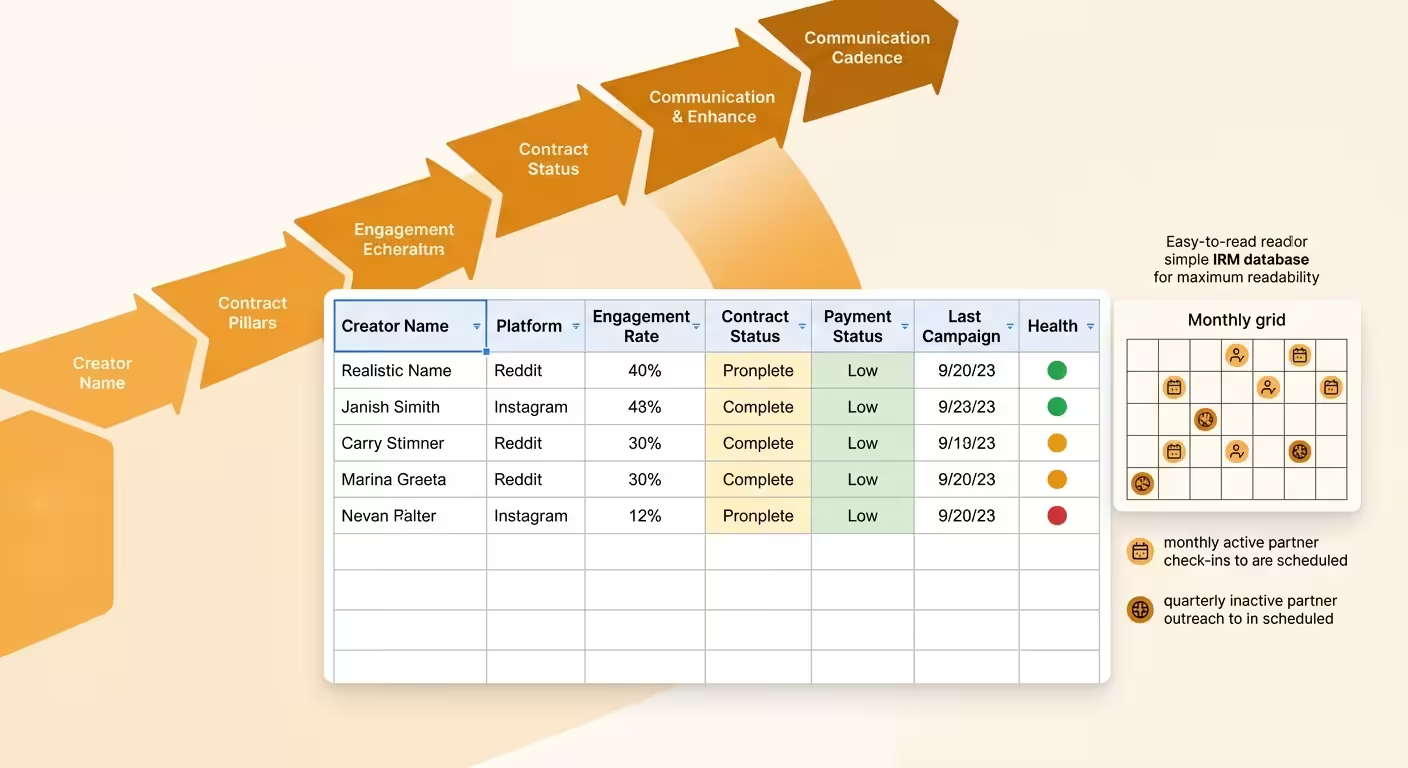
Use a spreadsheet or Notion database with these fields: creator name, platform(s), audience size, engagement rate, niche, contact info, contract status, payment status, last campaign date, and relationship health (green/amber/red). This is your IRM system until you outgrow it.
Step 3: Standardize Your Agreements
Draft a template contract that covers deliverables, timelines, compensation, payment terms, usage rights, exclusivity, FTC compliance requirements, and termination conditions. Have legal review it once. Use it for every partnership.
Step 4: Set a Communication Cadence
For active partners, schedule a monthly check-in that isn’t about a specific campaign. Share performance data, ask about their upcoming content plans, and discuss potential collaboration ideas. For inactive partners you want to retain, reach out quarterly with a personal message, not a mass email.
Step 5: Define Your Renewal Criteria
Before any contract ends, evaluate the creator against three questions: Did they deliver on time and on brief? Did their content drive measurable results? Is the relationship healthy? Two out of three yeses = renew. All three = renew with an increased rate. One or zero = thank them and move on.
How Influencer Visibility Compounds Across Channels
Strong IRM doesn’t just improve your influencer campaigns. It creates compounding visibility that extends beyond social media.
When a creator mentions your brand repeatedly over months, that consistency generates signals across multiple surfaces. Their content shows up in social search results. Their blog posts (if they have them) create organic backlinks. Their YouTube videos surface in Google video carousels. And increasingly, their content becomes part of the training and retrieval data that AI models use when generating recommendations.
This is where IRM connects to broader visibility monitoring and brand awareness measurement. A well-managed influencer roster becomes a distributed content network, one that generates mentions across platforms, publications, and search surfaces simultaneously.
The brands that understand this don’t treat IRM as a social media function. They treat it as a visibility function that happens to operate through creators.
Tracking IRM Performance With the Right KPIs
Standard influencer marketing KPIs, impressions, engagement rate, cost per engagement, measure campaign performance. IRM needs a separate set of metrics that measure the program’s health over time.
- Creator retention rate: What percentage of creators who completed one campaign went on to complete a second? A rate below 40% signals onboarding or payment problems.
- Average partnership tenure: How many months does the average creator stay active? Track this quarterly. A declining trend means your retention efforts are failing.
- Brief-to-publish cycle time: How many days from brief delivery to published content? Shortening cycle times indicate smoother operations and higher creator engagement.
- Creator-initiated contact rate: How often do creators reach out to you with ideas, questions, or collaboration proposals? Rising creator-initiated contact is the strongest signal of relationship health.
- Revenue per creator over time: Not per campaign, per creator across all campaigns. This reveals which long-term relationships are actually driving business results.
Build a quarterly IRM dashboard that tracks these five metrics alongside your standard influencer marketing KPIs. The campaign KPIs tell you what happened. The IRM KPIs tell you whether it’ll keep happening.
Influencer Relationship Management vs Creator Relationship Management
Creator relationship management and influencer relationship management point to the same underlying problem: how to work with creators in a way that compounds rather than burns relationships. The naming difference reflects whose perspective the system is built around.
Influencer relationship management (IRM) framings center the brand. The brand keeps a roster of influencers they pay or partner with. The system tracks campaign performance, deliverables, and contract terms across that roster. Most B2B tools marketed as IRM platforms come from this lineage.
Creator relationship management (CRM) framings center the creator economy. The terminology assumes the creator has multiple brand partnerships, owns their audience, and operates more like a small business. CRM-flavored tools emphasize co-marketing workflows, revenue share, and long-term affiliate structures.
In practice, the platforms overlap. If you’re shortlisting an IRM tool but the creator economy framing fits your team better, look at the same vendors. Most have rebranded to use “creator” terminology since 2024. The capabilities haven’t changed much. The vocabulary has.
For B2B SaaS teams working with industry analysts, podcasters, and LinkedIn voices, the IRM framing usually fits. For brands working with TikTok creators, YouTubers, and Instagram personalities at scale, the CRM framing usually fits. Pick the term your team will actually use in standups.
Frequently Asked Questions
What is the difference between IRM and influencer marketing?
Influencer marketing is the strategy, deciding to use creators to reach audiences. IRM is the operational system that manages those creator relationships across their full lifecycle, from discovery through retention. You can do influencer marketing without IRM, but your results won’t compound and your best creators will eventually leave for brands that manage relationships better.
How many influencers can you manage without dedicated software?
Most teams hit a ceiling around 25-30 active creators. Below that threshold, a structured spreadsheet, a shared inbox, and a project management tool handle the workflow. Above it, communication fragments, payments get delayed, and performance data becomes impossible to consolidate. If your team is spending more than five hours a week on manual creator admin, you’ve probably crossed the line where software pays for itself.
What’s the most common reason influencer partnerships end?
Late payments. Not creative disagreements, not low engagement, not strategy misalignment. Creators are running businesses, and a brand that can’t pay on time signals operational dysfunction. The fix is simple: automate payment processing, tie it to contract milestones, and make sure no creator ever has to send a follow-up invoice.
Should you give influencers exclusivity in exchange for lower rates?
It depends on the creator’s value and your competitive landscape. Exclusivity protects you from seeing your creator endorse a competitor next week. But it limits the creator’s earning potential, so the rate reduction is rarely steep, expect 10-15% at most. For top-performing creators, consider offering exclusivity bonuses (paying more for exclusivity, not less) to make the arrangement genuinely attractive to both sides.
How do you handle an influencer relationship that’s going badly?
Direct conversation, not email. Explain specifically what isn’t working, late deliverables, off-brand content, declining engagement, and ask whether there’s something on their end causing the issue. Sometimes the problem is a vague brief or unclear expectations on your side. If the conversation doesn’t improve things within one campaign cycle, end the partnership professionally and move on. Dragging out a bad fit costs both parties more than a clean exit.
Start With What Breaks First
Don’t try to build a perfect IRM system all at once. Find the one thing that’s costing you creators or results right now, late payments, fragmented communication, no renewal process, and fix that first. Then move to the next bottleneck.
The brands with the strongest creator rosters in 2026 aren’t the ones with the fanciest software. They’re the ones that made it easy and rewarding for creators to keep saying yes.
Want to track how your influencer partnerships contribute to broader brand visibility? Start with our guide on influencer marketing KPIs that prove real ROI.