
AI Visibility For Marketplace Platforms
AI visibility for marketplace platforms means ChatGPT, Gemini, Perplexity and Claude name your marketplace when a buyer asks where to hire or source, and when a supplier asks where to sell. Those are two prompt sets with two different source pools. We earn editorial coverage for each side and report your citation share against named competitors.
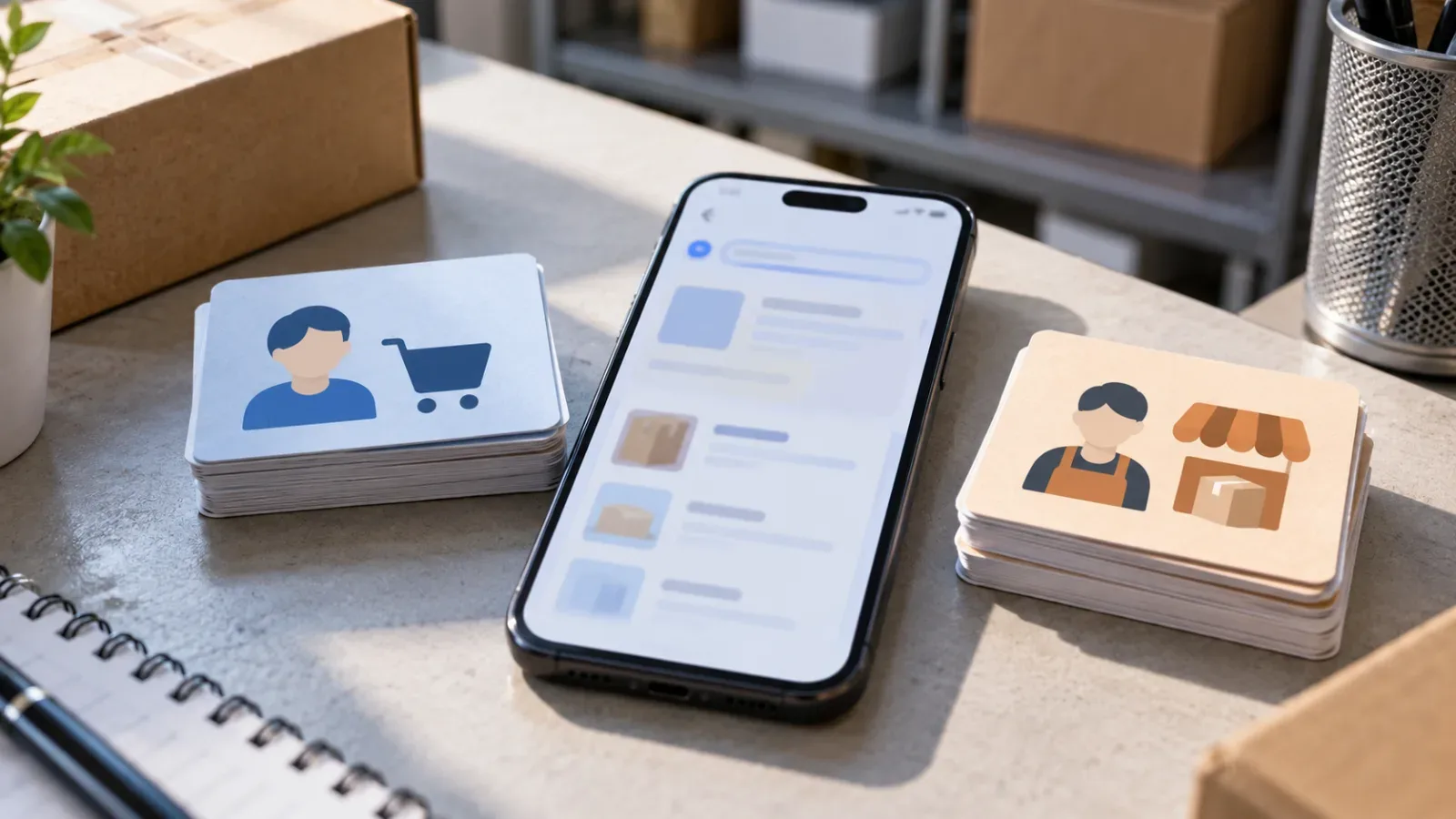
How Buyers And Sellers Ask AI About Marketplaces
Marketplace platforms face three prompt sets, not one: buyers looking for supply, suppliers deciding where to list, and both sides checking whether you’re safe. Each set draws on different publications.
That’s why strong coverage on one side won’t carry the other.
Demand-Side Prompts
A buyer asks ChatGPT where to hire a vetted contractor or source a part in their region. The answer comes from comparison articles, trade press and roundups written for buyers.
Supply-Side Prompts
A supplier asks Perplexity which platform charges fair fees and sends real demand. Those answers lean on seller communities, trade newsletters and fee breakdowns, rarely on your homepage.
Trust Prompts
Both sides ask whether you’re legitimate, how payouts work and what happens in a dispute. Gemini and Claude answer from news coverage and discussion threads, so an outdated fee fact spreads fast.
Why do AI assistants cite your listings but not name your marketplace?
AI assistants often use a marketplace’s listing pages as sources while never naming the marketplace as the recommendation. The assistant pulls a supplier’s profile to answer the question, then credits the supplier, not the platform hosting it.
That’s a citation without a mention. It sends a few clicks, but it doesn’t teach the assistant that your marketplace is where this category gets bought.
Two more patterns make it worse. Assistants file a niche marketplace as a directory, an agency or a software tool when coverage uses mixed labels.
And generic prompts default to the big horizontal platforms. A focused marketplace wins on specific prompts that add a vertical, a region or a buyer requirement.
Track the two numbers separately: prompts where your domain appears as a source, and prompts where your brand is named in the answer. The gap between them is a brand recognition problem, and more listing pages won’t close it.

The Coverage We Earn For A Marketplace
A marketplace programme earns editorial coverage on both sides of the network, so assistants see one accurate description of your platform from buyer sources and supplier sources. Placements come from our publication network for AI citations and from pitched editorial.
Buyer-Side Editorial
Comparison and how-to-choose articles in the trade and business press your buyers read. Each one names your marketplace for the specific category it serves.
Supplier-Side Coverage
Features in the newsletters, trade outlets and community publications where suppliers decide where to list. Your fee model and payout terms are stated correctly.
Category Definition Pieces
Explainers that describe your marketplace with one consistent label. Assistants stop filing you as a directory or an agency.
Founder And Data Stories
Commentary built on what your marketplace actually observes, pitched to journalists covering your vertical. We only pitch figures you can stand behind.
How A Marketplace Programme Runs
A marketplace programme runs in four steps, and the first two treat buyers and suppliers as separate audiences. You’ll see both sides’ numbers from the start, never one blended score that hides the weak side.
Map Both Prompt Sets
We write the prompts each side asks, by category, region and buyer type, and agree the named competitors for each. Supply-side rivals often differ from demand-side rivals.
Baseline Citation Share
Citation share is the portion of tracked AI answers that name you rather than those competitors. We measure it per side across ChatGPT, Perplexity, Gemini, Claude and Google AI Overviews.
Earn Placements Per Side
Coverage goes to the side with the larger gap first. You approve every angle, and every fact about fees, vetting and protections, before anything runs.
Report What Changed
You get confirmed placements and citation share per side against the same competitors. You can see which side moved and which still lags.
What makes a marketplace citable by AI assistants?
A marketplace becomes citable when independent sources describe it the same way: one category label, accurate public terms and proof tied to a niche. If you’re briefing a team, the brand mention and citation terms are defined in our glossary.
One Consistent Label
Pick the category phrase you want assistants to repeat and use it in every pitch, profile and About page. Three labels produce three half-formed brands.
Public, Current Terms
Publish fees, payout timing, vetting and dispute rules on a crawlable page. Assistants fill gaps with old forum threads, and a wrong take rate costs you suppliers.
Niche-Specific Proof
“Largest marketplace” claims get ignored or contradicted. Proof for one vertical, region or buyer type gives editors and assistants something precise to repeat.
How Earned Coverage Compares With Other Marketplace Tactics
Marketplace teams weigh four ways to show up in AI answers. Each covers a different gap, and most marketplaces need two of them, not all four.
Optimising listing pages
Moves source citations on long-tail prompts and mostly reaches buyers. The limit: suppliers get the credit, not you.
Review and community presence
Moves trust prompts and reaches both sides, but you don’t control the framing. For trust prompts, community answers carry more weight; the Quora authority playbook explains that channel.
Press releases
Put dated facts like fee changes and launches on record, but they are weak on both sides because editors rarely repeat them. Our press release strategy for AI citations covers where they help.
Earned editorial coverage
Gets your brand named as the answer and reaches both sides when planned per side. It is slower, and never guaranteed.
Is this right for your marketplace?
An earned-coverage programme fits marketplaces with real liquidity in at least one category and a clear answer to who they serve. It’s the wrong spend when the core problem is supply, because coverage can’t fix an empty marketplace.
A Good Fit
- You run a B2B or specialist marketplace, one side already knows you in a niche, and AI answers still default to bigger platforms. Payments-heavy marketplaces should also read our compliance-aware approach for fintech.
Not The Right Fit
- You’re pre-launch with thin supply, your fees are about to change, or you want guaranteed placement in ChatGPT answers. Nobody can honestly promise that, and we don’t.
Marketplace Questions
How long before AI assistants start naming a marketplace?
There’s no fixed timeline, because assistants pick up coverage in two ways. Assistants that search the web, like Perplexity and Google AI Overviews, can use new coverage once it’s indexed. Answers drawn from training data change only when a model is retrained, so treat them as a slower signal.
Do listing pages hurt a marketplace’s AI visibility?
No, they help with source citations on long-tail prompts. The risk is relying on them alone, because the answer then credits the supplier. Pair them with editorial that names the platform.
What if an AI assistant states our fees wrong?
Fix the public source first with a current, crawlable fees page. Then earn coverage that restates the correct terms, since assistants weigh independent sources. Expect search-based assistants to correct first.
Can a niche marketplace compete with the big platforms in AI answers?
Yes, on specific prompts. Generic prompts favour the largest names, but prompts that add a vertical, region or buyer requirement open room for a specialist with matching coverage.
Is our own blog enough to get the marketplace recommended?
Rarely. Assistants use your own pages for facts about you, but naming you as the best option needs independent sources saying so.
Which AI assistants should a marketplace track?
Track ChatGPT, Perplexity, Gemini, Claude and Google AI Overviews, because each draws on a different mix of sources. Your citation share often differs between them, and the weakest one shows where coverage is missing.
See Which Marketplaces AI Names For Each Side
Book a short strategy call. We’ll look at which platforms the assistants name for your buyers’ prompts and your suppliers’ prompts, and where earned coverage could close the gap.
Book a strategy callNo guaranteed-ranking promises. You see confirmed, attributable placements and your citation share against named competitors.