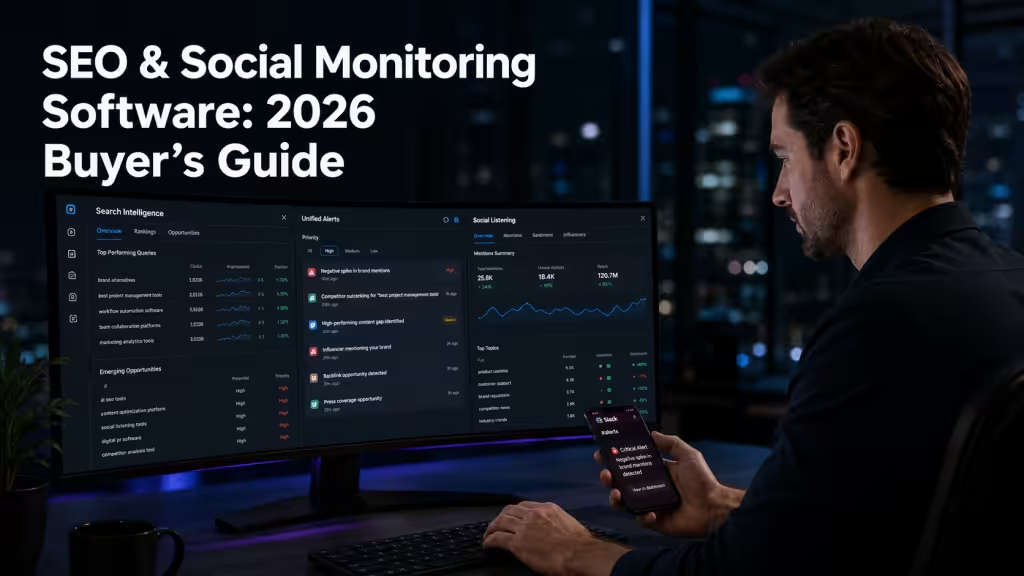

Seo & social monitoring software, Most marketing teams run two monitoring stacks that never talk to each other. SEO tools watch rankings, backlinks, and technical health. Social tools watch mentions, sentiment, and conversations. Neither sees the full picture, and the gap between them is where brand crises grow, competitor wins go unnoticed, and pipeline opportunities slip past.
SEO & social monitoring software combines search performance tracking (rankings, backlinks, site health, share of voice in search) with social listening (brand mentions, sentiment, competitor activity, conversation volume) into one workflow. The best 2026 stacks pull both data streams into a single alert system so your team responds to a Reddit thread, a ranking drop, or a sudden spike in branded search the same way: fast, with context.
This guide is for marketing leads who are tired of stitching dashboards together. We’ll cover what to evaluate, where most stacks fail, the tools worth your shortlist, and how to build a monitoring system that actually catches what matters.
Few products cover both jobs well, so the practical answer to SEO and social monitoring software is a pairing.
Use an SEO platform for rankings, backlinks and site health. Use a social listening tool for mentions and sentiment. Then share one report that puts both on the same timeline.
What You’ll Learn
- The real difference between SEO monitoring and social monitoring, and why treating them separately costs you
- The 7 capabilities your stack must cover, scored against the 11 most-used tools
- Honest pricing reality for 2026 (most “starting at” prices triple once you actually use the tool)
- How to build a unified alert workflow without buying a $40k enterprise suite
- The mistakes that turn monitoring into noise instead of signal
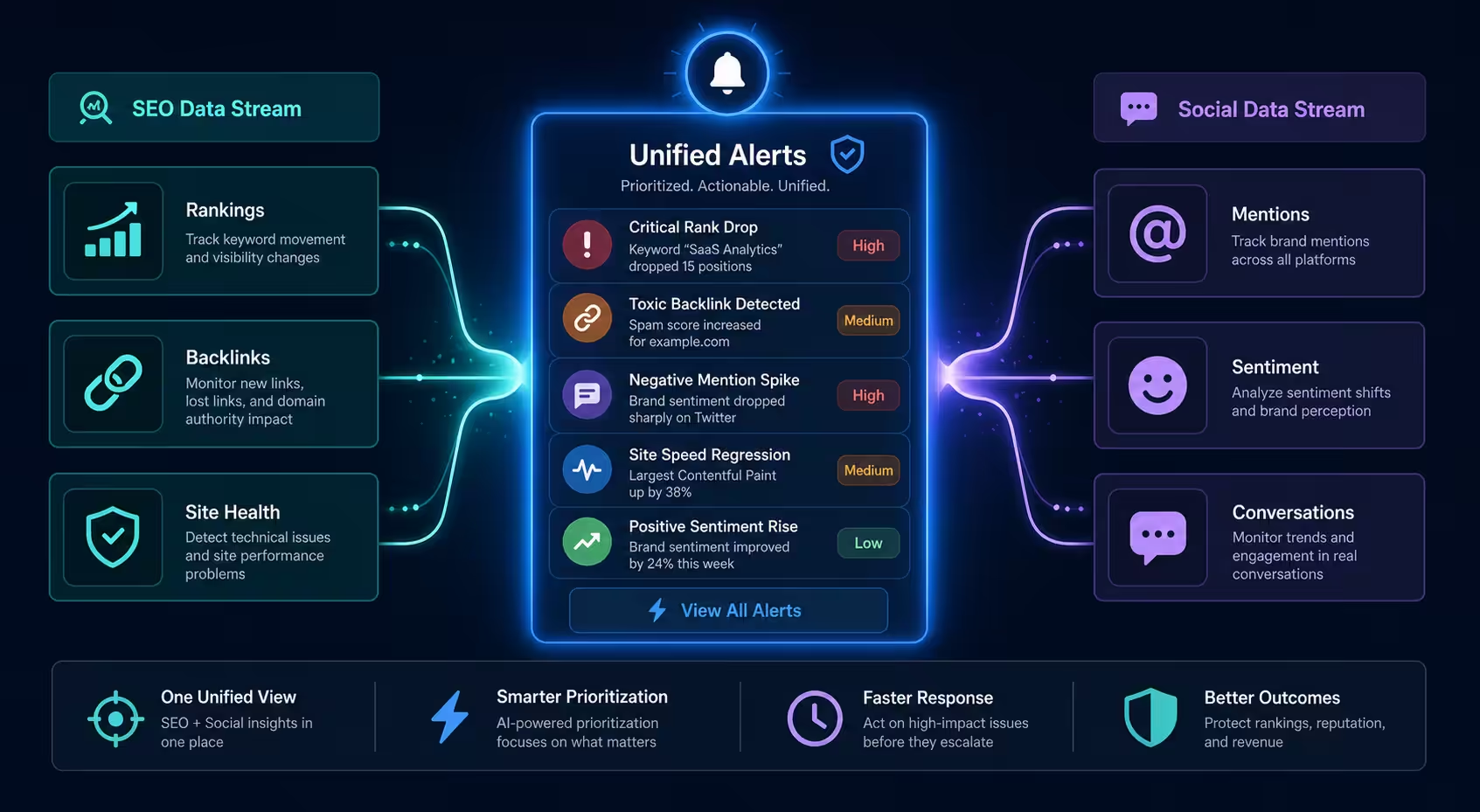
SEO Monitoring vs Social Monitoring: Why You Need Both
SEO monitoring tracks how your site performs in search: keyword rankings, backlinks gained or lost, technical errors, Core Web Vitals, indexing issues, and Google algorithm volatility. Social monitoring tracks how your brand is talked about: mentions on Twitter/X, Reddit, LinkedIn, news sites, blogs, podcasts, review platforms, and YouTube comments.
The teams that treat these as separate disciplines miss the most important signal of all: the connection between them.
A competitor launches a feature. Reddit lights up. Branded search for that competitor jumps 40% inside two weeks. Their pages start outranking yours for shared category terms. By the time your SEO tool flags the ranking drop, you’re three weeks behind the conversation that caused it.
Or the reverse: your team ships a great PR placement. The article ranks. Your brand mentions spike. Inbound traffic climbs. But because nothing connects the publication, the rankings, and the mentions in one view, no one inside the company can prove what worked, so the budget gets cut next quarter.
This is why unified monitoring matters now in a way it didn’t five years ago. Search and social are no longer separate funnels. They’re one continuous signal.
What Each Half Actually Tracks
| SEO Monitoring | Social Monitoring |
|---|---|
| Keyword rankings (daily/weekly) | Brand and competitor mentions |
| Backlink gains and losses | Sentiment trends |
| Site health, crawl errors, broken links | Reach and share of voice |
| SERP feature changes (AI Overviews, snippets) | Influencer and creator activity |
| Branded vs non-branded traffic | Trending topics and conversations |
| Competitor ranking shifts | Crisis signals and review spikes |
Run only the left column and you’ll miss why your rankings move. Run only the right and you’ll miss whether the buzz translated to revenue.
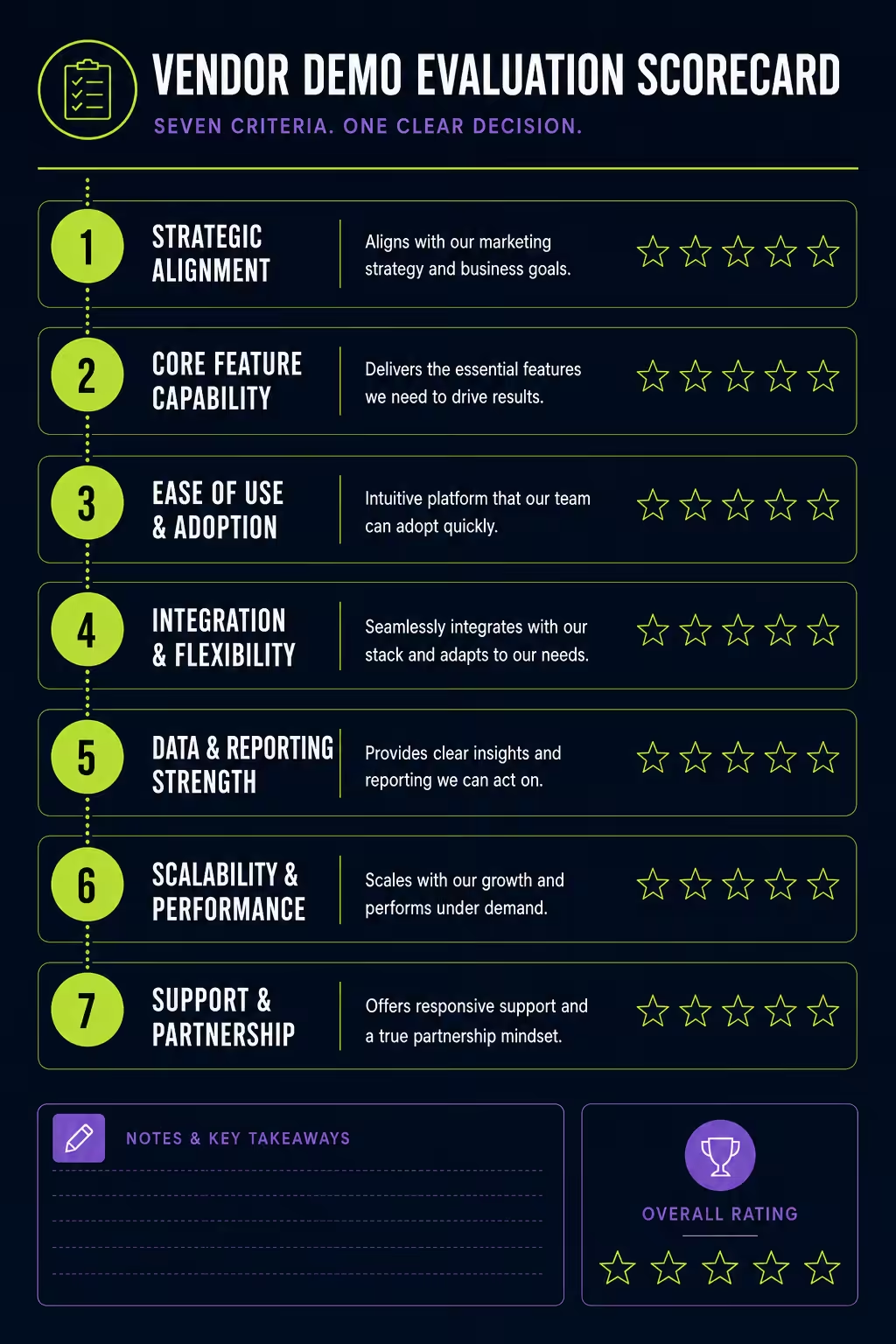
The 7 Capabilities Your Stack Must Cover
Before you compare tools, get clear on what monitoring needs to do. Most teams overbuy on features they never use and underbuy on the basics that matter daily.
1. Real-Time Alerts (Not Daily Digests)
If a Reddit thread about your brand goes viral at 7am and your tool emails you a digest at 5pm, you’ve already lost the day. Look for push alerts via Slack, Teams, or SMS for high-priority signals: spikes in mentions, sentiment drops, ranking crashes, or sudden backlink loss. Daily digests work for everything else.
2. Source Coverage Breadth
Coverage claims are the single most inflated number in this category. “Monitors 150 million sources” usually means the tool indexes that many domains, not that it actually surfaces useful mentions from all of them. Check the platforms that matter for your category: Reddit (often weak), niche forums, podcasts, newsletters, Substack, Discord, and review sites like G2 or Capterra.
3. Sentiment Analysis That You Can Trust
Most tools claim 80-85% sentiment accuracy. In practice, B2B sentiment analysis runs closer to 65-75%, sarcasm, technical language, and industry slang trip up the models. Don’t make critical decisions on sentiment scores alone. Use them for trend direction, not as a single source of truth.
4. Competitor Tracking in Both Streams
The tool should let you monitor 3-5 competitors with the same depth as your own brand. Their ranking shifts, their backlink wins, their mention spikes. This is where most stacks fall short, they track your brand well and treat competitors as an afterthought.
5. Historical Data and Backfill
The day you set up a tool, your historical record starts. If the tool offers 12 months of backfill, take it. Six months from now, when leadership asks “did our rebrand actually move the needle?”, you’ll need the before-and-after.
6. Reporting That Doesn’t Cost a Day
White-label PDF reports, scheduled email exports, and live shareable dashboards. If building a monthly client or executive report takes more than 30 minutes, the tool is failing you.
7. Integrations
Slack, Google Sheets, Looker Studio, HubSpot, Salesforce, and the major BI tools. The data has to go where your team already works, not into another dashboard nobody opens.
The 11 Tools Worth Comparing in 2026
Below is the working shortlist most B2B teams end up evaluating. The split is intentional, pure SEO tools, pure social tools, and the few that genuinely span both. We’ve used most of these in client work over the last three years; pricing and feature notes reflect what shows up on contracts, not what shows up on landing pages.
Tools That Cover Both SEO and Social Signals
| Tool | Best For | Real Starting Price | Watch Out For |
|---|---|---|---|
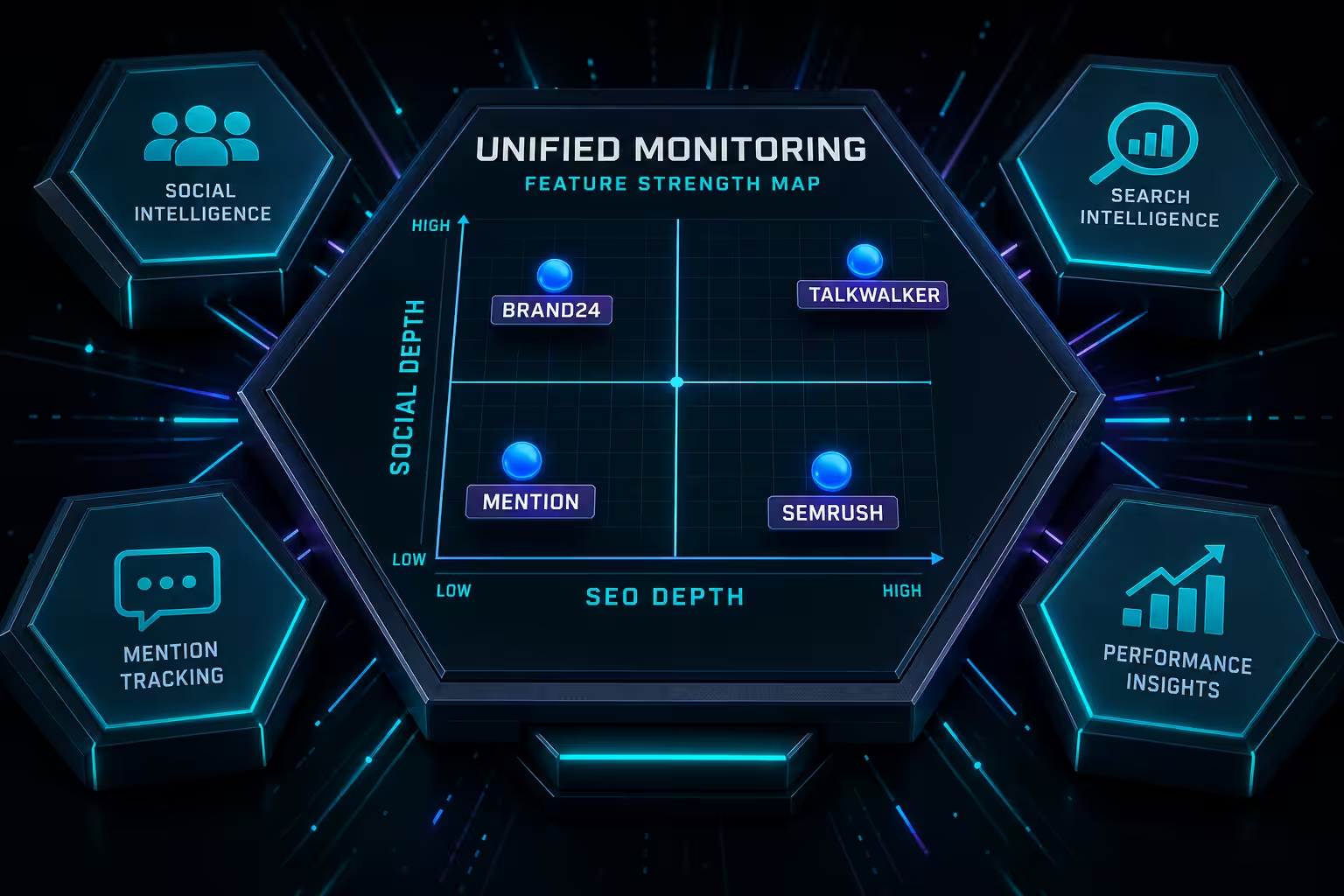
| Semrush | Mid-market teams wanting one platform for SEO + brand mentions | $140/mo (Pro tier) | Social monitoring is bolted on, not native depth |
| Brand24 | Strong social listening with basic SEO/mention overlap | $149/mo (Plus tier) | Real-time only on higher tiers |
| Mention | SMBs and agencies needing both with a clean UI | $49/mo (limited) | Mention volume caps fill fast |
| Talkwalker (Hootsuite) | Enterprise unified monitoring across channels | $9,000+/year | Enterprise-only pricing, long onboarding |
SEO-First Tools
| Tool | Best For | Real Starting Price | Watch Out For |
|---|---|---|---|
| Ahrefs | Backlink monitoring and competitor analysis depth | $129/mo (Lite) | Lite tier is genuinely limited; most teams need Standard ($249) |
| Moz Pro | Beginner-friendly SEO monitoring with local SEO tools | $99/mo (Standard) | Index size smaller than Ahrefs/Semrush |
| AccuRanker | Daily rank tracking precision for agencies | $129/mo (Starter) | Rank tracking only, not a full suite |
Social-First Tools
| Tool | Best For | Real Starting Price | Watch Out For |
|---|---|---|---|
| Awario | Boolean search depth for niche monitoring | $49/mo (Starter) | Reporting feels dated |
| Sprout Social | Customer support teams handling inbound | $249/user/mo | Per-user pricing scales fast |
| Brandwatch | Enterprise consumer brands needing deep listening | Custom (typically $1,000+/mo) | Heavy lift to set up well |
| BrandMentions | B2B teams wanting mention tracking with web + social coverage | $99/mo (Growing) | Stronger on web mentions than native social analytics |
Two notes worth flagging. First, every tool here has a free trial of 7 to 30 days, actually use them before committing. Demos hide friction. Second, the “starting price” column is what you see on the website. The real price most teams pay sits 1.5x to 3x higher because of seat limits, mention volume caps, and historical data add-ons. Build that into your budget conversation.
How to Build a Unified Monitoring Workflow
The mistake most teams make is buying tools first and figuring out the workflow later. The result is two dashboards nobody opens, three Slack channels nobody reads, and quarterly reports built from scratch every time.
Build the workflow first. Then buy the tools that fit it.
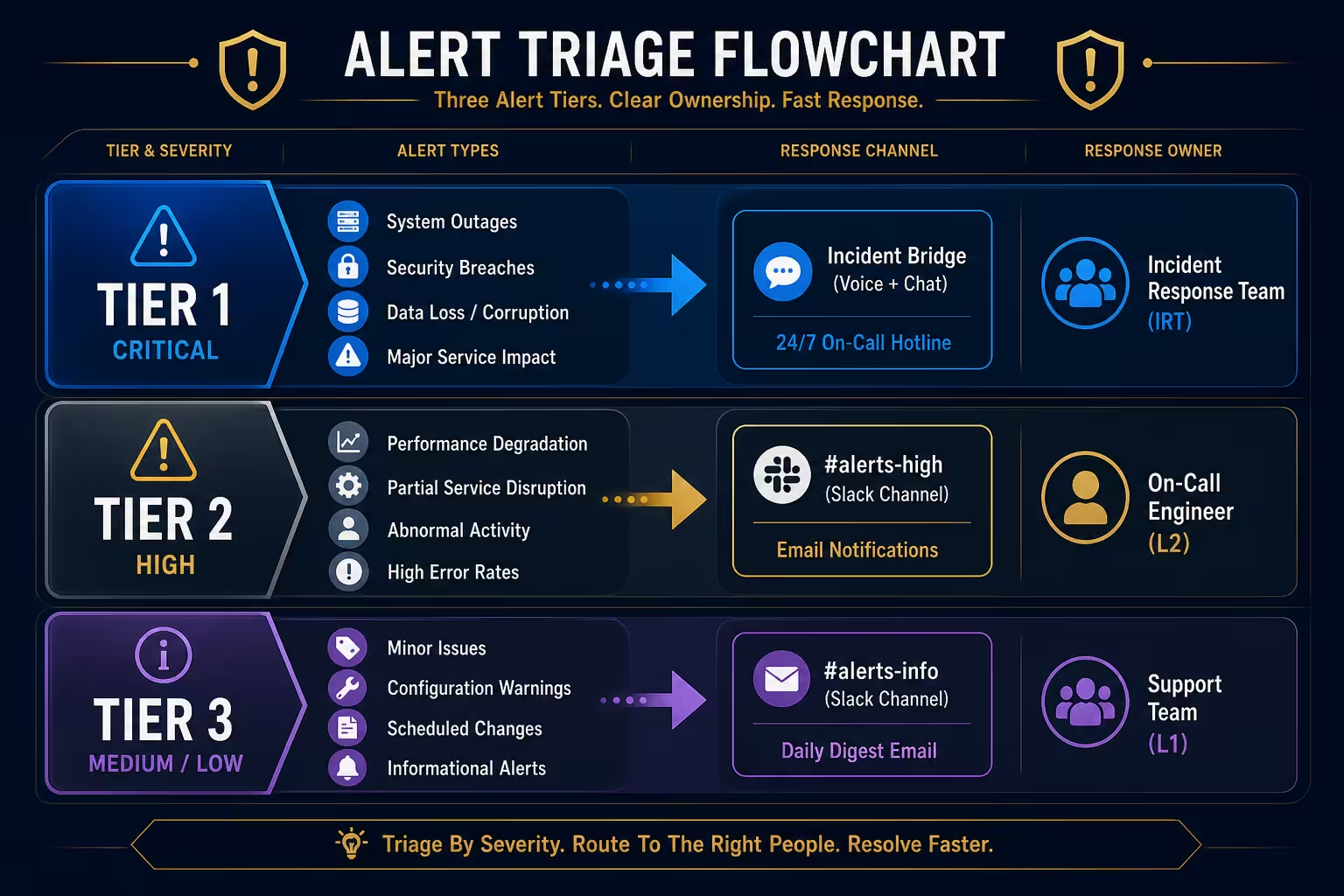
Define Three Alert Tiers
Not every signal deserves the same response. Tier your alerts before you set them up:
- Tier 1 (immediate response): Sentiment crash, ranking loss on top-5 commercial keywords, viral negative mention with 1k+ engagements, branded backlink loss from a top-tier domain. These hit Slack #monitoring-urgent and get a human within 30 minutes.
- Tier 2 (same-day review): Mention spikes, new competitor backlink wins, ranking shifts on tracked secondary keywords, new review on G2 or Capterra. Daily digest, reviewed each morning.
- Tier 3 (weekly review): Share of voice trends, sentiment direction over 7 days, content gap analysis, technical SEO drift. Weekly report, reviewed during marketing standup.
If everything is Tier 1, nothing is. The teams that get monitoring right are ruthless about what hits the urgent channel.
Assign Each Signal to a Person
An alert that nobody owns is noise. For each tier, name the responder. Tier 1 negative mentions go to your comms lead. Tier 1 ranking drops go to your SEO lead. Tier 2 competitor backlink wins go to your link building manager. Write it down. Put it in the runbook. Without ownership, alerts pile up and the team learns to ignore the channel.
Centralize the Reporting
Pull SEO and social data into one place. Looker Studio, Databox, or a clean Google Sheet works fine. The point isn’t a fancy dashboard. It’s that when leadership asks “how’s brand health?” you have a single answer instead of four tabs.
One pattern we’ve seen across B2B clients: the teams that build a single one-page brand health dashboard (mention volume, sentiment, share of voice in search, branded search trend) get budget renewed faster than teams with twenty-tab reporting. Simple wins.
The Mistakes That Turn Monitoring Into Noise
Three patterns kill monitoring programs faster than anything else. We see them in nearly every audit of a client’s existing stack.
Tracking Too Many Keywords
Teams set up 200 keyword alerts because the tool allows it. Now every alert email has 200 entries and nobody reads it. Cap your tracked keywords at 30: ten branded, ten commercial high-intent, ten competitor terms. Add seasonally if a campaign needs it. Cut what doesn’t move.
Treating All Mentions as Equal
A mention on Forbes and a mention on a 12-follower Twitter account both register as one mention in most tools. They’re not the same thing. Filter your reporting by reach, domain authority, or follower count so leadership reviews signal, not volume. The 5 mentions per month on high-authority publications matter far more than the 500 on noise.
Buying the Big Suite Before You Need It
Talkwalker, Brandwatch, and Sprinklr are excellent, for enterprise teams with dedicated analysts. If your monitoring team is one marketing manager with 20% of their week to spend on this, a $40k/year suite will sit unused. Start with a $200/month combined stack (Semrush + Brand24, or Ahrefs + Mention). Scale up only when you’ve outgrown the workflow, not the brand.
How AI Search Changes Monitoring in 2026
One shift worth flagging because it’s now affecting how every tool on this list reports data. AI Overviews appear in roughly 15-18% of US search results in late 2025, and that share is climbing. ChatGPT, Perplexity, and Gemini are increasingly the first answer surface for B2B research queries.
What this means for monitoring: branded search and rankings still matter, but so does whether AI assistants cite your brand. Most SEO tools added “AI Overview tracking” in 2026; the depth varies. Semrush, Ahrefs, and a handful of newer entrants now flag when your domain is cited in AI responses. If your category sees heavy AI search adoption, factor this into your tool selection, it’s an emerging signal, not a mature one yet.
For a deeper look at tracking AI citations specifically, see our guide on how to track brand mentions in AI search results.
See where AI answers put your brand
Twenty minutes with a senior strategist: where the major engines point buyers in your category, who gets named instead of you, and a straight read on what a programme would change.
Book a strategy callPricing Reality: What You’ll Actually Pay
The published “starting at” price is rarely the price you’ll pay after a year. Here’s what real costs look like for different team sizes, based on contracts we’ve seen:
| Team Size | Recommended Stack | Annual Cost (USA) |
|---|---|---|
| Solo founder / SMB | Mention + Google Search Console (free) | $600 to $1,200 |
| 5-10 person marketing team | Semrush + Brand24 | $3,500 to $5,500 |
| Mid-market B2B (20-50 marketers) | Ahrefs + Brand24 or Mention + custom dashboards | $8,000 to $15,000 |
| Enterprise | Talkwalker or Brandwatch + Ahrefs Enterprise | $30,000 to $80,000 |
Two budget rules worth holding to: don’t spend more than 4-6% of your marketing budget on monitoring tools, and don’t sign multi-year contracts on tools you’ve used for less than 90 days. Vendor lock-in costs more than you’ll save on the discount.
For most B2B teams in 2026, a unified monitoring stack costs between $3,500 and $15,000 per year and combines an SEO platform like Semrush or Ahrefs with a social listening tool like Brand24 or Mention. Enterprise suites like Talkwalker and Brandwatch start at $30,000 and up.
Frequently Asked Questions
What’s the difference between SEO monitoring software and social monitoring software?
SEO monitoring tracks how your website performs in search, rankings, backlinks, technical health, and SERP feature presence. Social monitoring tracks how your brand is talked about online, mentions, sentiment, reach, and conversations across social media, news, blogs, and forums. The strongest 2026 stacks combine both into one alert workflow because search and social signals increasingly drive each other.
Can one tool do both SEO and social monitoring well?
A handful try, but most do one well and the other adequately. Semrush has solid SEO with bolted-on social monitoring. Talkwalker covers both at enterprise scale. For most mid-market teams, two specialized tools, one SEO-first, one social-first, outperform a single all-in-one platform on depth and cost.
How much should a small business spend on monitoring software?
For a solo founder or SMB, $50 to $100 per month covers the basics: a tool like Mention plus free options like Google Search Console and Google Alerts. Spend more only when you have a person dedicated to acting on the data. Tools without operators are sunk costs.
Are free SEO and social monitoring tools enough?
For very early-stage brands, yes. Google Search Console handles SEO basics. Google Alerts catches major web mentions. Both are free and useful. The limits show up around 50-100 brand mentions per month, at that volume, free tools miss too much, alerts arrive late, and reporting falls apart. Upgrade when you’re consistently outgrowing what free tools surface.
How accurate is sentiment analysis in monitoring tools?
Vendors claim 80-85% accuracy. Real-world B2B accuracy runs closer to 65-75% because sarcasm, technical jargon, and industry slang trip up the models. Use sentiment scores for trend direction (is it rising, falling, stable?) rather than as a final verdict on individual mentions.
How often should I review monitoring data?
Tier 1 alerts (negative spikes, ranking crashes) need response within 30 minutes. Tier 2 alerts (mention growth, new backlinks) review daily. Tier 3 trends (share of voice, sentiment direction) review weekly. Monthly is for executive reporting, not for catching issues, by month-end, the issue has either resolved itself or done damage.
Do I still need monitoring software if I use Google Search Console and Google Alerts?
For brands under 200 web mentions per month and under 50 tracked keywords, the free combination handles most of what you need. Beyond that, paid tools earn their cost through faster alerts, deeper coverage, sentiment analysis, competitor tracking, and reporting that doesn’t take half a day to build manually.
How does AI search affect SEO and social monitoring in 2026?
AI Overviews appear in roughly 15-18% of US search results, and AI assistants like ChatGPT and Perplexity are now common research surfaces. Most SEO tools added AI Overview tracking in 2026, but depth varies. If your buyers research through AI assistants, factor AI citation tracking into your monitoring stack alongside traditional rankings and mentions.
Build the Stack You’ll Actually Use
The best monitoring stack isn’t the one with the most features, it’s the one your team opens every morning, the one that surfaces the right signal at the right tier, the one that turns into action instead of another report nobody reads. Most teams overbuy on capability and underinvest in workflow. Flip that. Define your three alert tiers, name the owners, and pick the smallest stack that covers what you need.
Want to see how unified monitoring fits with broader brand intelligence? Read our deeper guide on the best social media monitoring tools or how to choose an SEO competitor analysis tool.