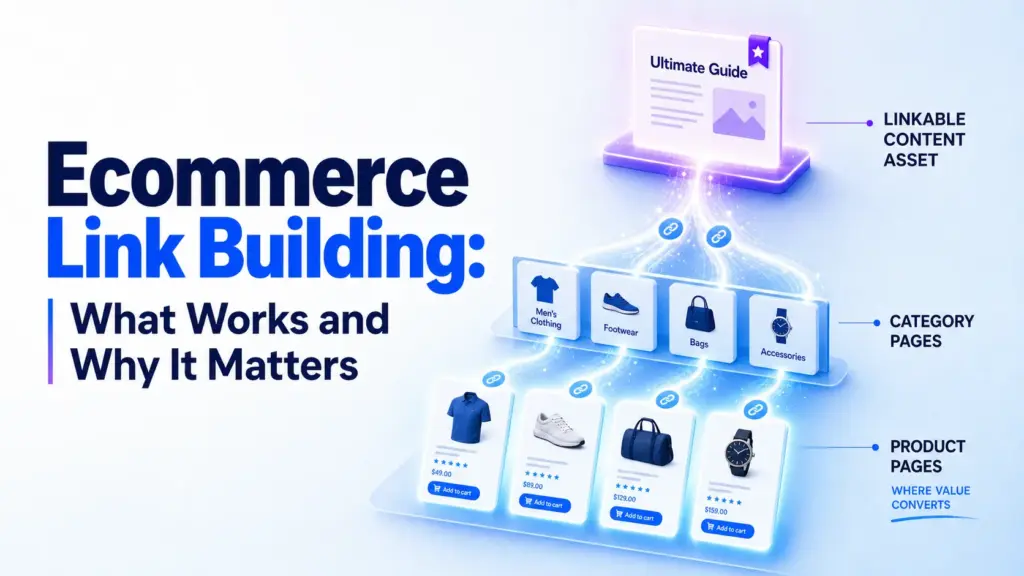

Ecommerce link building is less about getting more links and more about earning authority for pages that rarely attract links on their own. It means earning backlinks to an online store, its content, and its commercial pages so category and product pages can rank in high-intent search. Generic link-building advice misses what makes stores hard: nobody links to a product page voluntarily. This guide explains what ecommerce link building is, why it matters for stores specifically, and the tactics that actually move commercial rankings.
What Ecommerce Link Building Is
Ecommerce link building is the practice of earning backlinks to an online store and routing that authority toward the pages that drive revenue. It covers links to content assets, the homepage, category pages, and product pages, with the goal of lifting commercial rankings rather than just collecting referring domains.
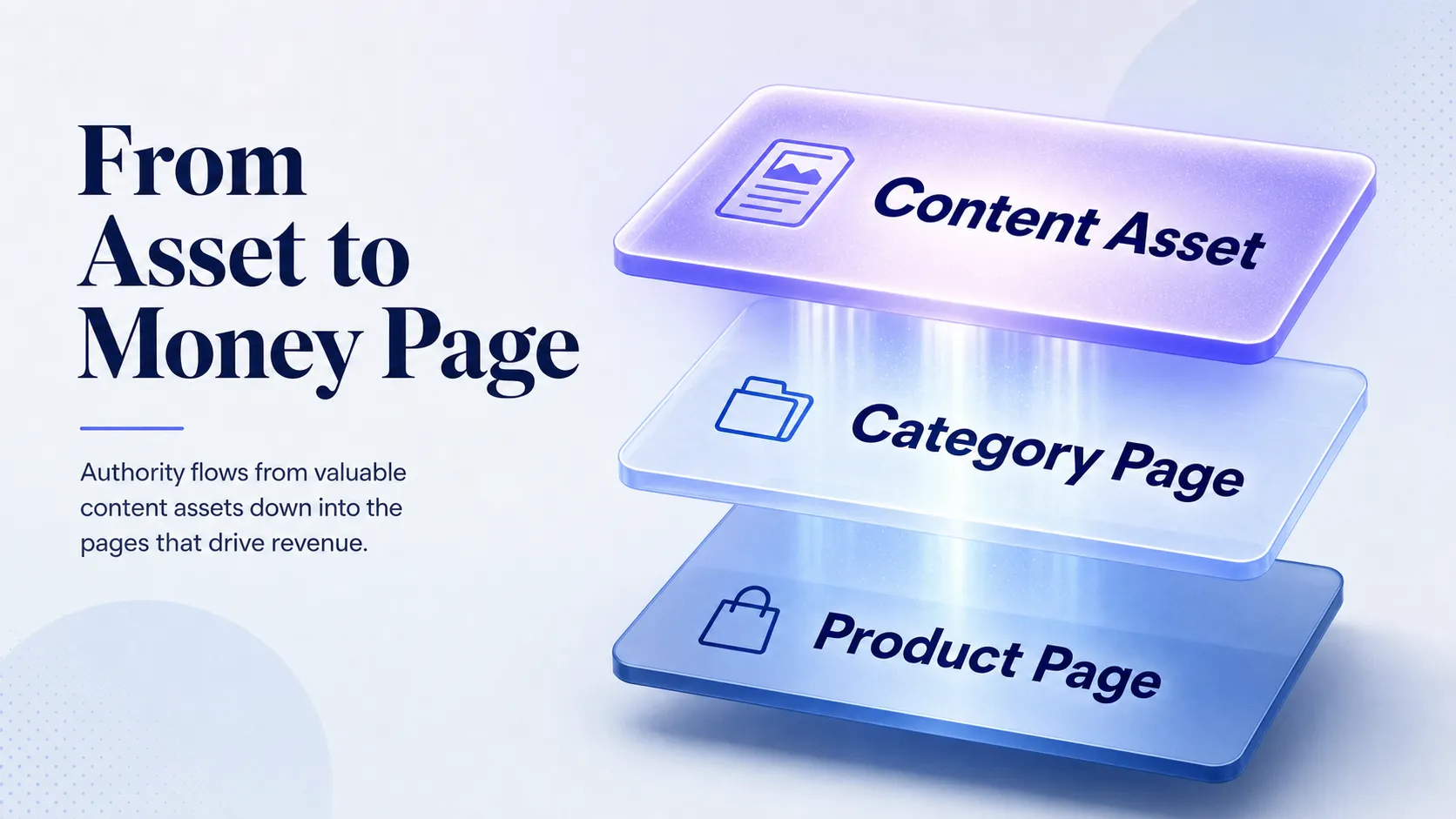
The reason it gets its own name is structural. A store’s most valuable pages are its category and product pages, the ones that capture buyers ready to spend. Those pages are also the weakest natural link magnets, because writers and editors link to guides and research, not to a product listing.
This is the core tension you work around. Product and category pages drive revenue but earn almost no links on their own merit, so you build authority indirectly: create something worth linking to, then pass that equity inward through deliberate internal linking.
One distinction matters before going further. This article is about earning links editorially, not buying them. Paid placements and link schemes carry risk that compounds against you, and they rarely produce the durable authority a store needs. The tactics here are sustainable, the kind that hold up as your catalog changes. If you want the broader mechanics first, our guide on how to do link building covers the fundamentals that apply to any site.
Why Ecommerce Link Building Matters
Backlinks matter for stores because they decide whether your commercial pages can compete at all. A category page targeting a broad buying term faces marketplaces, established retailers, and editorial roundups, and external authority is often the only thing that closes the gap.
The value splits cleanly into search outcomes and business outcomes, and a strong campaign delivers both at once.
| SEO Outcome | Business Outcome |
|---|---|
| Higher rankings for commercial keywords | More qualified buyers reaching money pages |
| Faster crawl and discovery of new pages | New products indexed and surfacing sooner |
| Stronger domain and page-level authority | Brand trust that converts cold traffic |
| Topical relevance signals to search engines | Referral traffic from relevant publications |
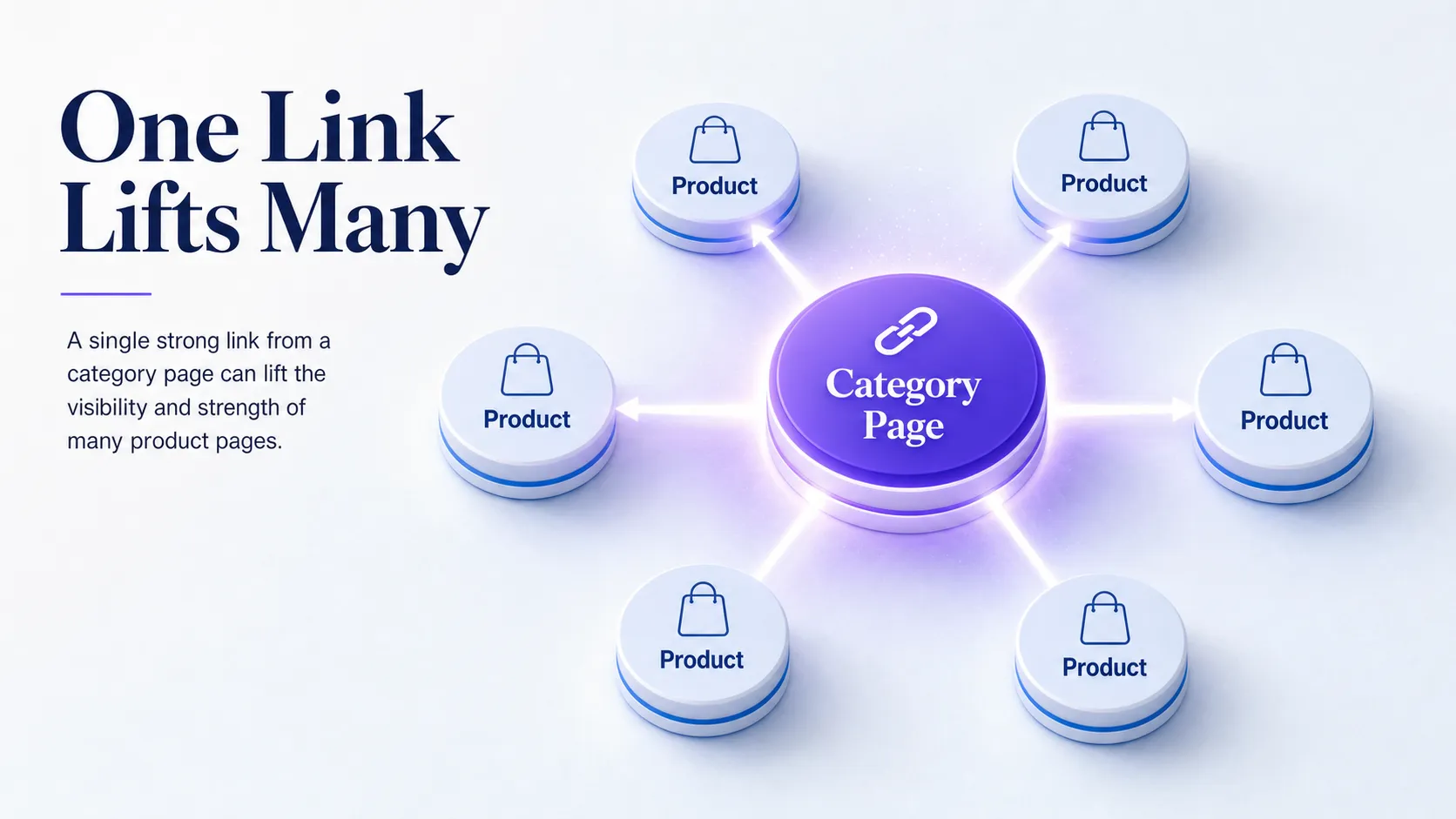
Here is the practical insight most generic advice skips: one relevant link to a strong category page can support multiple product URLs through internal linking. You are not chasing a link for every page. You are building authority into a few high-value hubs and letting your site architecture distribute it.
Stores also compete on a wider field than most sites. You fight other retailers for rankings, but you also fight Amazon, Walmart, and editorial “best of” content that often outranks the brands it covers. That competitive pressure is exactly why earned authority pays off, and why understanding brand mentions versus backlinks helps you weigh where to spend effort.
How Ecommerce Link Building Works
Backlinks work as signals that pass relevance and authority from one page to another. When a relevant, trusted site links to your store, it lends a portion of its standing to the page it points at, and search engines read that as a vote toward ranking.
For a store, the mechanism only pays off when authority reaches the right pages. That happens in three steps.
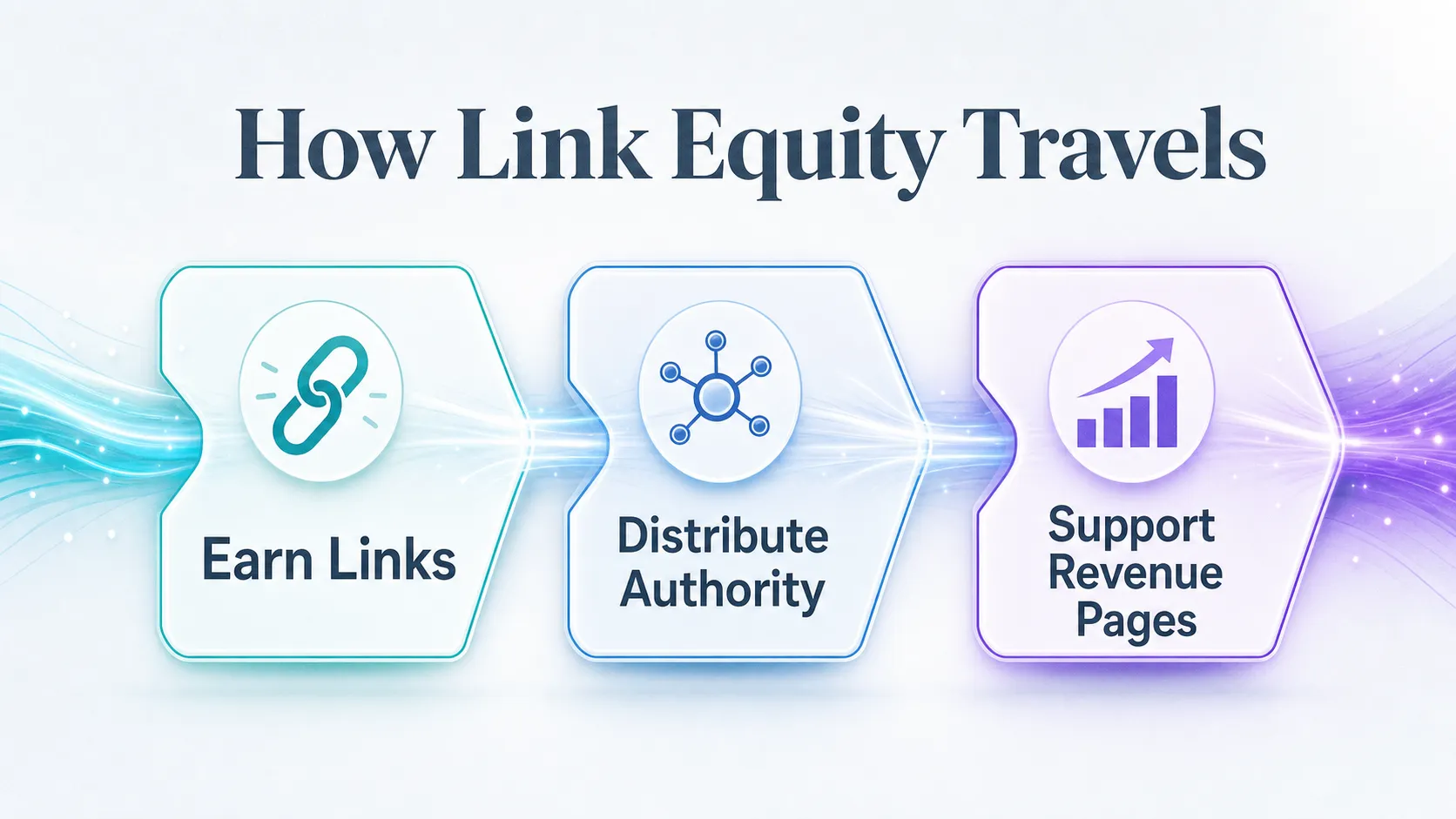
Step 1: Earn Links to Pages People Will Actually Link To
You start where links come naturally: guides, research, comparison pages, and useful tools. These earn citations because they help the reader, and they accept editorial links without any awkward ask. This is the supply side of the whole system.
Step 2: Distribute Authority Through Internal Linking
Link equity should flow from those assets to your category and product pages through intentional internal links. A buyer’s guide that links down to the relevant category page passes part of its earned authority exactly where you need it. Without this step, the links you earned sit isolated and do nothing for revenue.
Step 3: Support the Pages That Drive Revenue
The best results come from combining content, outreach, and site architecture, not from any single tactic. Anchor text and topical relevance matter as supporting factors, but they are secondary to the bigger truth: if your internal linking is weak, even great placements leak their value before it reaches the pages you care about. Placement quality matters less than page-level alignment when the architecture is broken.
Key Tactics That Actually Work
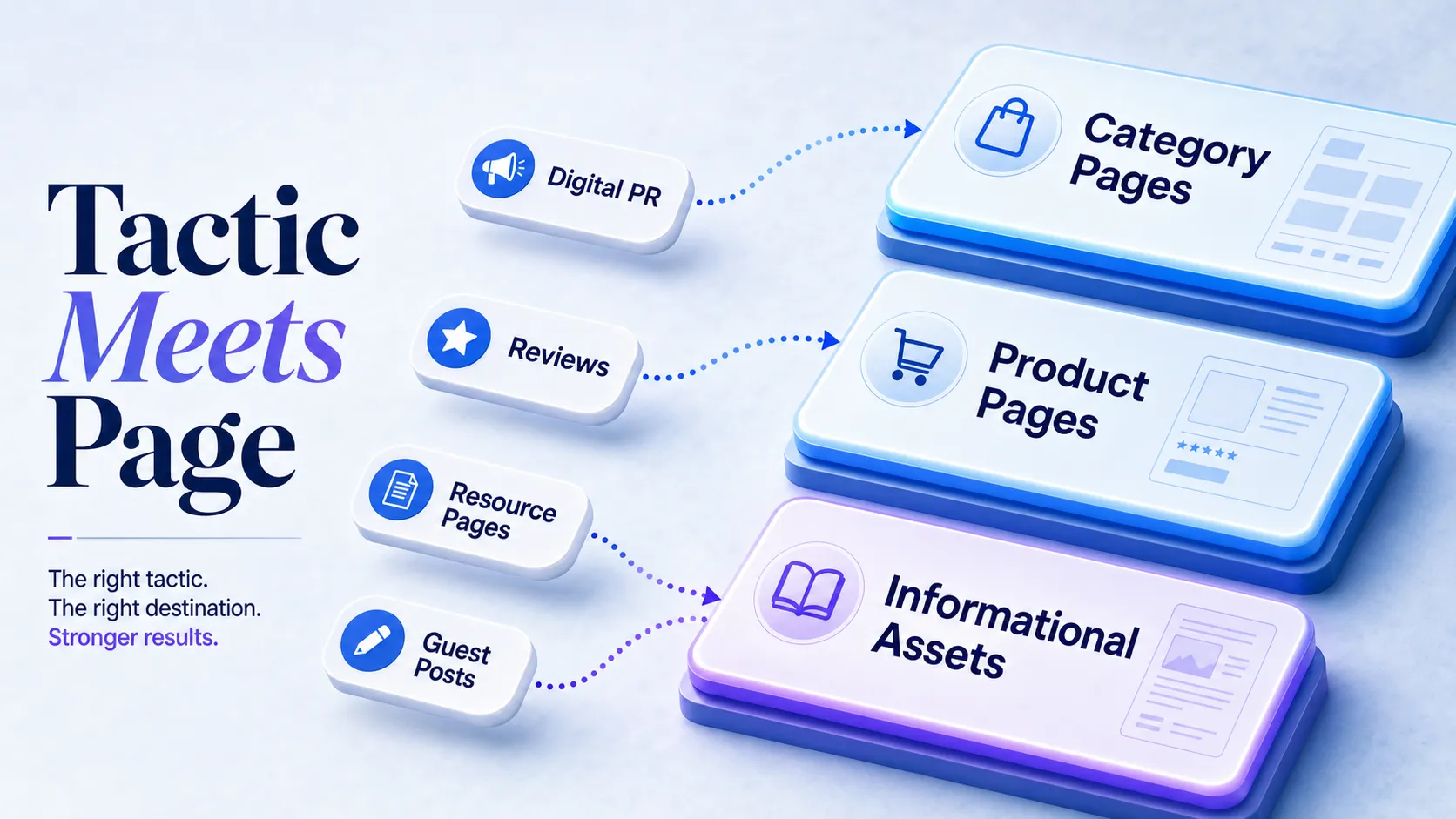
The tactics that earn durable links for stores share one trait: they give a publisher a real reason to link. Here is how the main approaches map to the pages they support best.
| Tactic | Best Page Type | Why It Works |
|---|---|---|
| Digital PR | Homepage, category, asset | Newsworthy angles earn high-authority editorial links |
| Linkable assets | Informational pages | Guides and research attract links you then route inward |
| Resource page outreach | Category, guides | Curated lists link to genuinely useful pages |
| Unlinked mention reclamation | Homepage, product | Existing mentions convert with a simple ask |
| Supplier and partner links | Category, homepage | Stockist and partner pages link naturally |
| Guest posts | Asset, category | Topical relevance earns contextual placements |
| Broken-link replacement | Guides, category | You replace a dead resource with your live one |
| Product reviews and roundups | Product | Tested products earn editorially honest placements |
Digital PR
Digital PR earns links by giving journalists something worth covering: a newsworthy product launch, a data story, a partnership, a seasonal campaign, or a charitable angle. It produces the highest-authority links a store can earn, and those links lift the whole domain. The catch is that it needs a genuine story, not a thin announcement dressed up as news.
Linkable Assets
Linkable assets are the evergreen resources that earn links passively: buyer’s guides, original research, comparison pages, and calculators. They do the quiet work of attracting citations over months, and they become the internal-linking source you route authority from. Think of them as the engine room, not the showroom.
Resource Page Outreach
Resource pages are curated lists of “best resources” maintained by associations, suppliers, and niche publishers. When your guide or category page genuinely fits the list, a short pitch lands the link. Our walkthrough on resource page link building covers how to find and qualify these prospects without wasting outreach.
Unlinked Brand Mention Reclamation
Unlinked brand mentions are the lowest-friction win for any established store. A publication already named your brand, so you simply ask them to make it a link. The work is finding the mentions, and our guide on turning unlinked mentions into links shows the reclamation workflow end to end.
Supplier, Partner, and Manufacturer Links
Supplier and partner links sit on stockist directories, brand-partner pages, and manufacturer “where to buy” lists. They are relevant by default and usually free, because the relationship already exists. Most stores leave these on the table simply because nobody asked.
Guest Posts and Editorial Contributions
Guest posts earn contextual links when topical relevance is strong, and waste effort when it is not. Use them sparingly, target publications your buyers actually read, and write something the editor would publish on merit. A byline on an unrelated site does little for a store’s commercial authority.
Broken-Link Replacement
Broken-link replacement finds dead resources that publishers still link to, then offers your live page as the fix. Discontinued product guides and outdated references are common targets. It works because you are solving the publisher’s problem, not asking for a favor.
Product Reviews and Roundups
Review and roundup placements earn links when the product is genuinely tested and the placement is editorially earned. These are among the few tactics that can point directly at a product page. Pay-to-play roundups are a different thing entirely, and they carry the risk this article warns against.
The highest-performing campaigns rarely run every tactic. They pair one strong linkable asset with one or two outreach channels, then go deep rather than wide. If you want a broader menu first, our roundup of tested link building methods compares approaches across use cases.
What to Build Links To on an Ecommerce Site
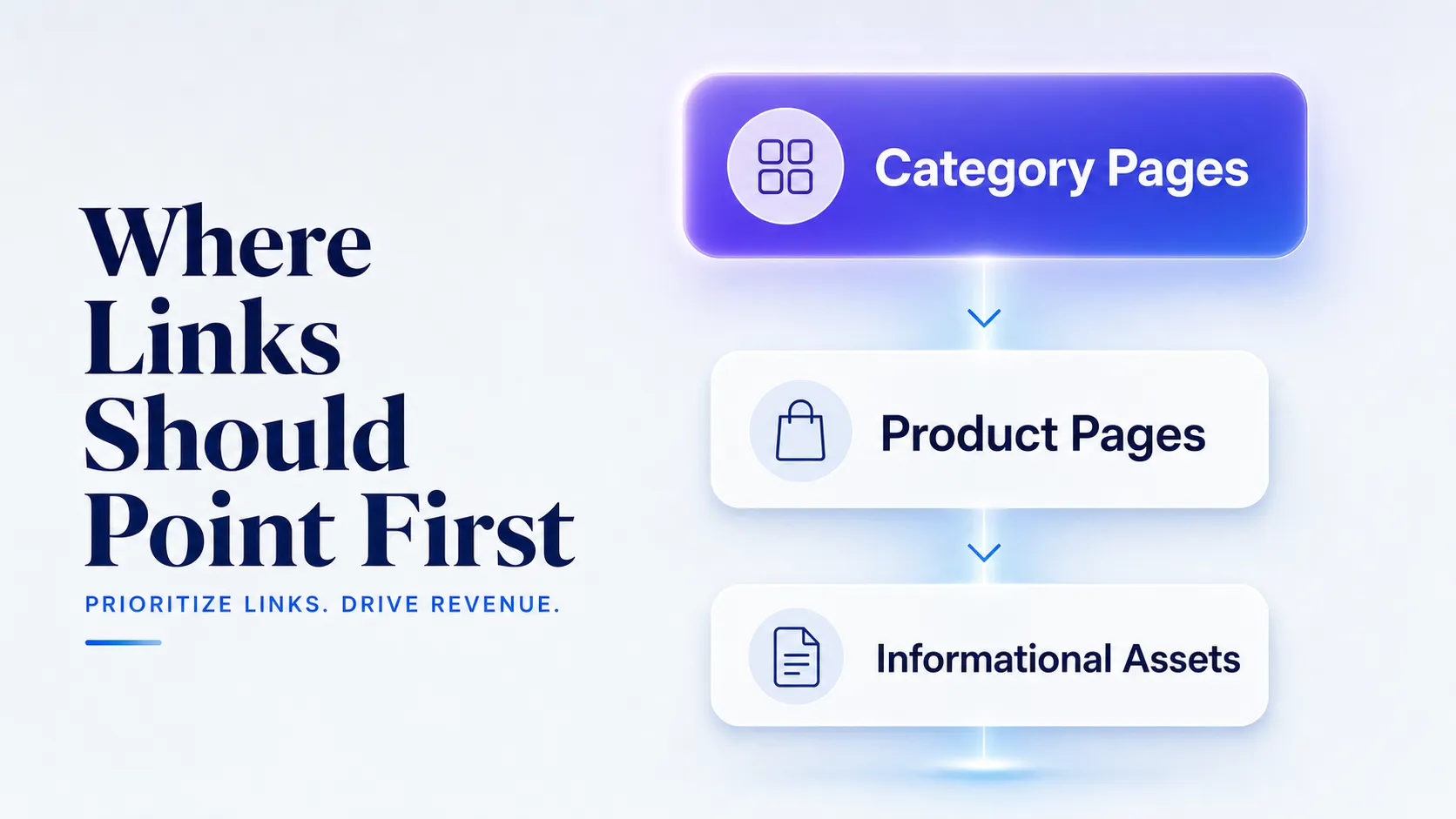
The ideal target hierarchy starts with category pages when the goal is revenue, supported by key product pages, then informational assets that funnel authority downward. Pointing links at the right page is half the battle, and most stores get the order wrong.
Category Pages First
Category pages deserve the largest share of link effort because they rank for broad commercial terms and can distribute equity to every product beneath them. In client patterns, this is where the strongest commercial lift shows up, since one ranking category page can pull traffic to dozens of SKUs at once.
Key Product Pages Next
Product pages come second, and selectively. You build links to standout products, new launches, or hero items, not your entire catalog. Spreading thin outreach across hundreds of products wastes effort that a few well-chosen pages would reward.
Informational Assets as the Funnel
Assets like guides and research sit beneath the revenue pages in priority but above them in link volume. They attract the bulk of your earned links, then funnel that authority upward and inward through internal links. They are link magnets first and ranking pages second.
When the Homepage, Promos, and Guides Fit
The homepage is a fine target for brand-led digital PR and unlinked mentions, but it should not be your main focus, because homepage authority dilutes across the whole site rather than concentrating on a buying term. Promotional and seasonal pages make sense only when they are evergreen or permanently reusable, so the link equity does not vanish when the campaign ends. Build links to a discount hub that lives year-round, not a URL you delete in January.
See where AI answers put your brand
Twenty minutes with a senior strategist: where the major engines point buyers in your category, who gets named instead of you, and a straight read on what a programme would change.
Book a strategy callCommon Mistakes and Misconceptions
Most wasted link-building budget on stores traces back to a handful of avoidable errors. Here is what to do and what to skip.
| Do | Don’t |
|---|---|
| Earn editorial links from relevant sites | Buy low-quality links as a shortcut |
| Use PR for genuine news | Rely on press releases as your main strategy |
| Build links to pages that need rankings | Chase homepage-only links |
| Judge links on relevance and context | Trust authority metrics alone |
| Target products selectively with PR or reviews | Expect product-page links to come easily at scale |
| Prioritize topical fit over volume | Assume more links beats better links |
| Fix internal linking and canonicals first | Ignore the architecture that passes link value |
Two misconceptions cause the most damage. The first is that quantity beats fit. A handful of relevant, editorial links outperforms a pile of placements from weak or unrelated sites, every time. The second is that backlinks work in isolation. They do not. Faceted navigation, canonical tags, and internal linking decide how much of an earned link’s value actually reaches your money pages, and a broken architecture quietly drains it.
Thin relevance and obvious link schemes produce cost without durable ranking gains. The links look like activity, but they do not compound, and some of them invite risk you do not want on a commercial site.
Building Authority That Compounds
Ecommerce link building works when it earns relevant authority and routes it to the pages that sell, not when it chases a higher link count. Category pages are usually your highest-value targets, supported by select products and the linkable assets that funnel equity inward. The stores that build authority intentionally see compounding gains, while the ones chasing isolated links plateau. Start with one strong linkable asset, then build authority into the category pages that drive your revenue. To see how earned authority increasingly shapes AI visibility for ecommerce stores, check where your brand already stands.
Frequently Asked Questions
What is ecommerce link building?
Ecommerce link building is the process of earning backlinks to an online store and directing that authority toward its commercial pages. It targets the homepage, category pages, product pages, and content assets so a store can rank for high-intent buying terms. The defining challenge is that the most valuable pages, category and product pages, rarely attract links naturally.
How do I build links to product pages?
You build links to product pages mostly through earned editorial placements and internal linking, not direct outreach at scale. Send a tested product to reviewers, target genuine roundups, and reclaim unlinked mentions that already name the product. For everything else, build authority into the parent category page and let internal links pass equity down to the products beneath it.
Which pages should get backlinks first on an ecommerce site?
Category pages should get backlinks first when the goal is revenue, because they rank for broad commercial terms and distribute equity to many products at once. Key product pages come next, targeted selectively. Informational assets attract the most links but sit beneath revenue pages in priority, since their job is to funnel authority upward.
Are press releases good for ecommerce link building?
Press releases are weak as a primary link strategy and useful only for genuine news. A store that pumps out routine releases earns syndicated, low-value links that do little for commercial rankings. Save the format for real launches and announcements worth covering, and lean on digital PR with a true story when you want authority links.
How long does ecommerce link building take to work?
Ecommerce link building usually shows early ranking movement within a few months and stronger commercial impact over six to twelve months. The honest timeline depends on your starting authority, niche competitiveness, and how well your internal linking distributes equity. A store with clean architecture sees results faster, because earned links reach the pages that matter instead of leaking value along the way.
The stores that win at this treat it as compounding work, not a one-off push. Earn something genuinely linkable, route its authority into the category pages that drive sales, and keep your architecture clean enough to carry that value where it counts. Run outreach that earns replies and the authority builds on itself month over month.