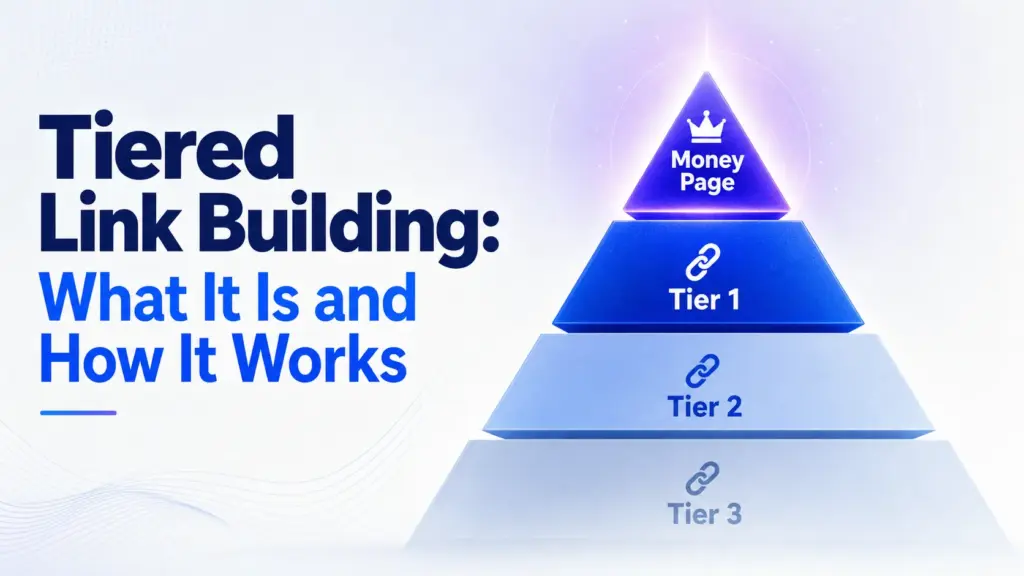

Tiered link building is just backlinks pointing to other backlinks, but the SEO tradeoffs are more complicated than the pyramid diagram suggests. It is a layered backlink structure where Tier 1 links point straight at your site, and lower tiers exist to strengthen those Tier 1 links instead of pointing at you directly. The idea is to move authority upward through the layers so your strongest links look more powerful.
It can still shift authority in narrow situations, but it carries real footprint risk and is not a default best-practice strategy. This guide walks through what it is, how each tier works, and where it breaks down.
The Short Version:
- Tiered link building stacks supporting links beneath your direct backlinks rather than building only direct-to-site links.
- Tier 1 points at your page, Tier 2 points at Tier 1, Tier 3 points at Tier 2.
- The tactic only makes sense once you already hold at least one valuable Tier 1 link worth amplifying.
- It sits in gray-hat territory and can trigger devaluation or footprint detection.
- Results are hard to attribute because rankings move for many reasons at once.
What Tiered Link Building Is
Tiered link building is a layered backlink structure where Tier 1 links point to your target page, and the lower tiers point at those Tier 1 links to reinforce them. So instead of every link aiming straight at your site, you build a small pyramid: the top sits on your page, and each layer below props up the one above it.
Standard direct link building has one job. Earn a backlink that points at your site. Tiered link building adds a second job on top of that: build more links that point at the pages already linking to you, with the goal of strengthening those linking pages so they pass more value through.
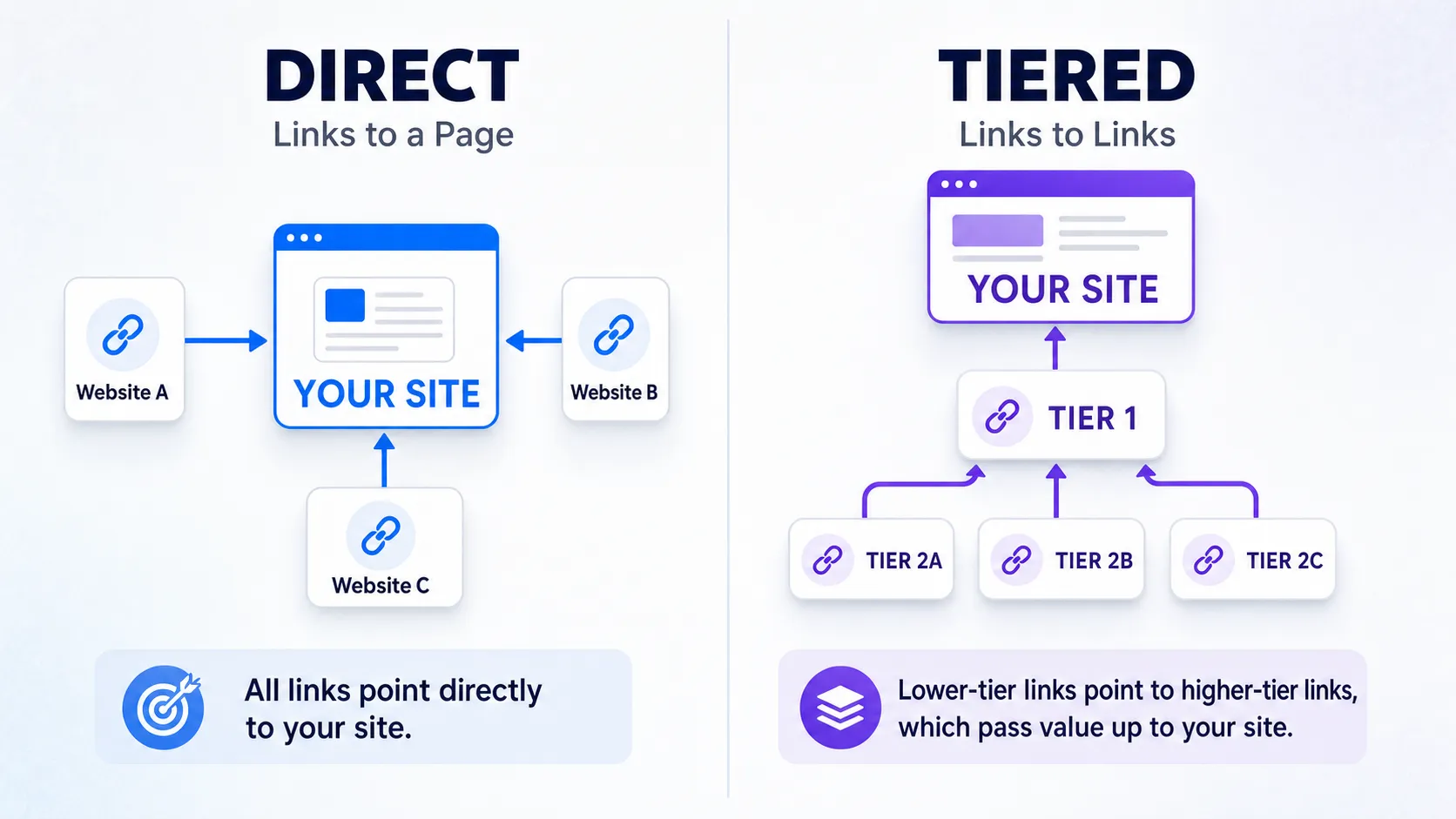
The “money page” is the page you actually want to rank, usually a product, service, or commercial landing page. That is the page Tier 1 links should point to. Everything below Tier 1 exists to make those direct links stronger, not to send traffic or rankings to your site on its own.
One honest caveat before you go further. The tactic only earns its keep when you already hold at least one Tier 1 link worth amplifying. If you have no strong direct links yet, there is nothing to support, and the whole pyramid sits on sand. Tiered link building is amplification, not acquisition.
Why SEOs Still Argue About This Tactic
SEOs keep debating tiered link building because the concept is simple to grasp but the payoff is hard to defend. The appeal is real: instead of spending every dollar on expensive direct placements, you spend some of it strengthening the links you already earned. That stretches a budget and can make a few strong backlinks do more work.
There is a risk-distribution argument too. By pushing your lower-quality, cheaper links one step away from your site, you keep the messy footprint off your own backlink profile. The reasoning goes that if something looks unnatural, it sits on a Tier 1 page rather than pointing straight at your money page.
That same logic is exactly why the tactic stays controversial. Moving a footprint one step away does not make it invisible. Search engines evaluate patterns across the whole graph, not just the links touching your domain. The qualities that make tiered link building attractive, cheap volume and indirect exposure, are the same qualities that make it look like a scheme when done at scale.
Searchers care whether it still works because the line between gray-hat amplification and a penalty-worthy link scheme keeps shifting. If you are weighing this against cleaner options, it helps to first understand how link building works in 2026 before deciding whether a pyramid belongs in your plan. The real tradeoff is cheaper amplification against authority you cannot cleanly measure.
How Tiered Link Building Works
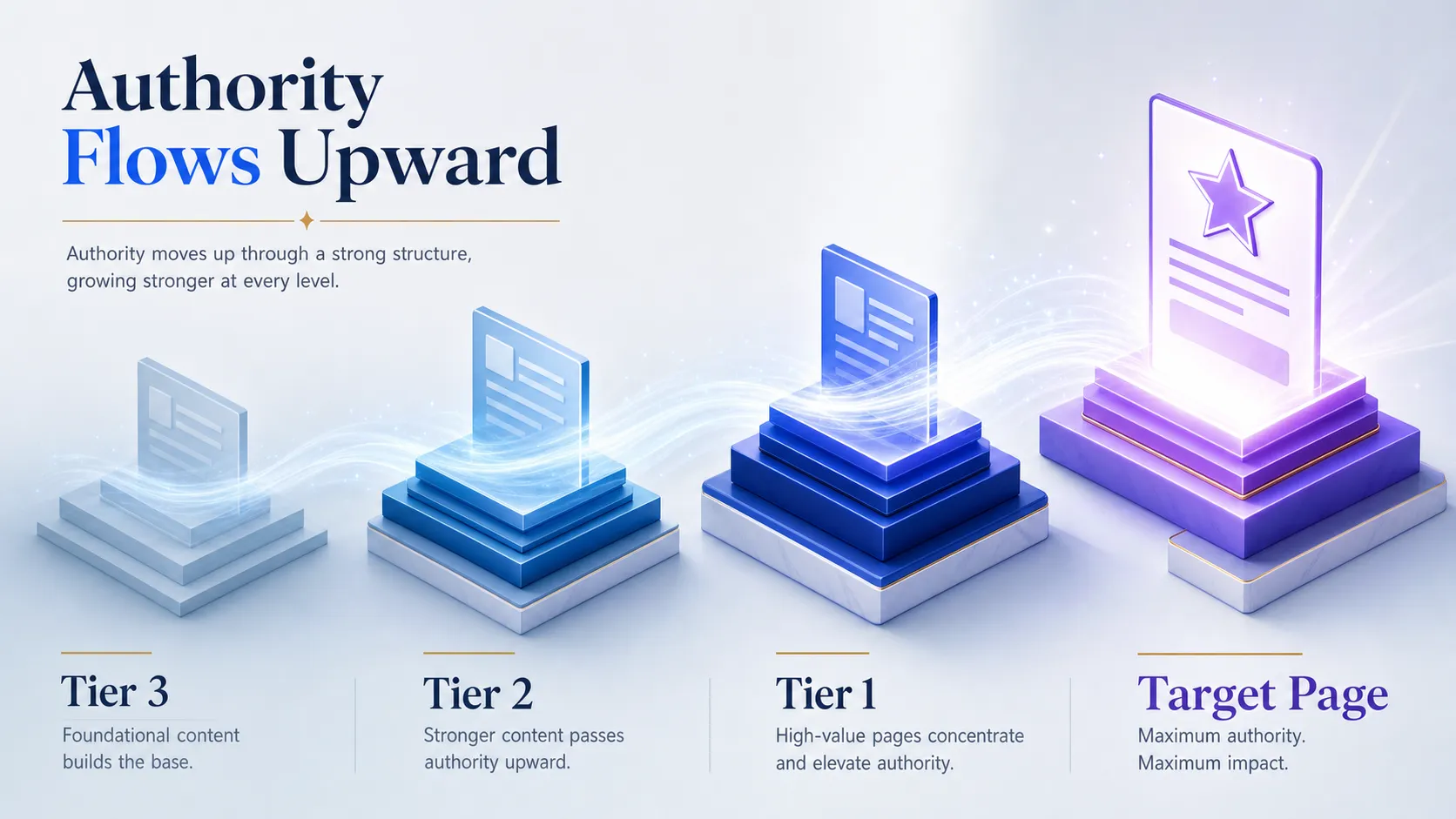
Tiered link building works by stacking three layers of links so authority flows upward toward your target page. You build the direct link first, then support it, then optionally support the support. The order matters more than the volume.
Step 1: Secure Tier 1 First
Tier 1 links are the direct backlinks pointing at your money page. These are the links that carry the most weight and the only layer that should touch your site. Secure these before anything else, because the rest of the structure exists only to make them stronger.
Step 2: Support Tier 1 With Tier 2
Tier 2 links point at your Tier 1 pages or placements, not at your site. The goal is to strengthen the pages already linking to you, on the theory that a stronger linking page passes more value through to your domain. This is where most of the actual tiered work happens.
Step 3: Add Tier 3 Only With a Reason
Tier 3 links point at your Tier 2 assets, usually for crawl support or volume rather than quality. Add this layer only when there is a real reason, such as helping Tier 2 pages get indexed. Building Tier 3 by default is where campaigns start looking spammy.
The practical sequence runs in that order: acquire or secure Tier 1, reinforce it with Tier 2, and add Tier 3 only if a specific need calls for it. The whole point is to make your strongest links look more powerful, never to replace solid Tier 1 acquisition with cheap volume below it.
Tier 1, Tier 2, and Tier 3 Links
The three tiers are not interchangeable. Each layer has a different job, a different expected quality level, and a different set of common link types. Quality is meant to drop as you go deeper, but never to the point where the footprint becomes obvious.
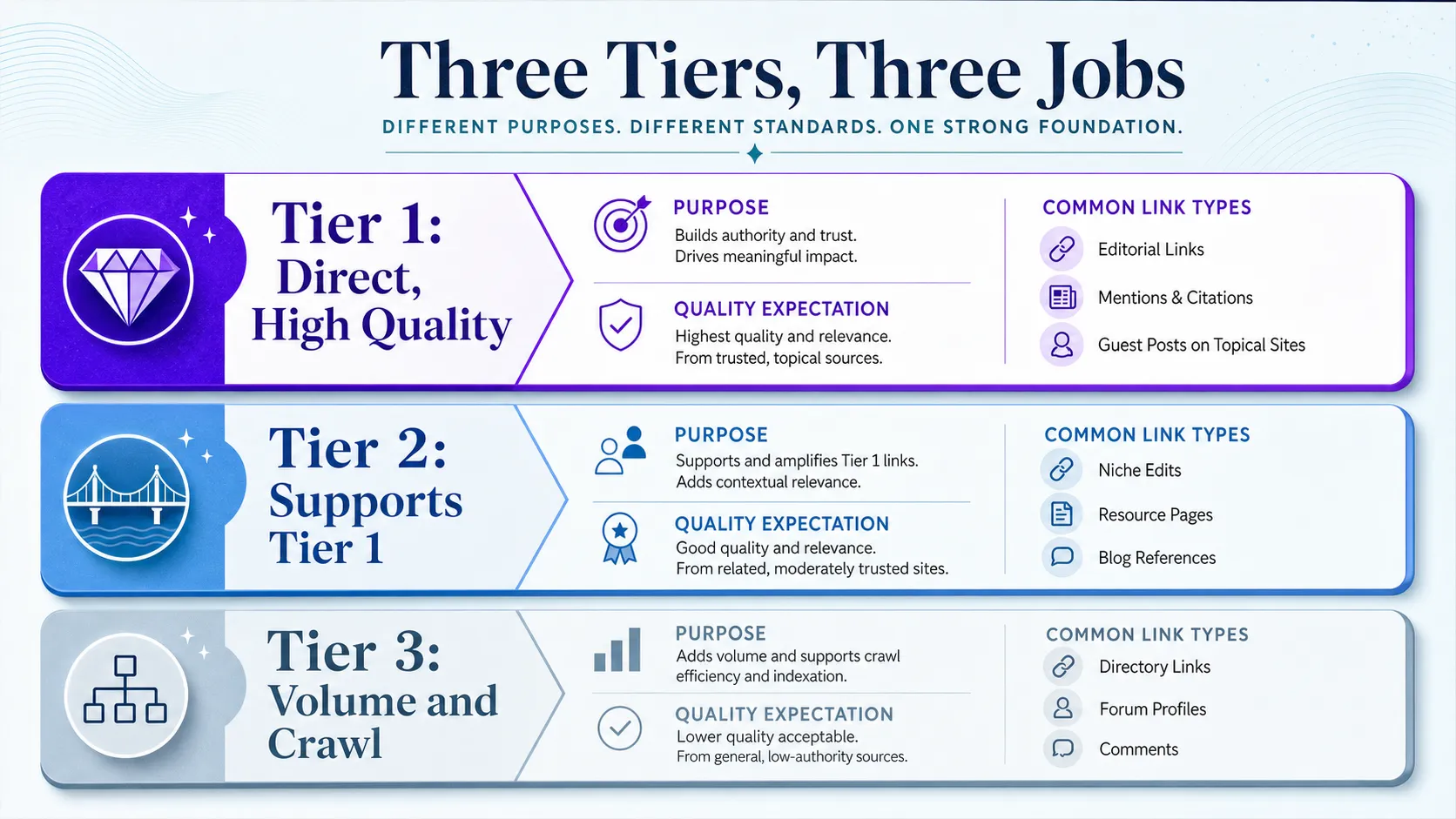
Tier 1 is the highest-quality layer and the only one that should point directly at your target page. These are the links you would be comfortable showing a client: editorial placements, contextual guest posts on relevant sites, and genuine niche mentions. If a link is good enough to earn through real outreach, it belongs in Tier 1.
Tier 2 supports Tier 1. Common examples include supporting guest posts, social posts, Web 2.0 pages, business citations, and other contextual links aimed at the page that already links to you. The quality bar is lower than Tier 1 but should still clear the spam threshold.
Tier 3 is a deeper support layer that usually pushes signals toward Tier 2 rather than your site. This is the lowest-quality layer by design, and it is where most penalty risk concentrates if you let quality collapse.
| Tier | Purpose | Quality Level | Common Link Types |
|---|---|---|---|
| Tier 1 | Point directly at your money page | High, client-presentable | Editorial placements, contextual guest posts, niche mentions |
| Tier 2 | Strengthen Tier 1 pages | Medium | Supporting guest posts, Web 2.0 pages, citations, social posts |
| Tier 3 | Push signals and crawl support to Tier 2 | Low, volume-focused | Directories, bookmarks, comment links |
Link attributes shape how this profile reads. The rel values nofollow, sponsored, and UGC tell engines how a link should be treated, and a profile stacked with the wrong mix at the wrong layer reads as engineered. A useful test for the quality gradient: Tier 1 should be a link you would happily show a client, while Tier 3 usually is not.
Does Tiered Link Building Still Work in 2026
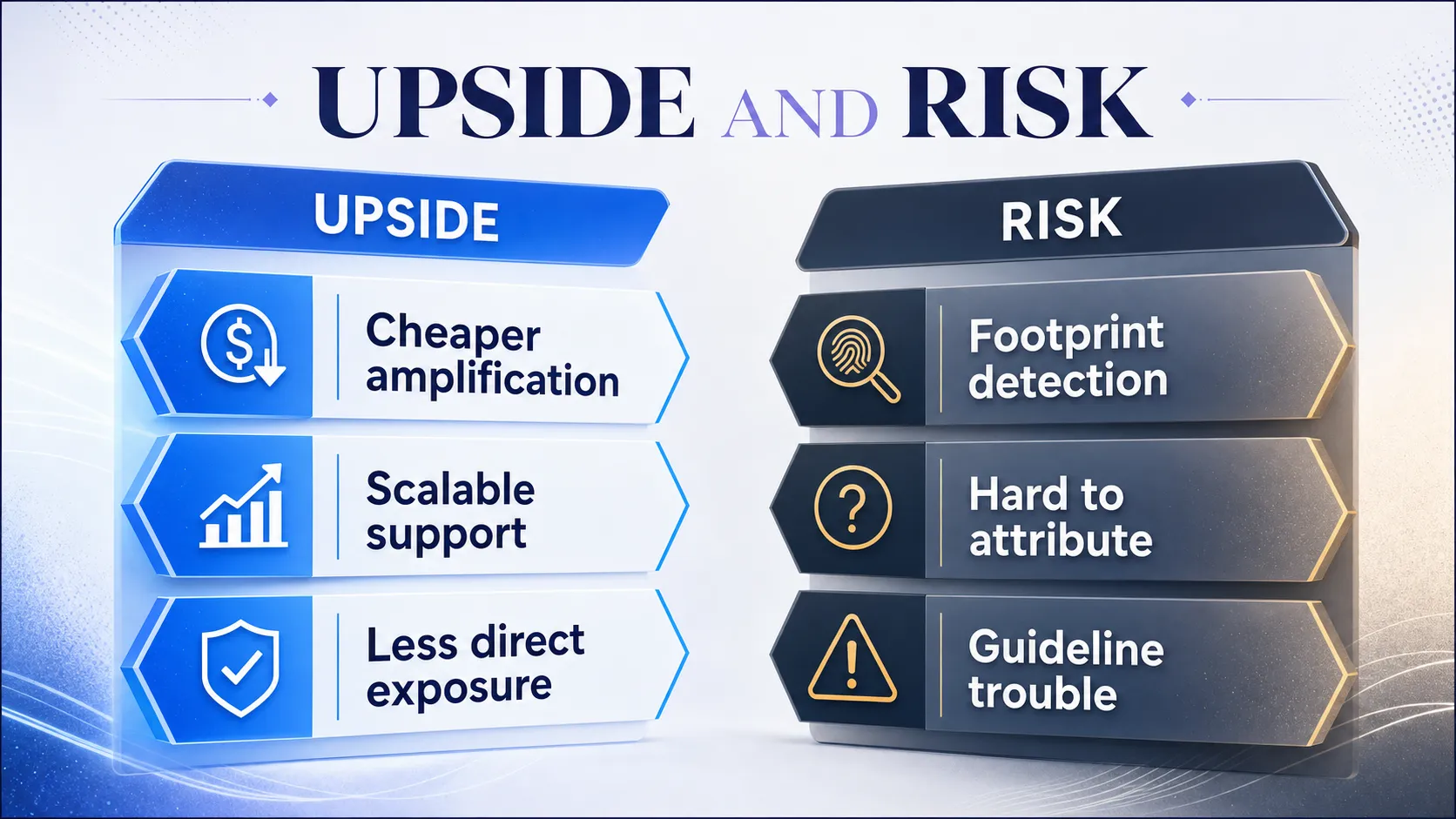
Tiered link building can still move authority in narrow situations, but it is not a safe default and should not be framed as modern white-hat SEO. The honest answer sits between “dead” and “proven,” which is exactly why the SERP is full of “does it still work” pieces.
| Benefits | Risks |
|---|---|
| Indirect authority gain for existing strong links | Footprint detection across the link graph |
| Scalable support using cheaper lower-tier links | Devaluation, where links are simply ignored |
| Cost efficiency that stretches a link budget | Possible link scheme guideline violations |
| Lower-quality footprint sits away from your site | Gains are hard to isolate and attribute |
The risks deserve more weight than most guides give them. The most common failure is not a dramatic penalty. It is quiet devaluation, where the supporting links get ignored and the effort produces nothing. You spent the budget, the footprint exists, and the ranking did not move.
Attribution is the deeper problem. Rankings shift because of content quality, internal links, intent match, and competitor moves, all at the same time. So when someone shows you a tiered link building “success story,” ask what else changed in that window. Most wins are confounded by other work, which means clean cause-and-effect proof is rare. If you want a cleaner read on what moves rankings, study link building methods tested for citation lift against the pyramid approach.
Common Mistakes and Misconceptions
Most tiered link building failures come from treating layers as power and quantity as safety. Both assumptions are wrong, and they show up in nearly every campaign that goes sideways.
- More tiers do not equal more power. A fourth or fifth layer rarely adds value and mostly adds footprint.
- Dumping low-quality links into lower tiers creates an obvious pattern, not a safe buffer.
- Google does not treat a link as harmless just because it sits one step away from your money page.
- Tier 2 and Tier 3 are support layers, not shortcuts around the work of earning real links.
- Not every site, niche, or risk tolerance fits this tactic, and high-trust commercial niches fit it worst.
- Using tiered links before you have earned strong direct editorial links is building a roof with no walls.
The pattern underneath all of these is overbuilding and ignoring relevance. A relevant supporting link on a topically aligned page does more than ten generic ones, and a restrained two-tier structure beats a sprawling four-tier one almost every time. If your instinct is to add more links to fix weak results, that instinct is usually the problem.
When the Pyramid Is Worth Understanding
Tiered link building is a layered backlink structure where links support other links instead of only pointing at your page. The mechanics are real, the risk is real, and the modern use case is narrow. It belongs in your vocabulary, not necessarily in your plan.
Treat it as SEO literacy rather than a first-choice playbook. Before you build a pyramid, weigh it against manual link building and earned editorial links, where the authority is cleaner and the attribution is honest. The honest verdict: understand it well enough to recognize it, then choose the safer path most of the time.
Frequently Asked Questions
Does tiered link building still work?
It can still move authority in narrow cases, but it is unreliable and risky in 2026. The most common outcome is quiet devaluation, where supporting links get ignored and the effort produces no ranking lift. Earned editorial links remain the more dependable path for most sites.
Is tiered link building black hat or gray hat?
It sits in gray-hat territory and edges toward black hat as it scales. Building links to amplify your own links is the kind of pattern Google’s link spam policies target, and the deeper and more automated the lower tiers get, the closer the tactic moves to a clear violation.
What is the difference between Tier 1, Tier 2, and Tier 3 backlinks?
Tier 1 links point directly at your site and carry the most weight. Tier 2 links point at your Tier 1 pages to strengthen them, and Tier 3 links point at Tier 2 assets, usually for crawl support or volume. Quality is meant to drop with each deeper layer.
Is tiered link building safe for SEO?
No, not reliably. Picture a SaaS brand that builds dozens of low-quality directory links pointing at its guest posts to “boost” them. If those patterns look engineered, the engine can devalue the whole cluster, and the brand has spent budget creating a footprint with nothing to show for it.
How many Tier 2 links should point to one Tier 1 link?
There is no proven ratio, and any specific number you see is a guess dressed as a rule. The safer principle is relevance over volume: a handful of topically aligned, indexable supporting links does more than dozens of generic ones, and overbuilding is the fastest way to create a detectable pattern.
Tiered link building is worth understanding precisely so you can recognize when an agency or tool is selling it to you in fancier language. The cleaner play is to earn strong direct links and measure what AI engines and search actually cite. Book a strategy call and see where your brand stands before you build anything.