
The best link building methods are the ones that earn relevant, editorial links without burning weeks on cold outreach that goes nowhere. Link building methods are the practical tactics you use to earn external links from other sites, and the strongest ones grow your authority, rankings, and visibility in both search and AI answers. This is a working roundup of 10 current methods, ranked from the fastest warm wins to the slower plays that compound over time, so you can match a tactic to your niche, budget, and stage instead of chasing every idea at once.
Some methods are warm and low-friction, like turning an existing mention into a link. Others are editorial and resource-heavy, like landing coverage from a journalist. Both belong in a real program. The quickest wins usually come from signals you already have, not from pitching strangers, so this list starts there.
What Link Building Methods Mean in SEO
Link building methods are the repeatable ways you earn external links from other websites to improve authority, discoverability, and rankings. A link from a relevant, trusted site tells search engines your page is worth surfacing, and it now feeds AI answer engines too, which weigh source authority and citations when they decide which brands to name.
This article compares methods so you can evaluate them, not a step-by-step manual for executing each one. If you want the ground-level definition first, start with a practitioner take on link building and come back here to choose your tactics.
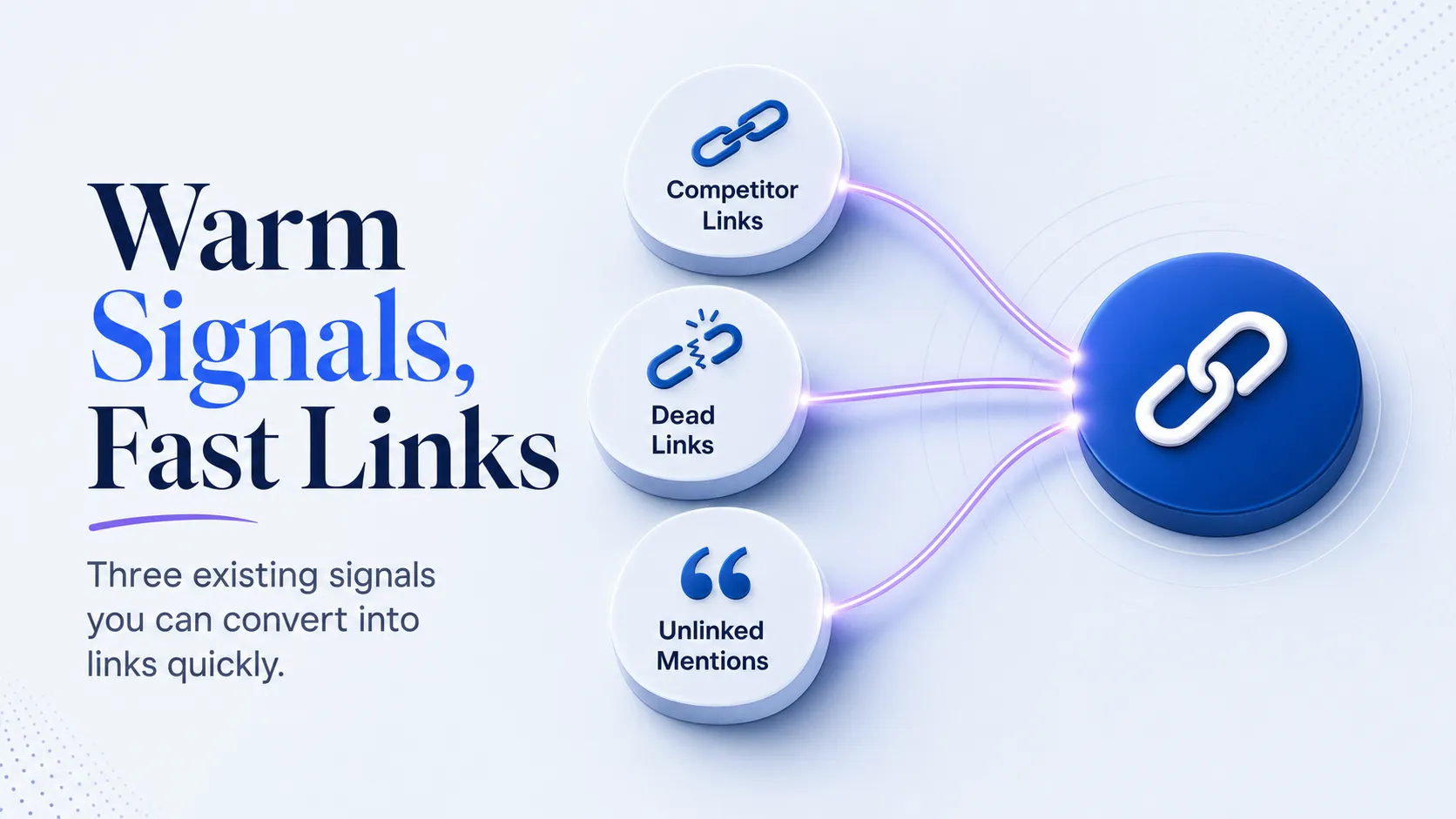
One pattern holds across almost every program worth running. The fastest links come from existing signals, competitor sources, dead references, and unlinked mentions, because the target site already has a reason to link. Cold pitching alone is the slowest, most fragile way to build links, so treat it as a supplement, not a foundation.
How We Chose These Link Building Methods
Every method here earns its spot against the same rubric an SEO lead uses when deciding what belongs in a quarterly campaign plan. We scored each tactic on five things.
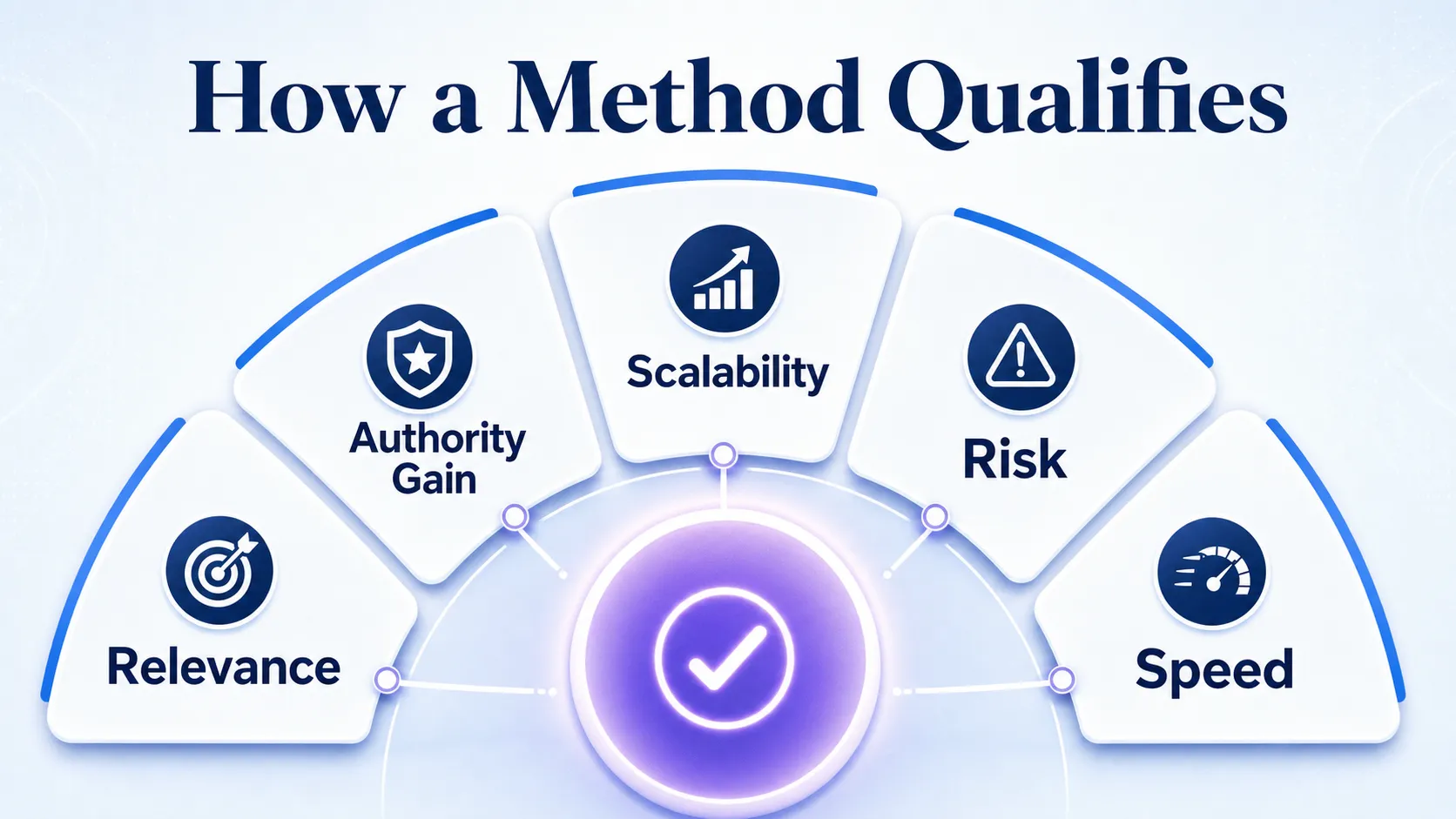
- Relevance: the method earns topically relevant links, not filler placements
- Authority gain: the links can move real authority, not just a count
- Scalability: it works for a solo marketer or a full team
- Risk: it stays clear of spam signals and policy trouble
- Speed: it can produce a first result in a reasonable window
Outdated, manipulative, or tool-dependent tactics did not make the cut. Link pyramids, expired-domain networks, and buy-in-bulk directory blasts carry more risk than they return, so you will not find them here.
Methods 1 to 3: The Fastest Warm-Link Wins
These three methods convert fastest because the target site already has a reason to act. There is a link to replace, a mention to formalize, or a proven pattern to follow. Start here when you need early wins to justify the program.
1. Competitor Backlink Replication
Competitor backlink replication means finding the pages already linking to competing content and pursuing those same sources. It works for any team that wants proven targets instead of guesses. If a site linked to a rival’s guide on your topic, it has shown clear link intent in your niche, which is a far warmer prospect than a random domain.
The benefit is less wasted effort. You skip the sites that never link out and focus on the ones that already do. The caution: a competitor’s link is not automatically winnable, so filter for relevance and quality before you pitch.
- Best for: teams entering a niche with established competitors
- Effort: Medium
- Time to results: Weeks
- Cost: Low to medium
2. Broken Link Building
Broken link building is replacing a dead reference on someone else’s page with a working, relevant resource from your site. It fits teams that already have solid content to offer as the fix. Publishers dislike broken links because they hurt user experience, so you are solving a real problem while earning a contextual backlink.
The reason it converts: you are helping first, asking second. The honest limit is scale. Finding enough dead links pointed at genuinely relevant pages takes patience, and not every editor updates old posts.
- Best for: content-rich sites with strong reference pages
- Effort: Medium
- Time to results: Weeks
- Cost: Low
3. Unlinked Brand Mention Reclamation
Unlinked brand mention reclamation turns an existing mention of your brand or asset into an actual link. It is the lowest-friction method on this list for any brand that gets talked about but not always linked. The publisher already named you, so you are asking for a small formatting change, not a favor.
The main benefit is warm awareness converting into authority with minimal resistance. Once you know how to convert unlinked mentions into links, this becomes a recurring, near-passive source of relevant backlinks.
- Best for: brands with press coverage or community buzz
- Effort: Low
- Time to results: Days to weeks
- Cost: Low
Methods 4 to 6: The Editorial Outreach Plays
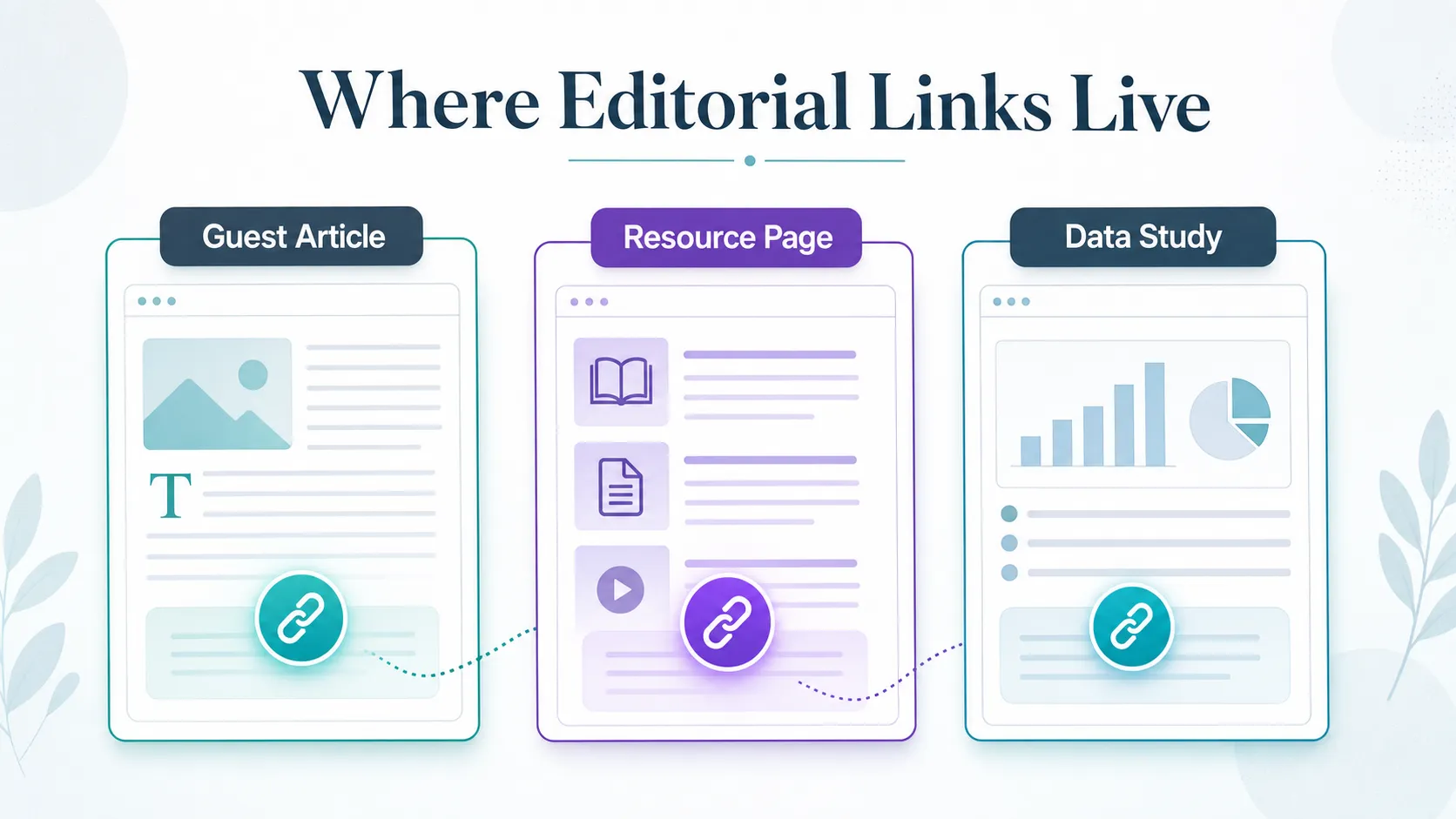
The middle tier takes more effort than warm wins, but it typically delivers stronger contextual relevance and better domains. These methods are more competitive, so tight targeting and sharp positioning matter more than pitch volume.
4. Guest Posting
Guest posting is contributing a relevant article to another publication in exchange for a contextual editorial link and exposure to its audience. It still works when used selectively, on sites your buyers actually read. The value is the link sitting inside genuinely useful content, not a footer or author bio.
Done poorly, it becomes a spammy volume game that AI engines and Google both discount. Done well, with a real guest post outreach workflow, one placement on a respected niche site beats ten on thin blogs.
- Best for: brands with subject-matter experts who can write
- Effort: High
- Time to results: Weeks to months
- Cost: Medium
5. Resource Page Link Building
Resource page link building targets curated lists that publishers build specifically to reference useful content. It suits teams with a genuinely strong asset worth listing. These pages exist to link out, so relevance and usefulness matter far more than persuasion.
You are not convincing a reluctant editor. You are showing a curator that your page fills a gap in their list. That framing is why resource page prospecting often lands links that cold guest pitches never would.
- Best for: tools, guides, and reference-grade content
- Effort: Medium
- Time to results: Weeks
- Cost: Low to medium
6. Digital PR and Newsworthy Content
Digital PR earns links by giving journalists and publishers something they want to cite: original research, timely insight, or a data-led story. It fits brands ready to invest in an asset worth covering. The benefit is scalable, high-quality coverage from authoritative publications, the kind of domains you cannot reach with a guest pitch.
It is the most competitive method here and the hardest to fake. A survey with a real finding, a proprietary dataset, or a sharp reaction to a live news story is what gets picked up. Budget matters, so understand what digital PR costs by deliverable before you commit.
- Best for: brands with data, a strong POV, or newsworthy stories
- Effort: High
- Time to results: Months
- Cost: High
Methods 7 to 10: The Compounding and Relationship Plays
The final tier builds links through assets, relationships, and authority signals that keep working after launch. These methods are strongest when your brand already has something real to offer: data, credibility, products, or local presence.
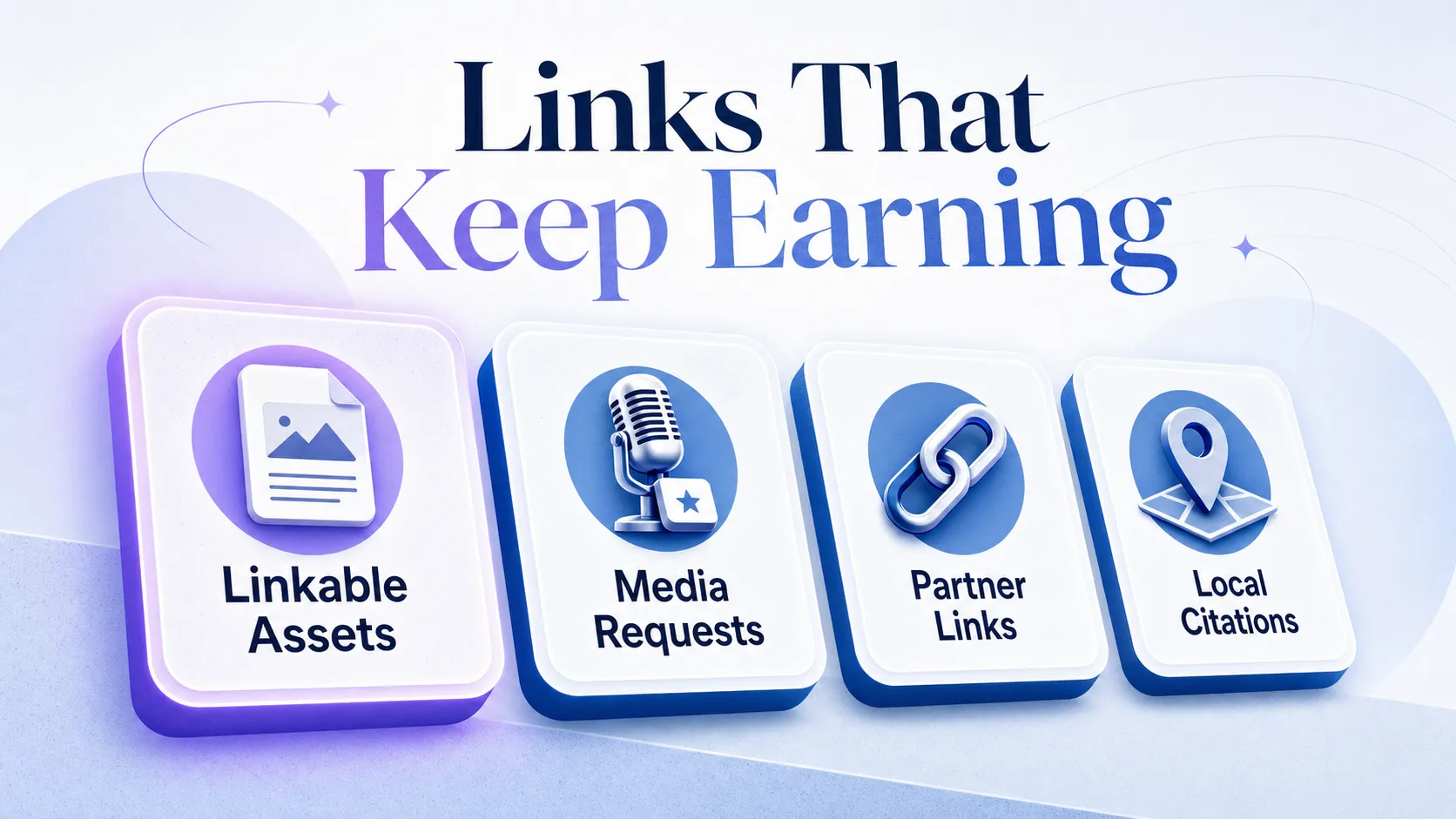
7. Linkable Asset Creation
A linkable asset is a piece of content built to attract references on its own: original data, a calculator, a template library, an industry report, or an evergreen reference guide. It fits teams that can invest upfront for a payoff that lasts. The compounding benefit is what sets it apart, since a strong asset keeps earning links for years after publication.
This is the closest thing to passive link building. The catch is that most content is not linkable, no matter how well written. It has to give other creators a reason to cite it, usually a number, a tool, or a definitive resource they cannot easily recreate.
- Best for: brands willing to invest in reference-grade content
- Effort: High
- Time to results: Months, then compounding
- Cost: Medium to high
8. Journalist Outreach and Expert Contribution
Journalist outreach means responding to reporter requests for sources and quotes, through platforms and query services, to earn a mention in a published story. It works for anyone with genuine expertise to share. The benefit is authoritative editorial links from trusted publications, often ones you could never pitch directly.
Speed and specificity win here. Reporters work on deadline, so a fast, quotable, on-topic answer beats a polished one that arrives late. The honest limit is inconsistency, since you are competing for every query and not every response gets used.
- Best for: founders and specialists with a clear point of view
- Effort: Medium
- Time to results: Days to weeks
- Cost: Low to medium
9. Partner, Supplier, and Community Links
This method earns links through real relationships: partner and integration pages, supplier directories, community memberships, and ecosystem listings. It suits brands with existing vendors, partners, or affiliations. These links tend to be easy to secure because they are grounded in a genuine connection and clear relevance.
Think integration partners listing you on their site, associations you belong to, or communities you actively contribute to. The links are natural and durable, and they rarely require the cold pitching that slows other tactics down.
- Best for: brands with partners, integrations, or memberships
- Effort: Low to medium
- Time to results: Weeks
- Cost: Low
10. Local Citations and Local Link Opportunities
Local citations and local links come from directories, local associations, sponsorships, chambers of commerce, and community sites. This method matters most for brands with a physical location or a local service area. The benefit is clearly local: stronger local relevance, trust signals, and discoverability in local search.
A sponsored community event, a chamber membership page, or a listing in a trusted regional directory does more for a local business than a generic national link. If you serve a defined geography, local link opportunities should sit near the top of your plan.
- Best for: local businesses and location-based services
- Effort: Low to medium
- Time to results: Weeks
- Cost: Low
Link Building Methods Compared at a Glance
Use this table to match a method to your situation fast. Small teams usually start with unlinked mentions and broken links, while larger brands lean into digital PR and linkable assets that compound.
| Method | Effort | Speed | Risk | Best Use Case |
|---|---|---|---|---|
| 1. Competitor backlink replication | Medium | Weeks | Low | Entering an established niche |
| 2. Broken link building | Medium | Weeks | Low | Sites with strong reference content |
| 3. Unlinked mention reclamation | Low | Days to weeks | Low | Brands already getting mentioned |
| 4. Guest posting | High | Weeks to months | Medium | Teams with expert writers |
| 5. Resource page link building | Medium | Weeks | Low | Reference-grade assets and tools |
| 6. Digital PR | High | Months | Low | Brands with data or news angles |
| 7. Linkable asset creation | High | Months, compounding | Low | Long-term authority building |
| 8. Journalist outreach | Medium | Days to weeks | Low | Founders with a clear POV |
| 9. Partner and community links | Low to medium | Weeks | Low | Brands with partners or memberships |
| 10. Local citations | Low to medium | Weeks | Low | Local and location-based businesses |
The most beginner-friendly methods are unlinked mention reclamation and local citations. The most authority-heavy are digital PR and linkable asset creation, which cost the most but return the strongest domains. We picked these ten on relevance, authority gain, scalability, risk, and speed, and we left out manipulative tactics that trade short-term links for long-term risk.
Choosing the Right Mix for Your Program
The best link building methods depend on your niche, budget, site maturity, and internal resources. There is no single winner, and the teams that treat one tactic as a silver bullet usually stall. The strongest results come from mixing warm, scalable, and editorial methods so you get early momentum and lasting authority at once.
Relevance and quality beat raw volume every time, in both search rankings and AI answers. A handful of links from trusted, topical sites moves more than a pile of generic placements. Pick one quick-win method and one compounding method to start, run them for a quarter, then measure which links actually improve your rankings and citations before you scale.
Frequently Asked Questions
What are the best link building methods for SEO?
The best link building methods combine warm, low-friction tactics with compounding editorial plays. Unlinked mention reclamation, broken link building, and competitor backlink replication deliver fast wins, while digital PR and linkable asset creation build durable authority. The right mix depends on your niche, budget, and how mature your site already is.
Is guest posting still worth it for backlinks?
Yes, guest posting still works when you do it selectively on relevant, respected publications. The value comes from a contextual editorial link inside genuinely useful content, plus exposure to a new audience. It stops working when it becomes a volume game on thin, unrelated blogs, which both Google and AI engines discount.
What is broken link building and does it still work?
Broken link building is finding a dead reference on another site and offering a relevant working page from your own as the replacement. It still works because publishers want to fix broken links that hurt user experience, so you solve a real problem while earning a contextual backlink. The main constraint is scale, since finding enough relevant dead links takes patience.
How do you get backlinks without paying for them?
You earn free backlinks by converting signals you already have and by creating content worth citing. Reclaim unlinked mentions, replace broken links, respond to journalist requests, and build linkable assets like original data or reference guides. These methods trade effort for cost, so they suit teams with more time than budget.
Which link building methods are safest for long-term SEO?
The safest methods earn relevant, editorial links through genuine value rather than manipulation. Linkable assets, digital PR, resource page placements, and unlinked mention reclamation all carry low spam risk because the links are contextual and earned. Avoid link pyramids, expired-domain networks, and bulk paid directories, which trade short-term links for long-term penalty risk.
Pick one warm method and one editorial method, run them for a quarter, and track which links actually move your rankings and AI citations. That single habit separates programs that compound from programs that spin their wheels. Want to see where your brand already stands in AI search and which links are earning you citations? Book a strategy call and start with data instead of guesswork.