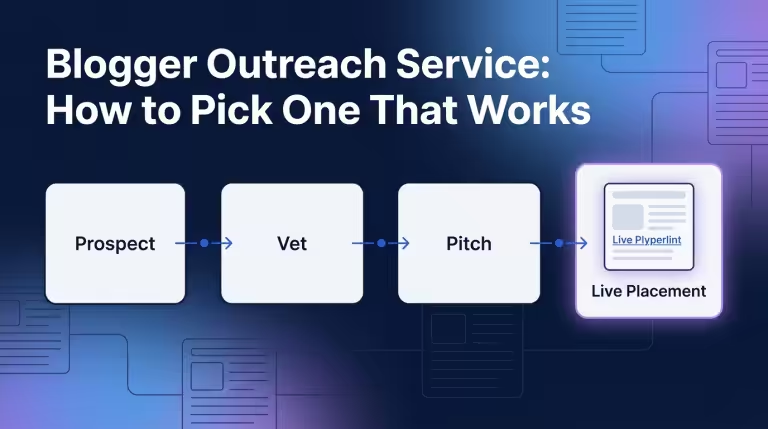

If your outreach emails keep getting ignored, the problem is usually the process, not just the copy. Link building outreach is a repeatable system: prepare a link-worthy asset, build and qualify a prospect list, find and verify the right contact, send a tightly matched pitch, follow up with restraint, then track the metrics that tell you what to fix. Get the setup wrong and even perfect copy stalls.
This guide walks the full workflow in order, with the decisions that actually move reply rates, so you can run a campaign that wins relevant backlinks instead of burning your sending domain on a cold list.
Before You Send a Single Email
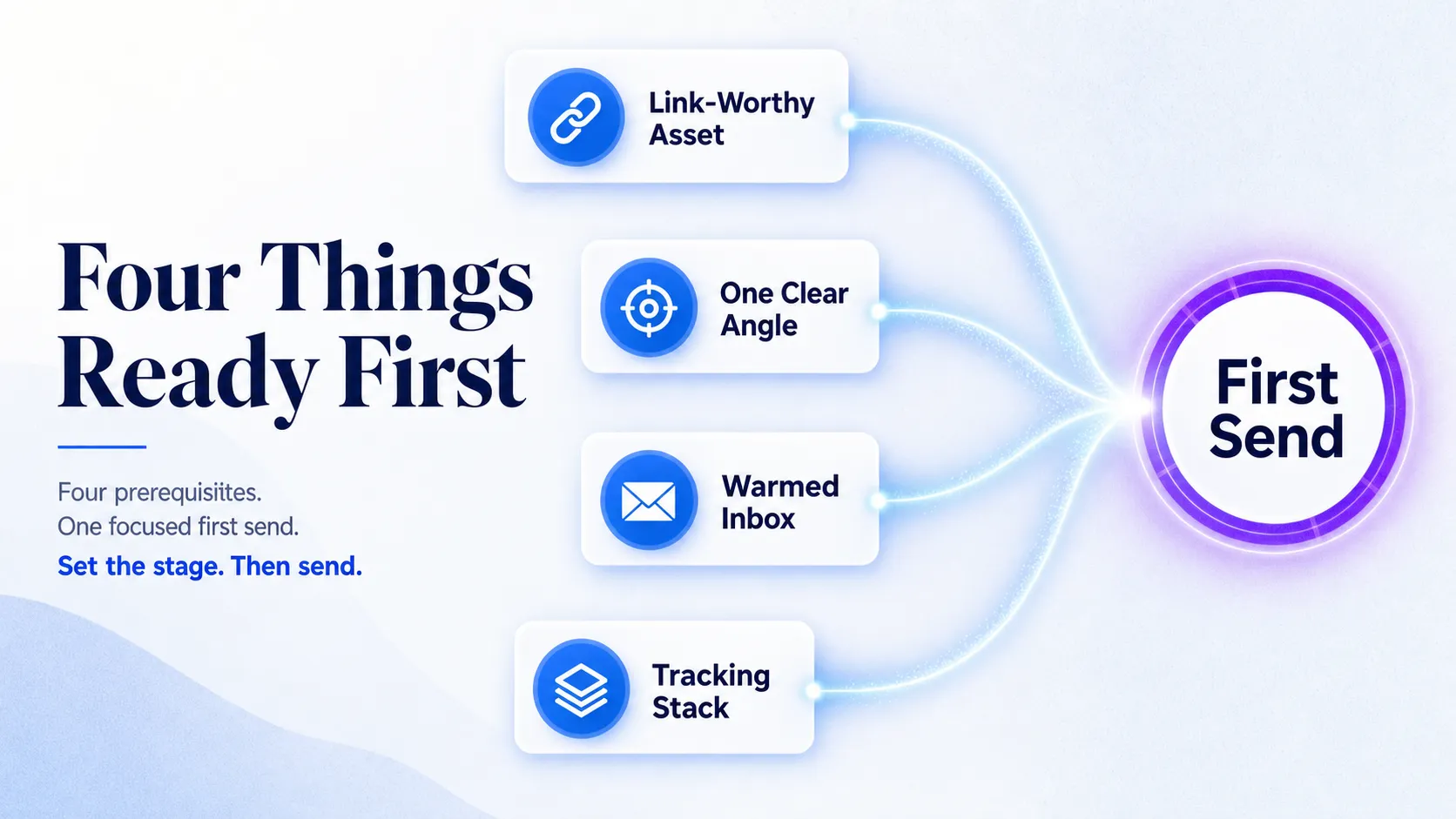
Outreach starts with setup, not writing. Four things have to be ready before your first send: a link-worthy page or asset, one clear outreach angle, a sending inbox and domain prepared for cold email, and a way to track what happens. Skip any of them and your reply rate suffers no matter how sharp the pitch reads.
The campaigns that fail fastest rarely fail on personalization. They fail because the asset was thin or the inbox was unprepared, and no amount of clever subject lines fixes either one.
What Makes a Page Worth Linking To
A link-worthy page gives the recipient a reason to reference it that survives editorial scrutiny. That reason is usually one of four: useful original data, strong practical utility, a tight fit with the target page’s audience, or a natural place it already belongs in their content. If you cannot name which one applies before you pitch, the asset is not ready and the campaign is built on sand.
Be honest here. A page that only restates what every competitor already published gives an editor nothing to gain by linking, and they know it. Strengthen the asset first, because that work compounds across every email you send.
Protect the Inbox You Send From
Your sending domain reputation decides whether your emails reach the inbox or die in spam, so treat it as infrastructure. Use a real inbox identity tied to a recognizable person, warm a dedicated outreach domain before scaling volume, and never launch a campaign from a domain registered last week. Cold sends from a fresh domain land in spam, and the recipient never sees the pitch you spent time writing.
The Minimum Tool Stack
You need four jobs covered, and one tool can handle several of them. Prospecting to find sites and pages, email verification to confirm addresses before you send, outreach tracking to manage sequences and replies, and basic analytics to measure results. Tools like Ahrefs handle prospecting and competitor research, Hunter.io finds and verifies contacts, BuzzStream manages the outreach pipeline, and Google Analytics tracks downstream traffic from placements. Pick a stack you will actually maintain, not the longest one.
Step 1: Define Your Outreach Goal and Linkable Offer
Pick one outreach objective and one offer per campaign so the pitch stays relevant and credible. The realistic goals are guest posts, resource page links, broken link replacements, unlinked mention reclamation, and editorial inclusion. Each one changes what you offer and how you ask, so a campaign that mixes them sends a muddled message that converts worse than a focused one.
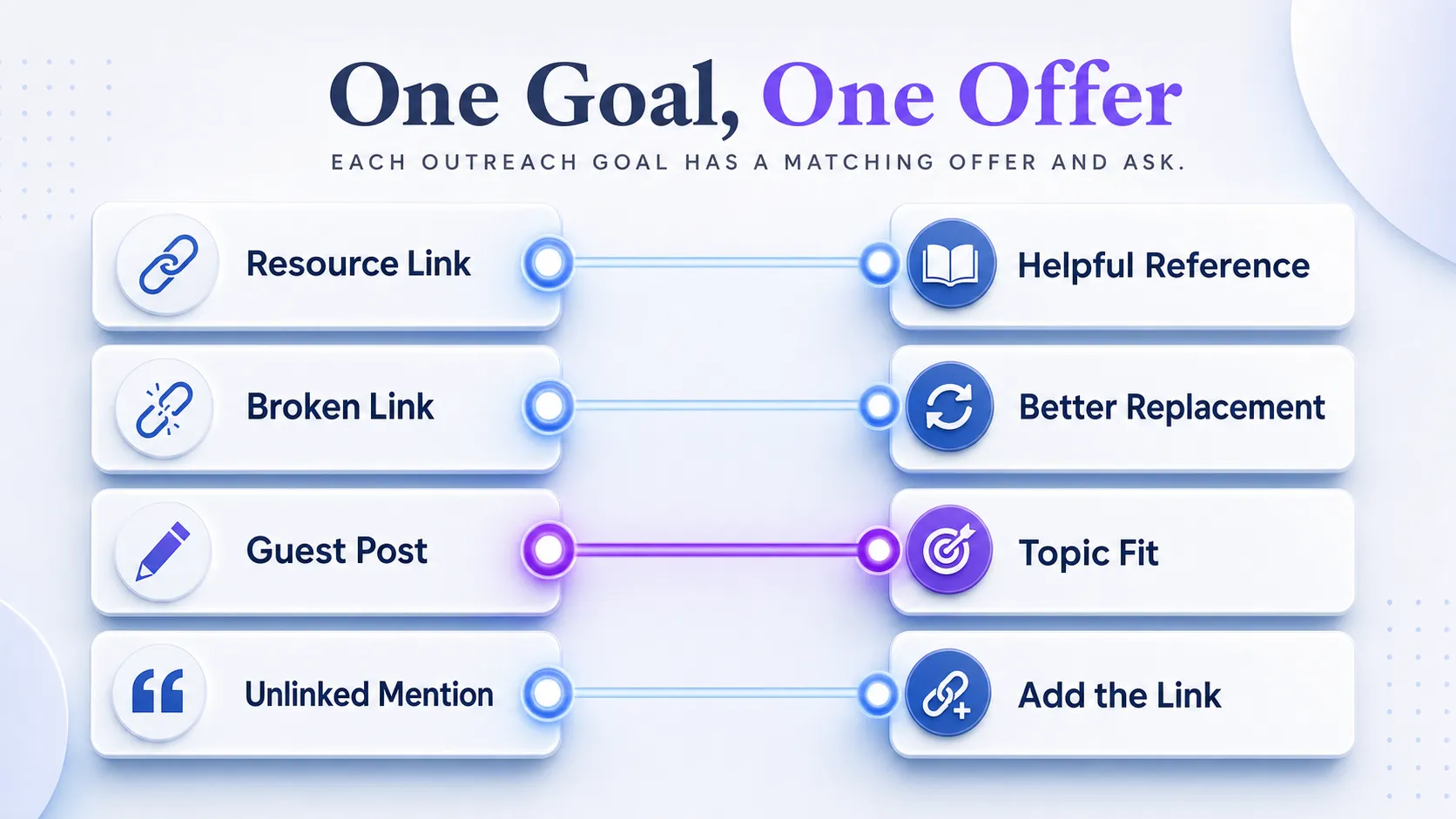
The offer follows the goal directly. Resource pages need a genuinely helpful reference worth listing. Guest posts need a topic that fits the publication and a reader it serves. Broken link replacements need a page that is clearly better than the dead one. Unlinked mentions need only a quick reminder that an existing reference deserves a link. If you want the full picture on choosing tactics, our practitioner’s guide to link building covers how these fit a wider strategy.
Before you write a single email, write one sentence that explains why the recipient should care. If you cannot finish that sentence, the offer is too weak. Here is the decision rule: if the offer does not improve the target page or serve its audience, the campaign fails at the source, not in the inbox.
Step 2: Build and Qualify Your Prospect List
A strong outreach list is built by rejecting most raw prospects, not by contacting everyone you find. Start wide, then filter hard, because a smaller clean list converts better than a large unfiltered one and protects your sending reputation along the way.
Where to Find Prospects
Pull candidates from several sources so your list is not one-dimensional. Google operators surface resource pages and niche roundups, competitor backlink profiles reveal sites already linking to work like yours, and content explorers find pages on your topic ranked by reach. Resource pages and existing roundups are especially efficient because the editor has already shown they link out. Pages that already link to a similar asset are your warmest targets, since they have demonstrated the exact behavior you want.
Filter Before You Add Anyone
Qualify every candidate on five signals before it earns a place on the list. Judge the page, not just the homepage, because the exact page that would carry your link matters more than a domain-level number.
| Signal | What you are checking | Reject when |
|---|---|---|
| Topical relevance | The page covers your subject area | Off-topic or only loosely related |
| Page-level fit | A link to your asset would belong here | No natural place to add it |
| Traffic | The page draws real visitors | No measurable traffic |
| Authority | The site has earned standing | Thin or spammy profile |
| Activity | The site updates and responds | Abandoned or stale for years |
The rule is simple: if the page is off-topic, thin, or looks abandoned, remove it. Every weak prospect you keep dilutes your reply rate and your patience.
Step 3: Find the Right Contact and Verify It
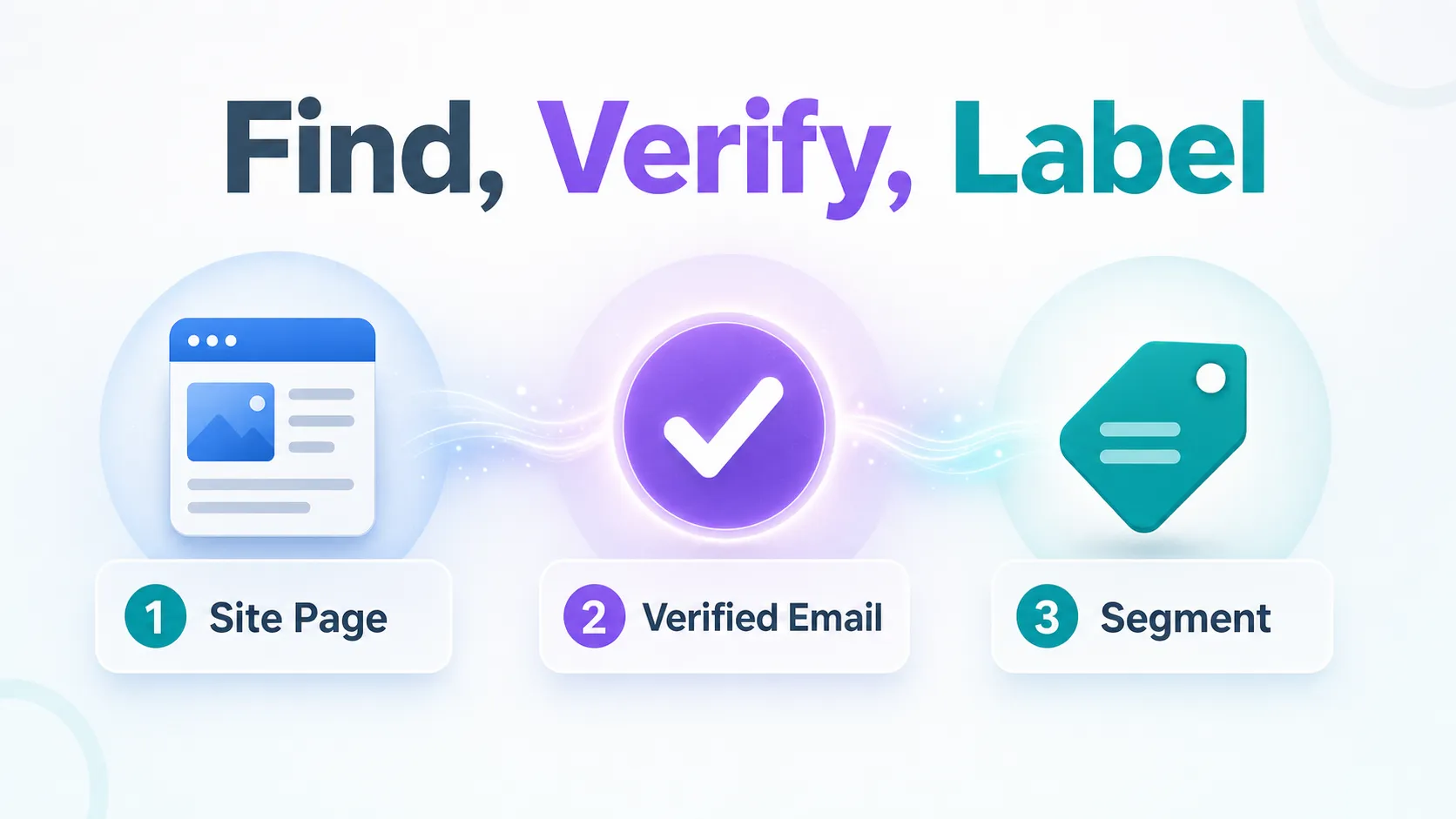
Role-based contacts outperform generic blasts because the email lands with someone who can actually add the link. Before sending, identify who that person is, confirm their address, and label the prospect so the campaign stays organized as it scales.
Match the Role to the Prospect
Different prospects need different people. A blog usually means the author or content manager, a publication means the editor, a small business site often means the owner, and a digital PR target means a press contact. Find names and clues in author bios, contact pages, bylines, and about pages, then confirm them on LinkedIn or X. A generic info@ inbox is acceptable only when no individual is findable and the site is small enough that one person reads everything.
Verify Before You Scale
Run every address through an email finder and verifier before sending at volume. Unverified sends bounce, and a high bounce rate signals to mailbox providers that you are spamming, which drags your whole campaign into the junk folder. Verification is cheap insurance for your deliverability.
Segment So Personalization Scales
Group your list by outreach angle, prospect type, or intent so you can personalize without chaos. A segment of resource-page editors gets one message frame, a segment of guest-post targets gets another, and each stays consistent inside its group. Segmentation is what lets you sound personal across two hundred prospects instead of writing every email from scratch.
Step 4: Write the Outreach Email
A strong pitch is short, relevant, and built around one ask. The structure runs in order: subject line, opener, relevance signal, value proposition, ask, and call to action. Each part does one job, and crowding extra requests into the email is the fastest way to get ignored.
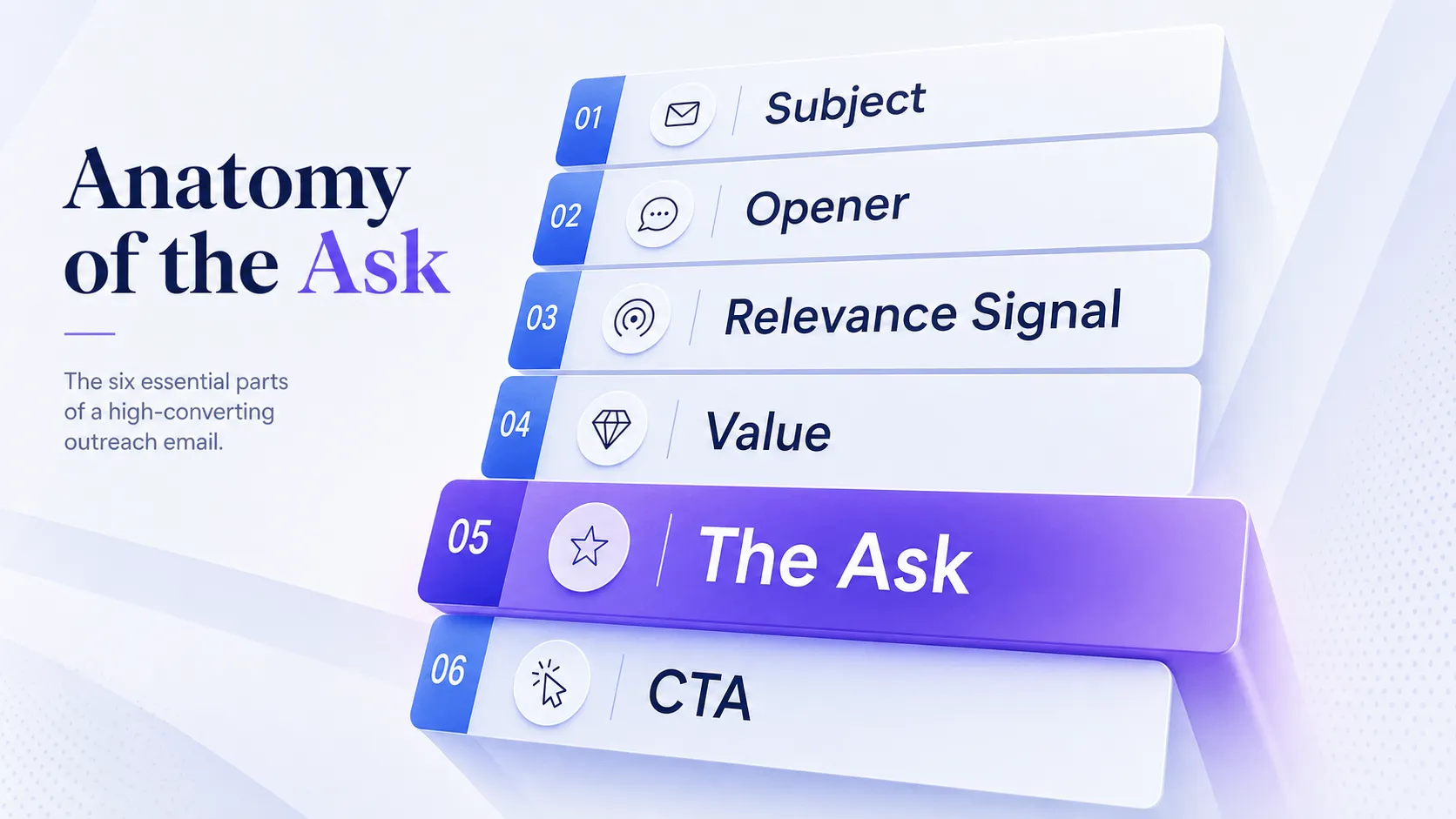
Keep the opener specific and short, with one proof point that shows you actually read their page. The value proposition has to match the campaign goal, not repeat a generic line about having great content. And the value should match what the recipient gains, framed for them, not for you.
Template 1: Resource Page or Broken Link
This frame works when you spotted a dead link or a gap on a page that lists references.
Subject: quick note on your [topic] resources page
Hi [Name], I was reading your guide on [specific topic] and noticed the link to [resource] returns a 404. I recently published [your asset], which covers the same ground with [specific improvement]. If it is useful, it might be a clean replacement. Either way, thanks for keeping that page maintained.
The subject names the exact page, which signals relevance before they open. The opener proves you read it by citing the dead link. The ask is single and low-friction, and the close stays warm whether or not they act.
Template 2: Guest Post or Editorial Inclusion
This frame works when you want to contribute or be referenced in an editorial piece.
Subject: idea for your [section] readers
Hi [Name], your recent piece on [specific article] made a point about [detail] that I have been testing firsthand. I would love to write a short companion piece on [angle] for your readers, with original data, no fluff. Happy to send an outline first so you can judge the fit.
The opener references a real article and a specific point, which separates you from mass senders. The value names what their readers get. The ask offers an outline first, lowering the risk for the editor instead of demanding a yes upfront.
One rule governs both: never write a multi-ask email that pitches content, requests a link, and proposes a partnership at once. One clear ask outperforms clever but crowded copy every time.
Step 5: Send, Follow Up, and Manage Replies
Most positive replies arrive after the first email, not the last, so follow-up is where campaigns are won. The job is to be persistent without being needy, and to know exactly when to stop.
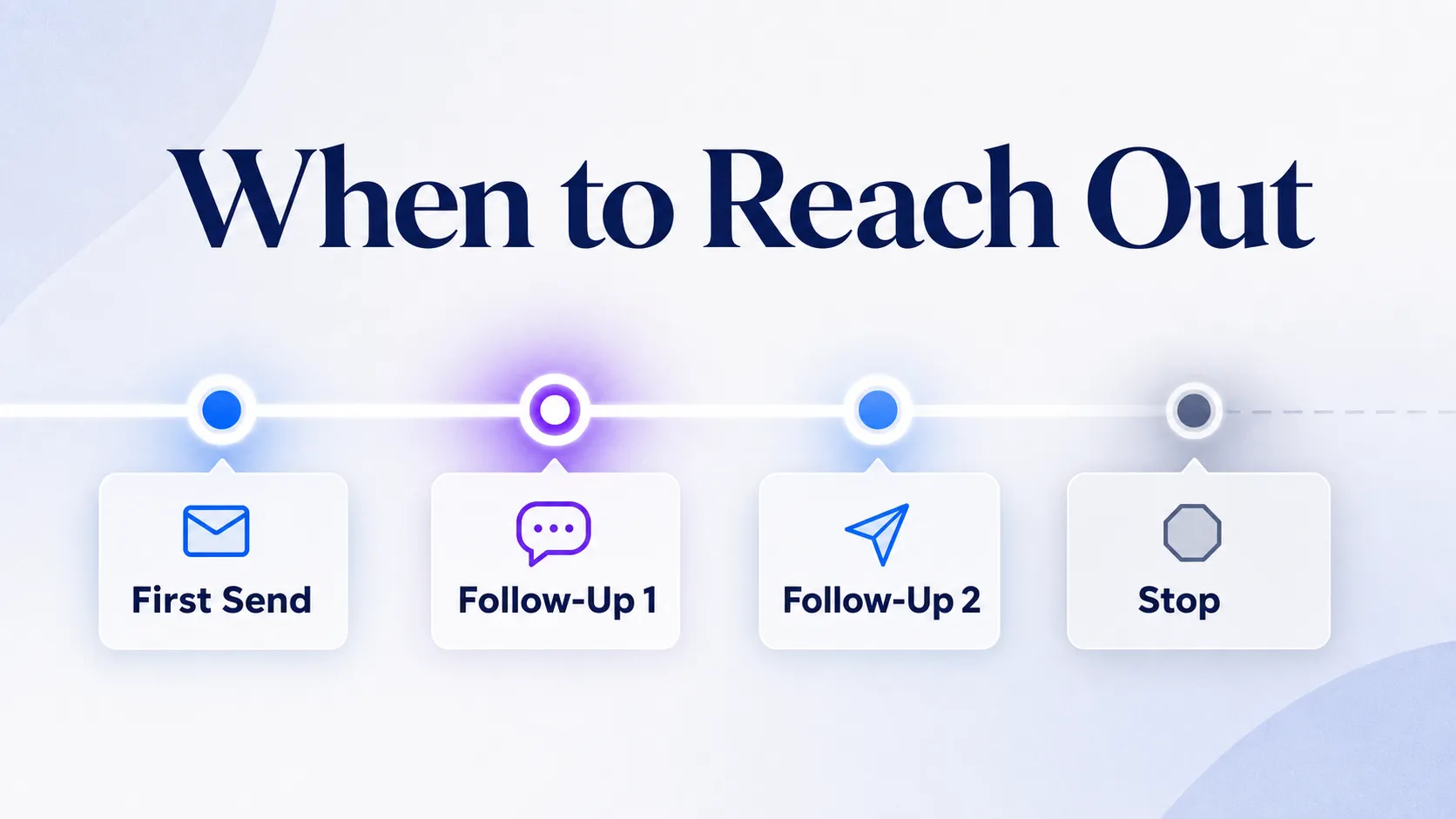
Send in controlled batches rather than blasting the whole list at once, so you can watch deliverability and adjust before you burn the full list. A workable cadence is one reminder a few days after the first email, then a second, lighter touch if the prospect is still genuinely relevant. Keep each follow-up concise and useful, never defensive. A good reminder adds something small, like a fresh angle or a quick clarification, instead of just asking again.
Handle replies by type. Interest moves to one clear next step, such as sending the draft or the link details. A “send more info” request gets exactly what they asked for and nothing extra. A “not now” earns a polite note to circle back later. A “no thanks” gets a genuine thank-you, because the relationship outlasts this one campaign. When someone says yes, give them a single, specific next action so the link does not stall in good intentions.
The stop rule keeps you out of spam complaints: two follow-ups maximum, then end the sequence. Beyond that you are not persistent, you are a problem in their inbox.
Step 6: Track Results, Avoid Mistakes, and Know What Good Looks Like
Strong campaigns are judged by qualified replies and quality placements, not by vanity open rates. Track five metrics, then read them as a diagnostic that tells you exactly which part of the campaign to fix.
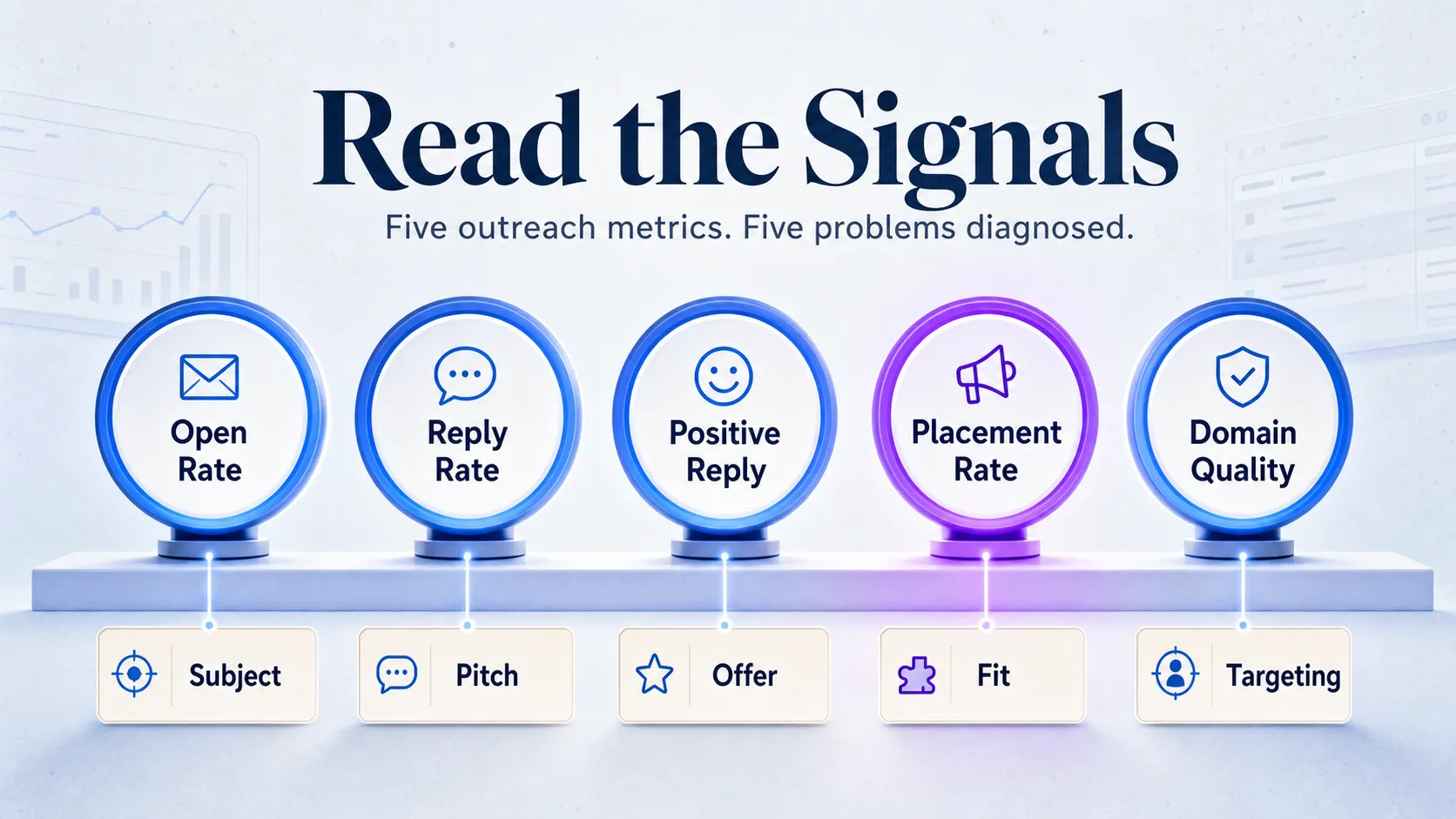
| Weak signal | Most likely cause | Where to fix it |
|---|---|---|
| Low open rate | Subject line or deliverability | Subject testing and inbox setup |
| Low reply rate | Targeting or pitch quality | List relevance and email copy |
| Low placement rate | Weak offer or poor page fit | Asset strength and prospect fit |
Set expectations honestly: link placement is a small share of total sends, and that is normal even for well-run campaigns. Judge a campaign by the relevance and quality of the links you win, not the raw count of emails you sent.
The Mistakes That Quietly Kill Campaigns
Most failed outreach repeats the same avoidable errors. Watch for these, because each one drags results down before the copy ever gets a chance.
- Over-personalizing every email until throughput collapses
- Vague asks that leave the recipient unsure what to do
- Poor list quality that no email copy can rescue
- Too many follow-ups that trip spam complaints
- Chasing volume over fit and burning the sending domain
- Ignoring deliverability until everything lands in junk
Outreach is a repeatable system, not a lottery ticket. When the numbers dip, the diagnostic above tells you which lever to pull, and you adjust one thing at a time. For a wider view of how earned links compare to other growth work, see our take on link building versus content marketing.
Frequently Asked Questions
What is link building outreach?
Link building outreach is the process of contacting site owners, editors, and writers to earn backlinks to your pages through email and other outbound channels. It combines prospecting, contact research, a personalized pitch, and follow-up into one repeatable workflow. The goal is relevant, editorially placed links, not bulk requests sent to anyone with an inbox.
How many follow-up emails should I send for link outreach?
Send two follow-ups at most, then stop. A practical cadence is one reminder a few days after your first email and a second, lighter touch only if the prospect is still genuinely relevant. Most positive replies arrive after the first email rather than the last, so follow-up matters, but a third or fourth chase reads as spam and risks complaints that hurt your sending reputation.
What reply rate should I expect from link building outreach?
Expect modest numbers, because outreach is a filtering game. Picture a campaign of two hundred well-qualified prospects: a single-digit share will reply with interest, and only a fraction of those become live links. That is normal and still worth it, since a tightly targeted list produces a handful of relevant, high-quality placements rather than a pile of weak ones. Judge the campaign by placement quality, not open rate.
What tools do I need for link building outreach?
You need four jobs covered: prospecting, email verification, outreach tracking, and basic analytics. One tool often handles several. Ahrefs supports competitor backlink research and prospect discovery, Hunter.io finds and verifies contact emails, BuzzStream manages the outreach pipeline and replies, and Google Analytics tracks the traffic your placements drive. Choose a stack you will keep current rather than the longest list of subscriptions.
How do I avoid spam filters when sending outreach emails?
Protect deliverability before you scale. Send from a warmed, dedicated domain with a real inbox identity, verify every address to keep bounces low, and send in controlled batches instead of one mass blast. Keep emails short, personal, and free of spammy phrasing, and cap follow-ups at two so you avoid complaints. Deliverability is infrastructure, and it decides whether your pitch reaches the inbox or never gets read.
Start With One Asset and One Clean Batch
The honest reality is that outreach rewards discipline over volume. A campaign built on a genuinely link-worthy asset, a ruthlessly qualified list, and two well-timed follow-ups beats ten thousand cold sends from a thin page every time. The numbers stay modest by design, and the links you earn that way are the ones that actually hold. Start with one linkable asset, build a qualified prospect list, and send your first personalized batch this week. Want to see where your brand already stands in search and AI answers? Book a strategy call and find your fastest wins.