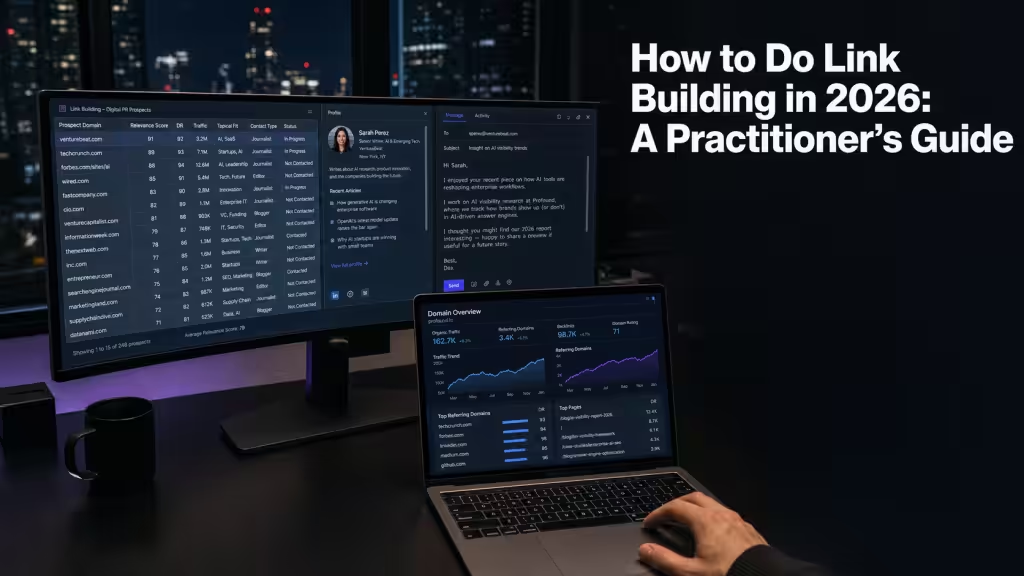

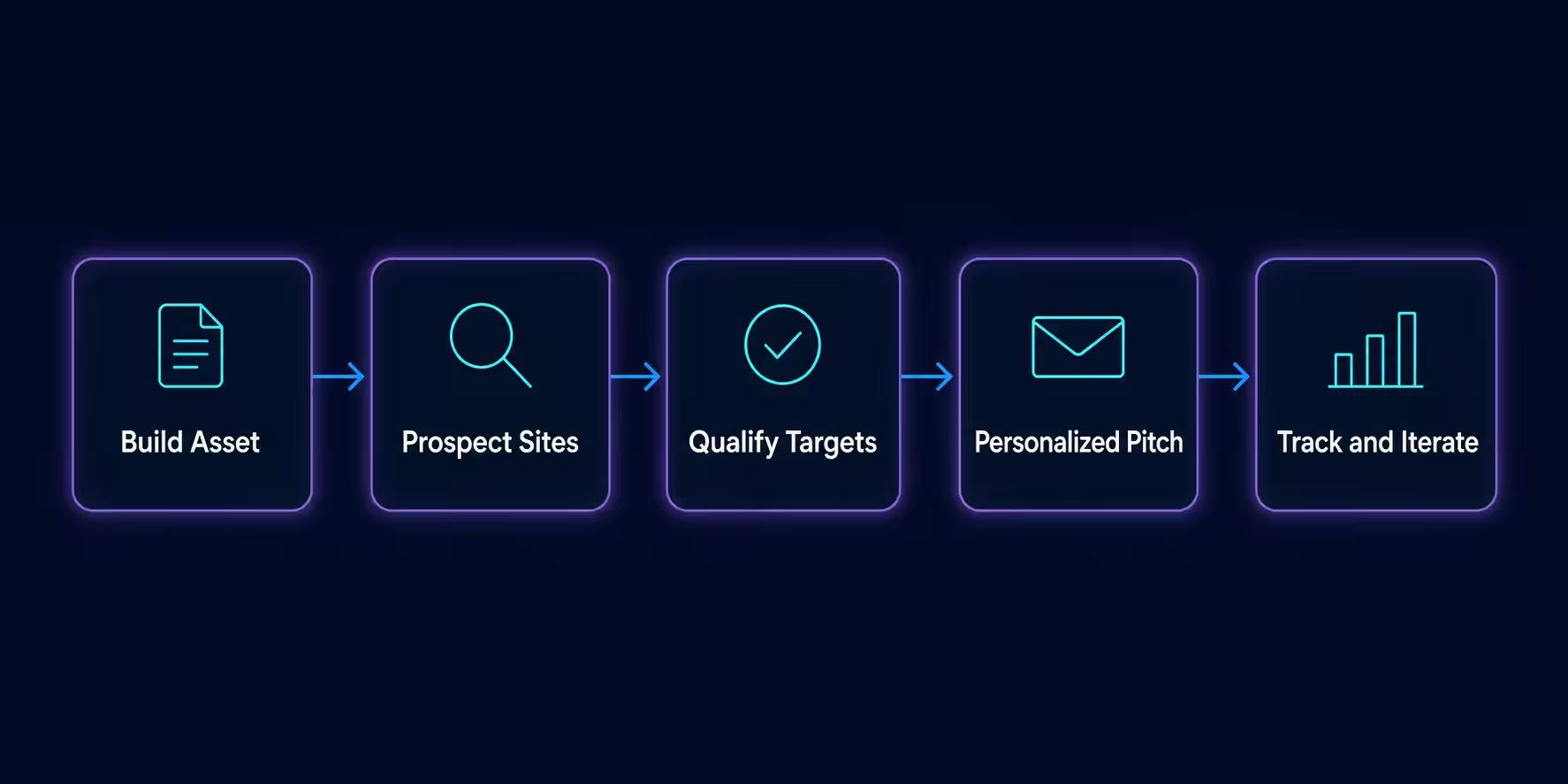
Most link building advice you’ll find online is recycled from 2018. Skyscraper this, broken link that, send 500 cold emails and pray. It doesn’t work anymore, and honestly, it barely worked then. The teams winning at link building in 2026 treat it less like an SEO checkbox and more like a small PR operation: tight prospecting, real assets, personalized outreach, and ruthless qualification of every site they pitch.
This guide walks through how to do link building the way working practitioners actually do it. No theory padding. No “what is a hyperlink” detour. If you’re past the basics and want a system you can run on Monday, start here.
What You’ll Learn
- The 5-stage link building system that replaces spray-and-pray outreach
- How to qualify a link target in under 90 seconds (and why most teams skip this)
- The four asset types that earn links in 2026, and the two that stopped working
- Pitch structures that get reply rates above 15% without sounding like a template
- How to measure link building beyond referring domains (the metrics that actually predict rankings)
Why Most Link Building Fails Before It Starts
Here’s the pattern we see across hundreds of B2B campaigns: a team decides they need backlinks, opens Ahrefs, exports a list of 800 sites, and starts blasting outreach to anyone with a contact form. Reply rates land at 1-2%. Link placement rate sits below 0.5%. After three months, the team has 4 links from sites nobody respects and concludes “link building doesn’t work for us.”
Link building works. Volume-first link building doesn’t. The shift since 2023 is straightforward: editors get hundreds of pitches a week, Google’s algorithms penalize irrelevant link patterns more aggressively, and AI tools have made generic outreach trivially easy to spot. What earns links now is the opposite of what most teams do, fewer prospects, deeper qualification, sharper pitches.
If you want to understand the strategic shift before getting tactical, our breakdown of the real benefits of link building covers why it still drives growth when done right.
Stage 1: Build Something Worth Linking To
You can’t outreach your way to authority with a thin “10 tips” blog post. Every campaign that consistently earns links starts with a linkable asset, a piece of content or tool that gives journalists, bloggers, and resource page editors a reason to cite you instead of someone else.
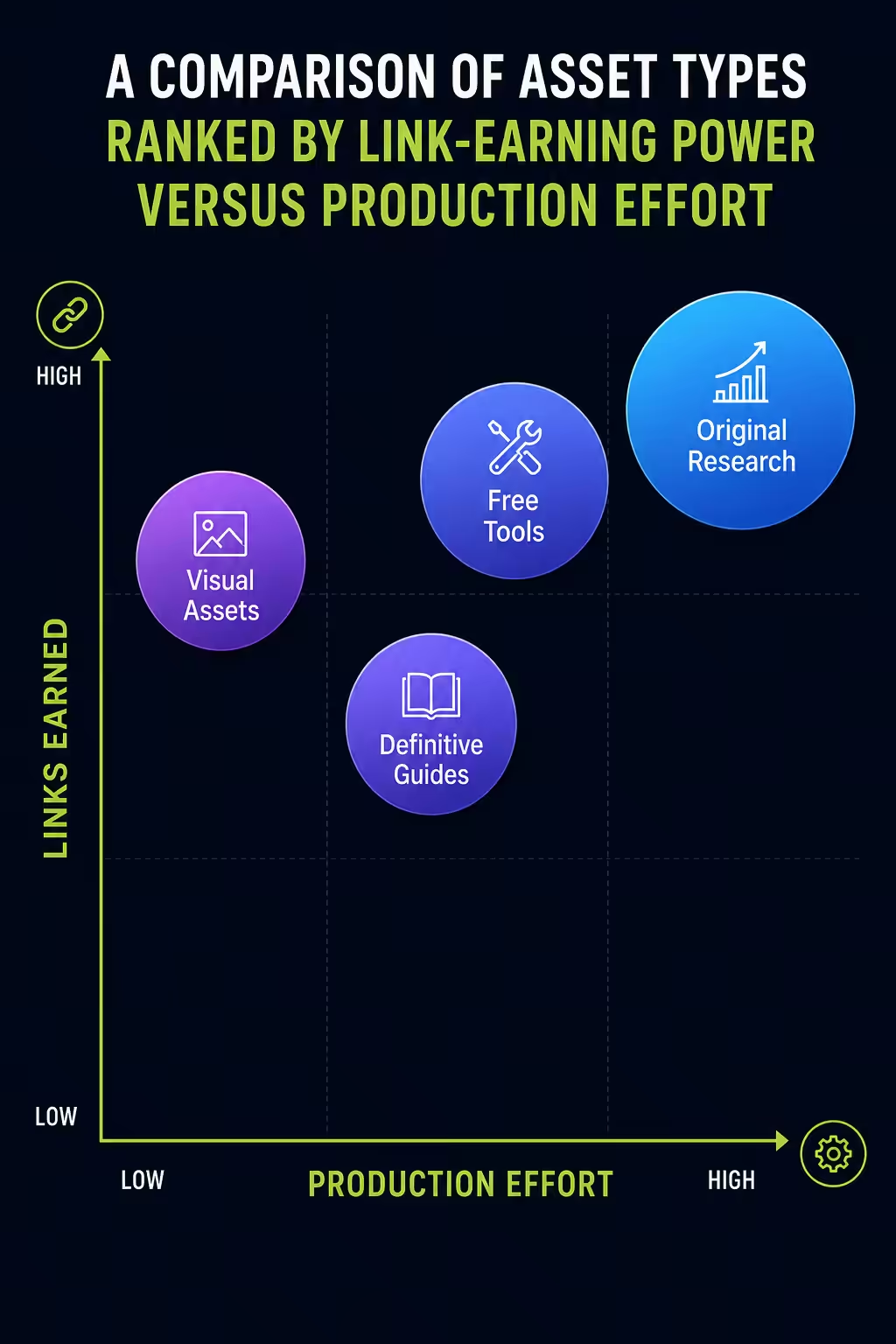
Four asset types still earn links reliably in 2026:
Original Research and Survey Data
This is the most valuable asset type. Survey 200+ practitioners in your category, publish the findings with clean charts, and pitch the data to journalists who cover that beat. A single original data point, “47% of B2B marketers can’t name their top AI search competitor”, can earn 30+ editorial links across 12 months because it gets cited and re-cited.
The investment is real (figure $3K, $15K for a credible survey), but a strong study produces links and citations for years. Backlinko’s own ranking factors studies earned tens of thousands of links over a decade. That’s not an outlier, it’s what data-led content does.
Free Tools and Calculators
Tools earn links passively because they solve a recurring problem. Anyone writing about your topic eventually needs to reference a calculator, a checker, or a generator, and they link to the best free option. Build the tool, rank it for the relevant query, and links arrive without outreach.
The catch: the tool has to actually work, look professional, and solve a real problem. A janky calculator with three input fields won’t earn anything.
Definitive Guides on Underserved Topics
Pick a topic in your space where every existing guide is either thin, outdated, or behind a paywall. Spend the time to write the version people will cite as the reference. Then pitch it to anyone who’s linked to the weaker existing guides, a tactic that still works because the value swap is obvious.
Visual Assets and Data Visualizations
Maps, custom charts, interactive comparisons. Journalists love embedding visuals because it saves them work and makes their article look better. A single well-designed visual can earn 20+ links if it gets picked up by the right outlet.
Two asset types that stopped working: generic “ultimate guides” that just repackage existing content, and listicle-style “X tools for Y” posts written purely for link bait. Editors have seen 10,000 of these. They don’t respond.
Stage 2: Prospect Sites That Actually Matter
The size of your prospect list matters less than its precision. A focused list of 80 highly relevant sites will outperform a list of 800 generic ones every single time. Build prospect lists from these five sources:
1. Competitor Backlink Analysis
Pull the referring domains of 3-5 direct competitors. Filter for sites that link to multiple competitors but not you, these are the highest-probability targets because they’ve already proven they cover your space.
2. Topic-Specific Search Operators
Use queries like intitle:”your topic” + “resources”, “your topic” + “best of”, and “your topic” + inurl:links to surface resource pages and roundups that are already curating links in your category.
3. Journalist Databases
Muck Rack, Prowly, and Roxhill let you find journalists who’ve written about your exact topic in the last 90 days. These are warm targets, they’re actively covering the beat.
4. HARO / Connectively / Qwoted Requests
Source requests from journalists who explicitly want expert input. Reply rate on these is dramatically higher than cold outreach because they asked first.
5. Unlinked Brand Mentions
Sites already mentioning your company without a hyperlink are the lowest-friction wins of the entire campaign. Find them, send a friendly note, get the link added. Our guide on how to find unlinked brand mentions walks through the exact workflow.
Build the prospect list in a spreadsheet with these columns: domain, contact name, contact email, relevance score (1-5), authority indicators (organic traffic, referring domains), and the specific angle you’ll pitch. If you can’t fill in the angle column, the site doesn’t belong on the list.
Stage 3: Qualify Every Target in Under 90 Seconds
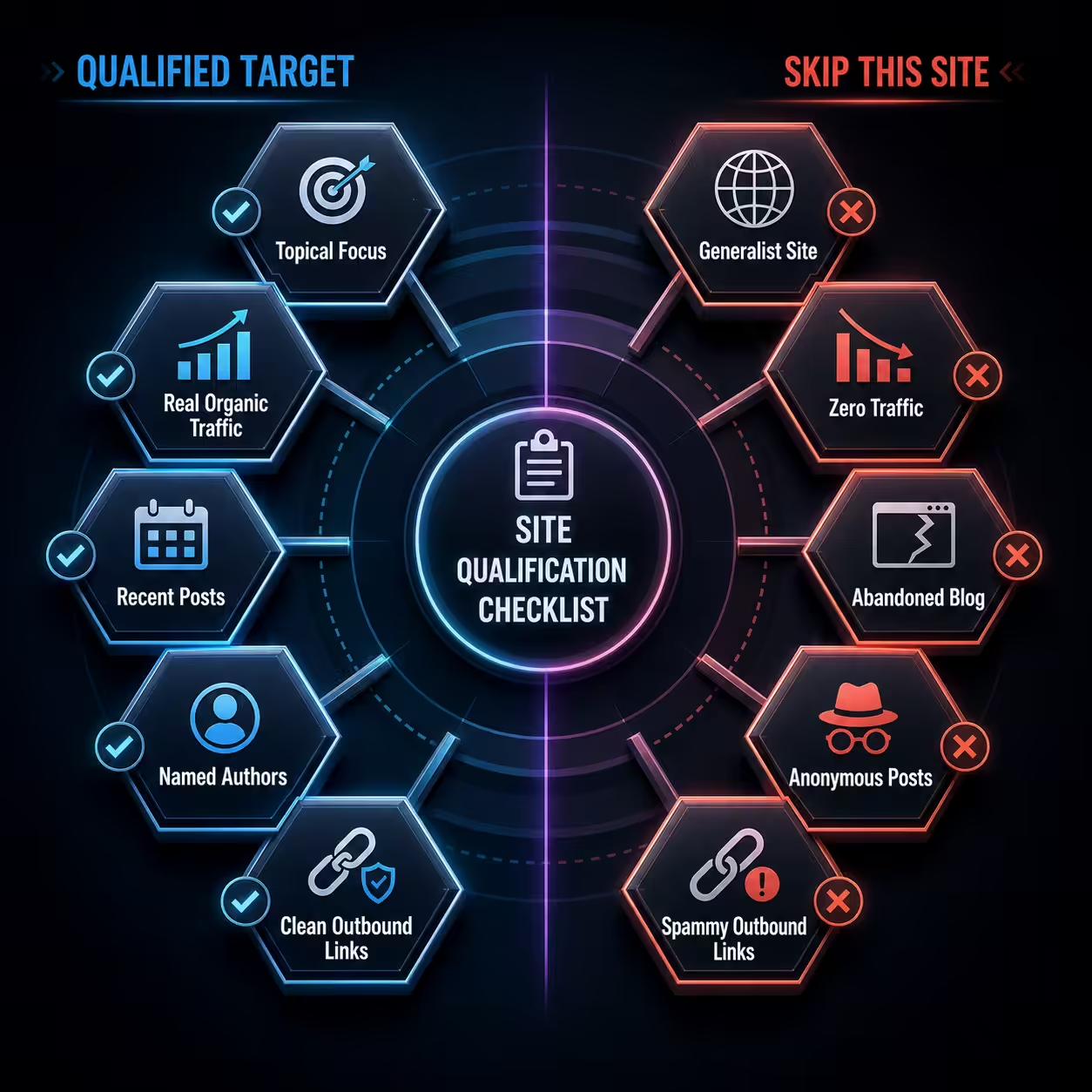
This is the stage most teams skip, and it’s the single biggest predictor of campaign success. Before you add a site to your outreach list, run it through a fast qualification check. If it fails any of these, drop it.
| Check | Pass | Fail |
|---|---|---|
| Topical relevance | Site has published 5+ articles on your specific topic in the last 12 months | Site is a generalist that happens to have one post in your space |
| Organic traffic | Above 1,000 monthly organic visits (per Ahrefs/Semrush) | Sub-500 monthly organic visits, likely dead or PBN-adjacent |
| Outbound link pattern | Links to other reputable sites in your category | Heavy outbound links to gambling, crypto, or unrelated niches |
| Recent activity | Published in the last 60 days | Last post was 8 months ago, abandoned site |
| Editorial signals | Real author bylines, about page, masthead | Anonymous posts, no author info, no contact details |
Run this check fast. The goal isn’t a perfect score, it’s catching the obvious disqualifiers. If a site has zero organic traffic and links out to crypto casinos, it’s wasting your outreach budget regardless of its domain rating.
The Authority Signal Nobody Talks About
Domain Rating and Domain Authority are convenient but increasingly misleading. A DR 70 site that publishes 40 sponsored posts a month is worth less than a DR 45 site with a real editorial team. The signals that actually predict link value: real journalists on staff, a clear editorial standard, links to and from other respected sites in the category, and consistent original reporting. Trust your eyes more than the metric.
For a deeper read on how third-party authority metrics can mislead, our breakdown of how most SEOs misread Trust Flow and Citation Flow covers the common interpretation mistakes.
Stage 4: Send Pitches That Don’t Sound Like Pitches
The average cold outreach reply rate sits around 8%. The teams hitting 15-25% do four things differently.
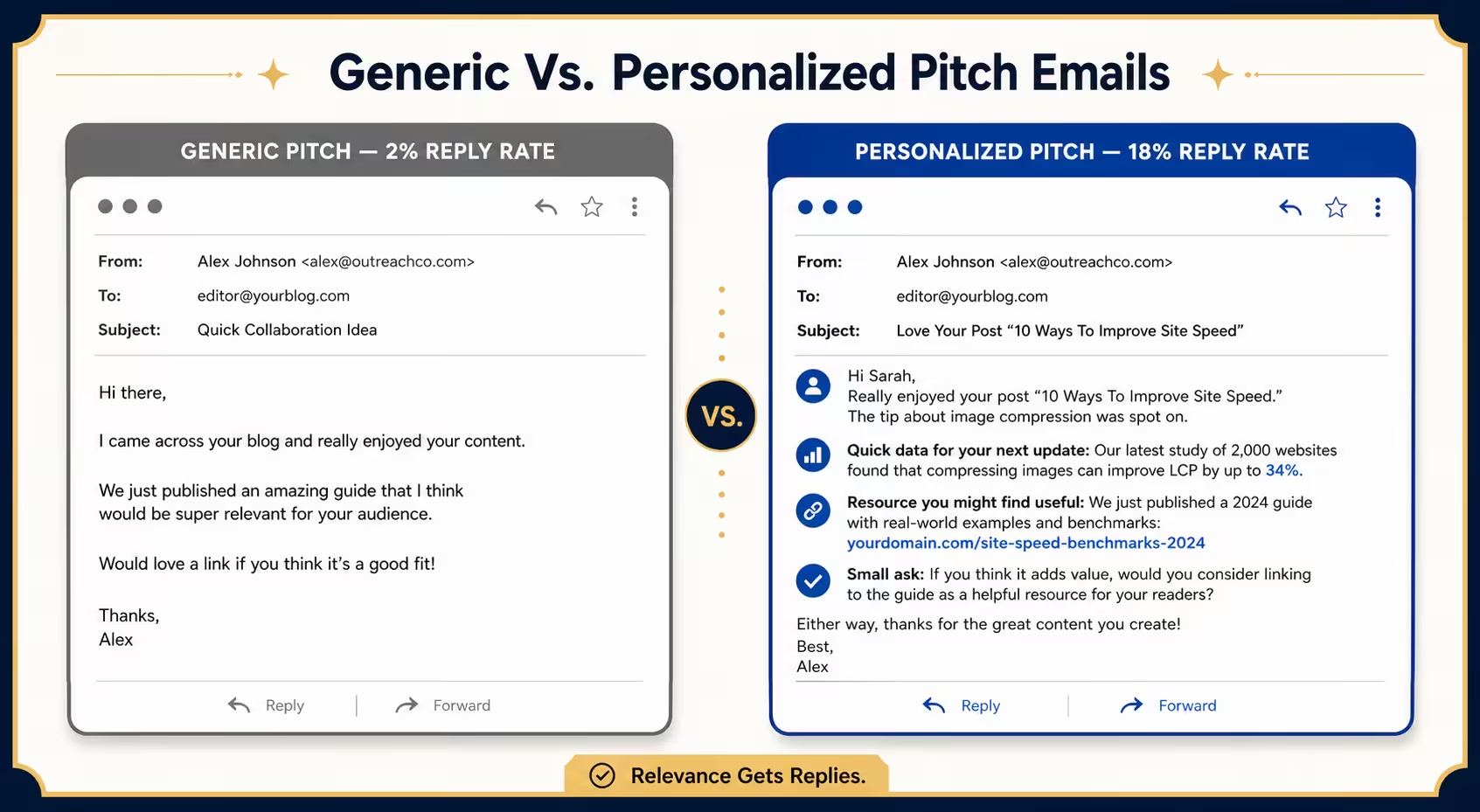
1. Personalize the First Two Sentences for Real
Not “I loved your post on X” personalization. Real personalization. Reference a specific argument they made, push back on it, agree with it for a specific reason, or connect it to something they wrote three years ago. The first two sentences prove you read their work. Everything after is allowed to be more standard.
2. Lead With What You’re Offering, Not What You’re Asking
The worst outreach opens with “I’m reaching out because we just published an article on X and thought it’d be a great fit for your site.” That’s the writer’s need, not the editor’s. Flip it: “Your piece on X mentioned that data on Y is hard to find. We just ran a survey of 340 practitioners on exactly that question, happy to send the raw data and a quote if useful.”
3. Make the Ask Small and Specific
“Would you consider linking to our guide?” is vague and asks for a decision. “If you update the post, this stat might be useful in paragraph 3, feel free to use it with or without a link” is concrete and gives away value before asking for anything. The second approach gets more links because it doesn’t feel like a transaction.
4. Keep the Email Under 120 Words
Editors scan on mobile. A 400-word email gets archived. A 90-word email with one clear ask gets a reply.
Here’s the structure that works:
- Sentence 1: Reference something specific they wrote
- Sentence 2: Connect it to a piece of value you have
- Sentence 3: Briefly describe the value (data point, asset, quote)
- Sentence 4: Make a small, specific ask
- Sentence 5: Sign off, no pressure, no follow-up threats
Follow-Up Cadence
One follow-up after 5-7 days. That’s it. Two follow-ups is acceptable if you have genuinely new information to add (“I noticed you just published another piece on this, same offer stands”). Three or more reads as desperate and damages your sender reputation.
Stage 5: Track What Actually Predicts Rankings
Most link building reports show one metric: referring domains gained. That number tells you almost nothing about whether the campaign worked. The metrics that matter:
Topically Relevant Referring Domains
Links from sites in your specific category, not generic high-DR sites
Anchor Text Distribution
Branded, partial-match, and natural-language anchors should dominate; exact-match anchors should stay under 10% of the profile
Link Placement
In-content editorial links beat sidebar, footer, and author-bio links by a wide margin
Organic Traffic to the Linked Page
The page should see ranking improvements within 60-90 days of earning quality links; if it doesn’t, the links weren’t quality
Reply Rate and Link Placement Rate
Campaign-level health metrics that let you tune the system over time
Reply rate below 8% means the targeting or pitch is broken. Link placement rate below 30% of replies means the asset isn’t strong enough or the ask isn’t aligned with what editors want. Diagnose the specific failure, fix it, run the next batch.
What to Skip Entirely
A few tactics are still everywhere in link building content. They don’t work, or they actively hurt you in 2026:
- Mass guest posting on low-quality blogs. Google’s link spam systems flag these patterns. Strategic guest posts on genuinely respected publications are different, those still work.
- Paid link networks and PBNs. Short-term lift, long-term penalty risk. Not worth it.
- Reciprocal link exchanges at scale. Three-way and four-way exchanges are equally trackable. Google sees the pattern.
- Comment links and forum signature links. Time sink. Zero impact.
- Generic “skyscraper” outreach. The original tactic worked because nobody else was doing it. Now everyone is. The reply rates have collapsed.
If a tactic feels like a shortcut, it probably is. Real link building takes time because real relationships and real authority take time.
See where AI answers put your brand
Twenty minutes with a senior strategist: where the major engines point buyers in your category, who gets named instead of you, and a straight read on what a programme would change.
Book a strategy callRealistic Timelines and Expectations
One thing nobody tells you when you start: link building results compound, but they compound slowly. Here’s what realistic looks like for a focused B2B campaign:
| Timeframe | Realistic Outcome |
|---|---|
| Month 1 | Asset built, prospect list compiled, first 50 pitches sent, 2-5 links secured |
| Month 2 | Outreach refined based on reply patterns, 8-15 cumulative links |
| Month 3 | First ranking movements visible, 15-25 cumulative links, referral traffic starting |
| Month 6 | 30-60 cumulative editorial links, target pages climbing in SERPs, compounding effect kicking in |
| Month 12 | Sustained authority growth, brand starting to appear in editorial coverage you didn’t pitch |
Teams that quit at month 2 because “it’s not working” miss the inflection point that happens around month 4-6. The links you place in month 1 don’t deliver their full ranking impact until months later. Plan for the compound curve, not for instant returns.
Link building takes 3-6 months to show meaningful ranking impact because earned links compound over time. Most teams quit before month 4, which is exactly when the inflection point usually hits.
Frequently Asked Questions
How many backlinks do I need to rank?
There’s no fixed number, it depends on your competition’s link profiles. Pull the top 10 ranking pages for your target keyword and look at the median number of referring domains they have. That’s roughly the threshold you need to hit, plus topical relevance and content quality. For most B2B keywords, 30-80 quality referring domains to the target page gets you into the running.
Is guest posting still a legitimate link building tactic?
Strategic guest posting on respected industry publications still works well. Mass guest posting on low-quality “guest post networks” doesn’t and can trigger penalties. The rule: would you be proud to have this byline on your LinkedIn? If yes, it’s a real guest post. If no, skip it.
How long does link building take to impact rankings?
Expect 60-90 days between earning a quality link and seeing the ranking lift it produces. Campaign-level results compound over 6-12 months. Anyone promising faster results is either lying or building links that won’t last.
Should I buy backlinks?
No. Paid links violate Google’s guidelines, the quality is almost always poor, and the link profiles look identical across hundreds of buyers, which makes them easy to detect algorithmically. The short-term lift isn’t worth the long-term risk to the domain.
What’s the difference between earning and building links?
Earning links means creating something so useful that people link to it without being asked, usually tools, original research, or definitive guides. Building links means active outreach to acquire links. Most successful campaigns combine both: build assets worth earning links to, then promote them through targeted outreach.
Do nofollow links have any value?
Yes, more than people think. Nofollow links drive referral traffic, build brand awareness, get cited by other journalists, and contribute to the overall authority signal Google measures. They don’t pass direct PageRank, but they’re part of a healthy, natural-looking link profile.
How do I find unlinked brand mentions?
Set up alerts for your brand name in Google Alerts, Mention, or BrandMentions. Filter for mentions on sites that don’t currently link to you, then send a polite note to the author asking if they’d consider adding the hyperlink. Conversion rates on this tactic are typically 30-50% because the editor has already cited you.
Start With One Asset, One List, One Pitch
Most teams overthink link building until they’ve planned themselves out of starting. The simpler move: pick one asset you can build in the next two weeks, prospect 50 highly relevant sites, qualify them tightly, and send 50 personalized pitches. Track reply rate and placement rate. Adjust. Run the next batch.
The teams winning at this in 2026 aren’t doing anything magic. They’re just running the system consistently while everyone else is chasing the next shortcut. Pick the boring, slow path. It works.
If you want to go deeper on the strategic side of link building, what types of links to prioritize, how to think about anchor text, and how to build a profile that holds up over time, our practitioner’s guide on what link building actually is in 2026 covers the foundation. For teams that need execution help, our breakdown of editorial link building that earns real authority goes into the campaign-level work.