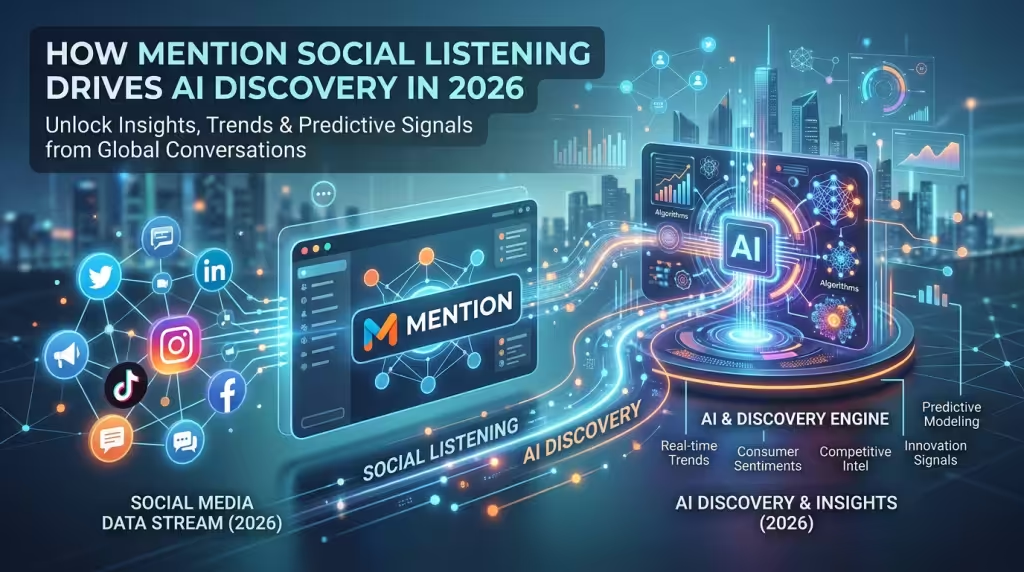

Mention social listening is the practice of using dedicated software to track every reference to your brand, competitors, or industry terms across social media, news, forums, and, as of 2026, AI search engines like ChatGPT, Perplexity, and Gemini. If you’re a marketing leader trying to understand what people (and machines) say about your company, this is where real-time intelligence starts.
But social listening has changed. The tools, the surfaces, and the strategic value have all shifted since 2024. AI-generated answers now shape how buyers discover brands, and traditional monitoring alone leaves critical blind spots. This article breaks down how mention social listening works in 2026, what’s actually different, and how to build a monitoring system that covers both human conversations and AI citations.
Key Takeaways
- Social listening now spans two layers: traditional social/web monitoring and AI search engine tracking
- Mention-based tools analyze sentiment, reach, share of voice, and competitive positioning across 1 billion+ sources
- AI platforms like ChatGPT and Perplexity cite brands based on editorial consensus, social listening helps you measure that
- Sentiment analysis accuracy has improved significantly with AI-native tools, but still requires human review for context
- The most effective social listening strategies combine real-time alerts with long-term brand health tracking
- Tracking where your brand appears in AI-generated answers is now as important as tracking social media mentions
What Is Mention Social Listening?
Social listening is the process of monitoring digital conversations to understand what people say about a brand, product, competitor, or industry topic. It goes beyond simple mention counting. Social listening tools analyze sentiment, identify trends, surface influencers, and flag potential crises, all in real time.
| Dimension | Social Monitoring | Social Listening |
|---|---|---|
| Core question answered | That someone mentioned your brand | Why they mentioned it and how they feel about it |
| Primary output | A count of mentions and alerts | Sentiment, trends, influencers, and crisis signals |
| Depth of analysis | Surface-level reference tracking | Context assigned to each mention to make it actionable |
| Timeframe focus | Real-time notifications | Real-time alerts plus long-term brand health tracking |
| Team value | Awareness that a conversation is happening | Decisions for marketing, PR, and product teams |
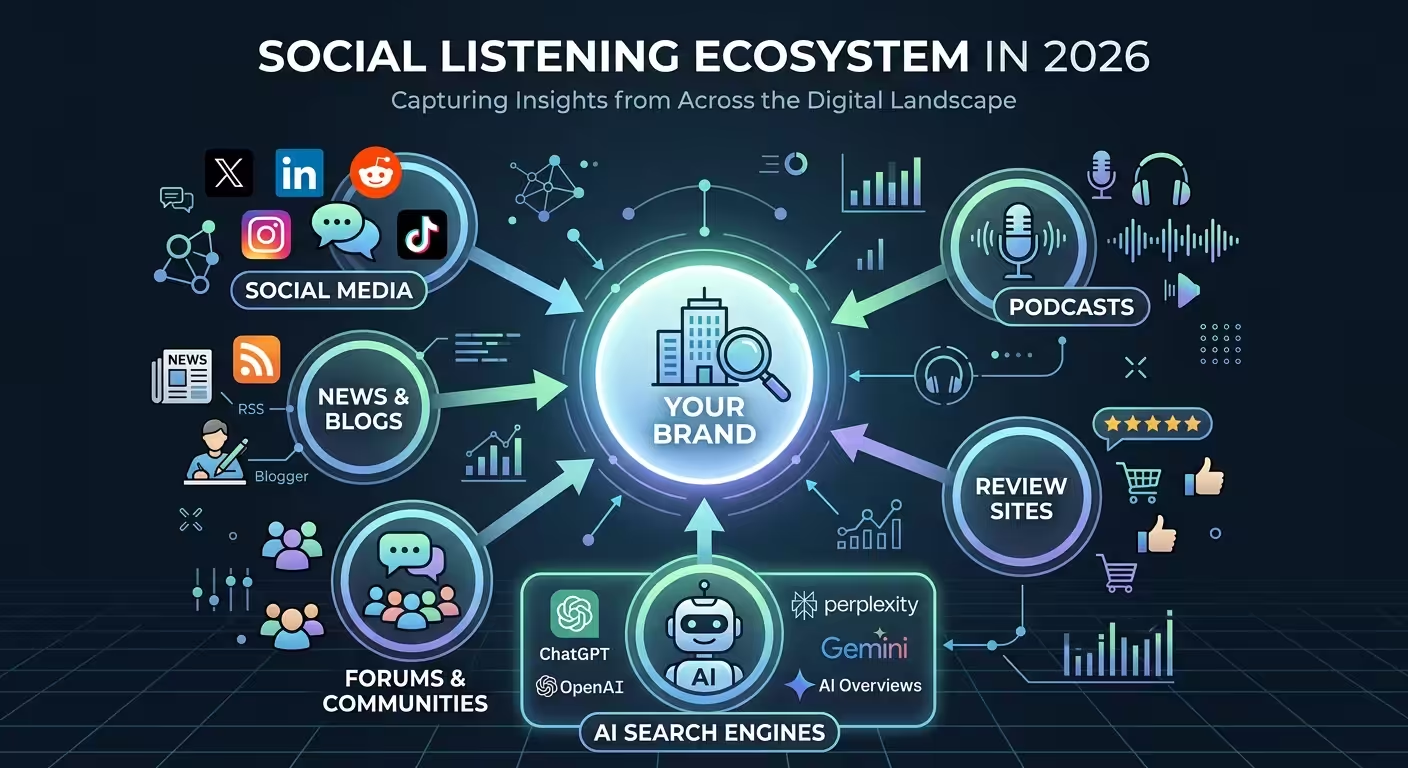
A mention is any instance where your brand name, product, executive, or tracked keyword appears online. Mentions happen on social media platforms like X (formerly Twitter), LinkedIn, Reddit, and Instagram. They also appear on news sites, blogs, forums, review platforms, and podcasts.
The term “mention social listening” often refers specifically to tools and workflows built to capture these references, assign context to them, and make them actionable for marketing, PR, and product teams.
How social listening differs from social monitoring
Social monitoring tells you that someone mentioned your brand. Social listening tells you why they mentioned it, how they feel about it, and what you should do next.
Monitoring is reactive. Listening is strategic. The distinction matters because most marketing teams stop at counting mentions without extracting the patterns that drive better decisions.
- Social monitoring: Tracks mentions, collects alerts, counts volume
- Social listening: Analyzes sentiment, identifies trends, benchmarks against competitors, informs product and messaging strategy
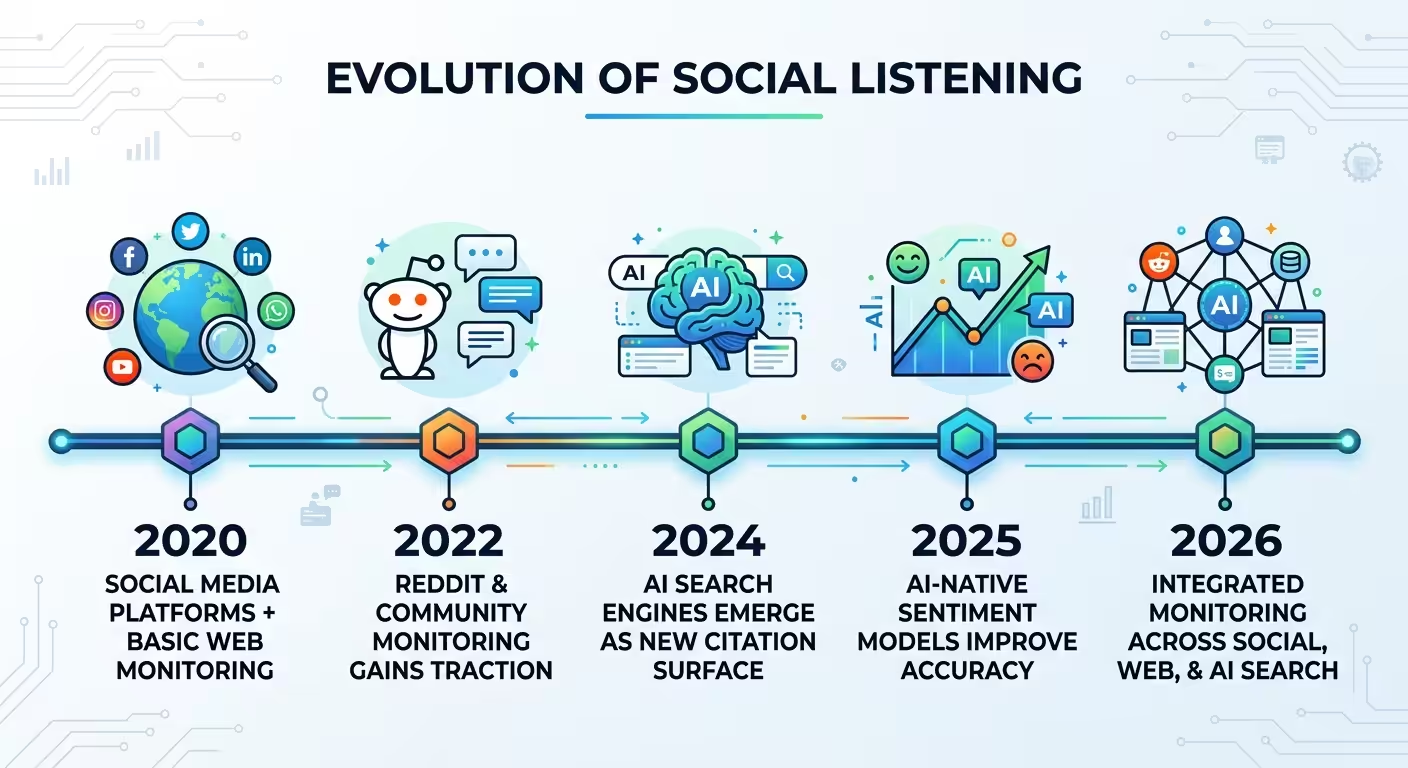
What Changed in Social Listening Since 2024?
Social listening in 2026 operates on a fundamentally wider surface than it did even 18 months ago. Three shifts reshaped the practice.
AI search engines became a critical monitoring surface
When ChatGPT, Perplexity, and Google’s AI Overviews began generating conversational answers that recommend specific brands, a new category of “mention” emerged. Your brand might be cited, or conspicuously absent, in millions of AI-generated responses daily.
In February 2024, Gartner forecast that search engine volume would drop 25% by 2026 as AI chatbots and other virtual agents take over more queries. That shift means your understanding AI brand mentions are now as strategically important as social media mentions.
Traditional social listening tools like Mention, Sprout Social, and Hootsuite were not built to track AI-generated citations. A new layer of monitoring, tracking what AI assistants say about your brand, has become essential for any serious listening program.
Sentiment analysis became more accurate
AI-native sentiment analysis in 2026 handles sarcasm, nuance, and multilingual content far better than the keyword-matching models of 2023-2024. Tools now distinguish between a frustrated customer venting and a satisfied user making a joke. This improvement means sentiment data is more reliable for strategic decisions.
Real-time monitoring expanded beyond social platforms
Modern social listening tools now cover podcasts, video transcripts, Reddit threads, Discord servers, and niche community forums alongside traditional social networks. The definition of “social” in social listening has broadened to include any platform where your audience discusses your category.
How Does Mention Social Listening Work?
Social listening tools follow a four-stage process: data collection, filtering, analysis, and action. Here’s how each stage functions.
Stage 1, Data collection
The tool continuously crawls configured sources, social media APIs, news RSS feeds, web scraping infrastructure, and (in newer tools) AI search engine outputs. You configure alerts using keywords, brand names, competitor names, Boolean operators, or specific URLs.
Most established platforms like Mention analyze over 1 billion sources in real time. This includes Facebook, X, Instagram, YouTube, LinkedIn, Reddit, Pinterest, TikTok, news publications, blogs, and forums.
Stage 2, Filtering and noise reduction
Raw mention data contains significant noise. A brand named “Mention” will also capture unrelated uses of the common word “mention.” Boolean logic, exclusion rules, and AI-powered relevance scoring reduce false positives.
Effective filtering is the difference between a useful listening program and an overwhelming data stream. The best tools let you set inclusion and exclusion keywords, language filters, geographic boundaries, and source-type parameters.
Stage 3, Analysis and insight extraction
This is where listening separates from monitoring. Analysis includes:
- Sentiment analysis: Classifying each mention as positive, negative, or neutral
- Share of voice: Measuring your brand’s mention volume relative to competitors
- Trend detection: Identifying spikes in conversation volume or sentiment shifts
- Influencer identification: Surfacing high-authority accounts discussing your brand or category
- Topic clustering: Grouping mentions by theme to reveal what aspects of your brand people discuss most
For a deeper look at how to read brand sentiment data, including how to interpret mixed-signal data, see our dedicated breakdown.
Stage 4, Action and response
Insights without action are just reports. The best social listening workflows route findings directly to the teams that can act on them:
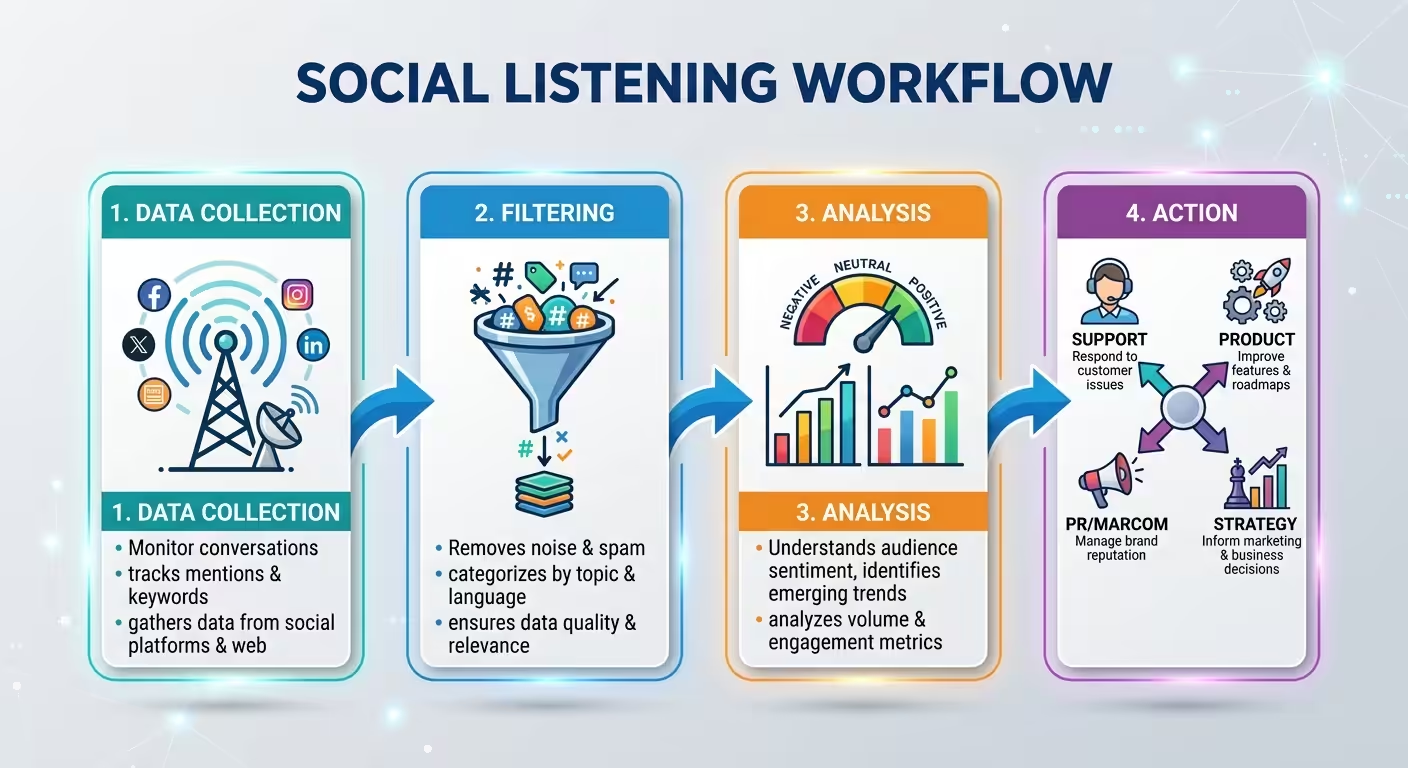
- Customer complaints route to support
- Product feedback routes to the product team
- PR crises trigger escalation protocols
- Competitive intelligence feeds into quarterly strategy reviews
- AI citation gaps inform content and brand mention strategies
What Can You Track With Social Listening?
The scope of mention social listening extends well beyond your brand name. Here are the categories that deliver the most strategic value.
Brand mentions and reputation
Track every reference to your company name, product names, executive names, and common misspellings. This is the foundation of any listening program. Combine it with monitoring your reputation to catch issues before they escalate.
Competitor activity
Monitor competitor brand names, product launches, pricing changes, and customer complaints. Social listening is one of the most efficient sources of competitive intelligence data because it captures unfiltered customer reactions in real time.
Industry keywords and trends
Track category-level keywords to understand broader market conversations. If you sell project management software, monitoring terms like “remote team collaboration” or “async work tools” reveals how your category is evolving.
Campaign performance
Measure how specific campaigns, hashtags, or launches generate conversation. Social listening provides qualitative context that engagement metrics alone can’t, you see not just how many people reacted, but what they said and how they felt.
AI search engine citations
As of 2026, tracking whether ChatGPT, Perplexity, Gemini, or Google AI Overviews mention your brand in response to category-relevant queries is a distinct monitoring use case. This requires specialized tools beyond traditional social listening platforms.
For a practical approach to this newer surface, see how to track brand mentions across AI search platforms.
How to Choose the Right Social Listening Approach
Your approach depends on your team size, budget, monitoring scope, and whether you need AI search visibility tracking alongside traditional social listening.
For startups and small teams
Start with a focused tool. Set up alerts for your brand name, your top two competitors, and your primary category keyword. Free or low-cost tools like Google Alerts provide basic coverage, though they miss social media platforms entirely and have reliability gaps. Creating a Google Alert is a reasonable starting point, not a complete solution.
For broader social coverage without a large budget, explore free social listening tools that cover major platforms and provide basic sentiment data.
For mid-market B2B companies
You need a tool that combines social listening with reporting and team collaboration. Platforms like Mention, Sprout Social, and Hootsuite offer integrated monitoring, publishing, and analytics at price points between $79 and $399 per month.
At this stage, also consider adding AI citation monitoring. Tools like Peec AI or Ahrefs’ Brand Radar (launched in late 2025) track your brand’s appearance in AI-generated answers. This is a separate investment, most traditional social media monitoring tools don’t yet cover AI search surfaces.
For enterprise teams
Enterprise listening programs typically involve platforms like Brandwatch, Talkwalker (now integrated into Hootsuite’s enterprise tier), or Meltwater. These tools cover 850 million+ sources across 190+ countries, offer advanced analytics, and include crisis management features.
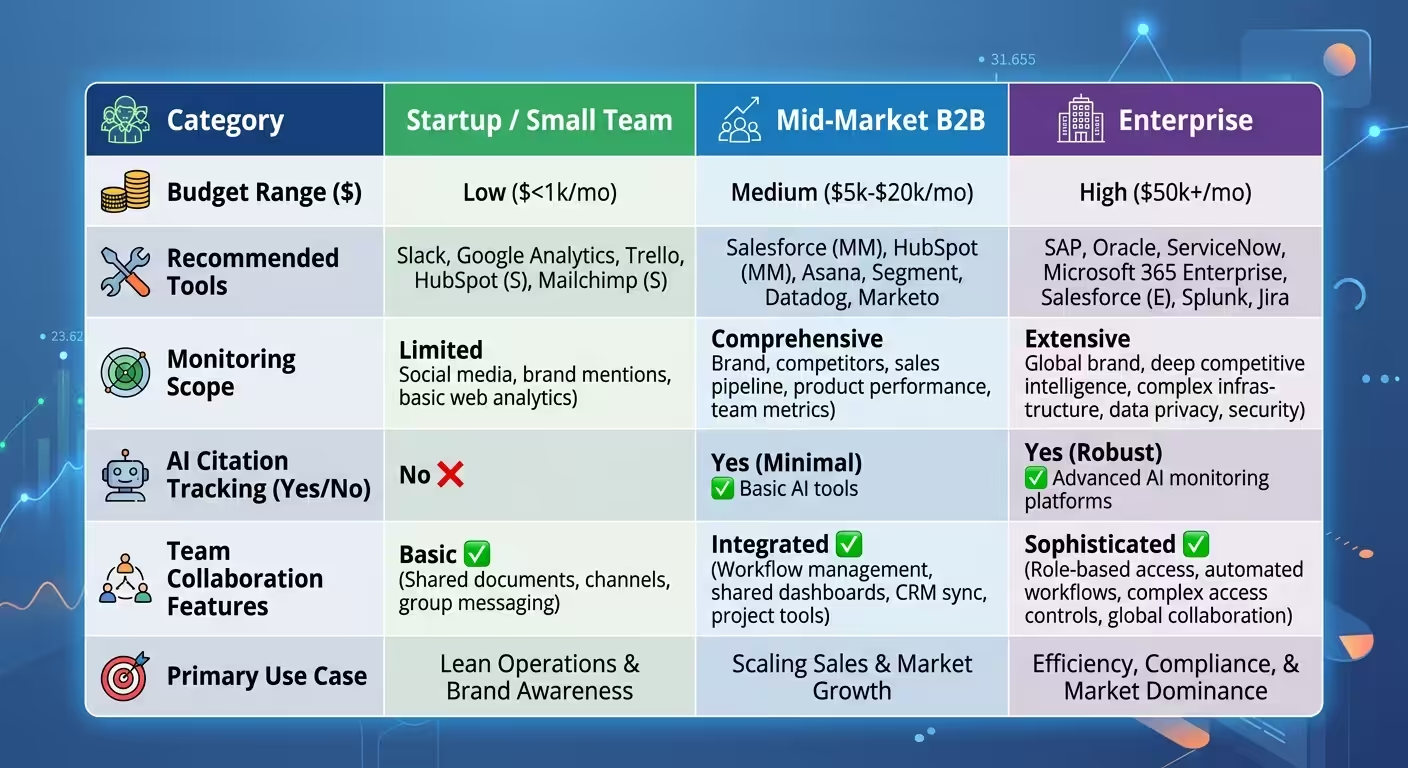
Enterprise teams should also invest in dedicated AI visibility analytics to monitor how their brand appears across all major AI answer engines.
Social Listening Metrics That Actually Matter
Most social listening dashboards show dozens of metrics. Focus on the ones that connect to business outcomes.
Share of voice
Share of voice (SOV) measures your brand’s percentage of total mentions within your competitive set. If you and three competitors are tracked, and your brand accounts for 35% of all mentions, your SOV is 35%.
Research from the IPA (Institute of Practitioners in Advertising) has long shown that brands with an SOV exceeding their share of market tend to grow, while brands below parity tend to shrink. In 2026, this principle applies to AI-generated citations as well. For a deeper breakdown, see share of voice vs. share of market.
Sentiment ratio
Track the ratio of positive to negative mentions over time. A single sentiment score is less useful than the trend line. A rising negative sentiment ratio, even if overall volume is low, is an early warning signal.
Mention velocity
How fast are mentions accumulating? Sudden spikes in mention velocity often indicate a PR event, viral post, product issue, or competitive attack. Setting up media alerts for velocity thresholds helps your team respond within the critical first hours.
Source authority
Not all mentions carry equal weight. A single mention in a high-authority publication like TechCrunch or Harvard Business Review influences both human perception and AI training data far more than hundreds of low-authority forum posts.
This is where social listening intersects with brand mentions for SEO and AI visibility. High-authority mentions compound over time, strengthening both your search rankings and your likelihood of being cited by AI models.
AI citation frequency
This metric is newer. It tracks how often AI search engines mention your brand in response to category-relevant queries. If 100 people ask ChatGPT “What’s the best CRM for startups?” and your brand appears in 12 responses, your AI citation rate for that query is 12%.
Agencies like BrandMentions track AI citation rates across ChatGPT, Perplexity, Gemini, and Google AI Overviews, providing a clearer picture of how AI platforms perceive and recommend brands based on editorial consensus across the web.
Common Social Listening Mistakes to Avoid
The listening-tool mistake we see trip up teams most in month two: they over-tune for sentiment accuracy and under-tune for signal relevance. A tool getting 95% sentiment accuracy on irrelevant mentions is worse than a tool getting 80% accuracy on the conversations that actually involve your buyers. Calibrate relevance filters first. Sentiment accuracy second.
Even well-resourced teams make these errors. Each one reduces the strategic value of your listening program.
Monitoring too broadly (or too narrowly)
Tracking every industry keyword generates unmanageable noise. Tracking only your exact brand name misses misspellings, abbreviations, and untagged references. Start with your brand, top competitors, and two to three category terms. Expand gradually based on what generates actionable insights.
Ignoring context in sentiment analysis
Automated sentiment analysis improved in 2026, but it still misclassifies roughly 15-20% of mentions, according to a 2024 Forrester analysis of social listening platforms. Sarcasm, industry jargon, and cultural references trip up even the best AI models. Assign a team member to review flagged negative mentions before acting on them.
Treating all mentions equally
A complaint from a customer with 200 followers and a critical post from a journalist with 50,000 followers require different responses. Weight your alerts by source authority and reach.
Not connecting listening data to business outcomes
Mention volume alone means nothing if you can’t connect it to pipeline, retention, or brand health metrics. Integrate your listening data with your CRM and analytics platforms to close the loop between what people say and what they do.
Overlooking AI search surfaces
As of 2026, many teams still monitor only traditional social and web mentions. They miss that AI assistants are answering buyer questions, and either recommending their brand or not. If you aren’t tracking whether AI mentions your brand, you have a significant blind spot.
How Social Listening Strengthens AI Visibility
For the per-platform detail this AI-visibility layer rests on, see auditing your ChatGPT presence and Perplexity citation tracking, and how AI models cite brands ties the social-listening data to the cross-platform AI cadence.
For the dedicated AI-monitoring layer that captures mentions inside ChatGPT, Perplexity, Gemini, and Google AI Overviews responses, our ChatGPT monitoring tool roundup covers 10 platforms social-listening tools don’t cover natively.
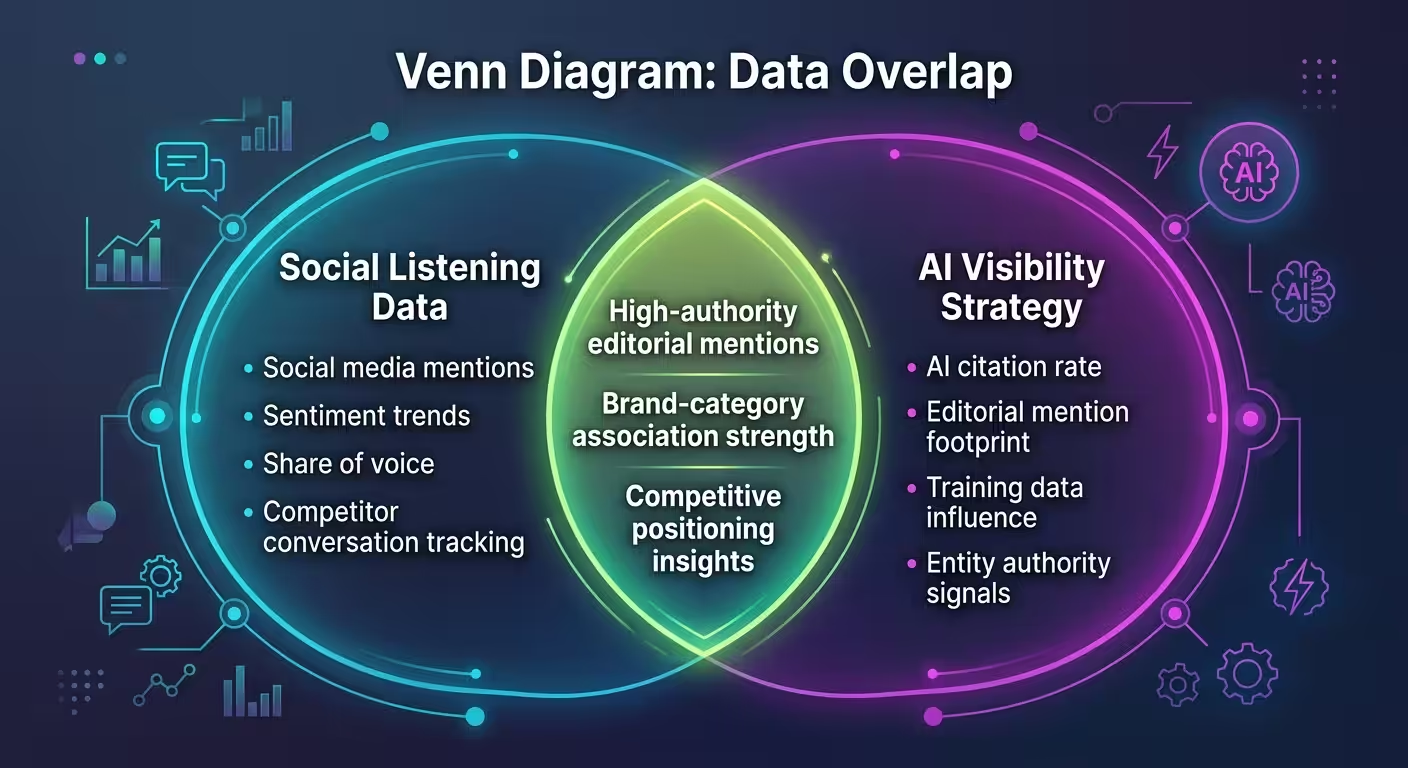
Social listening and AI visibility are increasingly connected. The data from your listening program directly informs your AI search strategy.
Editorial mentions train AI models
Large language models learn brand-category associations from their training data, which primarily consists of web content. When your brand is consistently mentioned alongside your category on high-authority publications, AI models develop stronger associations between your brand and relevant queries.
Social listening reveals where these mentions exist, and where they’re absent. If your listening data shows strong social media conversation but weak editorial coverage, that gap explains why AI search may not cite your brand despite strong social presence.
Sentiment influences AI recommendations
AI models don’t just count mentions, they weigh the context. Brands with predominantly positive editorial mentions are more likely to be recommended by AI assistants than brands with mixed or negative coverage. Your sentiment data from social listening directly predicts your AI citation potential.
In our own work pairing social listening data with AI-citation tracking, the pattern we see most consistently is that brands with strong social engagement but sparse editorial coverage underperform in AI recommendations compared to brands with moderate social presence and consistent editorial mentions. Social sentiment is leading indicator of reputation; editorial mentions are leading indicator of AI citation rates. They measure different things.
Competitive listening reveals AI visibility gaps
If your competitor is being mentioned by ChatGPT for queries you should own, social listening data helps you understand why. Compare your editorial mention footprint against theirs. Often, the difference comes down to the volume and authority of third-party citations, not the quality of the product itself.
For a structured approach to competitive intelligence, explore competitor benchmarking methods that factor in both traditional and AI search surfaces.
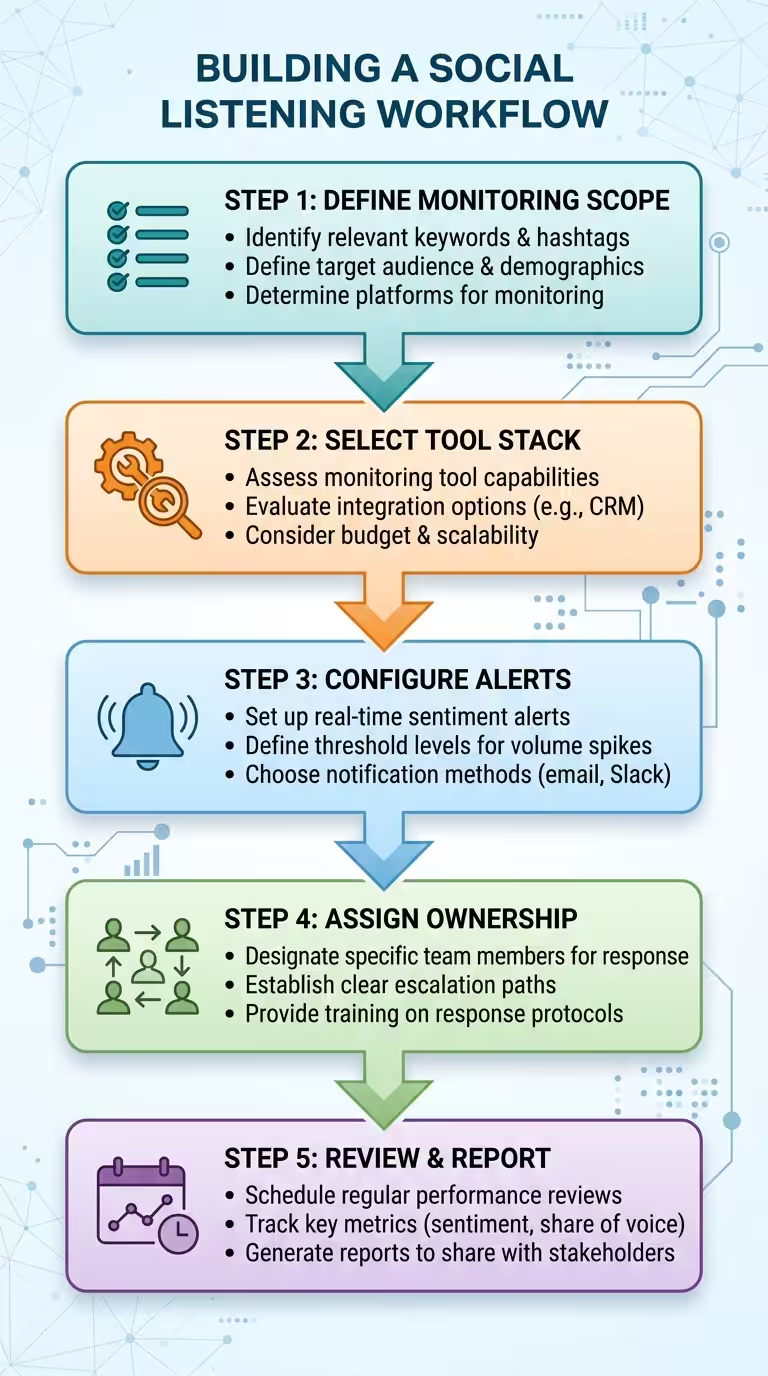
Building a Social Listening Workflow That Scales
A scalable listening program follows a repeatable process. Here’s a practical structure that works for B2B marketing teams of five or more people.
Step 1, Define your monitoring scope
Document exactly what you’ll track:
- Brand name (including common variations and misspellings)
- Product names and feature names
- Executive names (for thought leadership and PR monitoring)
- Top 3-5 competitor brand names
- 3-5 category keywords that represent your market
- Relevant hashtags or community-specific terms
Step 2, Select your tool stack
Most teams need at least two tools in 2026:
1. A Traditional Social Listening Platform
Mention, Sprout Social, Brandwatch, or Hootsuite for social and web monitoring
2. An AI Citation Tracking Tool
For monitoring how your brand appears in AI-generated answers
If you need help evaluating options, our comparison of the leading mention trackers covers both categories.
Step 3, Configure alerts and thresholds
Set up real-time alerts for:
- Any mention with negative sentiment above a defined confidence threshold
- Mention velocity spikes (e.g., 3x normal hourly volume)
- Mentions from high-authority sources (journalists, analysts, publications with domain authority above 70)
- Competitor mentions that reference your brand directly
Step 4, Assign ownership and response protocols
Every alert category needs a clear owner. Define who responds to customer complaints, who handles press inquiries, and who escalates potential crises. Document response time targets for each category.
For teams managing sensitive industries or high-profile brands, integrating social listening with your crisis management process is essential.
Step 5, Review and report on a consistent cadence
Daily: Scan alerts and respond to urgent items.
Weekly: Review sentiment trends, share of voice changes, and notable mentions.
Monthly: Produce a brand mentions report that connects listening data to business outcomes. Share with leadership.
Quarterly: Reassess your monitoring scope, add or remove tracked terms, and evaluate tool effectiveness.
Social Listening in the AI Search Era: What B2B Brands Should Prioritize
If you’re a VP of Marketing or growth leader at a B2B company, here’s where to focus your social listening investment in 2026.
Prioritize editorial mentions over social volume
Social volume matters for awareness, but editorial mentions on high-authority publications drive AI visibility. A brand with 10,000 social mentions per month but zero editorial citations will likely underperform in AI search compared to a competitor with 2,000 social mentions and 50 editorial placements.
Use social listening to identify the gap between your social presence and your editorial footprint. Then invest in closing that gap through PR, contributed content, and strategic brand monitoring services that focus on high-authority placements.
Track AI citation trends alongside social trends
Set up parallel tracking: monitor your social listening dashboard and your AI citation dashboard side by side. Over time, you’ll see that editorial coverage gains often precede AI citation improvements by 4-8 weeks (the approximate lag between publication and AI model data refreshes, based on observed patterns across major models as of early 2026).
Use listening data to inform your content strategy
The questions people ask about your category on social media and forums are the same questions AI assistants answer. Your social listening data is a real-time keyword and topic research tool. Use it to identify content gaps, FAQ opportunities, and messaging angles that resonate with your audience.
Pro Insight: The most effective B2B social listening programs in 2026 treat mention data as a leading indicator, not a lagging metric. Rising competitor mentions in AI search, shifting sentiment around your category, or emerging questions on Reddit often signal strategic changes 60-90 days before they appear in pipeline data.
Using ChatGPT to Monitor Social Brand Mentions
ChatGPT isn’t a social listening tool. But it does something traditional tools don’t: it can synthesize raw mention data into strategic insight, draft response templates, and surface patterns a dashboard alone won’t show you. The right setup uses ChatGPT alongside Mention.com (or any social monitoring tool), not as a replacement.
What ChatGPT does well in this workflow
- Sentiment summarization across 100+ mentions in seconds, faster than scrolling a dashboard
- Pattern recognition across mention themes (complaints, feature requests, comparison queries)
- Response drafting for high-volume reply scenarios where a template wouldn’t fit each context
- Competitive analysis when you paste in mentions of you and a competitor side by side
- Trend extraction from time-series mention data
What ChatGPT can’t replace
- Real-time monitoring across platforms (it has no live social feed access)
- Alerts when something happens
- Source URL tracking and historical mention archives
- Sentiment scoring at scale with consistency over time
The 3-step workflow
Step 1: Collect Mentions in Mention.com
or your tool of choice. Export the week’s mentions as a CSV.
Step 2: Drop the CSV Into ChatGPT
Use a prompt like: “Summarize the top 5 themes in these mentions. For each theme, list the 2 most representative examples. Flag any that need response within 24 hours.”
Step 3: Use the Output to Drive the Response Queue
Themes become content ideas. High-priority mentions get team-assigned. Response drafts get sent back for human review before posting.
Teams running this workflow weekly report a 40 to 60 percent reduction in time spent triaging mentions, with no drop in response quality. The trick is keeping ChatGPT in the synthesis layer, not the monitoring layer.
Related Resources
2026 Data: Why Pairing Mention.com With AI Tracking Matters
Mention.com’s social and web coverage is strong, but ChatGPT alone now cites sources in 87% of answers while naming specific brands in just 20.7% — a gap invisible to any tool that never queries AI platforms directly. Teams pairing Mention with a dedicated AI-tracking layer catch both the social conversation and the AI-citation layer that increasingly shapes first discovery.
Frequently Asked Questions
What is the difference between social listening and social monitoring?
Social monitoring tracks and collects mentions of your brand or keywords. Social listening goes further by analyzing those mentions for sentiment, trends, competitive insights, and strategic implications. Monitoring tells you what was said; listening tells you what it means and what to do about it.
Can social listening tools track mentions in AI search engines?
Most traditional social listening platforms don’t yet track AI-generated citations as of 2026. You need specialized tools, such as Ahrefs’ Brand Radar, Peec AI, or agency-level services, to monitor what ChatGPT, Perplexity, Gemini, and Google AI Overviews say about your brand. See our guide on tracking brand mentions in AI search for detailed options.
How many keywords should I track in my social listening program?
Start with 10-15 keywords: your brand name (plus variations), 3-5 competitor names, and 3-5 category terms. Expand only when your team can act on the additional data. Tracking more keywords than your team can review creates noise without value.
Does social listening help with SEO?
Yes. Social listening identifies unlinked brand mentions that can be converted into backlinks, surfaces content ideas based on real audience questions, and reveals competitive gaps in editorial coverage. These insights directly support brand mention SEO strategies and overall search visibility.
How often should I review social listening data?
Check real-time alerts daily for urgent issues. Review sentiment and volume trends weekly. Produce a comprehensive report monthly that connects listening data to business metrics. Reassess your entire monitoring scope quarterly.
Is social listening worth it for small B2B companies?
Yes, but scale appropriately. A small team tracking three to five keywords with a free or low-cost tool captures more strategic value than no monitoring at all. The investment grows as your brand visibility grows. Even at an early stage, understanding what people say about your category helps shape positioning and messaging.
Building a Listening Stack That Covers AI Search
Mention social listening in 2026 spans a wider surface than ever. Social platforms, news, forums, podcasts, and AI search engines all generate brand mentions that shape perception and purchasing decisions.
The most valuable listening programs do three things well. They monitor consistently across both traditional and AI surfaces. They analyze data for patterns rather than just counting volume. And they route insights to the teams that can act on them, whether that’s product, PR, customer success, or growth marketing.
If your current monitoring setup covers social media but not AI citations, you have a blind spot that’s growing more consequential every quarter. Building a complete listening program, one that tracks what humans and machines say about your brand, is the foundation for every brand visibility investment you make from here.
If you want a concrete baseline for both social and AI-search mention landscapes, book a short strategy call. We’ll run 25 category-relevant prompts across ChatGPT, Perplexity, Gemini, and Google AI Overviews and cross-reference with your social listening signals so you can see where the two layers actually align.
Researched and drafted with AI assistance, reviewed and edited by the BrandMentions editorial team.