


An SEO keyword monitor tracks where your pages rank for target search terms across Google, Bing, and increasingly, AI search platforms, giving you the data you need to protect and grow organic visibility. Modern SEO keyword monitoring covers traditional rank tracking, AI keyword monitoring (where you track which queries trigger AI Overviews and AI assistant answers), and AI overview keyword monitor tools that show whether your content is cited in Google’s synthesized answers. Without all three, you’re making content and optimization decisions blind.
But here’s what’s changed since 2024: the definition of “keyword monitoring” has expanded. Ranking position 1 on Google still matters, but it no longer tells the full story. As of 2026, AI Overviews appear on roughly 30% of U.S. commercial queries, according to a BrightEdge analysis published in late 2025. Perplexity, ChatGPT search, and Gemini now drive measurable referral traffic. If your keyword monitor only checks traditional SERPs, you’re seeing half the picture.
This article breaks down how modern SEO keyword monitoring works, what to look for in a tool, and how to build a monitoring workflow that accounts for both traditional and AI-driven search surfaces.
Key Takeaways
- An SEO keyword monitor tracks ranking positions, SERP feature presence, and now AI search citations for your target keywords
- Daily rank tracking catches algorithm shifts and competitor moves before they cost you traffic
- The best monitoring setups in 2026 combine traditional rank trackers with AI visibility tracking
- Keyword monitoring data should drive content updates, not just reporting
- Local, mobile, and desktop rankings often diverge, monitor each separately
- Tracking branded keywords reveals how AI platforms reference your company
What does an SEO keyword monitor actually do?
An SEO keyword monitor is a tool or system that checks your website’s ranking position for specific search terms on a scheduled basis, daily, weekly, or on demand. It records position changes over time so you can spot trends, diagnose drops, and measure the impact of SEO work.
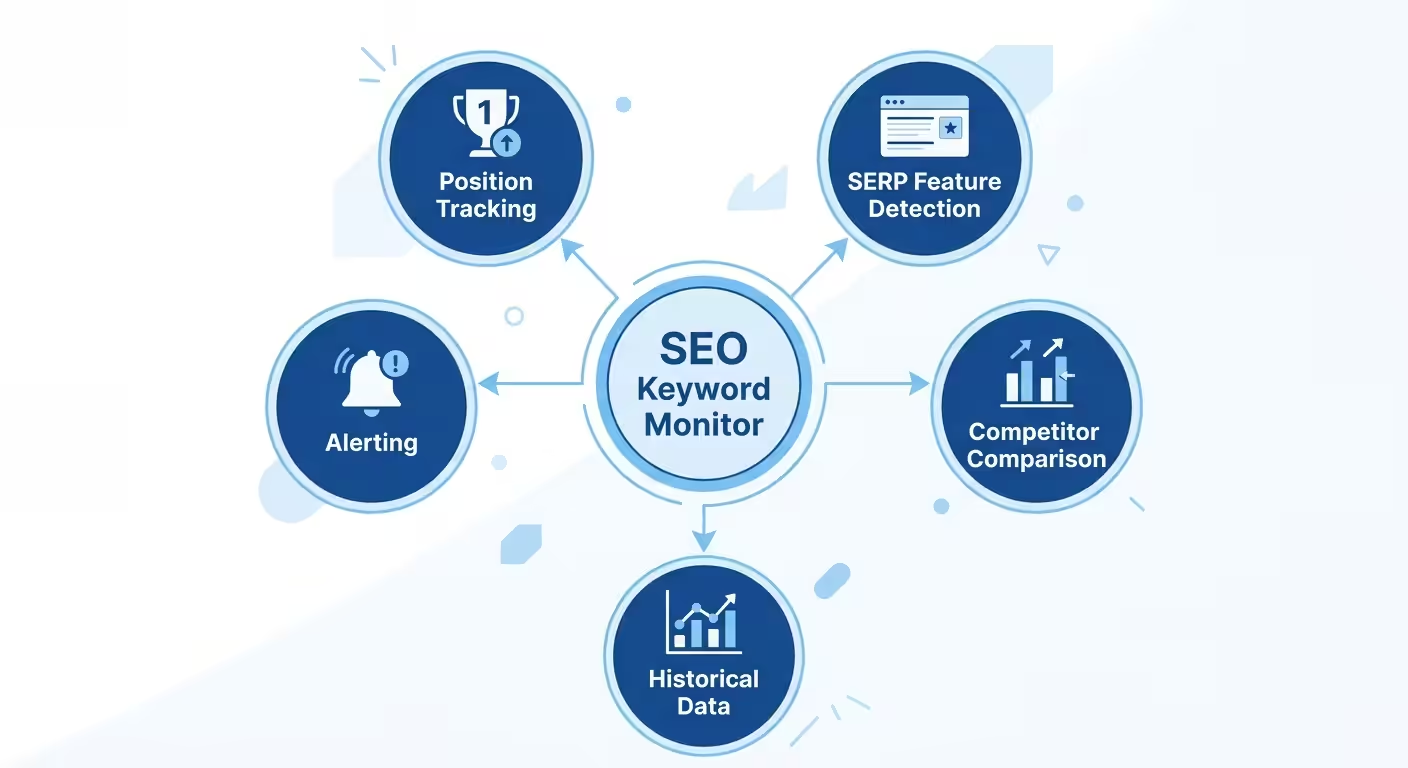
Core functions include:
- Position tracking, Your exact rank for each keyword on Google, Bing, and other search engines
- SERP feature detection, Whether your site appears in Featured Snippets, People Also Ask, image packs, or AI Overviews
- Competitor comparison, How your rankings compare to specific competitors on the same keywords
- Historical data, Trend lines showing rank movement over weeks, months, or years
- Alerting, Notifications when rankings shift beyond a threshold you set
The practical value is straightforward: keyword monitoring turns SEO from guesswork into a data-driven discipline. You see what’s working, what’s slipping, and where to focus next.
Why Keyword Monitoring Has Changed in 2026
Traditional rank tracking still matters. But the search landscape has fragmented in ways that make position-only monitoring insufficient.
AI Overviews Reshape What “Ranking” Means
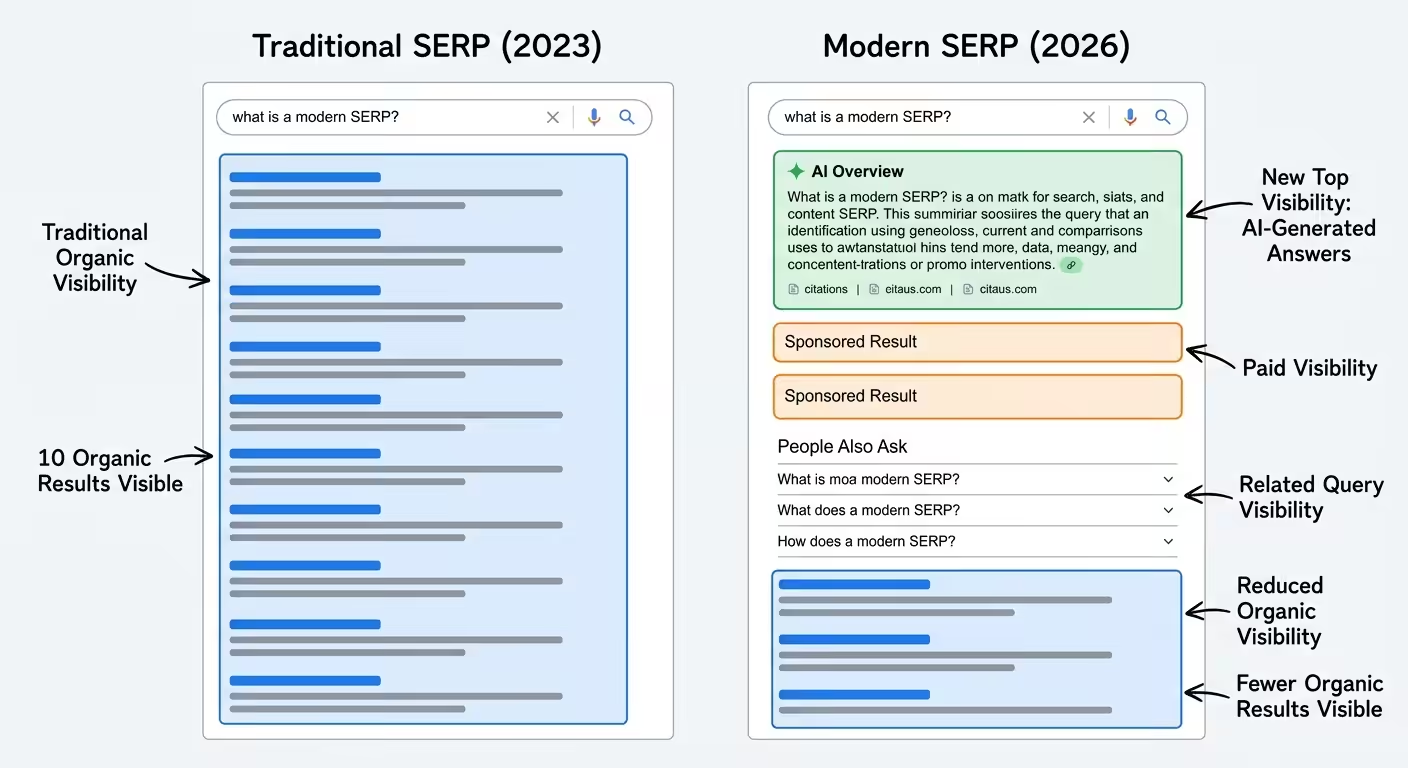
Google’s AI Overviews now sit above organic results for a significant share of queries. According to Authoritas research from 2025, only 47% of URLs cited in AI Overviews also rank in the traditional top 10 organic results. This means your page could rank position 3 organically but be absent from the AI-generated answer, or appear in the AI Overview despite ranking on page two.
A keyword monitor that only reports organic position misses this critical visibility layer.
AI Search Engines Generate Their Own Traffic
ChatGPT search, Perplexity, Gemini, and Copilot now answer queries directly. Sparktoro’s 2025 analysis estimated that zero-click and AI-answered searches account for roughly 60% of all Google queries. Beyond Google, AI-native search platforms are growing their user bases rapidly.
For B2B brands especially, the question is no longer just “where do we rank?” It’s also “does AI mention us when someone asks about our category?”
SERP Volatility Has Increased
Google’s core updates in 2026 and early 2026 have produced more frequent ranking fluctuations. Semrush’s Sensor data shows elevated SERP volatility across commercial keyword categories throughout the past 12 months. Without daily monitoring, you might not notice a drop until it shows up in traffic reports weeks later.
What to Track: Building Your Keyword Monitoring List
The keywords you monitor should reflect your actual business priorities, not just a massive list pulled from a research tool.
Start with Revenue-Connected Keywords
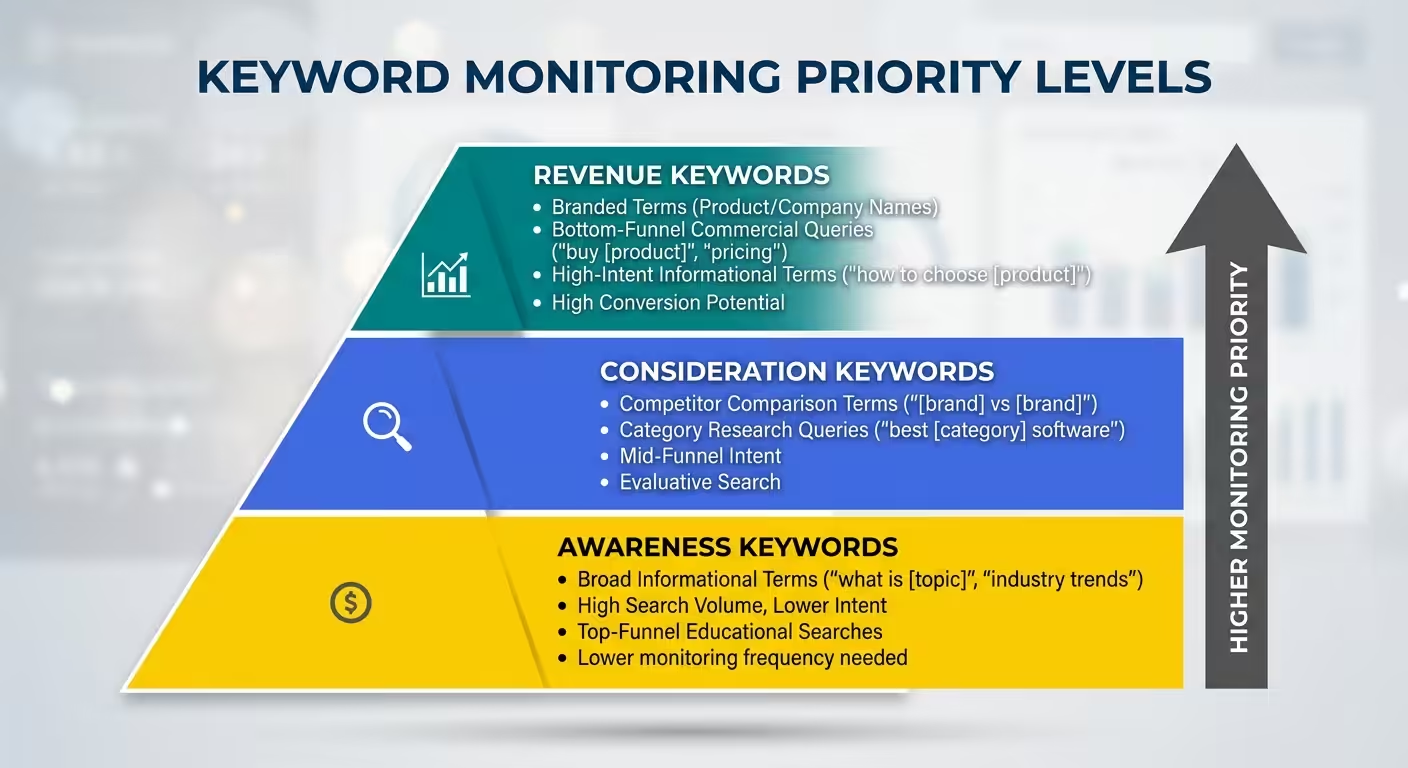
Prioritize terms that directly connect to pipeline and revenue. These are typically:
- Bottom-funnel commercial keywords, “[product category] software,” “[service type] agency,” “best [solution] for [use case]”
- Branded keywords, Your company name, product names, “[brand] reviews,” “[brand] vs [competitor]”
- High-intent informational keywords, Queries your prospects search before buying, like “how to evaluate [your category]”
A common mistake is monitoring hundreds of broad keywords that drive traffic but not revenue. A tighter, prioritized list gives you clearer signals.
Add Competitor-Overlap Keywords
Identify keywords where you and your top 3-5 competitors both rank. These contested terms are where monitoring pays off most, small ranking changes translate directly into traffic shifts between you and your competitors.
Tools like Semrush’s Keyword Gap or Ahrefs’ Content Gap can surface these overlapping terms. Add the most commercially valuable ones to your monitoring list. For a deeper approach to finding these opportunities, SEO competitor analysis provides a structured framework.
Include SERP-Feature-Targeted Keywords
If you currently hold or are targeting Featured Snippets, People Also Ask boxes, or AI Overview citations, monitor those keywords separately. SERP features are volatile, you can gain or lose a Featured Snippet in a single day.
Don’t Forget Branded Keyword Monitoring
Monitoring your own brand name keywords reveals:
- Whether competitors are bidding on your brand terms in paid search
- How search engines display your brand in Knowledge Panels and SERP features
- What AI platforms say about your brand when users ask about you directly
This connects directly to broader reputation-monitoring efforts that go beyond just SEO.
Choosing an SEO Keyword Monitor: What Actually Matters
The market has dozens of rank tracking tools. Most overlap in core features. The meaningful differences come down to a few practical factors.
Accuracy and Freshness of Data
Daily rank checks are now table stakes. But accuracy varies between tools depending on how they query Google. Some tools use data center proxies that produce slightly different results than what real users see. Others use residential proxies or direct API access for more accurate positioning.
Look for tools that:
- Offer daily updates as a baseline (not just weekly)
- Allow on-demand rank checks when you need real-time data
- Differentiate between mobile and desktop rankings
- Support localized results for specific cities or regions
SERP Feature Tracking
Your tool should detect whether your URL appears in:
- Featured Snippets
- People Also Ask boxes
- AI Overviews (Google’s SGE-evolved feature)
- Local pack results
- Image and video carousels
- Knowledge Panels
As of 2026, tools like Semrush, Ahrefs, and SE Ranking have added AI Overview detection. Verify this capability before committing to a platform.
Competitor Tracking Depth
Basic tools show your rank. Better tools show your rank alongside specific competitors for the same keyword, with historical trend lines for each. This comparative view matters more than absolute position because rankings are relative.
Reporting and Alerting
The best monitoring setup does nothing if you don’t act on the data. Choose tools that support:
- Automated alerts, Email or Slack notifications when a high-priority keyword drops more than 3-5 positions
- Scheduled reports, Weekly or monthly summaries for stakeholders who don’t log into SEO tools
- Custom dashboards, Filtered views for different keyword groups (branded, commercial, competitor-overlap)
If you’re already using Google Alerts for brand monitoring, think of keyword rank alerts as the SEO counterpart, early warnings that let you act before a ranking drop becomes a traffic crisis.
Tool Comparison: Key Platforms in 2026
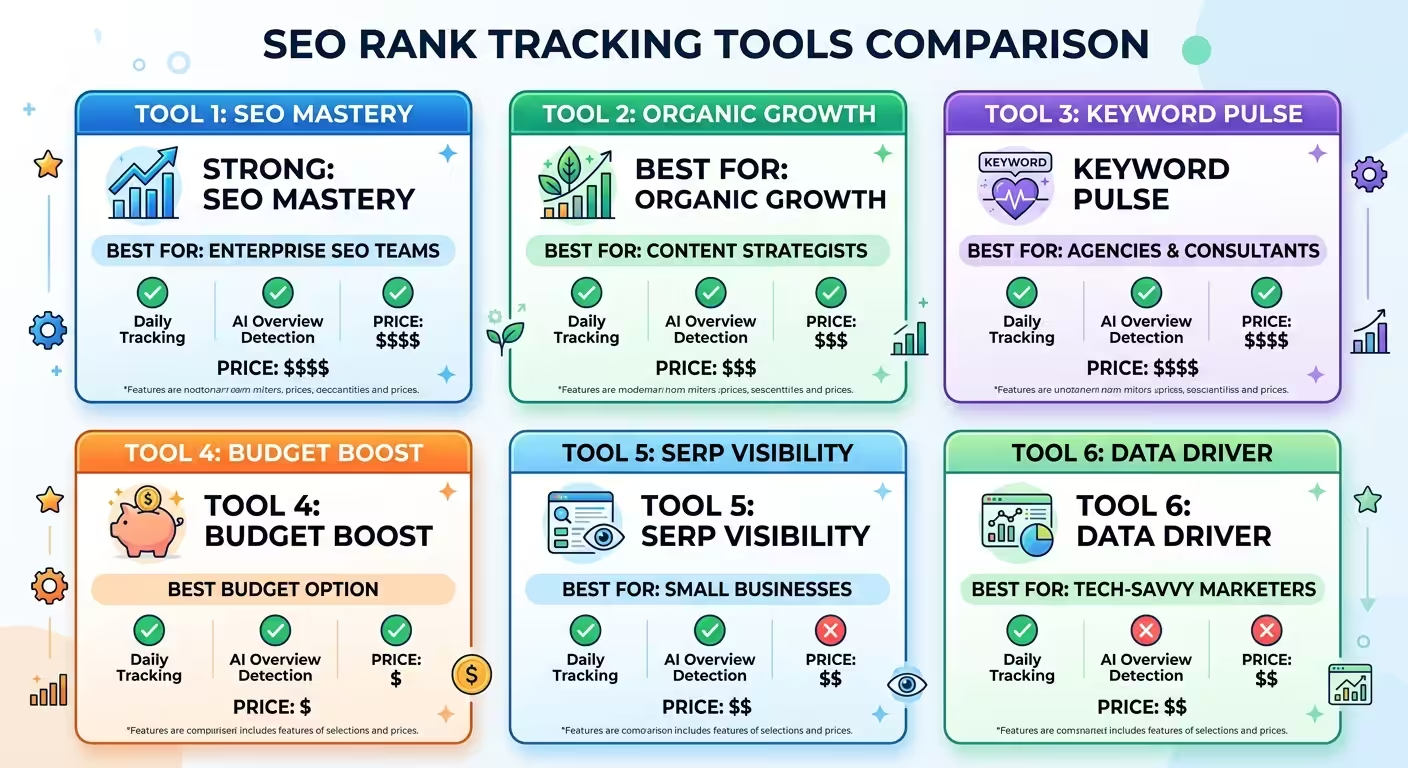
| Tool | Daily Tracking | AI Overview Detection | Local Rank Support | Starting Price (Monthly) |
|---|---|---|---|---|
| Semrush | Yes | Yes | Yes (city-level) | ~$130 |
| Ahrefs | Yes | Yes (added 2025) | Yes | ~$129 |
| SE Ranking | Yes | Yes | Yes | ~$52 |
| Mangools (SERPWatcher) | Yes | Partial | Yes | ~$30 |
| AccuRanker | Yes (on-demand) | Yes | Yes | ~$116 |
| Google Search Console | No (3-day delay) | No | Limited | Free |
Prices reflect published rates as of early 2026 and may vary by plan tier and keyword volume.
Pro Insight: Google Search Console is free and provides first-party click and impression data, but it’s not a real-time rank tracker. Use it alongside a dedicated keyword monitor, not as a replacement. GSC excels at showing which queries drive clicks to your site, while a rank tracker shows your exact position and how competitors move around you.
Setting Up a Keyword Monitoring Workflow That Drives Action
Data without action is just reporting. A strong keyword monitoring workflow connects rank data to decisions.
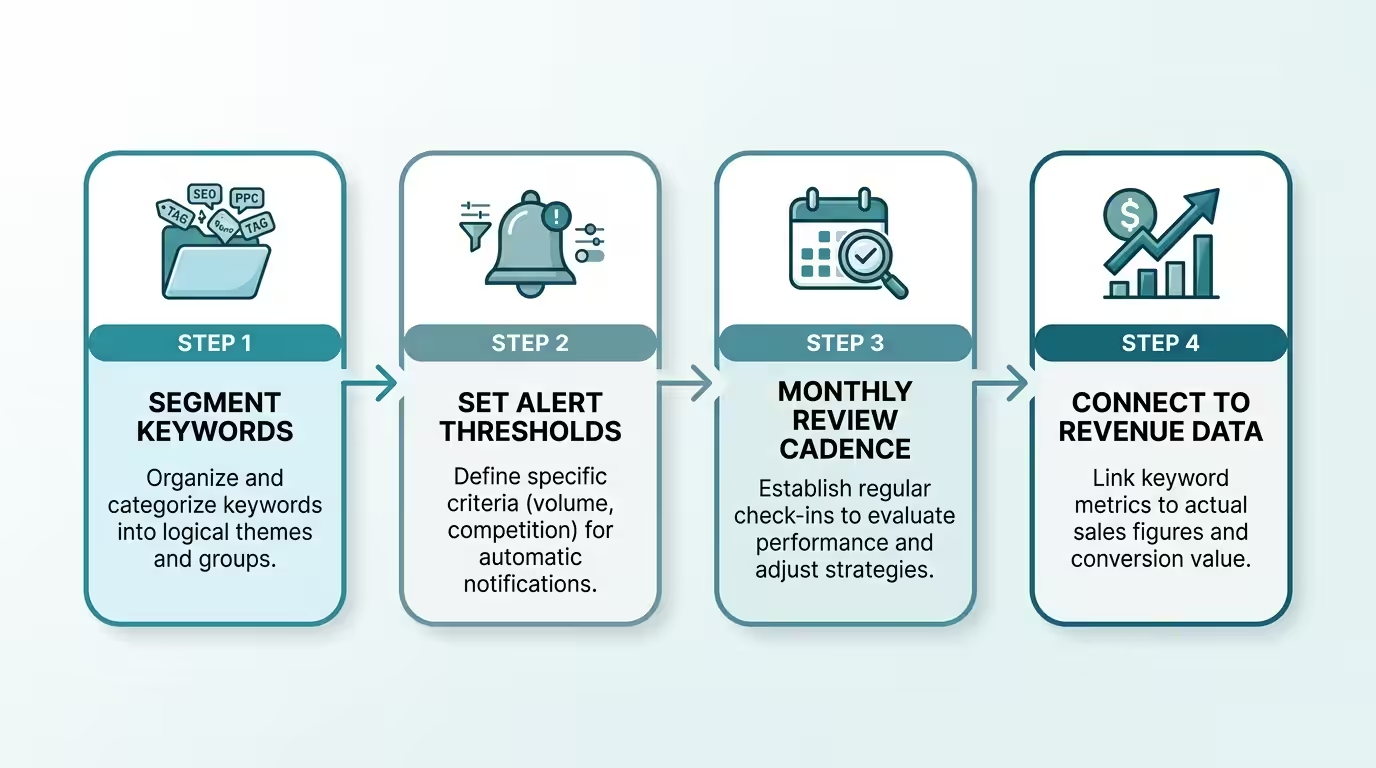
Step 1: Segment Keywords by Business Function
Group your keywords into segments that align with how your team operates:
- Product keywords, Terms tied to specific products or features
- Category keywords, Broader terms for the market you compete in
- Branded keywords, Your brand name and variations
- Competitor keywords, “[Competitor] alternative,” “[Competitor] vs [You]”
- Content keywords, Informational terms targeted by blog content
This segmentation lets you route alerts and reports to the right people. Product marketing cares about product keywords. Content teams care about blog keywords. Leadership cares about branded visibility.
Step 2: Set Alert Thresholds Based on Keyword Value
Not every ranking change deserves attention. Configure alerts based on keyword priority:
- Revenue keywords, Alert on any position change of 3 or more spots
- Category keywords, Alert on drops of 5+ positions or loss of page-one ranking
- Content keywords, Weekly summary review is usually sufficient
This prevents alert fatigue while ensuring you catch meaningful shifts quickly.
Step 3: Build a Monthly Review Cadence
Daily alerts handle emergencies. But the real strategic value comes from monthly reviews where you:
- Identify keywords trending upward, and double down with content updates or internal linking
- Identify keywords trending downward, and diagnose whether the cause is content decay, competitor improvement, or algorithm changes
- Spot new SERP feature opportunities, keywords where you rank top 5 but don’t hold the Featured Snippet or appear in AI Overviews
- Update your keyword list, add emerging terms, retire ones that no longer align with business priorities
Step 4: Connect Rank Data to Traffic and Conversions
Rank position alone doesn’t tell you enough. Cross-reference keyword monitoring data with Google Analytics and Search Console to answer:
- Did the rank improvement actually increase clicks?
- Are Featured Snippet captures reducing or increasing click-through rates?
- Which ranking improvements led to actual conversions or pipeline?
This integration turns keyword monitoring from an SEO activity into a business intelligence function.
Adding AI Visibility to Your Keyword Monitoring Stack
For the AI-visibility layer specifically, our guide to the best ChatGPT monitoring tools compares 10 platforms that track brand citations across ChatGPT, Perplexity, Gemini, and Google AI Overviews.
As of 2026, the gap between traditional keyword monitoring and AI visibility tracking is the biggest blind spot in most SEO programs.
Traditional rank trackers tell you where you appear on Google and Bing organic results. They don’t tell you whether ChatGPT mentions your brand when someone asks about your category. They don’t reveal if Perplexity cites your content. They don’t show if Gemini recommends your product.
What AI Visibility Monitoring Looks Like
AI visibility monitoring involves querying AI platforms with your target keywords and tracking whether, and how, your brand appears in the responses. This is a fundamentally different data collection process than checking a SERP position.
Key questions AI visibility monitoring answers:
- Does ChatGPT mention your brand when users ask about your product category?
- Does Perplexity cite your website as a source in its answers?
- Does Google’s AI Overview reference your content for target keywords?
- How do AI platforms describe your brand compared to competitors?
This emerging discipline, sometimes called AI search brand tracking, complements traditional keyword monitoring rather than replacing it.
Why Traditional and AI Monitoring Should Work Together
A keyword might show your website ranking position 4 on Google. But the same keyword triggers an AI Overview that cites three competitors and ignores you entirely. Without monitoring both layers, you’d assume your visibility is stable when it’s actually eroding.
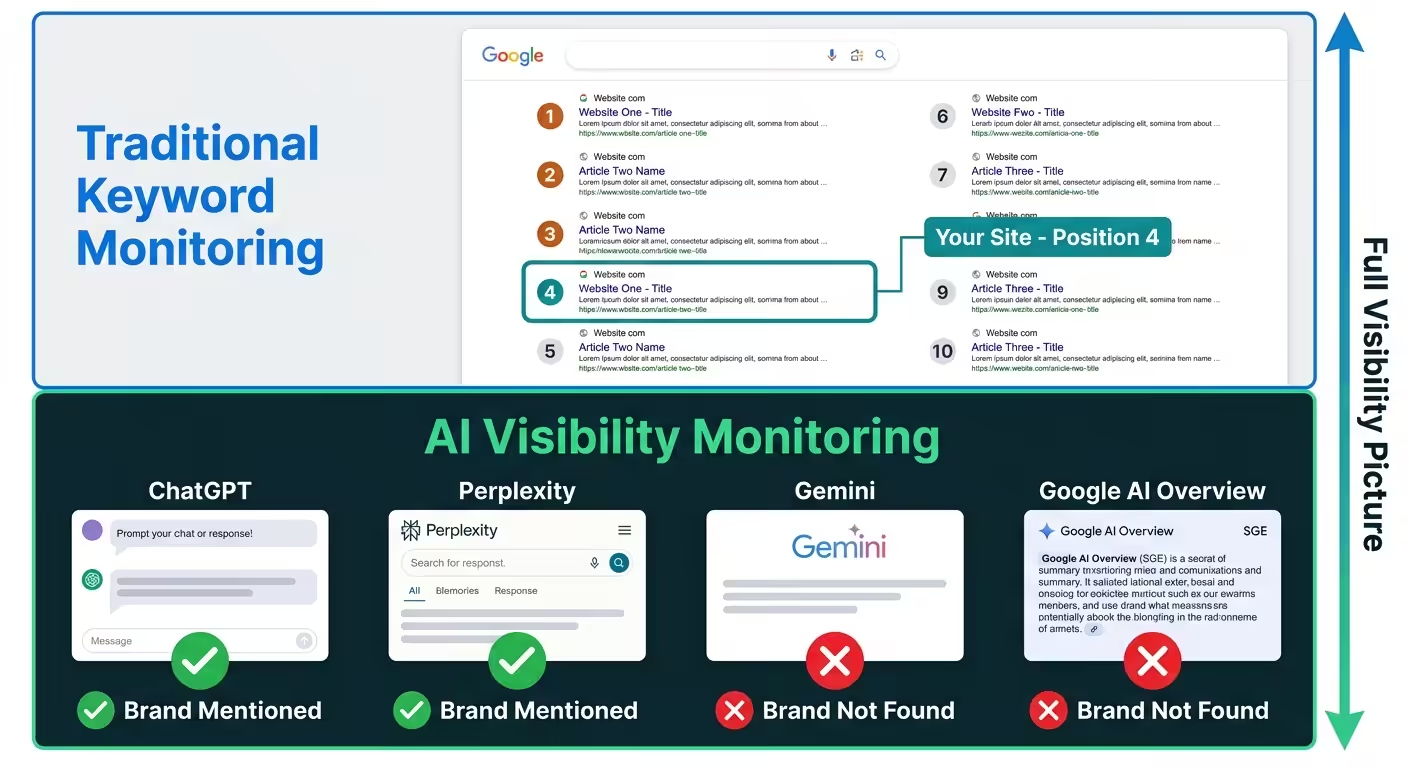
A keyword where you rank on page two might be one where AI platforms consistently cite your brand, meaning your actual discoverability is stronger than your organic ranking suggests.
The practical action: layer AI visibility monitoring on top of your existing keyword tracking. Start with your top 20-30 commercial keywords. Track AI mentions monthly. Look for gaps between your organic rankings and your AI visibility.
Agencies like BrandMentions approach this by monitoring both traditional rankings and AI citation behavior across platforms, then identifying the specific content and mention patterns that influence each surface. The AI brand mentions approach treats traditional SEO and AI discoverability as connected systems rather than separate channels.
Common Keyword Monitoring Mistakes (and How to Avoid Them)
The subtler mistake we watch for: teams over-track exact-match keywords and under-track the semantic variations that actually drive traffic. A keyword like “best CRM” has 40-60 semantic variants (“top CRM,” “leading CRMs,” “CRM software recommendations,” etc.) that Google groups conceptually but ranks differently. Monitor two or three semantic clusters for each core term, not just the exact-match query. The variance across cluster members is usually where the real rank movement hides.
Tracking Too Many Keywords Without Prioritization
Monitoring 5,000 keywords creates noise that drowns out signal. Most teams are better served by deeply monitoring 100-300 high-priority keywords and doing quarterly audits of a broader set.
Fix: Tier your keywords into A (revenue-critical, monitored daily), B (important, monitored weekly), and C (informational, reviewed monthly).
Ignoring Mobile vs. Desktop Differences
Google’s mobile and desktop results frequently differ by 2-5 positions, especially for commercial queries. According to Google’s own mobile-first indexing documentation, the mobile version of your site is what Google primarily uses for indexing. If you only track desktop rankings, your data may not reflect what most users actually see.
Fix: Monitor at least your top-tier keywords on both mobile and desktop. Prioritize mobile for B2C and local queries.
Reacting to Daily Fluctuations Instead of Trends
Rankings fluctuate daily. A single-day drop of 2 positions is usually noise. A consistent decline over 2-3 weeks is a signal that demands investigation.
Fix: Configure your monitoring dashboards to show 7-day and 30-day trends. Set alerts on trend changes, not daily position shifts.
Not Connecting Rank Data to Business Outcomes
A keyword ranking improvement from position 8 to position 3 is meaningless if that keyword drives zero conversions. Teams that monitor rankings in isolation often celebrate wins that don’t move business metrics.
Fix: Tag your keyword groups in Google Analytics or your CRM. Track which keyword-driven landing pages generate leads, trials, or revenue.
Forgetting to Monitor Competitor Movements
Your rankings don’t exist in a vacuum. A competitor publishing a superior piece of content or earning high-authority backlinks can push you down even if you’ve changed nothing. Effective rival tracking means watching their rank movements alongside yours.
Fix: Add your top 3-5 competitors to every keyword monitoring group. Review their movements during your monthly analysis.
Keyword Monitoring and Entity Authority: The Connection Most Teams Miss
There’s a direct relationship between keyword monitoring insights and entity SEO, the practice of building your brand’s identity and authority as a recognized entity in search engines’ knowledge systems.
When your keyword monitor shows you ranking well for category terms but poorly for branded queries, it’s often an entity authority problem. Search engines and AI platforms may not strongly associate your brand with your category.
Signs of weak entity authority in your keyword data:
- Strong rankings for generic informational content but weak rankings for “[your brand] + [category]” queries
- Absence from AI Overviews even when you hold top organic positions
- Competitors consistently appearing in Knowledge Panel results while your brand doesn’t
- AI platforms failing to mention your brand in category-related responses
The fix involves building brand mentions across high-authority publications that AI models and search engines learn from. When your brand appears consistently in editorial contexts alongside your category keywords, both traditional search algorithms and AI training pipelines strengthen the association.
In our own keyword-monitoring work, the ranking-stability pattern we consistently observe is that brands with steady editorial mentions on category publications see less volatility week-to-week and faster recovery after algorithm updates than brands relying on owned content and on-page optimization alone. The mentions act as a kind of ranking insurance against fluctuation.
Free vs. Paid Keyword Monitoring: Where to Start
You don’t need an expensive tool to begin keyword monitoring. But you’ll outgrow free options quickly if SEO is a meaningful growth channel for your business.
Free Options Worth Using
- Google Search Console, Shows average position, clicks, and impressions for queries driving traffic to your site. Not a rank tracker per se, but invaluable first-party data. Free for any verified website owner.
- Bing Webmaster Tools, Similar functionality for Bing search. Often overlooked but useful for tracking Microsoft-ecosystem visibility.
- Seobility Free Ranking Checker, Allows limited daily rank checks for specific keywords without an account.
When to Upgrade to Paid Tools
Invest in a paid keyword monitor when:
- You need to track more than 20-30 keywords daily
- You want competitor ranking comparison
- You need SERP feature and AI Overview detection
- You require automated alerts and scheduled reporting
- Multiple team members need access to dashboards
Most B2B companies with active SEO programs find the investment justified once organic search contributes meaningfully to pipeline. The cost of missing a ranking drop that causes weeks of lost traffic typically exceeds the annual cost of a monitoring tool.
How to Audit Your Current Keyword Monitoring Setup
For the AI-side of the same audit, our AI Overviews mentions tool guide covers how to check Google AI Overview appearance for each tracked keyword, so your audit catches AI-layer blind spots alongside the classic rank-tracker gaps.
If you already have monitoring in place, run this audit to identify gaps:
- Coverage check, Are your top 50 revenue keywords tracked daily? Are branded keywords included?
- Device check, Are you monitoring mobile and desktop separately for at least your highest-priority keywords?
- SERP feature check, Does your tool report on Featured Snippets, PAA, and AI Overview presence?
- Competitor check, Are your top 3-5 organic competitors tracked alongside your own positions?
- AI visibility check, Do you’ve any system for tracking why AI mentions your brand (or doesn’t) search responses? If not, this is the most significant gap to close in 2026.
- Action check, When was the last time a monitoring alert led to a concrete action (content update, technical fix, strategic shift)? If you can’t recall, your monitoring may be passive rather than operational.
- Integration check, Is your rank data connected to traffic and conversion data? If it lives in a separate silo, you’re likely not extracting full value.
For brands serious about the AI visibility layer specifically, resources on checking if AI mentions your brand and the AI visibility tool roundup provide practical starting points.
KeywordMonitor Alternatives: 5 Tools That Track Rankings Better
If you’re shopping for a KeywordMonitor alternative, the comparison points come down to refresh frequency, country and device granularity, and how the tool integrates with the rest of your SEO stack. Here’s the short list of tools B2B teams actually pick instead.
1. Ahrefs Rank Tracker

The deepest SEO platform on the market. Tracks rankings daily across 200+ countries with mobile and desktop separation. Best fit if you already use Ahrefs for keyword research and backlink analysis. Starts at $129/month. Expensive, but the platform consolidates five or six tools into one.
- Best for: Teams that already use Ahrefs for keyword research and backlink analysis
- Pricing: Starts at $129/month
- Standout strength: Consolidates five or six separate tools into one platform
2. SEMrush Position Tracking
Closest direct competitor to KeywordMonitor in scope. Daily refreshes, share-of-voice charts, competitor tracking included. Better dashboards than KeywordMonitor. Starts at $129/month for the Pro plan.
- Best for: Teams that want daily refreshes plus share-of-voice and competitor tracking built in
- Pricing: Starts at $129/month (Pro plan)
- Standout strength: Stronger dashboards than most direct competitors
3. AccuRanker
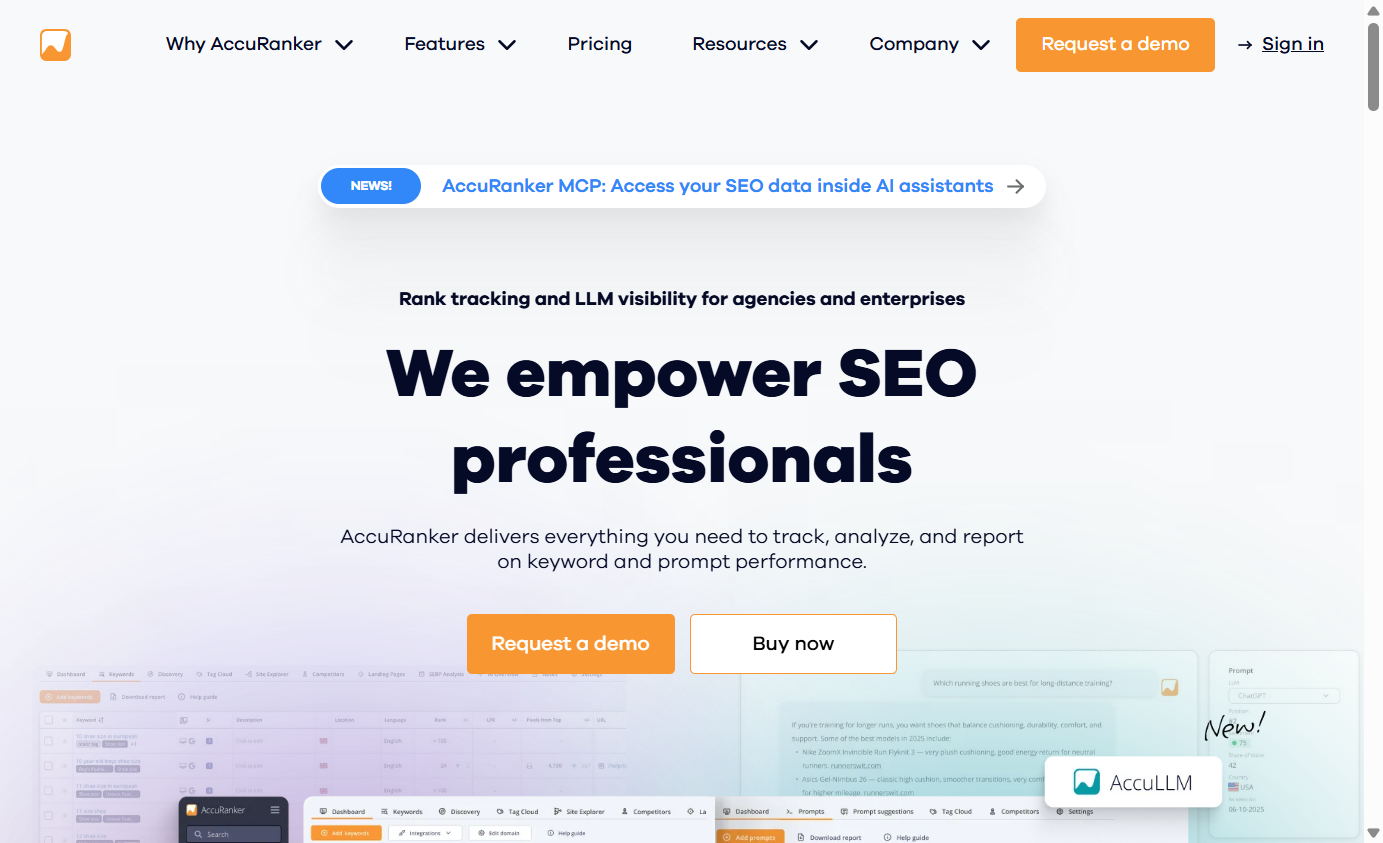
Built specifically for rank tracking, not a full SEO suite. Updates rankings every 24 hours by default with on-demand refresh available. Cleaner reports and stronger Google Search Console integration than most alternatives. Starts at $116/month for 1,000 keywords.
- Best for: Teams that want dedicated rank tracking rather than a full SEO suite
- Pricing: Starts at $116/month for 1,000 keywords
- Standout strength: Cleaner reports and stronger Google Search Console integration than most alternatives
4. Nightwatch
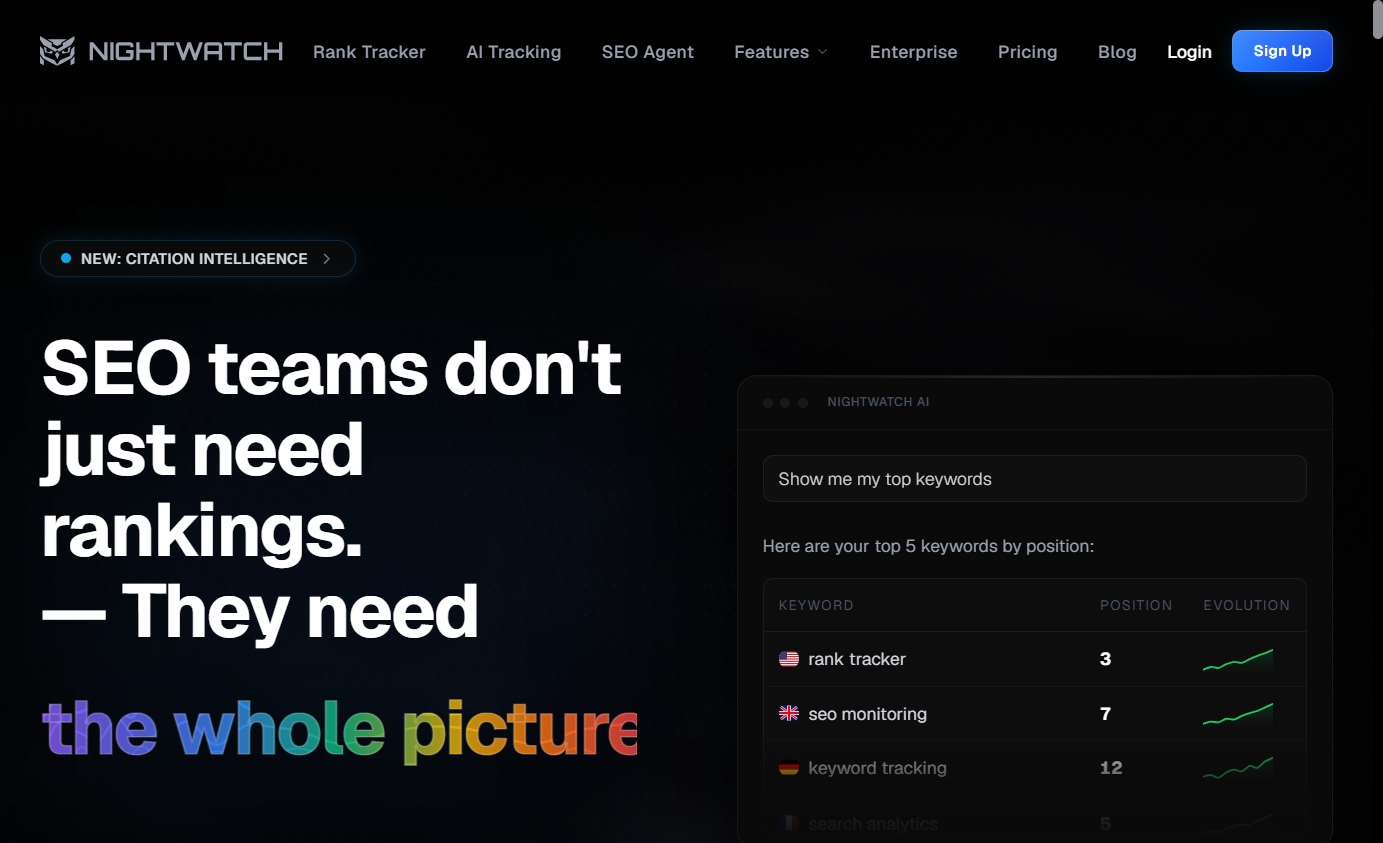
Best for agencies tracking multiple client domains. White-label reports, share-of-voice, and Google Maps tracking all included. More affordable at scale than the enterprise platforms. Starts at $39/month for 250 keywords.
- Best for: Agencies tracking multiple client domains
- Pricing: Starts at $39/month for 250 keywords
- Standout strength: White-label reports, share-of-voice, and Google Maps tracking included
5. SerpRobot
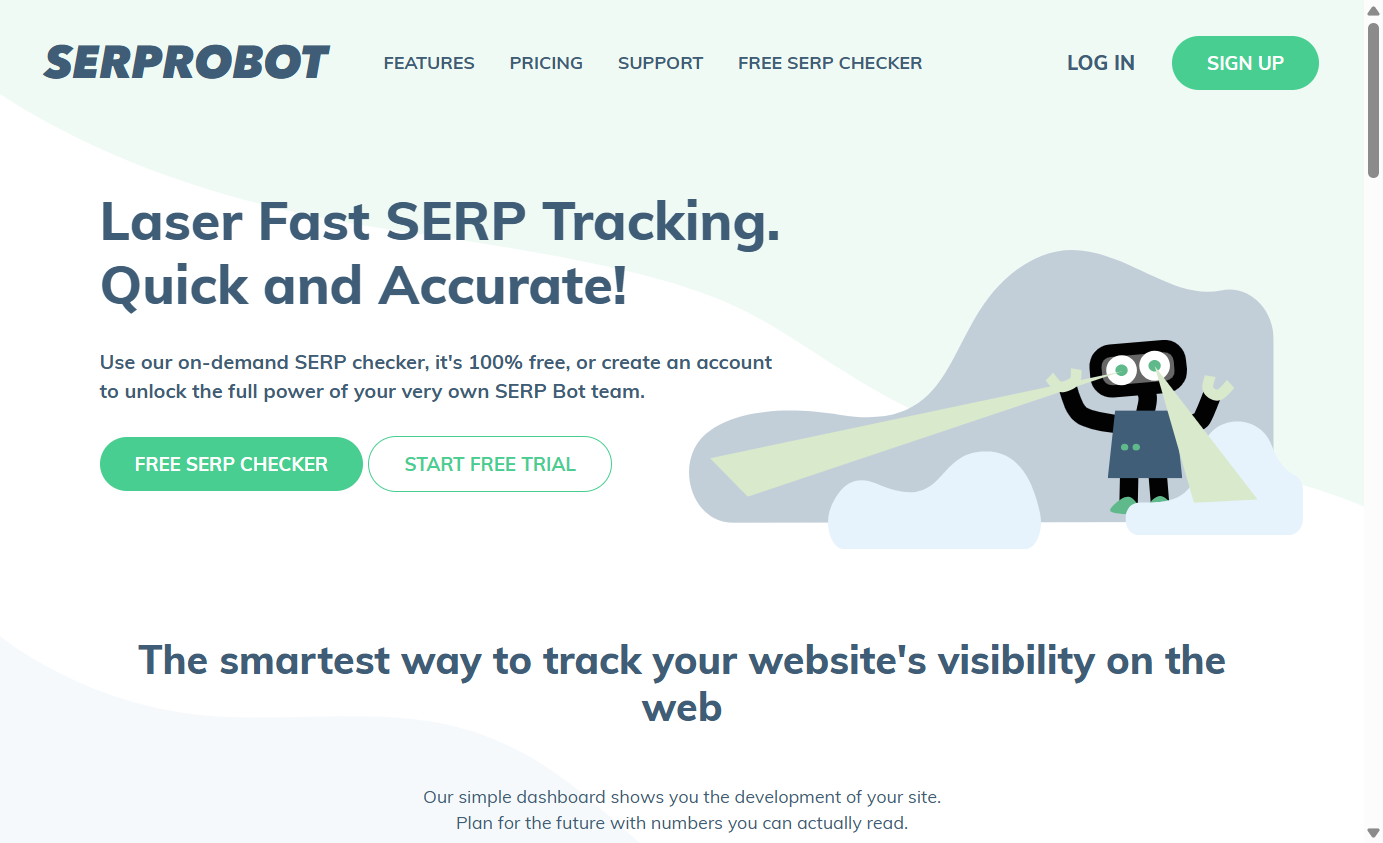
The budget option for small teams. Simple rank tracking with email alerts. Lacks competitor analysis and content audit features that bigger tools include. Starts at $9/month for 100 keywords. Worth it if all you need is rank monitoring.
- Best for: Solo founders and freelancers watching a small keyword set
- Pricing: From $9/month for 100 keywords
- Standout strength: Simple rank tracking with email alerts at the lowest price point on this list
How to pick
If you want one tool to handle keyword research, rank tracking, and backlinks, pick Ahrefs or SEMrush. If you only need rank tracking at scale, AccuRanker or Nightwatch fit better. If you’re a solo founder or freelancer watching 50 keywords, SerpRobot covers it for less than a coffee subscription.
If your rankings just fell off a cliff, see our diagnostic guide for when Google rankings drop dramatically.
Frequently Asked Questions
How often should I check keyword rankings?
For high-priority commercial and branded keywords, daily monitoring is the standard in 2026. Most paid rank tracking tools update positions automatically every 24 hours. For lower-priority informational keywords, weekly or monthly reviews are sufficient. The key is matching monitoring frequency to keyword business value.
Can I use Google Search Console as my only keyword monitor?
Google Search Console provides valuable click and impression data, but it has a 2-3 day reporting delay and doesn’t show exact positions in real time. It also lacks competitor tracking, automated alerts, and SERP feature detection. Use it as a foundational data source alongside a dedicated rank tracking tool, not as a standalone monitor.
Do keyword rankings still matter with AI search growing?
Yes. According to Similarweb data from 2025, Google organic search still drives the majority of website referral traffic across most industries. Traditional rankings remain important. However, AI search platforms are growing as an additional visibility layer. The strongest monitoring approach in 2026 tracks both traditional rankings and AI platform citations.
How many keywords should I actively monitor?
There’s no universal number. Focus on quality over quantity. Most B2B companies find that 100-300 carefully selected keywords, segmented by priority tier, provide actionable data without overwhelming their teams. Enterprise organizations may monitor thousands, but they typically have dedicated SEO teams to process that volume.
What should I do when a keyword ranking drops suddenly?
First, check whether it’s a single-day fluctuation or a sustained decline over several days. If sustained, investigate: Was there a Google algorithm update? Did a competitor publish or update content? Did your page experience a technical issue (slow load time, indexing error, broken canonical tag)? Cross-reference with Google Search Console for any crawl or indexing warnings. Then prioritize a response based on the keyword’s business value.
Shipping a Keyword Monitoring Program That Drives Action
Keyword monitoring is a foundational SEO practice that has grown more complex, and more valuable, as search fragments across traditional and AI platforms. The brands gaining ground in 2026 aren’t just tracking where they rank. They’re monitoring how AI systems reference them, how competitors move around them, and how rank changes connect to actual revenue.
Start with the basics: pick a reliable tracking tool, build a prioritized keyword list, and set up alerts that drive action. Then expand into AI visibility monitoring to close the gap that most competitors haven’t addressed yet.
If you want to understand how AI platforms currently reference your brand, and where the gaps are, a short strategy conversation can surface insights that keyword rank data alone won’t show you.
- Best for: Solo founders or freelancers watching a small keyword set
- Pricing: Starts at $9/month for 100 keywords
- Standout strength: Simple rank tracking with email alerts at the lowest price point here