

Measure brand awareness, Measuring brand awareness tells you whether your market knows you exist, and whether that recognition translates into trust, consideration, and revenue. Yet most marketing leaders track only a fraction of the metrics that matter, missing critical signals from AI search, earned media, and direct consumer feedback.
As of 2026, the surfaces where brand awareness forms have expanded well beyond Google SERPs and social feeds. AI assistants like ChatGPT, Perplexity, and Gemini now shape how millions of professionals discover and evaluate brands. If your measurement framework hasn’t adapted, you’re working with an incomplete picture.
This article breaks down the specific metrics, tools, and processes you need to measure brand awareness accurately, across both traditional and AI-driven channels. You’ll walk away with a practical system you can implement this quarter.
What You’ll Learn
- The difference between brand recall, brand recognition, and top-of-mind awareness, and why each requires a distinct measurement approach
- Nine specific metrics that capture brand awareness across search, social, earned media, and AI platforms
- How to measure whether AI assistants mention and recommend your brand
- Survey design principles that separate useful awareness data from noise
- How to connect awareness metrics to pipeline and revenue outcomes
- A quarterly measurement cadence you can start using immediately
- What’s changed in awareness measurement since AI search became mainstream in 2026, 2025
What Does Brand Awareness Actually Measure?
Brand awareness is the degree to which your target market recognizes, recalls, and associates your brand with a specific category, product, or solution. It spans a spectrum from basic recognition (“I’ve seen that logo”) to top-of-mind recall (“That’s the first brand I think of for this category”).
| Awareness dimension | What it measures | How to capture it | What a strong result signals |
|---|---|---|---|
| Unaided recall | Whether your audience names your brand for the category with no prompt | Open-ended survey question (“Which brands come to mind for [category]?”) | The strongest form of awareness; closely correlates with market share |
| Aided recognition | Whether your audience recognizes your brand when shown a list | Prompted survey question presenting a list of brand options | Latent familiarity that influences the purchase decision |
| Top-of-mind awareness | Whether yours is the first brand recalled for the category | First-mention analysis of unaided recall responses | Category leadership and a place in the consideration set |
| AI-assistant visibility | Whether AI assistants mention and recommend your brand | Prompt testing across ChatGPT, Perplexity, and Gemini | Awareness is forming on the surfaces where buyers now discover brands |
This matters because awareness is the entry point for every downstream business outcome. Without it, your product never enters the consideration set, regardless of how strong your offering is.
Four Dimensions of Brand Awareness
Effective measurement requires distinguishing between four awareness types, each captured differently:
Unaided Recall
Can your audience name your brand without any prompt when asked about your category? This is the strongest form of awareness and correlates closely with market share.
Aided Recognition
Does your audience recognize your brand when presented with a list? This reveals latent familiarity that influences purchase decisions at the point of consideration.
Top-Of-mind Awareness
Is your brand the first one mentioned? This privileged position drives disproportionate consideration and preference.
Brand Association Depth
Do people connect accurate attributes, values, or capabilities to your brand? This measures the quality of awareness, not just its existence.
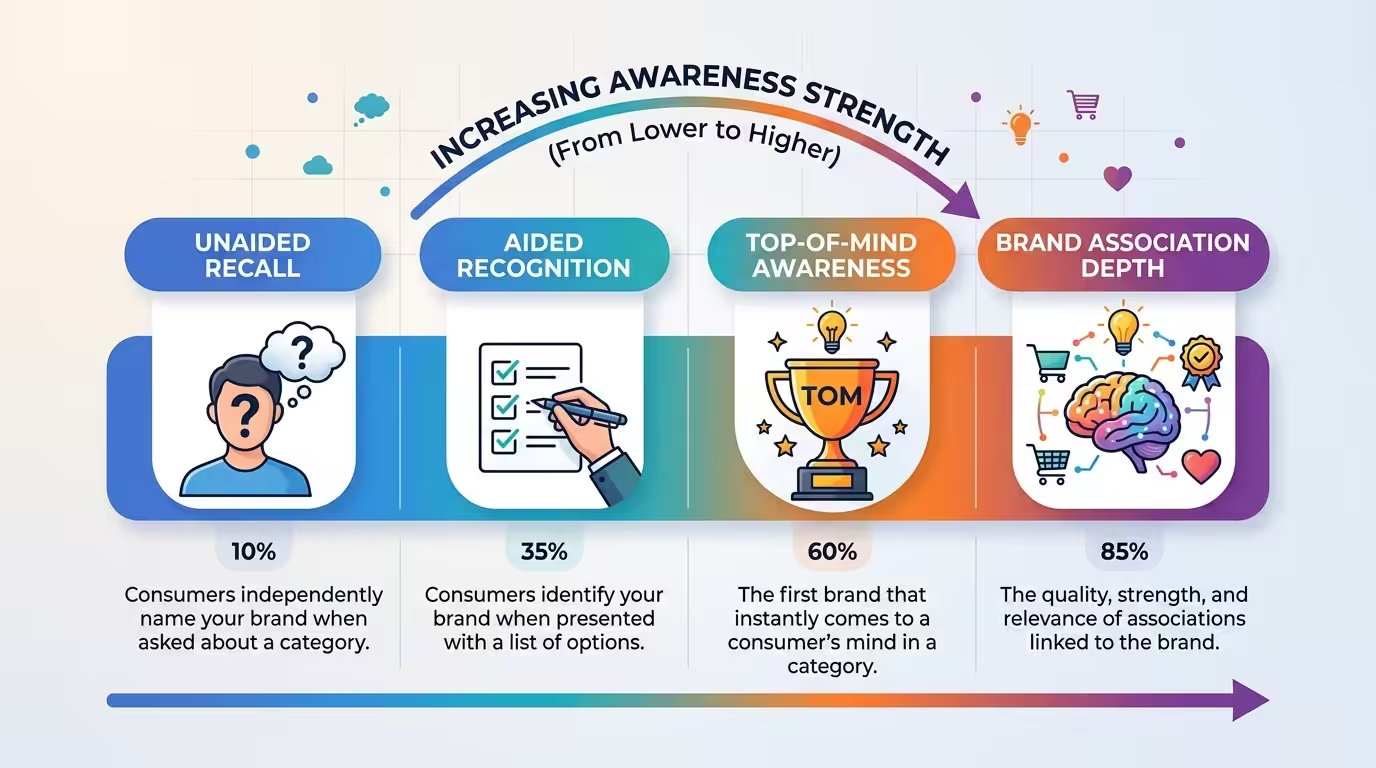
Tracking only one dimension gives you an incomplete view. A brand with high aided recognition but low unaided recall has a fundamentally different strategic problem than one with strong recall but weak attribute association.
Nine Metrics That Capture Brand Awareness in 2026
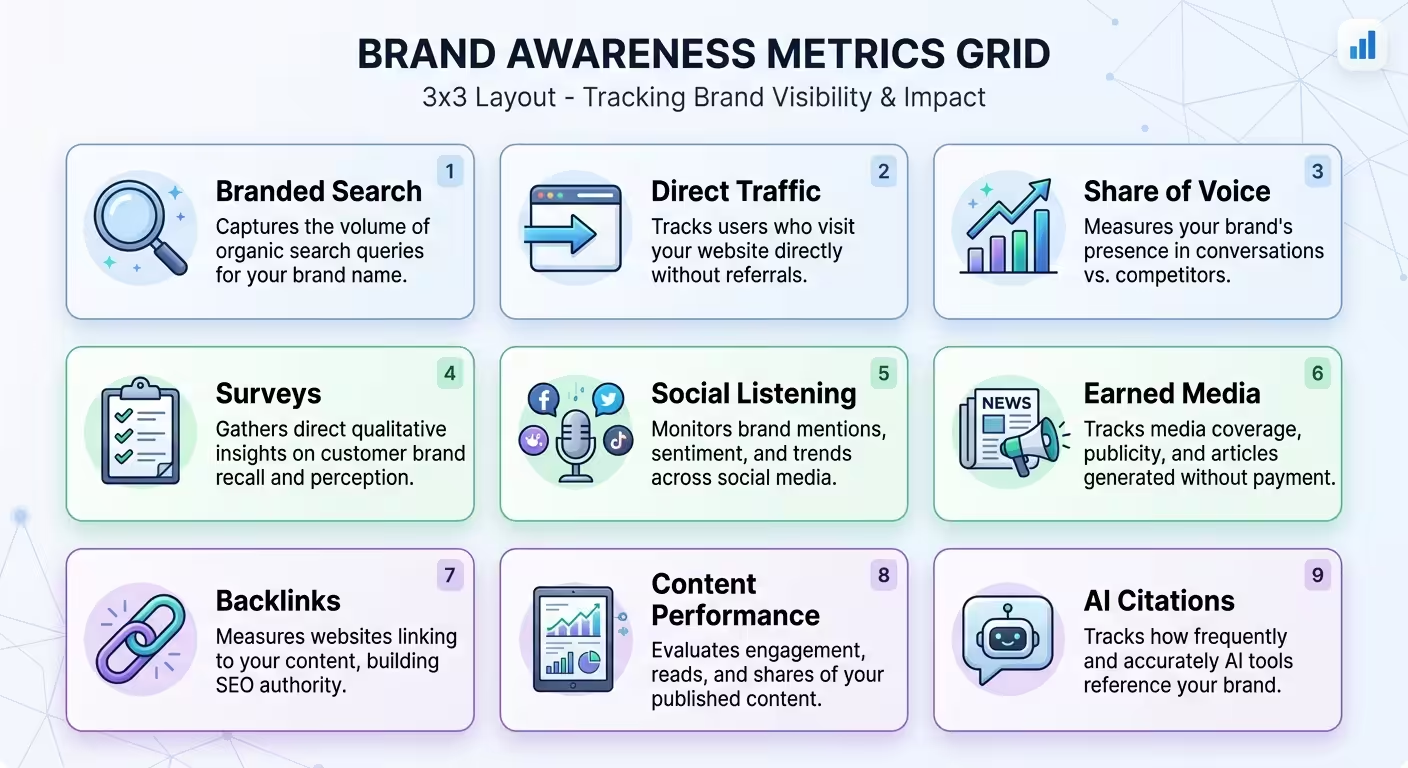
No single metric tells the full story. The following nine, tracked together, give you a reliable, multi-dimensional picture of how well your market knows your brand.
1. Branded Search Volume
Branded search volume counts how many people search for your company name or branded product terms each month. It’s one of the most direct behavioral indicators of awareness because it requires the searcher to already know you exist.
Track this using Google Search Console for actual click and impression data on branded queries, or tools like Ahrefs and Semrush for estimated monthly volume. Pay attention to trends over time rather than absolute numbers, a consistent upward trajectory signals growing awareness.
Action step: Set up monthly reporting on branded search volume. Segment by geography and device. Compare month-over-month and quarter-over-quarter to identify whether awareness campaigns are moving the needle.
2. Direct Website Traffic
Direct traffic comes from people typing your URL into their browser or using a bookmark. These visitors already know your brand well enough to seek it out without a search engine as an intermediary.
Google Analytics separates direct traffic from organic, referral, and paid sources. Monitor the trend, not just the number. Rising direct traffic typically correlates with growing brand awareness, though you should account for seasonal variation and campaign timing.
Action step: Track direct traffic as a percentage of total traffic. A rising percentage indicates your brand is becoming more memorable relative to your overall digital reach.
3. Share of Voice
Share of voice (SOV) measures your brand’s visibility as a proportion of total market conversation. It compares how often your brand is mentioned, searched, or discussed relative to competitors across social, search, and earned media.
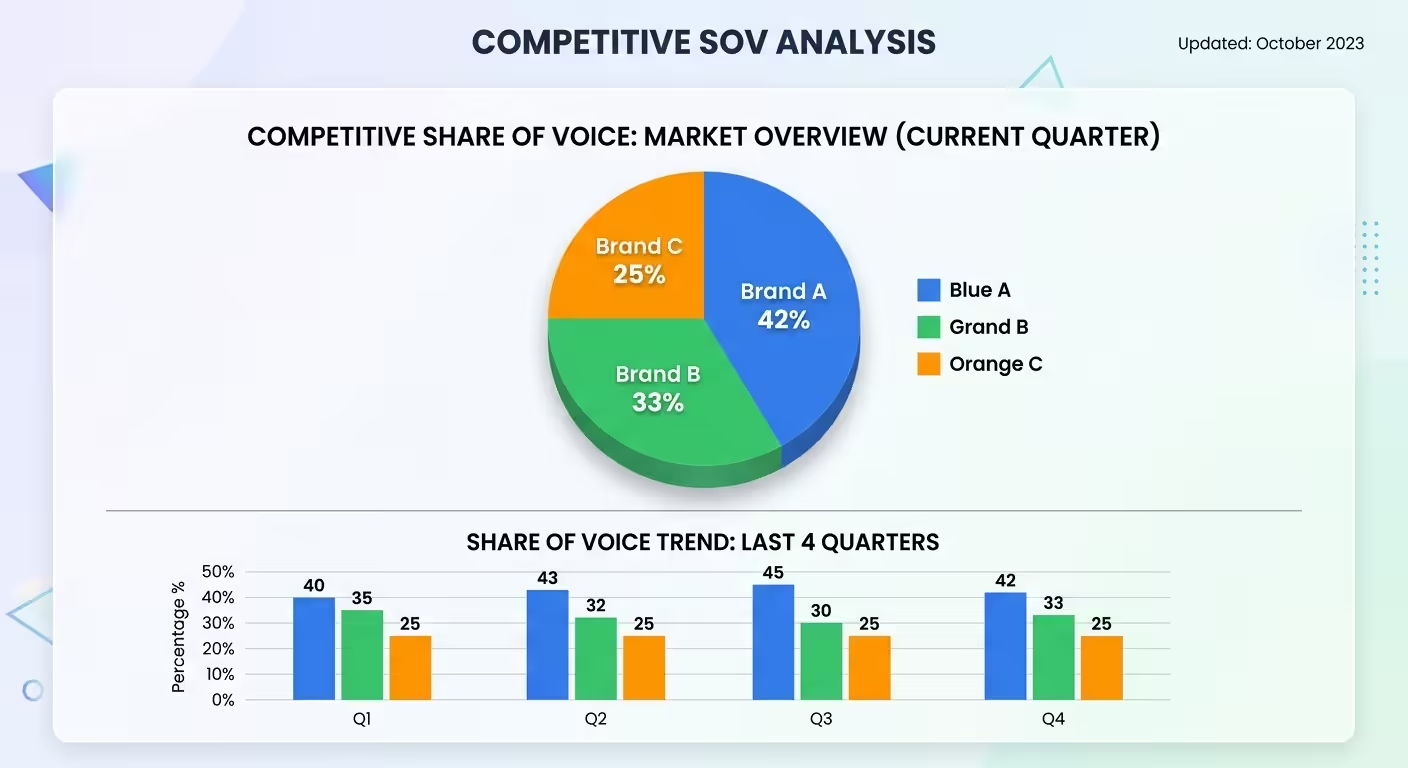
SOV matters because awareness is always relative. A 40% aided recognition rate means something very different if your top competitor sits at 80% versus 35%. Tracking the SOV metric over time reveals whether you’re gaining or losing ground in your category.
Action step: Use social listening platforms and brand monitoring tools to calculate your SOV monthly. Break it down by channel, you may dominate social conversation but lag in search visibility, or vice versa.
4. Brand Awareness Surveys
Surveys remain the most direct way to measure brand awareness because they capture what people actually think, not just what they click. A well-designed brand awareness survey measures unaided recall, aided recognition, attribute association, and competitive positioning in a single instrument.
The key is survey design discipline. Ask unaided questions first (“What brands come to mind when you think about [category]?”) before presenting any brand names. Follow with aided recognition questions. Then probe attribute associations and preference.
Run surveys quarterly for consistent tracking, or before and after major campaigns to measure lift. Use representative samples of your target audience, not just existing customers, to avoid inflating your numbers.
Action step: Design a 10-15 question awareness survey. Include both unaided and aided questions. Run it quarterly against a consistent sample of your target market. Track the gap between aided and unaided awareness, this “recognition potential” reveals how many people could recall your brand with the right prompts.
5. Social Listening and Mention Volume
Social listening tracks how frequently your brand is mentioned across social media, forums, blogs, and news sites, along with the sentiment and reach of those mentions. This captures organic conversation that surveys and search data miss.
Use social media monitoring tools to track mention volume, sentiment trends, and the reach of each mention. A mention from an account with 500,000 followers carries different weight than one from a personal account with 200. Factor in both volume and amplification.
Action step: Set up automated alerts through dedicated tracking software and Google Alerts. Track monthly mention volume and sentiment score. Correlate spikes with specific campaigns or external events to understand what drives organic conversation about your brand.
6. Earned Media Coverage
Earned media, press mentions, review articles, podcast features, guest appearances, and unsolicited editorial references, signals awareness and credibility simultaneously. Third-party coverage reaches audiences who may never encounter your owned content, expanding awareness into new segments.
Track the volume, reach, and sentiment of earned media mentions. Pay attention to the authority of the publication. A feature in a major industry publication carries more awareness value than a brief mention on a low-traffic blog.
Action step: Use media monitoring tools to track earned media mentions monthly. Calculate brand mention reports that include publication authority, audience size, and sentiment. Compare earned media trends against awareness survey results to see how press coverage influences recognition.
7. Backlink Profile Growth
Your backlink profile, the collection of external websites linking to yours, serves as a proxy for how often other brands and publishers find your content worth referencing. Growing backlinks from authoritative domains indicate expanding awareness and credibility across your industry.
Use Ahrefs or Semrush to track backlink growth, referring domain authority, and the context of links. Also monitor unlinked brand mentions, instances where someone references your brand without linking to your site. These unlinked mentions still signal awareness and can often be converted into backlinks through outreach.
Action step: Track referring domains and unlinked mentions monthly. Focus on growth rate rather than absolute count. Prioritize outreach to convert unlinked brand mentions into active backlinks.
8. Content Performance Metrics
Your content marketing efforts drive awareness when they rank, get shared, and reach new audiences. Track organic traffic to top-of-funnel content, social shares, and engagement rates to understand how effectively your content expands brand reach.
Focus on content that reaches people who didn’t previously know your brand. A blog post ranking on page one for a high-volume category term puts your brand in front of new audiences, even if they don’t convert immediately, they’ve entered the awareness stage.
Action step: Identify your top 10 content pieces by organic traffic. Track how many new users (versus returning visitors) each piece attracts. High new-user percentages indicate content that’s expanding your awareness reach.
9. AI Search Mentions and Citations
This is the metric most brands are still missing in 2026. AI assistants, ChatGPT, Perplexity, Gemini, Claude, and Copilot, now influence how millions of people discover and evaluate brands. When someone asks an AI assistant “What are the best project management tools for remote teams?” and your brand appears in the response, that’s a high-value awareness touchpoint.
AI brand mentions are instances where your company name appears in AI-generated responses to user queries. These mentions influence consideration and trust because users perceive AI recommendations as curated and credible.
Unlike traditional search where you can track rankings through established SEO tools, measuring AI visibility requires a different approach. You need to check whether AI mentions your brand across multiple platforms and query types.
Action step: Use AI search tracking tools to monitor your brand’s presence in ChatGPT, Perplexity, Gemini, and other AI platforms. Run category-relevant queries monthly and document where your brand does and doesn’t appear. Track changes over time as you build brand mentions in AI through strategic editorial placements.
How to Measure Brand Awareness in AI Search
For the per-platform walkthroughs this AI-awareness layer rests on, see auditing your ChatGPT presence and how to track brand mentions in Perplexity, and the LLM monitoring playbook describes the cross-platform cadence you’d lay on top.
The rise of AI-powered search fundamentally changed brand awareness measurement between 2024 and 2026. AI assistants don’t just surface links, they synthesize information and make explicit recommendations. If your brand appears in these recommendations, you gain awareness and credibility simultaneously. If it doesn’t, you’re invisible to a growing segment of your market.
Why AI Mentions Matter for Awareness
According to a 2025 Gartner forecast, traditional search traffic is expected to drop 25% by 2027 as users shift to AI-powered answer engines. This means a significant portion of your audience’s brand discovery now happens inside AI responses, not on search results pages.
AI mentions function differently from traditional mentions. When ChatGPT or Perplexity recommends your brand in response to a user query, it carries implicit authority. The user didn’t search for you specifically, the AI selected your brand from its training data and real-time retrieval. That selection signals relevance and quality, which strengthens awareness and trust simultaneously.
Brand mentions directly impact visibility in AI search because large language models build brand-category associations from the editorial content they learn from. The more consistently your brand appears in authoritative, contextually relevant publications, the more likely AI models are to reference your brand in their responses.
What to Track Across AI Platforms
Monitor your brand’s presence across these AI surfaces:
- ChatGPT responses, Check brand mentions in ChatGPT by running category-relevant queries and documenting whether your brand appears.
- Perplexity answers, Track brand mentions in Perplexity, which cites sources directly and often references brands with strong editorial footprints.
- Google AI Overviews, Monitor whether Google’s AI-generated summaries mention your brand for relevant queries.
- Gemini and Claude, Track Gemini mentions and Claude mentions to cover the full spectrum of AI platforms your audience uses.
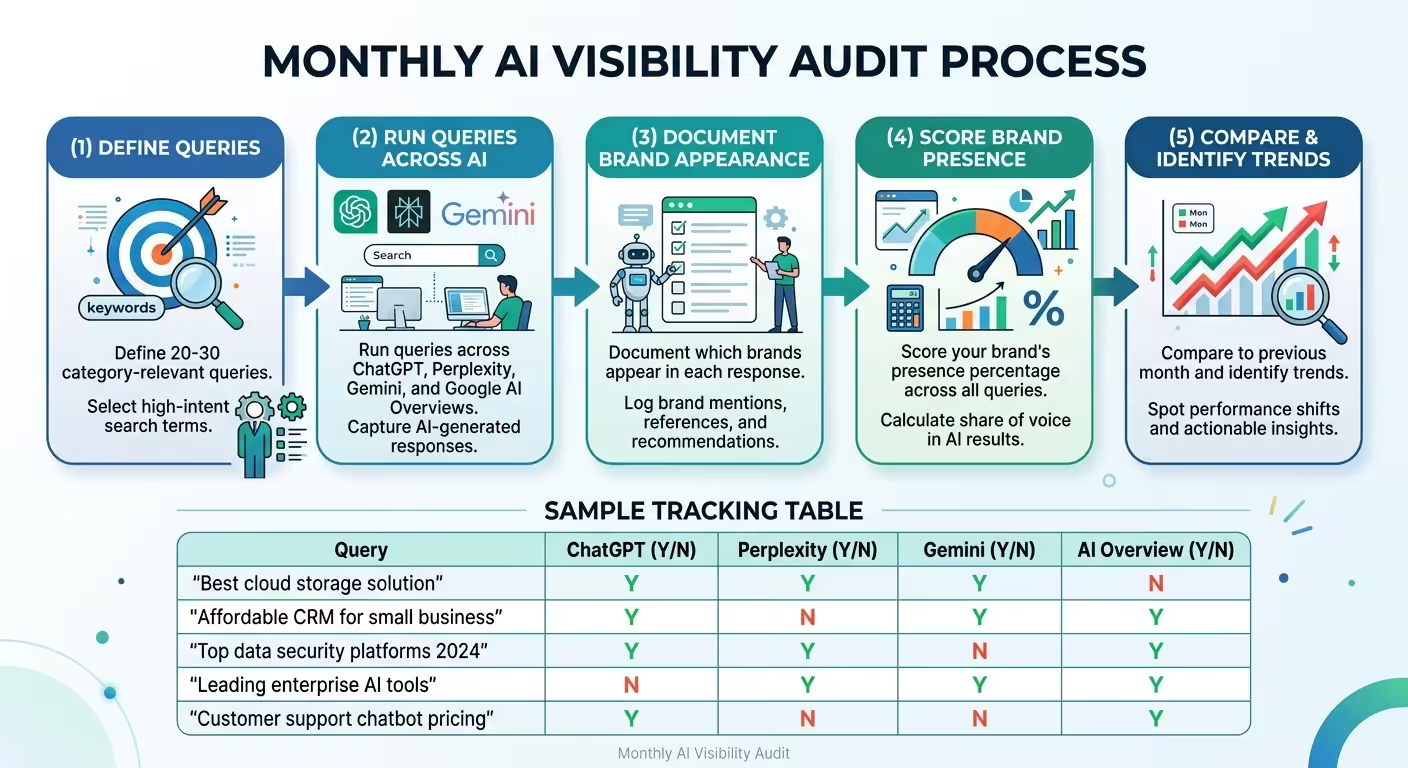
Action step: Build a monthly AI visibility audit. Select 20-30 queries your target audience would ask an AI assistant about your category. Run each query across ChatGPT, Perplexity, Gemini, and Google AI Overviews. Document which brands appear, yours and competitors’. Track changes monthly to measure progress.
How to Strengthen Your Brand’s AI Visibility
AI models learn brand-category associations primarily from the content they ingest during training and retrieval. To increase your brand mentions in AI search, you need consistent, contextually relevant mentions across publications that AI models trust and reference.
This means building editorial brand mentions on high-authority sites, not through link schemes or paid placements disguised as editorial, but through genuine contextual references that demonstrate your brand’s relevance to specific topics and categories.
The pattern we see repeatedly in measurement audits is that brands with sustained editorial coverage on category-relevant publications appear in AI answers far more reliably than those relying on traditional SEO alone. Measurement surfaces the gap; targeted editorial coverage closes it.
Pro Insight: AI visibility compounds over time. Each new editorial mention reinforces your brand’s association with your category in AI training data. The brands that start building these associations now will have a structural advantage as AI search adoption accelerates through 2026 and beyond.
How to Design an Effective Brand Awareness Survey
Surveys provide the most direct measurement of brand awareness, but only if designed correctly. A poorly constructed survey inflates numbers and creates false confidence. Here’s how to build one that delivers reliable, actionable data.
Question Sequencing Matters
Always ask unaided recall questions first. The moment you show your brand name to a respondent, you’ve contaminated their recall ability. Follow this sequence:
- Unaided recall: “When you think about [category], what brands come to mind?” (open-ended, no prompts)
- Top-of-mind identification: Record which brand the respondent mentions first, this is your top-of-mind metric.
- Aided recognition: “Which of the following brands have you heard of?” (present a list including your brand and competitors)
- Attribute association: “Which of these brands would you associate with [attribute]?” (measures depth of awareness)
- Preference and consideration: “If you needed [product/service] today, which brand would you consider first?”
This sequence moves from uncontaminated recall to progressively more specific questions, giving you clean data at each awareness dimension.
Sample Selection and Frequency
Survey your target market, not just existing customers. Your customer base already knows you. The awareness question is whether the broader market does. Use representative samples that reflect your target audience’s demographics, firmographics (for B2B), and geographic distribution.
Run awareness surveys quarterly for consistent tracking. If you’re launching a major campaign, add a pre-campaign and post-campaign wave to measure lift. Maintain identical question wording and sample criteria across waves, any changes create artificial variation that obscures real awareness shifts.
Connecting Survey Data to Other Metrics
Survey data becomes more powerful when correlated with behavioral metrics. If your quarterly survey shows unaided recall increased from 18% to 24%, check whether branded search volume and direct traffic moved in the same direction during that period. Consistent movement across multiple metrics confirms a genuine awareness shift rather than survey noise.
Use brand awareness measurement tools to consolidate survey results alongside digital metrics into a single dashboard. This integrated view reveals whether your awareness investments are producing real behavioral change, not just survey-reported familiarity.
Connecting Awareness Metrics to Business Outcomes
Awareness metrics become strategically valuable only when connected to revenue-impacting outcomes. Tracking awareness in isolation leads to the “vanity metric” problem, impressive numbers with no clear business impact.
Awareness-to-Consideration Conversion
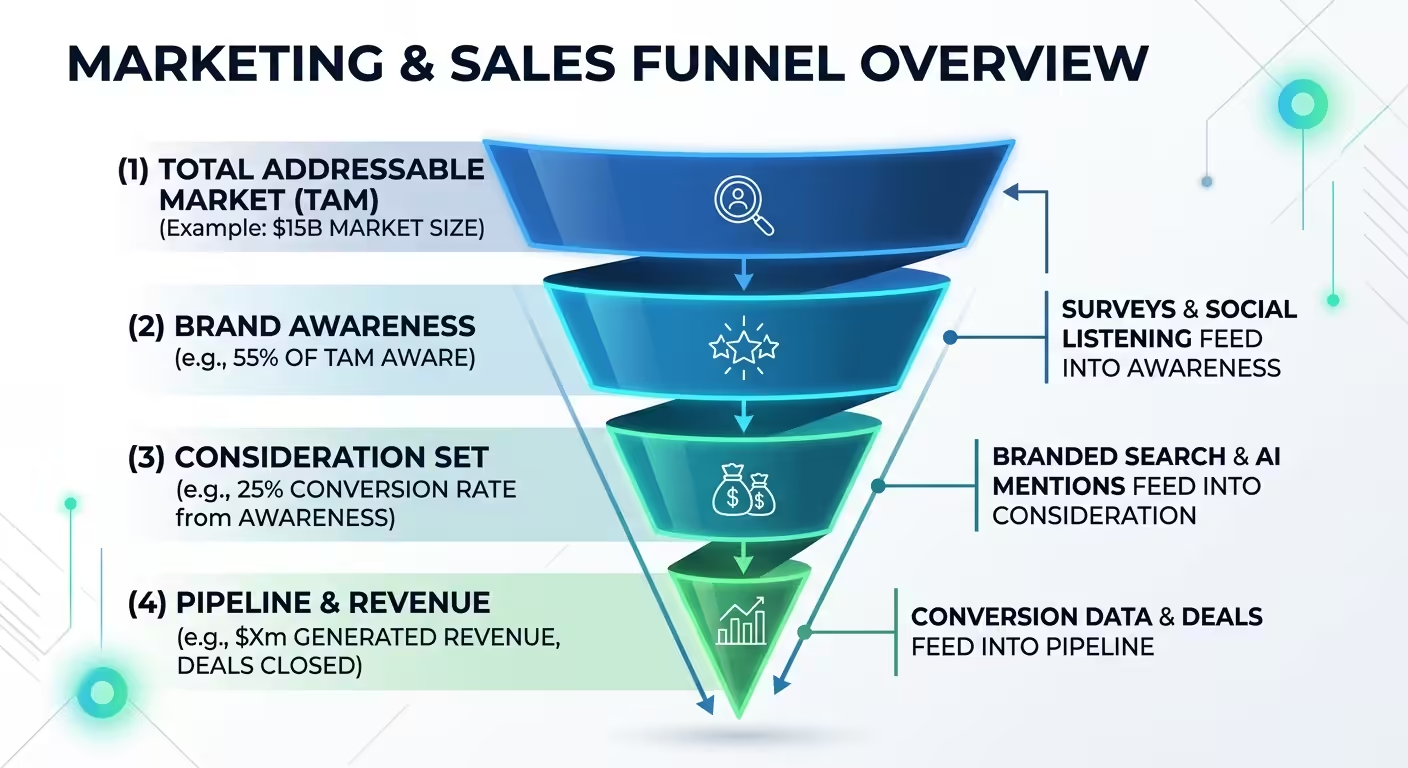
Track what percentage of people aware of your brand also include it in their consideration set when making a purchase decision. This conversion rate reveals how effectively awareness translates into actual business opportunity.
If your aided awareness is 60% but only 15% of aware respondents include you in their consideration set, you’ve a positioning problem, not an awareness problem. The market knows you exist but doesn’t see you as relevant. In contrast, a brand with 30% awareness but 70% awareness-to-consideration conversion has a strong position that needs broader reach.
Customer Acquisition Cost by Awareness Source
Compare acquisition costs between prospects who had prior brand awareness and those who didn’t. In campaigns tracked by BrandMentions across B2B SaaS companies, prospects who encountered the brand through AI recommendations or earned media before entering the sales funnel had 34% lower acquisition costs than those reached through cold outbound alone.
This data makes a concrete business case for awareness investment, it directly reduces the cost of acquiring each customer.
Awareness Elasticity
Over time, build enough historical data to calculate your awareness elasticity, the relationship between awareness percentage changes and changes in pipeline, revenue, or market share. This allows you to model the expected business impact of each awareness point gained, turning awareness budgets into revenue projections.
A Quarterly Measurement Cadence You Can Start Now
Implementing all nine metrics simultaneously can feel overwhelming. Here’s a phased approach that builds comprehensive measurement over three quarters.
Month 1-3: Establish Your Baseline
- Run your first brand awareness survey against your target market
- Set up branded search volume tracking in Google Search Console and one SEO tool
- Configure social media brand monitoring with automated alerts
- Run your first AI visibility audit across 20+ category queries
- Document all baseline numbers, these are your comparison points for every future measurement
Month 4-6: Add Competitive Context
- Calculate your share of voice across channels against your top 3-5 competitors
- Begin tracking earned media mentions and backlink profile growth monthly
- Run your second awareness survey with identical methodology
- Conduct your second AI visibility audit and compare against baseline
- Start correlating survey data with behavioral metrics to identify patterns
Month 7-9: Connect to Business Outcomes
- Segment awareness data by audience to identify where you’re strong and where gaps exist
- Begin tracking awareness-to-consideration conversion in your surveys
- Compare customer acquisition costs by awareness source
- Integrate all metrics into a single brand-monitoring dashboard
- Use the data to inform budget allocation for the next planning cycle
Tip: Don’t wait for perfect data to start making decisions. Even partial measurement, branded search volume plus a basic awareness survey, gives you dramatically more visibility than most B2B brands operate with. Start where you’re and build sophistication over time.
What’s Changed in Awareness Measurement Since 2024
Brand awareness measurement has shifted significantly in two years. Understanding what changed helps you avoid outdated approaches.
AI search created a new awareness channel. Before 2024, brand awareness measurement focused on traditional search, social, and earned media. As of 2026, AI assistants represent a major discovery surface that requires dedicated tracking. Brands that ignore AI brand mentions are missing a growing share of their audience’s attention.
Share of voice now includes AI visibility. A complete SOV calculation in 2026 needs to factor in how often AI platforms reference your brand versus competitors. Traditional SOV tools haven’t fully caught up, supplementing them with AI rank trackers fills this gap.
Surveys need to ask about AI-influenced awareness. Add questions like “Have you seen this brand recommended by an AI assistant?” to your awareness surveys. According to a 2025 study by Search Engine Journal, 41% of B2B professionals reported discovering at least one new vendor through an AI search tool in the previous six months. That number has likely grown in 2026.
Brand mentions compound across surfaces. The relationship between editorial mentions, AI citations, and search visibility has become more interconnected. A brand mentioned consistently in authoritative publications builds both traditional SEO signals and AI training data associations, strengthening awareness across every discovery surface simultaneously.
Common Measurement Mistakes to Avoid
The awareness-measurement mistake we correct most often in audits is teams tracking aided recall (“have you heard of X?”) as a vanity metric without pairing it to unaided recall or branded-search volume. Aided recall is almost always flattering and almost never predictive. When we see clients redirect budget based on aided numbers, the forecast usually misses by a wide margin a quarter later.
Even with the right metrics in place, several common mistakes undermine awareness measurement accuracy.
Surveying Only Existing Customers
Your customers already know you. Awareness measurement needs to include your broader target market to be meaningful.
Tracking Absolute Numbers Without Trend Context
A 35% aided awareness rate means little on its own. Is it up from 28% last quarter? How does it compare to your top competitor’s 52%? Always measure change and competitive context.
Ignoring AI Search Entirely
As of 2026, a significant portion of brand discovery happens through AI assistants. Omitting this channel from your measurement creates a blind spot that grows larger every quarter.
Changing Survey Methodology Between Waves
Any change in question wording, sample composition, or survey platform introduces artificial variation. Maintain strict consistency for valid trend data.
Treating Awareness as a Vanity Metric
Awareness becomes strategically valuable when connected to consideration, acquisition cost, and revenue. Always tie awareness data back to business outcomes.
Frequently Asked Questions
How often should you measure brand awareness?
Track behavioral metrics, branded search volume, direct traffic, social mentions, monthly through automated tools. Run structured awareness surveys quarterly. This combination gives you continuous signal plus periodic validated measurement. If you’re running a major campaign, add pre- and post-campaign survey waves to measure lift.
What is the most accurate way to measure brand awareness?
Brand awareness surveys using representative samples of your target market provide the most direct and accurate measurement. They capture unaided recall, aided recognition, and attribute association, dimensions that behavioral metrics alone can’t isolate. Supplement surveys with branded search volume and AI visibility data for a complete picture.
Can you measure brand awareness without a survey?
Yes, but with limitations. Branded search volume, direct traffic, social mention volume, share of voice, and AI mention tracking all serve as behavioral proxies for awareness. These metrics show trends reliably but can’t distinguish between unaided recall and aided recognition the way a survey can. Use behavioral proxies for continuous monitoring and surveys for periodic calibration.
How do you measure brand awareness in AI search?
Run category-relevant queries across ChatGPT, Perplexity, Gemini, and Google AI Overviews. Document whether your brand appears in responses. Use AI search tracking tools to automate this process. Track your AI mention rate, the percentage of relevant queries where your brand appears, and monitor changes monthly.
What’s a good benchmark for brand awareness?
Benchmarks vary significantly by industry, company size, and market maturity. Rather than targeting a universal number, establish your own baseline and focus on quarterly improvement. For B2B brands, achieving 20-30% unaided recall among your target audience within the first two years of focused awareness investment is a reasonable goal. Track your awareness-to-consideration conversion rate alongside raw awareness numbers to ensure recognition translates into business opportunity.
Does AI visibility actually affect brand awareness?
Yes. When AI assistants recommend your brand in response to user queries, it creates high-trust awareness touchpoints. According to research published by the Allen Institute for AI in 2026, large language models form persistent brand-category associations from their training data. Brands that appear consistently in authoritative editorial content build stronger associations, leading to more frequent AI recommendations and broader awareness among AI-using audiences.
Standing Up a Quarterly Brand-Awareness Cadence
Brand awareness measurement in 2026 requires tracking more surfaces, more metrics, and more connections to business outcomes than ever before. The brands that measure effectively don’t just know where they stand, they know exactly where to invest to grow.
Start with the fundamentals: branded search volume, a quarterly awareness survey, and social mention tracking. Then layer in the metrics most brands still overlook, AI search visibility, share of voice, and awareness-to-consideration conversion. Connect every metric back to pipeline and revenue.
The gap between brands that measure brand awareness rigorously and those that don’t widens every quarter. Your competitors are building measurement systems right now. Build yours first.
If you want a baseline before committing to a tool or process, request a quick AI visibility audit. We’ll run 25 category-relevant prompts across ChatGPT, Perplexity, Gemini, and Google AI Overviews so you can see exactly which sources each platform trusts for your category, and which competitors are capturing citations you’re not.
Researched and drafted with AI assistance, reviewed and edited by the BrandMentions editorial team.