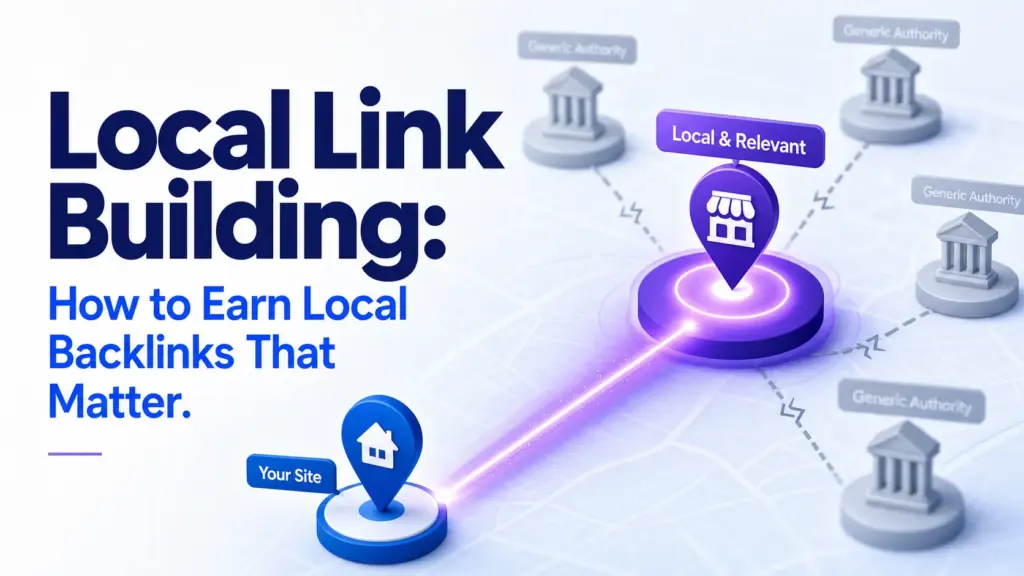

If your local competitors keep outranking you, the fix is often not more content, but better local link building. Local link building is the work of earning backlinks from websites that are geographically and topically relevant to your service area, like local news sites, chambers of commerce, community organizations, and partner businesses. Those links tell Google your business belongs to a specific place, which moves both local organic rankings and Local Pack visibility.
This guide walks the actual workflow: set a clean foundation, audit what you already have, secure the obvious sources, mine relationships and mentions, earn local media, then prioritize and track the whole thing. Relevance and consistency win here far more than raw volume.
Before You Start, Build the Local Link Foundation
The minimum setup before any outreach is a clean local entity: an optimized Google Business Profile, consistent business details everywhere, defined target pages, and basic tracking. Skip this and you send hard-won links to weak pages or to a business Google cannot pin to one place.
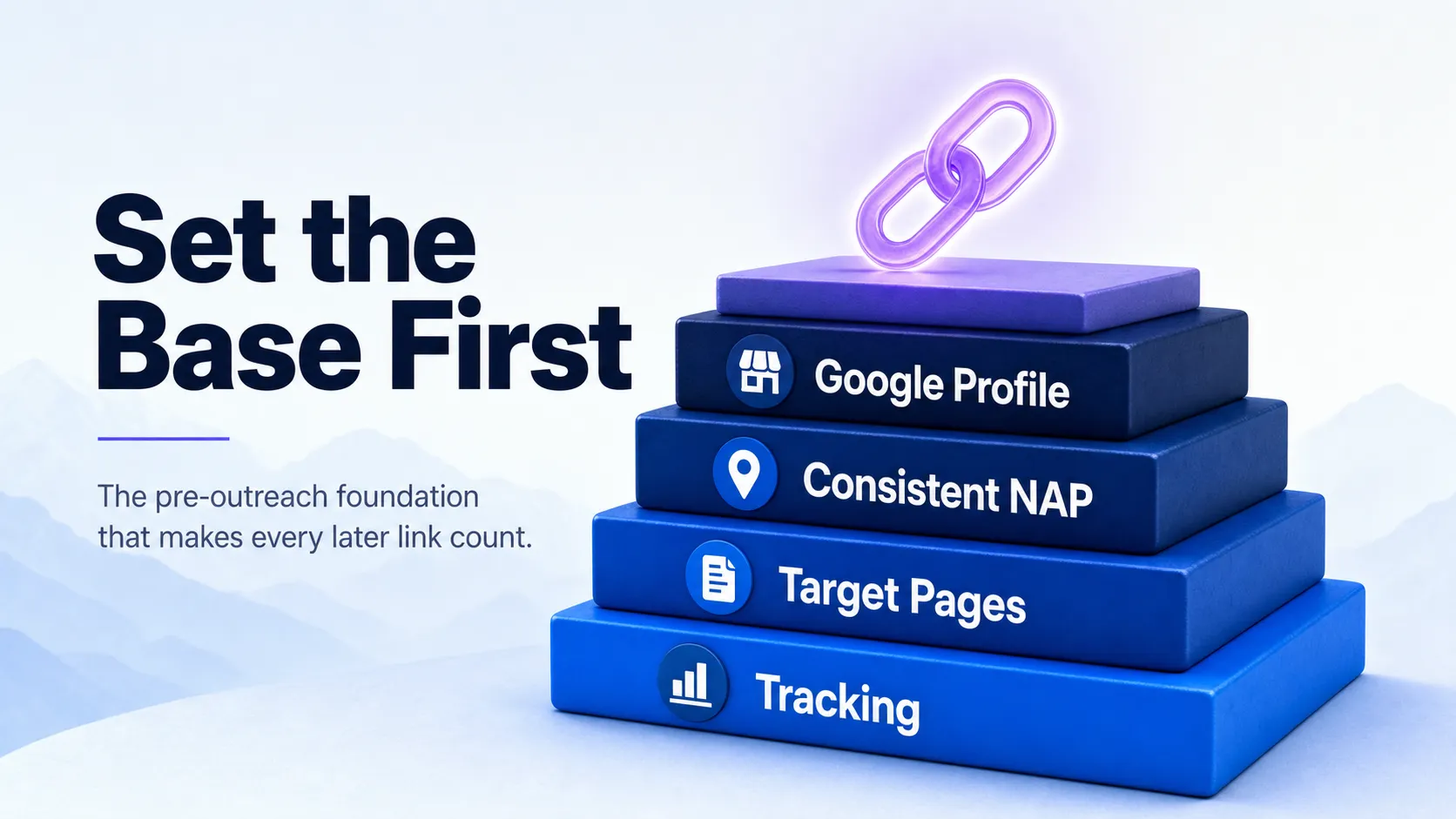
Many local campaigns underperform because the business pitches too early, before its local signals are clean and coherent. Get these four things right first.
Step 1: Finish Your Google Business Profile
Confirm your Google Business Profile is fully optimized before you ask anyone for a link. That means correct primary and secondary categories, an accurate service area, the right website URL, current hours, and real photos. Your profile is the anchor of your local entity, so a thin one weakens every signal a new link could send.
Step 2: Clean Up NAP Consistency
Make sure your name, address, and phone number match across your website, your Google profile, and every existing citation. When those details conflict, search engines hesitate to treat the listings as one business. A coherent entity makes each new link point to a single, trusted place rather than a fragmented one.
Step 3: Decide Which Pages the Links Should Support
Name the exact pages local links should strengthen: your homepage, individual location pages, service pages, or a dedicated local resource page. Outreach without a target page sends authority to whatever happens to rank, not to the page that earns revenue. Pick the pages first, then pitch toward them.
Step 4: Set Your Link Acceptance Rules
Define what counts as a good link before you start, so you are not tempted by anything with a pulse. A link qualifies when it is locally or topically relevant, sits in genuine editorial context, and is not a paid placement dressed up as content. Writing these rules down keeps a slow week from turning into a spammy directory binge.
Step 5: Turn On Tracking
Confirm you have access to Google Search Console, a backlink tool, a brand mention monitor, and Google Analytics 4 before you launch. You cannot judge what you cannot measure, and you will want a baseline the moment results start moving. If you are building the broader habit, our guide to setting up brand mention monitoring covers the dashboard side in depth.
Audit Your Current Local Link Profile and Competitor Gap
Start every local campaign by auditing what you already have and what your competitors have that you do not. This establishes a baseline, surfaces easy reclamation wins, and turns competitor patterns into a ready-made prospect list before you write a single outreach email.
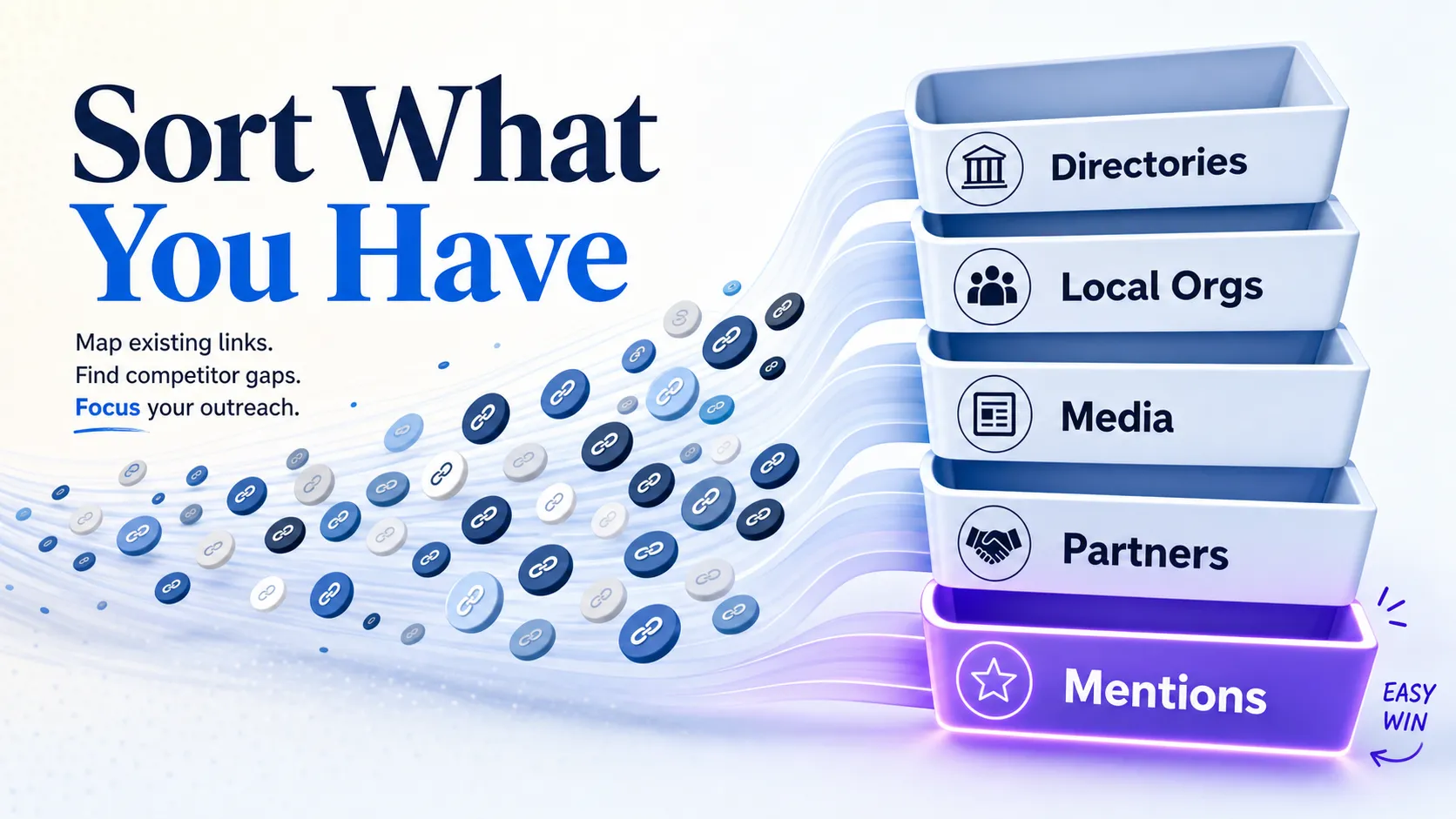
The first real lift often comes from reclaiming mentions and links that already exist, before any new outreach starts. Work through these steps in order.
Step 1: Pull Your Links From Two Sources
Export your current backlinks from Google Search Console first, then cross-check them against Ahrefs, Semrush, or Moz. Search Console shows you Google’s own view of your links, while the third-party tools catch coverage Google has not fully surfaced. Looking at both gives you a fuller picture than either alone.
Step 2: Bucket Your Existing Backlinks
Sort what you already have into categories: directories, local organizations, media mentions, sponsorships, partner sites, and citations. This grouping shows you where you are already strong and where a category is empty. An empty bucket is usually your fastest area to grow.
Step 3: Hunt for Unlinked Mentions
Search for unlinked references to your business name, your founders, your products, and your location. These are places that already know you and simply forgot to link. Our walkthrough on finding unlinked brand mentions quickly shows the exact search operators and tools to use.
Step 4: Compare Against Local Competitors
Run the same backlink export for two or three local competitors and look for sources that link to more than one of them. A site linking to several similar businesses is far more likely to link to you than a one-off placement. Focus on the repeating patterns, not the outliers. A structured SEO competitor analysis makes those repeat sources easy to spot.
Step 5: Build the Prospect List
Turn those repeated sources into a working list with columns for source type, local relevance, authority, and outreach difficulty. This single sheet becomes the spine of the whole campaign. Rank rows so the easiest, most relevant sources sit at the top.
Map Local Link Opportunities by Type, Effort, and Payoff
Group every opportunity into four buckets so you chase high-fit links before low-fit ones: foundational links, relationship-based links, earned media, and content-driven links. Each bucket carries a different mix of relevance, effort, and likelihood, and knowing which is which keeps you from spending a week chasing a link you were never going to get.
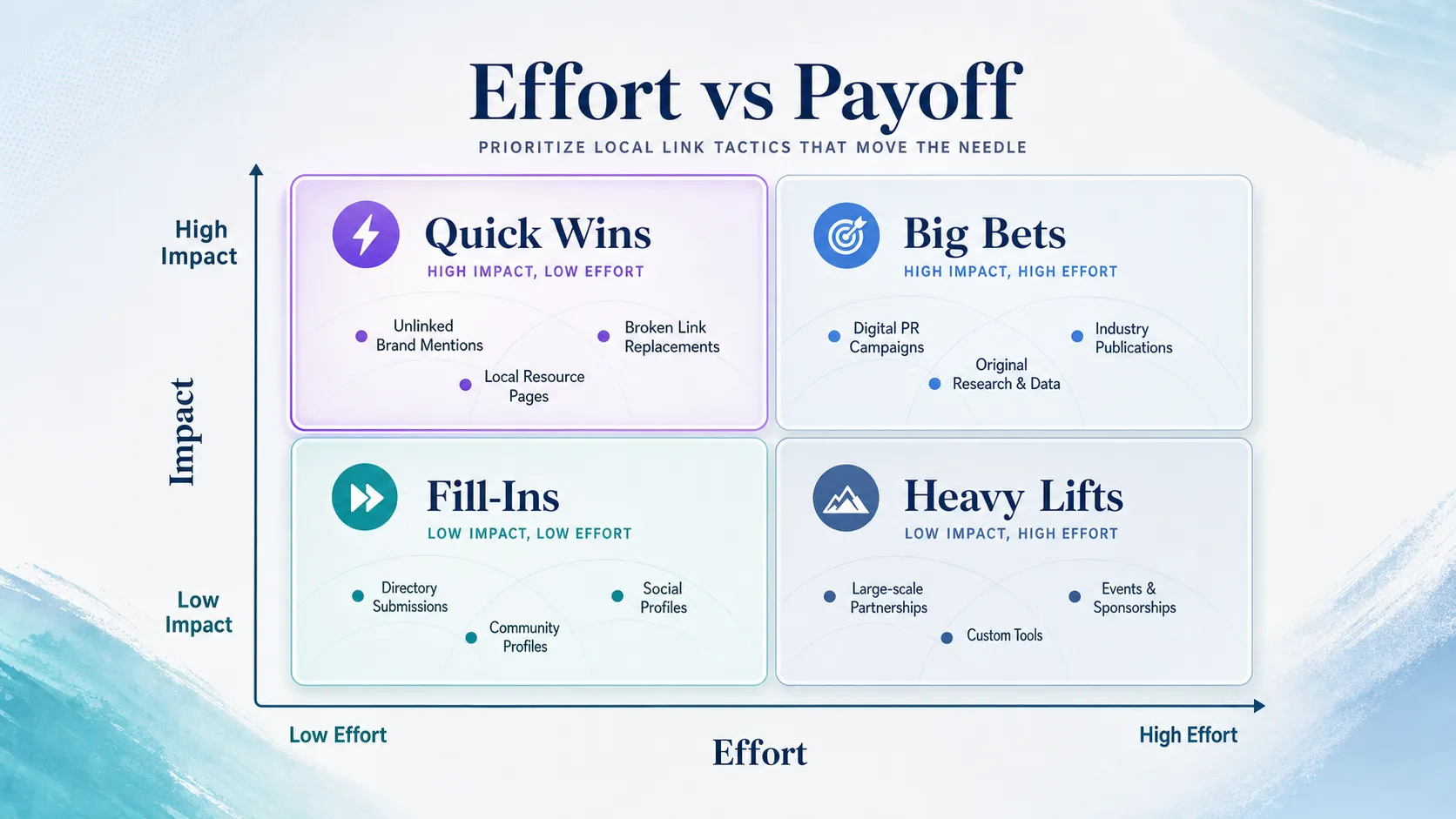
Local campaigns usually win faster with relevance and relationships than with generic national authority chasing. Use this map to decide what fits your situation.
| Bucket | What it is | Effort | Best when |
|---|---|---|---|
| Foundational | Directories, citations, chamber listings, review profiles | Low | You are new or have gaps in core listings |
| Relationship-based | Partner pages, vendor links, testimonials, sponsorships | Low to medium | You already know local businesses and groups |
| Earned media | Local news, neighborhood blogs, community sites | Medium to high | You have a newsworthy angle or local data |
| Content-driven | Local guides, data studies, resource pages, roundups | High | You can invest in a linkable asset over time |
Not every valuable local signal looks the same. A citation confirms your details, a nofollow review profile builds trust and discovery, a partner link passes relevance, and a local news feature drives both authority and referral traffic. They do different jobs, so judge each by the job it does. The prioritization rule is simple: target sources that are both locally relevant and realistically obtainable before you push for aspirational ones.
Secure Foundational Local Links First
Claim the obvious, legitimate local sources before anything else, because they establish trust and fill the citation gaps that quietly cap your rankings. Many local ranking problems start with incomplete or inconsistent foundational listings, not with a lack of outreach.
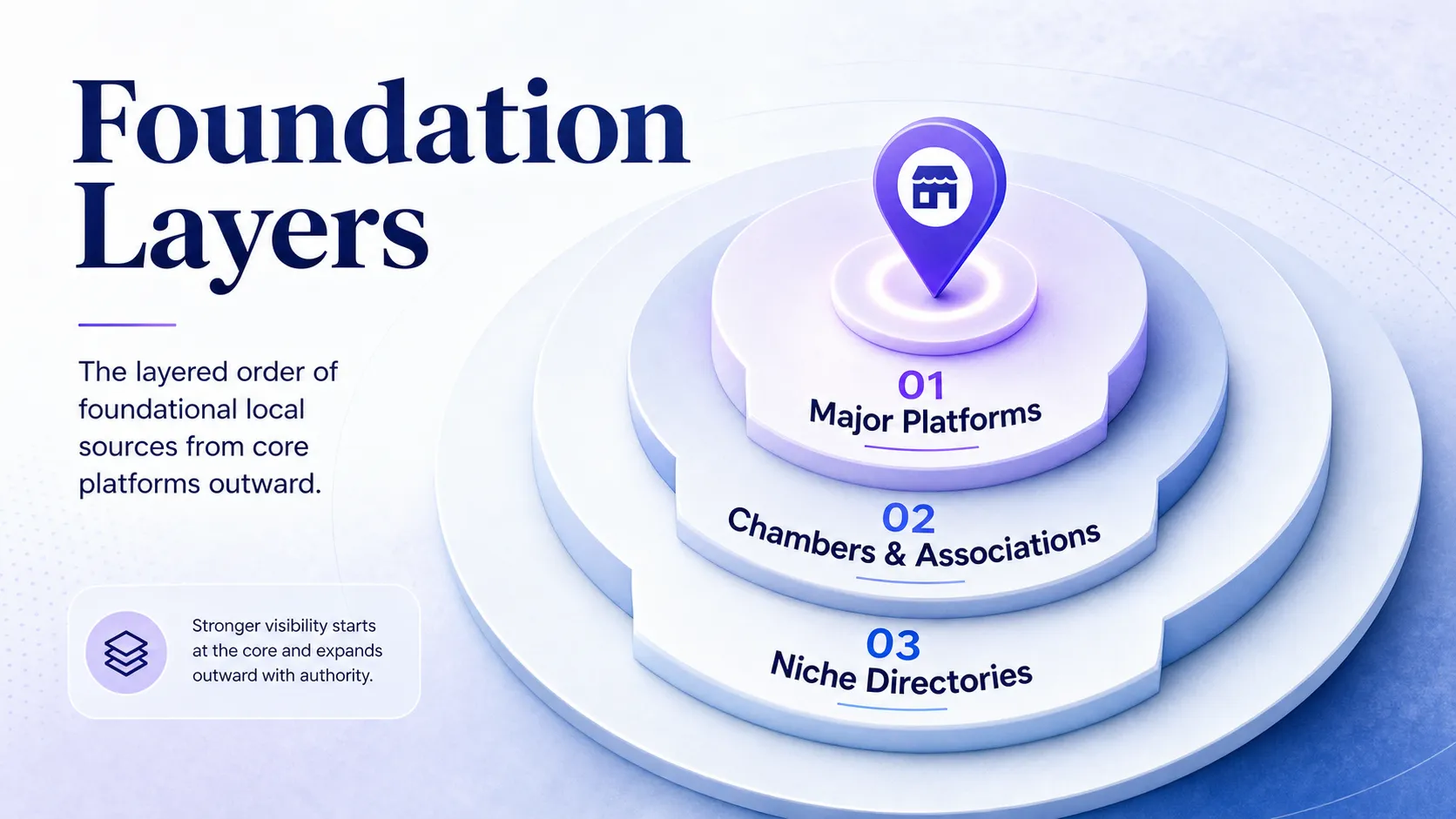
Work outward from the platforms everyone checks to the directories specific to your trade.
- Major platforms: Google Business Profile, Bing Places, Apple Maps, Yelp, and Foursquare.
- Community credibility: your local chamber of commerce and relevant trade associations.
- Niche directories: the industry-specific listings buyers in your category actually use.
For each profile, “good enough” means complete: the exact business name, address, phone number, website, accurate categories, real photos, and a clear description. Do not waste hours hunting down every possible directory on the internet. A handful of legitimate, consistent, relevant listings beats fifty thin ones, and the thin ones can drag your trust signals down. Review platforms and social profiles belong here too, since they reinforce local trust even when the link itself is nofollow.
Turn Relationships and Mentions Into Links
The highest-converting local links come from people and organizations you already know, not from strangers. Local link building usually starts with warm relationships, so map your existing contacts before you draft a single cold email.
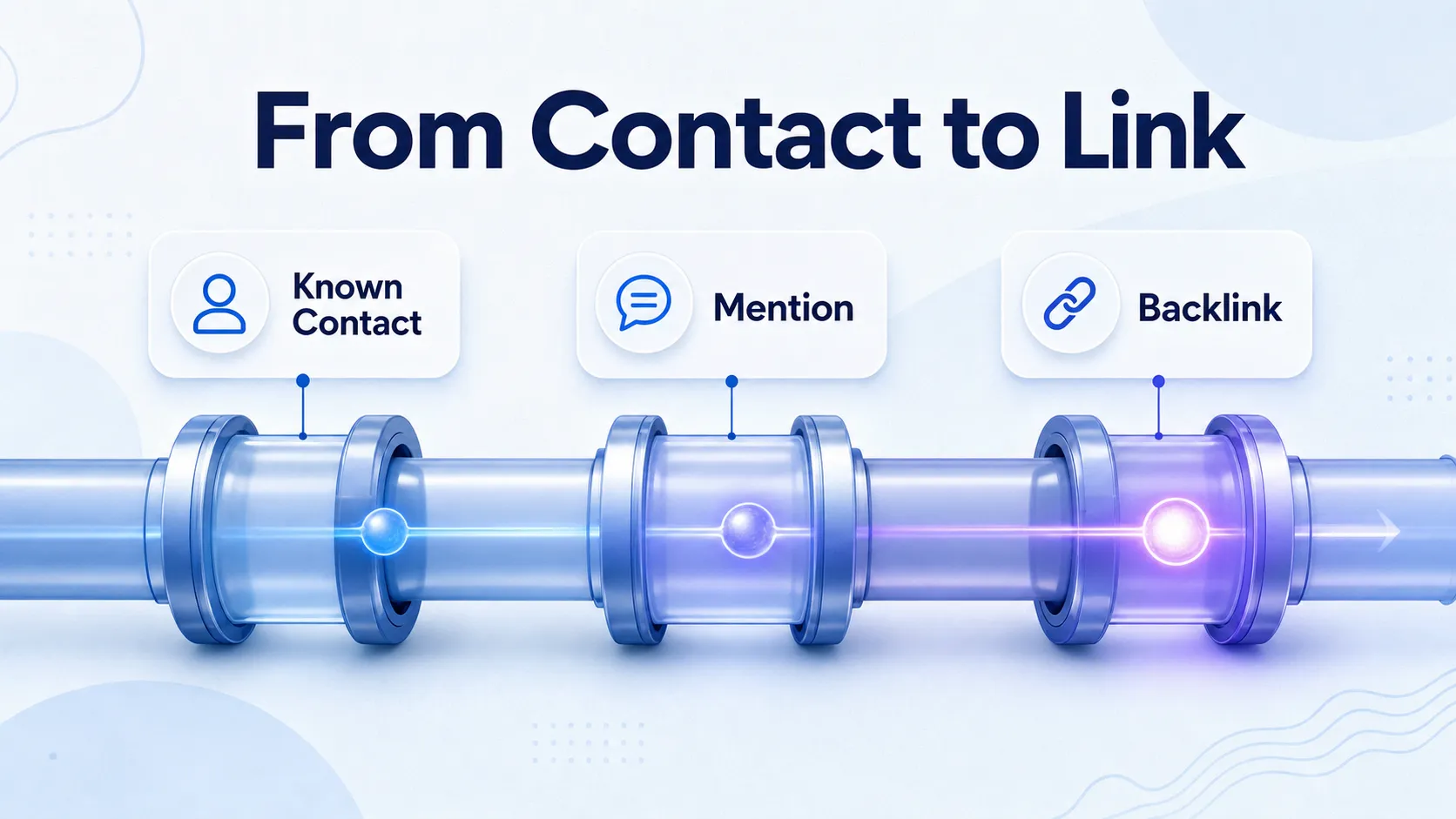
These are the link sources sitting in your existing network. Work them in this order.
Step 1: Ask Vendors, Clients, and Partners
Reach out to suppliers, clients, and complementary local businesses for partner-page links, testimonial links, co-marketing mentions, or a spot on a referral page. A supplier you pay every month has every reason to feature you, and a happy client often welcomes the chance to vouch for you publicly. These links carry strong relevance because the relationship is real.
Step 2: Tap Community Groups and Sponsorships
Local groups become link sources through sponsorships, speaking slots, event pages, and member directories. Chambers, nonprofits, sports teams, and meetup organizers all maintain pages that list supporters and participants. Pick the ones genuinely tied to your audience rather than buying a logo placement on any site that will take your money.
Step 3: Reclaim Unlinked Mentions
Find mentions of your business, founder, product, or location that do not yet link to you, then send a short, friendly request to add one. This is the fastest win because the site already named you and the editor just needs a nudge. Our guide to turning unlinked mentions into links covers the request that actually gets a yes.
Step 4: Build and Rank a Relationship List
List at least 20 existing contacts and rank them by closeness, local relevance, and site quality. Closeness predicts whether they reply, relevance predicts whether the link helps, and site quality predicts how much it moves. Working a ranked warm list converts far better than blasting a cold one.
Step 5: Pursue Local Guest Posts Selectively
Pitch a local guest post only where there is a real editorial fit and the publication serves your community. A bylined piece on a respected neighborhood site builds both a link and local authority. Mass-pitching generic blogs does neither, so treat this as a targeted move, not a volume play.
Pitch Local Media and Build One Linkable Local Asset
Earn editorial local links by being useful, newsworthy, or genuinely relevant to a community, then build one asset that keeps attracting links over time. Local editors respond to usefulness and relevance, not SEO jargon or over-optimized anchor text.

Step 1: Pitch a Story, Not a Link
Contact local journalists, neighborhood blogs, resource curators, chambers, nonprofits, and event organizers with a story, never a link request. Editors care about what their readers want, so lead with the angle and let the link follow naturally. The angles that earn coverage are local data, community impact, hiring or expansion news, expert commentary on a local issue, an event launch, and genuine public-service content.
Step 2: Build One Asset Worth Linking To
Create a single linkable local asset that gives outreach a reason to exist. A neighborhood guide, a local data study, a community event calendar, an expert roundup, or a practical resource page all qualify. The asset matters because it gives your pitch something useful to point at, not just a homepage and a hope. One strong asset compounds, drawing links long after you build it.
Step 3: Match the Angle to the Publication
Tailor each pitch to what the specific outlet actually covers, then attach the relevant asset. A neighborhood blog wants the local guide, the business section wants the expansion news, and a nonprofit newsletter wants the community impact. The closer the fit, the higher the reply rate. For the mechanics of pitching at scale, our guide to running a reply-worthy outreach campaign covers the email structure that lands.
See where AI answers put your brand
Twenty minutes with a senior strategist: where the major engines point buyers in your category, who gets named instead of you, and a straight read on what a programme would change.
Book a strategy callPrioritize Outreach, Track Results, and Avoid Common Mistakes
Turn the tactics into a repeatable workflow with a clear priority order, a simple outreach sequence, and metrics that measure business impact, not vanity. The best local campaigns track both link acquisition and the rankings and revenue those links produce.
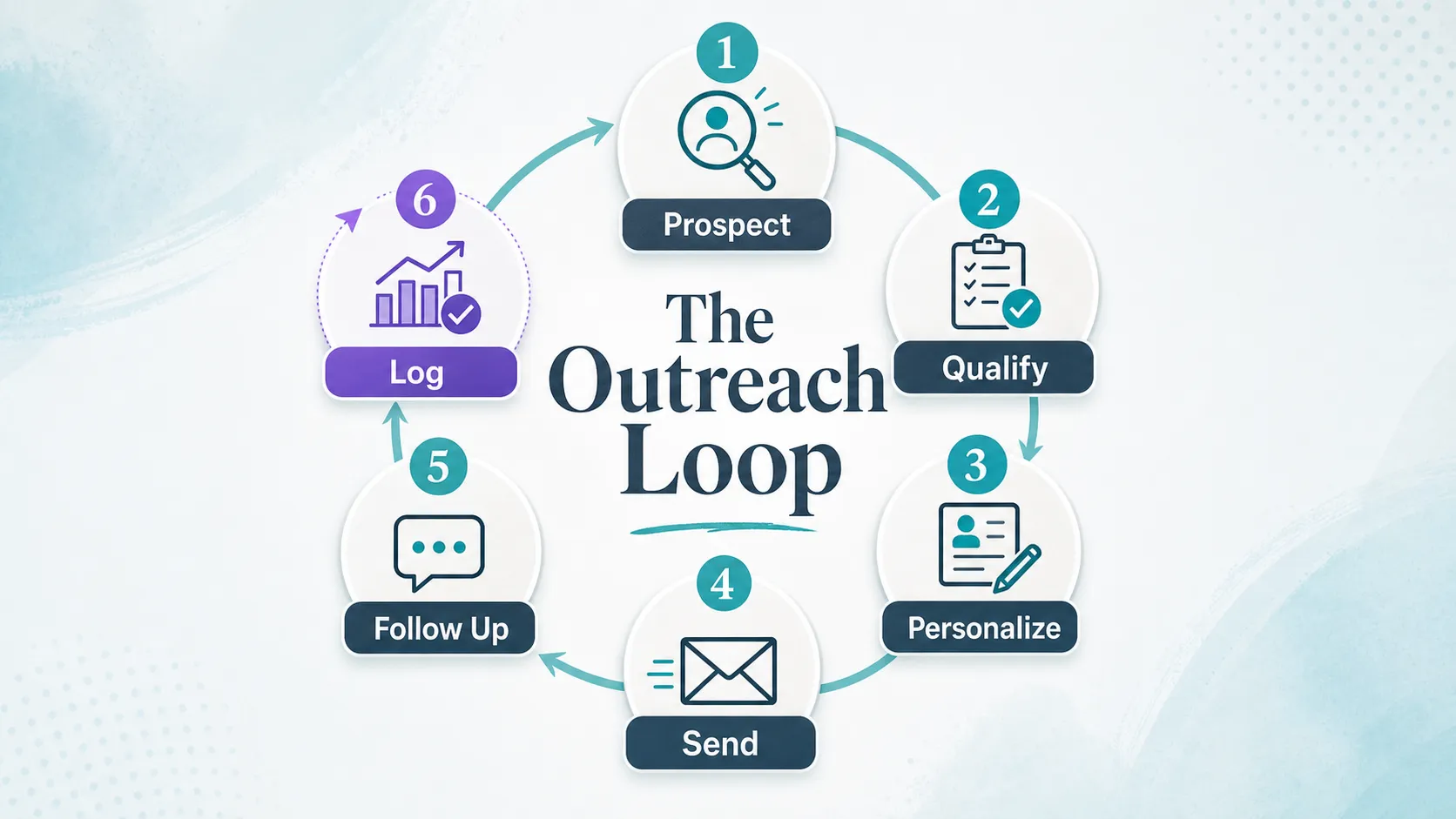
Run prospects in priority order: easiest high-fit sources first, then relationship-based links, then local media, then content-driven assets. That sequence banks momentum early while the slower, higher-value work develops. Within each tier, run the same loop: prospect, qualify, personalize, send, follow up, log the outcome, then revise the pitch based on what replies.
| Track this | Where | Why it matters |
|---|---|---|
| New referring domains | Backlink tool | Shows raw link acquisition |
| New local links | Search Console | Confirms Google sees them |
| Referral traffic | Google Analytics 4 | Proves links send real people |
| Branded searches | Search Console | Signals growing local awareness |
| Conversions from local pages | Google Analytics 4 | Ties links to revenue |
Set realistic expectations. Rankings and traffic improve gradually, not overnight, and the gains compound as links and mentions accumulate. The honest timeline is months of steady work, not a single big push. If you want the full framework that sits above this local workflow, our guide on how to do link building in 2026 connects local tactics to the wider strategy.
Mistakes That Kill Local Campaigns
The fastest way to waste a quarter is generic outreach, so personalize every email and reference something specific about the site. Avoid spammy directories and unrelated high-authority sites that carry no local relevance, since neither helps a local business rank. Do not over-optimize anchor text into exact-match keywords, and never judge success by link count alone. A handful of relevant, trusted links beats a pile of irrelevant ones every time.
Why Nofollow Links Still Count
Treat nofollow links, review profiles, and citations as part of the work, not throwaways. They build trust, confirm your details, and help both users and AI engines discover your business, even when they pass no direct ranking weight. A complete local presence depends on these signals as much as on followed editorial links, so chase the relevant ones rather than dismissing them.
Frequently Asked Questions
What is local link building?
Local link building is the process of earning backlinks from websites that are geographically and topically relevant to your business, such as local news outlets, chambers of commerce, community groups, and partner businesses. The goal is to tell search engines your business belongs to a specific place, which strengthens both local organic rankings and Local Pack visibility. It prioritizes relevance and community connection over raw domain authority.
Do citations count as backlinks for local SEO?
Citations and backlinks are related but not the same. A citation is a mention of your business name, address, and phone number, sometimes without a link, while a backlink is an actual clickable link to your site. Both matter for local SEO: citations confirm your business details and build trust, and backlinks pass relevance and authority. A linked citation does both jobs at once, which is why directory profiles remain a useful foundation.
How many local backlinks do I need to rank?
There is no fixed number, because it depends on your market’s competitiveness and what your competitors already have. The practical answer is to match and then exceed the relevant local links your top two or three competitors hold, focusing on quality and relevance rather than a target count. In a low-competition town, a handful of strong, relevant links can move you. In a dense metro, expect a longer, steadier build.
Are nofollow local links worth it?
Yes, nofollow local links are worth pursuing. Review profiles, directory listings, and many community pages use nofollow links, yet they still build trust, confirm your business details, and help users and AI engines discover you. Picture a local restaurant with a strong TripAdvisor profile: the link may be nofollow, but the citation value and referral traffic are real. Pursue relevant nofollow links rather than dismissing them as worthless.
What is the fastest way to build local links?
The fastest local links come from reclaiming unlinked brand mentions and tapping existing relationships. Sites that already mention your business or already work with you need only a short request to add or place a link, which converts far faster than cold outreach to strangers. Start there, then move into foundational directories before pursuing slower earned-media and content-driven links.
Local link building rewards patience and relevance, not volume or shortcuts. Start with the audit this week, fix the foundation, then earn one genuinely high-fit local backlink from a real community relationship before you do anything else. That single relevant link teaches you more about your market than a month of cold outreach, and it compounds from there. Want to see where your brand stands across search and AI answers first? Book a strategy call and build from a clear baseline.