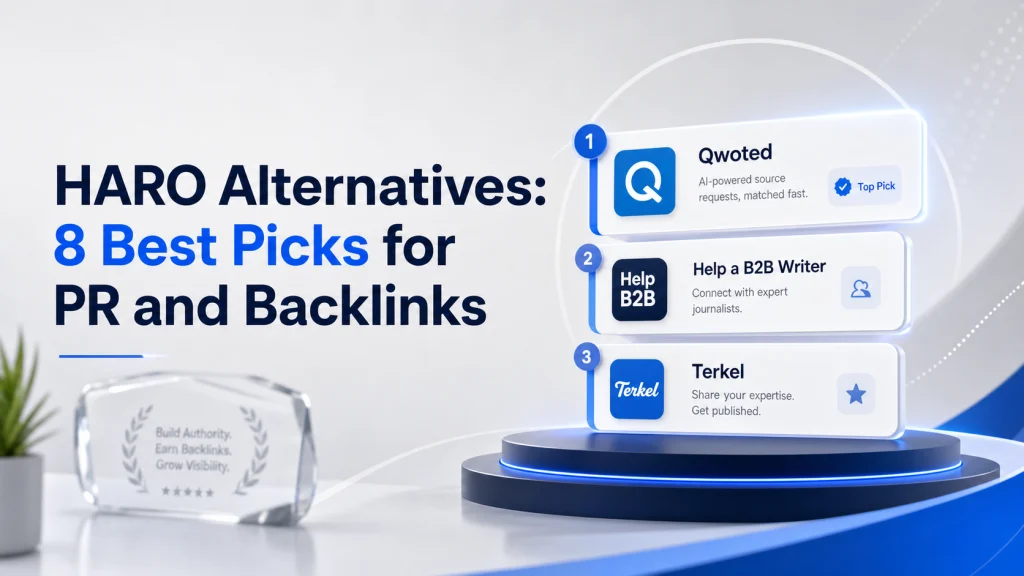

HARO-style source requests still work, but the best alternative now depends on whether you care more about speed, niche fit, or link quality. After Help a Reporter Out went through its shutdown and relaunch cycle, the question stopped being whether journalist query platforms earn placements and became which one fits your goals.
The closest free replacement is Source of Sources, the fastest option for placements is Featured, and the premium choice for higher-quality PR coverage is Qwoted. The other five picks below win on niche or regional fit.
This is a curated ranking built for SEOs, PR pros, founders, and link builders who already know the category and want a fast decision, not a history lesson.
The Short Version
- Source of Sources is the easiest switch for anyone who used HARO and wants the same request-response rhythm.
- Featured delivers the fastest turnaround and the strongest conversion for backlink-focused outreach.
- Qwoted and ProfNet win when reputation and authority matter more than volume.
- Help a B2B Writer, SourceBottle, ResponseSource, and JournoLink each own a specific niche or region.
- The strongest results come from pairing one broad platform with one niche or regional platform, not signing up for all eight.
Why You Need HARO Alternatives Now
HARO and HARO-style workflows still earn real mentions, links, and credibility for brands that pitch fast and pitch well.
The issue is no longer whether source requests work. It’s which platforms deliver the response quality and placement potential worth your time.
Platform volatility is the reason a backup stack matters. HARO itself shut down, rebranded as Connectively, and came back, and that kind of instability resets your pipeline overnight if you depend on a single source.
Spam volume, changing access rules, and uneven journalist quality make the case stronger. A feed packed with low-authority requests wastes the time you should spend writing a sharp pitch.
Curated query feeds usually beat broad-volume outreach when your goal is an actual mention, not just a reply that goes nowhere. That principle drives the ranking below.
How We Ranked These HARO Alternatives
The order favors placement potential and practical wins over brand recognition. A smaller, sharper tool can outrank a famous one when it produces more relevant requests for your niche.
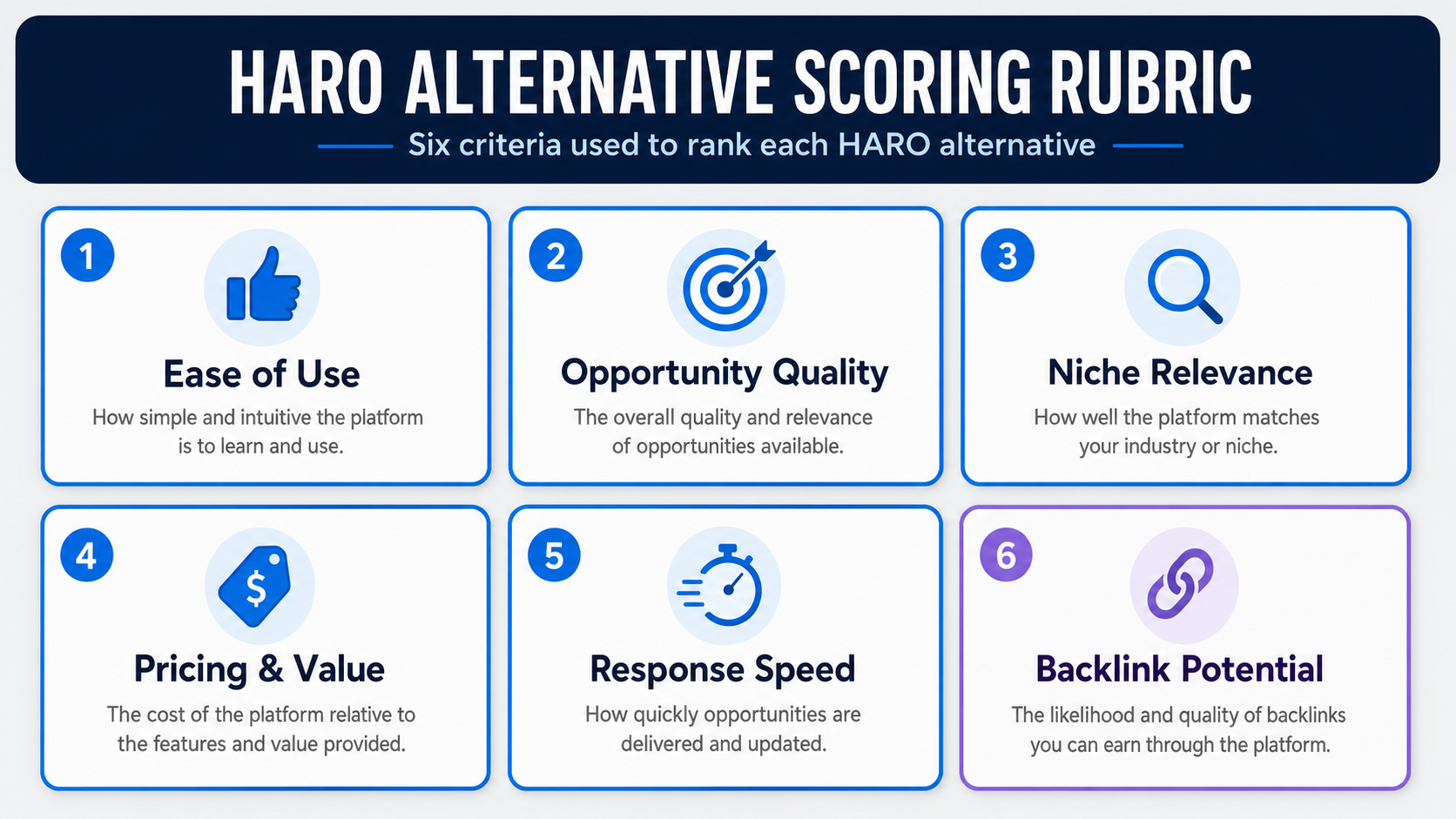
Six criteria shaped the list:
- Ease of use, so you can start pitching the same day you sign up.
- Quality of journalist opportunities, measured by relevance and the authority of the outlets behind each request.
- Niche relevance, because a tight topic match beats a flood of off-target queries.
- Pricing and accessibility, including whether a usable free tier exists.
- Speed of responses, since the first strong pitch usually wins the slot.
- Backlink and media potential, the outcome most readers actually want.
Pricing and access rules change often, so the notes below use current public information where available and flag anything that needs a fresh check. Geography matters too, so regional tools are ranked for the audience they actually serve rather than penalized for not being global.
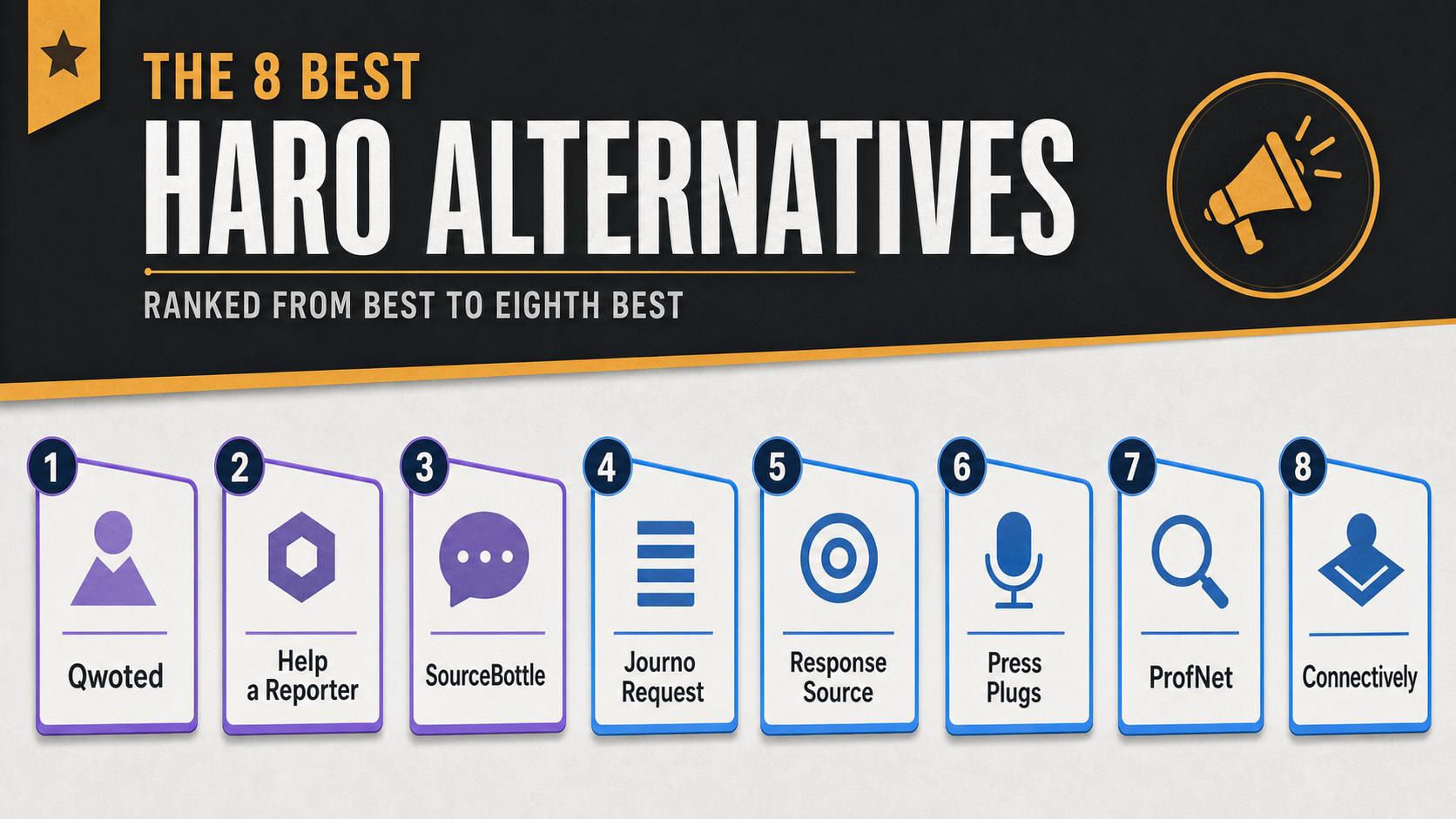
8 Best HARO Alternatives Ranked
Each entry below gives you what the platform is, why it earns its rank, the main benefit, a short pros and cons read, a pricing note, and the placement angle that matters most.
1. Source of Sources

Source of Sources, often shortened to SoS, is a source request board built by HARO founder Peter Shankman that mirrors the classic request-response model. It earns the top spot because it feels familiar to anyone who used HARO, which makes it the lowest-friction switch on this list.
The request format and email-driven rhythm let you scan opportunities and reply fast without learning a new system.
The main benefit is speed of adoption. You can move your entire HARO habit over in an afternoon and start pitching the same day.
On the upside, the interface is simple, the requests are direct, and the learning curve is close to zero. The trade-off is a smaller opportunity pool than the largest platforms and lighter niche filtering, so very specialized topics may surface fewer matches.
- Best for: beginners and HARO refugees who want the closest workflow match for quick expert quotes and starter-level links
- Pricing: Free
- Standout strength: Closest match to the old HARO workflow, so the switch takes an afternoon
2. Featured
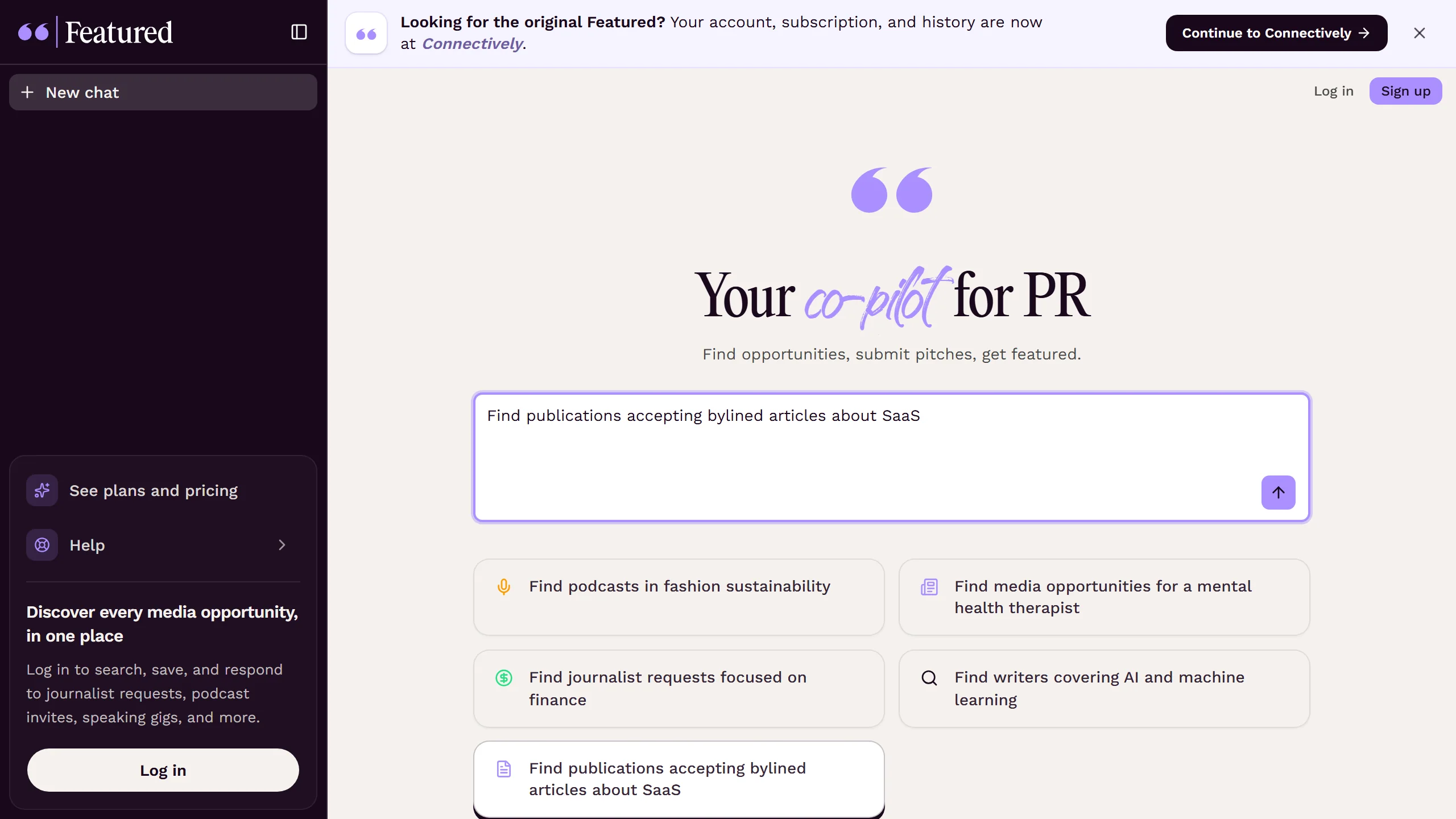
Featured is an expert quote platform built around answering journalist questions and converting those answers into published mentions. It ranks second because it pairs a fast turnaround with strong conversion, which is exactly what backlink-focused teams want. Concise, well-targeted answers get visibility quickly here compared with broad HARO-style feeds.
The main benefit is speed to placement. When the goal is editorial mentions and editorial backlinks with less waiting, Featured shortens the gap between pitch and publish.
Strengths include a real free entry point, accessible paid plans, and good visibility for tight pitches. The downside is heavy competition on popular questions, and not every answer turns into a link.
- Best for: SEO teams and founders chasing faster placements without an enterprise budget
- Pricing: Free tier for answers, Business from $49 per seat per month on annual billing
- Standout strength: Speed from pitch to published mention
3. Qwoted
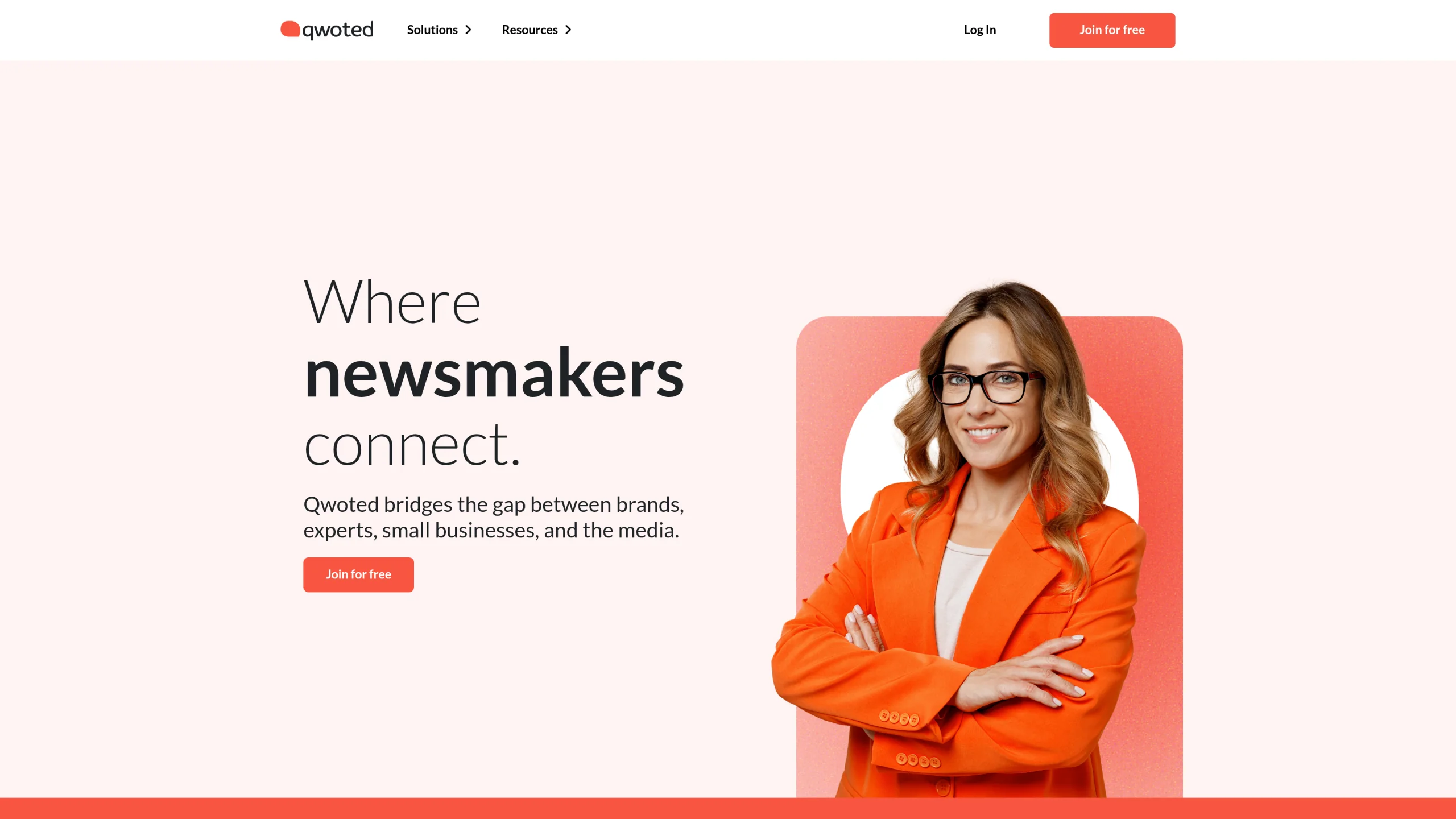
Qwoted is a PR pitching platform and journalist request network known for surfacing higher-quality, better-fit opportunities. It earns third because it leans into curation and credibility rather than raw volume, which suits teams that value reputable coverage.
You communicate with journalists and editors directly on the platform, and the media environments tend to be stronger than what you find on high-volume feeds.
The main benefit is authority. Qwoted is built for placements that build trust, not just easy links.
It carries a reputable brand, better curation, and strong journalist access. The cost is real: it’s pricier than entry-level tools, and it offers fewer total opportunities than the busiest platforms.
- Best for: premium PR teams that want reputable coverage and credibility over backlink quantity
- Pricing: Free plan with 2 pitches a month, Pro $99 per month, Enterprise custom
- Standout strength: Curated, higher-authority journalist requests
4. Help a B2B Writer

Help a B2B Writer is a niche-specific source request board built for business, marketing, and technology topics. It ranks fourth because tighter focus means more relevant requests and far less wasted pitching for B2B brands. The narrower pool works in your favor when your expertise sits squarely in SaaS, marketing, or tech.
The main benefit is relevance. You spend less time filtering noise and more time answering questions you’re genuinely qualified to address.
Strengths include strong B2B fit, an easier path to standing out, and a low barrier to entry. The limitation is narrow topic coverage, so it’s a poor match for consumer or lifestyle PR.
- Best for: B2B SaaS companies, agencies, and expert-led marketing teams building thought leadership
- Pricing: Free for both writers and sources
- Standout strength: Tight B2B relevance, so less time filtering irrelevant requests
5. SourceBottle

SourceBottle is a journalist callout platform with particular strength in lifestyle, consumer, travel, and Australia and New Zealand coverage. It ranks fifth because geographic and topical fit can outperform global scale for brands that don’t need US-only reach.
The regional focus makes it a smart pick when your audience lives outside the standard American media circuit.
The main benefit is fit. You reach media that actually serves your region and your category instead of fighting for crowded US slots.
It’s easy to use and useful for regional and consumer media. The trade-off is lower opportunity volume in some verticals and a clear regional skew.
- Best for: lifestyle, consumer, travel, and Australia or New Zealand targeted pitches
- Pricing: Free to pitch, paid add-ons from $25 per month
- Standout strength: Regional strength across Australia, New Zealand, and consumer media
6. ProfNet

ProfNet is a legacy expert source network tied to the PR Newswire ecosystem and serious newsroom relationships. It ranks sixth because it’s a credibility-first tool rather than a quick backlink platform, which makes it a different kind of bet.
The journalist demand here’s genuine, but the platform serves formal media relations more than fast link harvesting.
The main benefit is authority access. ProfNet connects you to established outlets and reporters who expect substantive sources.
Its strengths are a strong reputation, enterprise-grade relationships, and serious journalist demand. The downsides are higher cost, a lighter SEO focus, and a heavier onboarding or sales process.
- Best for: enterprise communications teams and brands with a real PR budget and formal media relations
- Pricing: No public rate card, subscription priced by institution type and seats
- Standout strength: Enterprise-grade newsroom relationships through the PR Newswire ecosystem
7. ResponseSource
ResponseSource is a journalist enquiry platform with strong UK relevance and structured topic categories. It ranks seventh because regional fit can beat generic global tools for the right audience, and its British media flow is hard to match elsewhere. The category structure helps you reply only to enquiries that suit your expertise.
The main benefit is UK media access. If your targets are British publications and trade press, the opportunity flow lines up with your goals.
Strengths include UK-heavy opportunity flow, organized categories, and good fit for timely replies. The drawbacks are an annual cost and limited usefulness for US-only backlink campaigns.
- Best for: UK PR teams, agencies, and brands with British media targets and trade press goals
- Pricing: Journalist Enquiry Service from £625 a year per category
- Standout strength: UK-heavy enquiry flow organised by topic category
8. JournoLink

JournoLink is a journalist outreach platform built more around relationships and small-business PR than pure alert response. It ranks eighth because it suits readers who want to build ongoing journalist relationships, not only react to alerts. The workflow is more hands-on, which fits long-term PR more than fast backlink runs.
The main benefit is relationship building. JournoLink helps small teams develop media contacts they can return to over time.
It’s small-business friendly with a more proactive outreach workflow. The cost is fewer pure request opportunities and more manual effort per placement.
- Best for: small businesses and lean PR teams that want proactive, relationship-led outreach
- Pricing: Micro plan from £12 a month, Starter £59 a month
- Standout strength: Relationship-led outreach built for small business PR
See where AI answers put your brand
Twenty minutes with a senior strategist: where the major engines point buyers in your category, who gets named instead of you, and a straight read on what a programme would change.
Book a strategy callHARO Alternatives Comparison Table
Use this table to shortlist in seconds before you ever create an account.
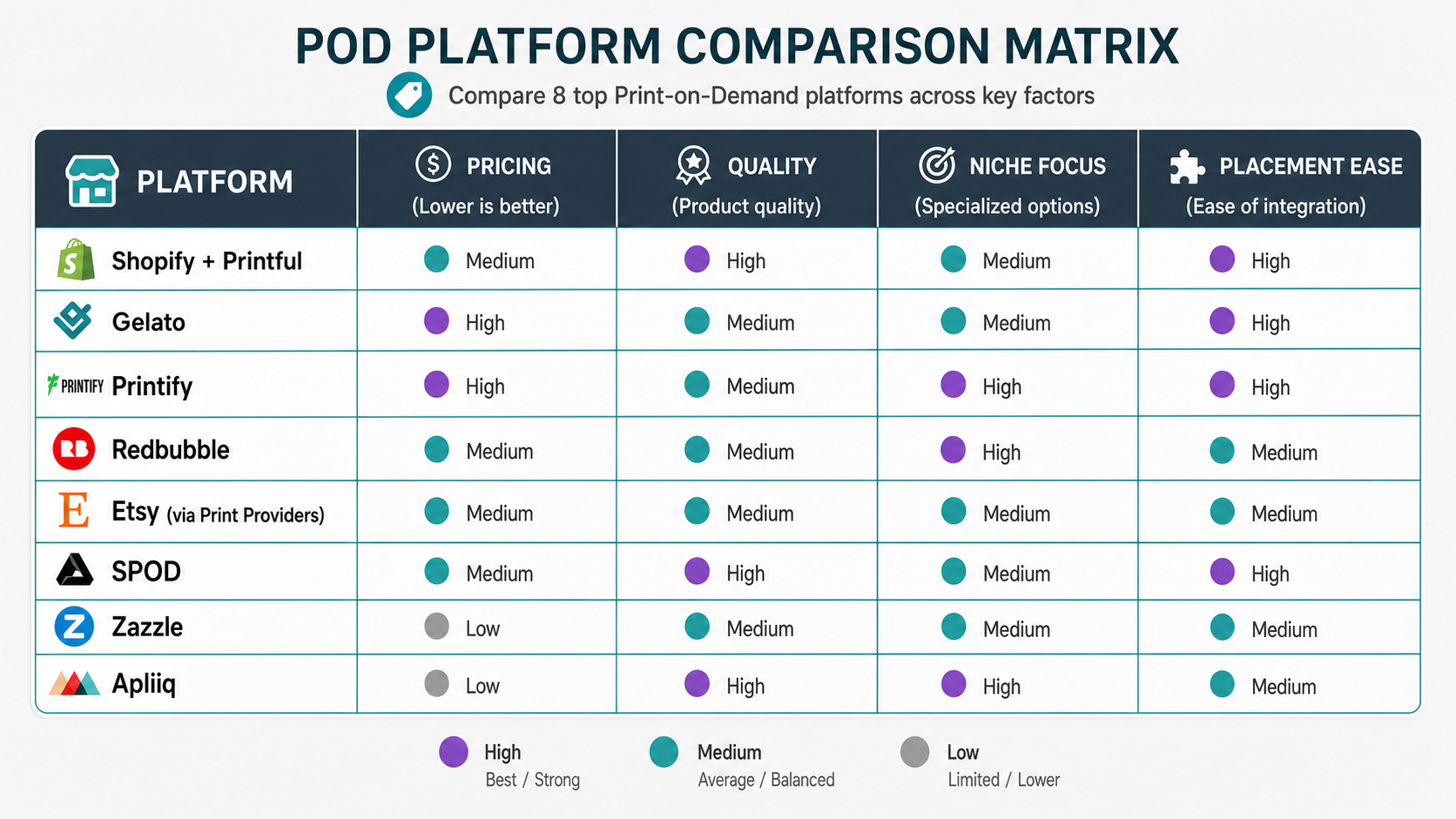
| Platform | Best for | Pricing | Opportunity quality | Niche focus | Ease of winning placements |
|---|---|---|---|---|---|
| Source of Sources | HARO refugees | Free | Medium | General | High |
| Featured | Fast backlinks | Freemium | High | General | High |
| Qwoted | Premium PR | Freemium | High | General | Medium |
| Help a B2B Writer | B2B and SaaS | Free or freemium | High | B2B and tech | High |
| SourceBottle | Lifestyle and AU/NZ | Freemium | Medium | Consumer and regional | Medium |
| ProfNet | Enterprise comms | Enterprise | High | General | Low |
| ResponseSource | UK PR | Paid | High | UK media | Medium |
| JournoLink | Small-business PR | Paid | Medium | Small business | Medium |
If you want a starting trio: pick Source of Sources for familiarity, Featured for speed, and one niche or regional tool that matches your audience.
Which HARO Alternative Fits Your Use Case
The ranking only matters once it maps to your actual goal. Match your situation to the picks below, then commit to one primary platform plus one backup.
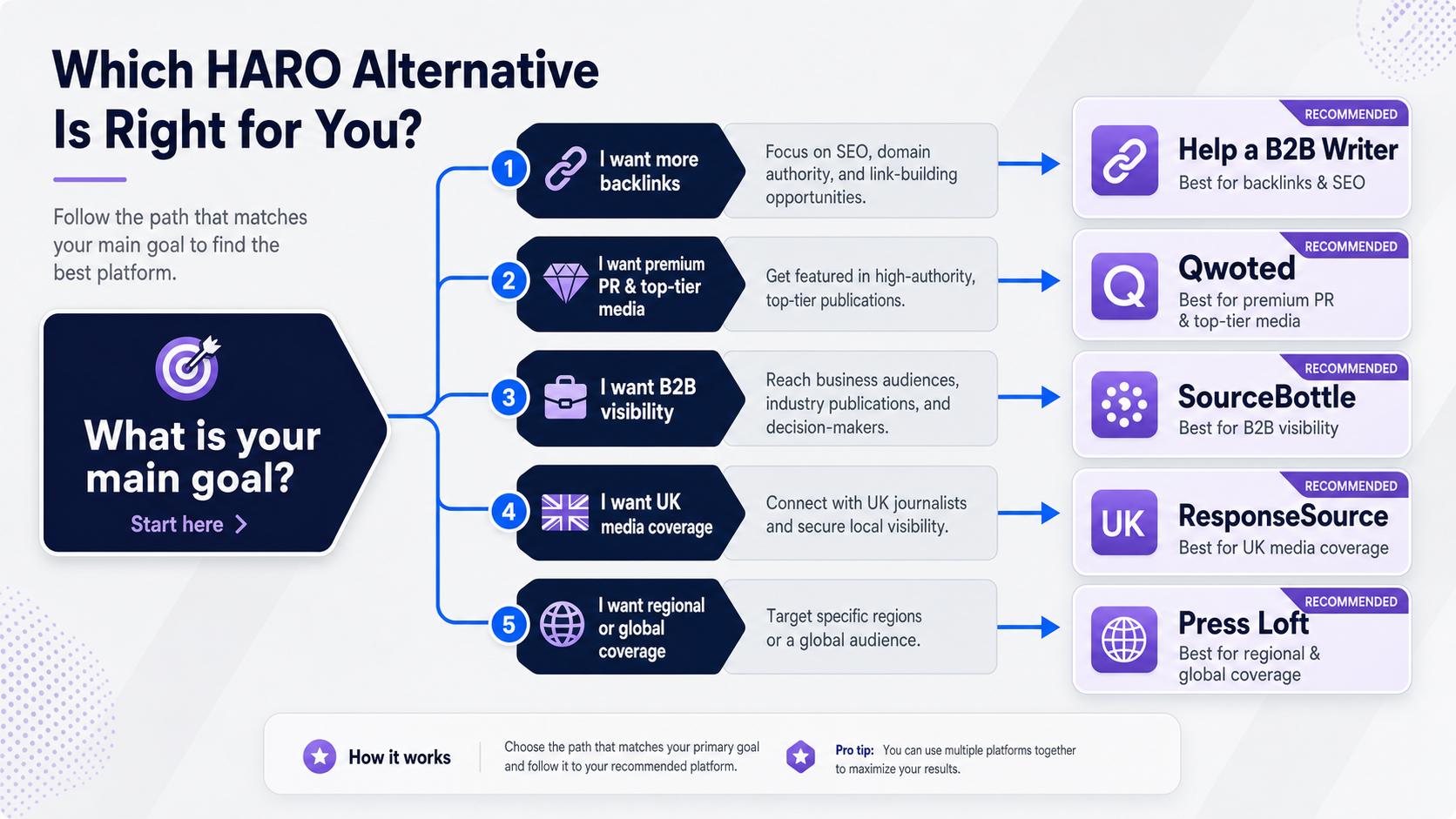
- Free or low-cost entry-level use: start with Source of Sources or Help a B2B Writer.
- Fastest SEO and backlink play: choose Featured.
- Premium PR and higher-authority placements: choose Qwoted or ProfNet.
- B2B and thought leadership: choose Help a B2B Writer.
- UK-focused PR: choose ResponseSource.
- Australia, New Zealand, or lifestyle coverage: choose SourceBottle.
- Small-business relationship building: choose JournoLink.
The strongest results usually come from pairing one broad platform with one niche or regional platform. You don’t need all eight, and running too many feeds at once dilutes the speed that wins placements.
Once you start earning coverage, the next step is turning those wins into durable authority. A focused approach to editorial link building helps you convert media mentions into lasting links, and many of those same mentions feed your AI citation strategy by giving language models trusted sources to cite.
When you spot coverage that names your brand without linking, a structured unlinked mention reclamation process recovers the link value you already earned.
How to Win Placements on Any of These Platforms
The platform matters less than the pitch. Most competitors skip this, yet it decides whether you earn a mention or get ignored.
Answer fast, because the first strong reply usually takes the slot. Set alerts and treat new requests as time-sensitive rather than something to batch later.
Lead with the answer, not your bio. Journalists scan for a usable quote, so give them a tight, quotable line in the first two sentences and add credentials underneath.
Match the request exactly. A relevant, specific reply to a narrow question beats a polished but generic pitch every time.
Skip generic AI-written responses. Editors recognize them, reject them, and some platforms remove users who send them, which costs you future access.
Track which platforms convert for you. A short log of pitches sent and placements won tells you where to spend the next month, and pairing that data with an agency evaluation guide for B2B link building helps when your in-house pitching hits a ceiling.
Frequently Asked Questions
What’s the best HARO alternative in 2026?
There’s no single best HARO alternative, because the right pick depends on your goal. Source of Sources is the closest free replacement for the classic HARO workflow, Featured is the fastest path to backlinks, and Qwoted is the strongest choice for premium PR coverage.
Are there free HARO alternatives that actually work?
Yes. Source of Sources, Featured, Help a B2B Writer, and SourceBottle all offer free access or free tiers that earn real mentions. Success on a free plan depends on pitch speed and relevance far more than on paying for a premium tier.
Is Featured better than HARO for backlinks?
For backlink-focused outreach, Featured usually converts faster because it’s built around concise expert answers and editorial mentions. It’s the stronger pick when your priority is earning links quickly rather than building long-term media relationships.
Which HARO alternative is best for B2B?
Help a B2B Writer is the best fit for B2B brands because its requests center on business, marketing, and technology topics. The tighter niche means more relevant opportunities and far less wasted pitching for SaaS and tech teams.
Does Source of Sources replace HARO?
Source of Sources is the closest direct successor, built by HARO founder Peter Shankman to mirror the original request-response model. It feels familiar to former HARO users, though its opportunity pool is smaller than the largest platforms today.
The Honest Take
No single platform replaces HARO perfectly for every team, and chasing one that does will waste your time. Source of Sources gives you familiarity, Featured gives you speed, Qwoted gives you premium reach, and the regional tools give you fit that global platforms can’t match.
The win comes from fast, relevant pitching, not from the size of the platform you choose. Pick one HARO alternative, set your alerts today, and send three tailored pitches this week.