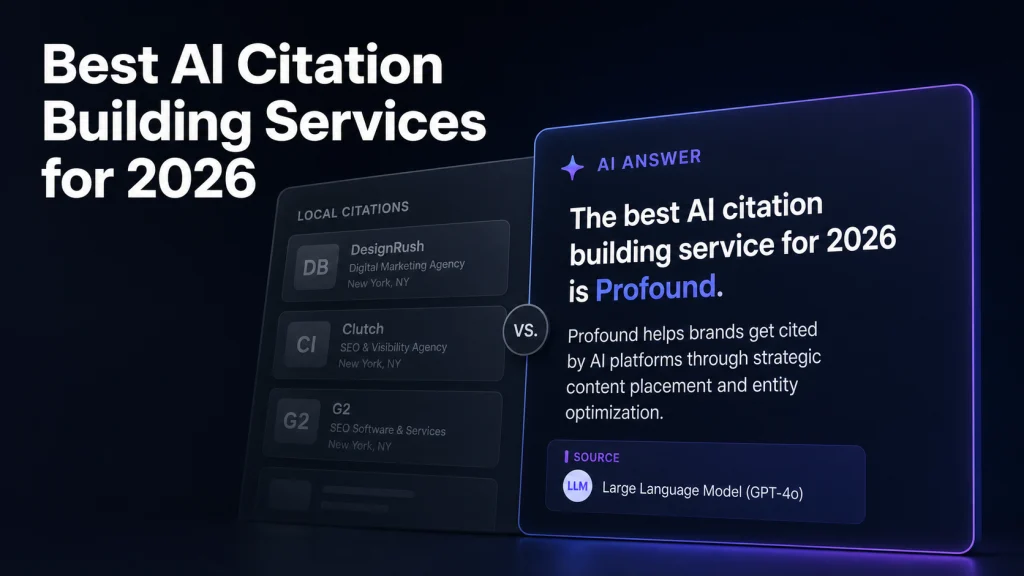

What AI Citation Building Actually Means in 2026
AI citation building is the practice of getting your brand referenced as a source inside AI answer engines, so models name you when buyers ask questions in your category. A citation here is a model pulling your brand into its response, often with a link, when someone asks Perplexity for the best tool in your space. This is a different discipline from local citation building. Local citations are business listings on directories like Yelp or Apple Maps. They support map-pack rankings through consistent name, address, and phone data. Useful for a dentist. Close to irrelevant for a B2B SaaS company trying to get named in ChatGPT.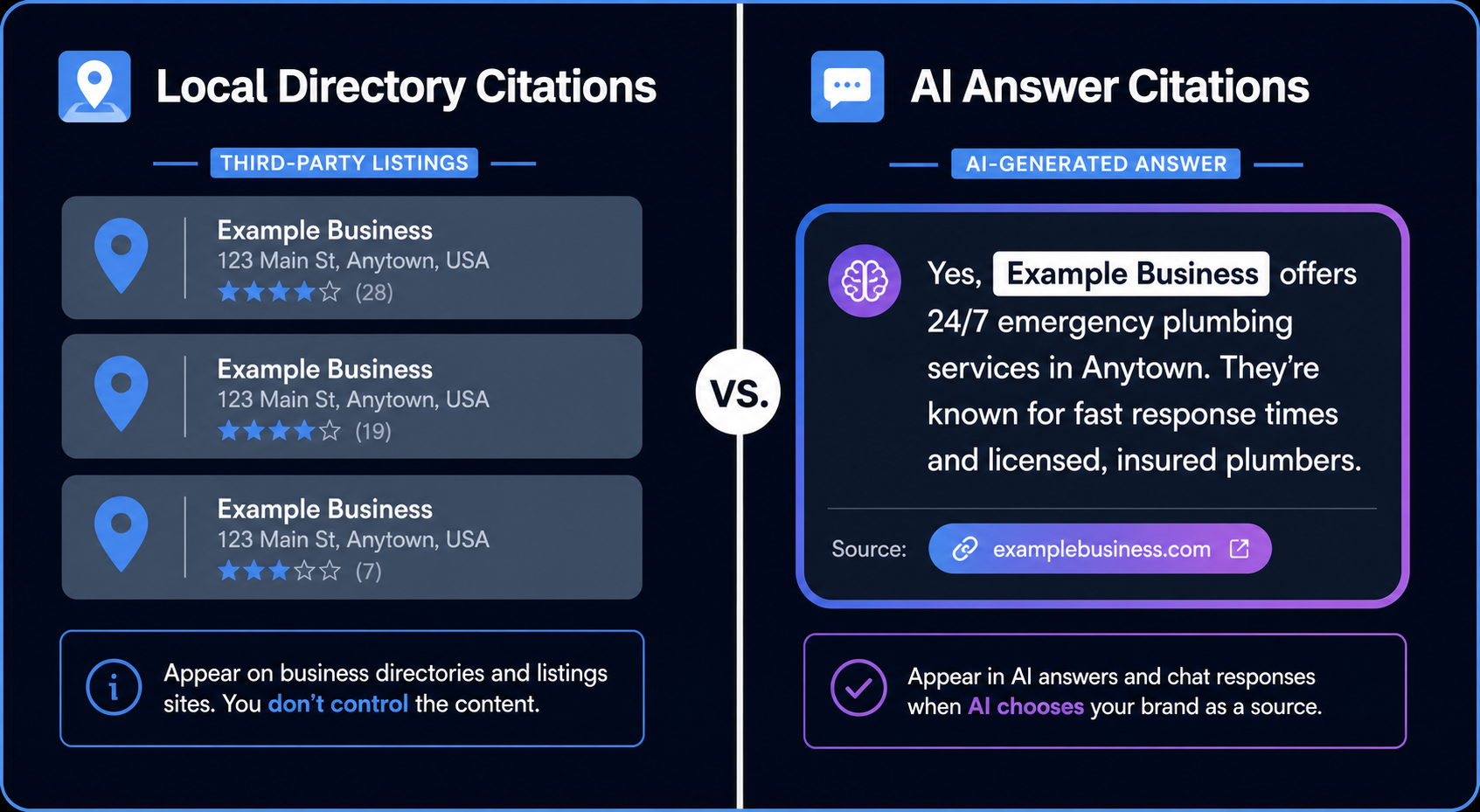
Why the Top-Ranking Services Don’t Match the Search Intent
The services ranking for this keyword mostly solve a problem you don’t have. When you read the top pages, you find directory submission at $2 per citation, one-time builds across 1,000+ sites, and white-label reports for agencies. That model assumes your goal is local map-pack visibility. If you sell to other businesses, that goal is wrong. Buyers in B2B categories now open ChatGPT or Perplexity, ask which vendor fits their use case, and act on the names that come back. A Yelp listing does nothing for that moment. A cited mention in a comparison article or an industry roundup does almost everything. Here is the editorial position worth taking. A service that cannot tell you which publications AI models cite in your category is not an AI citation service. It is a directory vendor with a new homepage. The first question you ask any provider is simple: show me the prompts where my competitors get cited and I don’t.How Real AI Citation Building Works
Real AI citation building runs on a loop: find the prompts that matter, see who gets cited, then earn placement in those exact sources. It reverse-engineers what the models already trust rather than guessing.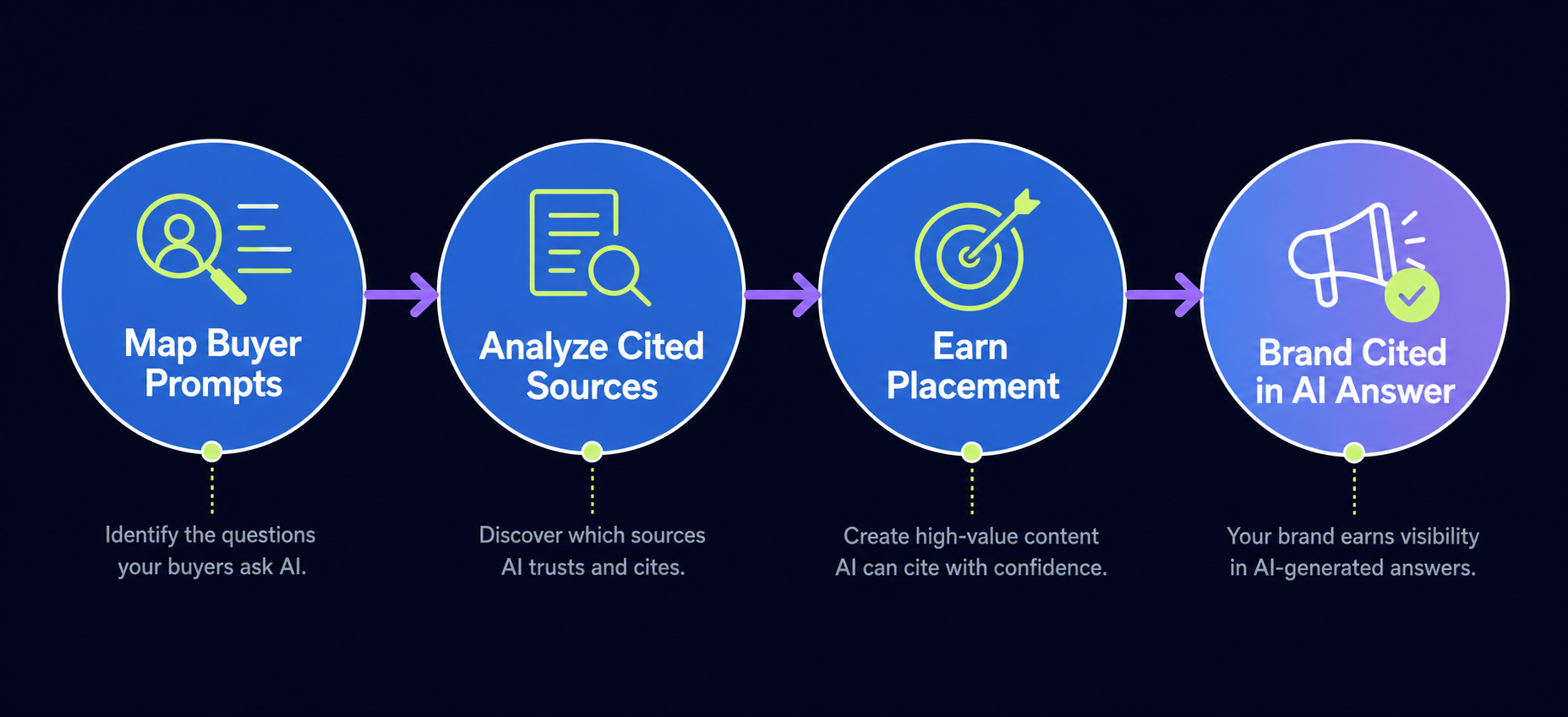
Stage One: Map the Prompts Buyers Actually Use
Start by listing the questions your buyers ask AI tools before they buy. These are not keywords. They are full natural-language prompts like “what’s the best brand monitoring tool for a Series A startup.” You build this list from sales calls, support tickets, and the questions your category already gets in tools like ChatGPT. In our campaigns, the prompt list is where most of the value hides. A client once assumed buyers asked about features. The prompts that returned competitors instead asked about compliance and integration. We had been chasing the wrong sources for a quarter.Stage Two: Analyze Which Sources Get Cited
Run each prompt through the major engines and log every source the model cites. You are building a map of the publications, comparison pages, and community threads the models already pull from. Patterns appear fast. The same five or six domains tend to carry most of the citations in any given category. This analysis tells you where placement is worth pursuing. If Perplexity cites a single industry roundup in four of your ten priority prompts, that roundup is your highest-value target. You can read more on how AI crawlers actually pick sources to understand why certain pages keep surfacing.Stage Three: Earn Placement in Cited Sources
Now you pursue mentions inside the exact sources the models trust. That means editorial outreach, contributing data to roundups, getting added to comparison pages, and building presence in the community threads that keep getting cited. The goal is a contextual mention, not just a link. This is slow work done well. A service promising citations in 30 days is selling you something else. Real placement in trusted publications takes a quarter or more to compound, and the lift shows up gradually as models refresh what they pull from.The 6 Things That Separate a Real Service From a Repackaged One
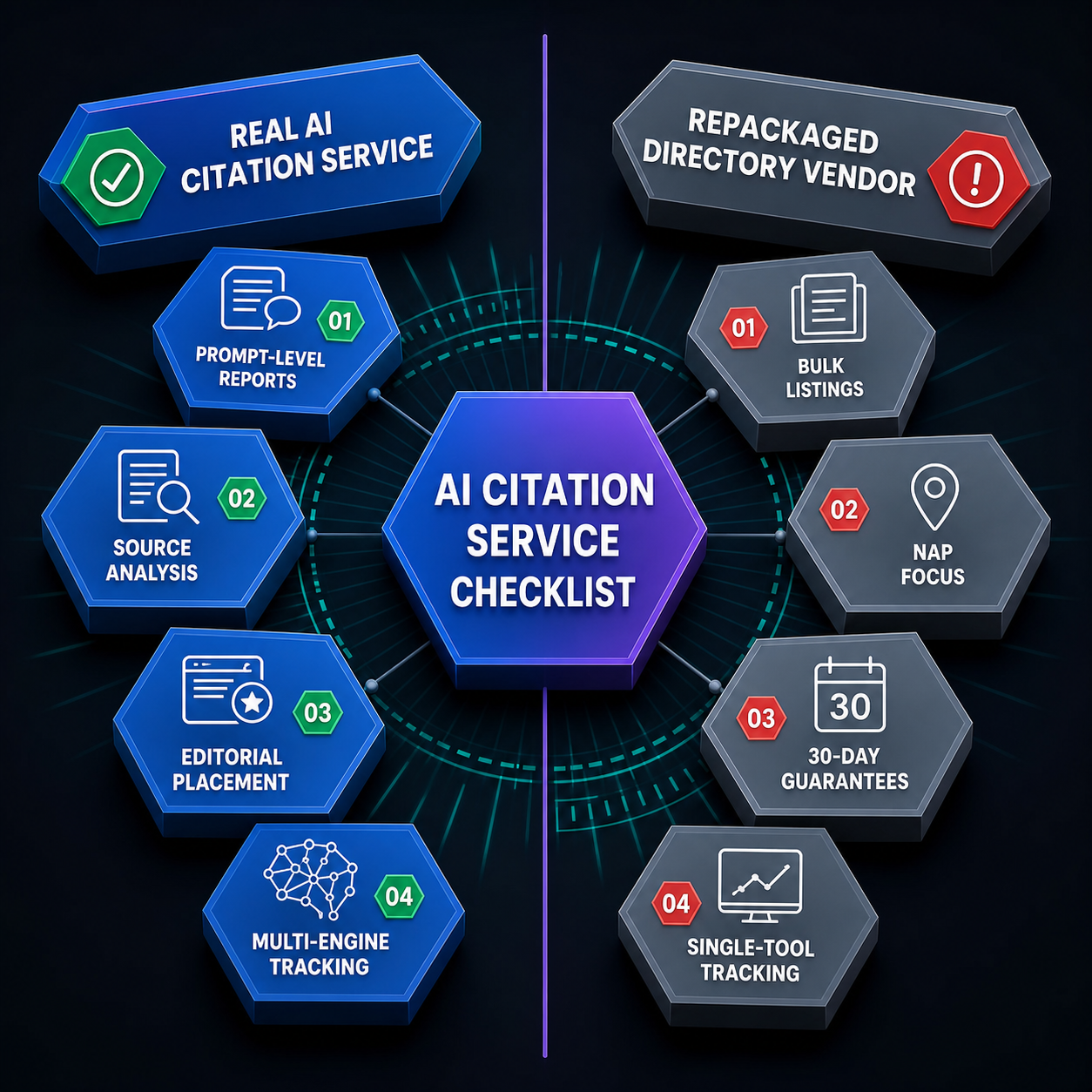
The best AI citation building services share six traits that directory vendors cannot fake. Use this as your evaluation checklist on the first call.Prompt-Level Reporting
They show you the actual prompts where you appear and where you don’t, across multiple engines.
Source Analysis
They name the specific publications models cite in your category, not a generic directory list.
Editorial Placement
Their method is outreach and contribution to trusted sources, not bulk submission.
Multi-engine Tracking
They measure visibility across ChatGPT, Perplexity, Gemini, and Google AI answers, not one tool.
Honest Timelines
They quote 60 to 90 days for measurable movement and refuse to guarantee a citation count.
Citation-Rate Metrics
They report how often you get cited for priority prompts, not traffic or rankings alone.
What a Service Should Cost and Deliver
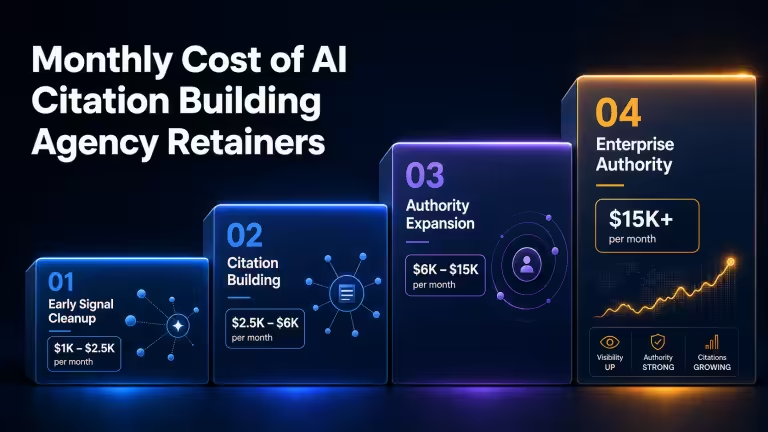
A genuine AI citation program runs on a monthly retainer because the work compounds, not on a one-time fee. Directory vendors charge per listing because their work is a transaction. Citation building is a campaign. The structures reflect two different jobs. Expect the deliverables to include a living prompt map, monthly source analysis, an outreach and placement pipeline, and citation-rate tracking across engines. The first 30 days usually go to research and baseline measurement. Placement lift follows. For a deeper breakdown of retainer ranges and what drives them, see our guide on the monthly cost of an AI citation building agency. One pattern from our client work: brands that already publish strong content see faster citation lift than brands starting cold. The service is not creating authority from nothing. It is connecting authority you have to the sources models read. If your category presence is thin, expect the timeline to stretch.Service vs In-House: Which Fits Your Team
Hire a service when you lack the time to run prompt analysis and outreach every week, which describes most marketing teams. Build in-house when AI visibility is core to your roadmap and you can dedicate a person to it. The decision turns on capacity, not capability. The work itself is learnable. The friction is consistency. Prompt maps drift as models update. Cited sources shift as new content ranks. Outreach needs steady follow-up. A part-time effort produces part-time results, which is why many teams that try in-house first end up outsourcing the loop.| If your team | Then |
|---|---|
| Has no dedicated AI visibility owner | Hire a service to run the full loop |
| Has one owner but limited outreach reach | Use a service for placement, keep analysis in-house |
| Has a full team and AI visibility is core | Build in-house with a tracking tool |