There’s no price tag on a single brand mention inside ChatGPT, Gemini or Perplexity, because no one sells space in an AI answer. What you pay for is the work that earns the mention: editorial placements, digital PR and the tracking that shows your citation share. That spend runs from entry-level monitoring software to custom retainers for managed programmes. This guide splits the three pricing models so you can see what each one actually buys.
The mistake most buyers make is comparing a $99 subscription to a $999 campaign as if they were rival quotes for the same thing. They aren’t. One watches mentions; the other creates them. Sort that first, and the pricing stops looking random.
What We’re Comparing and Why
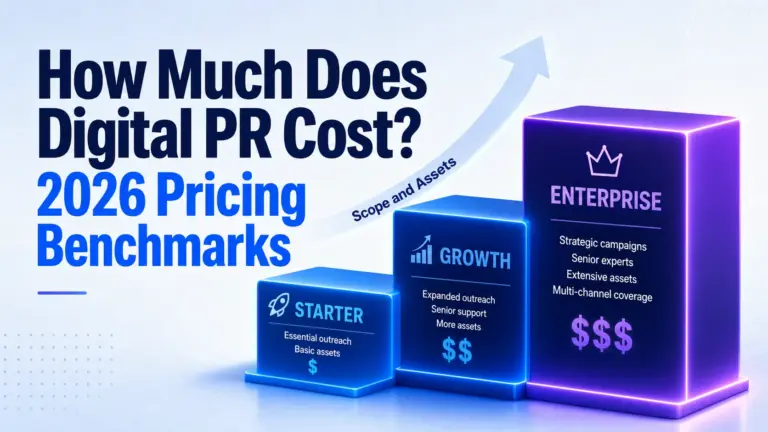
Three offer types hide behind “brand mentions service pricing,” and each charges on a different logic. Monitoring software charges a monthly subscription to track mentions you already have. Done-for-you placement services charge per placement or per campaign to create new mentions through outreach. Hybrid programs bundle tracking or planning with managed placement delivery on a retainer.

Price climbs as the provider takes on more labor. A tool runs software you operate yourself, so it sits at the bottom. A done-for-you service adds strategy, publisher selection, content, and outreach, so it costs more per unit. A hybrid layers managed delivery on top of tooling, so it sits highest and usually runs as a monthly retainer.
The cheapest option isn’t always the best fit. If your goal is editorial quality, AI visibility or white-label fulfillment, a monitoring tool won’t move that needle no matter how good its dashboard is. It can’t place a single mention. Match the model to the objective, then compare price inside that model.
| Model | Typical cost | What it does | Best for |
|---|---|---|---|
| Software | Check each tool’s official pricing page for current entry plans | Tracks and alerts on existing mentions | In-house monitoring and reporting |
| Done-for-you | Priced per placement or per campaign, so check each vendor’s pricing page for current rates | Creates new editorial mentions through outreach | Authority building and AI visibility |
| Hybrid | Custom monthly retainer | Combines tracking with managed placement delivery | Ongoing campaigns at scale |
What Does a Brand Mention in AI Actually Cost?
The price of an AI brand mention is the cost of the editorial coverage that leads ChatGPT, Gemini, Perplexity and Claude to name you, divided across the answers where you end up named. You can’t buy the answer itself. Anyone selling a guaranteed spot in an AI response is selling something no one controls.
So price the inputs, not the output. Your real costs are the placements and PR that put your brand on sources those engines read, plus the tracking that tells you whether it’s working.
A Simple Cost-Per-Citation Check
Use this method on any quote, with your own numbers:
- Add up the monthly spend: placements, content, PR and tracking.
- Pick a fixed set of buyer prompts in your category and track them monthly.
- Count how many of those prompts name your brand at the start and after three months.
- Divide the spend by the new prompts where you’re named.
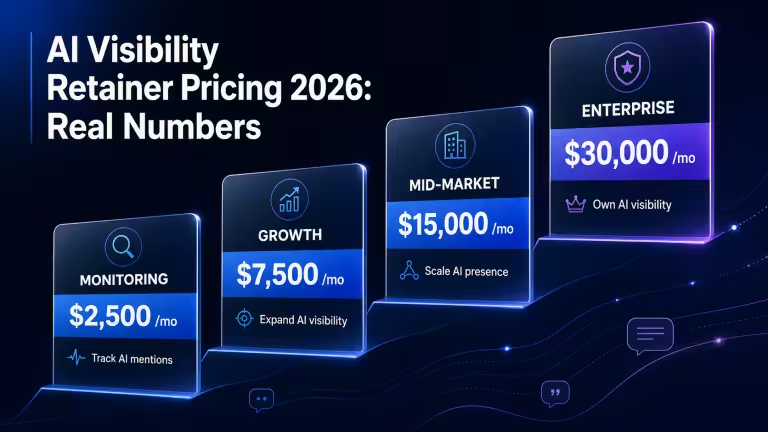
That number won’t be stable in month one, and that’s normal: editorial coverage takes time to show up in AI answers. For reference, BrandMentions publishes its managed programmes at $1,997 to $4,997 a month, and results are never guaranteed.
The question of what a mention is worth once you have it is a different one, covered in the guide to predictive AI alerts for brand mentions.
Evaluation Criteria for Brand Mentions Pricing
Use a consistent scorecard so a lower price only wins when the deliverables and quality thresholds still hold. Walk these five dimensions for every provider before you compare headline numbers.
- Pricing model: monthly subscription, per-placement fee, campaign bundle, retainer, or custom quote.
- Minimum commitment: month-to-month, a minimum order size, or a multi-month contract.
- Deliverables: number of mentions or placements, content pieces, outreach volume, and reporting frequency.
- Quality signals: domain rating or authority, monthly traffic, topical relevance, editorial standards, and placement type.
- Service extras: strategy support, white-label delivery, replacement guarantees, and turnaround time.
Read this like a procurement officer, not a bargain hunter. A $50 placement on a site no AI engine crawls is more expensive than a $215 placement on a relevant, well-trafficked publication, because the cheap one delivers nothing. Price per unit is meaningless until you fix the quality floor.
Service Model Comparison: Software vs Done-For-You vs Hybrid
Each model carries a different cost structure and suits a different buyer. The split below shows where your money goes and who each model fits.
Software: Lowest Entry Cost, Monitoring Only
Monitoring software is the cheapest entry point, with plans that typically rise with mention volume and seats. You pay for tracking and alerts, not outreach. It fits in-house teams that want to watch mentions, sentiment and competitors and report internally. It won’t create a single new mention for you, and tools that check AI answers are covered in how to see if AI mentions your brand.
Done-For-You: Highest Labor Cost, Real Placements
Done-for-you services carry the highest cost per unit because a person does the work: strategy, publisher vetting, content and outreach. Per-placement vendors price by domain authority tier, with higher tiers costing more per placement. Campaign vendors bundle the work into a single package. For a per-tactic view, see digital PR pricing by deliverable.

Hybrid: Managed Delivery on a Retainer
Hybrid programs combine tracking or planning with managed placement delivery, almost always on a custom monthly retainer. This model fits teams that want scale without hiring an in-house outreach desk: agencies serving clients, enterprise brands running continuous campaigns, and growth teams that need both the data and the placements in one relationship. Expect quote-based pricing rather than a public number, because the retainer flexes with placement volume and reporting depth.
Service pricing jumps most when the provider becomes responsible for publisher vetting and content execution, not just monitoring. That is the line between a tool subscription and a service fee, and it is the single biggest driver of what you pay.
Side-by-Side Analysis by Criterion
Cost differences come from specific buying dimensions. Break the comparison into the six that actually move the number, and you can see exactly what you are paying for at each tier.
| Criterion | Software | Done-for-you | Hybrid |
|---|---|---|---|
| Entry and monthly cost | $99 to $249 per month | $50 to $215 per placement, $999-plus per campaign | Custom retainer |
| What’s included | Tracking, alerts, sentiment | Content, outreach, placement, reporting | Tracking plus managed placements |
| Placement quality and reach | Not applicable, no placements | DR or DA 20 to 60-plus, traffic floors vary | Higher thresholds, vetted publishers |
| Scalability and budget fit | Flat, scales with seats and credits | Scales per order | Scales with retainer size |
| Support and customization | Self-serve, limited support | Order-level support, some white-label | Strategy, account management, white-label |
| Risk and guarantees | Cancel anytime | Replacement or money-back varies by vendor | Negotiated in contract |
Entry Price and Monthly Cost
Software starts lowest and stays predictable because you are renting a tool. Done-for-you can start lower per unit than you expect, but the real spend depends on volume: one $90 placement is cheap, thirty of them is a campaign budget. Hybrid retainers cost the most upfront because they bundle labor and tooling into a recurring fee. Compare the all-in monthly outlay, not the sticker on the smallest unit.
What’s Included
This is where buyers overpay or underpay. A monitoring plan includes tracking, sentiment, and alerts and nothing else. A placement service includes content creation, outreach, and a live URL. A hybrid includes both, plus campaign management. If two quotes look similar but one excludes content creation, they are not the same quote.
Placement Quality and Reach
Placement quality is the criterion that separates a useful mention from a wasted one. The research shows real thresholds in market: DR or DA floors from 20 to 60-plus, and traffic floors that range from 100 to 1,000-plus monthly visitors depending on the vendor. A mention on a site AI engines actually reference is worth more than a cheaper mention on one they ignore. To understand how publication quality maps to citations, the tier-based publication hierarchy for AI citations lays out which placements carry weight.
Scalability and Budget Fit
A startup buying three mentions, an agency reselling fifty a month, and an enterprise running a continuous program have different cost curves. Per-placement pricing scales linearly and suits small, deliberate orders. Retainers scale better for high volume because the per-unit cost usually drops as the program grows. Map your expected volume before you pick a model, because the cheapest model at five placements is rarely the cheapest at fifty.

Support and Customization
Software gives you self-serve dashboards and basic support. Done-for-you adds order-level support and sometimes white-label reporting. Hybrid programs add strategy input, a dedicated contact, and client-ready reports. Agencies should weigh white-label delivery heavily here, because branded reporting is often the difference between a service they can resell and one they cannot.
Risk and Guarantees
Guarantees sound reassuring and are often oversold. A “lifetime placement guarantee” or an “indexing guarantee” only covers what the contract spells out, and indexing in Google is not the same as being picked up by an AI engine. Read the replacement and refund language before you weight it. Teams routinely pay a premium for guarantees they will never invoke, while skipping the quality checks that actually protect the spend.
Provider-by-Provider Price Comparison
Here is a shortlist of representative providers and the published price points in the research, so you can frame your own shortlist. These are starting points, not full campaign totals, and they sit in different models.
| Provider | Starting price | Model | Best fit |
|---|---|---|---|
| Typical monitoring tool | Varies by tool; see the vendor’s pricing page | Subscription software | Low-friction monitoring, not fulfillment |
| Vazoola | Varies by DA tier; see Vazoola’s pricing page | Pay-per-placement, DA tiers | Agencies wanting flexible white-label fulfillment |
| OneNine Design | Varies by scope; see OneNine Design’s pricing page | Campaign bundle | Buyers wanting bundled, campaign-style placements |
| FatJoe | Quote-based | Listicle and review placements | Buyer-friendly done-for-you ordering |
Monitoring Tools
Monitoring tools are usually the lowest-cost entry point. Treat them as the low-friction option for tracking mentions, sentiment and competitors, not as fulfillment. Their job is to show where your brand appears, not to place it anywhere new.
Vazoola
Vazoola prices per placement on domain authority tiers, with higher DA tiers costing more. That structure suits agencies that want flexible white-label fulfillment without a fixed retainer. Costs add up fast at volume, so model your total order before committing, and check Vazoola’s pricing page for current rates.
OneNine Design
OneNine Design offers campaign pricing as a mid-range option for brands that want visibility without a high upfront commitment. It suits buyers who prefer a bundled campaign over piecemeal orders. You get less control over each placement than a per-unit model gives you. Check OneNine Design’s pricing page for current rates.
FatJoe
FatJoe markets simple pricing and a risk-free ordering flow with listicle and review placement formats. It reads as a buyer-friendly done-for-you option. The published pricing detail is less granular than the per-tier vendors, so the on-page number functions as a starting point rather than a quoted campaign total.
See where AI answers put your brand
Twenty minutes with a senior strategist: where the major engines point buyers in your category, who gets named instead of you, and a straight read on what a programme would change.
Book a strategy callVerdict by Use Case
The right choice is the one that matches your goal and your budget band, not the lowest number on the page. Match your profile below.
Best for Low-Budget Monitoring
Choose software if the goal is alerts, tracking, and internal reporting only. A $99 to $249 monthly plan covers it. Do not expect it to create mentions; it watches the ones you already earn.
Best for Startups Buying a Few Mentions
Choose per-placement or a starter campaign when you want early authority without a large retainer. A handful of DA-tiered placements or a $999 bundle builds momentum without locking you into a contract.
Best for Agencies Needing White-Label Fulfillment
Choose a provider with branded reporting, predictable deliverables, and flexible scaling. Pay-per-placement vendors with white-label delivery let you resell with margin and scale order by order.
Best for Brands Wanting Premium Editorial Placements
Choose a higher-touch campaign where publisher quality and topical relevance outrank lowest price. The relevant question is not cost per mention but whether the publication is one AI engines and your buyers actually read.
Best for Enterprise or Ongoing AI Visibility Campaigns
Choose a hybrid or retainer model with strategy support, recurring placements and reporting depth. The breakdown of monthly AI citation agency retainers shows realistic ranges, and the comparison of agency versus in-house team cost helps you decide whether to buy or build. If you’d rather run it yourself, weigh agency vs DIY AI citations first.
Choose the Pricing Model That Matches the Goal
Start with the objective, not the budget: monitoring, authority building, AI visibility, or backlink-adjacent brand exposure each point to a different model. Judge any quote against deliverables, placement quality, and reporting, never the entry number alone. Before you buy, ask for a sample report or an example placement list, because a vendor that cannot show one is selling a promise, not a service. Compare the model first, then compare the provider.
Frequently Asked Questions
How much does a brand mentions service cost?
Brand mentions service cost ranges from about $99 a month for monitoring software to $50 to $215 per placement for done-for-you outreach, with bundled campaigns starting around $999 and managed retainers priced on quote. The figure depends entirely on whether you are buying a tracking tool, individual placements, or a fully managed program. Sort the model first, then the price comparison makes sense.
Is brand mention monitoring software cheaper than an agency service?
Yes, monitoring software is far cheaper than an agency service, starting near $99 a month versus hundreds or thousands per campaign. But they do different jobs. Software tracks mentions you already have; an agency service creates new ones through outreach and content. Cheaper does not mean comparable, because only one of them places your brand anywhere new.
What is included in a brand mentions package?
A done-for-you brand mentions package typically includes strategy, publisher selection, content creation, outreach, a live URL placement, and a report. Quality thresholds vary by vendor, commonly a domain rating or authority floor and a monthly traffic minimum. A monitoring package, by contrast, includes only tracking, sentiment, and alerts, so always confirm whether content and outreach are in scope.
Can you pay to get mentioned in ChatGPT?
No, you can’t pay ChatGPT, Gemini or Perplexity to name your brand in an organic answer. You can pay for the editorial coverage those engines draw on, which is what brand mention services sell. Any vendor promising a guaranteed AI mention is overselling, because nobody controls the model’s output.
Do brand mentions help AI visibility?
Yes, brand mentions help AI visibility because models build their sense of a brand from how often and how credibly it appears across trusted sources. A mention in a publication an AI engine references strengthens that signal. A mention on a site it never crawls does not, which is why publisher quality matters more than raw volume. See more on increasing brand mentions in AI search.
What’s the value of recurring brand mentions across third-party content?
Pricing tells you half the story; deliverables and placement quality tell the rest. Map your goal to the right model, shortlist two or three providers inside it, and ask each for a sample report before you commit a dollar. If AI visibility is the goal, see BrandMentions programme pricing and book a short strategy call when you’re ready to compare.