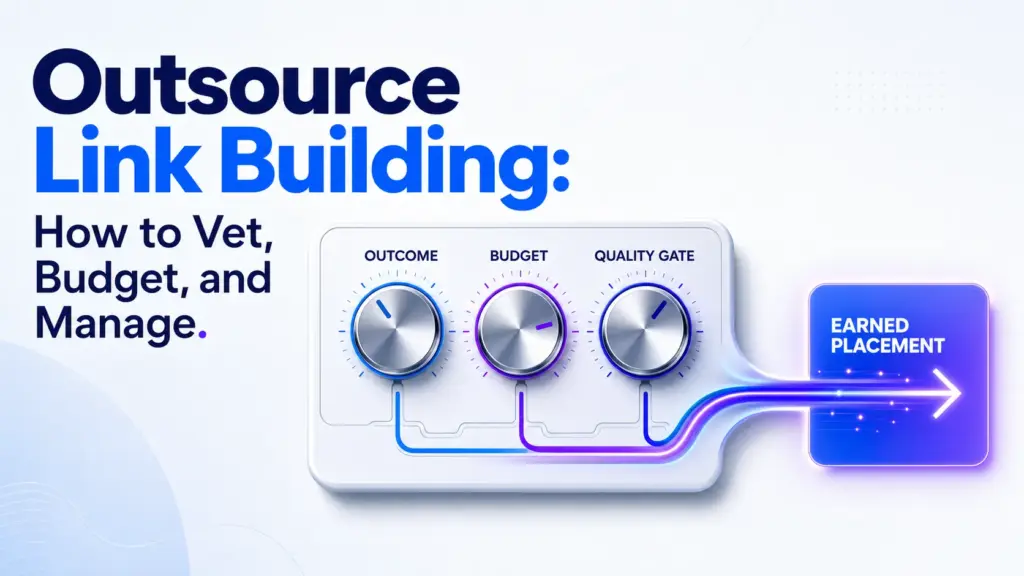

Outsource link building only works when you know the outcome you want, the budget you can support, and the quality standards you will enforce. Outsourcing is worth it when your business needs expertise, scale, or speed that you cannot build internally, but only after your site is ready and the provider is vetted. Hand a campaign to an agency before you have done that prep, and you pay for placements that never move a ranking. This is a practical workflow: define the goal, set the budget, prepare the site, shortlist the right provider type, vet hard, then manage quality from the first deliverable.
The order matters more than the provider. Most failed outsourcing starts with a vague brief and a money page that was never ready to rank, not with a bad outreach team.
Prerequisites: What You Need Before You Outsource
You need three things before you hire anyone: a named business goal, a specific page or topic to support, and a realistic budget tied to a timeline. Without all three, you are buying links on hope. A provider can execute outreach, but it cannot decide what your campaign is supposed to achieve.
The second gate is site readiness. Links only compound when they point at pages that can rank and convert. That means indexable URLs, sensible internal linking, content that matches search intent, and clean technical SEO. Most link-building failures start with weak page readiness, not with bad outreach.
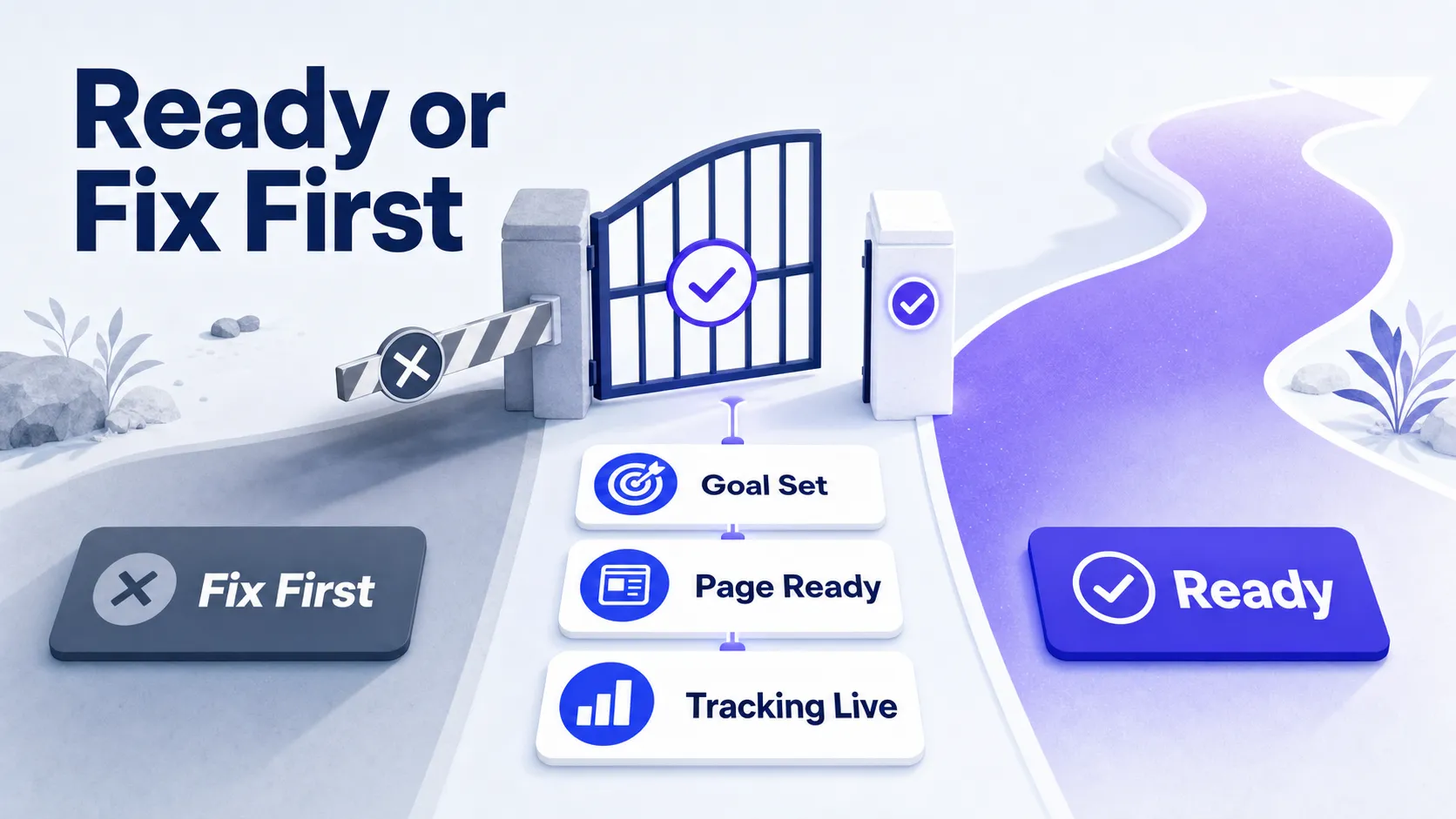
Run this quick self-qualification before you spend a dollar:
- Can you name the page or topic the links must support?
- Do you have a goal beyond “more backlinks,” like ranking a category hub or launching a product?
- Is your budget set for at least a 3 to 6 month window?
- Are GA4 and Google Search Console connected and reporting?
- Does the target page already match the intent it ranks for?
Two or more “no” answers mean you fix the site first. Outsourcing cannot rescue thin pages, broken tracking, or a site with no conversion path. If you cannot name the page the links are meant to support, delay the engagement and do prep work. The decision between running this internally or hiring out is worth its own look, and our breakdown of in-house versus outsourced link building covers the tradeoffs.
Step 1: Define the Outcome You Want From Outsourced Link Building
Translate “we need backlinks” into one specific objective a provider can execute against. A goal like “rank our pricing page for three commercial keywords” gives outreach a target. A goal like “increase domain authority” gives it nowhere to aim. The cleanest campaigns start with one or two priority pages, not a sitewide wish list.
Step 1a: Pick the Real Objective
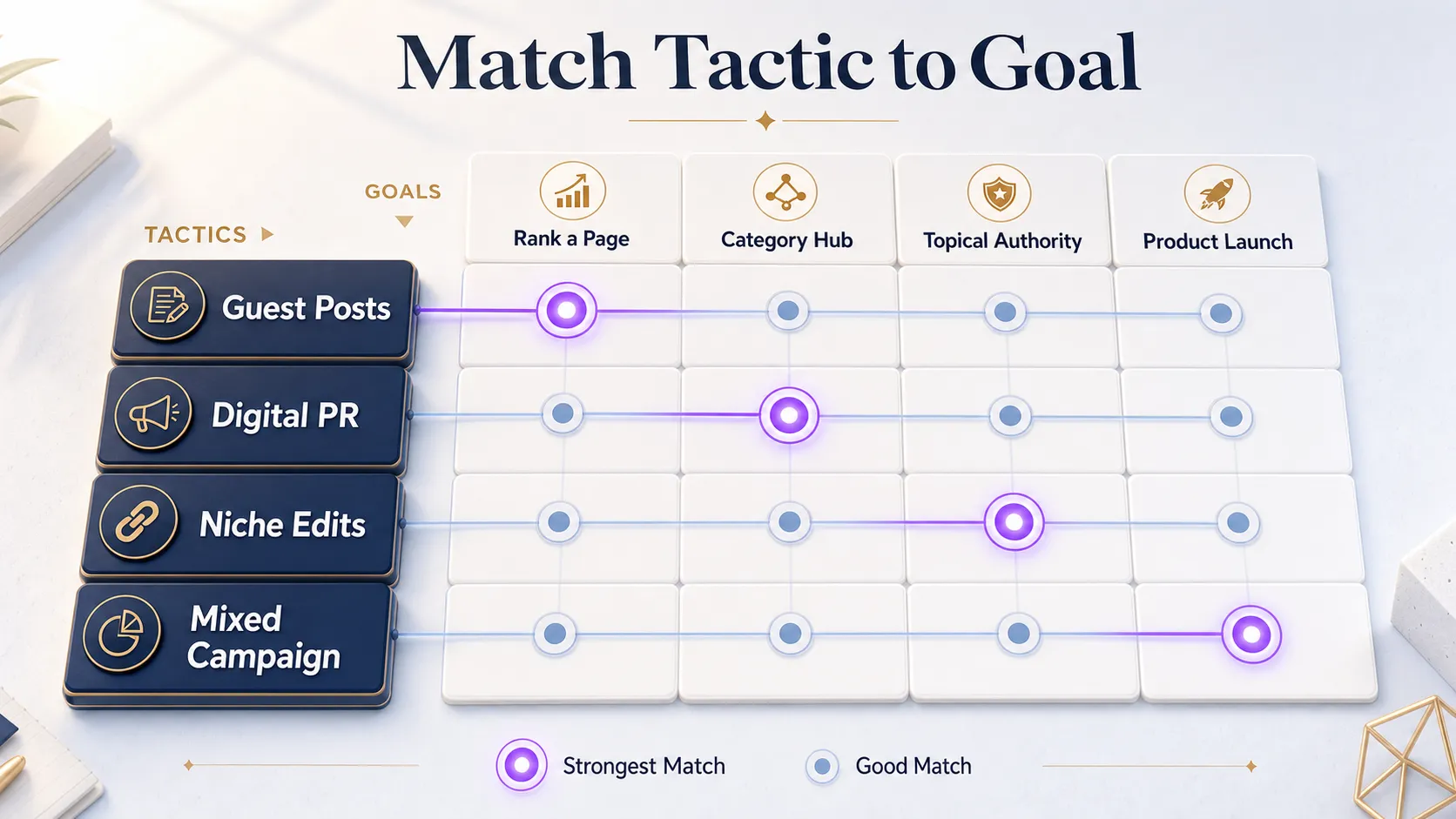
Your objective is one of a few concrete things: ranking a single money page, supporting a category hub, building topical authority across a cluster, or earning visibility for a product launch. Each one changes the link mix. Ranking one page wants relevance and a handful of strong placements. Building topical authority wants steady volume across related pages.
Step 1b: Choose the Tactic Mix That Fits
Guest posts earn contextual authority through contributor articles on relevant sites. Digital PR earns broader visibility and stronger domains through news-driven outreach, and our guide to digital PR agency pricing shows what that costs. Niche edits, also called link insertions, place a contextual link inside an existing relevant article. Most real campaigns blend these for scale.
Step 1c: Set the Success Metric Up Front
State how you will judge the campaign before it starts: referring domains gained, quality placements delivered, ranking movement on target keywords, assisted conversions, or revenue impact. Vague goals like “more backlinks” or “increase DA” give you no way to fire or keep a provider. A named metric does.
Step 2: Set the Budget and Pricing Model Up Front
Budget for outsourced link building based on quality and campaign design, not link count alone. The same dollar buys one strong editorial placement or five weak ones, and the weak ones cost you more over time. Pick the pricing model before you take a sales call, so you can read quotes instead of reacting to them.
The four common models each fit a different situation.
| Pricing model | Cost structure | Best use case | Risk level |
|---|---|---|---|
| Per-link | Flat fee per placement | Small, defined campaigns or testing a provider | Medium, if quality varies per link |
| Monthly retainer | Fixed fee for an agreed volume | Ongoing programs needing steady output | Low to medium, depends on transparency |
| Project-based | One scoped fee for a defined outcome | Launches or single-page push campaigns | Medium, scope creep is the risk |
| Hourly or performance | Time billed or paid on results | Niche outreach or consulting-led work | High, results-based deals invite shortcuts |
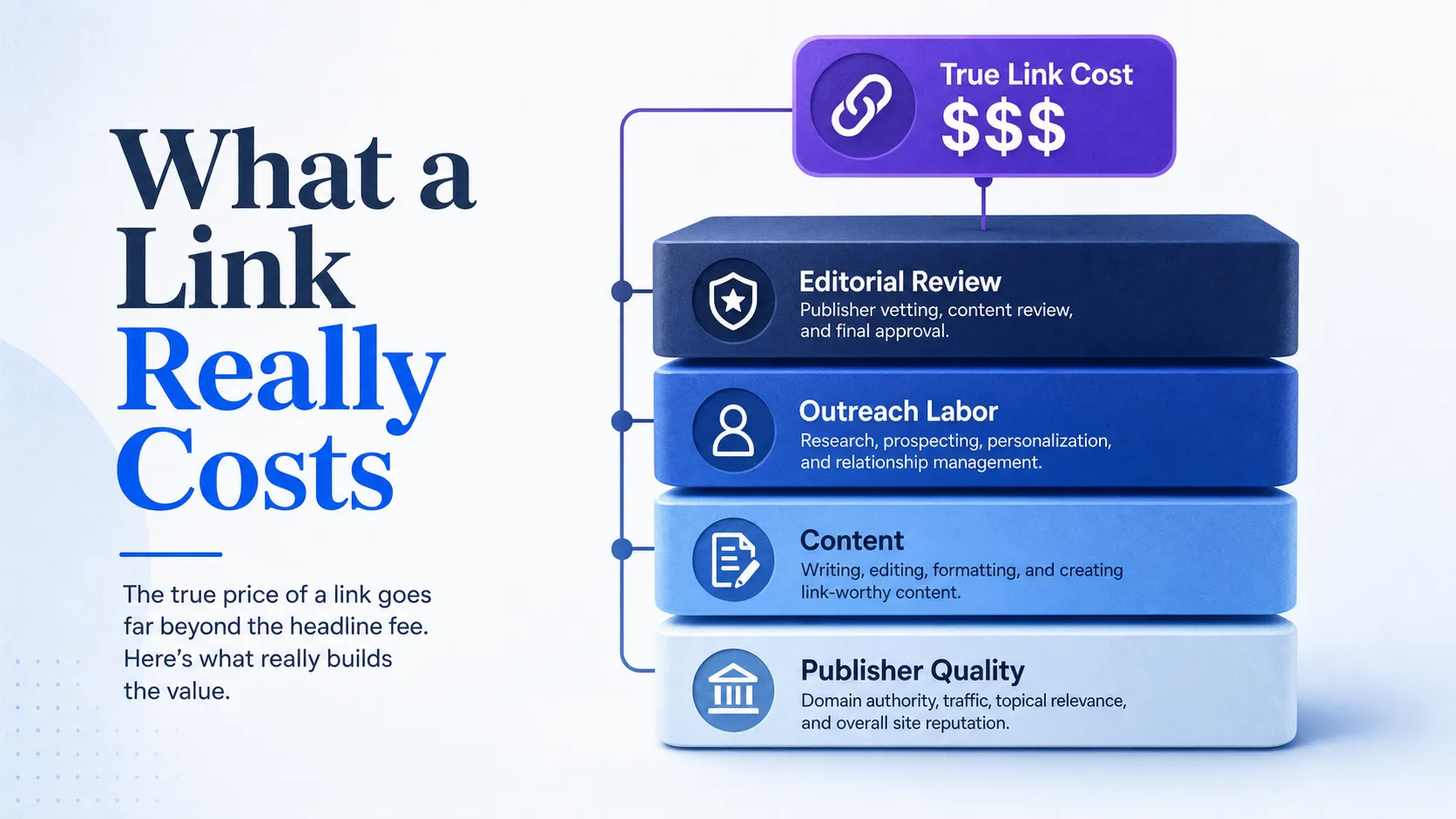
What drives cost is publisher quality, niche difficulty, content creation, outreach labor, editorial review, and turnaround speed. A finance or health placement costs more than a general blog because the publishers are harder to reach and the editorial bar is higher. Cheap link quotes usually sacrifice one of four things: site quality, relevance, transparency, or permanence. Budget for QA and content too, not just the placement, because a link on a thin page does little for you.
Step 3: Prepare Your Website and Assets Before Outreach Starts
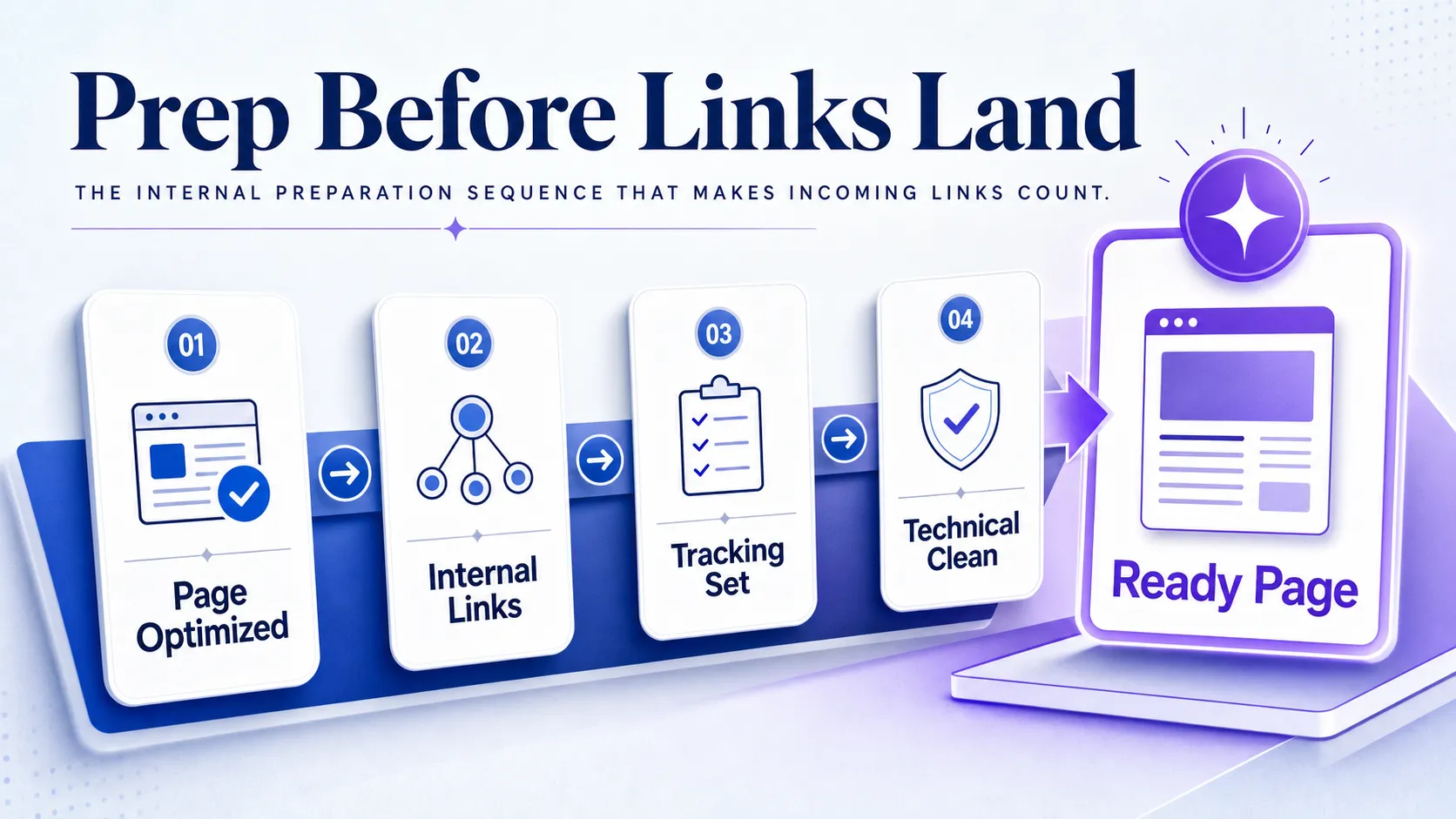
Fix the internal work that lets outsourced links move rankings and leads. A link points authority at a page. If that page is half-built, the authority lands on a dead end. Link campaigns underperform when the landing page looks unfinished or lacks a clear next step.
Step 3a: Optimize the Target Page First
The page the links support should match the search intent it targets, with clear headings, proof points, and an obvious conversion path. A reader who arrives from a citation should know what the page is and what to do next within seconds.
Step 3b: Route Internal Authority to the Page
Add internal links from relevant pages so authority flows to the URL the campaign supports. Outsourced links bring external authority to the door. Internal linking decides where it goes once it is inside.
Step 3c: Connect the Tracking Stack
Set up GA4, Google Search Console, and CRM or form tracking before the first placement goes live, plus rank tracking for your target keywords. You cannot judge a provider on results you never recorded.
Step 3d: Gather Brand Assets and Clean the Technical Layer
Pull together the assets a provider may need: expert bios, logos, screenshots, original stats, case studies, and media-ready quotes. Then clear the technical blockers that waste links, including canonical errors, crawl problems, slow pages, and accidental noindex tags. A link to a noindexed page is money lit on fire.
Step 4: Shortlist the Right Provider Type
Choose the outsourcing model that matches your budget, control needs, and campaign complexity. The right provider type usually comes down to approval speed and niche difficulty, not headcount. A four-person startup in a hard niche often needs a boutique specialist more than a large generalist agency.
| Provider type | Control | Speed | Best for |
|---|---|---|---|
| Agency | Medium | Fast at scale | Ongoing programs needing steady volume |
| Freelancer | High, you direct | Variable | Narrow, defined tasks or single niches |
| Boutique specialist | Medium to high | Moderate | Hard niches needing publisher expertise |
| White-label partner | Low, you resell | Fast | Agencies fulfilling client work behind the scenes |
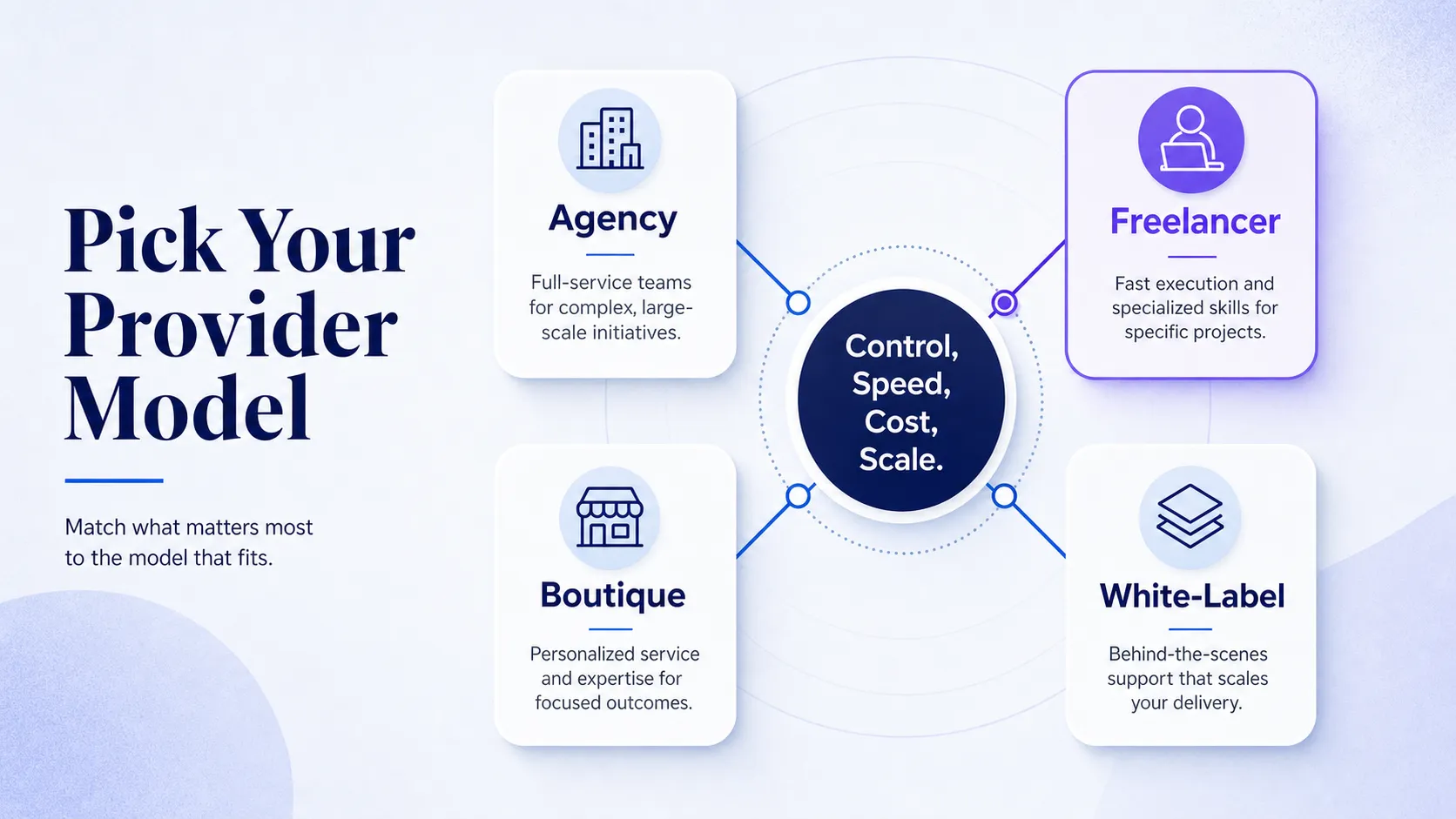
Think in operational terms, not brand names. Who owns strategy, who owns outreach, who owns quality control, and who reports results? A simple rule holds for most buyers: choose agencies for ongoing scale, freelancers for narrow tasks, boutiques for niche expertise, and white-label partners for fulfillment. The deeper tradeoff between two of these shows up in our look at the link building agency versus freelancer decision, and agencies reselling work should read up on white label link building services.
Step 5: Vet Vendors Before You Sign Anything
Run a real due-diligence pass that separates credible providers from risky ones. The strongest tell is whether the provider can explain exactly how they obtain links without hiding the publisher network. Vague answers about “our relationships” usually mean a marketplace or a private blog network you do not want near your site.
Step 5a: Demand Live Examples, Not Screenshots
Ask for sample placements with live publisher URLs, then check the topic relevance of each one. A screenshot proves nothing. A live link on a relevant, real publication proves the provider can do what you are paying for. If they will not show live examples, that is your answer.
Step 5b: Map the Outreach Process
Ask how they find prospects, run outreach, create content, and secure editorial approval. A provider with a real process can walk you through it in plain terms. One that cannot is buying links from a list, and you inherit the risk.
Step 5c: Set the Reporting Standard
Require reporting that names the live URL, source site, topic relevance, anchor text, placement type, and status for every deliverable. You also need clarity on tactics: guest posts, link insertions, digital PR, any sponsored links, nofollow or UGC use, and whether they pull from marketplace inventory. Transparency here is not optional.
Step 5d: Watch for the Red Flags
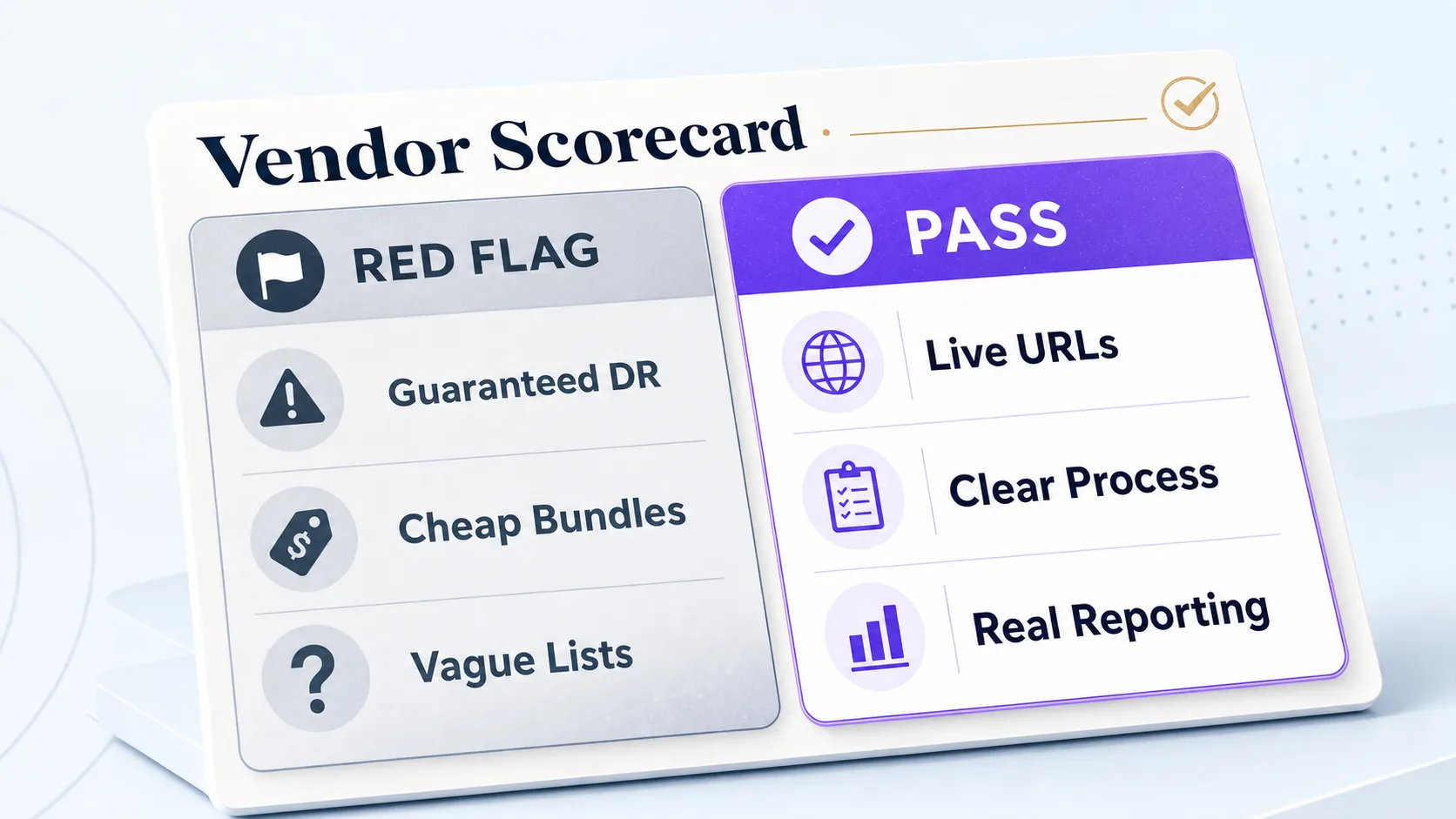
Walk away from guaranteed rankings, guaranteed domain rating, suspiciously cheap bundles, vague publisher lists, no replacement policy, and over-optimized exact-match anchor text. Each one signals a provider optimizing for their delivery speed, not your safety. A confident provider names their publishers and explains their tactics without flinching.
See where AI answers put your brand
Twenty minutes with a senior strategist: where the major engines point buyers in your category, who gets named instead of you, and a straight read on what a programme would change.
Book a strategy callStep 6: Set SOPs, Monitor Quality, and Measure Results
Launch and manage the engagement so expectations stay aligned and results are judged correctly. Good outsourced campaigns look controlled and repeatable, not flashy. The reporting should prove process, not just promise outcomes.
Step 6a: Define the Operating Rules Before Work Begins
Agree on the target URLs, anchor text rules, approval workflow, replacement policy, and reporting cadence before the first placement. A branded and partial-match anchor strategy keeps the profile natural. Lock who approves each placement and how fast, so the campaign does not stall on your side.
Step 6b: QA Every Live Link Manually
Check each delivered link by hand: placement context, publisher quality, the site’s outgoing link profile, page relevance, and whether the link is actually indexed. A link on a page Google never indexes passes no value. Spot-checking the first batch tells you whether the provider matches their own pitch.
Step 6c: Separate Leading Indicators From Lagging Ones
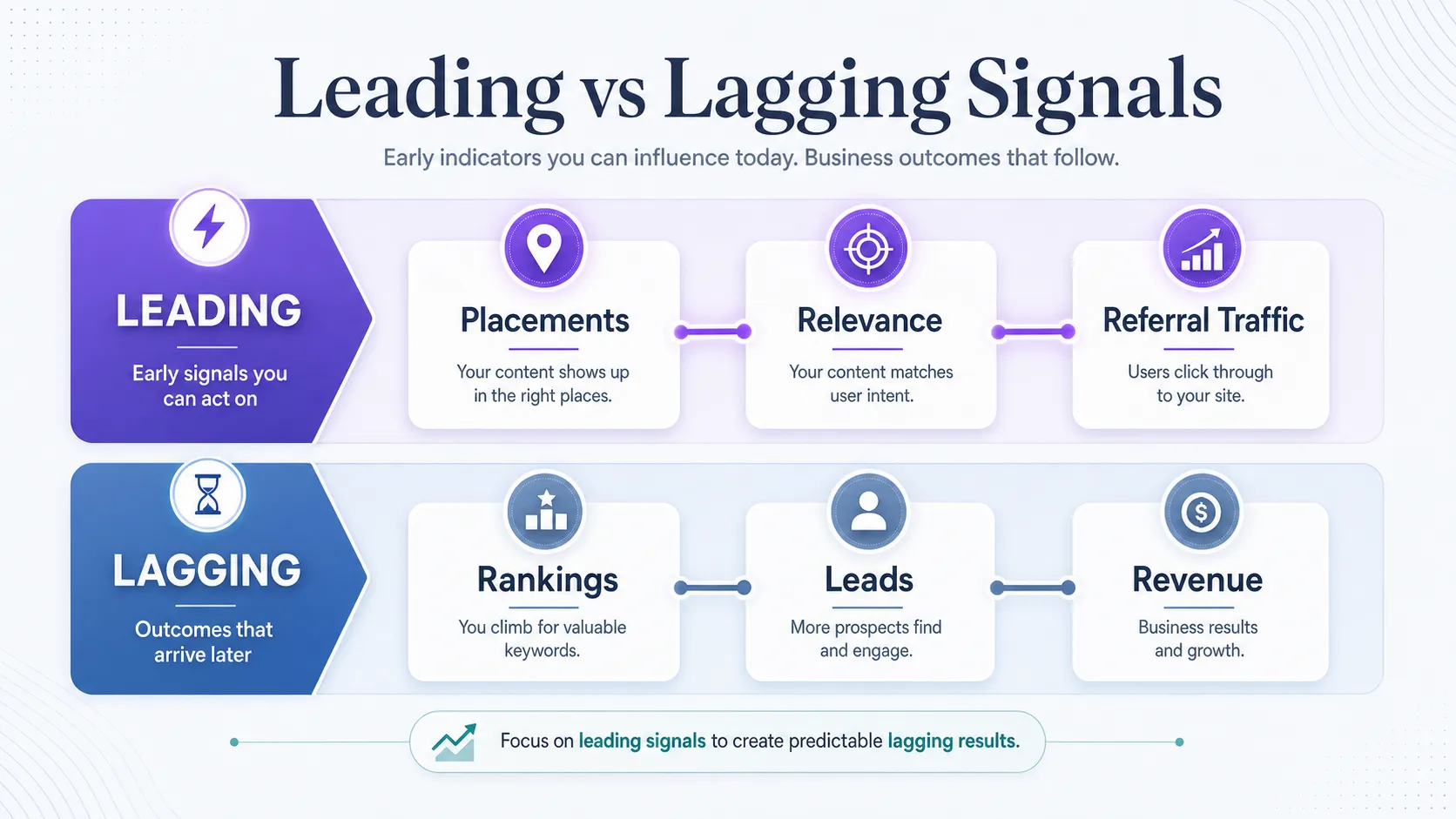
Judge early progress on leading indicators: live placements, topic relevance, and referral traffic. Judge the campaign on lagging indicators: ranking movement, leads, and revenue, which arrive later. A provider delivering strong, relevant placements in month one is on track even if rankings have not moved yet.
| Metric type | What to watch | When it shows |
|---|---|---|
| Leading | Placements, relevance, referring domains, referral traffic | Weeks 1 to 4 |
| Lagging | Ranking movement, assisted conversions, revenue | Months 2 to 6 and beyond |
Step 6d: Avoid the Common Pitfalls
The repeat mistakes are predictable: buying volume over relevance, ignoring page readiness, never checking live links, and expecting instant ROI. Each one turns a working budget into wasted spend. Relevance beats volume every time, and a campaign you never QA is a campaign you are not really managing.
Step 6e: Know What Success Actually Looks Like
Outsourced link building improves authority and visibility gradually, not overnight. Expect steadier rankings, a growing count of relevant referring domains, and compounding visibility over 3 to 6 months. A provider promising fast jumps is either lucky or cutting corners, and the corners come back as a problem.
FAQ
Should I outsource link building or keep it in-house?
Outsource when you need expertise, scale, or speed you cannot build internally, and keep strategy in-house. The strongest model for most teams is hybrid: you own goals, target pages, and quality control, while the provider runs outreach and placement. A solo in-house builder rarely matches an agency’s publisher access, but no agency knows your business better than you do.
How much does outsourced link building cost?
Cost depends on publisher quality, niche difficulty, content, and the pricing model you choose. Per-link, monthly retainer, project-based, and performance models each carry different cost structures and risks. Budget for QA and content alongside placements, and treat any quote far below market as a warning sign rather than a deal.
What should I ask a link building provider before signing?
Ask for live placement examples with real publisher URLs, their exact outreach and content process, their reporting format, and their replacement policy. Push for clarity on tactics and whether they use marketplace inventory. The answer that matters most is whether they can explain how they obtain links without hiding the publisher network.
Are guest posts or niche edits better for outsourced link building?
Neither wins outright; the right choice depends on your goal. Guest posts build contextual authority through new contributor articles, while niche edits place a link inside an existing relevant page for faster relevance signals. Many campaigns blend both, and our comparison of niche edit link insertion services and guest posting services shows when each fits.
How do I know if outsourced links are safe and high quality?
A safe link sits on a relevant, indexed page from a real publisher with genuine traffic, using natural anchor text. Check placement context, the publisher’s outgoing link profile, topic relevance, and indexation by hand. If a provider guarantees rankings or domain rating, or refuses to name its publishers, treat the links as risky regardless of price.
The Decision in One Pass
Outsource link building when you need expertise, scale, or speed, but earn the right to outsource first. Define the outcome, set the budget and model, prepare the site, vet the provider against live evidence, and lock quality controls before the first placement. Do that, and outsourcing compounds your authority. Skip it, and you fund someone else’s link inventory.
Start with a site readiness audit and a shortlist of two vetted providers. See where your brand stands in AI search and which pages are ready to absorb the links you are about to pay for.