
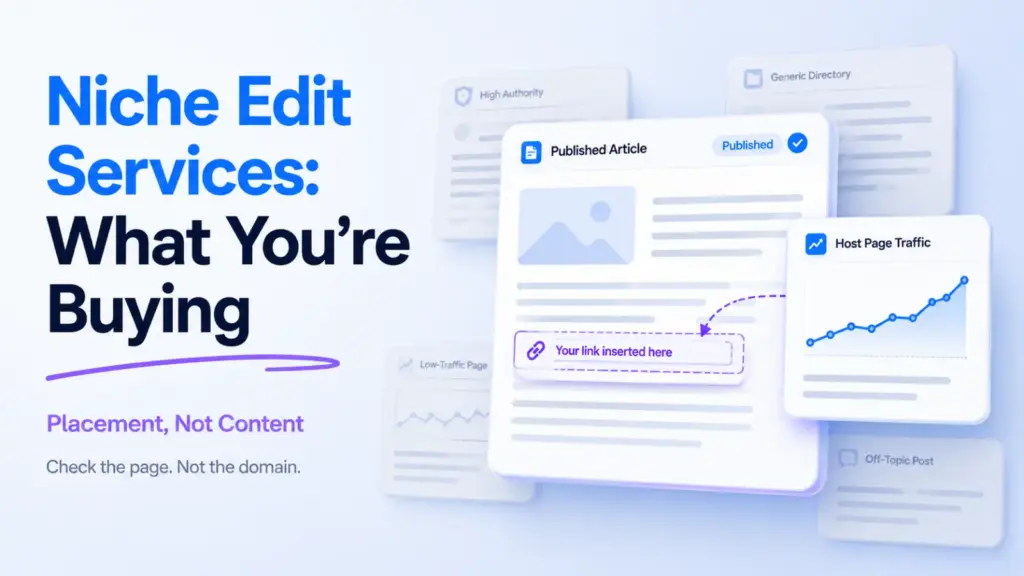

A seller sends over a spreadsheet. Forty domains, an authority score against each one, a price per placement, and a question about which ones you want.
That spreadsheet answers the wrong question first. Niche edit link insertion services differ on things the columns don’t show, and those things are checkable in about a minute per site.
What follows is what the service delivers, what moves the price, and the four checks worth running before you reply.
Providers, vendors and agencies all sell the same placement, so the label on the invoice tells you nothing. What separates them is everything the spreadsheet leaves out.
What a Niche Edit Service Delivers
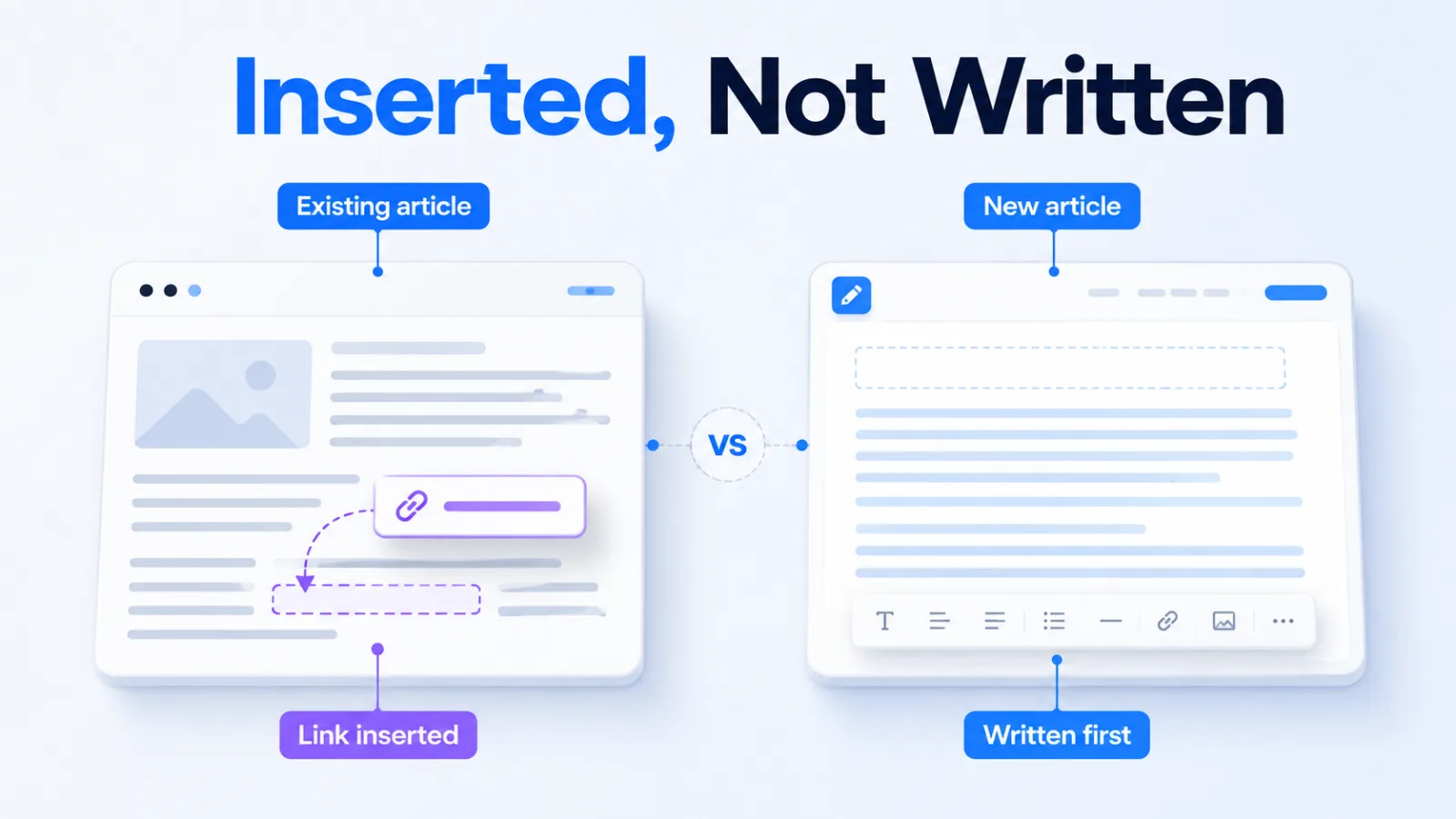
You’re buying a link placed inside an article that already exists, already ranks and already carries links of its own.
Nobody’s writing anything new. An editor opens a published post, adds a sentence or adjusts one, and your link goes in where it fits.
Why It Costs Less Than a Guest Post
It costs less because there’s no writing, no pitching a topic and no waiting for an editorial slot. You’re paying for access to a page, not for a piece of content.
The full comparison sits in guest posting vs niche edits, and the short version is that each one buys a different thing.
Why It Can Move Faster
It moves faster because an indexed page doesn’t need to earn its position again.
If the host page already ranks for something close to your topic, the link starts from that position rather than from nothing.
What Moves the Price
Four things, and the domain’s authority score isn’t the strongest of them.
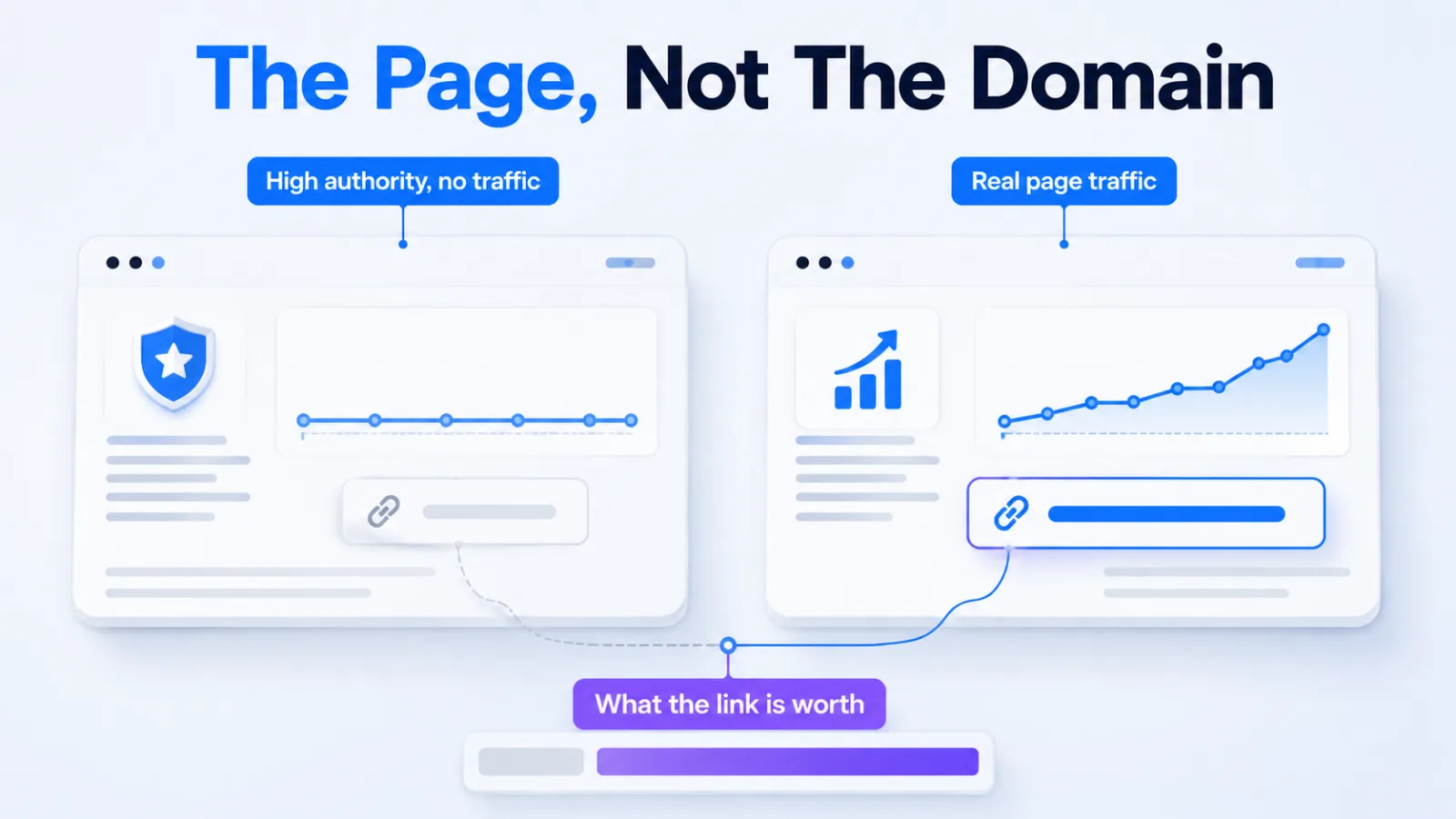
Traffic on the Host Page
A page with no visitors passes on almost nothing, whatever the domain scores. Ask for the host page and check what it receives, not what the site receives.
This is the gap that separates two placements at identical prices on identical domains.
Topical Fit
A link about payroll software inside an article about garden furniture is cheap for a reason. Fit is what the placement is worth paying for.
Link Position on the Page
A link in the third paragraph of the body reads as editorial. A link appended to a closing list of resources reads as an afterthought, and prices should reflect that.
Who Controls the Site
A seller who owns the site can place anything and can remove it as fast. A seller with an editorial relationship can be refused, which is a good sign rather than a bad one.
On numbers: our brand mentions service pricing breakdown puts the per-placement market at $50 to $215 a link, priced on domain authority tiers. Bundled campaigns start at $999. A niche edit quote lands inside that spread according to the four drivers above.
Those are vendor rates rather than ours. We sell monthly programmes, our pricing starts at $1,997.
What a Cheap Quote Is Selling
Price collapses for reasons, and the reasons are usually one of three.
- The host page has no traffic, so the placement moves nothing.
- The seller owns a network of sites and is placing into inventory rather than into editorial.
- The page already carries a long run of outbound links, so yours is one of a crowd.
None of those is a bargain. They’re the same product with the working part removed.
Buying by Vertical
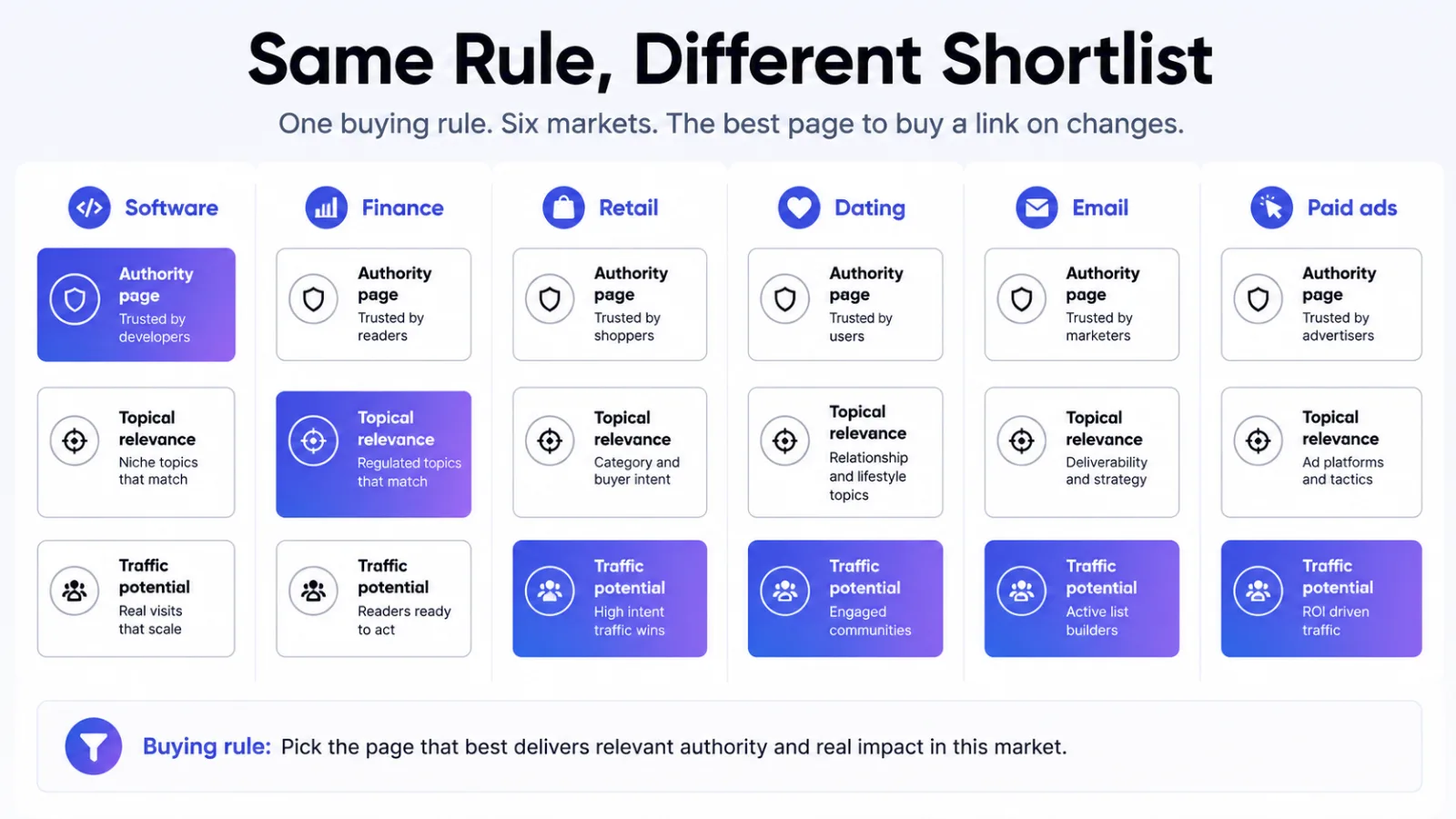
The tactic holds everywhere, and what a good placement looks like changes by market.
SaaS and B2B Software
Comparison posts and category roundups are the pages worth being inside, because they’re where buyers arrive already choosing.
Finance and Fintech
Editorial standards run higher and so do prices. Expect to be refused more often, and treat a refusal as evidence the site is worth the placement.
Ecommerce and Retail
Gift guides and product roundups date fast, which cuts both ways. A seasonal page can carry a link well for one quarter and then stop being read.
Dating and Relationships
Inventory here skews heavily toward sites built for placements rather than readers. Check traffic before anything else, because the ratio of real publications to networks is worse than in most markets.
Email Marketing and Martech
Tool listicles dominate, and they get refreshed often. A placement inside one that gets updated is worth more than the price difference suggests, because it survives the next refresh.
Paid Ads and Performance
Buyers in this market read practitioner posts rather than category pages. A link inside a tactical walkthrough reaches someone running budget today.
Regulated and Restricted Niches
Health, legal and gambling carry rules that sit above anything a link seller decides. Get the compliance answer before the placement answer.
The Checks That Separate Real From Rented
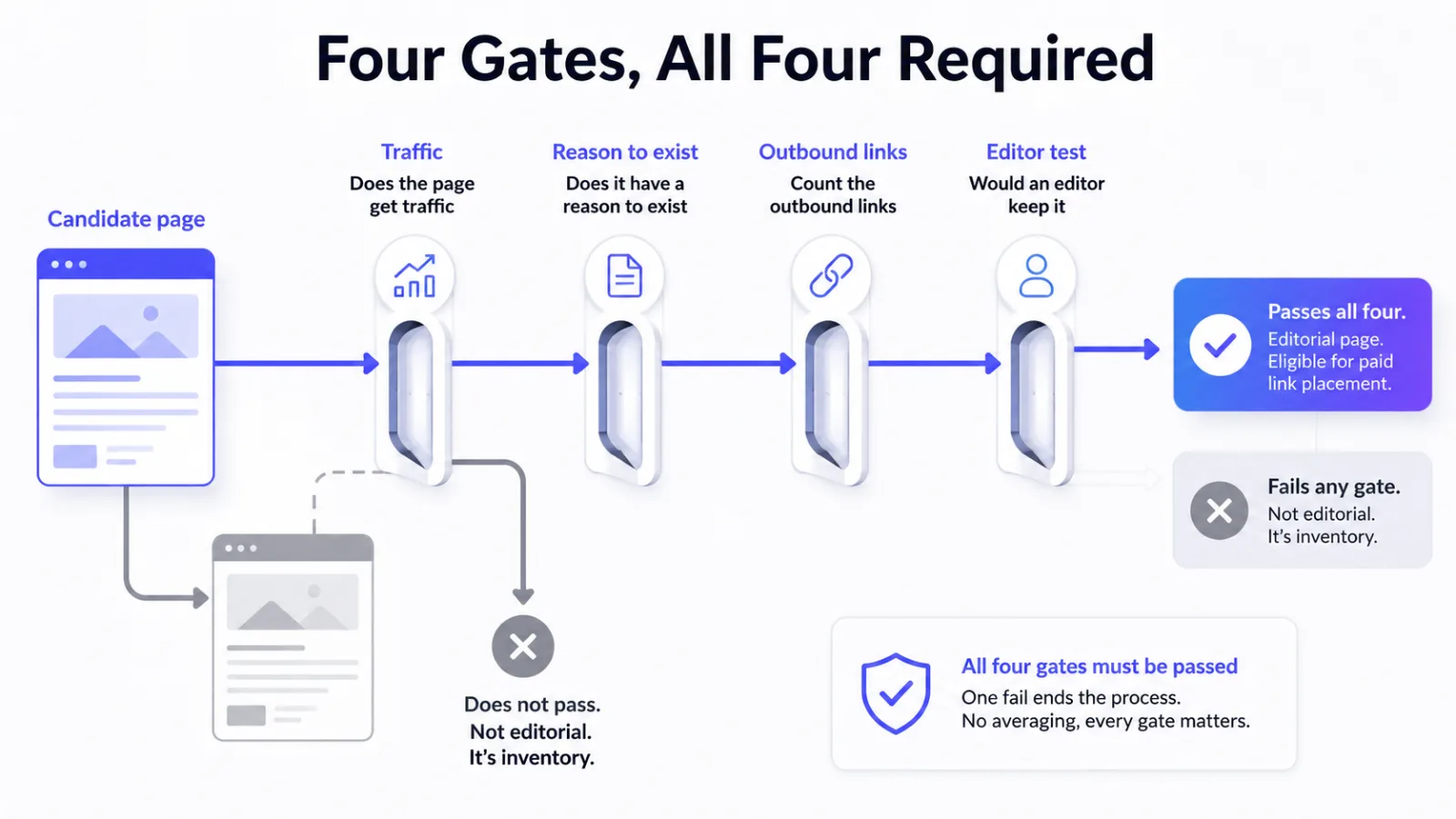
Run these on one domain before you reply to the spreadsheet. Together they take about a minute.
Does the Host Page Get Traffic
Not the domain. The page. A domain rating tells you about the site’s link profile and nothing about whether anyone reads the article your link goes into.
Does the Page Have a Reason to Exist
Open it and read the first two paragraphs. A page written for readers reads differently from a page written to hold links, and the difference is obvious inside ten seconds.
Count the Outbound Links It Carries
Count the external links already on the page. A post carrying a dozen of them to unrelated businesses is inventory, and your link joins a queue.
Would This Link Survive an Editor
Ask whether a real editor reading the sentence would keep it. If the sentence exists to hold the link, the placement is fragile and reads that way.
Choosing a Provider
Three questions sort most sellers, and the answers matter more than the deck.
Ask for the Host Page, Not the Domain
A seller who’ll name the exact page is selling a placement. A seller who’ll only name the domain is selling access to a list.
Ask How They Got Access
Ownership, a paid arrangement and an editorial relationship produce different links with different lifespans. Any of the three can be fine, and you should know which you’re buying.
Ask What Happens If It’s Removed
Get the replacement policy in writing before the first placement. Links come down, and a backlink not showing in Ahrefs is a check worth running before you raise it as a loss.
Frequently Asked Questions
How much should a niche edit cost?
Vendors who sell per placement mostly charge $50 to $215 a link, priced on domain authority tiers. Where a specific quote falls inside that depends on host page traffic, topical fit and link position, so compare quotes on those three rather than on domain rating.
Are niche edits safe?
The tactic is as safe as the placement. A link inside a read article on a real publication behaves like any editorial link. A link inside a page built to hold links behaves like what it is.
Do niche edits help with AI answers?
They can, through the sentence rather than the link. Niche edits for AI search covers why the wording around the link is the part an assistant can repeat.
Which verticals are hardest to buy in?
Finance and regulated markets are hardest because editorial standards are genuinely higher. Dating is hardest for a different reason, which is that the supply skews toward sites built for placements rather than readers.
How large should a first campaign be?
Fewer than most sellers propose, and on better pages. A short run of placements on pages with real traffic outperforms a long list bought on domain rating, and it costs less to keep clean.
Run the Four Checks on One Domain
Take the spreadsheet you were sent and pick the most expensive line on it. Open the host page, read two paragraphs, count the outbound links and look at what the page receives.
If it fails, the rest of the list was priced the same way. Our pricing page shows what the checked version costs.