
Digital PR agency pricing in 2026 usually starts around $5,000 a month and can rise past $20,000 for larger campaigns. Most agencies sell the work as a monthly retainer, with project fees and hourly rates used for narrower engagements. A realistic monthly budget sits in the $5,000 to $20,000+ range, with the exact number driven by campaign ambition, team seniority, and how much original research the work demands. This guide breaks down the charging models, the market bands, and what each level of spend actually buys, so you can set a budget before you ever request a quote.
For a line-item breakdown of what each specific deliverable costs rather than the overall monthly range, see digital PR pricing by deliverable.
What Digital PR Agency Pricing Is
Digital PR agency pricing is the cost of strategy, content creation, media outreach, journalist relations, reporting, and campaign management, bundled and delivered by an agency. It is the price of a team, not a list of deliverables.
Agencies sell that team in four shapes: a monthly retainer, a fixed project fee, an hourly engagement, or a hybrid that blends a base fee with scoped extras. The retainer dominates because digital PR is iterative work that compounds across months.
Two distinctions matter before you compare prices. Digital PR is not traditional PR, which leans on broadcast, print, and trade media for reputation rather than earned links and search authority. It is also not pure link building, which buys placements without the research, storytelling, and media relationships that earn coverage on merit. If you want the full split, read our breakdown of how digital and traditional PR differ.
This is why two agencies can quote wildly different numbers for what looks like the same brief. One is pricing a junior account manager sending pitches. The other is pricing senior strategists, an original data study, and a designer building the asset. Same category, different products.
Why Digital PR Pricing Matters Before You Hire
Understanding pricing before you reach out protects you from three expensive mistakes. Get the budget framing wrong and you will compare proposals that were never comparable, then blame the agency for a result your budget could not buy.
- You request quotes before defining the goal, so agencies price very different scopes against the same loose brief.
- You underbudget, which quietly strips out the research, senior oversight, and outreach effort that make a campaign land.
- You compare agencies on headline price or placement count alone, creating false equivalence between thin and serious work.
The cheapest quote is rarely the most efficient one. In practice, a low price almost always removes the exact work that makes digital PR effective: the original research that earns a journalist’s attention, or the outreach hours that turn a story into coverage. You pay less and get a campaign that produces less.
Budget, ambition, and timeline have to match. A $4,000 brief asking for national coverage in three weeks is not underfunded, it is misaligned. Naming what you actually need first lets you read every proposal against one honest standard.
How Digital PR Agencies Charge
Four pricing models cover almost every digital PR engagement. The right one depends on whether your goal is ongoing or finite, and how much execution you need versus advice.
| Model | Best for | What to expect |
|---|---|---|
| Monthly retainer | Ongoing outreach, repeated campaigns, monthly reporting | A set fee each month for a defined scope and team. The standard model in 2026. |
| Project-based fee | Launches, surveys, one-off campaigns with a clear end point | A fixed fee for a milestone-driven deliverable, typically $5,000 to $30,000+. |
| Hourly billing | Consulting, audits, limited supplemental support | A rate per hour, usually for advice rather than full execution. |
| Hybrid or performance | Buyers wanting a base plus upside | A base fee with bonuses or scoped extras. Read it closely; outcomes and deliverables can blur. |
Retainers are common because digital PR rewards repetition. A single month rarely builds enough relationships or coverage to move authority, so the model assumes you are buying a multi-month rhythm. Performance-only pricing sounds appealing but usually leaves too much undefined, since neither side fully controls whether a journalist runs a story.
Whatever the model, ask the same five things: the exact scope, who on the team does the work, how many revisions are included, the reporting cadence, and what falls outside the fee. The answers separate a clear proposal from a vague one.
Typical Digital PR Agency Price Ranges in 2026
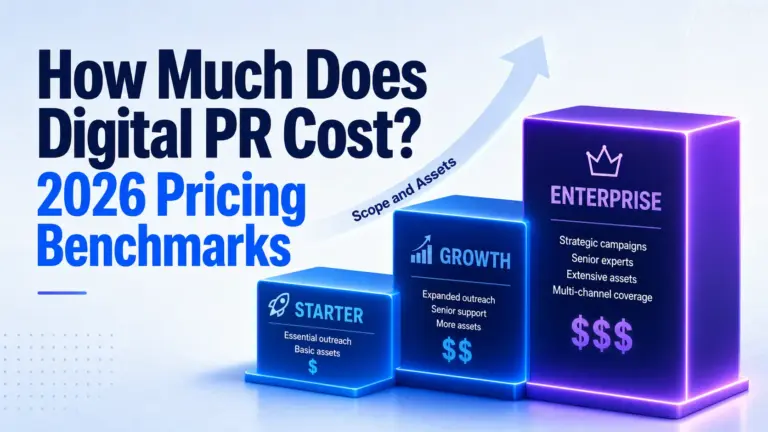
Here is the direct answer most buyers come for. Digital PR retainers in 2026 cluster into four bands, each supporting a different level of campaign ambition.
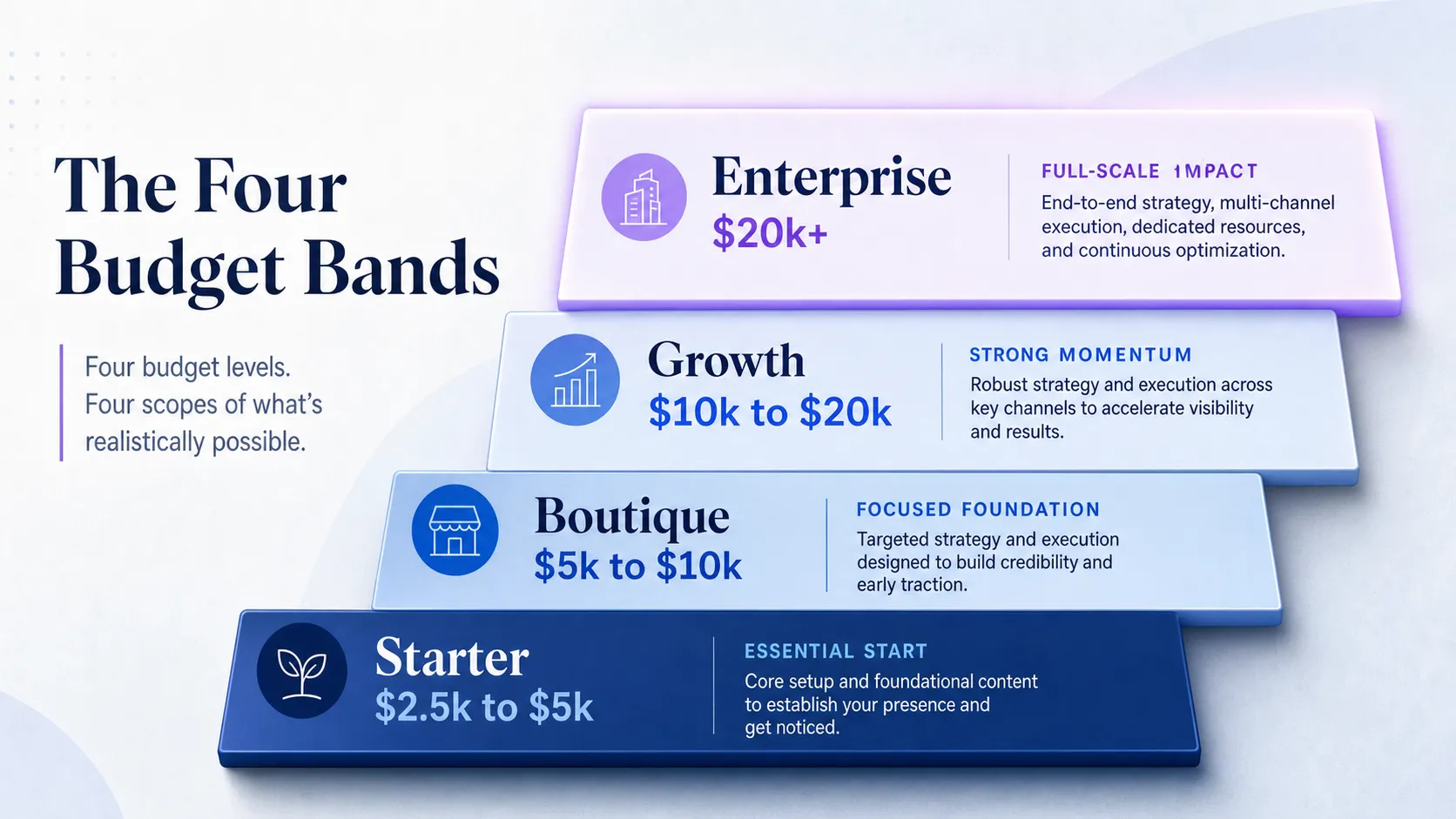
| Tier | Monthly retainer | Campaign scope it supports |
|---|---|---|
| Starter | $2,500 to $5,000 | One focused campaign or light, limited outreach with basic reporting. |
| Boutique | $5,000 to $10,000 | Ongoing outreach, modest data-led campaigns, regular reporting. |
| Growth | $10,000 to $20,000 | Original research campaigns, thought leadership, multi-campaign cadence. |
| Enterprise | $20,000+ | Multi-market work, senior-heavy teams, deep measurement. |
For non-retainer quotes, benchmark project fees at roughly $5,000 to $30,000 for a defined campaign, and hourly consulting in the low hundreds per hour. A pay-per-placement quote in the $800 to $1,200 range exists in the market, though it usually buys volume over quality.
Many agencies with real outreach capability will not work below a meaningful monthly minimum, often around $5,000. That floor is not greed. It is the cost of senior time, since the people who can shape a story and reach the right journalists are the largest line on the invoice. The simple takeaway: a realistic digital PR budget is often $5,000 to $20,000+ per month, scaled to ambition.
What You Actually Pay For and What Drives Pricing
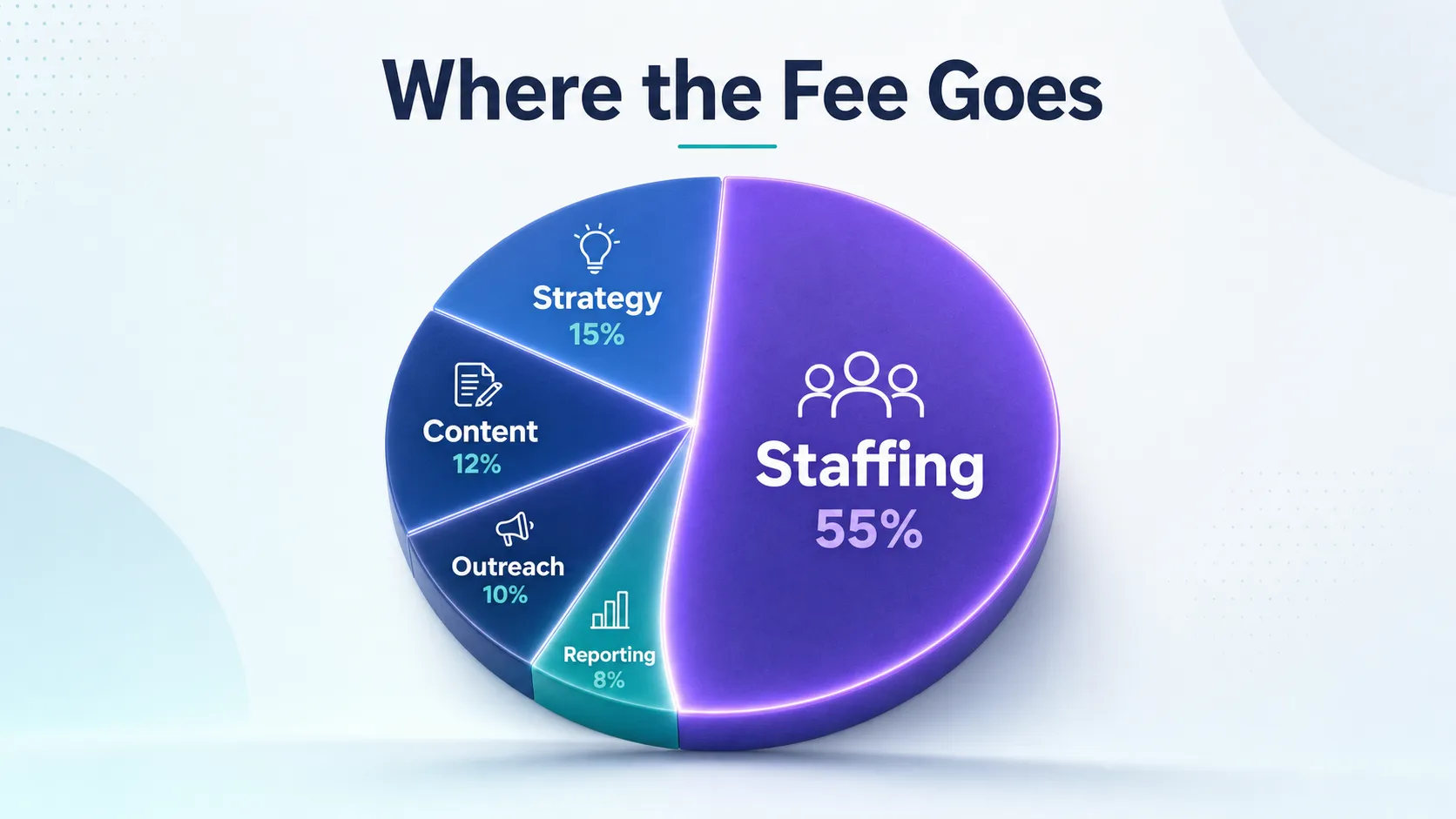
The price feels arbitrary until you see the cost stack behind it. Most of the fee is people, and people with judgment, positioning skill, and real media relationships cost more than people who send templated emails.
| Cost area | What it covers |
|---|---|
| Strategy and planning | Angle development, campaign design, target media mapping. |
| Research and data | Original research, surveys, and data analysis that earn coverage. |
| Content and assets | Writing, design, and production of the campaign piece. |
| Journalist outreach | Pitching, follow-up, and relationship management with reporters. |
| Account management | Coordination, revisions, and client communication. |
| Reporting and tools | Coverage tracking, measurement, and the software behind it. |
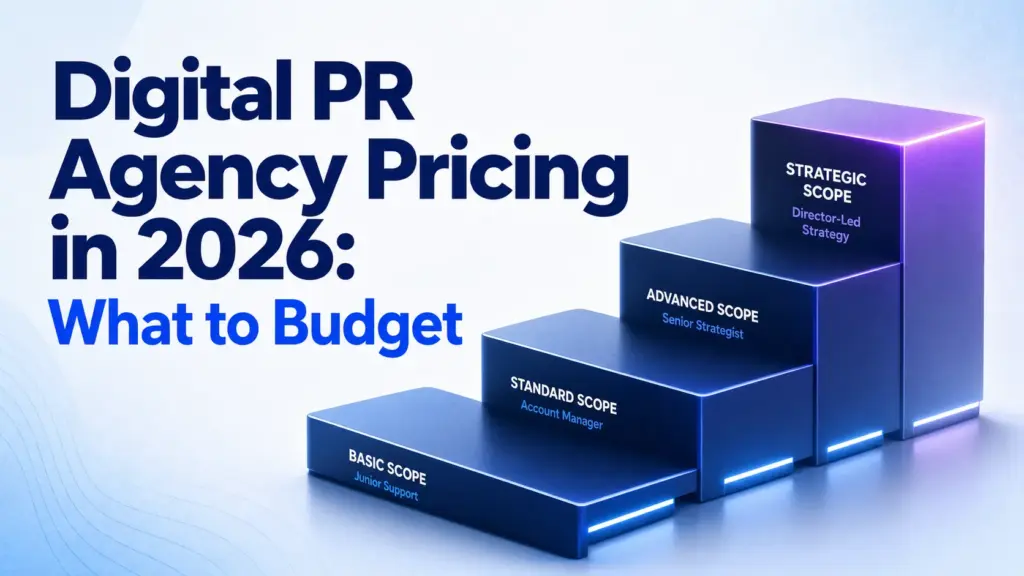
Staffing typically makes up the largest slice of the fee, and seniority is the multiplier. A senior strategist adds positioning, narrative judgment, and the press contacts that a junior cannot replicate, which is why their hours cost more.
| Driver | Pushes price up when |
|---|---|
| Campaign complexity | The work needs custom assets, multiple angles, or heavy creative. |
| Niche expertise | Your sector requires specialist knowledge and reporter relationships. |
| Geography | You target multiple markets or higher-cost regions. |
| Turnaround time | You compress the timeline and need senior attention faster. |
| Data requirements | The campaign rests on original research or commissioned surveys. |
| Reporting depth | You want detailed measurement beyond a coverage list. |
Deliverables alone never set the price. Two campaigns described as the same scope can differ heavily in research load, creative burden, and senior oversight. The sharpest cost increases come from bespoke data, senior strategy, and serious outreach effort, not from sending more emails. And no agency should promise guaranteed placements, because earned coverage is earned, not bought.
What’s Usually Included at Different Budget Levels
Mapping deliverables to spend shows what each tier realistically buys, and just as usefully, what it will not. The question is never only what is cheap. It is what scope can still produce a credible campaign.

| Monthly spend | Typical scope | Strategy and reporting depth |
|---|---|---|
| $2,500 to $5,000 | One-off campaign or light ongoing outreach | Basic strategy, lean content, simple coverage reporting. |
| $5,000 to $10,000 | Ongoing outreach plus a modest data-led campaign | Defined strategy, regular content, monthly reporting. |
| $10,000 to $20,000 | Original research, thought leadership, multi-campaign work | Senior strategy, stronger creative, detailed measurement. |
| $20,000+ | Multi-campaign and multi-market programs | Senior-led strategy, custom data, deep reporting and analysis. |
First-month costs often run higher than later months. Onboarding, discovery, and initial asset development front-load the work, so do not read a heavier setup invoice as a red flag on its own. Ask what the setup fee covers and whether it recurs.
Common Pricing Mistakes to Avoid
The same buyer errors show up again and again. Avoiding them is worth more than shaving a few hundred dollars off a retainer.
- Assuming cheaper means more efficient, when it usually means less senior time and thinner research.
- Comparing agencies only by placement count instead of coverage quality and relevance.
- Expecting guaranteed links, which no credible agency promises.
- Ignoring onboarding fees and contract terms until after you sign.
- Not checking who actually does the work, since the named senior in the pitch is not always the one on your account.
See where AI answers put your brand
Twenty minutes with a senior strategist: where the major engines point buyers in your category, who gets named instead of you, and a straight read on what a programme would change.
Book a strategy callHow to Budget for a Digital PR Agency
Budgeting well is a scope-matching exercise, not a price-shopping one. Work through five steps and you turn the ranges above into a quote request agencies can answer cleanly.
Step 1: Define the Goal First
Name the outcome before the budget. Links, brand visibility, thought leadership, launch support, and reputation building all demand different work, and the goal sets everything downstream.
Step 2: Choose the Engagement Model
Match the model to the timeline, not to what sounds cheapest. A finite launch suits a project fee, while an ongoing visibility goal needs a retainer to build momentum.
Step 3: Match Ambition to Budget
Decide whether the campaign needs light outreach, original research, or a multi-campaign program. Each step up in ambition moves you into the next budget band.
Step 4: Add a Buffer for Setup and Extras
Leave room for onboarding, creative production, deeper reporting, and any specialist data. Setup often costs more than a steady-state month, so budget for it explicitly.
Step 5: Ask for a Line-by-Line Breakdown
Have each agency separate what is included, what is optional, and what could trigger extra fees. A clear breakdown is itself a signal of how the agency works.
How to Write a Smart Quote Request
Give every agency the same brief so the proposals are comparable. A useful request names six things: the goal, a budget range, the timeline, target markets, the internal assets you already have, and your reporting expectations. That single paragraph does more to surface a good fit than any sales call.
If you want a worked example of how a structured program is scoped and priced, our overview of how our brand mention programme works shows the moving parts in one place.
FAQ: Quick Answers Before You Request Quotes
How much do digital PR agencies charge per month?
Most digital PR retainers run $5,000 to $15,000 per month, with competitive or enterprise programs pushing past $20,000. Starter engagements can begin near $2,500, though they buy a narrow scope.
What is the minimum budget for digital PR?
The practical floor for an agency with real outreach capability is around $5,000 per month. Below that, you are usually buying a single light campaign or limited support rather than ongoing work, and many serious agencies will decline the engagement entirely.
Do digital PR agencies charge hourly?
Some do, but hourly billing is mostly reserved for consulting, audits, and supplemental support rather than full campaign execution. Rates typically land in the low hundreds per hour. For ongoing work, a retainer is more common and easier to budget.
Is a retainer the standard pricing model for digital PR?
Yes. The monthly retainer is the default because digital PR is iterative and compounds over months. Project fees exist for finite, milestone-driven work, and hybrids appear occasionally, but the retainer remains the norm in 2026.
What does the first month of digital PR usually include?
The first month usually covers onboarding, discovery, strategy development, and initial asset creation, which is why it often costs more than later months. You are paying to build the foundation: the angles, the target media, and the first campaign assets that everything after depends on.
What Budget You Should Expect
A workable digital PR budget in 2026 sits between $5,000 and $20,000+ a month, and the right number inside that range depends entirely on scope, seniority, and how ambitious the campaign is. The cheapest quote almost always removes the work that makes the campaign worth running, so price the outcome you want, not the invoice you’d prefer. Use these ranges to set your budget first, then request quotes that spell out scope, deliverables, team seniority, and reporting line by line.
2026 Data Point: What Budget Buys in the AI-Visibility Era
Content with statistics, citations, and original data achieves 30-40% higher AI visibility than generic coverage — which is exactly the kind of asset higher-tier digital PR retainers are built to produce. When comparing quotes at different budget levels, the real differentiator is whether the agency is pitching data-backed stories (higher AI-citation value) or generic press releases (lower value regardless of placement count).