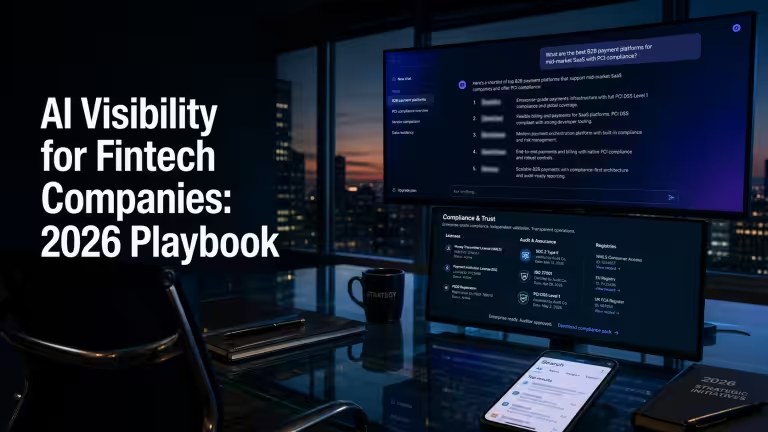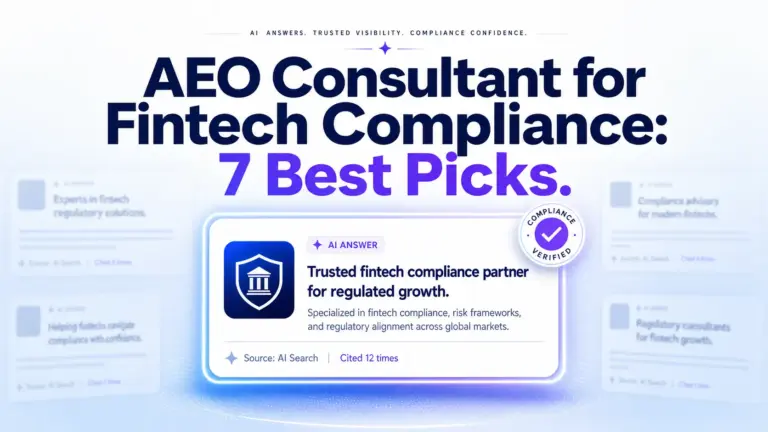

If your fintech wants ChatGPT, Perplexity, Gemini, and Google AI Overviews to name your brand when a buyer asks for the best payments, lending, or banking platform, you need an agency built for regulated visibility, not a generic SEO shop with a new label.
This is a buyer shortlist for fintech teams: nine AI visibility agencies ranked by how well they handle the specific demands of finance, including compliance-safe content, entity accuracy, and citation tracking across AI answers. Below, you get the criteria we ranked them on, a profile for each, a comparison table, and a clear recommendation by company stage.
Fintech is the hard case in AI search. An AI answer that misstates your fees, your licensing status, or a product feature isn’t just a bad look, it’s a compliance exposure. The right partner earns citations while keeping your claims accurate and your sources clean.
Why Fintech Buyers Need a Specialist Shortlist
Fintech needs more than traditional SEO because AI answers carry real risk when they get finance wrong. A model that invents an APR, names a license you don’t hold, or summarizes a competitor’s product as yours creates problems no ranking report measures.
Generic agencies optimize pages. A fintech-fit agency optimizes how AI systems describe a regulated brand.
The surfaces this shortlist is built for are the ones your buyers actually use: ChatGPT, Perplexity, Gemini, and Google AI Overviews. Each pulls from different sources and trusts different signals, so “AI visibility” is never one tactic applied everywhere.
“Best” here means best fit for a trust-sensitive buyer, not the biggest agency or the loudest AI marketing claim. A boutique technical shop can beat a 500-person agency for a complex payments platform, and the reverse is true for a content-led neobank.
Every profile below answers four questions: what they do, why it matters for fintech, what they do best, and where they fit. For the deeper strategy behind the category, the fintech AI visibility playbook covers the tactics these agencies execute.
The pain point most fintech teams hit is this: an agency looks strong on SEO audits and keyword rankings, then stalls the moment the work requires entity disambiguation, compliance review, or building the kind of trusted mentions AI engines actually cite. Screen for that gap first.
How We Ranked These Agencies for Fintech
We scored agencies on the factors that separate real AI visibility capability from recycled SEO positioning. The weighting favors fintech-specific strengths, because depth in finance matters more here than raw agency size.
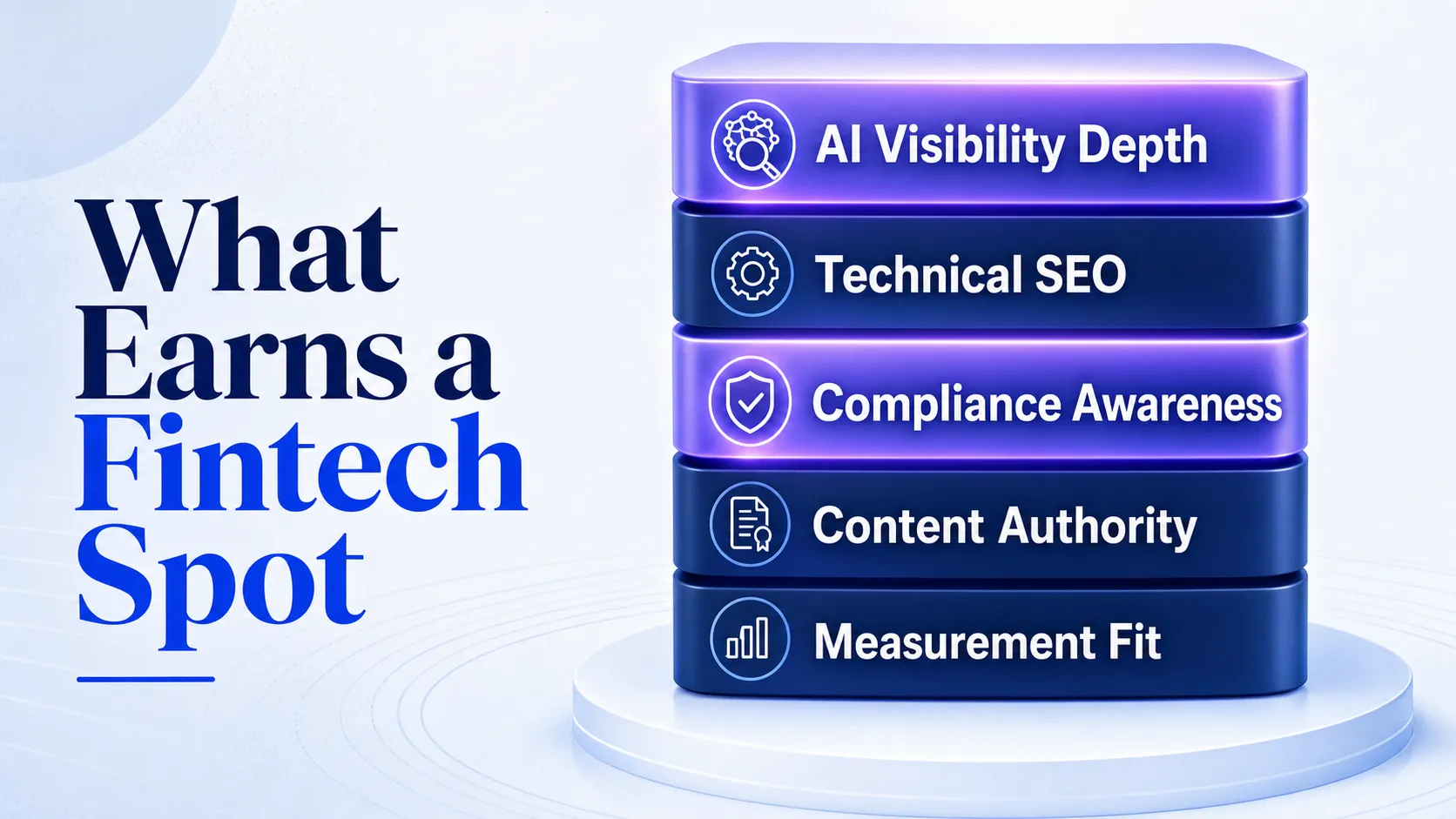
Here’s what moved an agency up or down the list.
- AI visibility depth, meaning prompt research, citation tracking, retrieval understanding, and real testing of how engines answer category questions, not just keyword reports.
- Technical SEO capability, especially crawlability, schema, rendering, entity optimization, and clean site architecture.
- Compliance awareness, since fintech content needs cautious claims, clear disclosures, and disciplined sourcing.
- Content authority and digital PR, because trusted mentions are often what earn AI citations in finance.
- Measurement rigor and buyer fit by stage, so enterprise, mid-market, and early-stage fintechs are matched to the right kind of partner.
One thing to hold onto: AI visibility only pays when it maps to prompt-level citation growth tied to commercial intent. Getting named in a low-value informational answer is vanity.
Getting named when a buyer asks “what’s the best B2B payments API” is pipeline. If you want a baseline before hiring anyone, the AI visibility diagnostic framework shows how to measure where you stand today.
The 9 Best AI Visibility Agencies for Fintech
These nine are ranked by fintech-specific fit, starting with the strongest technical and regulated-finance match. Each profile names exactly why the agency belongs on a fintech shortlist, plus where it fits and where it doesn’t.
1. BrandMentions: Best for Earning the Citations Fintech Brands Get Judged By
Disclosure: BrandMentions publishes this guide, and Outreach Desk, next on this list, is run by the same team.
BrandMentions is an AI visibility and brand citation agency that earns editorial mentions in the publications search engines and AI assistants already trust.
For fintech that matters more than most categories, because models hold regulated money topics to a higher bar: they name brands that credible third parties have covered, not brands that only describe themselves well.
It takes the top spot because it works the exact gap most fintech shortlists stall on, which is third-party authority. Placements are attributable and editorial, entity data stays consistent across sources, and pricing is public, from $1,997 a month for the startup programme to $4,997 for growth-stage teams.
The tradeoff is that this is a managed programme rather than self-serve software, and final review of rate, fee, and licensing claims stays with your compliance team.
- Best for: Fintech brands that need third-party authority and AI answer visibility
- Pricing model: Tiered monthly, $1,997 to $4,997, published
- Standout strength: Earned, attributable citations in publications AI engines read
2. Outreach Desk: Best for Managed Digital PR and Authority Links
Outreach Desk is a managed, fully transparent digital PR and link building service that earns niche-relevant placements through real manual outreach. Every placement comes from a pitch to a topically matched publisher, and you see exactly where each link lands, which suits regulated categories like fintech where sourcing has to stand up to scrutiny.
It ranks second because authority links are the corroboration layer AI engines lean on in finance queries. Public per-link pricing keeps procurement simple, a dedicated account manager runs the campaign, and a six-month replacement guarantee backs every placement. The tradeoff is pace, since manual outreach to quality publishers compounds over weeks rather than days.
- Best for: Fintech and B2B teams that want outreach handled with clear sourcing
- Pricing model: Per link, $300 Foundation to $200 Custom, published
- Standout strength: Transparent placements with a six-month link replacement guarantee
3. Onely: Best for Enterprise Fintech With Technical Complexity
Onely is an engineering-led AI search optimization and GEO agency for fintech organizations with complex digital ecosystems. It fits best when a site carries multiple products, technical debt, entity ambiguity, or strict regulatory review.
What sets Onely apart is implementation depth. Many agencies hand you a recommendations deck.
Onely embeds engineering thinking into the work, which matters when a fintech site has rendering issues or entity confusion that block AI engines from reading the brand correctly. The honest tradeoff: this is a technical-first partner, so if your main gap is high-volume content production rather than infrastructure, the fit weakens.
- Best for: Mid-market to enterprise fintech with technical complexity and multi-product portfolios
- Pricing model: Custom, no published rates
- Standout feature: Engineering-embedded implementation plus entity disambiguation
4. First Page Sage: Best for Authority-Led Fintech Lead Generation
First Page Sage builds GEO and thought-leadership content designed to earn AI recommendations and qualified leads. It works well when the goal is to show up as a credible answer inside research-heavy fintech buyer journeys.
Its strength is content authority tied to lead generation, backed by a reported 92% client retention rate. For an established fintech that can support a real content program with strategic oversight, this is a strong pick.
It’s less suited to early-stage teams that need a fast, lean engagement, since the model leans on sustained content investment.
- Best for: Established fintech brands prioritizing qualified leads and thought leadership
- Pricing model: Custom, no published rates
- Standout feature: Enterprise fintech content portfolio with strong retention
5. Omnius: Best for Growth-Stage and Multi-Region Fintech
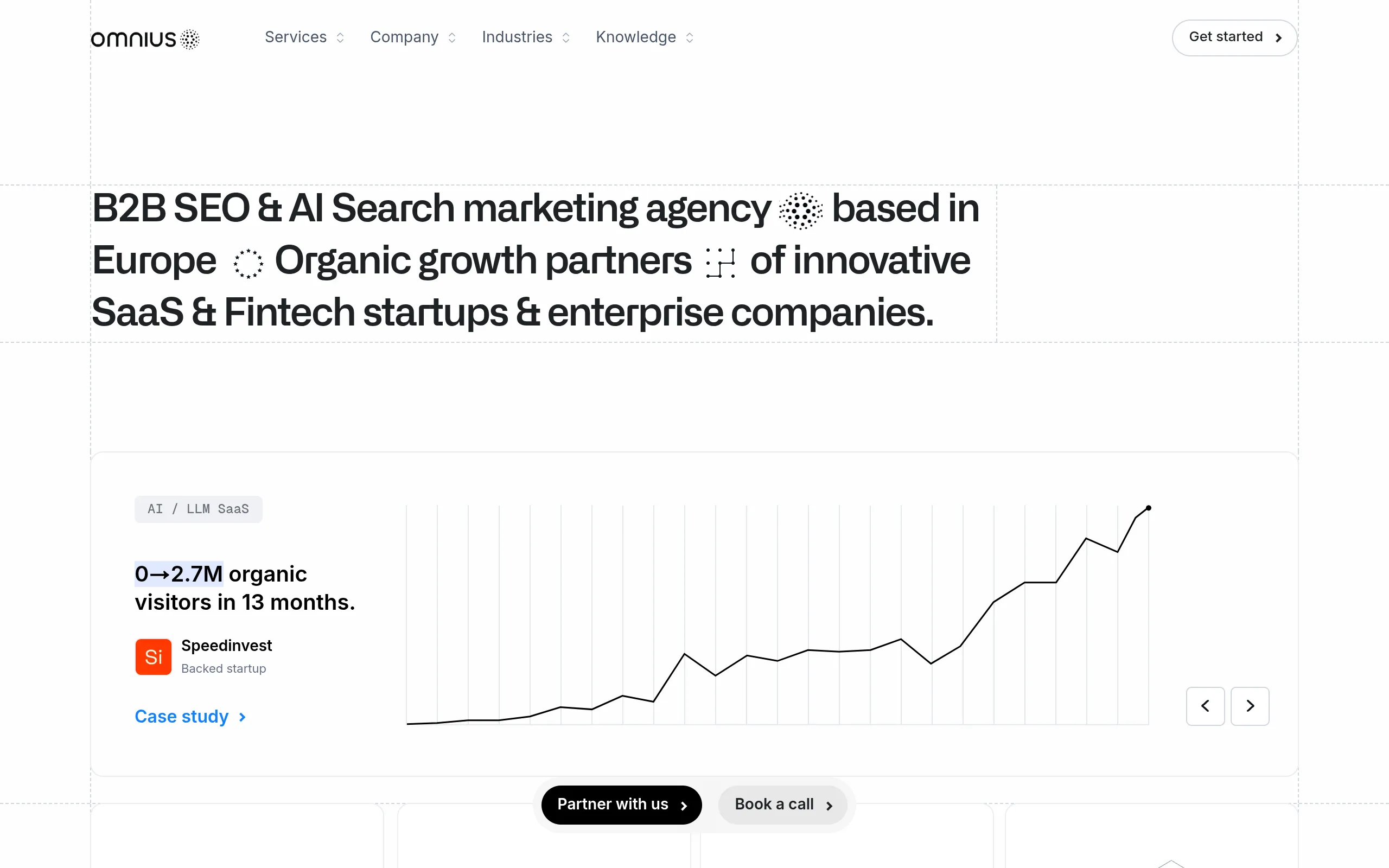
Omnius is a fintech and SaaS-focused SEO and generative engine optimization agency with semantic audits and digital PR support. It suits brands that need AI visibility plus regional or multilingual reach, especially across European markets.
The differentiator is its narrow focus. Omnius works almost exclusively with B2B SaaS and fintech, which means it understands the buyer and the compliance context instead of learning your category on your budget.
It offers a free 30-minute consultation, a low-friction way to test fit. It’s better for teams that want focused execution than enterprise governance layers.
- Best for: Growth-stage B2B SaaS fintech, especially multi-region operations
- Pricing model: Custom, direct consultation recommended
- Standout feature: Exclusive fintech and SaaS focus with digital PR
- Free audit or trial: Yes, free 30-minute call
6. iPullRank: Best for Relevance Engineering and Entity Work
iPullRank is a technical SEO and content engineering agency focused on structured data, entity optimization, and machine-readable content. It’s the right call for comparison pages, product taxonomies, and any fintech content that needs precise entity alignment so AI engines describe products accurately.
Its standout work is relevance engineering: prompt systems, governance, and entity structuring that help models distinguish your brand from similarly named entities. For a fintech with a sprawling product catalog or a name AI engines confuse with another company, this matters more than another blog post.
Entity confusion is one reason AI engines misattribute features, and entity disambiguation is core to fixing it. The fit is best when your team can support a systems-oriented approach.
- Best for: Fintech with complex product taxonomies or entity confusion
- Pricing model: Custom, no published rates
- Standout feature: Relevance engineering and structured-data depth
7. Siege Media: Best for Content Authority and Digital PR
Siege Media is a content marketing and editorial link-earning agency built for visibility and brand authority. It fits fintech brands whose AI citations depend on trusted mentions, editorial quality, and source credibility rather than technical fixes.
The strength is high-quality content paired with digital PR that earns the kind of editorial coverage AI models lean on when answering finance questions, reflected in a reported $148M in cumulative client traffic value.
It isn’t the first pick if your core problem is site architecture or technical retrieval, since those sit outside its main lane.
- Best for: Fintech brands needing content authority and editorial mentions
- Pricing model: Custom, no published rates
- Standout feature: Editorial content production at scale with digital PR
8. Seer Interactive: Best for Analytics-Heavy Fintech Teams
Seer Interactive is an analytics-first SEO and search strategy agency using data science, audience segmentation, and attribution reporting. It helps when your marketing team needs to prove whether AI visibility changes actually influence pipeline.
The differentiator is measurement rigor. For a fintech with mature analytics infrastructure and a CFO who wants attribution, Seer connects visibility work to outcomes better than most.
It’s strong for data-driven teams, but it’s less of a pure GEO-native specialist than the technical shops higher on this list, so set expectations on dedicated AI search depth.
- Best for: Fintech organizations with mature analytics and attribution needs
- Pricing model: Custom, no published rates
- Standout feature: Analytics-first strategy with strong measurement
9. WebFX: Best for Broad Full-Service Support
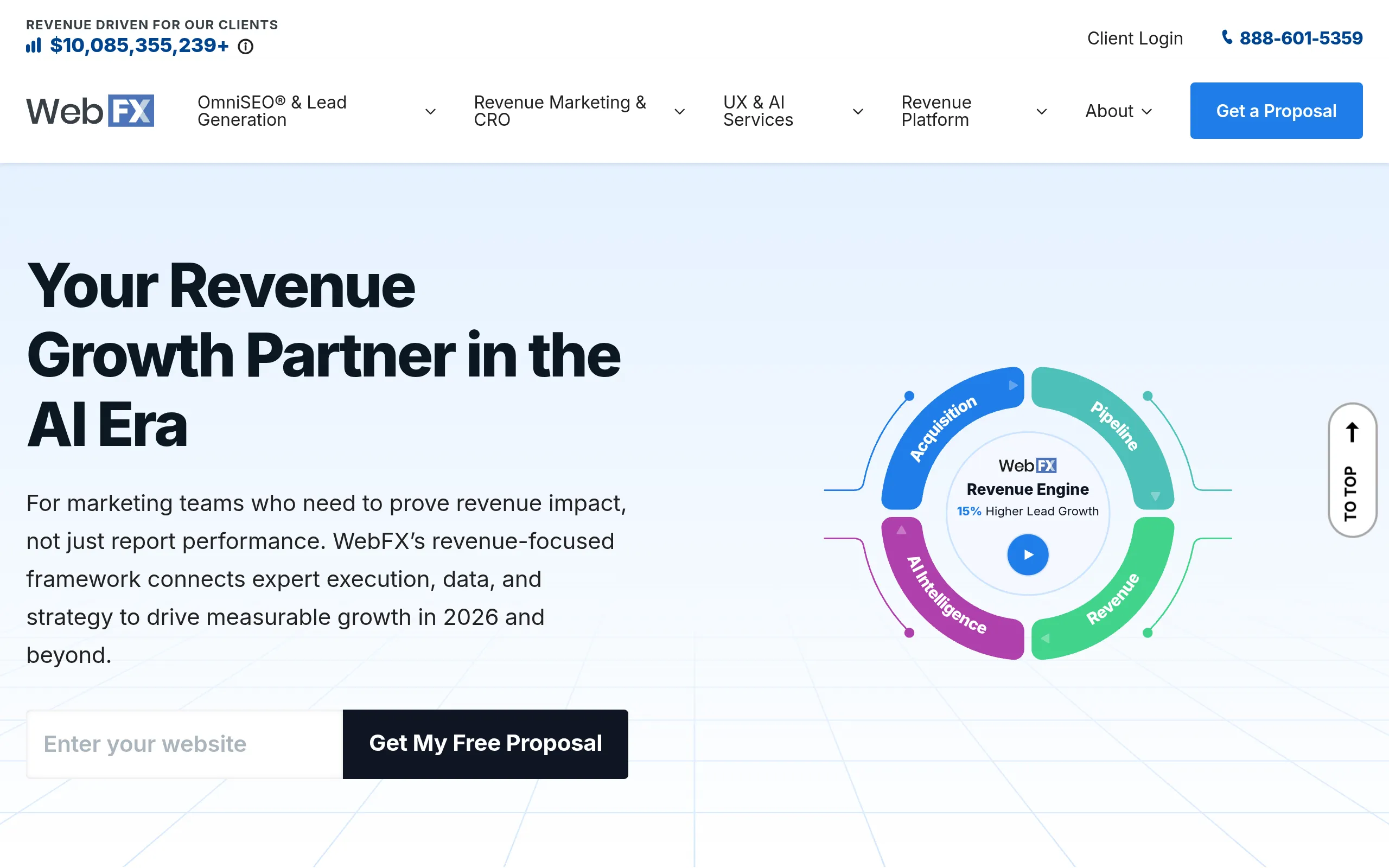
WebFX is a large-scale digital marketing agency covering SEO, content, paid, CRO, and web under one roof, with proprietary reporting technology. It’s a practical option when one vendor must coordinate multiple channels and several internal teams.
The strength is breadth and process depth, backed by 500+ client testimonials and a reported 91% retention rate. For a fintech that wants a single accountable partner across channels, that consolidation is useful.
The tradeoff is specialization: WebFX is broad rather than GEO-native, so a brand whose only problem is AI citation depth will get more from a focused technical or content specialist.
- Best for: Fintech wanting one vendor across multiple marketing channels
- Pricing model: Custom, no published rates
- Standout feature: Full-service breadth with proprietary reporting
Comparison Table: Which Fintech Agency Fits Which Need
Use this table to narrow the shortlist fast. Pricing visibility is reported honestly: nearly every agency in this category uses custom pricing, so treat published-rate claims elsewhere with caution. Compliance orientation is called out because it’s often the hidden deciding factor in fintech.
| Agency | Best for | Pricing visibility | GEO / AI visibility depth | Technical strength | Compliance orientation |
|---|---|---|---|---|---|
| BrandMentions | Earned citations and third-party authority | Published | Very high | Moderate | Strong |
| Outreach Desk | Managed digital PR and authority links | Published | High | Moderate | Strong |
| Onely | Enterprise, complex sites | Custom | High | Very high | Strong |
| First Page Sage | Authority-led lead gen | Custom | High | Moderate | Moderate |
| Omnius | Growth-stage, multi-region | Custom | High | Moderate | Strong |
| iPullRank | Entity and relevance work | Custom | High | Very high | Moderate |
| Siege Media | Content and digital PR | Custom | Moderate | Moderate | Moderate |
| Seer Interactive | Analytics and attribution | Custom | Moderate | High | Moderate |
| WebFX | Full-service breadth | Custom | Moderate | High | Moderate |
We scored each agency on AI visibility depth, technical capability, compliance awareness, content authority, and stage fit, drawing on the agencies named across current fintech AI visibility and GEO roundups. We excluded pure tools and tracking platforms, since this is an agency shortlist, not a software comparison.
Best Agency by Fintech Scenario
The right agency depends on your technical debt, content maturity, and compliance burden, not just your budget. Match your situation to one recommendation below.
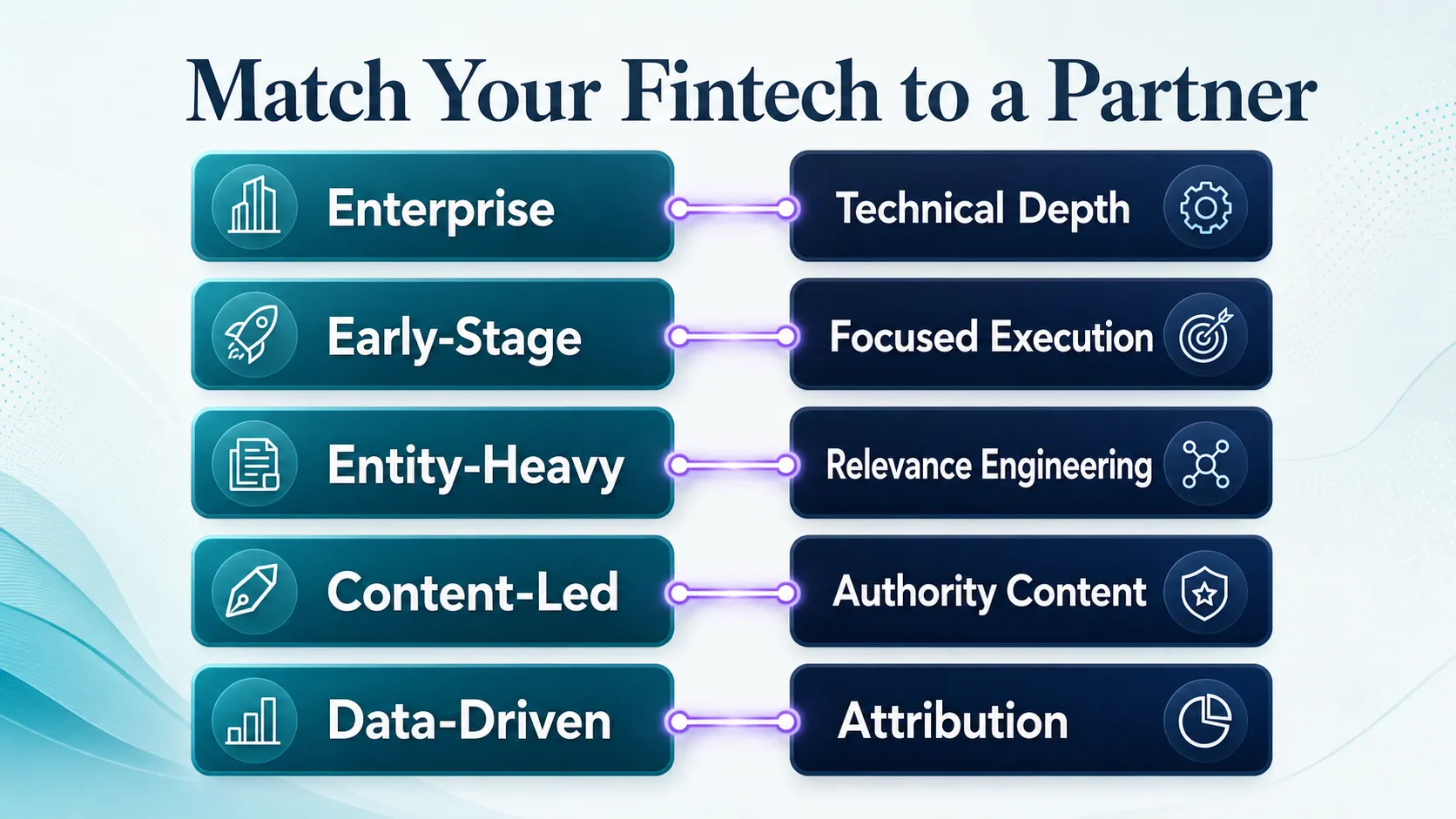
| Your fintech scenario | Recommended agency | Why |
|---|---|---|
| Brand that needs third-party citations and authority | BrandMentions | Earns editorial mentions AI engines cite, with sourcing your compliance team can audit |
| Team that needs managed outreach and authority links | Outreach Desk | Transparent, niche-relevant placements with clear sourcing |
| Enterprise fintech with complex architecture | Onely | Engineering depth resolves rendering and entity issues at scale |
| Early-stage fintech with a lean team | Omnius | Focused fintech execution without enterprise overhead |
| Brand with entity confusion or sprawling products | iPullRank | Relevance engineering aligns how AI describes each product |
| Content-led growth team building trust | First Page Sage | Authority content earns recommendations in research journeys |
| Performance team needing attribution | Seer Interactive | Analytics rigor ties visibility to pipeline |
| One-vendor full-service support | WebFX | Coordinates many channels under one accountable partner |
If two options feel close, default to the one whose core strength matches your biggest current gap. A content-strong fintech with a broken site structure should fix the technical layer first, then build authority on top of it.
Picking the Right Partner for Your Stage
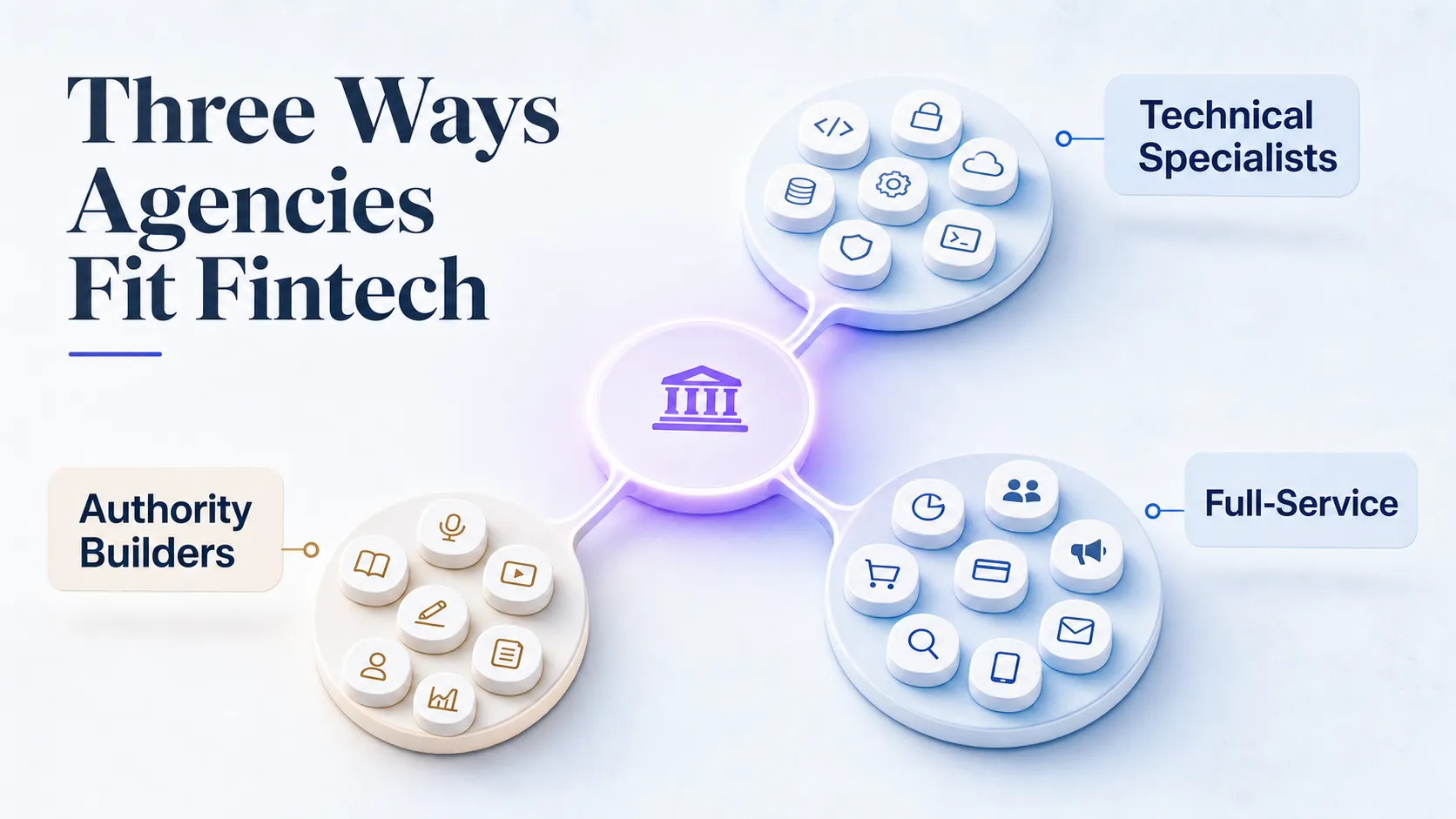
The decision rule is simple: lead with your dominant constraint. If technical debt or entity confusion is blocking AI engines from reading your brand correctly, choose a technical-first partner like Onely or iPullRank.
If your site is sound and the gap is credibility, choose an authority builder like First Page Sage or Siege Media. If you need one vendor to run everything, WebFX covers the breadth.
Before you book a single sales call, audit where your brand actually stands in AI answers today. Shortlisting from real gaps beats shortlisting from guesswork, and it changes which agency strength you should weight most.
Comparing the cost of hiring out versus building internally also helps, which the agency versus in-house cost breakdown covers in detail.
One caution worth stating plainly: an agency that promises guaranteed AI recommendations or a fixed citation count is overpromising. Citations are earned through trust signals and consistency, not bought on a schedule. Treat certainty claims as a red flag.
Frequently Asked Questions
What’s the difference between a GEO agency and a traditional SEO agency?
A GEO agency optimizes how AI answer engines describe and cite your brand, while a traditional SEO agency optimizes how you rank in blue-link search results.
The work overlaps on technical foundations like crawlability and schema, but a real GEO agency adds prompt research, citation tracking, entity optimization, and testing of how ChatGPT, Perplexity, and Gemini actually answer category questions. Many SEO agencies have relabeled their services as GEO without changing methodology, so look for proof of AI-answer testing.
How do fintech companies verify that an agency has real AI visibility experience?
Ask the agency to show you live AI answers for your category and walk you through how it would change them. A genuine specialist can pull current ChatGPT or Perplexity responses for prompts your buyers use, point to which sources the answer cites, and explain the work needed to get your brand named.
If the conversation stays on rankings, traffic, and keyword reports without touching citations or retrieval, the AI visibility capability is thin.
How long does it take to improve AI visibility for a fintech brand?
Most fintech brands see early movement in 3 to 6 months, with compounding results beyond that. Technical and schema fixes can register faster, sometimes within a few weeks, because they remove barriers to how engines read your site.
Earning the trusted mentions and content authority that drive citations takes longer, and fintech’s compliance review adds time to every content cycle. Anyone promising fast guaranteed citations is selling certainty that doesn’t exist.
What should a fintech ask before signing an AI visibility retainer?
Ask how the agency handles compliance review, how it tracks citations across engines, and what it considers a successful prompt-level outcome. A strong answer names a measurement method, a reporting cadence, and a clear process for keeping claims accurate and disclosures intact.
You should also ask which engines it focuses on and why, since a one-size-fits-all answer signals shallow engine-specific knowledge. For budget context, the AI visibility retainer pricing guide sets realistic expectations.
Can AI visibility be measured in ChatGPT, Perplexity, and Gemini?
Yes, AI visibility is measurable through prompt-level tracking that records whether your brand is named, how often, and against which competitors. The method involves running a consistent set of buyer-intent prompts across engines, logging citations and share of voice, then tracking movement over time rather than relying on one-off screenshots.
Different engines cite different source types, so the measurement has to be engine-specific to mean anything for a fintech.
The fintech brands that win in AI search aren’t the ones with the biggest agency or the loudest pitch. They’re the ones whose partner can earn citations while keeping every claim accurate and every source clean.
Start by auditing where your brand actually appears in AI answers today, then shortlist the agency whose core strength closes your biggest gap. Book a strategy call, then book the call that fits your stage, compliance load, and GEO depth.