
If your team needs AI citations fast and lacks the internal hands to build them, an agency usually wins; if you have time, internal capacity, and a tight budget, doing it yourself can be the smarter move. That is the whole decision in one line.
The right choice depends on whether you value lowest upfront cost and maximum control, or faster results and lower operational burden. AI citations are the moments when ChatGPT, Perplexity, Gemini, or Google AI Overviews name your brand inside an answer, and earning them takes consistent work across content, structure, and authority signals. This comparison weighs both paths on cost, speed, expertise, control, scalability, and risk, then gives you a clear recommendation by team type.
What Agency vs DIY AI Citations Actually Means
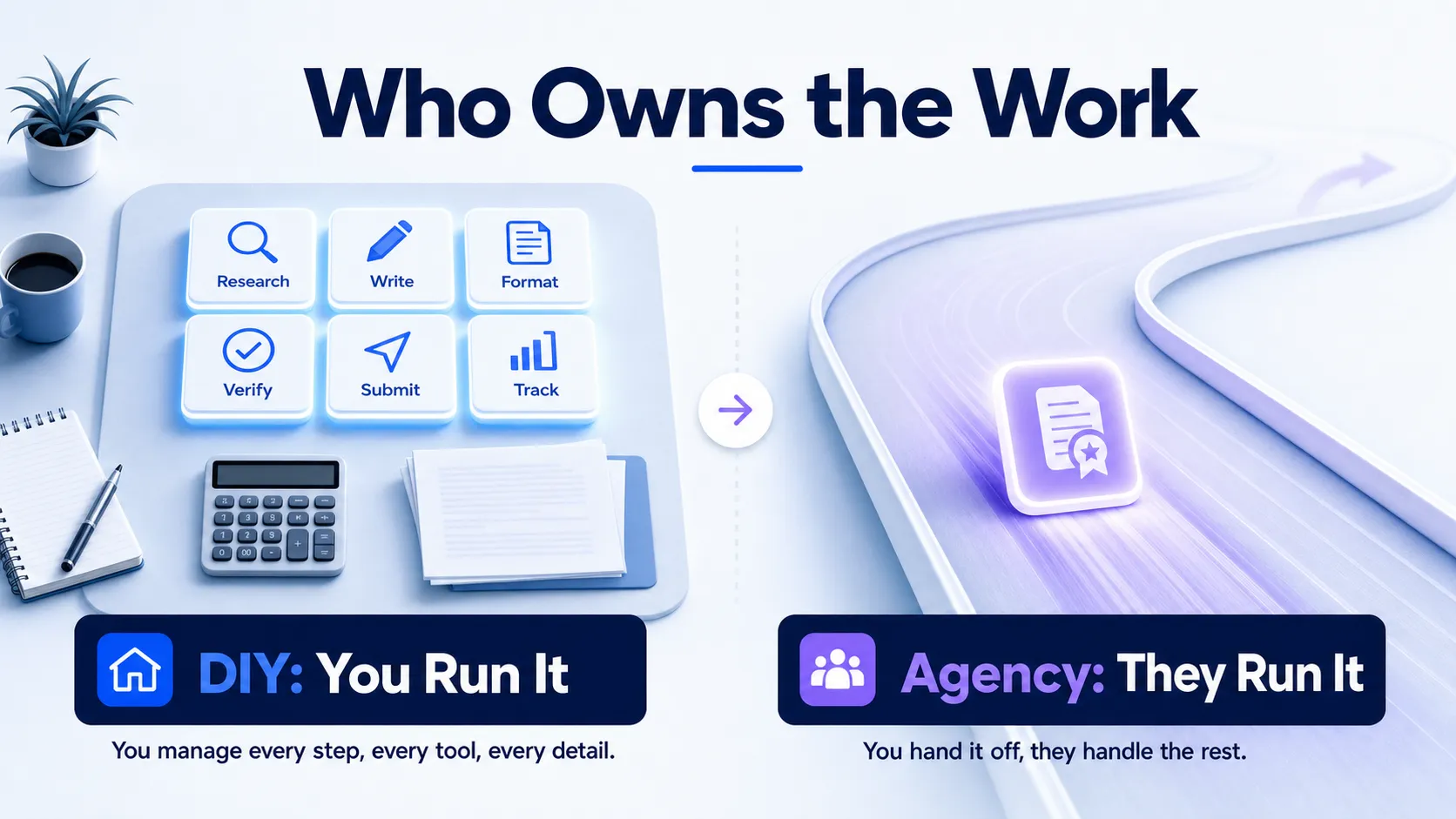
This is a procurement decision, not a theory debate. You are choosing who owns the work of getting your brand named inside AI answers, and that ownership question drives everything else: cost, speed, and how much of your week disappears into the project.
An agency or managed service plans, creates, distributes, and optimizes citation-building work end to end. You hand over the goal and the brand rules, and the agency runs strategy, content production, source placement, and ongoing optimization. DIY means doing that same work in-house with tools, templates, and your team’s time. You buy a few subscriptions, learn the workflow, and run it yourself.
AI citations span more than one engine, and they do not behave identically. ChatGPT pulls from training data plus live retrieval. Perplexity leans hard on fresh, well-sourced pages it can cite inline. Gemini ties into Google’s index and knowledge graph. Google AI Overviews surface brands that already earn classic search trust. Earning a mention in one does not guarantee the others, which is part of why this work is harder than it looks from a tool dashboard.
The goal here is not to crown a universal winner. It is to find the best fit for your budget, your bandwidth, your technical maturity, and your compliance needs. The core tradeoff sits at the top of every section below: DIY gives you more control and lower cash spend, while agencies usually give you more speed, expertise, and scale.
| Path | What you own | Best when |
|---|---|---|
| DIY in-house | Tools, time, full control, all execution | Budget is tight and someone can own the work consistently |
| Agency or managed service | The goal and brand rules; the agency owns execution | You need speed and scale without dedicated internal hands |
How to Judge Agency vs DIY AI Citations
Score both paths on seven criteria before you compare any single number. Picking on price alone is the most common buying mistake, because the cheapest line item often hides the most expensive labor. A clear framework keeps internal hours and brand governance counted as real costs, not hidden extras.
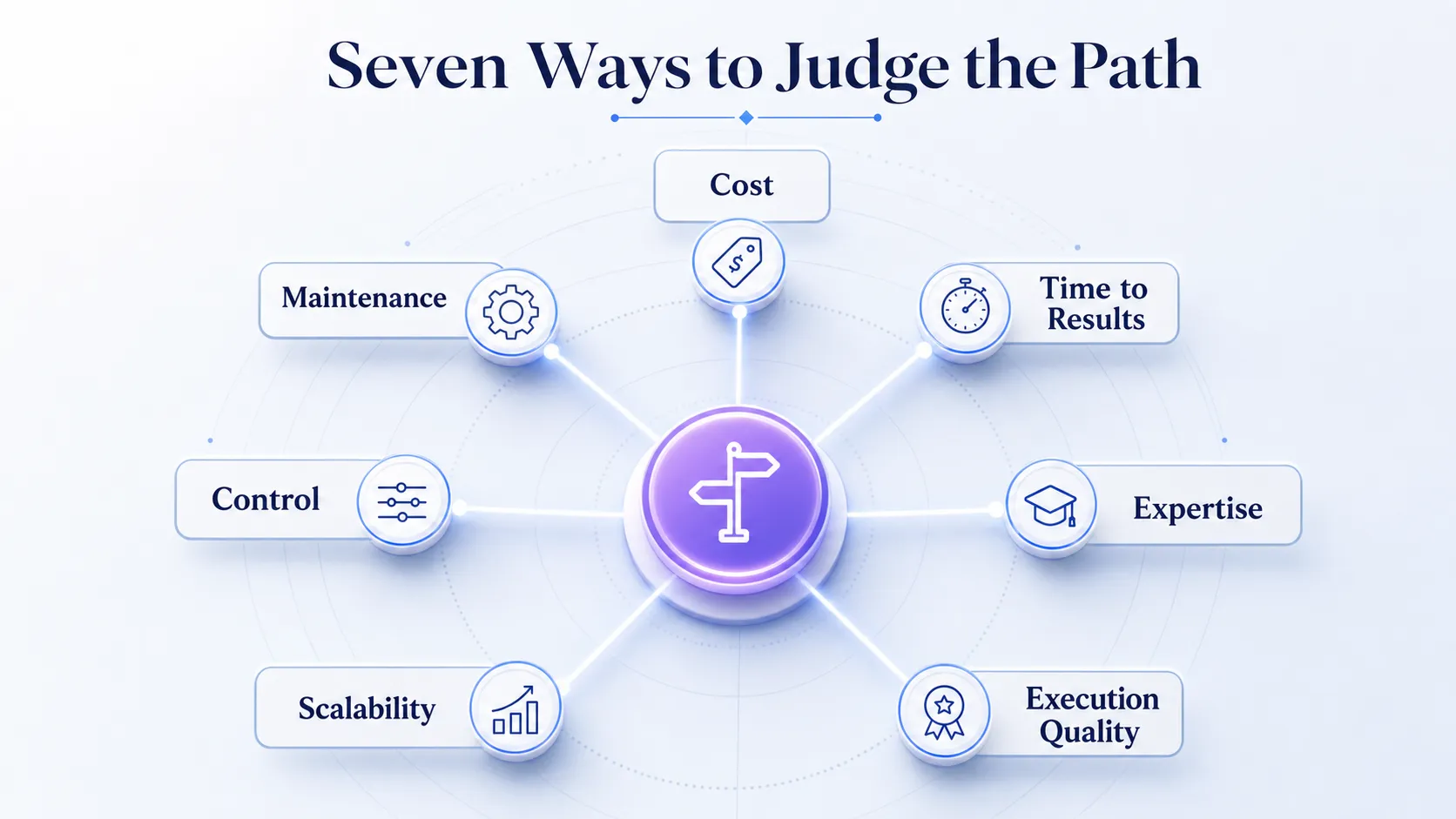
Each criterion measures a real cost or a real outcome, defined the same way for both paths:
| Criterion | What it measures |
|---|---|
| Cost | Software fees plus internal labor, management time, training, and quality checks |
| Time to results | Both the first citation gain and a repeatable, sustainable output |
| Expertise | The technical, editorial, and authority-building skill the work demands |
| Execution quality | How consistently the path produces accurate, source-backed, well-structured citations |
| Scalability | How easily the system expands across topics, markets, and AI platforms |
| Control | Approval flow, brand governance, and keeping work inside internal rules |
| Maintenance | Effort to keep citations from drifting as engines and content needs change |
Two criteria trip up most buyers. Cost gets read as the subscription price, when the real number is the loaded cost including the hours your senior marketer spends learning the workflow. Maintenance gets ignored entirely, because the first citation win feels like the finish line when it is actually the start. The AI visibility diagnostic framework walks through how to baseline where your brand stands before you weigh either path.
Agency vs DIY AI Citations on Cost and Total Investment
Compare full cost, not tool fees against retainers in isolation. DIY looks cheaper on paper and often costs more once internal time is counted as a real expense. A subscription stack might run a few hundred dollars a month, but the hours behind it carry a salary attached, and that salary is the line buyers forget.
DIY cost has six parts: tool subscriptions, staff time, training, content production, quality checks, and management overhead. Agency cost has fewer visible parts: a monthly retainer, setup work, production, reporting, and any add-on services. The agency number looks bigger because it sits in one place. The DIY number looks smaller because it is scattered across people who already have other jobs.
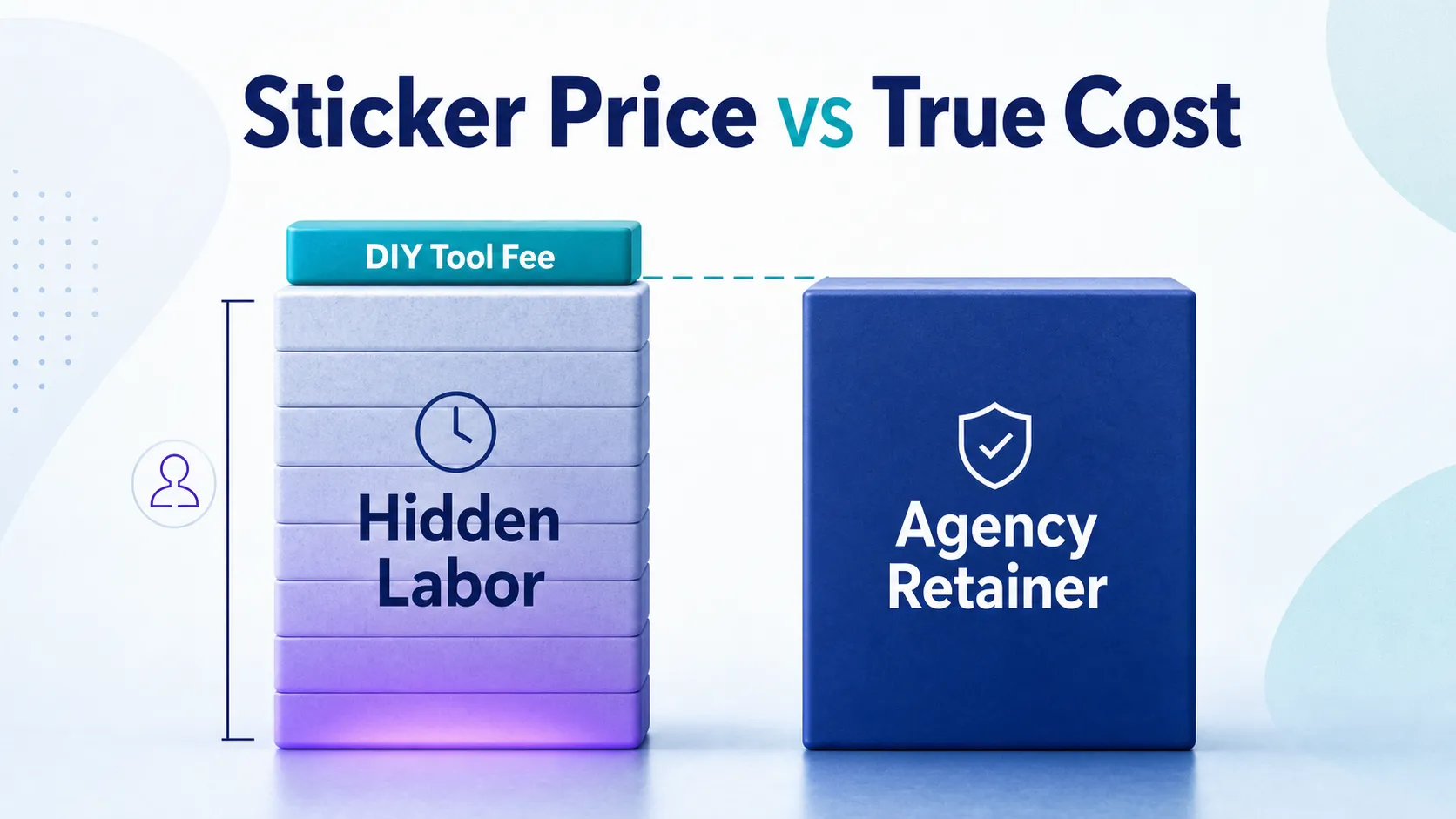
Here is a round-number example. Say a DIY stack costs $400 a month in tools, and a content lead spends 10 hours a week on citation work at a loaded rate of $60 an hour. That is $2,400 a month in labor on top of the $400 in software, for $2,800 total, before you count the training ramp and the manager reviewing it. A managed service at, say, $4,000 a month suddenly looks less like a premium and more like a transfer of that labor plus the execution risk that comes with it.
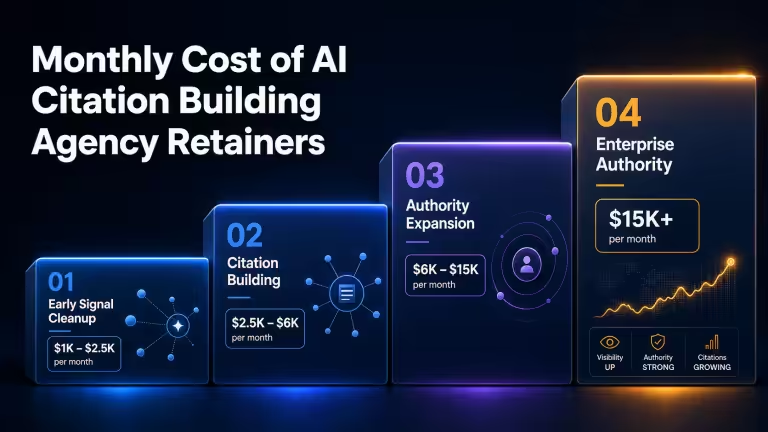
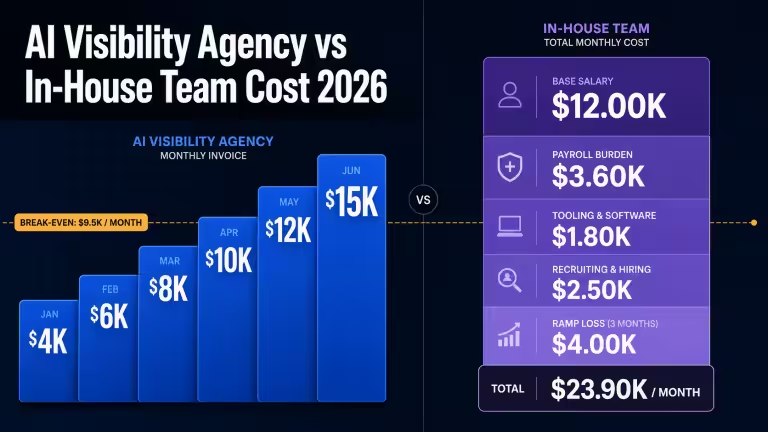
Agency pricing is not just a fee. You are buying back the time your senior people would otherwise spend learning workflows instead of doing higher-value work, and you are moving the risk of a stalled, inconsistent program off your own team. For a deeper breakdown of what those retainers actually buy, the guide on the monthly cost of AI citation building retainers lays out the ranges. The agency versus in-house team cost comparison runs the full math on staffing your own function instead.
| Cost layer | DIY in-house | Agency or managed service |
|---|---|---|
| Visible spend | Tool subscriptions | Monthly retainer |
| Labor | Your staff hours, counted at loaded cost | Included in the retainer |
| Ramp | Training and trial-and-error time | Agency already runs the workflow |
| Risk | Carried internally if the program stalls | Transferred to the agency |
Agency vs DIY AI Citations on Speed and Execution Quality
Agencies usually move faster because they already have the strategy, templates, distribution channels, and execution workflows built. DIY usually takes longer because your team has to learn the system, test what works, and operationalize the process before any of it runs smoothly. The gap is widest in the first 90 days, when an agency is executing and a DIY team is still figuring out where to start.
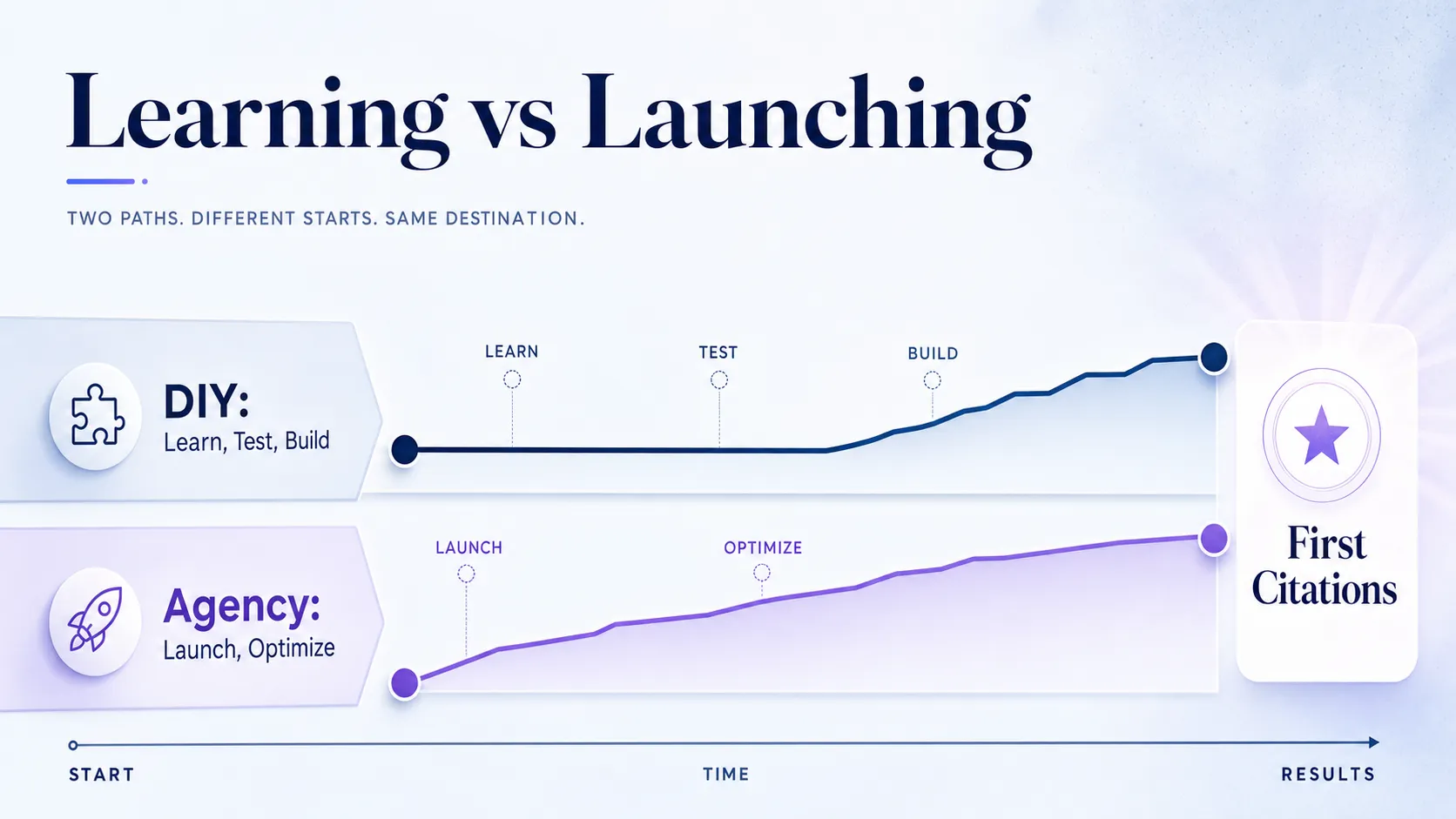
Separate two kinds of speed when you compare. A fast first win means one early citation. Fast repeatable wins mean a system that keeps producing citations month after month. DIY teams sometimes land a fast first win by accident, then stall because they never built the repeatable engine. Agencies are built for the second kind, which is the one that compounds.
Execution quality comes down to editorial rigor, source selection, page structure, and cross-channel consistency. This is where DIY most often breaks down, and the failure modes are predictable.
Where DIY Quality Tends to Slip
Generic content is the first problem. AI engines cite pages that answer a question better than the alternatives, and a thin in-house draft rarely clears that bar. Incomplete schema is the second: structured data gets half-implemented, so engines cannot parse the page cleanly. Weak prioritization is the third, where the team spreads effort across low-value pages instead of the queries that actually drive citations. And inconsistent follow-through is the fourth, when the program runs hot for a month, then goes quiet when other work lands. Knowing what actually drives AI citations is half the battle most DIY teams skip.
Where Agencies Tend to Outperform
Agencies bring prioritization first, because they have seen which queries and channels produce citations across many brands and they sequence the work accordingly. They bring structured content built to be extracted, not just read. They run outreach and source placement as a standing function rather than a side task. And they coordinate production across channels, so the editorial, technical, and authority work pulls in the same direction. Understanding how AI crawlers pick their sources is the kind of working knowledge that separates a fast program from a stalled one.
Agency vs DIY AI Citations on Control, Scalability, and Maintenance
The first citation win is the start of the work, not the end. From there, the system needs monitoring, refreshing, and expanding, and that is where control and maintenance decide which path holds up. Treat AI citation work as an ongoing operating system, not a one-time project, and the comparison shifts.
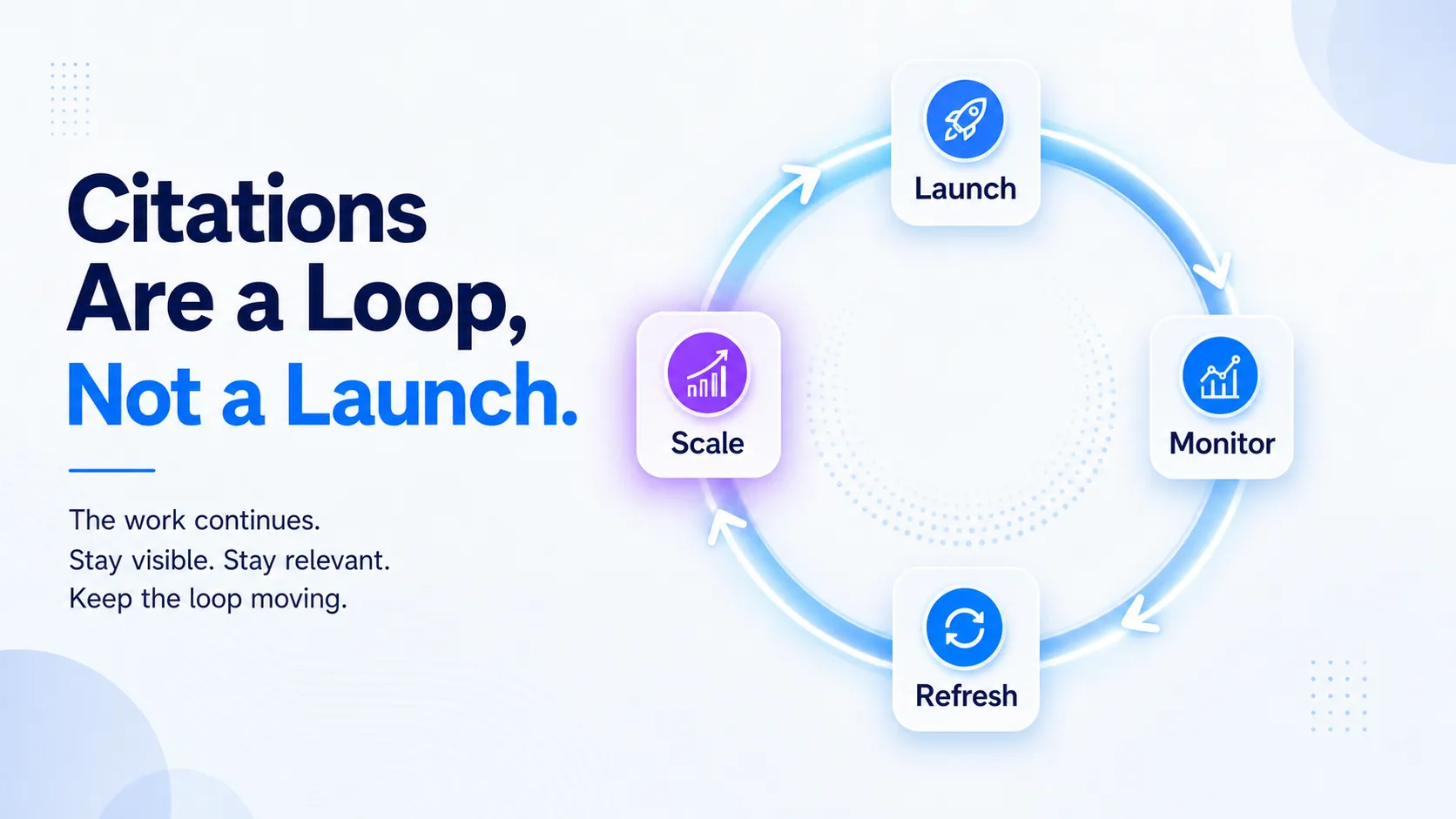
DIY wins on control. If your brand operates under strict legal review, tight messaging rules, or a compliance-heavy approval chain, keeping the work in-house means every line passes through your own people before it ships. That matters most in regulated industries, where an outside team moving fast can create more review friction than it saves. Agencies counter with operational lift: by owning production and optimization end to end, they remove the daily coordination load from your team.
Scalability separates the two paths over time. Adding more pages, more brands, more topics, or new markets multiplies the workload, and DIY hits a ceiling fast because it usually rests on one or two people. An agency adds capacity without you hiring for it. Maintenance is the quiet work that keeps citations alive: updating content, refreshing source signals, revising schema, and watching for citation drift across AI engines as answers shift.
The Risks on Each Side
DIY risk is stalled execution. The program depends on internal bandwidth, upkeep gets inconsistent, and one person leaving can take the whole system with them. Agency risk runs the other way: opacity in what gets done, generic execution that does not fit your voice, vendor lock-in, and poor results when the brief and communication are weak. Neither path is risk-free, and naming the risk you can actually manage is part of the choice.
Many teams land on a hybrid. Start with an agency for setup and the early operating system, then transition routine maintenance in-house once the playbook is proven and your team has watched it run. You buy speed and expertise upfront, then take back control of the parts that no longer need an outside hand.
| Factor | DIY in-house | Agency or managed service |
|---|---|---|
| Control | Highest; every line passes internal review | Lower; you set rules, the agency executes |
| Scalability | Caps fast on one or two people | Adds capacity without internal hiring |
| Maintenance | Risk of inconsistent upkeep | Built into the standing engagement |
| Main risk | Stalled execution, key-person dependency | Opacity, generic output, lock-in |
See where AI answers put your brand
Twenty minutes with a senior strategist: where the major engines point buyers in your category, who gets named instead of you, and a straight read on what a programme would change.
Book a strategy callWhich Option Fits Your Team Best
Internal capacity, not software price, decides which path succeeds. Match your situation to one of these scenarios and the answer gets clear fast.
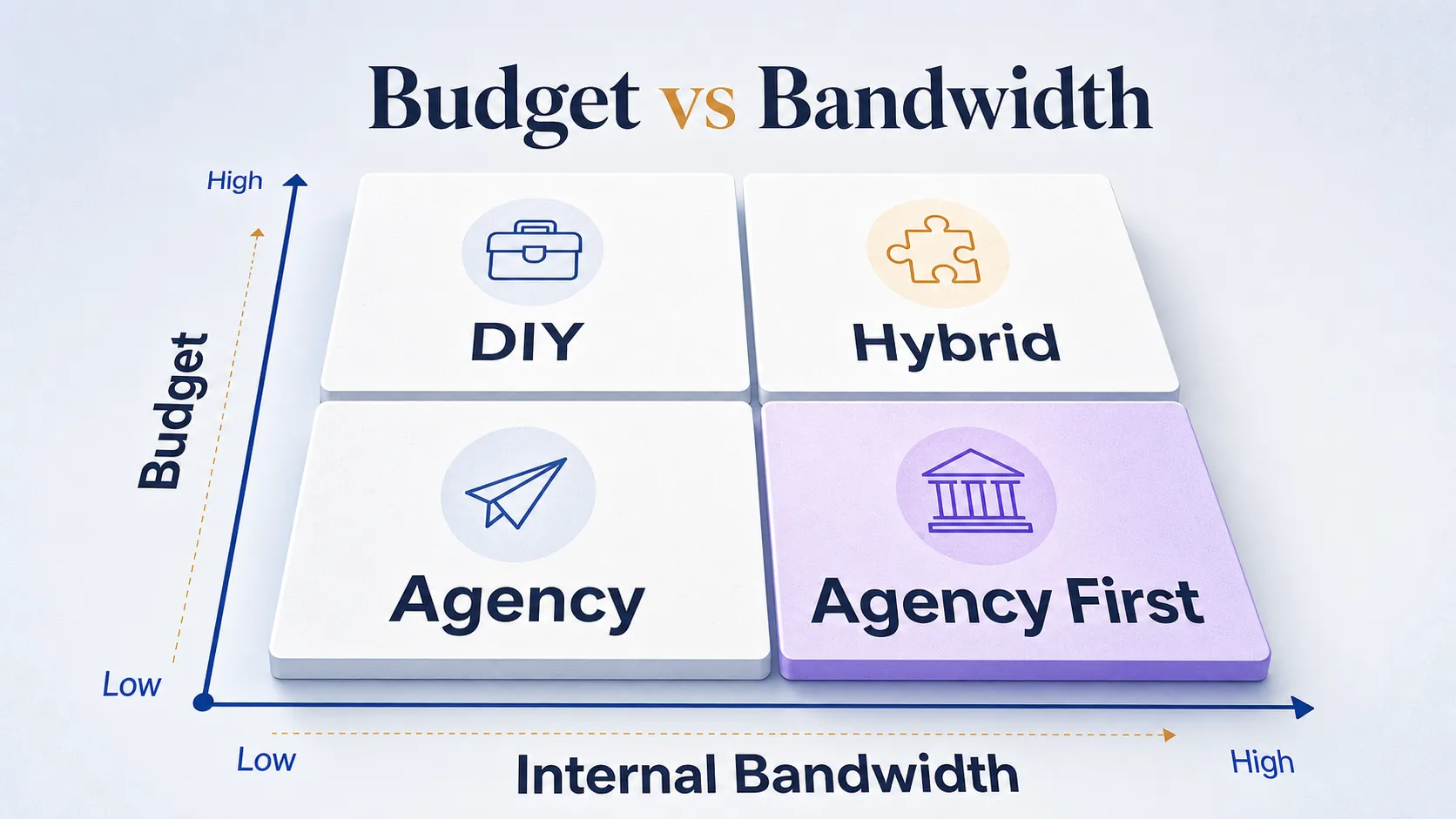
- Startups with very limited budgets and a simple category should go DIY, provided one person can own the work consistently and not abandon it after week three.
- Teams that need fast results, lack dedicated internal bandwidth, or want repeatable scale should hire an agency or managed service.
- Enterprise brands needing multi-team coordination, stronger governance, and faster operational lift should start with an agency, then decide what to internalize later.
- Mid-market teams that already have content capacity should run DIY or a hybrid, keeping control while buying strategic support where they lack depth.
- Regulated businesses should lean agency if internal compliance slows DIY to a crawl or makes execution inconsistent, while keeping final approval in-house.
The simple rule: choose DIY if control matters most, choose an agency if speed and scalability matter most, and choose a hybrid if you genuinely need both. If you are still unsure where your brand sits today, comparing how to evaluate AI citation building services sharpens the criteria, and seeing how a citation service closes a visibility gap shows what the agency path actually delivers.
The Rule That Settles Agency vs DIY AI Citations
The real tradeoff fits in one sentence: DIY minimizes cash spend and maximizes control, while an agency minimizes operational burden and usually shortens the path to results. The cheapest path is rarely the lowest-cost path once you count the labor and the delays. Before you buy a single tool or sign a single retainer, decide which one thing matters most right now: lowest upfront cost, fastest results, maximum control, or lowest maintenance burden. That answer makes the choice for you.
Frequently Asked Questions
Is it cheaper to build AI citations in-house?
Only if your internal time is genuinely free, which it almost never is. DIY looks cheaper because the tool fee is small, but once you count staff hours at a loaded rate, plus training and management time, the real cost often lands close to or above a managed retainer. The honest test is to price your team’s hours the same way you price an invoice.
How long does DIY AI citation building usually take?
Expect a slower ramp than an agency, because your team has to learn the workflow before it runs smoothly. A first citation can come quickly by chance, but a repeatable, sustainable output usually takes longer as you test source placement, content structure, and schema. The compounding gains arrive once the process is operationalized, not after a single good month.
What does an agency do differently from DIY tools?
An agency owns execution end to end, while DIY tools only hand you a dashboard. A tool tells you where you stand and drafts or monitors; it does not run strategy, place sources, prioritize the right queries, or coordinate production across channels. That difference between data and done work is the core of what you are paying for.
Can I start DIY and switch to an agency later?
Yes, and many teams do the reverse too. A common path is DIY first to learn the basics, then bringing in an agency once the work outgrows internal bandwidth. The opposite hybrid also works well: start with an agency for setup and the operating system, then transition routine maintenance back in-house once the playbook is proven.
Do AI citations work the same across ChatGPT, Perplexity, Gemini, and Google AI Overviews?
No, each engine sources answers differently, so a mention in one does not guarantee the others. Perplexity leans on fresh, well-sourced pages it cites inline, Gemini ties into Google’s index and knowledge graph, ChatGPT blends training data with live retrieval, and AI Overviews favor brands that already earn classic search trust. Earning citations broadly means covering the signals each engine reads, not optimizing for one.
Before you commit to DIY or an agency, find out where your brand actually stands. Book a strategy call to see which engines name you, which name your competitors, and where the gaps are worth closing first.