
A monthly retainer range ($5K-$25K) tells you the total program cost, but not what you’re actually paying for inside it. Digital PR pricing breaks down very differently depending on the specific deliverable, and knowing the line-item costs is what lets you judge whether a quote is fairly allocated or padded in one area. For the overall program budget range, see digital PR agency pricing.
Cost by Deliverable Type
Data Study / Original Research
The most expensive single deliverable, typically $3,000-$10,000+ depending on survey size and analysis depth. This is also the deliverable most likely to generate secondary coverage and backlinks on its own, which is why agencies front-load budget here.
Journalist Pitching and Relationship Building
Usually priced into the monthly retainer rather than sold separately, this is the ongoing labor cost — typically 40-60% of a retainer goes toward pitching time, follow-up, and relationship maintenance rather than one-off production.
Press Release Distribution
The cheapest and most commoditized line item, often $200-$1,000 per release through a wire service, though a well-pitched exclusive to one journalist (no wire distribution) frequently outperforms a wide release at a fraction of reach.
Expert Commentary / Reactive PR (HARO-style)
Lower cost per placement individually but requires consistent daily monitoring and fast turnaround, making it better suited to a retainer model than a one-off purchase.
Executive Ghostwriting for Bylines
Typically $500-$2,000 per byline article depending on publication tier and research depth required, billed either per-piece or bundled into a quarterly thought-leadership package.
Why This Breakdown Matters More Than the Total
Two agencies quoting the same $10,000/month can allocate that very differently — one weighted toward one expensive data study, another spread thin across many small reactive placements. Ask any prospective agency for this exact breakdown before signing; a vendor unwilling to itemize is usually one you should be cautious about.
What Digital PR Cost Actually Means
Digital PR cost is the total investment required to plan, create, pitch, and measure earned-media campaigns. That includes strategy, research, content or data assets, journalist outreach, follow-up, reporting, and account management. You are paying for a full process that earns editorial coverage and links, not for a list of placements you can buy off a shelf.
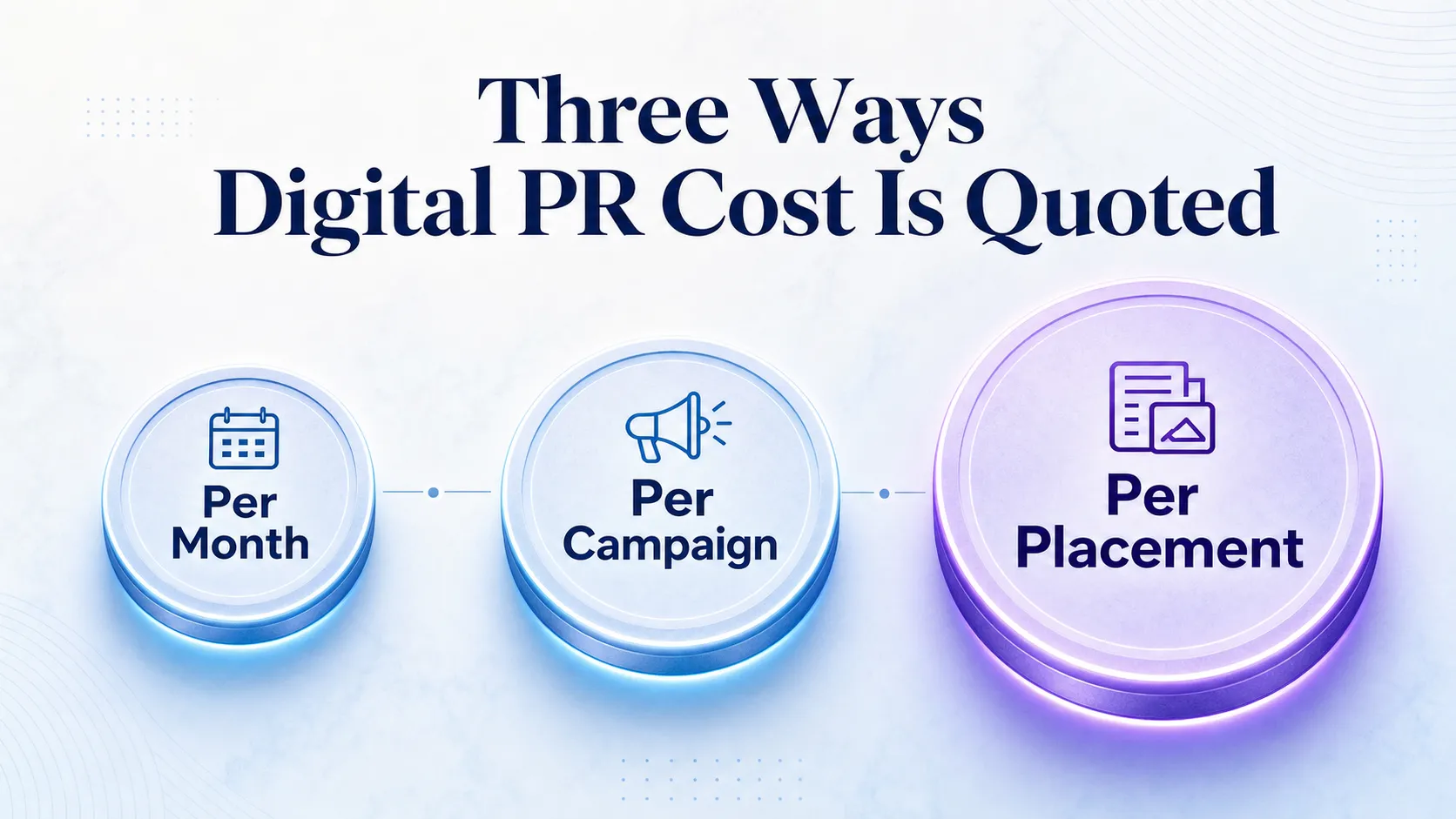
Three cost figures get confused constantly, and they are not interchangeable.
Cost Per Month
This is the retainer: a recurring fee for ongoing work. It usually starts around $5,000 and rises with campaign volume, seniority, and complexity. A monthly fee buys a working rhythm, not a fixed number of links.
Cost Per Campaign
This is a fixed fee for one defined push, like a data study or a launch story. It typically lands between $5,000 and $30,000 depending on whether the campaign needs original research and custom design.
Cost Per Placement
This is what a single piece of coverage works out to once you divide the spend by the links earned. It is a useful sanity check, not a price tag. A quote can look cheaper simply because it excludes research, creative production, or media monitoring, which means the work either does not happen or shows up as an add-on later.
One more distinction matters. Digital PR is an earned-media service, not a guaranteed-placement service. A good agency raises the probability of strong coverage through research, angles, and relationships. It does not promise that a named publication will run your story. If a quote guarantees a fixed number of placements at named outlets, you are usually looking at paid placement dressed up as editorial, which carries far less trust with both readers and search engines.
Why Your Digital PR Budget Drives the Whole Program
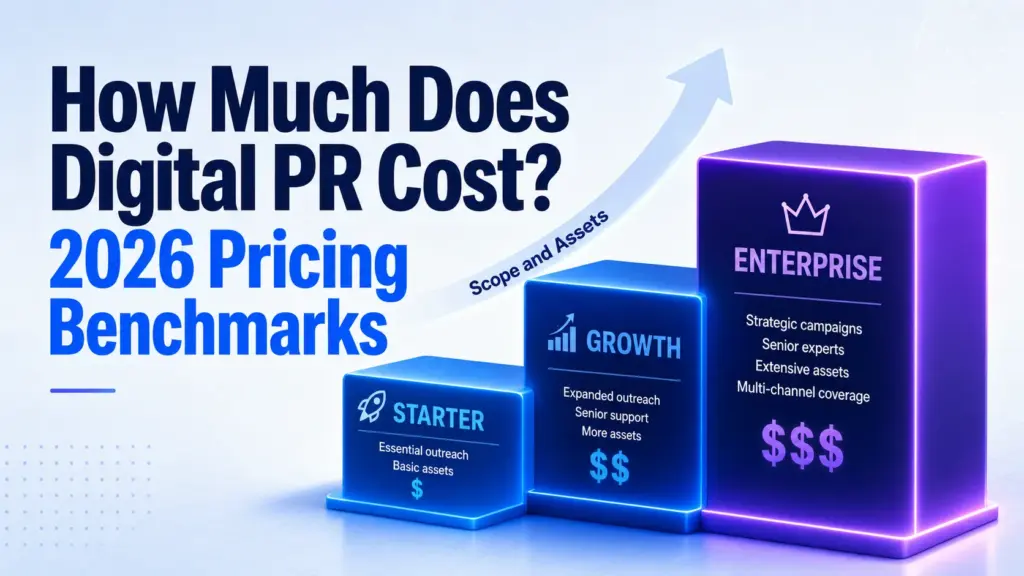
Pricing decides what kind of program you can actually run. At a starter budget, you get a lighter touch: fewer campaigns, less original creative, more reliance on stories you already have. At a growth budget, you get consistent monthly campaign work that compounds over time. The budget is not a procurement detail. It sets the ceiling on ambition.
Here is why the number matters before you ever read a proposal:
- It determines whether digital PR runs as an ongoing program or a single campaign.
- It maps directly to expected outcomes: coverage quality, brand authority, referral traffic, and visibility in search and AI-driven answers.
- It sets whether the team pitching your story is senior and experienced or junior and stretched thin.
Underbudgeting is the quiet failure mode. When the retainer is too small for the goal, the work gets thin: rushed outreach, weak creative, and inconsistent results that make the whole channel look broken. The most common buyer pattern we see is a brand asking for enterprise-level coverage on a starter retainer, then concluding digital PR does not work. The strategy was sound. The budget never matched the goal.
Earned media also feeds brand mentions that support SEO and AI visibility, so the spend should be judged against compounding authority, not just this month’s clip count.
How Digital PR Pricing Works
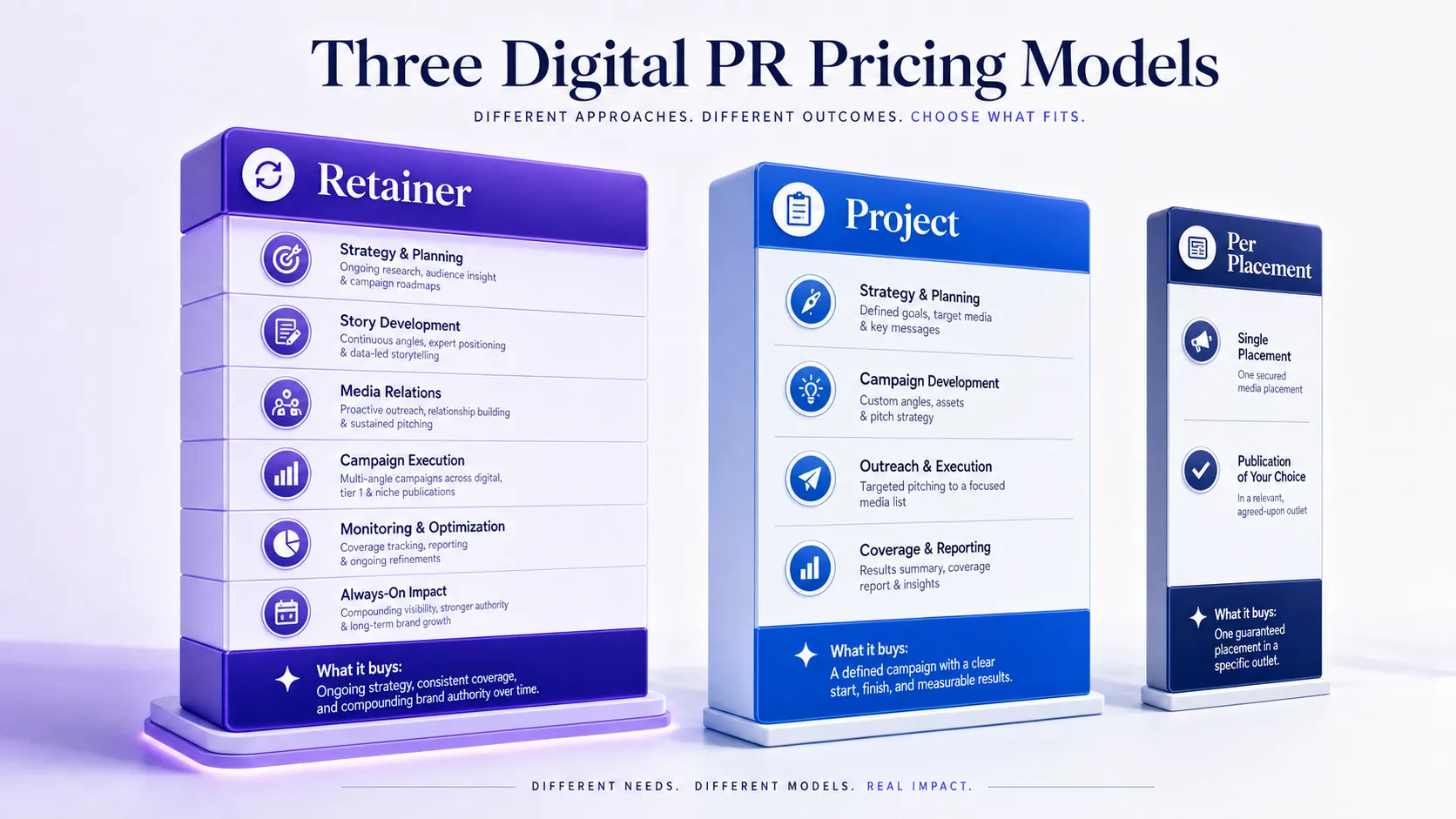
Three pricing models dominate the market: monthly retainers, project-based fees, and pay-per-placement deals. Each scopes work differently and signals something about quality.
| Model | Typical Range | What It Includes | Best Use Case |
|---|---|---|---|
| Monthly retainer | $5,000 to $40,000/mo | Strategy, ongoing pitching, media relations, content, reporting | Long-term coverage and compounding authority |
| Project-based | $5,000 to $30,000/campaign | One defined campaign, often with research and design assets | Launches, surveys, reports, one-off story pushes |
| Pay-per-placement | $200 to $1,000+ per link | Individual placements, often blurring earned and paid lines | Rarely recommended; high volume, low control |
Monthly Retainer Pricing
The retainer is the most common model and usually starts around $5,000 per month. It rises with seniority, campaign volume, and how much original asset creation the work requires. A real retainer covers strategy, pitching, media relationships, and reporting, not just a queue of outreach emails. When you compare retainers, ask what share of the fee goes to senior strategy versus junior outreach, because that split predicts coverage quality more than the headline number does.
Project-Based Pricing
Project pricing fits launches, surveys, reports, and one-off story pushes. Expect $5,000 to $30,000 depending on scope. A story you already have, lightly packaged, sits at the low end. A campaign that needs original research, data visualization, and multi-channel pitching sits at the top.
Pay-Per-Placement Pricing
Pay-per-link and pay-per-placement models charge for each piece of coverage, often $200 to $1,000 or more per link. The problem is what these deals usually are: paid placements on sites that accept money, not earned coverage a journalist chose to run. They blur the line between editorial and advertising, and that distinction is exactly what gives earned media its authority. Senior-led outreach and custom assets cost more because they increase both the time invested and the probability of genuine coverage. That is the trade you are paying for.
What Makes One Digital PR Quote Cost More Than Another
Two proposals for the same brand can differ by thousands of dollars a month. The gap comes from how much original work each scope contains. These are the drivers that move the number.
Strategy Depth
Competitive research, angle development, and story positioning take senior time. A campaign built on a sharp, defensible angle costs more than a generic press release because the thinking behind it is where coverage is won or lost.
Research and Original Data
Original surveys, data scraping, and custom analysis raise production costs fast. Data-led campaigns earn the strongest coverage precisely because journalists want a number they cannot get elsewhere, and producing that number is real labor.
Content and Design Assets
Reports, landing pages, infographics, and data visualizations add time and budget. A text pitch is cheap. A designed interactive report that a newsroom wants to embed is not. The asset is often what separates a placement from a polite no.
Outreach and Journalist Relationships
Building media lists, writing tailored pitches, and following up takes experienced hands. Pitching publications AI models and journalists do not actually read is wasted effort. Checking the right target list first is part of what a senior team is paid for.
Reporting and Measurement
Media monitoring, link tracking, and performance summaries are part of the real cost, not a free extra. If a quote looks cheap, check whether reporting is included or billed separately, because a proper media monitoring report is how you prove the spend worked.
Campaign Type
Reactive PR, where you respond fast to news, is leaner because it rides existing momentum. Data-led campaigns and thought leadership cost more because they create the story from scratch. Always-on outreach sits in the middle. As a rule of thumb, original research plus custom design pushes a campaign above the midpoint of the market range.
What Digital PR Should Cost by Business Size
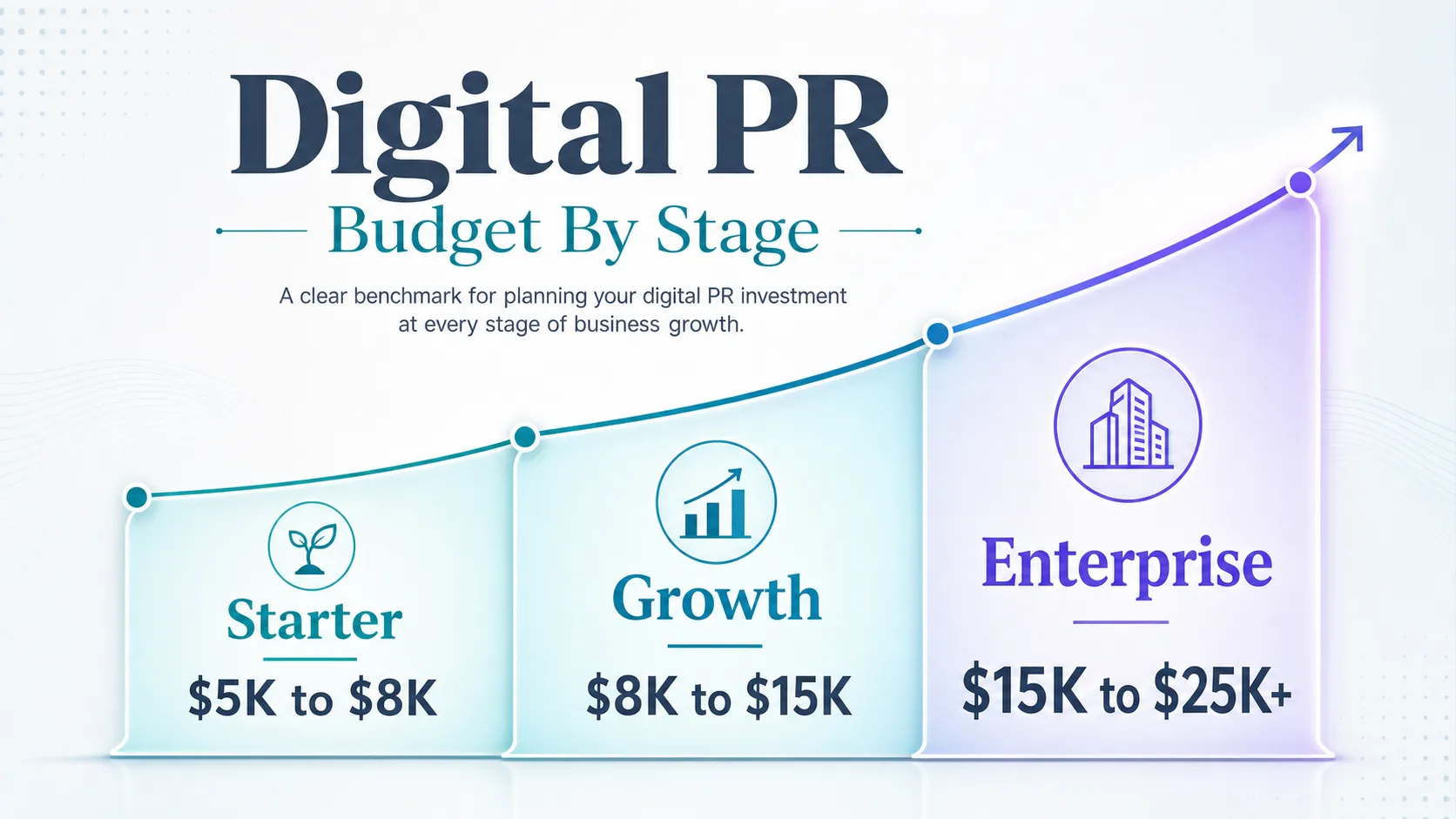
Use these benchmarks to map a quote to your own stage. The cheapest retainers only work when you already have strong stories, fast internal approvals, and assets ready to pitch.
| Stage | Monthly Budget | What It Buys |
|---|---|---|
| Starter | $5,000 to $8,000 | A strong existing story, lighter outreach, fewer campaigns |
| Growth | $8,000 to $15,000 | Consistent monthly campaign work and steady coverage |
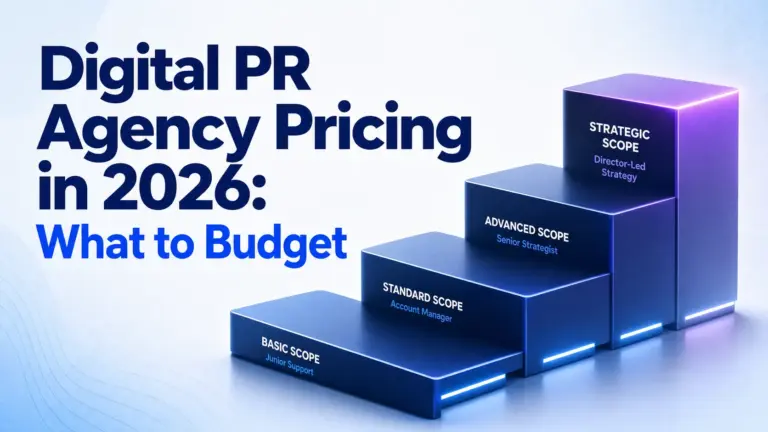
| Enterprise or competitive | $15,000 to $25,000+ | Senior strategy, custom assets, heavier outreach |
| One-off campaign | $8,000 to $30,000 | Original research, design, and multi-channel pitching |
Whichever tier fits, budget for at least 3 to 4 months before you judge performance. Digital PR compounds: relationships warm up, angles refine, and coverage builds on coverage. A single month is a sample size too small to read. If you want a deeper breakdown of how agencies structure these tiers, the guide to digital PR agency pricing walks through what each band typically includes.
Common Mistakes When Reading a Digital PR Quote
Most buyers misjudge value by reading the wrong number. These are the misreads that cost the most.
Treating Digital PR as Just Link Building
Links are an outcome of digital PR, not the whole job. The work is earning editorial coverage that builds authority and visibility. Brand mentions without links still matter, especially for how AI engines surface your brand. Pricing the service as pure link acquisition undervalues what you are actually buying.
Expecting Guaranteed Coverage
No reputable agency guarantees a fixed number of placements at named outlets. Earned media depends on what journalists choose to run. A guarantee is a signal you are buying paid placement, not earned coverage, and that distinction changes the value entirely.
Comparing Agencies on Monthly Fee Alone
A $6,000 retainer and a $12,000 retainer can scope completely different work. One might be junior outreach on existing stories. The other might be senior strategy with original research. The fee only means something next to the scope and the seniority behind it.
Missing the Hidden Costs
Research, design revisions, media monitoring, and extra rounds of pitching can all show up as add-ons. A low headline quote that bills these separately often ends up more expensive than a higher quote that bundles them. Read what the fee covers before you compare two numbers.
Judging Value on Cost Per Link Alone
Cost per link is a tempting metric because it is simple. It is also misleading when it ignores coverage quality and publication authority. One link from a tier-one publication can outweigh ten from low-trust sites, both for readers and for how search and AI systems weigh your brand. A cheap cost per link on weak placements is not a deal. It is a different, lower-value product.
Matching Your Budget to the Right Scope
Digital PR usually costs a few thousand dollars a month, with most brands landing in the $5,000 to $15,000 range. The right number for you depends on story strength, campaign complexity, competition, and the seniority of the team doing the work. The decision rule is simple: if your scope is light and your stories are ready, expect the lower end.
If you need original assets and high-authority coverage in a competitive market, expect the upper end. Before you sign anything, ask what is included, how success is measured, and whether the quote covers research, content, outreach, and reporting. The fair price is the one matched to scope, never the lowest headline number.
If you’re budgeting for digital PR, use these ranges to sanity-check any quote before you sign, and see where your brand stands in AI search while you plan the spend.
Frequently Asked Questions
How much does a digital PR agency cost per month?
A digital PR agency usually costs $5,000 to $15,000 per month, with retainers starting around $5,000 and rising past $15,000 for competitive niches or enterprise programs. The figure scales with campaign volume, the seniority of the team, and how much original research and design each campaign needs. Brands with strong existing stories and lighter outreach needs can sit near the bottom of that range.
What is included in a digital PR retainer?
A digital PR retainer typically covers strategy, story development, content or data assets, journalist outreach, follow-up, and reporting. A genuine retainer pays for senior thinking and media relationships, not just a queue of outreach emails. If a quote excludes research, creative production, or media monitoring, expect those to appear as separate add-on costs later.
What is the average cost per link in digital PR?
Average cost per link in digital PR sits around $597 across the market, ranging from roughly $150 for guest posting to $800 for large data-led campaigns. The metric is useful as a sanity check but increasingly outdated on its own, because it ignores coverage quality and publication authority. One link from a high-trust outlet can be worth more than ten from low-value sites.
Is digital PR worth the cost?
Digital PR is worth the cost when you have a story worth telling and a market where authoritative coverage is hard to earn any other way. The value compounds: coverage builds authority, authority strengthens search and AI visibility, and that visibility feeds future coverage. It is rarely worth the spend when a brand has no real story and tries to manufacture coverage on a starter budget.
How long does digital PR take to work?
Digital PR usually takes 3 to 4 months to show meaningful results. The first month builds lists, angles, and relationships; coverage and links accumulate from there. Judging a program on a single month is reading a sample size too small to be reliable, because earned media compounds rather than spiking on demand.