
Manual link building is still one of the most reliable ways to earn relevant backlinks when quality matters more than volume. It means a human researches each prospect, judges whether the site is a real fit, and earns the link through editorial review rather than a bot or a bulk submission.
This article skips the vendor pitch and the tool roundup. You’ll get a plain-English definition, a clear contrast with automation, the high-level workflow, the main tactics, and the mistakes that quietly waste most campaigns.
Key Takeaways
- Manual means a human chooses the prospect, writes the pitch, and earns the placement; it’s a judgment process, not just a non-automated one.
- Manual doesn’t automatically mean safe: an irrelevant site, a paid placement, or a forced anchor is still a weak or risky link.
- Topical relevance beats raw authority; a mid-authority page in your niche often outweighs a high-authority page with no topical fit.
- The five-stage workflow is prospect, evaluate, find the contact, personalize, then secure and monitor.
- Digital PR tends to land the strongest placements when you have a real story; unlinked mention reclamation is the easiest win when your brand is already named without links.
- Over-personalizing volume and under-personalizing pitches are the two failure modes that quietly sink most campaigns.
What Manual Link Building Is
Manual link building is the practice of earning backlinks through human-led research, outreach, and editorial judgment, where a person decides which sites are worth pursuing and persuades the publisher to add the link. The “manual” part isn’t about avoiding software. It’s about who makes the decisions.
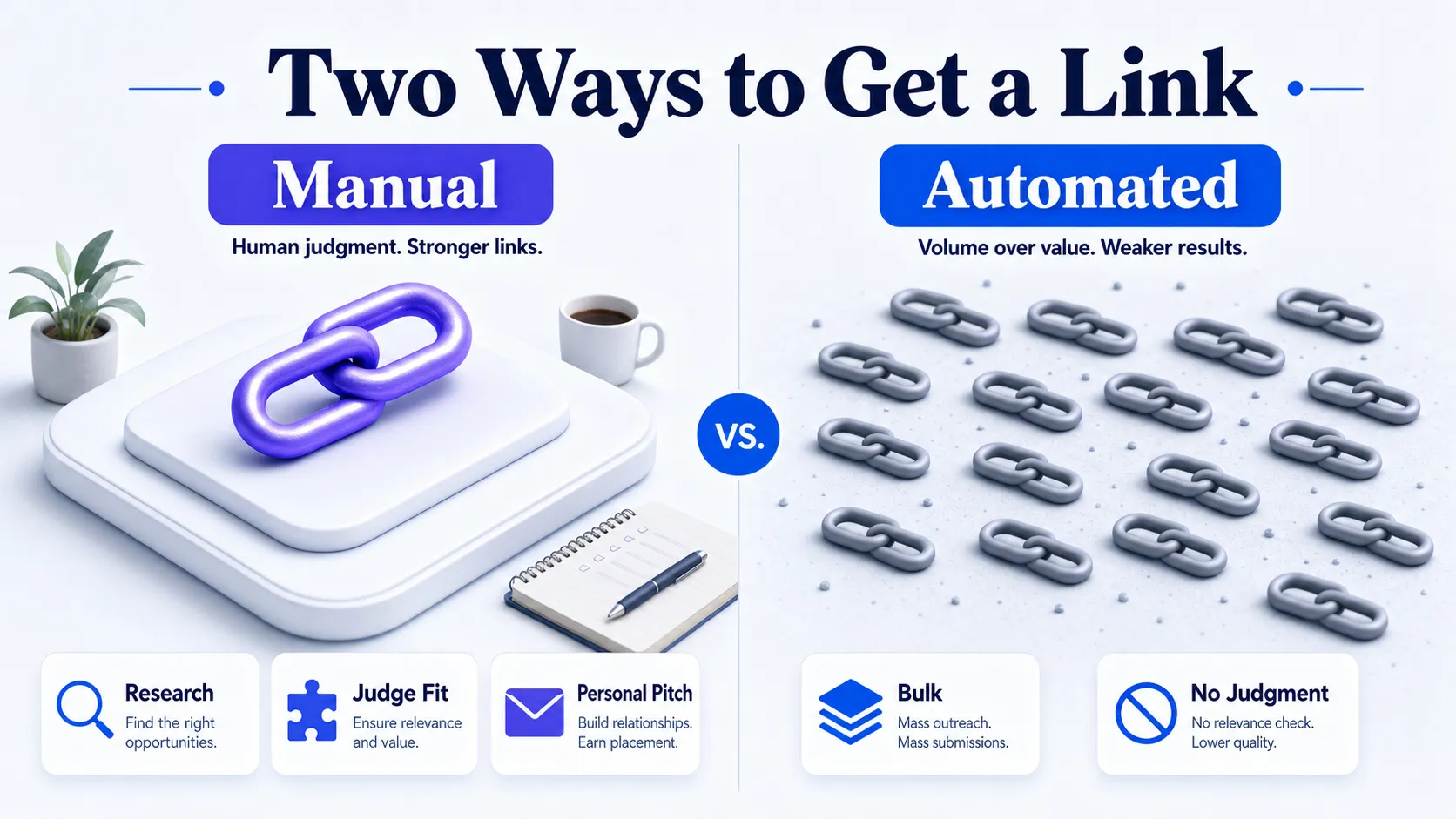
A human leads the prospecting, so the list is filtered by relevance before any email goes out. A human writes the outreach, so the pitch speaks to a specific editor and a specific page. And a human waits on approval, because the publisher chooses whether the link earns a place in their content.
That separates it cleanly from automated link building, mass directory submissions, comment-section drops, and the other shortcuts that generate links at scale without anyone checking fit. Those tactics optimize for count. Manual outreach optimizes for context.
One caution worth stating early: manual doesn’t automatically mean safe or white-hat. A human can still choose an irrelevant site, pay for a placement, or force an anchor that looks unnatural. The method is human-led, but the judgment behind it is what makes the link clean.
A simple example makes it concrete. You publish original research, you email an editor who covers that topic, and after reviewing it they add a contextual link inside an existing article. The practitioner rule holds here: if a human didn’t choose the prospect, write the pitch, and earn the placement, it isn’t truly manual.
Why Manual Link Building Matters
Manual link building matters because it gives you control over quality before a single link exists, which automation cannot offer. You reject weak placements during prospecting instead of cleaning up a messy profile later. That front-loaded judgment is the whole point.
Quality control is the first benefit. When a person reviews each prospect, off-topic sites, thin content farms, and pages with no real audience get filtered out before outreach. You spend effort only where a link could plausibly help.
Topical relevance is where manual outreach earns its keep. A handful of links from sites that actually cover your subject signal more to search engines than a larger pile of unrelated placements. Modern ranking leans on relevance and context, not raw link count, so a relevant editorial link inside a related article carries weight that a random sidebar link never will.
Relationships are the compounding part. A genuine pitch that lands once often opens the door to repeat coverage, expert quotes, and future mentions.
You’re not buying a one-off link. You’re building a contact who may cite you again, which is closer to editorial relationship management than mass outreach.
The payoff extends past rankings. Relevant editorial links bring referral traffic from readers who already care about your topic, strengthen your brand’s presence where your buyers spend time, and support the kind of authority that helps you get named in search results. If you are weighing this against other channels, our breakdown of link building versus content marketing shows where each one pulls weight.
How Manual Link Building Works
Manual link building works as a five-stage workflow: prospect relevant sites, evaluate link quality, find the right contact, personalize the outreach, then secure and monitor the placement. Each stage filters the next, so the effort concentrates where a link can realistically happen.
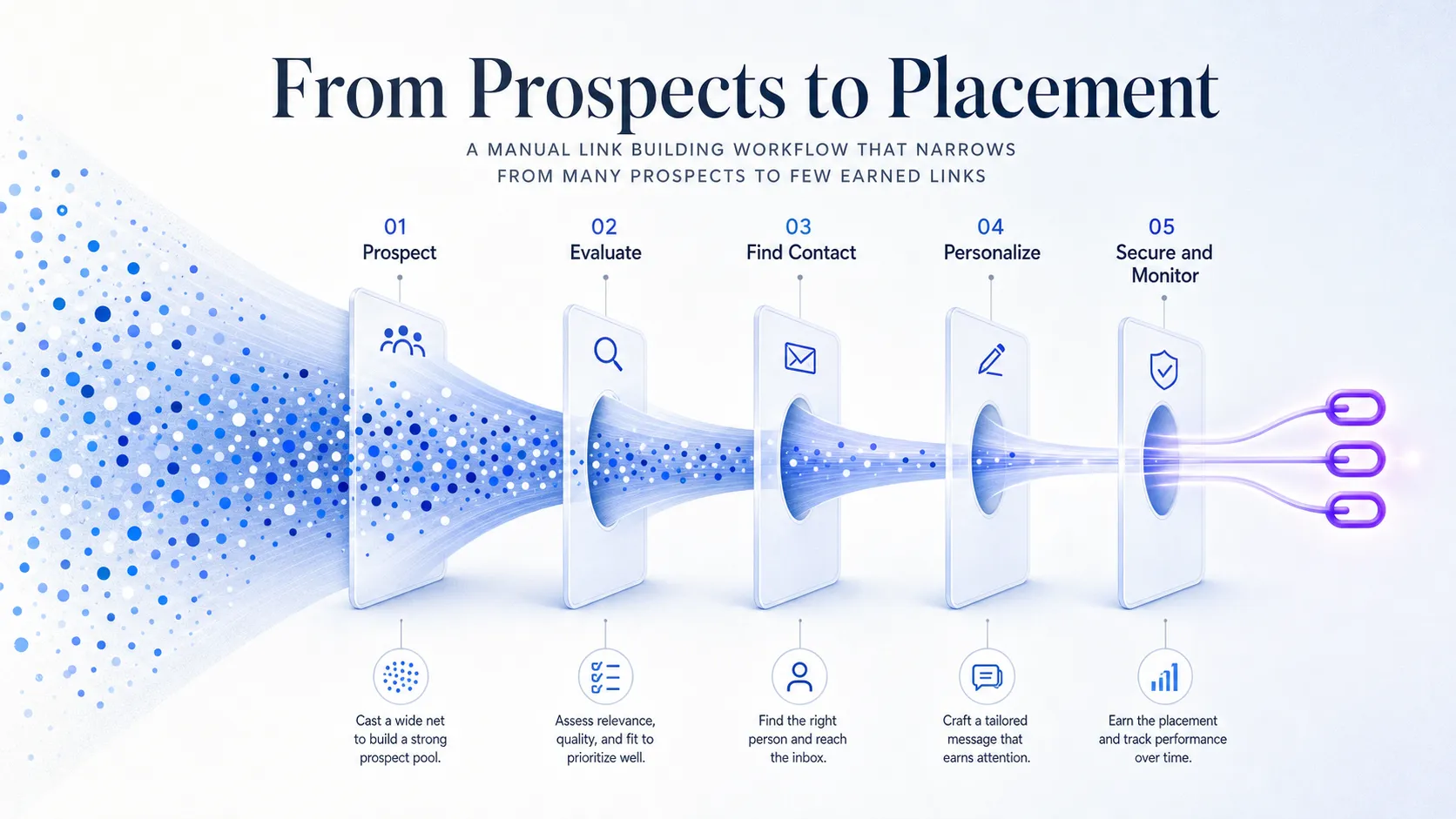
- Prospect relevant websites and narrow the list to pages that fit your topic, audience, and the context where a link would belong.
- Evaluate link quality before outreach by checking relevance, editorial standards, and whether the page can realistically add value to readers.
- Find the right contact, usually an editor, content lead, journalist, or site owner who can actually approve a change.
- Personalize the outreach so the pitch explains why the link or mention helps their audience, not why it helps your rankings.
- Secure the placement, confirm the link is live, then monitor it so you catch removals or lost mentions later.
The biggest time sink isn’t sending the email. It’s qualifying prospects: pulling a clean list of genuinely relevant, link-worthy pages takes far longer than writing the pitch, and skipping that work is why so many campaigns post low response rates.
A reply-worthy campaign starts with a tight list, which our guide to running a link building outreach campaign walks through in detail.
Key Components and Main Types of Manual Link Building
The main types of manual link building each solve a different problem, so the right one depends on what you have: expertise, news, existing mentions, or resource-worthy content. There is no single best tactic. There is a best fit for your situation.
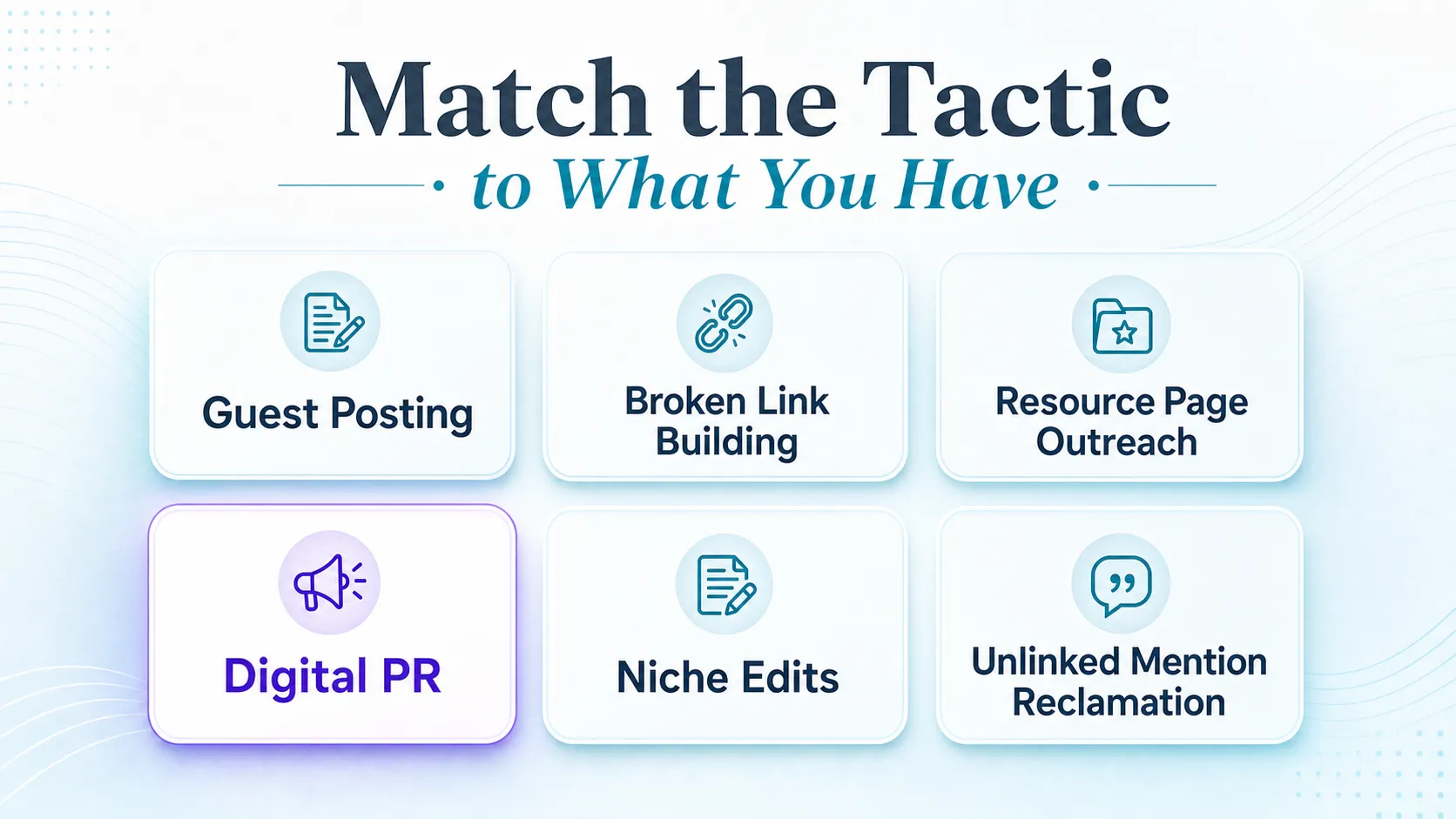
| Tactic | What it is | Best use case | Main caution |
|---|---|---|---|
| Guest posting | Contributing original content to another site in exchange for a contextual backlink | You have genuine expertise that adds something useful to their readers | Thin, scaled guest posts on low-quality sites carry little value |
| Broken link building | Finding dead outbound links on relevant pages and suggesting your resource as the replacement | The site already curates resource lists or reference pages | Low conversion; most prospects never reply or fix the link |
| Resource page outreach | Earning a spot on curated lists, tool roundups, or educational pages | You have a genuinely list-worthy resource readers would use | Fit comes first; forcing onto an unrelated list reads as spam |
| Digital PR | Earning editorial coverage through newsworthy stories, original data, or expert commentary | Your brand has something timely or quotable to say | Needs a real story; weak angles get ignored by journalists |
| Niche edits | Earning a contextual link inside an existing, already-published article | A relevant page would genuinely benefit from the addition | Relevance and page quality matter more than forcing the insert |
| Unlinked mention reclamation | Turning existing brand mentions into backlinks by asking the publisher to link | Your brand is already named across the web without links | Only works where the mention exists and a link fits naturally |
Guest posting works when your knowledge can carry an article on its own. Broken link building works when a site already points readers to outside resources and one of those links has died. Resource page outreach is fit-first: the page already exists to send readers to useful sources, and you either belong on it or you don’t.
Digital PR sits apart because it earns coverage rather than asks for a link, which is why it tends to land the strongest placements. If you are deciding between earning editorial mentions and traditional media work, our look at digital PR versus traditional PR draws the line clearly.
Niche edits and guest posting often get confused, since both produce contextual links, but the mechanics differ: one adds a link to existing content, the other contributes new content. Our comparison of guest posting versus niche edits explains when each one makes sense.
And unlinked mention reclamation is the lowest-effort win when it applies, because the recognition already exists; you’re just asking for the link. Our guide to turning unlinked brand mentions into links covers how to find and pitch them.
Common Mistakes and Misconceptions
Most manual link building campaigns fail for the same reason: they chase easy placements instead of editorial fit. The mistakes below are predictable, and each one is fixable once you name it.
Assuming Manual Means Safe
Manual outreach isn’t automatically penalty-proof. A person can still choose an irrelevant site, accept a low-quality page, or arrange a paid drop.
The method protects you only when the judgment behind it is sound. Treat “a human did it” as a starting point, not a guarantee.
Believing More Outreach Equals Better Results
Sending more emails doesn’t produce more links once personalization drops. High-volume blasts hurt deliverability, train spam filters against your domain, and lower response rates across the board. A smaller list of well-researched, genuinely personalized pitches beats a mass send almost every time.
Judging Quality by Authority Metrics Alone
Domain authority and similar scores don’t define a link’s value on their own. A high-authority page that has nothing to do with your topic sends a weaker signal than a mid-authority page squarely in your niche. Relevance and editorial context belong in the quality judgment, not just a single number.
Targeting Sites That Do Not Fit
Irrelevant targeting wastes effort twice. The link, if you get it, does little, and the off-topic pitch lowers your response rate because editors can tell you didn’t read their site. Filtering for fit before outreach is the cheapest improvement you can make.
Over-Optimizing Anchor Text
Stuffing exact-match keywords into your anchors makes a profile look unnatural even when every link was earned manually. Natural editorial links use varied, contextual anchors, including your brand name and plain phrases. If your anchor profile reads like a keyword list, the manual work behind it stops mattering.
Confusing Manual Link Building With Buying Links
Paying for placements is a different risk category, not a manual tactic. Transactional link swaps and paid drops can trigger penalties regardless of how personal the email felt. Manual link building earns links through value and editorial review; buying them skips that review entirely.
FAQ About Manual Link Building
What is manual link building?
Manual link building is earning backlinks through human-led research and outreach, where a person picks relevant prospects, pitches them, and earns the link through editorial review rather than automation or bulk submission. The human judgment at each step is what separates it from scaled link tactics.
How is manual link building different from automated link building?
Manual link building puts a human in charge of which sites to target, what to say, and whether a placement is worth pursuing. Automated link building generates links at scale with software and no fit check, which produces volume but little relevance. The difference is judgment, not whether tools are involved.
Is manual link building safe for SEO?
Manual link building is safer than automation, but it is not automatically safe. A human can still target irrelevant sites, over-optimize anchors, or pay for placements, all of which carry risk. Say you land ten links on unrelated, low-quality blogs through personal emails: those are manual and still weak. Safety comes from relevance and editorial fit, not from the outreach being human.
How long does manual link building take?
Manual link building is slower than automation because qualifying prospects and personalizing outreach take real time, and editors reply on their own schedule. Most of the work sits in building a tight, relevant list before any email goes out. Expect weeks to see live links, not days, which is the cost of earning placements that actually hold value.
Which manual link building tactic works best?
The best tactic depends on what you have to offer. Digital PR tends to land the strongest placements when you have a real story or original data, while guest posting fits when your expertise can carry an article. Unlinked mention reclamation is the easiest win when your brand is already named without links. Match the tactic to your assets rather than chasing one method everywhere.
Manual Link Building as Relationship Work
Manual link building is a human-led approach to earning backlinks through research, outreach, and editorial judgment, and it works best when relevance and context come before scale. The tactics differ, but they all reward the same thing: a tight prospect list and a pitch that respects the publisher’s audience.
Strong manual link building looks less like mass outreach and more like editorial relationship management, where one good contact is worth more than a hundred cold sends. If you want the tactical version next, read our tested link building methods and practitioner’s guide to link building in 2026.
If you’d rather have this research and outreach done for you, talk to our link-building team about which prospects are worth pursuing in your category.