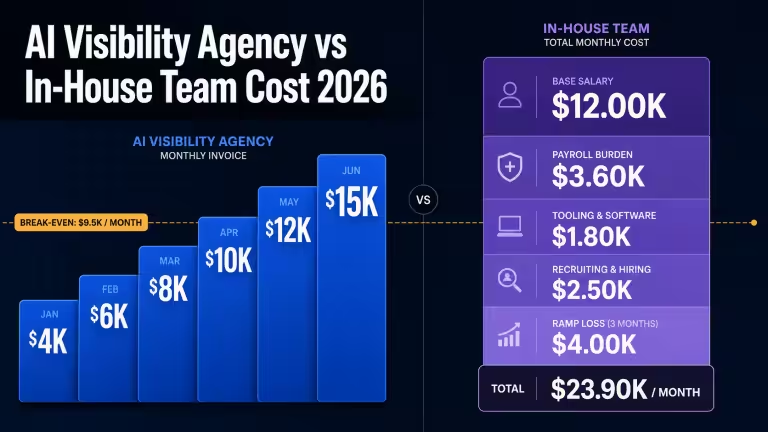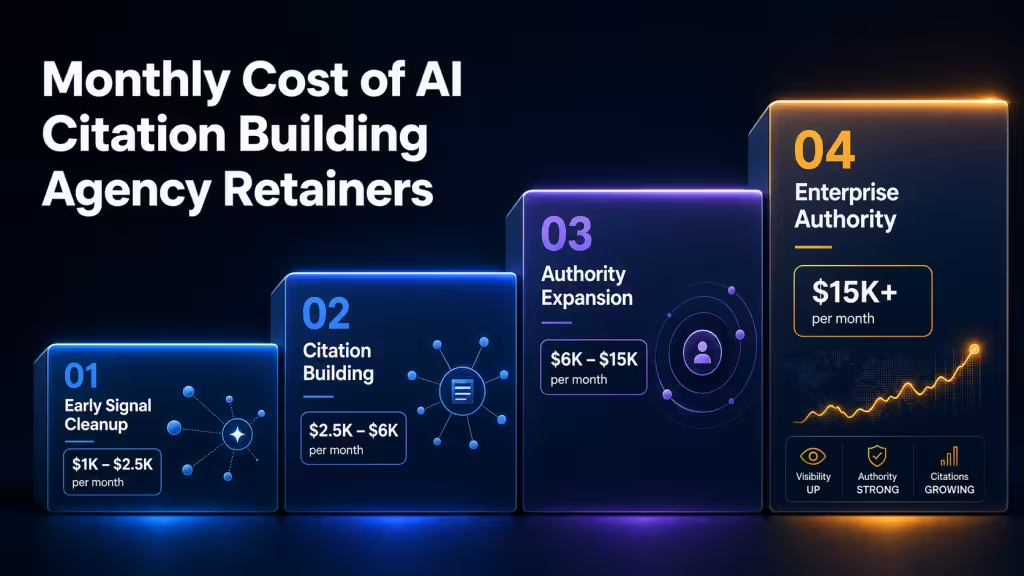

The monthly cost of AI citation building agency support is not one flat market rate. Most serious B2B programs fall between $3,500 and $12,000 per month, while enterprise authority programs often reach $20,000 or more. The right number depends on citation gap size, content production, publication access, technical cleanup, and measurement depth. If a proposal costs less than the work required to build durable citations, you’re buying activity instead of visibility.
Monthly Cost Of AI Citation Building Agency Work By Scope
AI citation building pricing changes most when the agency moves from tracking mentions to actively building the sources that large language models, or LLMs, can cite.
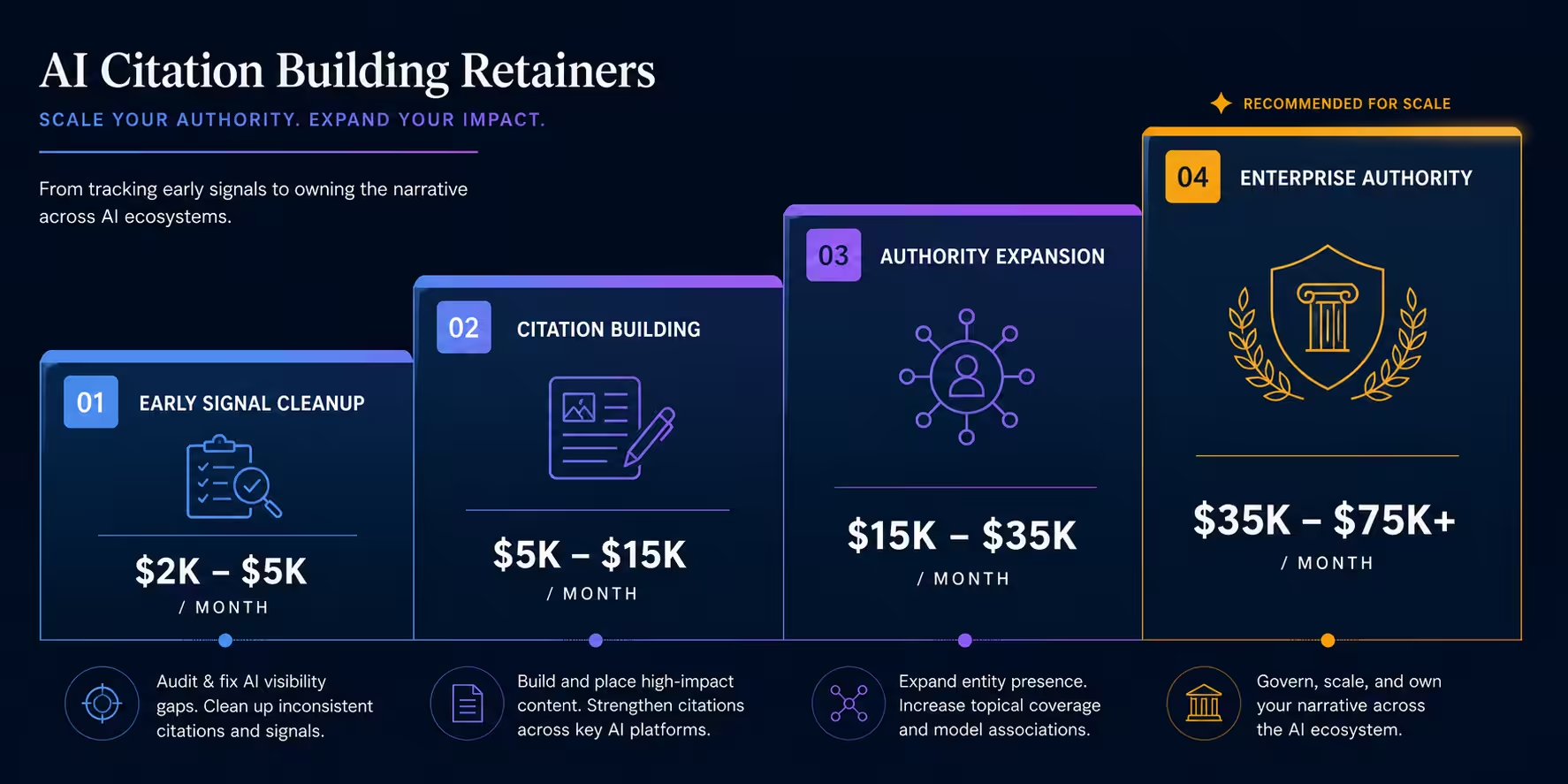
A small program tracks prompts, fixes weak entity signals, and earns a limited number of third-party mentions. A larger program builds a citation profile across editorial sources, comparison pages, industry pages, founder expertise, and source-ready owned content.
| Monthly Budget | Best Fit | Typical Work Included | What You Should Expect |
|---|---|---|---|
| $2,500 to $4,000 | Early startup or narrow category | Prompt tracking, citation audit, owned content fixes, light outreach | Cleaner signals and early visibility movement |
| $4,000 to $8,000 | Funded startup or B2B service brand | Authority mapping, source creation, targeted publication work, competitor monitoring | Measurable citation growth across priority prompts |
| $8,000 to $12,000 | Growth-stage SaaS or multi-product company | Content refreshes, digital PR support, expert pages, comparison assets, recurring reporting | Stronger category presence and more stable AI visibility |
| $12,000 to $25,000+ | Enterprise or regulated market | Multi-market citation building, governance, executive thought leadership, technical entity work | Compounding authority across several buying journeys |
Those ranges apply to ongoing retainers, not one-time audits. A one-time audit helps you see the gap, but it doesn’t build enough third-party proof to change how AI systems describe your brand.
What You’re Paying For In A Citation Building Retainer
You’re paying for source development, not just mention tracking.
A strong AI citation retainer combines research, content, outreach, technical cleanup, and measurement. The work matters because AI answers pull from sources that look clear, current, consistent, and useful for the question being asked.
In campaign reviews, we see the same pattern: brands with scattered messaging get mentioned less consistently than brands with clear category pages, named experts, comparison assets, and outside citations. That gap shows up even when both brands have similar SEO traffic.
Citation Gap Analysis
A citation gap analysis shows where competitors appear in AI answers and where your brand is missing.
The useful version goes beyond counting mentions. It groups prompts by buyer intent, maps cited sources, labels sentiment, and identifies which assets AI systems appear to trust for each topic.
Entity Authority Work
Entity authority is the confidence search and AI systems build around who your brand is, what category you belong to, and what you’re known for.
This work includes clearer company descriptions, consistent product naming, expert profiles, structured pages, and better internal links. It also includes source alignment across third-party mentions so your brand isn’t described five different ways.
Owned Source Creation
Owned sources give AI systems a clear place to verify your positioning.
These assets include category pages, comparison pages, research posts, answer-first explainers, and expert-authored content. If your owned content is vague, third-party citations carry less weight because the model has no stable source to reconcile against.
Third-Party Citation Building
Third-party citation building earns mentions on sources your buyers and AI systems already consult.
That can include editorial articles, industry roundups, partner pages, niche directories, community references, and review profiles. The best work prioritizes relevance over raw volume.
Measurement And Reporting
Reporting proves whether citations are changing the answers buyers see.
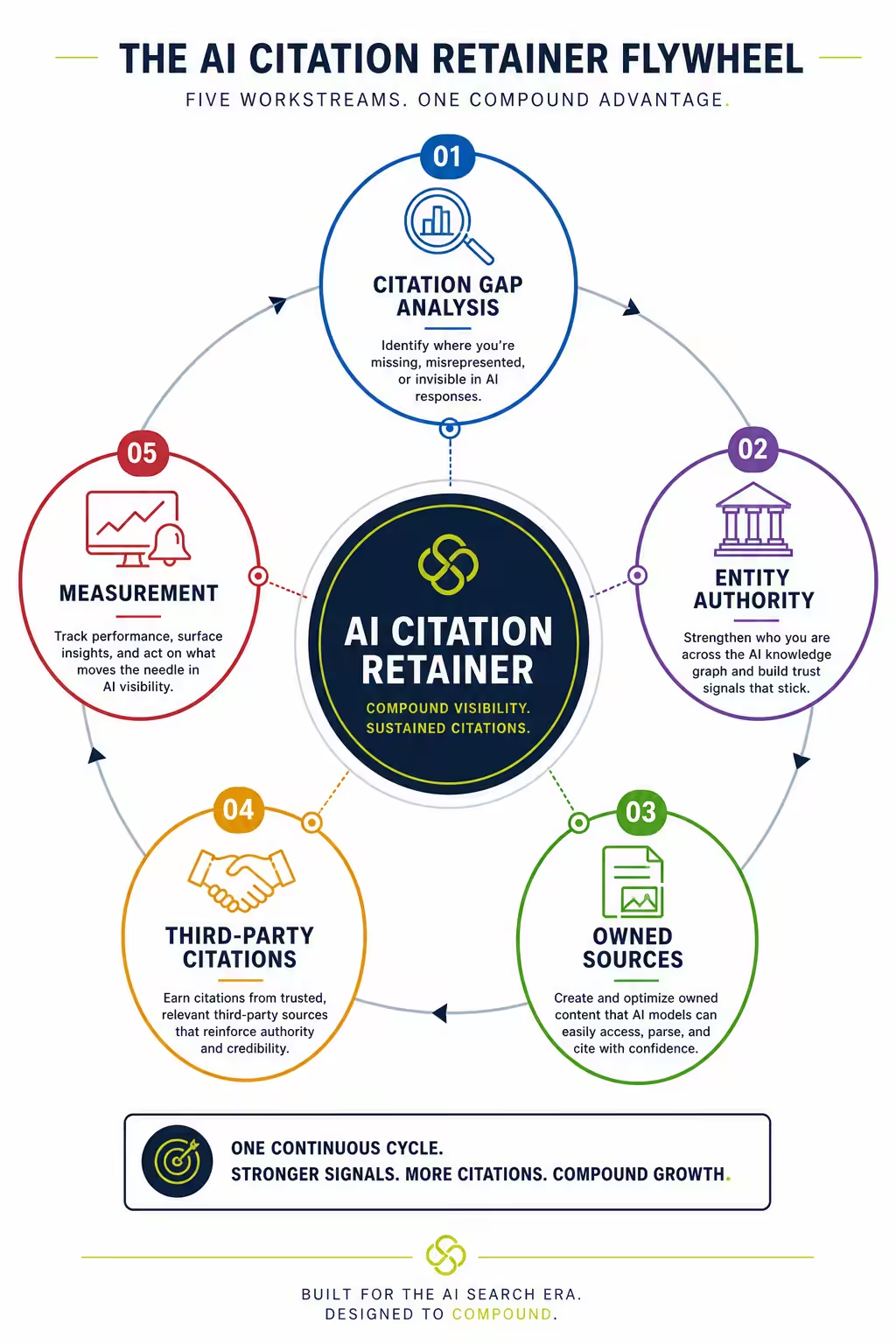
Your report should track prompt coverage, competitor share, source overlap, answer sentiment, and visibility changes by platform. For a deeper measurement setup, use the framework in AI Visibility vs SEO Metrics.
Why Cheap Citation Building Usually Costs More Later
Low-cost citation building fails when it treats AI visibility as a list of placements instead of a source quality problem.
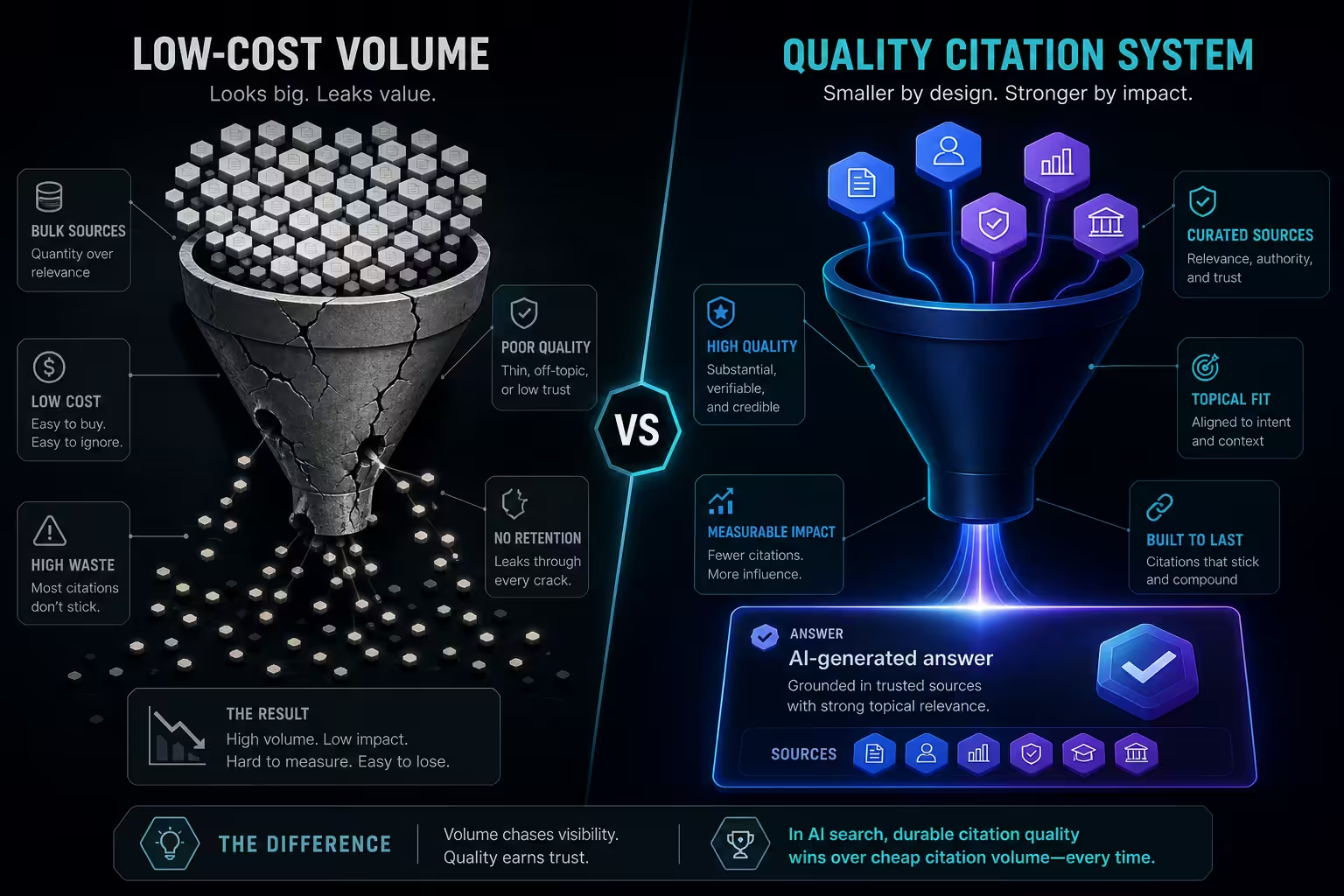
A cheap program often produces scattered mentions with weak context. That creates noise. It doesn’t strengthen the sources AI systems use to answer buyer questions.
The hidden cost is cleanup. We’ve seen teams inherit old citation work that mentioned outdated products, dead taglines, wrong locations, or categories they had already left. Fixing those signals takes longer than building the right ones the first time.
| If The Proposal Emphasizes | Ask This Question | Likely Risk |
|---|---|---|
| Number of mentions only | Which prompts and sources will those mentions influence? | Volume without buyer relevance |
| Guaranteed AI recommendations | What exactly is guaranteed? | Overpromising in a channel no agency controls |
| One-time citation blast | How will the source profile stay current? | Fast decay after the first month |
| No source review process | Who approves where our brand appears? | Brand safety and relevance problems |
| No competitor benchmark | What are we trying to outrank or replace? | No clear path to share growth |
The better question isn’t “How many citations do I get?” Ask what those citations make easier for AI systems to understand, verify, and repeat.
How To Match Budget To Your Current AI Visibility Gap
Your budget should follow the gap between how buyers ask questions and how often your brand appears in credible answers.
Start with three inputs: priority prompts, competitor visibility, and source strength. If your competitors appear across buying questions and you appear only for branded prompts, a small monitoring retainer won’t close the gap.
BrandMentions usually starts this kind of work with an AI visibility audit because the same monthly spend can be wasted or powerful depending on the gap. See the deeper process in our audit methodology.
Use A Smaller Retainer When The Category Is Narrow
A smaller retainer works when you sell into a focused niche and your competitors don’t have a deep source profile.
This budget should improve owned pages, build a short list of relevant citations, and track prompt movement. It should not pretend to build category leadership in a crowded market.
Use A Mid-Range Retainer When Competitors Already Own The Answers
A mid-range retainer fits when competitors show up in comparison prompts, shortlist prompts, and problem-solution prompts.
This level requires more source creation and more third-party coverage. It also requires tighter messaging because weak positioning gets repeated poorly by AI systems.
Use An Enterprise Retainer When The Risk Of Being Misdescribed Is High
An enterprise retainer fits when accuracy, compliance, or category framing affects revenue.
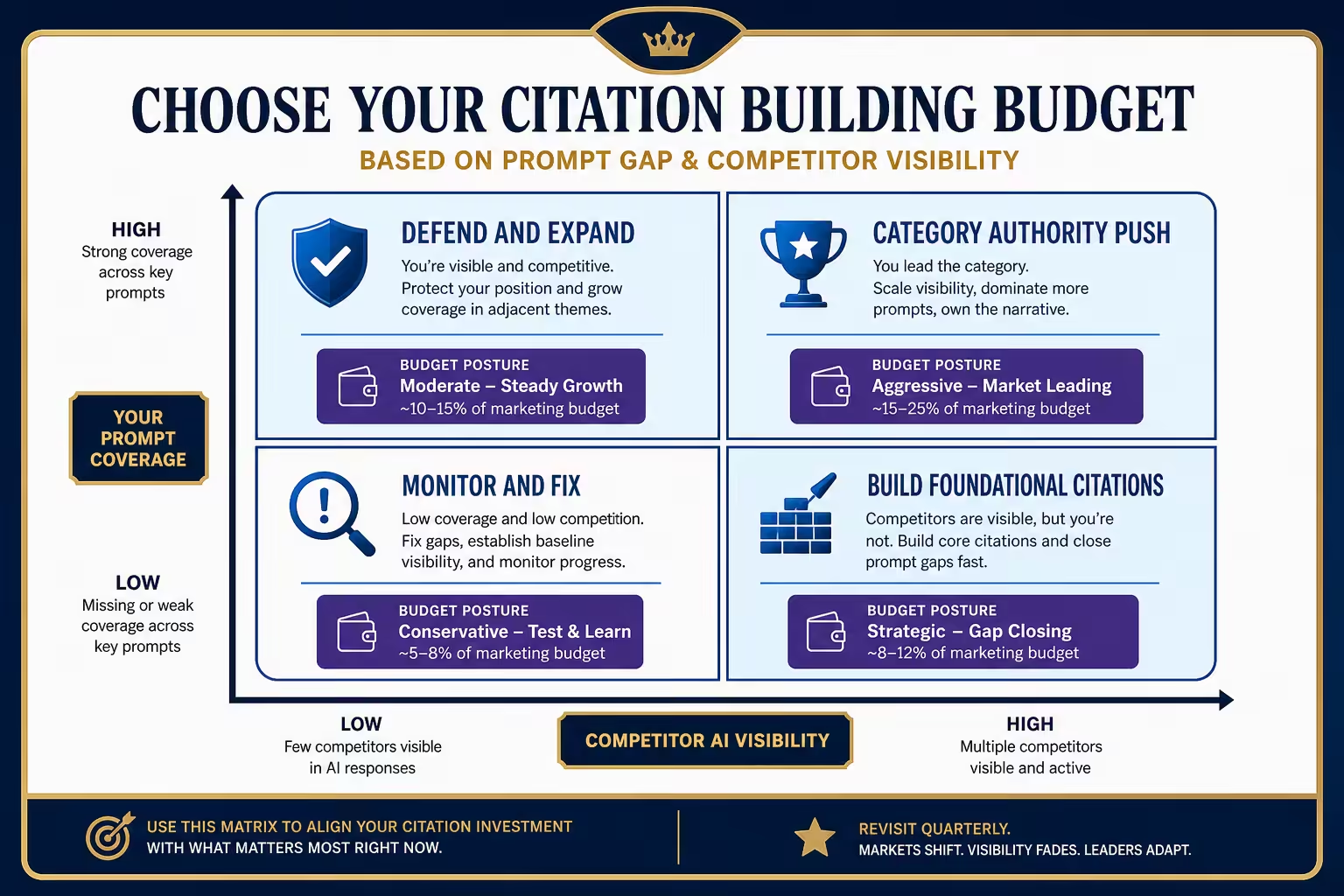
Regulated and complex markets require more review cycles, expert input, and governance. The cost rises because the work must protect the brand while it grows visibility.
What A Good Monthly Proposal Should Include
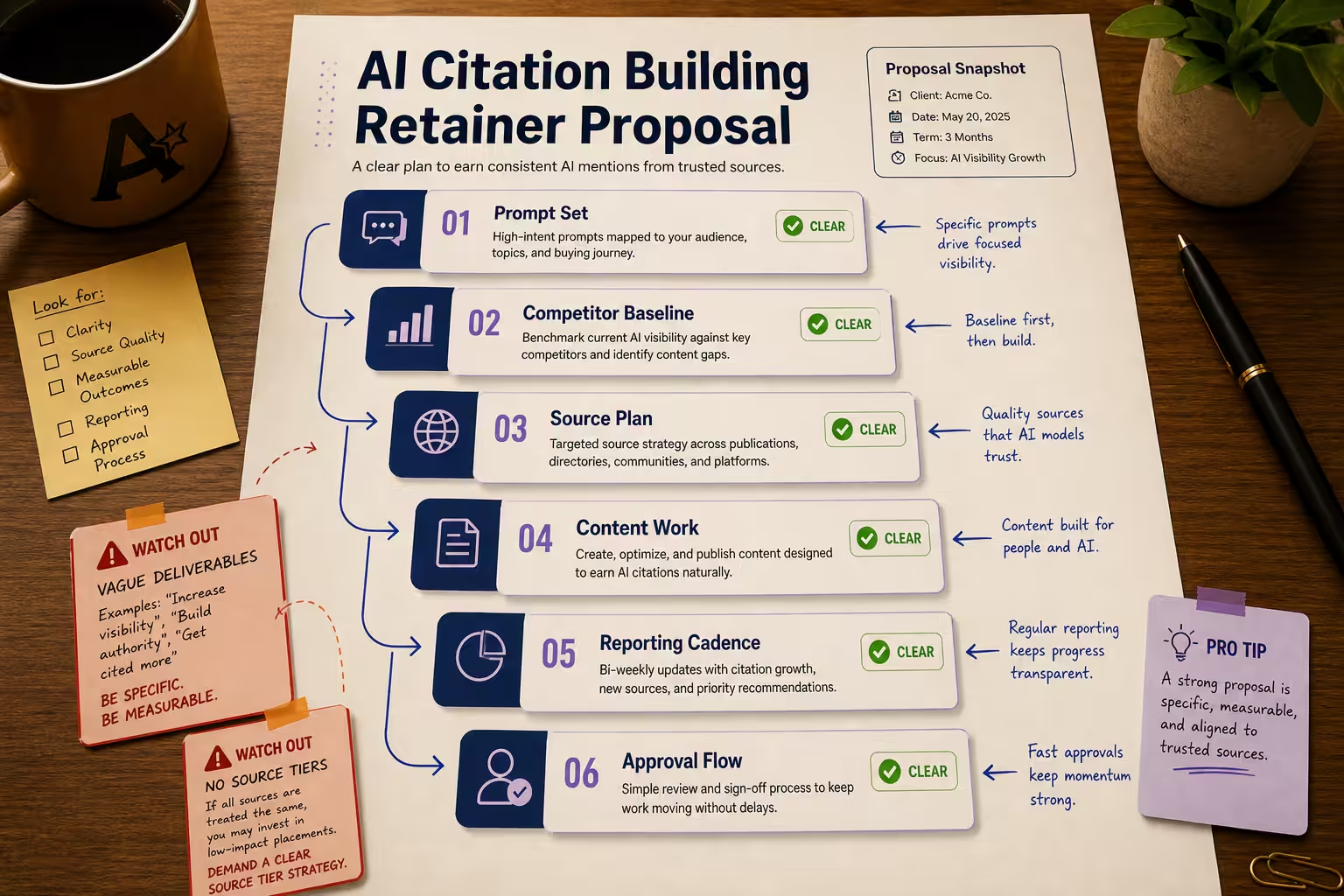
A good proposal should make the work, the sources, the cadence, and the measurement clear before you sign.
You should see how the agency defines a citation, which prompts it tracks, which competitors it benchmarks, and which sources it plans to build or improve. If those pieces are vague, the price is impossible to evaluate.
Use this proposal checklist before comparing retainers:
- Priority prompt set grouped by buyer intent
- Baseline AI visibility and competitor share
- Owned content fixes tied to citation gaps
- Third-party source plan with approval steps
- Entity authority cleanup plan
- Monthly reporting format and decision cadence
- Clear definition of what counts as a successful citation
Ask for source tiers, not just placement counts. The hierarchy in our publication-tier guide explains why one relevant industry citation can matter more than a bundle of weak mentions.
The Agency Should Separate Setup From Ongoing Work
Setup work finds the gap and builds the operating system.
Ongoing work compounds source strength. A clean proposal separates audit, strategy, content production, outreach, reporting, and technical support so you can see what the monthly fee actually funds.
The Agency Should Show How Citations Become Assets
A citation becomes an asset when it keeps strengthening your brand after the month ends.
Examples include durable editorial references, partner ecosystem pages, expert profiles, category explainers, and comparison content that keeps earning attention. Temporary activity belongs in a lower budget tier.
What Results Should You Expect By Month
AI citation building usually shows progress in signal quality before it shows up as broad answer dominance.
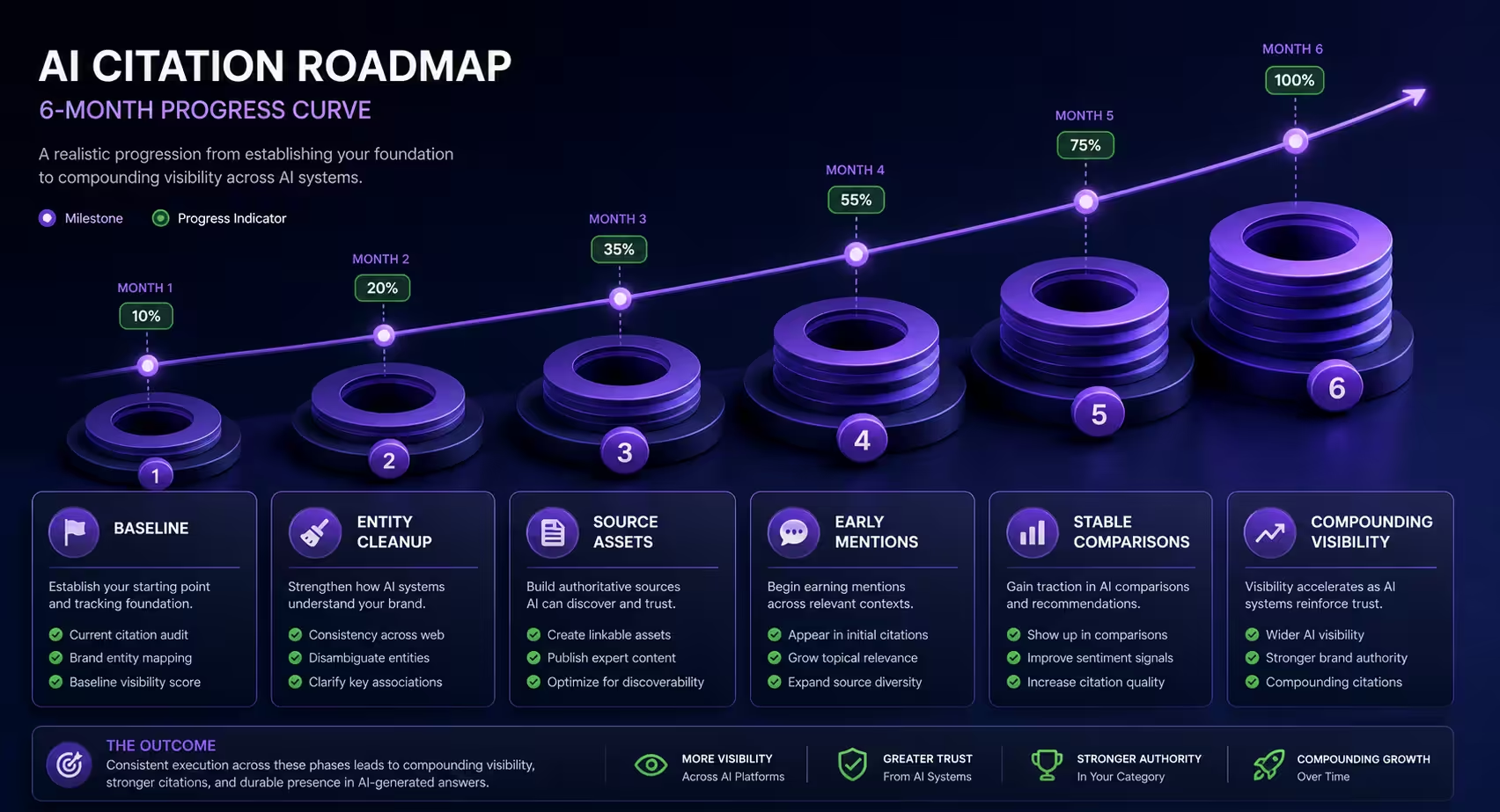
Month one should establish the baseline, fix obvious entity issues, and identify the source gaps. Month two and three should add better sources, improve owned content, and show early movement across priority prompts.
By months four to six, a healthy program should show clearer brand descriptions, more consistent inclusion in relevant answers, stronger competitor comparisons, and fewer wrong or incomplete summaries. If nothing changes by then, the strategy deserves a hard review.
| Timeframe | Healthy Signal | Unhealthy Signal |
|---|---|---|
| Month 1 | Clear baseline, prompt map, source map, entity cleanup plan | Only a generic audit report |
| Months 2 to 3 | New source assets and early answer changes | Placements with no prompt-level tracking |
| Months 4 to 6 | More stable mentions across high-intent prompts | No movement in competitor comparisons |
| Months 6+ | Compounding source strength and cleaner category association | Reports still focus only on activity |
The strongest programs treat measurement as a decision system. If a source starts appearing in AI answers, build around it. If a source never appears, stop funding it.
For brands that already invest in AI visibility retainers, compare this against AI Visibility Retainer Pricing 2026 to see how citation building fits inside the broader budget.
Where AI Citation Building Fits In Your Marketing Budget
AI citation building should sit between content, digital PR, SEO, and brand measurement.
It doesn’t replace those functions. It redirects part of their work toward sources that influence AI answers. That is why many teams fund citation building by reallocating budget from low-performing content volume, generic outreach, or brand tracking that doesn’t lead to decisions.
A practical split for a funded B2B company looks like this:
- Use content budget for owned sources that answer buying questions.
- Use PR budget for credible third-party mentions and expert visibility.
- Use SEO budget for technical access, internal linking, and source clarity.
- Use analytics budget for AI answer tracking and competitor monitoring.
If you treat citation building as a disconnected add-on, it gets expensive fast. If you tie it to content and authority work you already fund, the retainer becomes easier to defend.
The pillar for this topic is How an AI Citation Service Closes Your Visibility Gap. Use it to evaluate the service model before you compare quotes.
FAQ
How much do agencies charge for AI search optimization?
Agencies commonly charge $3,500 to $12,000 per month for serious AI search optimization, with enterprise programs often priced higher when they include publication work, governance, and multi-market reporting.
Is AI citation building a separate service from SEO?
AI citation building is separate from SEO when the work focuses on AI answer visibility, third-party source authority, prompt tracking, and brand representation inside LLM responses.
How long does AI citation building take to show results?
AI citation building usually needs three to six months to show meaningful movement because sources must be created, discovered, trusted, and reflected in answer patterns.
What should I ask before hiring an AI citation building agency?
Ask which prompts the agency tracks, which sources it builds, how it defines a citation, how it benchmarks competitors, and how monthly reporting connects activity to visibility gains.
The Honest Take On Monthly Retainers
The right monthly cost is the number that funds the sources your category actually requires.
A $3,500 retainer can work in a narrow market with weak competitors. A $10,000 retainer can fail if it funds random mentions with no prompt strategy. Price only means something after you understand the gap.
If you want that gap mapped before you commit budget, book a strategy call.