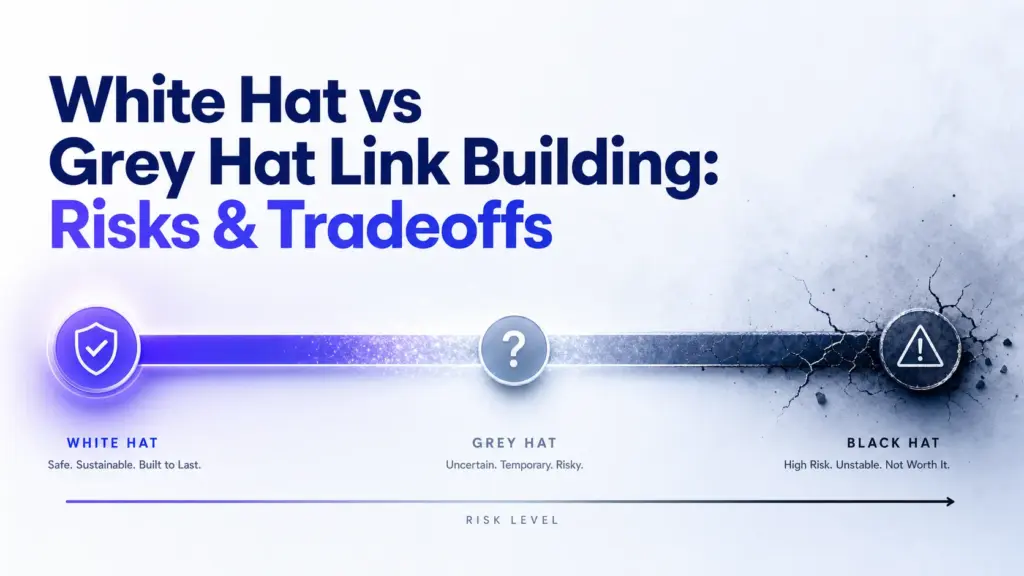

Choosing between white hat and grey hat link building comes down to one question: how much ranking risk you can absorb for a faster lift. White hat link building is the safer, more defensible option, while grey hat can be faster in the short term but brings higher volatility, weaker durability, and more guideline risk. White hat earns links through editorial value and genuine outreach.
Grey hat leans on tactics that are not always banned outright, but depend on ambiguity, loopholes, or weak enforcement. The gap between them is not moral. It is practical, and it shows up in rankings, penalties, and how long your links keep working.
This comparison walks through the criteria that actually matter, so you can decide based on tradeoffs instead of vibes.
What White Hat vs Grey Hat Link Building Means
White hat link building earns links through editorial merit: useful content, digital PR, expert commentary, and real outreach that a publisher would accept without payment for placement. Grey hat link building uses tactics that sit in a gap between the rules, where nothing is explicitly forbidden but the intent is closer to manipulation than to earning.
The cleanest way to separate them is a question a senior SEO asks during an audit: would this link still feel defensible if a human reviewer looked at it? A guest contribution you wrote for a relevant publication passes. A paid placement dressed up to look editorial does not.
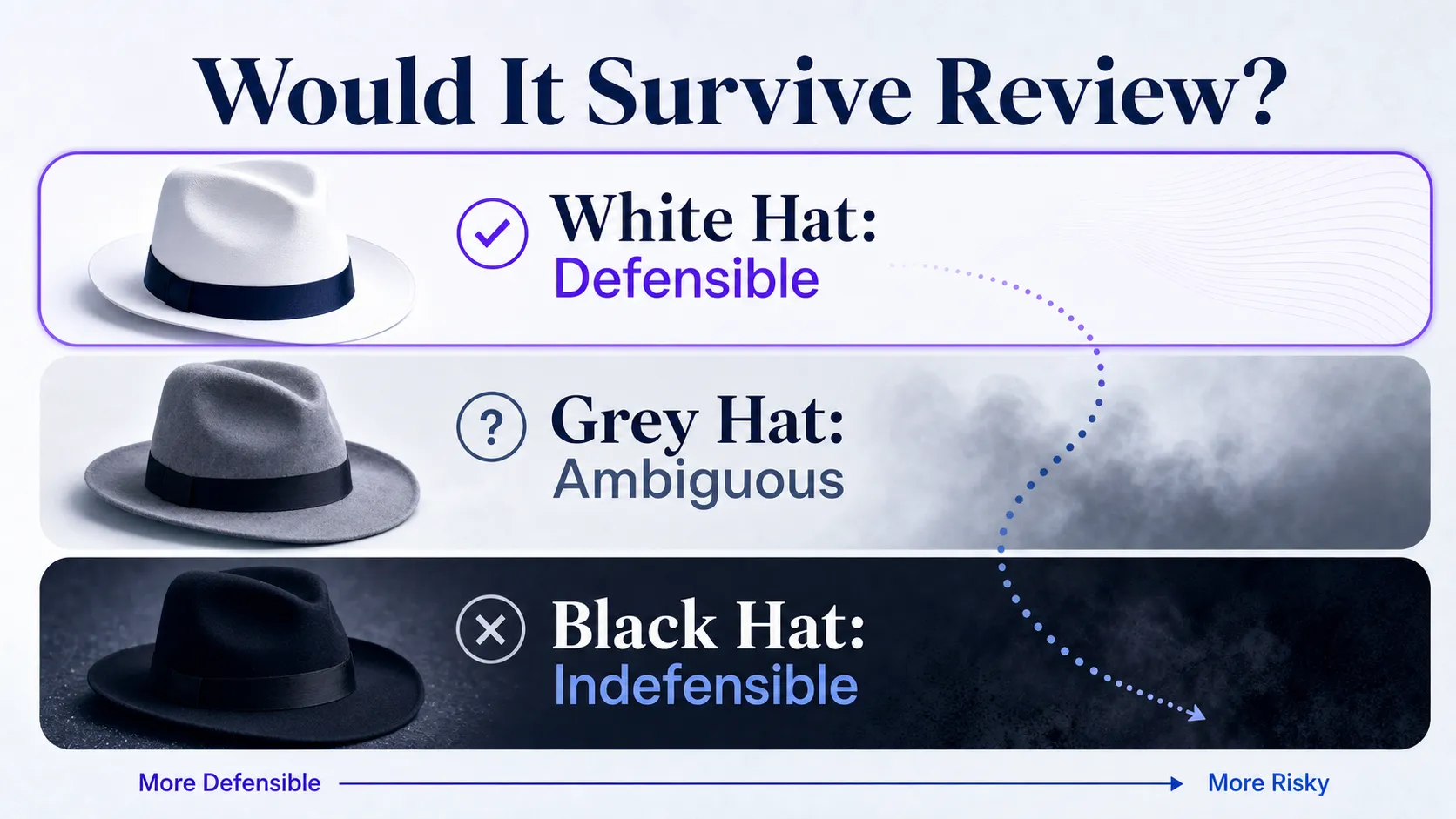
Black hat belongs in this conversation only as a reference point. It covers tactics that clearly violate search engine guidelines: private blog networks, spun content at scale, hidden links, hacked placements. Grey hat matters precisely because it borrows the mechanics of black hat while staying just inside the letter of the rules.
The boundary blurs because the same tactic can shift categories based on intent, disclosure, and execution. A sponsored post with a clear nofollow and honest disclosure is white hat. The same post with a followed link and no disclosure, bought purely to pass authority, is grey hat sliding toward black. The tactic did not change. The intent did. If you are still building your foundation here, our practitioner guide to link building covers the basics this comparison assumes.
The Criteria That Matter in the Comparison
Before comparing tactics, fix the lens. These seven criteria decide whether an approach fits your brand, and they keep the choice grounded in decisions rather than ethics.
| Criterion | White Hat | Grey Hat |
|---|---|---|
| Guideline compliance | Aligns with Google Search Central guidance | Exploits gaps, not clearly compliant |
| Penalty risk | Low | Moderate to high, rising over time |
| Speed to results | Slower, weeks to months | Faster, sometimes days |
| Cost per link | Higher upfront (labor, content) | Lower upfront, higher hidden cost |
| Scalability | Repeatable systems | Depends on short-lived openings |
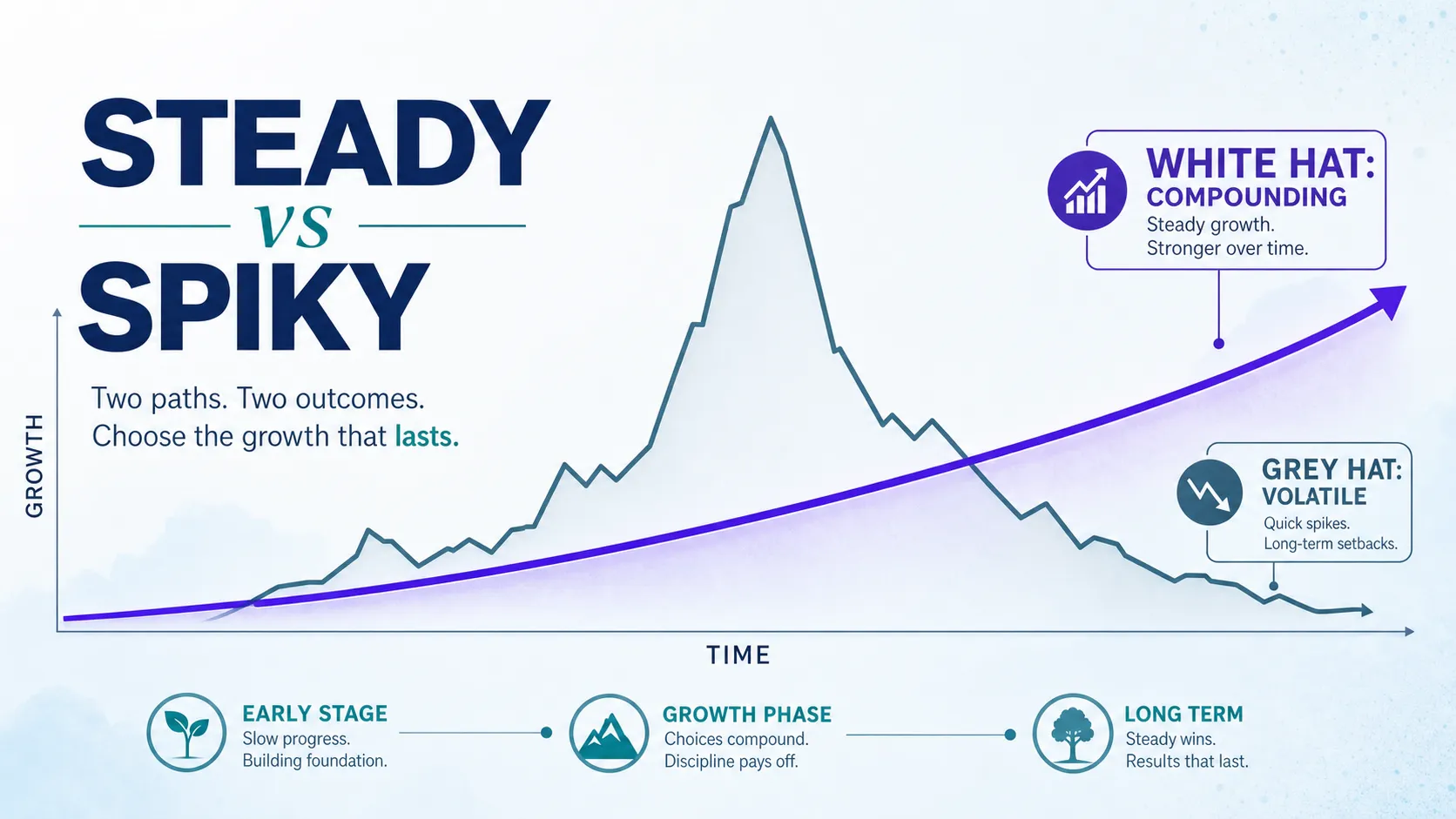
| Sustainability | Durable, compounds | Volatile, prone to decay |
| Control over quality | High relevance, less placement control | More placement control, less predictable quality |
The single most useful lens is the one a team uses for a risk-sensitive client: which of these tradeoffs can the brand actually afford to lose. A startup burning runway weighs speed differently than a regulated fintech weighs penalty risk. The criteria stay the same. The weighting shifts with the stakes.
Compliance and Safety
White hat link building is the easiest approach to defend because it aligns with Google’s link scheme policies and the earned-link principle at the center of them. When a link exists because your content deserved it, there is nothing to unwind, disclose, or explain away in a manual review.
Grey hat lives in the harder territory. It may not break a written rule, but it clusters around paid placements without clean disclosure, links acquired for authority rather than context, and tactics that work only while enforcement stays loose. “Not explicitly banned” is doing a lot of quiet work in that sentence, and it is not the same thing as safe.

The risk splits into two forms. Manual actions come from a human reviewer flagging a pattern, and they hit hard and fast. Algorithmic devaluation is quieter: the link stops passing value, your rankings soften, and no notice ever arrives. Grey hat profiles are exposed to both, and the second is worse because you often cannot tell it happened.
Here is the part most tactic guides skip. The biggest question is not whether a grey hat link works this quarter. It is whether it survives the next review, the next policy note from Google, or the next core update. White hat links carry that survival built in, because they were never dependent on enforcement staying loose in the first place.
Speed, Cost, and Scalability
Grey hat looks cheaper and faster because it skips the editorial friction that makes white hat slow, but that friction is where the durability comes from. White hat needs better assets, real research, and relationship building, so the upfront cost is higher and the first links take longer to land.
The cost picture flips once you count what happens after. Grey hat carries hidden costs that never show up in the initial invoice: cleanup when a tactic sours, link replacement after a devaluation, and lost performance when a policy shifts. A cheap link you have to rebuild twice was never cheap.
| Cost type | White Hat | Grey Hat |
|---|---|---|
| Upfront cost | Higher: content, outreach, PR | Lower: fewer editorial steps |
| Hidden cost | Minimal maintenance | Cleanup, replacement, volatility |
| Time to first links | Weeks to months | Days to weeks |
| Scaling model | Repeatable systems | Fragile, opportunity-dependent |
Scalability is where the gap widens most. White hat scales through repeatable systems: digital PR campaigns, expert outreach, and asset-led content that keeps earning links after you stop pushing. Grey hat scaling depends on finding and exploiting short-lived openings, so every scale-up resets the clock instead of compounding. The pattern shows up again and again: short-term gains look efficient right up until they stop compounding and start needing replacement. To see how the repeatable side works in practice, our breakdown of tested link building methods maps the systems that scale.
Link Quality, Control, and Long-Term Value
The better comparison is not which approach gets links, but which gets links that stay valuable. White hat links tend to be more relevant and contextual, and they are far easier to justify to a stakeholder who asks where a placement came from.
Grey hat offers a real advantage on one axis: control. Because you are often paying for or arranging placements, you get more say over exact anchor text, surrounding copy, and where the link sits on the page. But that control comes with unpredictable quality. The site relevance is weaker, the publisher consistency wobbles, and the value is less durable than it looks on day one.
What Weakens Grey Hat Links Over Time
Grey hat links decay through ordinary site maintenance you do not control. Pages get removed, followed links quietly switch to nofollow, and content updates strip out placements that no longer fit. Each one erases value you paid for, and none of them sends a warning.
Why Brand Reputation Is the Hidden Variable
Transactional-looking placements become a liability in serious sectors. A regulated brand caught with links on low-quality sites does not just risk rankings. It risks the trust it sells to customers and regulators. That reputational exposure never appears on a link-building invoice, and it is the cost that outlasts every algorithm change.
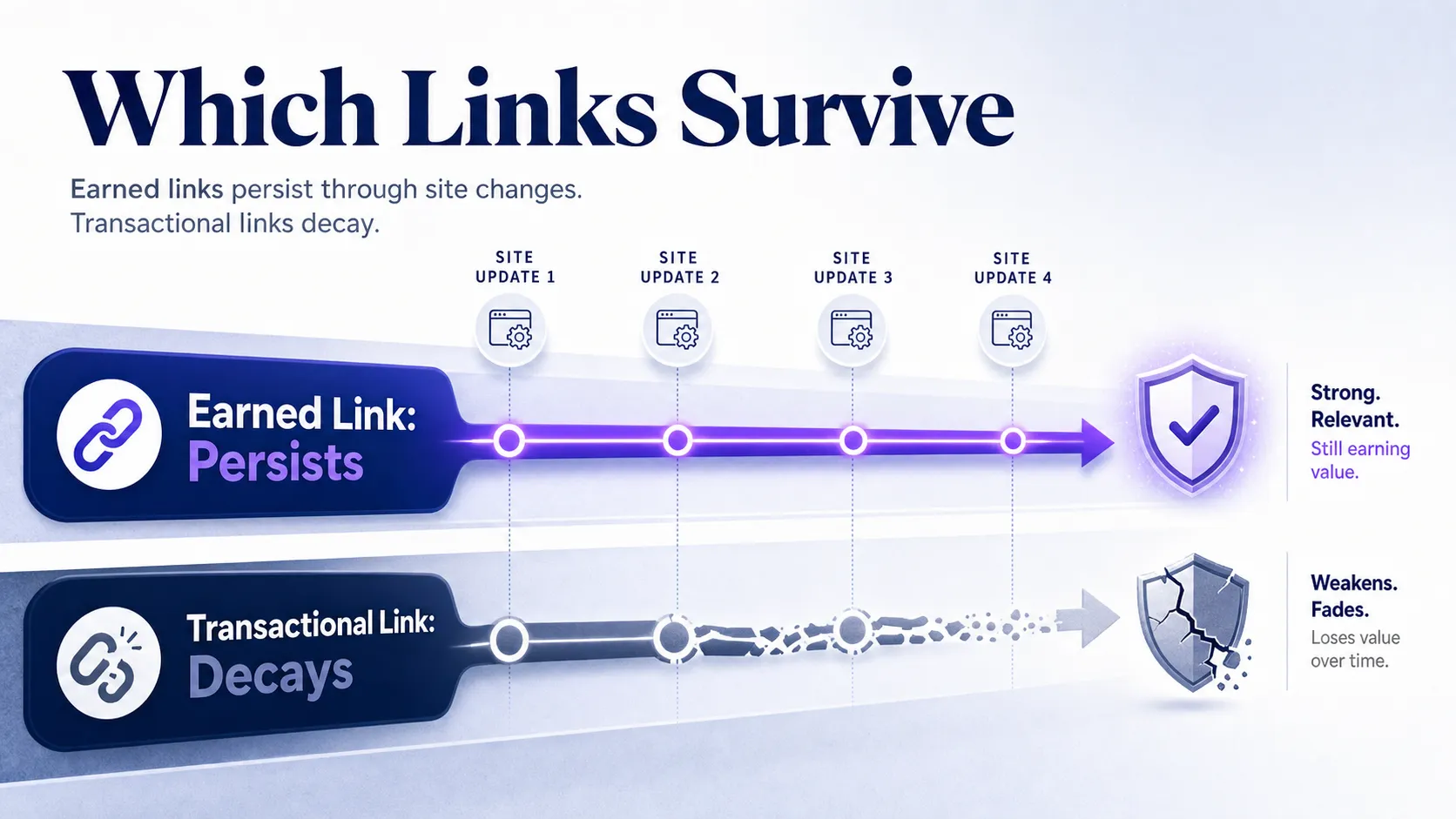
The portfolio pattern is consistent: the links that survive updates are almost always the ones that were earned, not the ones that leaned on aggressive control. Editorial placements built on genuine relevance hold their value because nothing about them needed to stay hidden. For a closer look at that durable end of the spectrum, our guide to editorial link building shows what defensible authority looks like in practice.
See where AI answers put your brand
Twenty minutes with a senior strategist: where the major engines point buyers in your category, who gets named instead of you, and a straight read on what a programme would change.
Book a strategy callExamples and Verdict by Use Case
The distinction gets concrete fast once you see the tactics side by side. White hat examples are the ones you would happily explain in a review. Grey hat examples are the ones you would rather not.
What White Hat Looks Like in Practice
White hat link building shows up as digital PR campaigns built on original data, resource page outreach where your content genuinely belongs, expert commentary placements, unlinked brand mention reclamation, and real guest contributions to relevant publications. Each one earns the link because the content deserved it. A structured version of the outreach side lives in our guest post outreach workflow.
What Grey Hat Looks Like in Practice
Grey hat clusters around paid placements that blur editorial disclosure, followed links bought purely for authority, and contextual insertions that work only while a publisher’s policy stays loose. The common thread is a link that exists because money or ambiguity moved it, not because the content earned it. That is the line, and it is why intent decides the category more than the tactic does.
Which Approach Fits Which Business
The right call shifts with how much reputation and stability a brand has to protect.
| Business type | Recommended approach | Why |
|---|---|---|
| Startups | White hat, selective PR | Cannot afford a penalty that stalls early growth |
| B2B SaaS | White hat | Buyers and AI engines reward durable authority |
| Local businesses | White hat | Reputation and reviews matter more than link volume |
| Regulated industries | White hat only | Reputational and compliance exposure is too high |
| Agencies | White hat | Client trust depends on defensible link profiles |
White hat should be the default for any brand with a reputation to protect, which is nearly all of them. Grey hat is tempting when speed feels urgent and budget is tight, and that pull is real for early-stage teams. But the observation that holds across portfolios is simple: the happiest clients six months out are the ones who can explain every link without backpedaling. If you are weighing whether to run this in-house or bring in help, our comparison of in-house versus outsourced link building lays out the tradeoffs.
Frequently Asked Questions
What is the difference between white hat and grey hat link building?
White hat link building earns links through editorial value and genuine outreach that follows Google’s guidelines, while grey hat relies on tactics that are not clearly banned but depend on loopholes, ambiguity, or weak enforcement. The practical gap is durability: white hat links survive reviews and updates, and grey hat links carry rising risk over time.
Is grey hat link building safe?
Grey hat link building is not safe in any durable sense. It may avoid an immediate penalty, but it sits in territory that gets riskier as enforcement tightens and algorithms update. A tactic that works today because it exploits a gap can lose its value the moment that gap closes, and you rarely get a warning.
Is buying backlinks grey hat or black hat?
Buying followed backlinks to pass authority is a link scheme violation, which places it closer to black hat than grey. It drifts toward grey hat only when the paid relationship is disclosed and the link is marked nofollow or sponsored, which removes the manipulation. The intent and the disclosure decide where it lands.
What are examples of white hat link building?
White hat examples include digital PR built on original data, resource page outreach, expert commentary placements, unlinked brand mention reclamation, and genuine guest contributions to relevant sites. Say a SaaS brand publishes a survey its industry cites for a year: every link back is earned, contextual, and defensible in any review.
Can grey hat link building get you penalized?
Yes, grey hat link building can trigger both manual actions and algorithmic devaluation. Manual actions come from a human reviewer spotting a pattern, and algorithmic devaluation quietly strips the value from links without any notice. The exposure grows as a grey hat profile scales, because larger patterns are easier for both to detect.
Choosing the Approach You Can Defend
White hat and grey hat are not two flavors of the same thing. One builds authority that compounds and survives scrutiny. The other trades that durability for speed and control you pay for later, in cleanup, volatility, and reputation. For nearly every brand, the choice that looks slower today is the one still working a year from now. If you want link growth you can defend under scrutiny, make white hat your baseline and treat every link as one you should be able to explain out loud.