
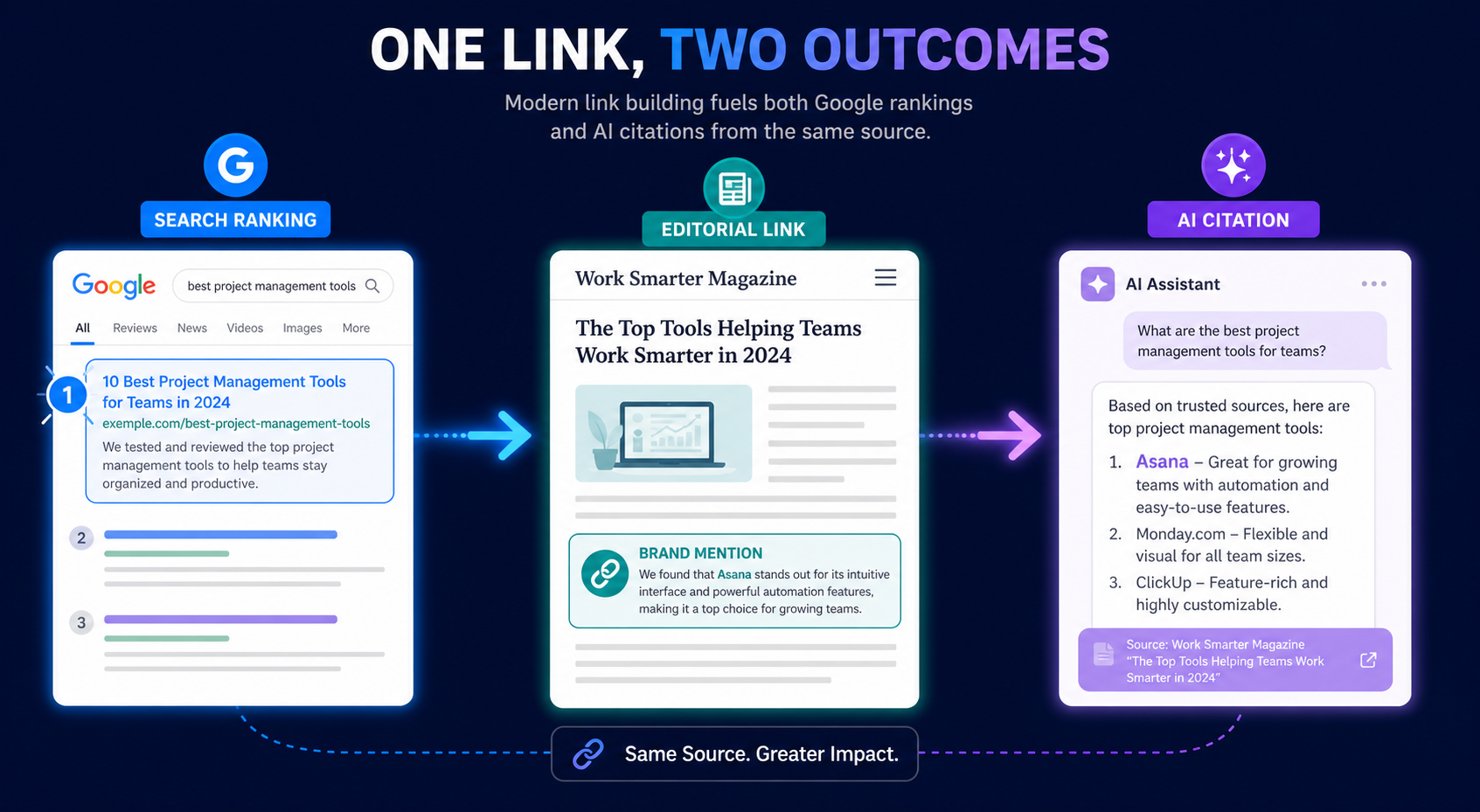
Link building is the practice of earning hyperlinks from other websites to your own, and in 2026, those links do double duty: they signal authority to Google’s ranking systems and they shape which brands get cited inside ChatGPT, Perplexity, and Google’s AI Overviews. The mechanics haven’t changed much. The stakes have. A link from a publication that AI models actually learn from now influences whether your brand shows up when a buyer asks an LLM for recommendations in your category.
Most teams still treat link building like it’s 2018, chasing domain authority numbers, mass-emailing guest post pitches, buying placements on sites no real reader visits. That approach didn’t work great then. It works worse now. The brands winning at link building in 2026 are the ones who treat it as editorial PR with a citation strategy attached.
The Short Version
- Link building is earning hyperlinks from external websites to your own, links act as trust and authority signals to search engines and AI systems.
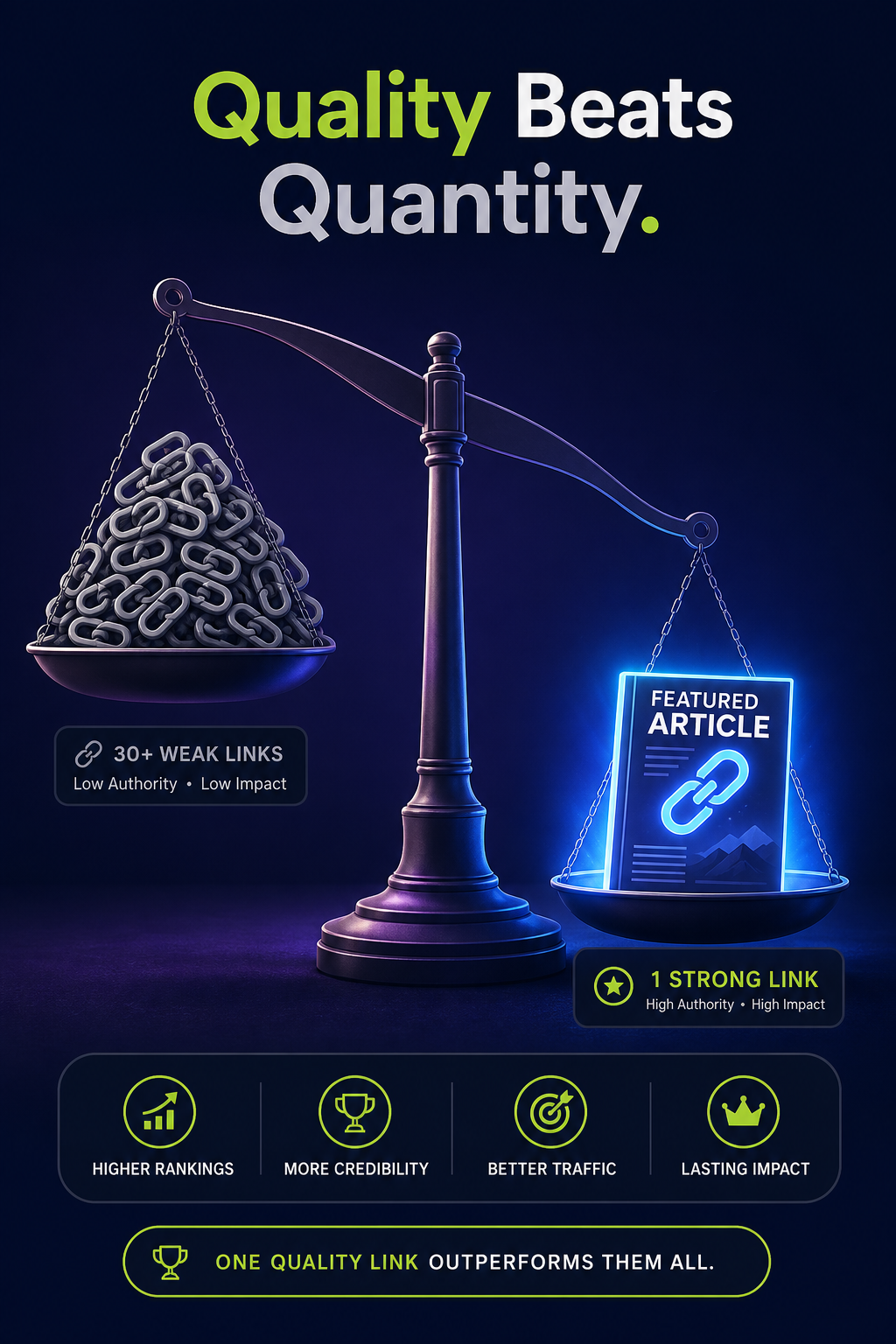
- One editorial link from a topically relevant publication outperforms 50 links from low-quality directories. Quality and relevance beat quantity, every time.
- The tactics that work in 2026: digital PR, linkable assets, broken link building, unlinked mention reclamation, HARO-style sourcing, and genuine relationship outreach.
- Tactics to avoid: PBNs, paid link networks, comment spam, reciprocal link schemes. Google penalizes them and AI models filter them out.
- Links influence both Google rankings and AI citation patterns, the same publications that move the needle for SEO often appear in LLM training data.
What a Link Actually Is (And Why Search Engines Care)
A hyperlink, usually called a backlink when it points to your site, is HTML code that connects one webpage to another. When a reader on TechCrunch clicks a link to your homepage, that’s a backlink. When Wikipedia cites your research with a footnote URL, that’s a backlink too.
Search engines treat links as votes. Larry Page’s original PageRank concept was simple: if smart, trustworthy websites link to you, you’re probably trustworthy too. That logic still drives Google’s ranking systems in 2026, even after countless algorithm updates. The math has gotten more sophisticated. The principle hasn’t changed.
What’s new is that LLMs use a similar logic when deciding which brands to cite. AI models trained on web data learn which sources discuss which brands in which contexts. A brand mentioned repeatedly across high-authority editorial sources becomes part of the model’s knowledge of that category. A brand mentioned only on its own website doesn’t.
The Anatomy of a Backlink
Every backlink has four parts that determine its value:
- The linking page, the specific URL where the link appears. A link from a buried archive page is worth less than a link from a heavily-trafficked feature article.
- The anchor text, the clickable words. “Click here” tells search engines nothing. “Best AI visibility tools for B2B SaaS” tells them everything.
- The link attribute, dofollow passes ranking signals, nofollow passes minimal signal but still drives referral traffic and AI training exposure, sponsored marks paid placements, ugc marks user-generated content.
- The destination, where the link points on your site. A link to a deep resource page often outperforms a link to your homepage.
Why Link Building Still Drives Real Results in 2026
Some marketers will tell you links don’t matter anymore. They’re wrong. Backlinks remain one of Google’s strongest ranking signals. Google’s own John Mueller has confirmed this repeatedly, and every major SEO study since 2020 has reached the same conclusion. The Ahrefs analysis of 1 billion pages found a strong correlation between referring domains and organic traffic, pages with more quality backlinks get more traffic.
What’s changed is the second-order effect. Links now influence:
- Google rankings, still the primary use case. More high-quality links generally means better positions for competitive keywords.
- AI Overviews appearances. Google’s AI Overviews tend to pull from sources that already rank well, and those sources are usually well-linked.
- LLM citations. ChatGPT, Perplexity, and Claude cite sources their training data treats as authoritative. Editorial mentions on trusted publications shape that authority.
- Knowledge graph entity strength, links from authoritative sources help Google’s knowledge graph confirm who you are, what you do, and where you fit in your category.
- Referral traffic, sometimes the most underrated benefit. A link in a popular newsletter can drive more qualified visitors in a week than six months of SEO work.
In our work building citation profiles for B2B brands, the pattern is consistent: brands with 15+ editorial mentions on topically relevant publications start showing up in AI-generated answers within roughly 3-4 months. Brands with mentions only on their own blog and a handful of low-quality directories don’t show up at all. [EDITOR: INSERT, replace with specific BrandMentions citation rate data once available.]
How Link Quality Actually Gets Measured
Domain Authority and Domain Rating are useful starting points, but they’re not the whole picture. A DA 80 site that’s irrelevant to your category will move the needle less than a DA 45 site that’s the trusted voice in your niche. Here’s what actually matters when evaluating a link opportunity:
Topical Relevance
Is this site about your category, or adjacent to it? A link from a fintech publication to a fintech SaaS makes sense. A link from a recipe blog to that same SaaS doesn’t, and Google’s algorithms recognize the mismatch. Topical relevance matters more in 2026 than it did five years ago because AI systems use semantic clustering to understand which sources discuss which topics.
Editorial Standards
Does the site have real editors? Are articles bylined by named writers with verifiable credentials? Does it publish original reporting or just rehashed press releases? Sites with strong editorial standards pass more authority because Google and AI systems trust them more.
Real Traffic
A site can have a high DA and zero actual readers. Check organic traffic estimates in Ahrefs or Semrush. If a site shows DA 70 and 2,000 monthly organic visits, something’s off, likely artificially inflated authority through link schemes.
Audience Overlap
Would the site’s readers actually care about your business? A link from a publication your target buyers already read drives qualified traffic and signals genuine relevance. A link from a site no one in your category visits is mostly a vanity metric.
Link Placement and Context
Where on the page does the link sit? A link in the body of an editorial article carries more weight than a link in a footer or sidebar. Surrounding text matters too, a link wrapped in genuine editorial discussion of your product passes more value than a link in a generic resource list.
| Quality Signal | Strong Indicator | Weak Indicator |
|---|---|---|
| Topical Relevance | Site covers your category or close adjacent | Generic site, unrelated industry |
| Editorial Standards | Named editors, original reporting, bylines | No bylines, AI-generated content, paid placements obvious |
| Real Traffic | Consistent organic visits matching authority claims | High DA but minimal organic traffic |
| Link Placement | In-body editorial context with discussion | Footer, sidebar, generic resource list |
| Anchor Text | Natural, descriptive, varied across profile | Exact-match commercial anchors, repetitive patterns |
Tactics That Actually Work in 2026
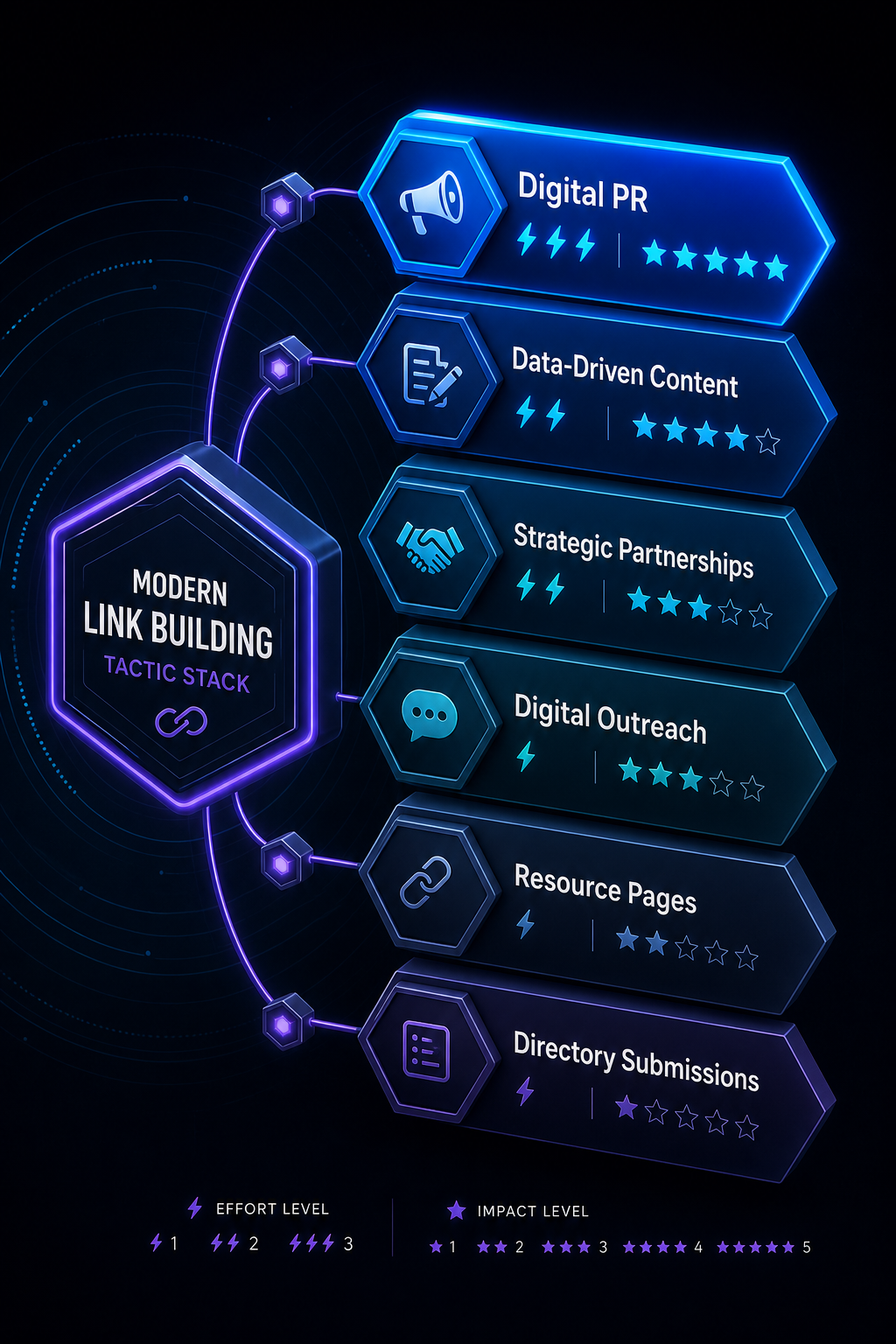
The tactics below are the ones that consistently produce links worth having. They take effort. They don’t scale to 500 links a month. That’s the point, the ones that scale that fast usually aren’t worth having anyway.
Digital PR With Original Research
Run a study. Survey your industry. Analyze your own data. Publish findings journalists want to cite. This is the most valuable link-building tactic that exists right now because journalists need data, and data-led stories earn links from sites that don’t link to anyone else. A single well-pitched study can earn 30-80 referring domains across tier-one publications.
Linkable Assets
Build resources so useful that other sites link to them naturally. Calculators, templates, free tools, original frameworks, definitive guides on niche topics. The goal isn’t to chase the broadest topic, it’s to own a specific gap competitors haven’t filled. A free tool that solves one painful, specific problem in your category will earn links for years.
Broken Link Building
Find pages on relevant sites with dead outbound links. Build (or already have) the better replacement. Email the editor with a useful note pointing out the broken link and offering your resource as a fix. Conversion rates on this run higher than cold guest post pitches because you’re actually helping the editor.
HARO and Source-Request Platforms
Journalists need expert quotes daily. Platforms like Connectively (the rebranded HARO), Qwoted, and Twitter’s #JournoRequest connect them with sources. If you respond fast with substantive expertise, not generic talking points, you’ll earn mentions in publications that don’t take guest posts.
Unlinked Brand Mention Reclamation
Sometimes publications mention your brand without linking. Set up alerts for your brand name, find unlinked mentions, and email the writer asking for a link. Most editors say yes, it’s literally one minute of work for them. Tools like BrandMentions surface these opportunities at scale.
Guest Posting (Done Right)
Guest posting still works, but only on real publications with real editorial standards. The “submit your post” sites that publish anything for $50 are worse than useless, they actively hurt your link profile. A handful of well-placed guest contributions on respected industry publications outperforms 100 placements on link farms.
What to Avoid: Tactics That Look Like Shortcuts
If a tactic promises hundreds of links for a few hundred dollars, it’s a trap. Google’s spam systems and AI training filters have gotten remarkably good at identifying manipulated link patterns. Here’s what to skip:
Private Blog Networks (PBNs)
Networks of fake sites built to pass authority. Google’s been hunting these for a decade and is excellent at detection. The penalties cost more than the links ever earned.
Paid Link Schemes
Buying do-follow links from random sites. Violates Google’s link spam policies and gets sites filtered from AI training data.
Mass Blog Comment Spam
Posting links in comments at scale. Google ignores the links. AI models filter the source. Pure waste.
Link Exchanges and Reciprocal Schemes
“I link to you, you link to me” arrangements at scale. Google flags excessive reciprocal patterns easily.
Low-Quality Directory Submissions
Generic directories with no editorial standards. The 2008 playbook. Doesn’t work anymore.
Automated Outreach Blast Tools
Sending 10,000 templated pitches. Response rates are terrible and good editors blacklist the sending domain.
The honest reality: there’s no shortcut to a strong link profile. Brands that try shortcuts spend years recovering from penalties. Brands that build slowly and editorially compound their authority year over year.
How to Build a Link Building Program From Scratch
If you’re starting today, here’s the order of operations that actually works:
1. Audit Your Current Link Profile
Use Ahrefs, Semrush, or Moz to see what you already have. Identify toxic links (disavow if necessary) and identify your strongest existing relationships.
2. Identify Your Top 50 Target Publications
Build a list of sites that meet the quality criteria above and serve your buyer audience. This becomes your prospecting universe.
3. Build at Least One Strong Linkable Asset
An original study, a free tool, or a definitive resource. Without something link-worthy, outreach has nothing to point at.
4. Set Up Brand Monitoring
Track unlinked mentions, competitor links, and journalist requests in your space. Tools like BrandMentions handle this automatically.
5. Start With Relationships, Not Requests
Engage with journalists and editors before you need anything. Comment on their work, share their pieces, build genuine connection. Outreach to people who recognize your name converts at multiples of cold outreach.
6. Run Digital PR Campaigns Quarterly
One strong data-led campaign per quarter beats constant low-effort guest post pitching.
7. Track and Measure
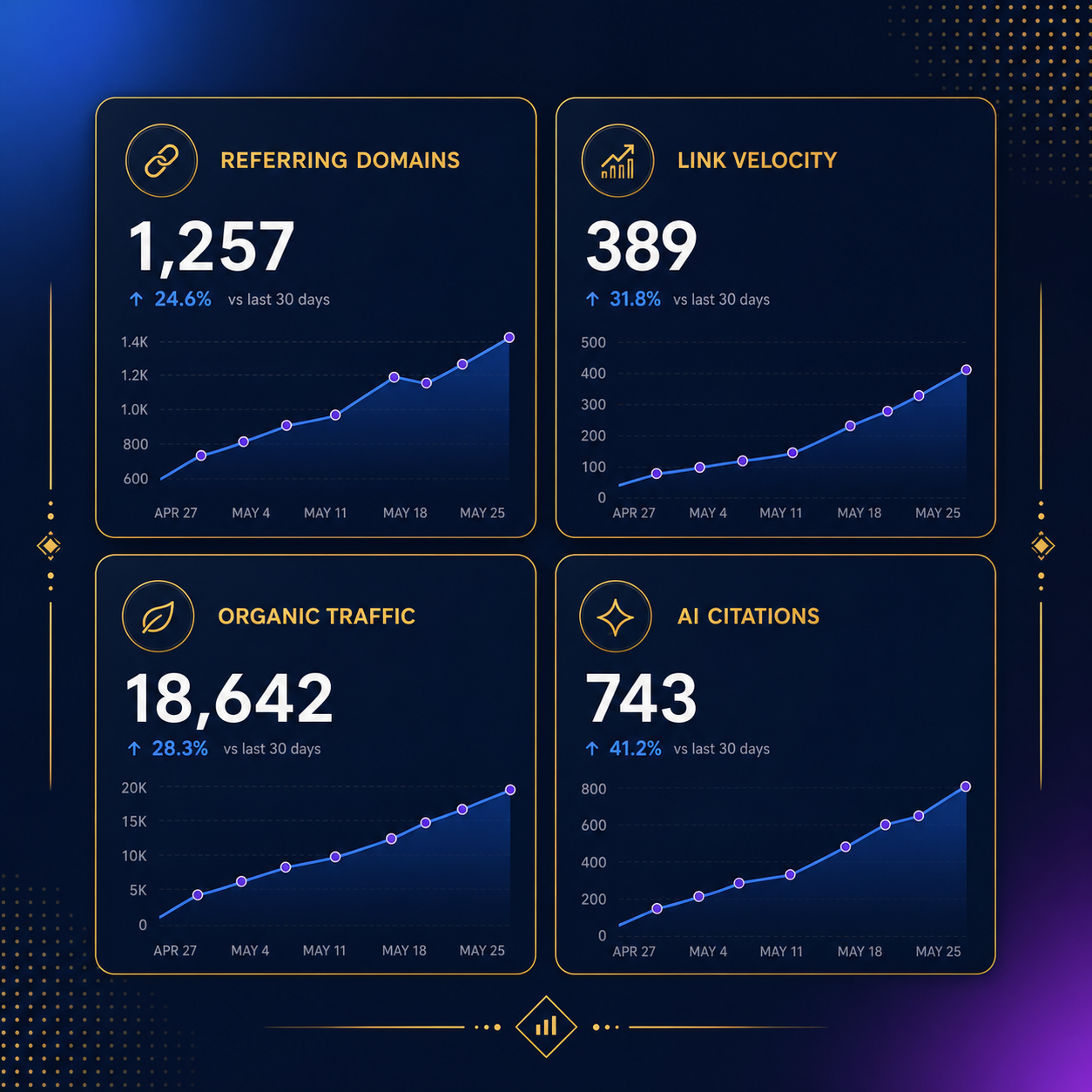
Referring domains, anchor text distribution, link velocity, traffic from links, ranking changes, and AI citation appearances.
See where AI answers put your brand
Twenty minutes with a senior strategist: where the major engines point buyers in your category, who gets named instead of you, and a straight read on what a programme would change.
Book a strategy callMeasuring Whether It’s Working
Link building is slow. Results show up in months, not weeks. The metrics that matter:
Referring Domains Growth
The count of unique domains linking to you. More important than total backlinks. A domain linking once is a domain. A domain linking 50 times is still one domain.
Anchor Text Distribution
Natural profiles have varied anchors: branded, naked URL, descriptive, occasional exact-match. Heavily exact-match profiles look manipulated.
Link Velocity
How fast new links appear. Sudden spikes from no obvious cause look suspicious. Steady growth looks natural.
Organic Traffic to Linked Pages
Pages earning links should see ranking improvements over 3-6 months.
Brand Search Volume
Successful link building drives brand awareness, which shows up in branded search queries.
AI Citation Appearances
Query ChatGPT, Perplexity, and Gemini for category recommendations and track whether your brand surfaces. This is the newest measurement layer and the most overlooked.
Internal Links: The Half of Link Building Most Teams Ignore
External links get all the attention. Internal links, the links between pages on your own site, quietly do half the work. They distribute authority across your site, help search engines understand which pages matter, and guide readers to deeper content.
Most sites underuse internal linking. Pages that should be connected aren’t. Cornerstone resources sit isolated. Topic clusters never form. The fix is straightforward: when you publish or update a page, add 3-5 internal links to genuinely related pages, and update older relevant pages with links to the new one.
One model worth following is the 70/20/10 Internal Linking Model. BrandMentions’ rule for topic-cluster integrity: 70% of internal links point to the same cluster, 20% to adjacent clusters, 10% maximum to commercial or conversion pages. This keeps each cluster’s authority concentrated where it belongs and prevents the site from devolving into a funnel that pushes every visitor toward one page.
Related: link building methods · how to do link building · editorial link building
Frequently Asked Questions
Is link building still relevant in 2026?
Yes. Backlinks remain one of Google’s strongest ranking signals and now also influence which brands AI systems cite. The tactics have evolved, manipulative shortcuts don’t work, but the fundamental principle is unchanged: earning links from authoritative, relevant sources strengthens your visibility across both search engines and AI assistants.
How many backlinks does a website need to rank?
There’s no fixed number. It depends on your competitors. For a low-competition keyword, you might need a handful of quality links. For competitive commercial keywords, you might need hundreds of referring domains. Analyze the top 10 ranking pages for your target keyword and look at their referring domain counts, that’s your benchmark.
What’s the difference between dofollow and nofollow links?
Dofollow links pass ranking signals (PageRank) from the linking page to yours. Nofollow links include a tag telling search engines not to pass that signal. Nofollow links still drive referral traffic, build brand awareness, and contribute to AI training data exposure, they’re not worthless. Both belong in a natural link profile.
How long does link building take to show results?
Plan for 3-6 months before meaningful ranking changes appear, and 6-12 months before compounding authority effects show up. AI citation effects often appear faster, within 2-4 months of consistent editorial mentions on relevant publications. Anyone promising results in 30 days is selling something that won’t last.
Can I build links myself or do I need an agency?
You can absolutely build links yourself if you have the time. The skills are learnable: research, writing, outreach, relationship-building. Agencies make sense when you need volume, speed, or established media relationships you don’t have. The choice depends on your timeline and bandwidth, not on any rule about who “should” do link building.
Do paid links ever work?
Paid links violate Google’s guidelines. They sometimes work short-term until Google detects them, at which point penalties typically erase any gains. Sponsored content marked properly with rel=”sponsored” is allowed but doesn’t pass ranking signal. The clear answer: don’t pay for ranking-signal links.
Do brand mentions count as links if there’s no hyperlink?
For Google rankings, no, only hyperlinks pass PageRank. But unlinked brand mentions still matter because AI systems learn brand-category associations from mentions in editorial text regardless of whether a link exists. They also represent reclamation opportunities, most editors will add a link if you ask politely.
Where Link Building Goes From Here
The next 12 months will reward brands that treat link building as editorial PR with a citation strategy attached, not as a numbers game. The publications that influence Google rankings increasingly overlap with the sources LLMs treat as authoritative. Build presence in the right places once and the same work pays off across both surfaces.
Pick one tactic from this guide and commit to it for 90 days. Most teams scatter effort across six tactics and master none. The brands consistently earning quality links picked one approach, got disciplined about execution, and let it compound. That’s the whole game.
Want to dig deeper? Read our guide on how to track unlinked brand mentions and turn them into earned links.