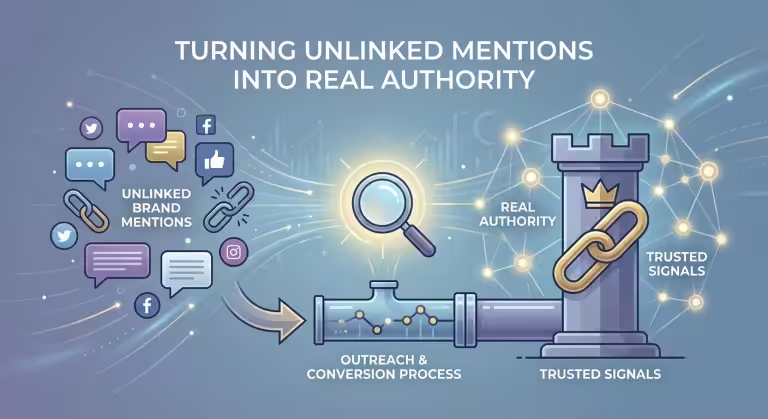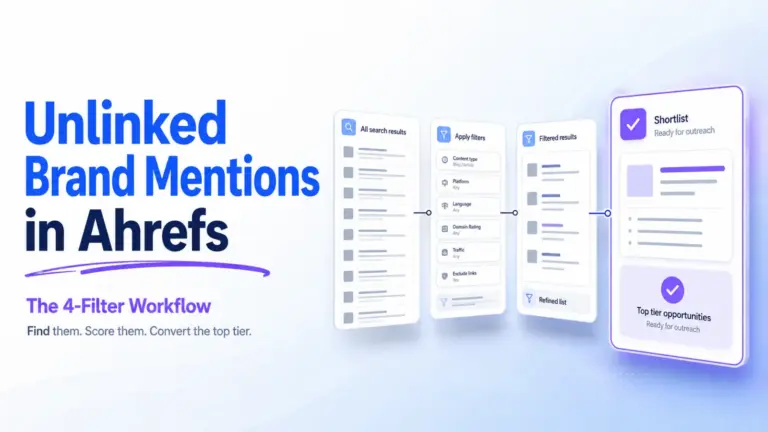

Your brand is already getting named across the web, and a chunk of those mentions never link back to you. Unlinked brand mentions are references to your brand on other sites that do not hyperlink to your domain, and you can convert the best of them into backlinks with a simple find, verify, prioritize, and outreach workflow. This guide walks that workflow step by step. It is built for execution, not definitions, so you finish with a prospect list, a scoring system, and an outreach process you can run every week.
The win here is leverage. The publisher already knows your brand, already wrote about it, and already published the page. You are not pitching a cold story or begging for coverage. You are asking someone who already cited you to add the link that should have been there. That is one of the lowest-friction link opportunities in your stack, and most teams leave it sitting untouched.
What You Need Before You Start
Set up your inputs before you prospect anything. The teams that win at this treat it as a repeatable pipeline, not a one-off afternoon of Googling. Five things go on the table first.
- A full brand set to monitor: brand name, product names, founder and executive names, your slogan, and common misspellings.
- At least one monitoring source and one search source, so the workflow never depends on a single tool.
- A tracker with columns for source URL, mention text, publication date, contact name, priority score, outreach status, and link outcome.
- A clear owner for outreach and one inbox where replies land.
- A rule that you track variations from day one, because exact-match brand tracking misses the easiest wins.
Start with multiple brand variants, not just the company name. In practice, the fastest conversions often come from a misspelled product name or a founder mentioned in an interview, because those mentions slip past the brand’s own monitoring and sit unclaimed. A page that names your CEO in a podcast writeup but never links your site is a clean, easy ask.
If you are deciding which monitoring tool to start with, a head-to-head breakdown helps narrow the field before you commit budget. Our brand mention monitoring tools comparison covers what each one actually catches.
How to Find Unlinked Brand Mentions
Run these six methods and log every hit into the tracker as you go. Discovery works best in a set order, from automated to manual, so you build a usable prospect list instead of a pile of random tabs.
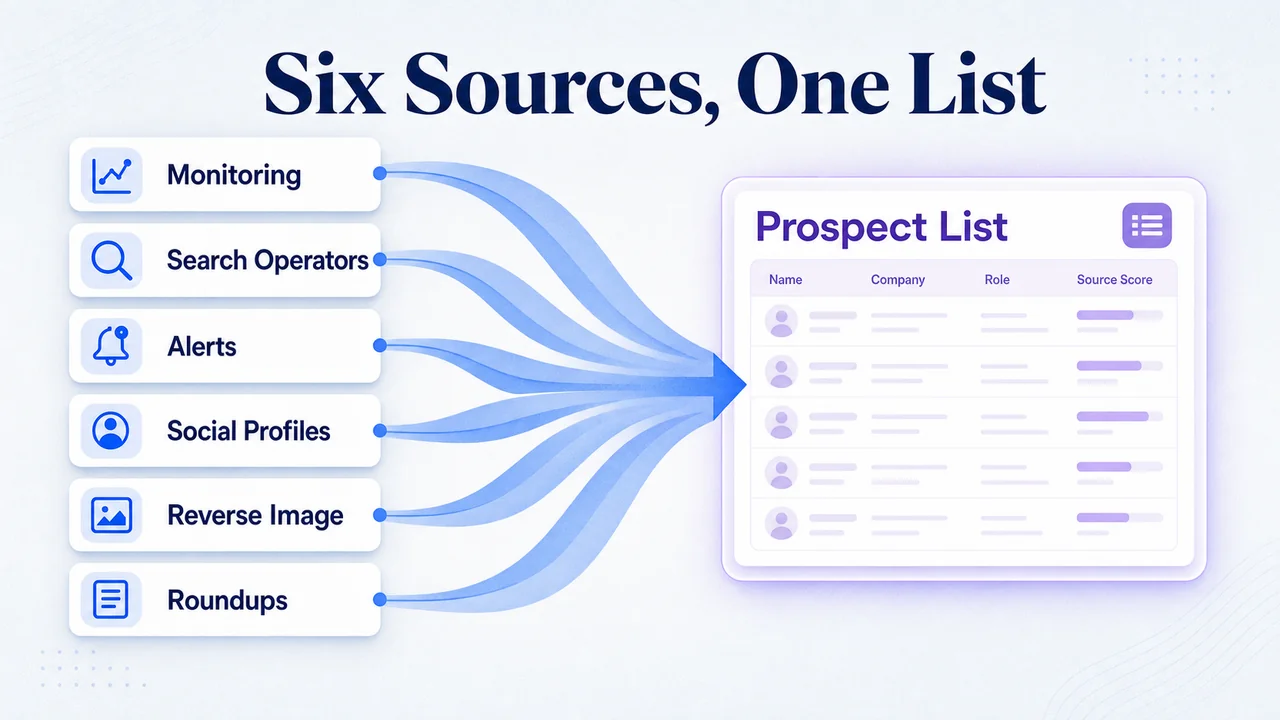
Step 1: Pull Mentions From Monitoring Tools and Alerts
Start with a brand monitoring or media monitoring tool, because it surfaces new mentions automatically and saves you the manual sweep. Set it to track your full brand set, then capture the page URL, the mention snippet, and the publication date the moment a hit lands. The snippet matters: it tells you the context before you ever open the page, which speeds up later filtering.
Step 2: Run Google Search Operators
Search your brand in quotes alongside the variations you mapped: product names, executive names, your slogan, and misspellings. Combine those with words that signal editorial coverage, like review, interview, podcast, roundup, award, and list. A search for your brand in quotes plus “roundup” surfaces listicles where you are named but not linked, and those pages convert well because editors expect to add references.
Step 3: Set Google Alerts and News Alerts
Create alerts for your exact brand and your highest-value variations so new coverage reaches you as it publishes. Alerts are built for ongoing discovery, not bulk historical prospecting, so use them to keep the pipeline fed rather than to mine the back catalog. If you have never set one up, our three-minute Google News alert walkthrough gets it running fast.
Step 4: Check Social and Profile Mentions
Look at public bios, profile pages, creator pages, and company directory pages where your brand name appears without a link. These are easy to overlook because they are not articles, but a creator who lists your tool in their bio or a directory that names you in a profile blurb is a live opportunity. Many of these owners can edit the page themselves in seconds.
Step 5: Run Reverse Image Search
Use reverse image search for your logo, product shots, infographics, and any original visuals you have published. Sites that reuse your graphics without crediting the source are clear candidates: they already feature your work, so a link request is reasonable and often welcomed. This catches mentions that text search never finds.
Step 6: Mine Existing Coverage and Roundups
Comb through interviews, podcast pages, listicles, press coverage, and resource pages where editors already reference your brand. These pages are where the highest-intent prospects live, because the editor chose to include you. Fresh editorial coverage and roundup pages usually convert faster than older archive pages, because the editor can update them quickly and still cares about the content.
How to Verify the Mention Is Truly Unlinked
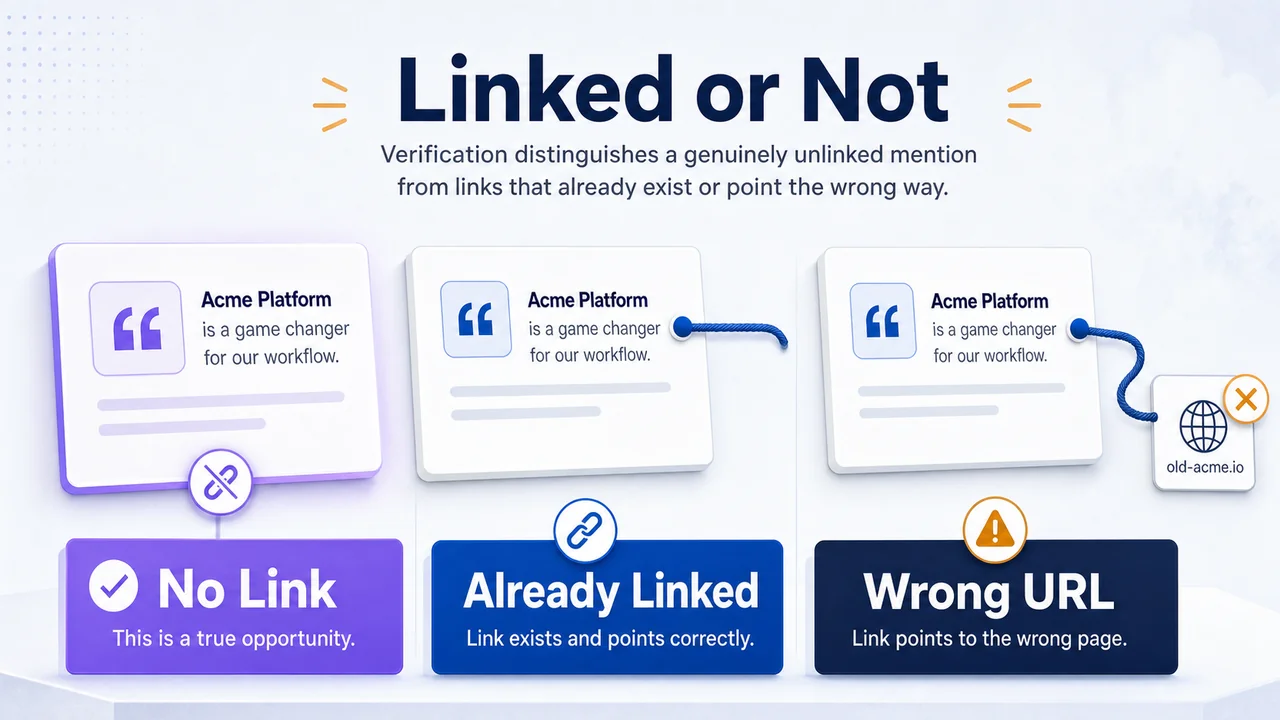
Verify every mention before outreach, because chasing a page that already links to you wastes the publisher’s goodwill and your time. A search snippet or cached preview lies often enough that you check the live page or you check nothing. Five quick checks separate real opportunities from noise.
Step 1: Open the Live Page
Load the actual published page, not the search result or a cached version. Pages get edited, links get added, and your snippet might be months stale. Open it, find the mention with a quick page search for your brand name, and look at whether that text is hyperlinked.
Step 2: Confirm the Link Points to You
If a link exists, check where it goes. Some pages link your brand name to a redirect, an outdated URL, or even a competing property they confused with you. A mention that links to the wrong destination is still an opportunity, just a different one: you are asking for a correction, not a new link.
Step 3: Separate Editorial From User-Generated Content
Editorial mentions inside an article are worth pursuing. Comment sections, forum threads, and user reviews rarely are, because no editor controls them and the link carries little weight even if added. Flag user-generated mentions and move them to the bottom of the list.
Step 4: Tell a Missing Link From a Broken Link
A missing link means the brand is named with no hyperlink at all. A broken link means there is a link, but it points to a dead page. Broken links are often the easier request, because you are helping the publisher fix something already broken on their page rather than asking them to add something new. Flag these separately, because they convert at a different rate.
Step 5: Note Whether an Existing Link Is Nofollow
If the page already links you with a nofollow attribute, that changes the calculus. The placement still drives referral traffic and brand visibility, but it passes a weaker ranking signal. Decide case by case whether the page is worth a request to upgrade or whether your effort belongs elsewhere.
How to Filter and Prioritize the Opportunities
Not every unlinked mention deserves outreach, even when it is genuinely unlinked. Score each prospect on six signals, then sort into tiers so your team contacts the strongest first. A simple scoring pass turns a messy list into a ranked queue.
| Signal | What You Are Judging | Higher Score When |
|---|---|---|
| Relevance | Topical fit to your niche | The page covers your category directly |
| Authority | The site’s standing | The domain is trusted in your space |
| Traffic potential | Real audience on the page | The page draws active readers |
| Freshness | How recent the content is | Published or updated recently |
| Editorial control | Whether someone can edit it | A clear editor or owner exists |
| Likelihood of response | Odds of a reply | Contactable, active publisher |
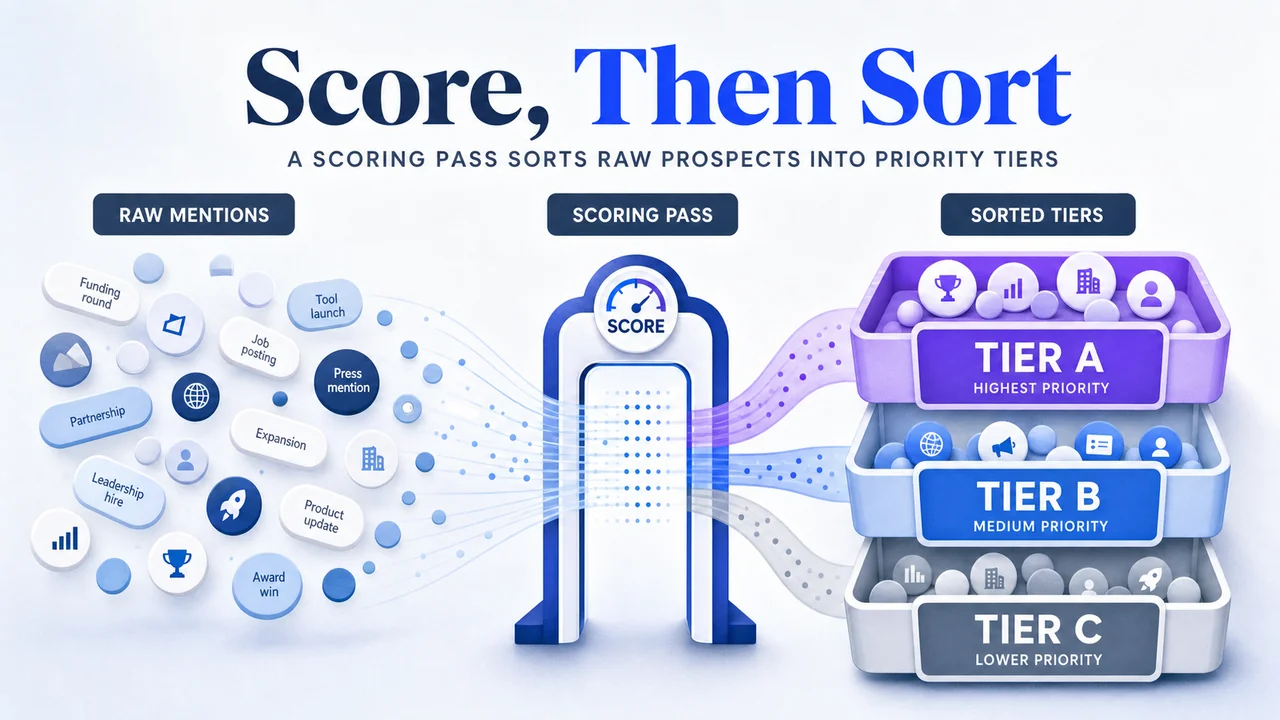
Sort the scored prospects into A, B, and C tiers. Tier A gets contacted this week, Tier B next, and Tier C only if you have spare capacity. Prioritize positive or neutral mentions on pages that are actively maintained, and de-prioritize low-value directories, spammy roundups, stale archives, and pages with no obvious owner. Pages that already cite sources or name competitors tend to support outbound links naturally, so they slot higher.
The strongest prospects are usually niche-relevant pages with active editorial ownership, not the highest-authority domains in your space. A trusted site in your exact category, run by an editor who replies to email, beats a massive general publication where no one can find or edit the page. If you are still weighing whether links or raw mentions matter more for your goals, our take on brand mentions versus backlinks sets the context.
How to Find the Right Contact and Write the Outreach Request
Reach the person who can actually edit the page, then ask in a way that takes them under a minute to approve. The fastest conversions come from short, reader-first requests sent to the right inbox, not long SEO pitches blasted to a generic contact form.
Step 1: Identify Who Can Edit the Page
Find the author, editor, content manager, or webmaster with edit rights. Start with the byline and author page, then the contact or newsroom page, then the person’s profile on professional networks, then the site’s contact form. Save generic inboxes for last, because they convert poorly. If no owner is obvious, contact the most likely editorial operator rather than scattering the request across random departments.
Step 2: Write a Subject Line That Reads as Help, Not a Pitch
Name the specific page or say something like “quick update on your [topic] piece.” A subject that sounds like a link pitch gets ignored or filed as spam. A subject that references their actual content reads as a reader being helpful, which earns the open.
Step 3: Keep the Body to Four Moves
A strong request does exactly four things: greet the person, name the exact mention and where it sits, explain why the link helps their readers, and hand over the correct destination URL. Skip anchor-text requests, skip SEO jargon, and skip anything that reads as mass-emailed. Here is the shape:
Hi [Name], I was reading your piece on [topic] and noticed you mentioned [Brand] in the section on [detail]. Readers clicking through to learn more would land in the right place if it linked to [URL]. Totally your call, and thanks either way for the kind reference.
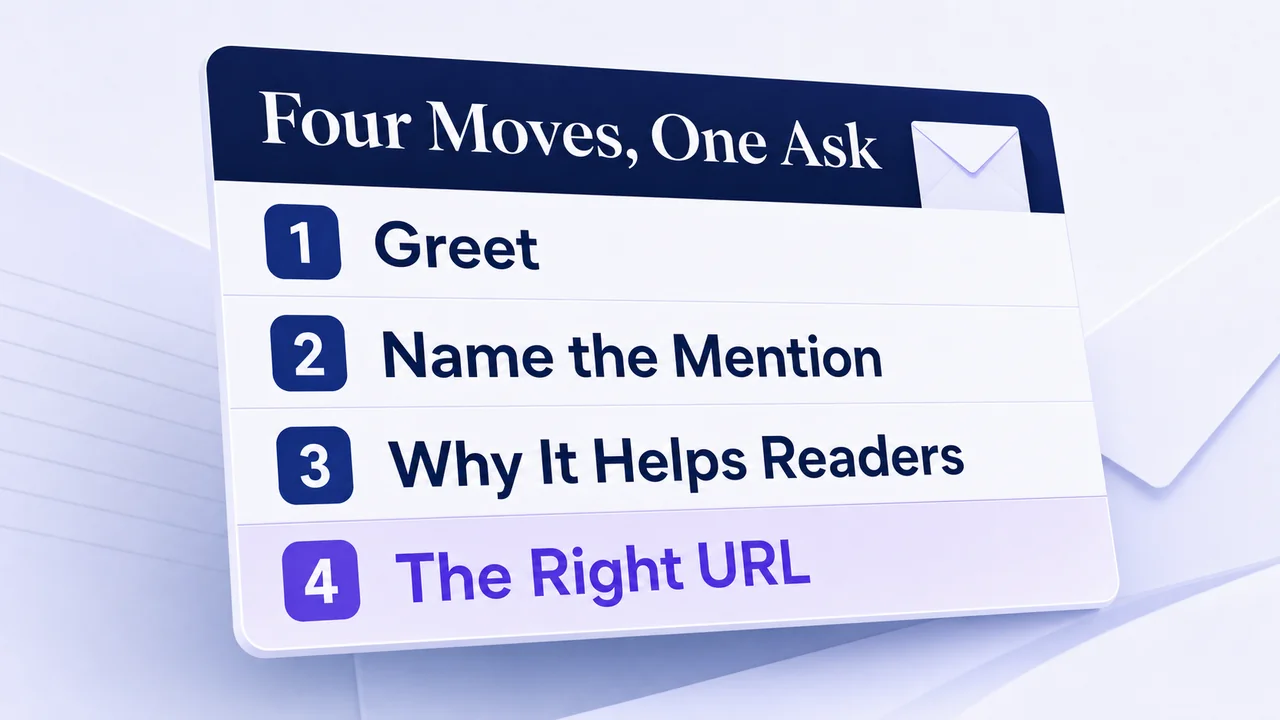
Short, reader-first requests convert better than long explanations, because they reduce friction for the publisher. The moment your email reads like an SEO favor rather than a useful nudge, the reply rate drops. Lead with their content and their readers, and the link becomes an easy yes.
See where AI answers put your brand
One free audit: 25 category prompts across every major engine, your citation share against named competitors, and a clear read on what a programme would change.
Request a free auditHow to Follow Up, Handle Replies, and Track Results
Turn replies into live links with a disciplined follow-up cadence and a tracker that records every outcome. Most teams recover a meaningful share of wins on the first follow-up, but only when the prospect list is well prioritized and the ask stays concise.
Step 1: Follow Up on a Set Cadence
Send the first nudge 5 to 7 days after the initial email, then one final nudge 7 to 10 days after that. Keep follow-ups even shorter than the first message: a single line referencing your earlier note is enough. Two follow-ups is the ceiling for most prospects. Past that, you are annoying people, not converting them.
Step 2: Handle Common Replies
If the publisher asks for more context, resend the exact page, the mention snippet, and the destination URL in one tidy message. If they ask for a reciprocal link, decide based on relevance and editorial value, not convenience. If they ask for payment, only proceed when it fits your brand’s rules and risk tolerance, and treat that as a separate decision from earned-link outreach.
Step 3: Accept Partial Wins When They Add Value
A live followed link is the goal, but it is not the only good outcome. A nofollow link, a citation-only update, or a corrected mention can still add value when a full link is not on offer. Take the win, log it accurately, and move on.
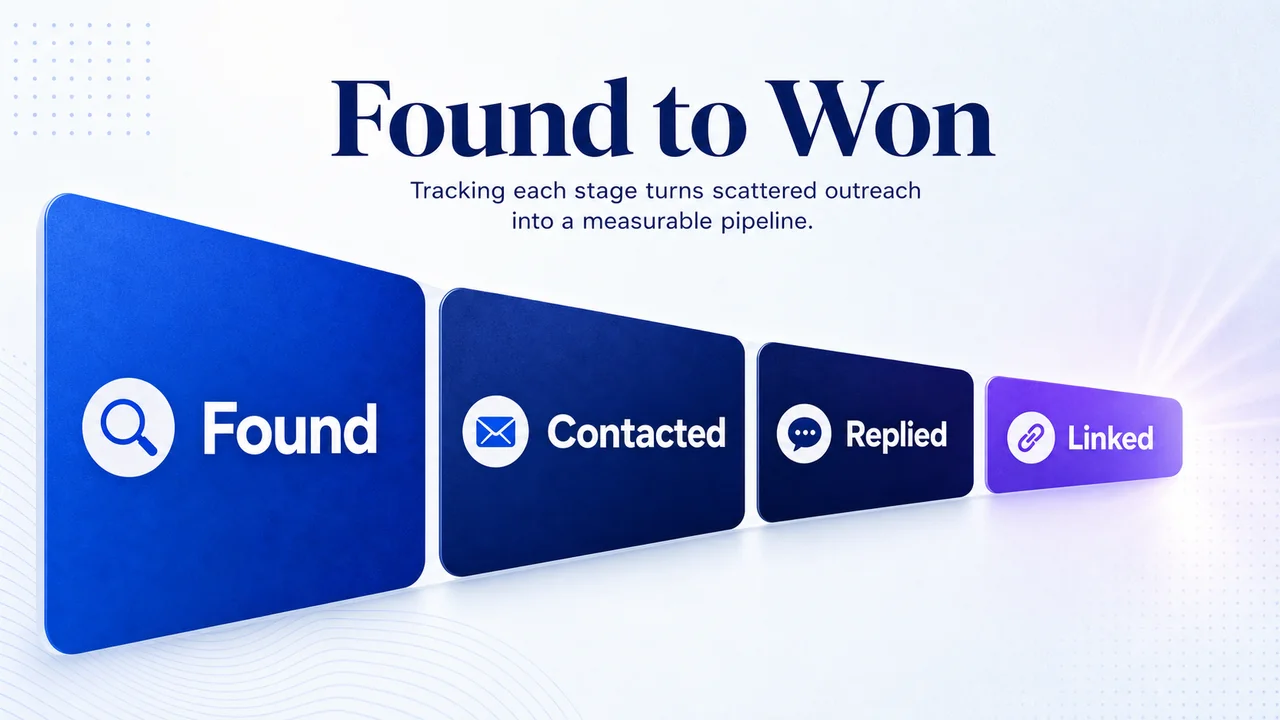
Step 4: Track Every Outcome Separately
Record found, contacted, replied, linked, nofollow, rejected, and ignored as distinct statuses. Then measure response rate, link conversion rate, and which source types close most often. That data is what makes the next cycle faster, because it tells you where to spend your outreach hours.
Tips, Common Pitfalls, and Realistic Expectations
The real gain comes from consistency and timing, not from chasing every mention you find. A few habits separate the teams that win links steadily from the ones that burn out after one batch.
- Prioritize fresh mentions first, because editors update recent pages far more willingly than old archives.
- Personalize every request with the exact page title or article topic, never a templated greeting.
- Do not request exact-match anchor text or force keyword-rich links, because that flags the email as an SEO play.
- Do not chase low-value pages, irrelevant mentions, or content no one can edit.
- Do not mass-email one template to your whole list, because it shows and it gets ignored.
- Expect a minority of prospects to convert, and treat that as normal rather than failure.
Set the bar honestly. Success here looks like a cleaner prospect list, a repeatable workflow, and a steady stream of backlink wins pulled from coverage you already earned. The conversion rate depends on mention quality, niche relevance, and how consistently you run the cycle. If you would rather hand this off than build the pipeline in-house, our overview of unlinked mention reclamation services covers what to look for in a provider.
2026 Data: Why Converting Unlinked Mentions Matters More Now
Google’s patent filings reference “implied links” — unlinked mentions from authoritative sources that can pass entity-trust value similar to a backlink. Ahrefs’ 75,000-brand study confirms branded web mentions correlate with AI visibility at 0.66-0.71 regardless of whether they carry a hyperlink. That means every unlinked mention you find and convert is doing double duty: strengthening entity signals immediately, and adding full link equity once converted.
Frequently Asked Questions
Do unlinked brand mentions help SEO?
Unlinked brand mentions support brand recognition and entity signals, but they do not pass link equity the way a hyperlink does. Search engines can associate the mention with your brand and use it as a context signal, yet a real link carries the ranking weight. That gap is exactly why converting mentions into links is worth the effort: you keep the brand signal and add the link value on top.
How do I find unlinked brand mentions?
Find them by combining automated monitoring with manual search. Set a brand monitoring tool and Google Alerts to track your brand name, product names, and founder names, then run Google search operators with your brand in quotes plus terms like review, interview, and roundup. Add reverse image search for your logo and visuals, and check social profiles and directory pages where your name appears without a link.
How do you turn unlinked mentions into backlinks?
You verify the mention is genuinely unlinked, identify the editor or author who can edit the page, then send a short, friendly email naming the exact mention and offering the correct URL. Say a writer covered your product launch and named you without linking. You email them, point to the line, explain that a link helps their readers reach the source, and hand over the URL. A clean ask plus one polite follow-up wins a solid share of these.
Are unlinked brand mentions worth it for local SEO?
Yes, especially when the mention sits on a locally relevant or industry-specific site. A converted link from a regional publication or a local resource page strengthens both your link profile and your local relevance signals. Even when a mention stays unlinked, a consistent citation of your business name and details supports how search engines understand your local presence.
What if a publisher wants payment or a reciprocal link?
Treat both as separate decisions from standard earned-link outreach. A reciprocal link is fine when the other site is genuinely relevant and the exchange adds value for readers, not just for rankings. Paid placement only makes sense when it fits your brand’s link policy and risk tolerance, and many teams decline it outright to keep their profile clean. There is no obligation to say yes just because they asked.
Start With Your Freshest Mentions This Week
Unlinked brand mentions are some of the easiest links you will ever earn, because the hard part, getting noticed, is already done. The teams that win at this do not chase every mention; they run a tight cycle on the freshest, most relevant ones and let the wins compound. Pull your last 30 days of coverage, score the top handful, and send your first batch of requests before the pages go stale. Want to see where your brand stands and which mentions are sitting unclaimed right now? Get a free AI visibility audit and start the cycle with real data.