
White label link building is not a shortcut to easy rankings. It is an outsourced fulfillment model where a third-party provider acquires backlinks for your clients while you present the work under your own brand. You keep the client relationship, the reporting, and the strategy; the provider handles prospecting, outreach, and placement behind the scenes. For an agency with backlink demand but no in-house outreach team, it can be a practical way to deliver links without expanding payroll. This guide explains how the model works, the main service types you can buy, and what to vet before you sign anything.
What White Label Link Building Means
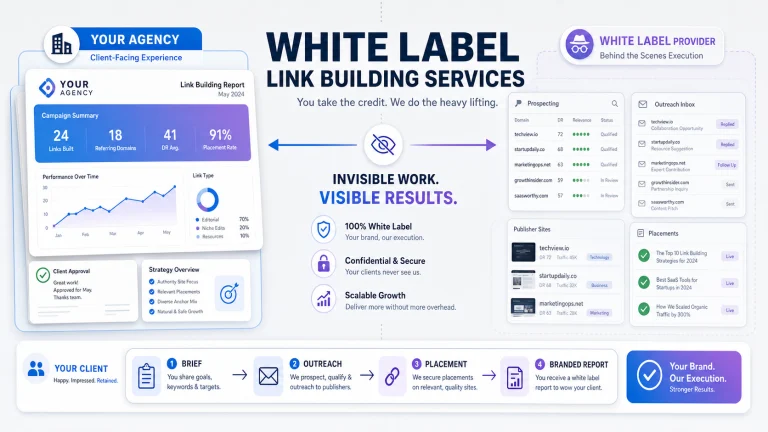
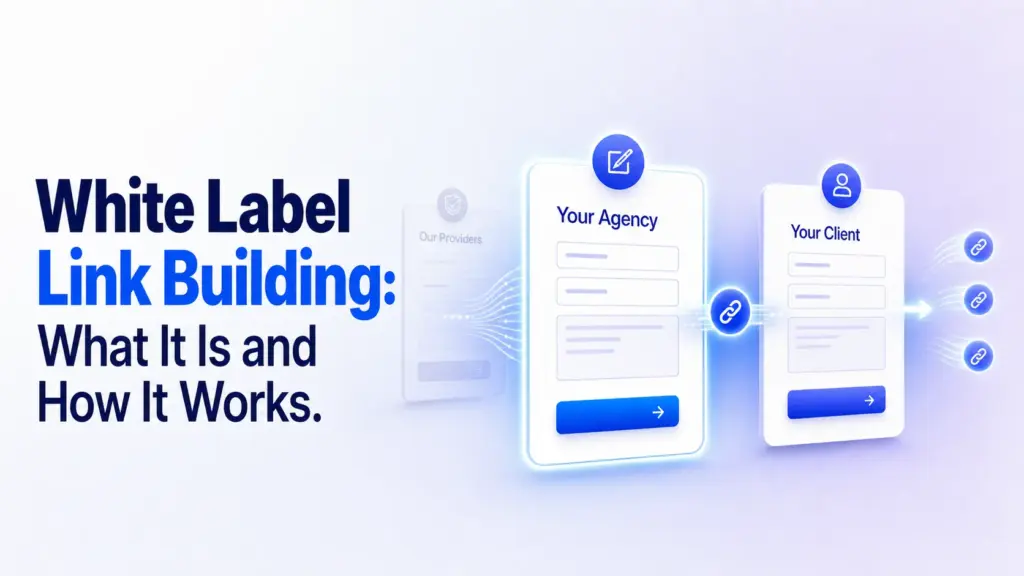
White label link building is a fulfillment model in which a specialized provider builds backlinks on behalf of an agency, and the agency delivers those links to the end client as its own service. The client never sees the provider. They see your brand on the report, your account manager in the inbox, and your strategy framing the work.
The word “white label” is the key. It signals that the provider’s name, branding, and identity are stripped from everything client-facing. What reaches the client looks like your agency built the links in-house.
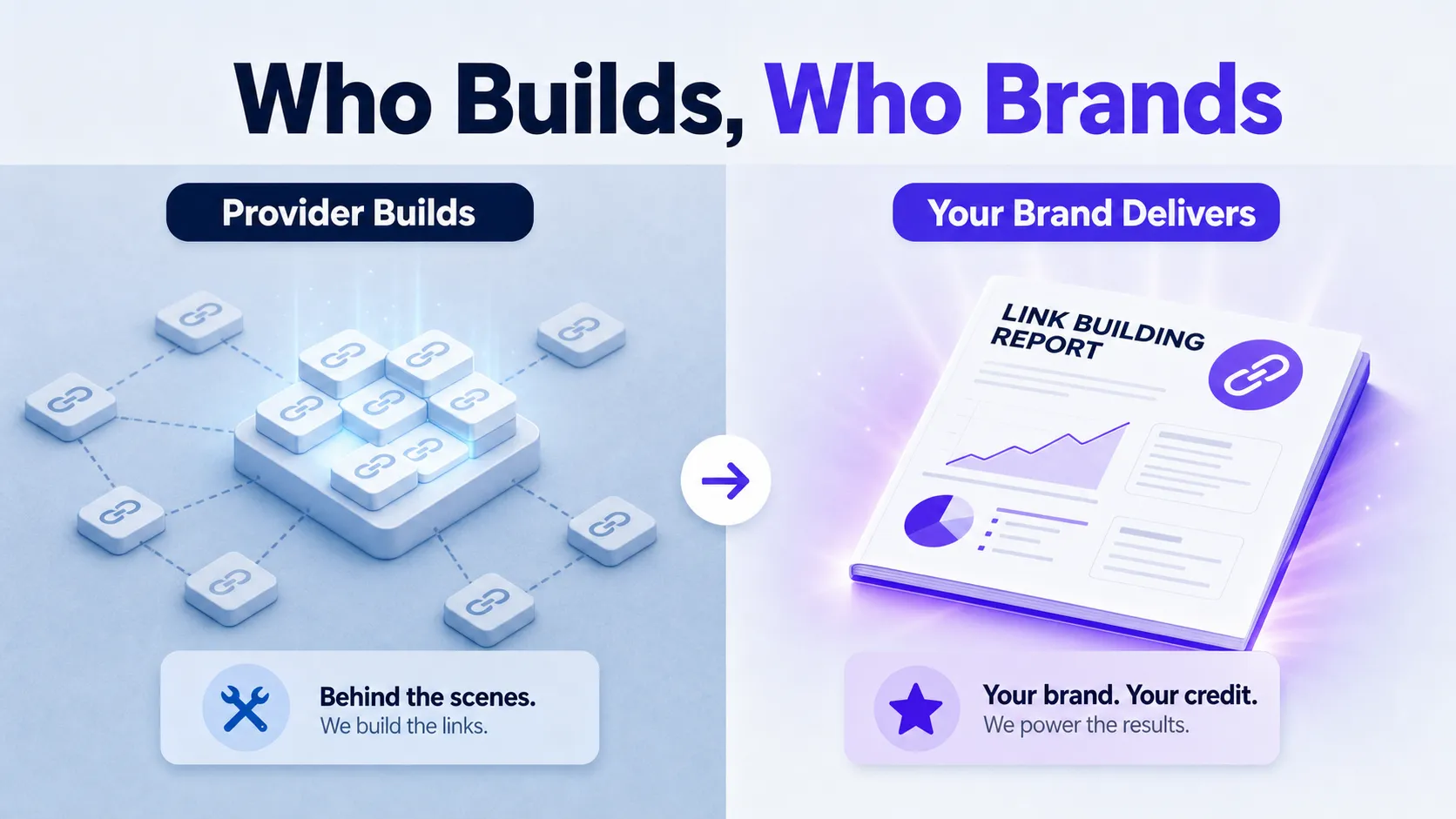
This is not a separate SEO tactic. The links themselves are the same guest posts, niche edits, and editorial placements any link campaign uses. What changes is who executes them and whose name carries the result. A guest post built white label is still a guest post. The model describes the commercial arrangement, not the link.
It also differs from a few things agencies often confuse it with. Hiring a freelancer means you manage one person’s capacity and quality directly. Buying from a marketplace means you pick individual placements off a list, often without much vetting. White label link building sits closer to a managed partnership: the provider runs the process end to end and hands you finished, branded deliverables.
The best providers behave like an invisible extension of your team. If a client ever senses a third party in the chain, the model has slipped. Good white label fulfillment is felt by you and never seen by them. For the broader decision of whether to keep this work internal, our take on in-house versus outsourced link building covers the tradeoffs in depth.
Why Agencies Use White Label Link Building
Agencies use it to offer backlinks without building, training, and managing an internal outreach team. The work is labor-heavy, relationship-driven, and slow to staff well, so outsourcing the execution lets a small team sell a service that would otherwise be out of reach.
Capacity is the most common driver. Prospecting sites, writing pitches, negotiating with publishers, and placing links at any real volume eats hours that a lean team does not have. A provider absorbs that load so your people stay on strategy and client communication.
Specialization matters too. A dedicated provider already runs outreach systems and holds publisher relationships that take years to build from scratch. You inherit that infrastructure on day one instead of rebuilding it. That usually means better placement quality than a team learning outreach on the job.
Then there is margin. When link building is bundled into a retainer, outsourcing fulfillment at a wholesale rate while billing at your service rate protects the spread. You add a revenue line without the fixed cost of salaries, tools, and onboarding.
Speed closes the case. Hiring an outreach specialist, training them, and waiting for their first placements can take a quarter or more. A provider can start producing inside weeks. Many agencies turn to this model the moment a client asks for backlinks and the internal answer is “we do not have the bandwidth.” That single conversation, repeated across clients, is what sends most agencies looking. If you are weighing the broader build-or-buy question, our guide on how to outsource link building walks through budgeting and management.
How White Label Link Building Works
The white label workflow runs from a client brief to a branded handoff, with the provider doing the heavy lifting in the middle. Understanding the sequence makes the model concrete instead of abstract, and it tells you where your agency stays in control.
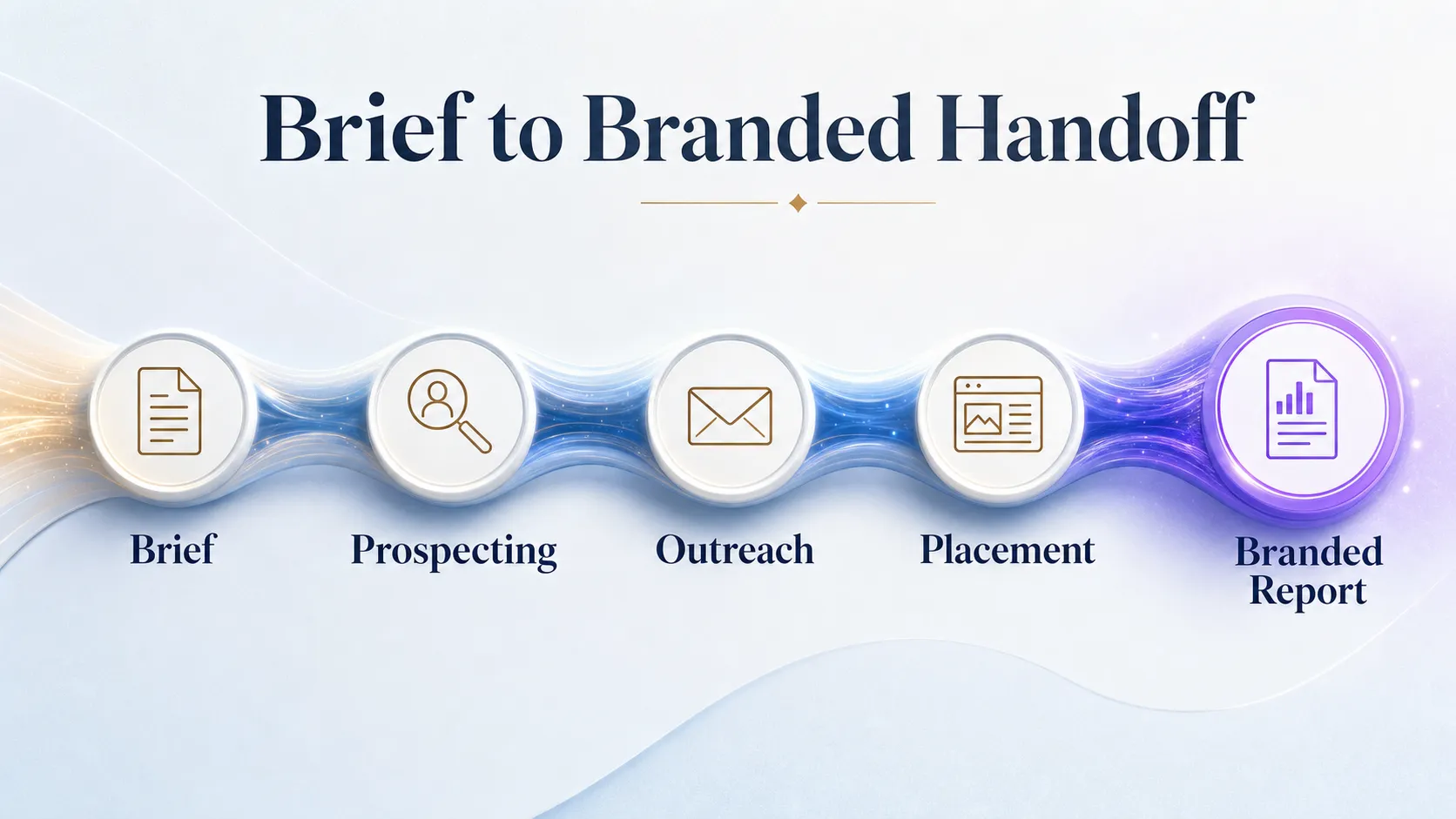
Step 1: Set the Brief
The campaign starts with your client’s goals translated into a brief. You define target pages, anchor text preferences, the niche, and the client’s risk tolerance. A good provider asks for this detail up front, because a campaign built without it produces links that miss the pages that matter.
Step 2: Prospect and Vet Sites
The provider builds a list of candidate sites and vets each one before any outreach begins. This is where quality is won or lost. Strong providers screen for relevance, real traffic, and editorial standards, and they reject spammy or thin domains rather than padding the list.
Step 3: Run Outreach and Create Content
With a vetted shortlist, the provider pitches publishers, negotiates placement, and writes the content the link sits inside. The link is woven into a useful article or an existing page, not dropped into filler. This stage carries the relationship work that makes placements possible at all.
Step 4: Place the Link
Once a publisher agrees and content is approved, the link goes live. The provider confirms the placement, records the live URL, and captures the metrics that will appear in your report.
Step 5: Report Under Your Brand
The provider assembles the deliverable with your branding, your logo, and your framing, then hands it to you to forward to the client. The report carries live URLs, anchor text, and site metrics in a client-ready format. You present it as your agency’s work.
Step 6: Handle Revisions and Replacements
Campaigns are not finished at placement. If a link is removed or a placement changes, a reliable provider revises or replaces it under an agreed policy and keeps you informed. This is the part that separates a partner from a one-off vendor.
Main Types of White Label Link Building
Agencies buy this service in a few distinct formats, and each suits a different need. Matching the type to the client’s situation matters more than picking the format that sounds most impressive.
| Link type | What it is | Best fit |
|---|---|---|
| Guest posts | Authored articles placed on a relevant publisher, with the client’s link inside the content. | Controlled, contextual placements where the client wants branded content and a chosen anchor. |
| Niche edits (link insertions) | A link added into an existing published article that already holds authority and indexing. | Pages that benefit from a contextual link inside content already ranking and indexed. |
| Editorial links | Earned placements where a publisher links because the content genuinely merits it. | More selective campaigns where authority and credibility matter more than volume. |
| Digital PR placements | Brand-led campaigns that earn coverage and links from media and industry sites. | Stronger authority and broader visibility when the client has a story worth pitching. |
Most agencies mix these rather than rely on one. The right blend depends on the niche, the budget, and what the client expects to see. A new client with thin authority often starts with guest posts and niche edits for momentum, then layers in editorial and digital PR as the profile matures. If you are choosing between the two most common formats, our breakdown of guest posting versus niche edits explains when each wins, and our view on editorial link building covers the earned end of the spectrum.
What to Evaluate Before You Outsource
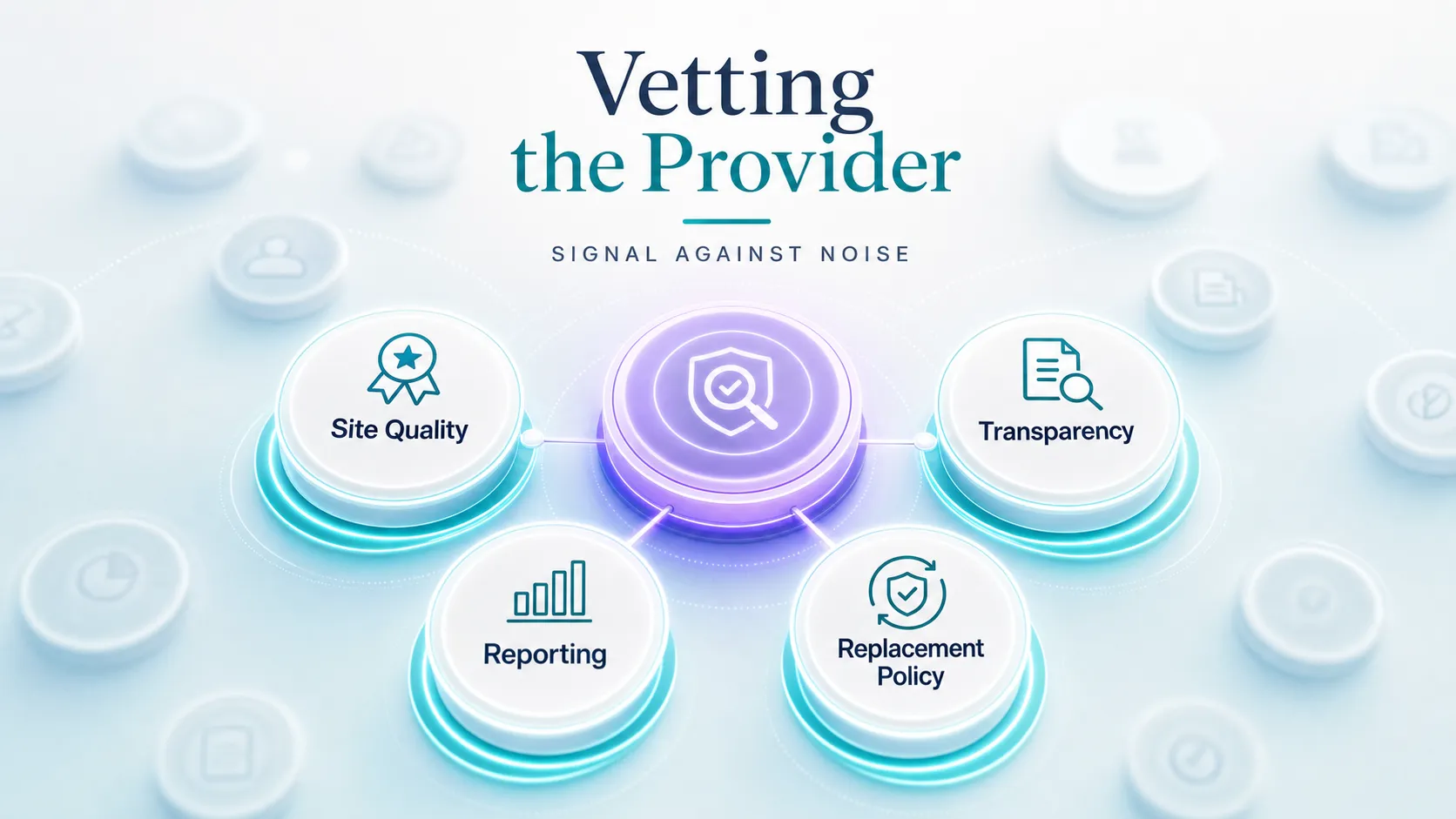
Before you commit to a provider, judge it like a fulfillment partner, not a price line. The cheapest option and the highest domain metric both fail you if the process behind them is opaque. These are the criteria that actually predict whether the relationship holds up.
Site Quality
Look at relevance, real traffic signals, and editorial standards, not just a domain score. A site with a high metric and no genuine readership is a vanity placement. Ask how the provider screens for spam indicators and whether it ever rejects sites that do not meet the bar.
Transparency
The strongest providers show you the site URL, its metrics, or an approval option before placement. If a provider refuses to reveal where links will live, you cannot defend the work to a client, and you are buying blind.
Reporting
Confirm what you receive, how often, and whether it arrives client-ready. A report you can forward without rebuilding it saves hours every cycle. A spreadsheet you have to reformat is a hidden cost.
Turnaround Time
Realistic timelines beat fast promises. Manual outreach and editorial placement take weeks, not days, and a provider quoting suspiciously quick delivery is usually cutting corners on vetting or quality.
Replacement Policy
Ask what happens when a live link is removed. A clear replacement window protects the deliverable you already billed for. No policy means the risk lands on you.
Communication
Check whether you get a dedicated account contact or a clear response cadence. When a client question comes in, you need answers from the provider on your timeline, not theirs.
Safe Acquisition Methods
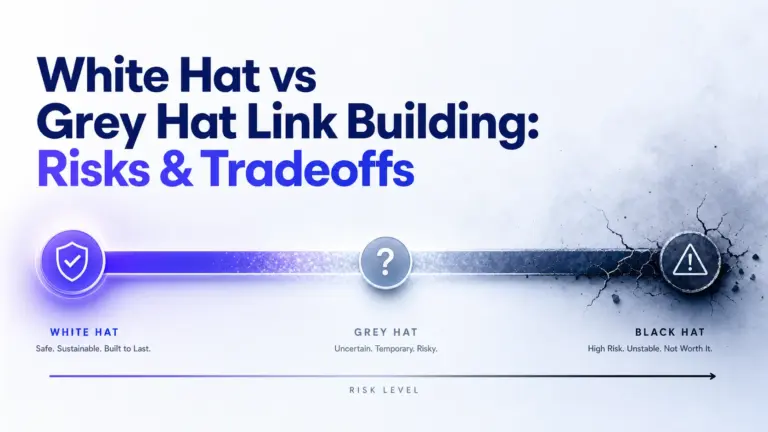
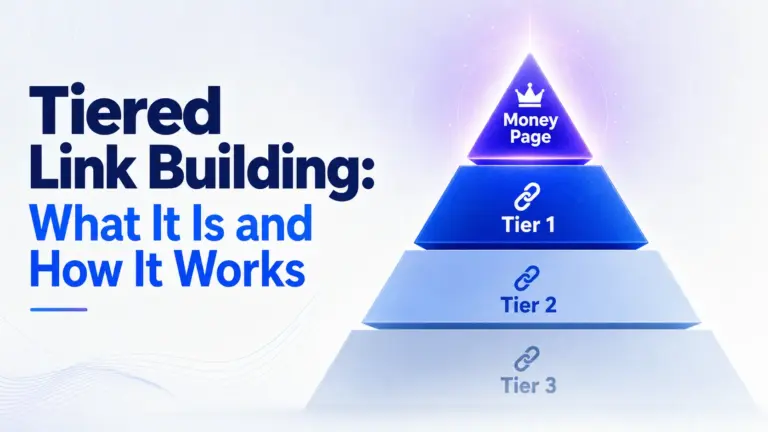
Confirm the provider relies on manual outreach and editorial review. Private blog networks and link farms are red flags that put your client’s domain at risk, and that risk becomes your liability the moment you resell the work.
Common Mistakes and Misconceptions
Most bad white label decisions trace back to a few wrong assumptions. Clearing them up before you buy saves you from the failures that quietly damage client trust.
The first is treating all such services as the same. A provider running manual outreach with vetted publishers and one selling blind link lists are not the same purchase, even when the price looks similar. The label tells you nothing about the process underneath it.
The second is believing more links automatically mean better results. A handful of relevant, credible placements usually outperforms a pile of low-quality ones. Volume without relevance is noise, and clients eventually notice when rankings do not move.
The third is assuming low-cost providers are just as good. Suspiciously cheap pricing usually hides weak site quality or thin process control. Someone is absorbing the cost of doing it properly, and at rock-bottom prices, that someone is not the provider.
The fourth is trusting opaque vendors. A provider that will not disclose placements or methods is asking you to resell work you cannot inspect. When a client questions a link, you have nothing to stand on.
The fifth is thinking a guarantee alone proves a provider is safe. A replacement guarantee is useful, but it does not validate quality. The real failure mode is rarely a single bad link. It is poor process visibility that makes the work impossible to defend when a client or an algorithm update puts it under scrutiny.
When White Label Link Building Is and Is Not a Fit
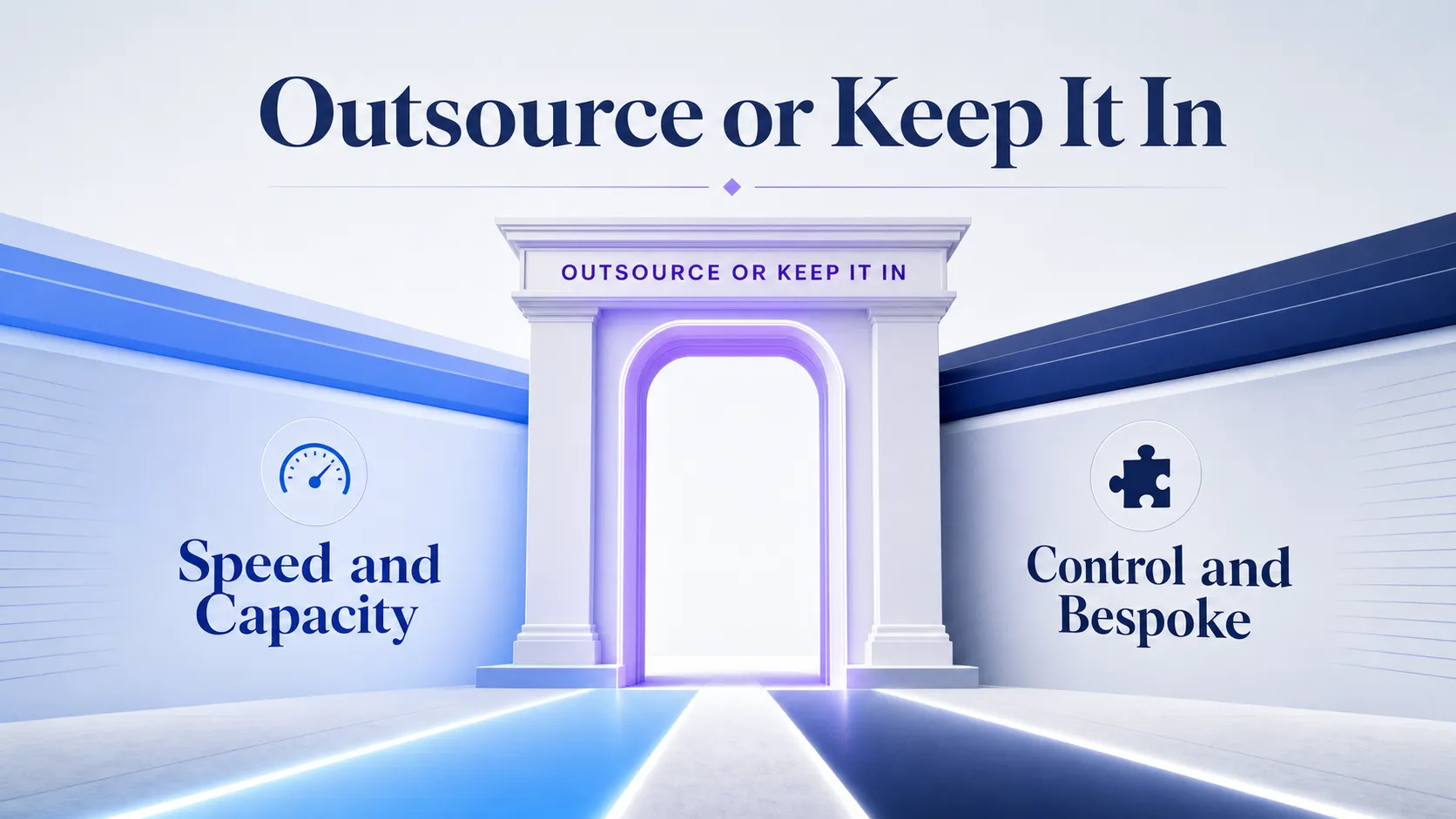
This model fits when speed and capacity matter more than granular control. It is the wrong call when you need to shape every placement by hand. The decision is operational, not moral, and it turns on your team size, your margin targets, and how much execution control you want.
It is a strong fit when you have client demand for backlinks, limited internal capacity, and a need to scale a fulfillment layer quickly. It also fits when you want to sell link building without hiring and managing a full outreach team, since the provider supplies the infrastructure you would otherwise build.
It is less suitable when you need deep strategic control over every individual placement. Agencies running bespoke, high-stakes campaigns where each link is a deliberate strategic move often want the execution closer to home.
It is also a poor fit if you lack an internal process for reviewing deliverables and communicating results. White label fulfillment hands you finished links, but you still own the client relationship. Without a system to check the work and frame it, even good links land badly.
The simple rule: outsource when speed and capacity are the priority, and keep link building in-house when control and bespoke strategy matter most. For agencies weighing a specialist freelancer instead, our comparison of a link building agency versus a freelancer sharpens that choice.
White Label Link Building FAQs
What is white label link building?
White label link building is a fulfillment model where a specialized provider builds backlinks on behalf of an agency, and the agency delivers those links to its client under its own brand. The client never knows a third party was involved. The agency keeps the relationship, the reporting, and the strategy.
How does white label link building work for agencies?
It works as a behind-the-scenes pipeline. You give the provider a client brief, they prospect and vet sites, run outreach, create content, place the link, and hand you a branded report you forward to the client. You stay client-facing throughout while the provider absorbs the labor-heavy execution.
Is white label link building the same as outsourcing link building?
It is a specific kind of outsourcing. General outsourcing can mean hiring a freelancer or buying from a marketplace, where the work may not be branded. White label specifically means the provider’s identity is stripped from everything the client sees, so the deliverable looks like your agency built it.
What should an agency look for in a white label link building provider?
Look for site quality, transparency, client-ready reporting, realistic turnaround, a clear replacement policy, and reliable communication. Above all, confirm the provider uses manual outreach and editorial review rather than private blog networks or link farms. A provider that hides its placements or methods is one you cannot defend to a client.
Are guest posts and niche edits part of white label link building?
Yes. Guest posts and niche edits are two of the most common formats agencies buy through white label providers. Guest posts place authored content with a contextual link, while niche edits insert a link into an existing published article. Most agencies use a mix, often adding editorial links and digital PR as a client’s authority grows.
It earns its place when your agency has real backlink demand and no realistic way to staff outreach internally. The honest reality is that the model lives or dies on the provider you choose: a transparent partner with vetted sites and clean reporting compounds your value, while an opaque one quietly erodes the trust you have built with clients.
Vet the process, not the price, and treat the provider like an extension of your team rather than a line item. If you want to see where your clients stand in search and AI answers before you scale any link program, book a short strategy call and start from a clear baseline.