
If you run a small business, the fastest link-building wins usually come from relationships you already have, not from cold-pitching random websites. The owners, partners, suppliers, and local groups already connected to your business are sitting on links you can earn this week.
This guide skips the theory and walks you through a practical, low-budget workflow that fits a few hours a week, not a full-time SEO team. The easiest starting points are local citations, partner links, and unlinked mentions of your business that already exist without a link back. Everything that follows builds from those quick wins toward steady, compounding authority.
What You Need Before You Start
Before you send a single pitch, set up the basics so your effort sends visitors to pages that can actually convert and so you can track what works. Most small-business campaigns stall early because there was no tracking system and no target page before outreach began.
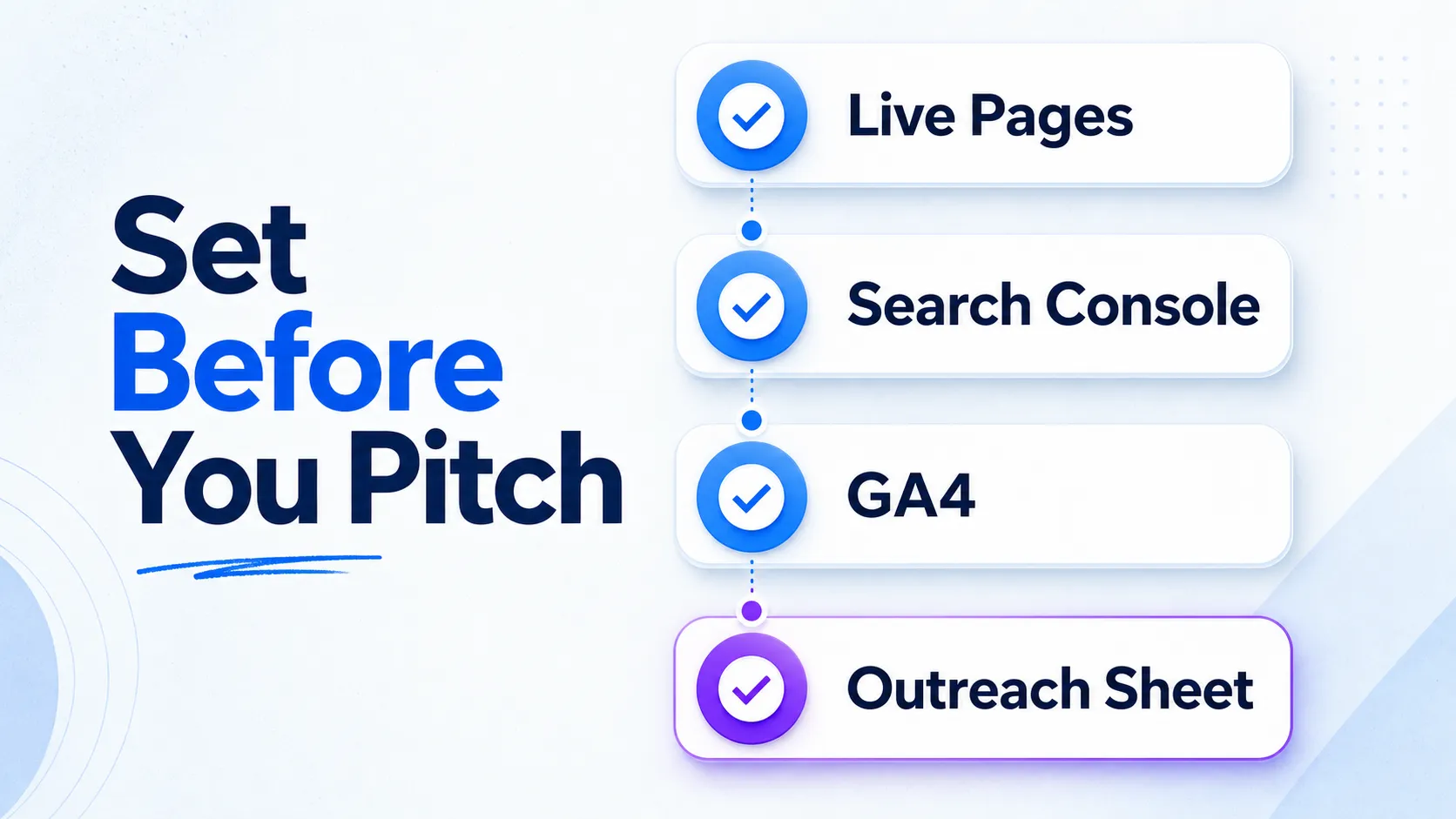
Here is the non-negotiable starting kit:
- A live website with at least one clear service page or location page worth linking to
- Google Search Console access, so you can see your existing backlinks for free
- Google Analytics 4 (GA4) access, so you can track referral traffic from new links
- A simple outreach spreadsheet to keep prospects and follow-ups in one place
- A clear target audience or location, so you know which sites are actually relevant
Your spreadsheet does not need to be fancy. One row per prospect with these columns is enough: prospect name, URL, contact, tactic, relevance score, outreach date, follow-up date, and result. That single sheet keeps you from pitching the same site twice and shows you which tactics earn replies.
Define what “good” looks like before you chase anything. For a small business, a good link is relevant to your niche or location, can send real referral traffic, and points to a page that turns visitors into customers. A link from a giant site that has nothing to do with your business is worth less than a link from the local supplier your customers already trust.
This approach is built for local service businesses, small ecommerce stores, and very small teams working with limited budget. Plan for a few focused hours per week. Consistency over months beats a frantic burst that fizzles out.
Step 1: Audit Your Current Backlinks and Competitors
Start by mapping the links you already have and the links your competitors earned, because that shows you the realistic opportunities sitting right in front of you. An audit turns guesswork into a shortlist of sites that already link to businesses like yours.

Export your existing backlinks from Google Search Console under the Links report. If you have access to Ahrefs or SEMrush, pull a second export there for more detail. Then sort every link into three buckets:
| Bucket | What it means | Action |
|---|---|---|
| Keep | Relevant, healthy links from real sites | Note the source type and look for more like it |
| Reclaim | Mentions with no link, or broken links to old pages | Reach out and ask for the link or a fix |
| Ignore | Spammy or irrelevant links you did not build | Leave them, do not waste time |
Look for the common gaps that hold small businesses back: no links to your homepage, no links to your key service pages, thin local coverage, or only a handful of referring domains. Each gap is a target. If your best service page has zero links, that page becomes a priority for the assets you build later.
Now study the competition. Pick 3 to 5 direct competitors, ideally ones at a similar size, and inspect their best links. You are not trying to copy a national brand’s link profile. You want the site types that already link in your niche: a local directory, a supplier’s partner page, a regional blog, an industry association. A focused competitor link gap analysis often reveals the fastest realistic wins.
In most small-business audits, the first useful opportunities show up in three places: competitor partner links, local directories, and mentions of your business that already exist without a link. Those are the threads to pull first.
Step 2: Choose the Tactics That Fit Your Business Model
Pick the tactics that match how your business actually works, because the wrong playbook wastes the limited hours you have. A local plumber and a niche ecommerce store need different starting moves.
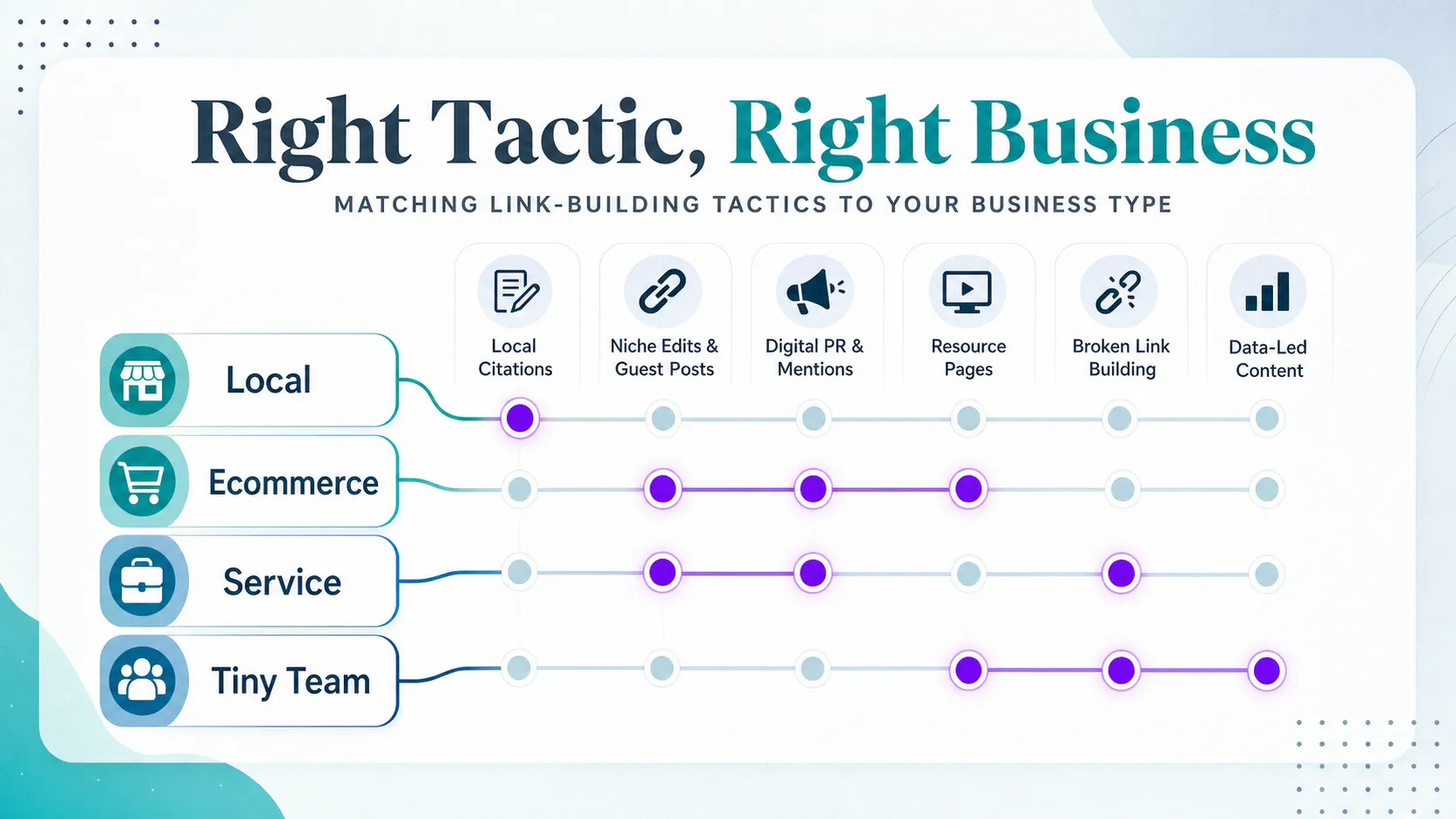
Here is how the main tactics map to common small-business types:
| Tactic | Best fit | Why |
|---|---|---|
| Local citations and directories | Local service businesses | Easy to claim, build local relevance fast |
| Partner links | All types | Suppliers and partners already trust you |
| Unlinked mention reclamation | Businesses with any press or mentions | The link is half-earned already |
| Sponsorships and community links | Local businesses | Visibility plus a relevant link in one move |
| Resource pages | Service and ecommerce | Curated lists welcome genuinely useful pages |
| Guest posts | Teams with content capacity | Higher effort, better for topical authority |
| Digital PR | Brands with news or data | High effort, reserve for genuinely newsworthy angles |
If you run a local business, start with citations, partner links, and community links before you ever cold-pitch a guest post. Those three build relevance quickly and lean on relationships you already have. Earning local backlinks that matter is usually the highest-return path for a business serving one area.
Ecommerce brands face a different reality. Directory submissions do little on their own, so you need better content assets and partner outreach to suppliers, complementary brands, and niche reviewers. The goal is links that also send buyers, not just listings.
Digital PR sits at the high-effort end. Use it only when you have something genuinely newsworthy or a small piece of original data. Pitching journalists with nothing to say burns goodwill you cannot easily rebuild. Small teams almost always get faster wins from relationship-based tactics than from broad guest-post outreach.
Step 3: Prioritize Opportunities by Effort, Relevance, and Payoff
Score every opportunity so you work on the links most likely to help, not the ones with the most impressive logo. A simple scoring habit keeps you from chasing vanity metrics while real wins sit untouched.

Rate each prospect from 1 to 5 on three factors:
| Factor | Low score (1) | High score (5) |
|---|---|---|
| Effort | Months of work, hard to reach | A quick claim or a warm contact |
| Relevance | Unrelated audience or location | Same niche or local area as you |
| Payoff | No realistic traffic or authority | Sends buyers or builds local trust |
The best small-business opportunity is high relevance, moderate-to-low effort, and likely to drive referral traffic or local authority. Existing partners, local directories, unlinked mentions, and resource pages usually score well on all three, so do those first.
Resist the pull of big-name sites that are slow, expensive, or irrelevant to your customers. A national publication link feels impressive, but if its readers will never become your customers and the pitch takes three months, it is the wrong first move. Use one simple rule: if a site is not relevant enough to send you real traffic, it should not be your first target.
Small businesses move faster when they earn the first 10 links from realistic targets before aiming for premium placements. Those early links build momentum, sharpen your outreach, and give you proof the process works.
Step 4: Build a Linkable Asset or Outreach Angle
Give people a real reason to link by creating one asset or angle worth referencing, because outreach without a hook gets ignored. Every campaign needs one clear thing to point at, not ten weak ideas competing for your time.
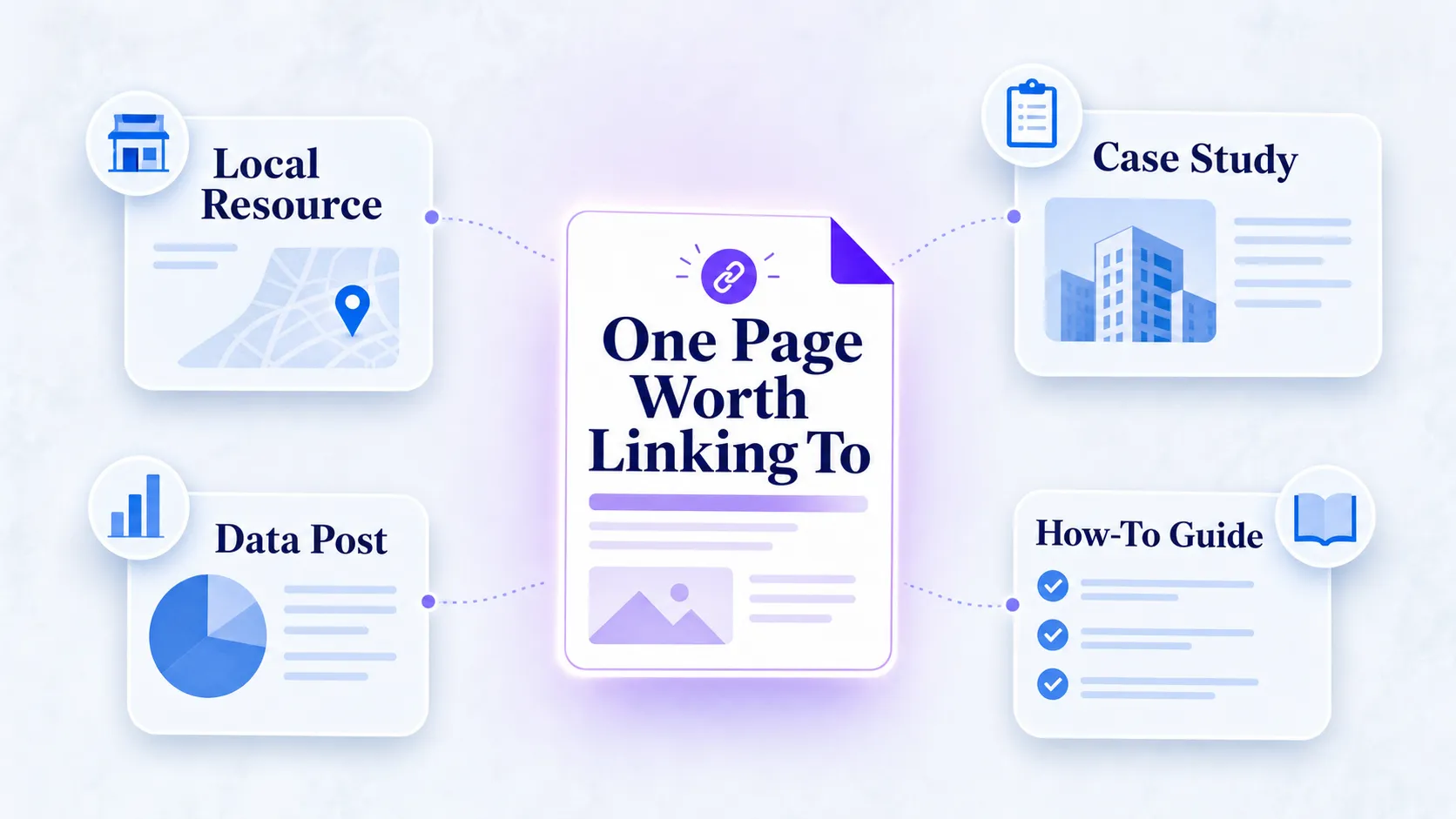
You do not need a research project. You need one useful page that helps a publisher or community. Strong options for a small business include a local resource page, a partner spotlight, a customer case study, a small data post drawn from your own numbers, a genuinely useful how-to guide, or a comparison page that helps buyers decide.
Tailor the asset to the site you want a link from. A regional blog wants something local and specific. A supplier’s resource page wants a guide their customers will value. Match the topic and audience before you build, and the pitch almost writes itself.
Make the asset link-worthy by making it specific, useful, and easy to reference. A page titled “2026 permit requirements for contractors in [your city]” earns links because it answers a real question better than a generic blog post ever will. The clearer and more useful the page, the less you have to sell it. A resource page link-building approach works because curators are actively looking for pages exactly like that.
One strong page usually does more for outreach success than a full content calendar of generic posts. Build the single best thing you can, then point every pitch at it.
Step 5: Run Outreach, Follow Up, and Secure the Link
Reach the right person with a short, human message and confirm the link goes live correctly, because most outreach fails on length and impersonality, not on the offer itself. Who you contact matters as much as what you say.

Match the contact to the tactic. For a guest post, reach the editor. For a partner link, talk to the partnership manager or owner. For a community link, contact the chamber coordinator or group organizer. For a broken or outdated link, find whoever maintains the page. Sending the right message to the wrong inbox wastes your one shot.
Keep the message tight with a simple three-part formula: one line on why their site is relevant to you, one line on the value you bring, and one clear ask. That is the whole email. Short, personalized notes beat long templates and mass blasts every time, because the recipient can see you actually looked at their site.
Set a steady follow-up rhythm: the first email, then two follow-ups spaced across 10 to 14 days. Then stop. Most replies arrive on the first or second follow-up, not the opening email, so the follow-up is where the work pays off. A reply-worthy outreach campaign lives or dies on personalization and persistence, never volume.
When a site agrees, confirm the placement is right. Check that the link is live, points to the correct page, sits in relevant context, uses sensible anchor text, and note whether it is follow or nofollow. A link buried on an unrelated page helps far less than one inside a paragraph your customers would actually read.
See where AI answers put your brand
Twenty minutes with a senior strategist: where the major engines point buyers in your category, who gets named instead of you, and a straight read on what a programme would change.
Book a strategy callStep 6: Track Results and Refine the Process
Measure whether the work is helping the business, not just growing a link count, because raw numbers hide what matters. The signal you care about is qualified traffic and local authority, not a bigger tally.
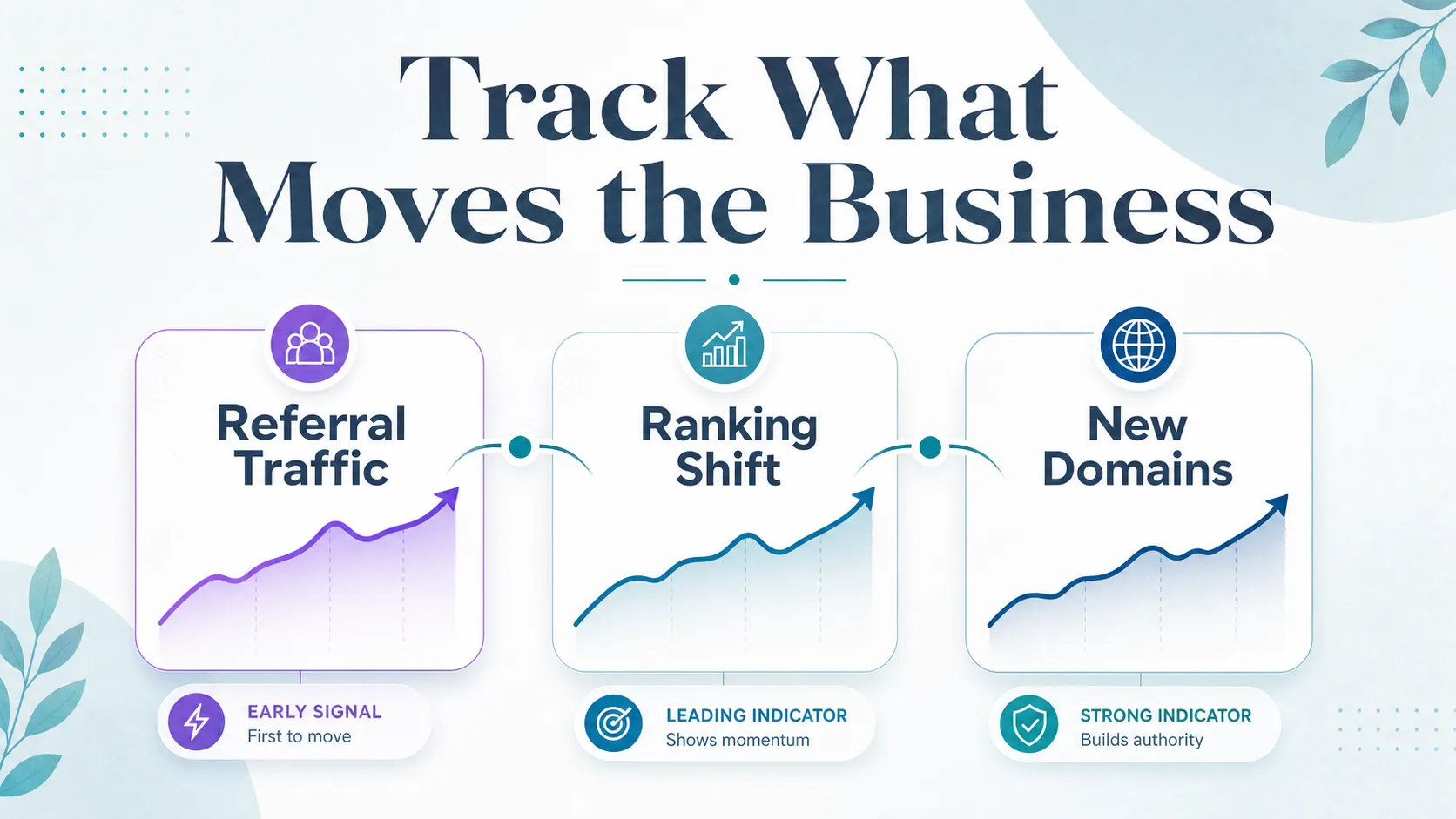
Track these signals in GA4 and Search Console:
- Referral traffic from the sites that linked to you
- Ranking movement for your target service or location pages
- Indexed pages, so you know search engines see your new links
- Lead quality, not just visit counts
- The pace of new referring domains over time
Care more about qualified traffic and local authority than total link volume. Ten relevant links that send buyers beat a hundred listings nobody clicks. When you watch the right signals, you spot what is working and double down on it.
Watch for warning signs that the process needs a fix:
| Symptom | Likely cause | Fix |
|---|---|---|
| Links live, no clicks | Placements on low-traffic or irrelevant pages | Target sites your customers actually visit |
| No ranking movement | Links point to the wrong pages | Direct new links to priority service pages |
| No replies to outreach | Generic or impersonal pitches | Shorten, personalize, fix the relevance line |
| Sudden spam links appear | A bad provider or negative SEO | Ignore irrelevant junk, focus on real links |
Avoid the mistakes that sink small-business campaigns: buying spammy links, chasing irrelevant sites, over-optimizing anchor text, building links too fast, and treating every backlink as equally valuable. None of those shortcuts compound, and several can hurt you. Set realistic timing too. Early signals often show up in referral traffic and impressions before rankings visibly move. In small-business campaigns, referral traffic and qualified leads usually improve before the SEO rankings look dramatic.
What Realistic Success Looks Like for a Small Business
Link building is gradual, compounding work, not an overnight ranking fix. The businesses that win treat it as a habit they keep, not a project they finish. Expect the first results to feel small, then build.
Early on, success looks like a few relevant links, slightly better local visibility, a bump in referral traffic, and stronger authority on the pages you targeted. After consistent effort over months, you should see steadier rankings, more branded searches, and more leads arriving from both organic and referral sources. Relevance and consistency matter far more than scale. The most common win is not a huge spike but steady improvement from a few well-chosen links.
Here is the plan to start this week:
- Audit your existing backlinks and pull 3 to 5 competitor link profiles
- Pick one low-budget tactic that fits your business model
- Build or improve one linkable asset worth pointing at
- Send 10 short, personalized pitches to relevant sites
Frequently Asked Questions
How do small businesses build backlinks?
Small businesses build backlinks by starting with the relationships and mentions they already have, then expanding outward. Claim local citations, ask partners and suppliers for links, reclaim mentions that lack a link, and create one useful page worth referencing. The fastest path is relevance plus relationships, not cold-pitching at scale. Build a small outreach list, send short personalized messages, and follow up twice before moving on.
What is the easiest way to get backlinks for a local business?
The easiest links for a local business are local citations and directory listings, because you can claim most of them yourself in an afternoon. Set up or update your Google Business Profile, claim listings on relevant local and industry directories, and join your chamber of commerce. These build local relevance fast and require no pitching. From there, partner links and event sponsorships are the next quickest wins.
Are directory backlinks worth it for small businesses?
Yes, relevant directory backlinks are worth it for small businesses, especially local and niche directories tied to your area or industry. Many are nofollow, but they still confirm your business details and build local relevance that helps you show up in local search. Skip generic, low-quality directories that list any business for a fee. Quality and relevance decide the value, not the raw count.
Should a small business buy backlinks?
No, a small business should not buy spammy links from link farms or marketplaces that sell bulk placements, because they carry real risk and rarely send customers. Paying a vetted agency to earn editorial links through legitimate outreach is different from buying cheap links in bulk. If a link costs little, comes fast, and sits on an irrelevant site, treat it as a warning sign. Earned, relevant links compound. Bought junk links do not.
How many backlinks does a small business need?
There is no fixed number, because relevance and quality matter far more than volume for a small business. A local business competing in one area often needs only a modest set of relevant, trusted links to compete, while a competitive niche needs more. Focus on closing the gap with your direct competitors rather than hitting a target count. Earn your first 10 strong links, measure what they do, then keep building.
Link building for a small business rewards patience and relevance over speed and scale. Start this week by auditing your backlinks, picking one low-budget tactic, and sending 10 personalized outreach emails to relevant sites. Keep at it for a few months and the results compound, even on a tight budget. See how a hands-on manual link-building approach works when you are ready to go deeper.