
Contextual backlinks are links placed inside the main body of relevant content, and they usually carry more SEO value than links sitting in footers, sidebars, or author bios. The difference is the paragraph around the link. When a reference genuinely supports the sentence it lives in, search engines read it as an editorial vote, not a placement. This guide explains what makes a backlink contextual, why that matters for rankings, how these links pass value, and how to judge whether one is worth keeping.
Most explainers stop at the definition. The part that actually decides link quality, the surrounding content and editorial fit, gets one line. You will get the opposite weighting here.
What Contextual Backlinks Are
A contextual backlink is a link embedded inside the running text of a relevant article, where the surrounding sentences and the page topic both support the reference. The clickable text is only part of the signal. The paragraph wrapping it tells search engines what the link is about and why it belongs.
The contrast is sharp once you see it. A link in a footer, a sidebar widget, an author bio, a navigation menu, or a blog comment sits outside the editorial flow. It was not placed because a sentence needed it. A contextual link is the opposite: it exists because the writer referenced something while making a point.
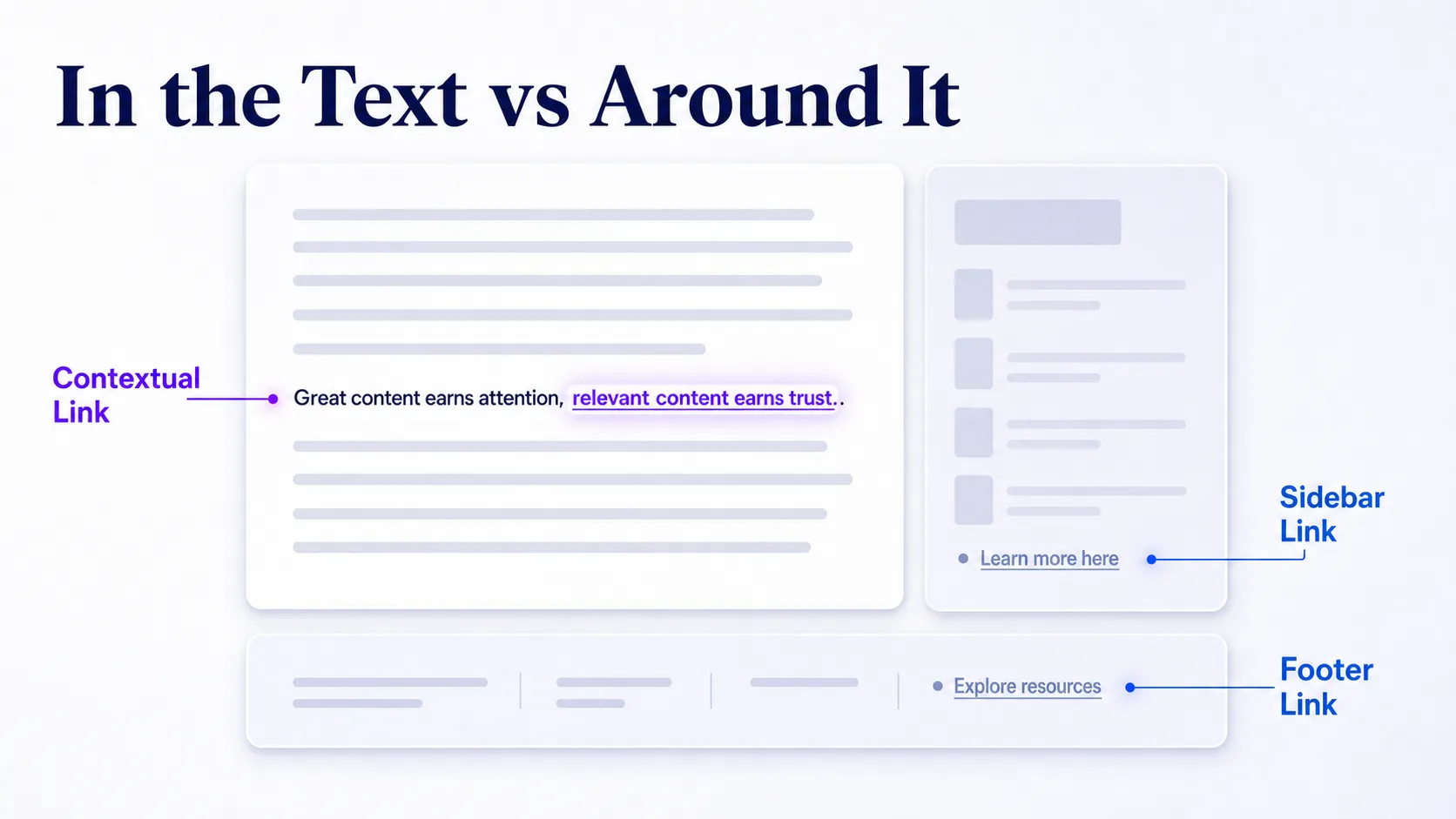
Here is a plain example. An article about email deliverability writes, “Authentication records like SPF and DKIM stop most spoofing,” and links the phrase to a guide that explains those records. The link is contextual because the sentence created the need for it. Strip the link and the sentence still reads naturally, which is the mark of an honest editorial placement.
“Contextual” means two things at once: topical fit, the source page covers a subject related to the destination, and editorial placement, the link sits inside content a human wrote and would stand behind. A link can clear one test and fail the other. Both have to hold for the link to behave like a real citation.
Why Contextual Backlinks Matter
Contextual backlinks matter because they tell search engines what a page is about and who vouches for it, in a way disconnected links cannot. A link inside relevant content is surrounded by topical signals: the sentence, the heading above it, the rest of the article. That surrounding text helps an engine confirm the destination belongs to the same subject area.
Relevance also changes how people behave. A reader already on a related article is more likely to trust and click a reference that fits the paragraph. That click sends qualified referral traffic, the kind that arrives knowing what your page is about and is more likely to convert, because the reader was already thinking about the topic when they followed the link.
There is a quieter benefit too. A contextual link strengthens the topical association between two pages, which feeds into how engines map your site’s subject authority. A scattered link from an unrelated page does not do this. It might pass a sliver of equity, but it does nothing for the story your link profile tells about what you cover.
The practical pattern is worth stating plainly: a context-rich placement on a moderately strong page often outperforms an off-topic link from a page with bigger raw metrics. Relevance and placement do more work than backlink volume. If you are still chasing counts, that is the habit to break first, and our breakdown of how manual link building works shows where that effort actually pays off.
How Contextual Backlinks Work
Contextual backlinks pass value through a stack of signals that search engines read together: the surrounding text, the anchor, the topic match between source and destination, the page’s placement in the main content, and the page’s overall quality. No single one carries the link. They reinforce each other.
- Surrounding text shapes meaning. The sentences around the link tell an engine what the reference is about. The same anchor inside a relevant paragraph reads very differently from the same anchor dropped into filler.
- Anchor and topics align. The link text, the destination page’s subject, and the source page’s subject work as a set. When all three point the same direction, the link reads as a natural citation.
- Main-content placement signals intent. A link inside the article body, not a template area, signals that an editor or writer chose to include it. That editorial intent is part of what gives the link weight.
- Page quality and indexability set the ceiling. A link can only pass value if the page is worth crawling and actually indexed. A strong link on a page no engine indexes passes nothing.
- Follow status is separate from contextuality. A link can be dofollow, nofollow, sponsored, or UGC and still be contextual. The rel attribute controls how equity flows; it does not decide whether the placement fits the content.
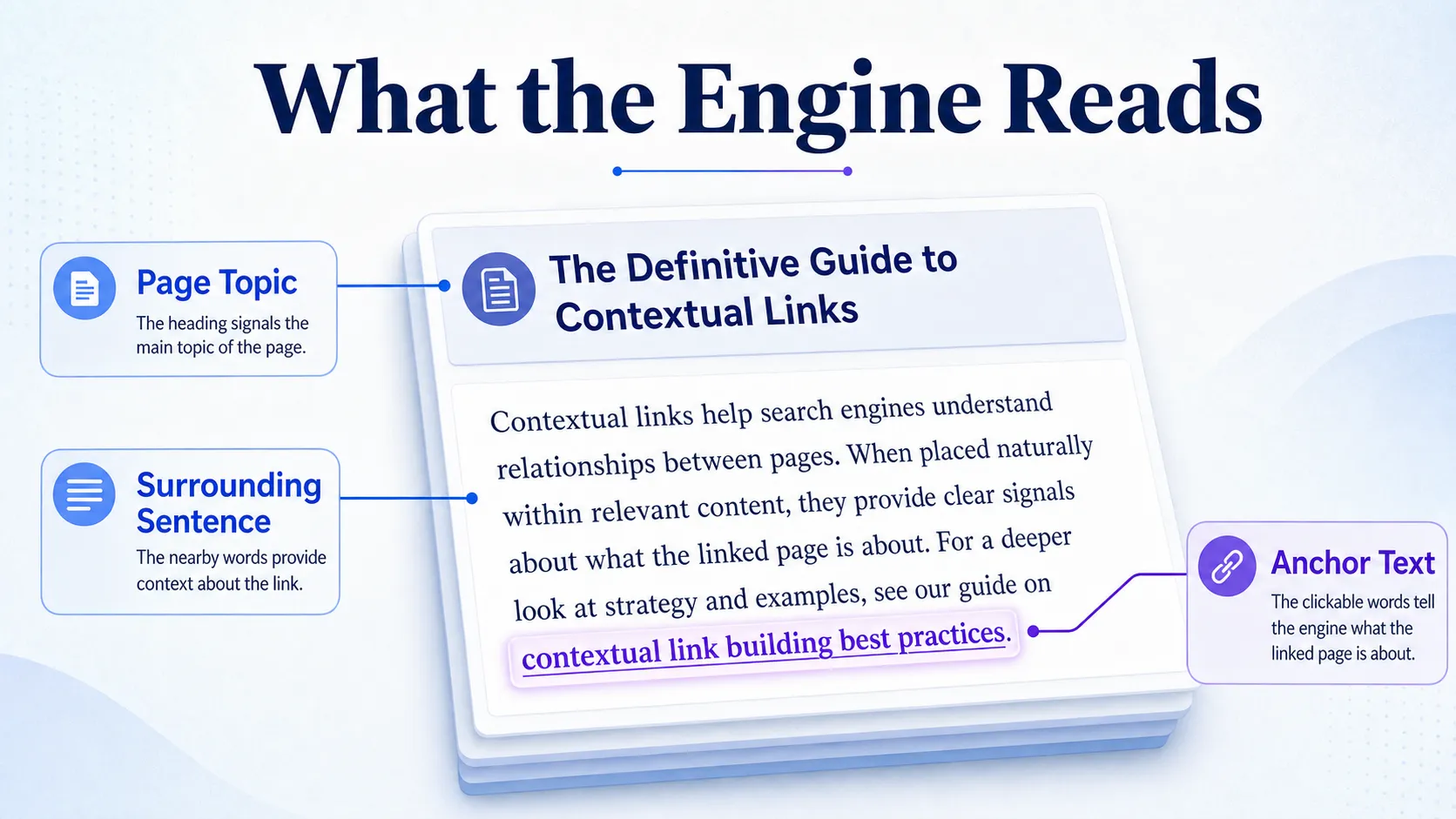
Here is the practitioner insight that surprises people: two identical anchors can perform differently depending on the paragraph around them. The link text is fixed, but the meaning the engine extracts shifts with the surrounding sentence. That is why placement quality matters as much as where the link points.
Key Components and Types
Contextual backlinks are an umbrella category, not one link format. What unites them is a shared set of quality components, and what separates them is how they get created.
The core components are the same across every type: relevance between source and destination, placement inside the main content, sensible anchor text, the source page’s quality, and the editorial fit of the link to the paragraph. Judge any contextual link against these five and you can compare a guest post to a niche edit on equal footing.
| Type | How it’s created | Quality note |
|---|---|---|
| Earned editorial links | A writer references your page because it supports their point | The most natural version, hardest to earn, most durable |
| Guest-post placements | You contribute an article that links to your page, subject to editorial review | Quality depends on the publication’s standards, not just the link |
| Niche edits or link insertions | A link is added into an already-published page | Only as strong as the existing page it’s inserted into |
| Resource and related-content links | Your page is included in a curated list or guide | Value tracks the relevance and upkeep of the resource page |
The durability gap is real. Editorially strong pages tend to hold their value because the publisher maintains them. An insertion is a different animal: it is only as good as the page it lands on, and a link added to a thin, neglected article inherits that page’s weakness. If you want to weigh those two paths against each other, our take on guest posting versus niche edits covers where each one fits.
How Contextual Backlinks Are Earned or Evaluated
Contextual backlinks are earned through a handful of paths and judged against a short list of quality checks. The earning side is about giving relevant pages a reason to link. The evaluation side is about deciding whether a link is worth pursuing or keeping.
The main earning paths are strong content other sites want to reference, outreach to pages already aligned with your topic, digital PR that turns a story into earned media, broken-link opportunities where you offer a working replacement, and inclusion on resource pages that curate your niche. Quality content does the heaviest lifting, because it gives other writers a natural reason to cite you without being asked. For the full set of approaches and where each one fits, our guide to link building methods lays them out.
Outreach works best when it targets pages that already cover your subject, not a blast to anyone with a contact form. A relevant page is one edit away from a contextual link. An irrelevant one will never host a placement that reads naturally, no matter how polished the pitch. Our approach to resource page link building shows how to find pages where your reference genuinely belongs.
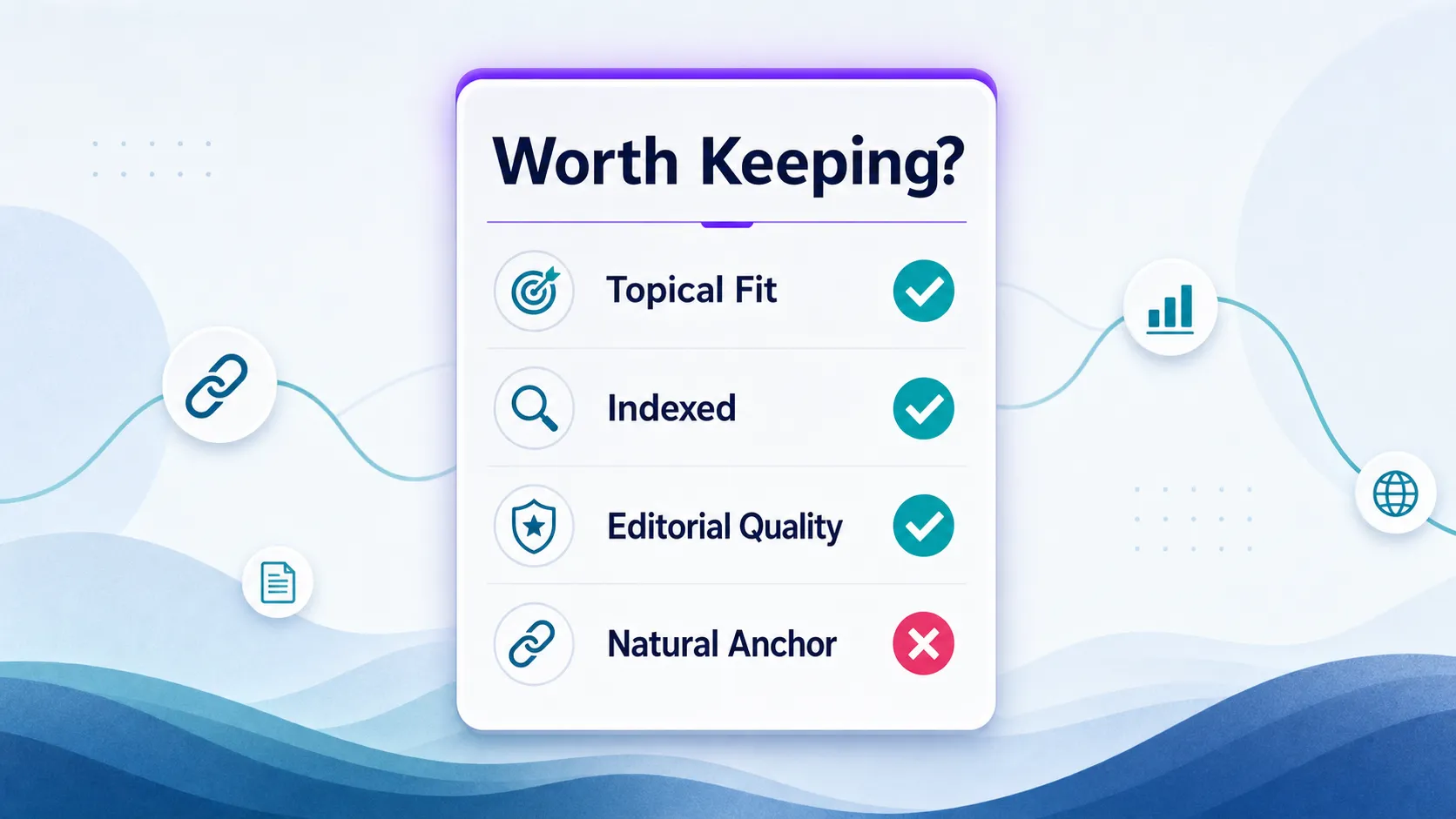
For evaluation, run a link through these checks before you chase or accept it:
- Topical fit between the source page and your destination page
- Traffic quality, real human visitors rather than an empty page
- Indexation, the page is actually in the search index
- Editorial standards, the page reads like real content a person wrote
- Anchor usage that is natural, not stuffed with exact-match phrases
- Outbound-link behavior, the page is not linking out to everything
Paid placements get the same treatment, judged on relevance and editorial quality rather than the fact that they exist. The real-world rule that holds up: a link is only worth keeping if you would be comfortable with the surrounding article being cited on its own, even without your backlink in it. If the page only exists to host links, that is your answer.
See where AI answers put your brand
Twenty minutes with a senior strategist: where the major engines point buyers in your category, who gets named instead of you, and a straight read on what a programme would change.
Book a strategy callCommon Mistakes and Misconceptions
Most of the bad calls around contextual backlinks come from treating the label as a guarantee of quality. It is not. Here is where the thinking usually goes wrong.
Myth: Every Backlink Is Contextual
Reality: most backlinks are not. Footer links, sidebar widgets, profile links, directory entries, and blog comments all live outside editorial content. Only links inside the main body of relevant content qualify. Counting all your links as contextual inflates a number that does not mean much.
Myth: More Links Always Beats Fewer
Reality: volume without relevance usually weakens results. A pile of off-topic links dilutes the topical story your profile tells and can invite scrutiny. A handful of genuinely relevant placements does more for both rankings and the subject authority you are building.
Myth: Exact-Match Anchor Text Is the Goal
Reality: over-optimizing anchors with the same exact-match phrase reads as manipulation, not citation. Natural contextual links use varied, descriptive anchors that fit the sentence. A profile stacked with identical commercial anchors is a pattern engines have learned to distrust.
Myth: All Paid Placements Are Equal
Reality: paid placements range from genuine editorial features to links dropped into spun filler. The price tells you nothing about the page’s quality or editorial standards. Judge the page, not the invoice.
Myth: A Link in Thin Content Still Counts
Reality: a link inside thin, low-effort filler is not the same as a link in useful body copy, even if both technically sit “in content.” The surrounding page has to be worth something for the placement to inherit any value. This is the mistake agencies make most: treating any in-content placement as valuable while ignoring that the page around it is generic or barely relevant.
Myth: Nofollow Links Are Worthless
Reality: nofollow, sponsored, and UGC links are neither automatically worthless nor automatically safe. The rel attribute controls equity flow, not whether the placement is contextual or trustworthy. A relevant nofollow link from a strong publication still drives qualified traffic and supports your topical presence.
Judging a Contextual Backlink, Context First
A contextual backlink earns its value by living inside relevant, useful content, and the best ones are earned from trustworthy pages that already cover your topic. That is the whole idea. Strip away the jargon and you are left with a simple test of whether a link reads like a natural citation or a transaction.
Carry one mindset into every link you build or audit: context first, placement second, metrics third. The page’s relevance and the quality of the paragraph around the link tell you more than any domain score. A contextual backlink should read like a writer chose to reference you, not like a slot you bought. When you reach the point of acquiring links at scale, that test keeps you out of the placements that look good on a spreadsheet and do nothing in the index.
Frequently Asked Questions
What are contextual backlinks?
Contextual backlinks are links placed inside the main body of relevant content, where the surrounding text supports the reference. They sit within an article’s running paragraphs rather than in footers, sidebars, author bios, or comments, which is what separates them from most other backlink types and gives them stronger topical signals.
Are contextual backlinks better than guest post backlinks?
The comparison is a category error, because a guest post backlink is one kind of contextual backlink. A well-placed link inside a guest article on a relevant, editorially strong publication is contextual. What matters is not the label “guest post” but the relevance of the page, the quality of the publication, and whether the link fits the paragraph it lives in.
How do you get contextual backlinks?
You earn contextual backlinks mainly through strong content that gives other sites a reason to reference you, plus outreach to pages already covering your topic, digital PR, broken-link replacement, and inclusion on curated resource pages. The common thread is relevance: the source page has to cover a subject close enough to yours that a link reads as a natural citation.
What is the difference between contextual and non-contextual backlinks?
A contextual backlink sits inside relevant editorial content; a non-contextual one sits in a template or low-editorial area like a footer, sidebar, author bio, or comment thread. The contextual link carries the topical signals of the surrounding text, so search engines read it as an editorial vote. The non-contextual link lacks that supporting context and usually carries less weight.
Are contextual backlinks safe to buy?
Buying links carries risk regardless of the type, and “contextual” on the label does not make a paid placement safe. Some paid placements live on genuine editorial pages; others sit in spun filler built only to host links. Judge any paid link by the page’s relevance, traffic, indexation, and editorial standards, not by the fact that it is sold as contextual. If the surrounding page would not be worth citing on its own, the link is not worth the spend.
Run a context audit on your own profile before you build anything new. Pull your backlinks, read the paragraph around each one, and flag every link where the surrounding content does not actually support it. Those are the placements that look like wins and behave like dead weight. The ones that read like natural citations are the links worth protecting and worth replicating.