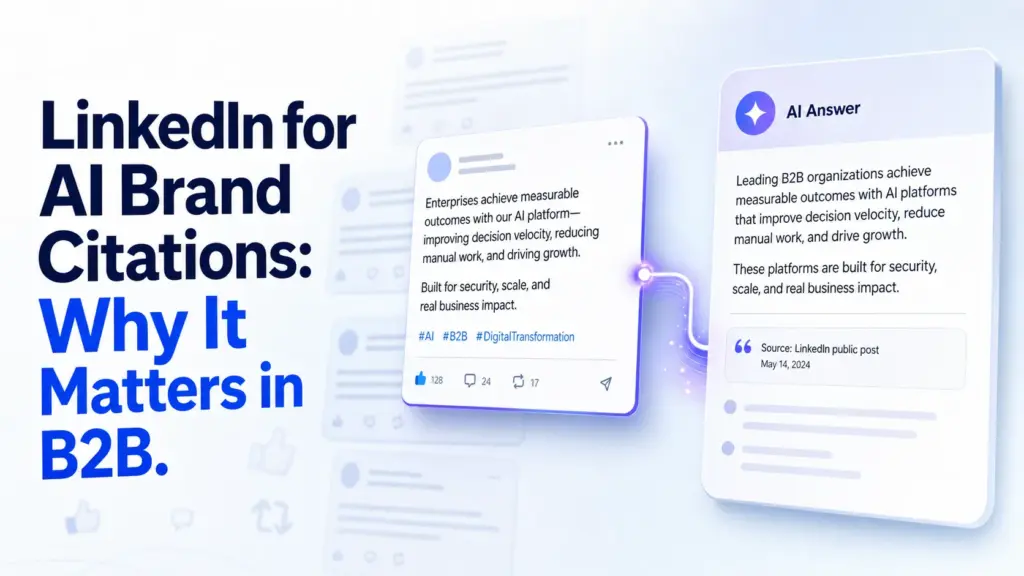

LinkedIn isn’t just a place to distribute posts anymore. It’s increasingly showing up as a cited source inside AI answers to professional and B2B questions.
When someone asks ChatGPT or Perplexity which vendors lead a category, or what an expert thinks about a trend, the model often pulls from public LinkedIn profiles, posts, and articles. LinkedIn matters for AI brand citations because AI systems now treat public, original LinkedIn content as credible source evidence for professional queries, which can place your brand into the consideration set before anyone visits your site.
This piece explains what that means, why it carries weight for B2B, and which LinkedIn assets actually earn citations. It’s a visibility and strategy topic, not a posting tutorial: you won’t find cadence templates or hook formulas here, just how the mechanism works and where to focus.
What LinkedIn for AI Brand Citations Means
An AI brand citation happens when an AI answer uses a LinkedIn page as source evidence for a claim, not when your post simply appears in someone’s feed. The model reads a public profile, post, article, or company page, then references it to support what it tells the user. That is a different event from reach or engagement.
The distinction matters because most LinkedIn measurement tracks the wrong layer. Impressions, likes, comments, and follower growth describe how humans interact with your content inside the platform. A citation describes whether an answer engine trusts your content enough to use it when nobody is on LinkedIn at all.
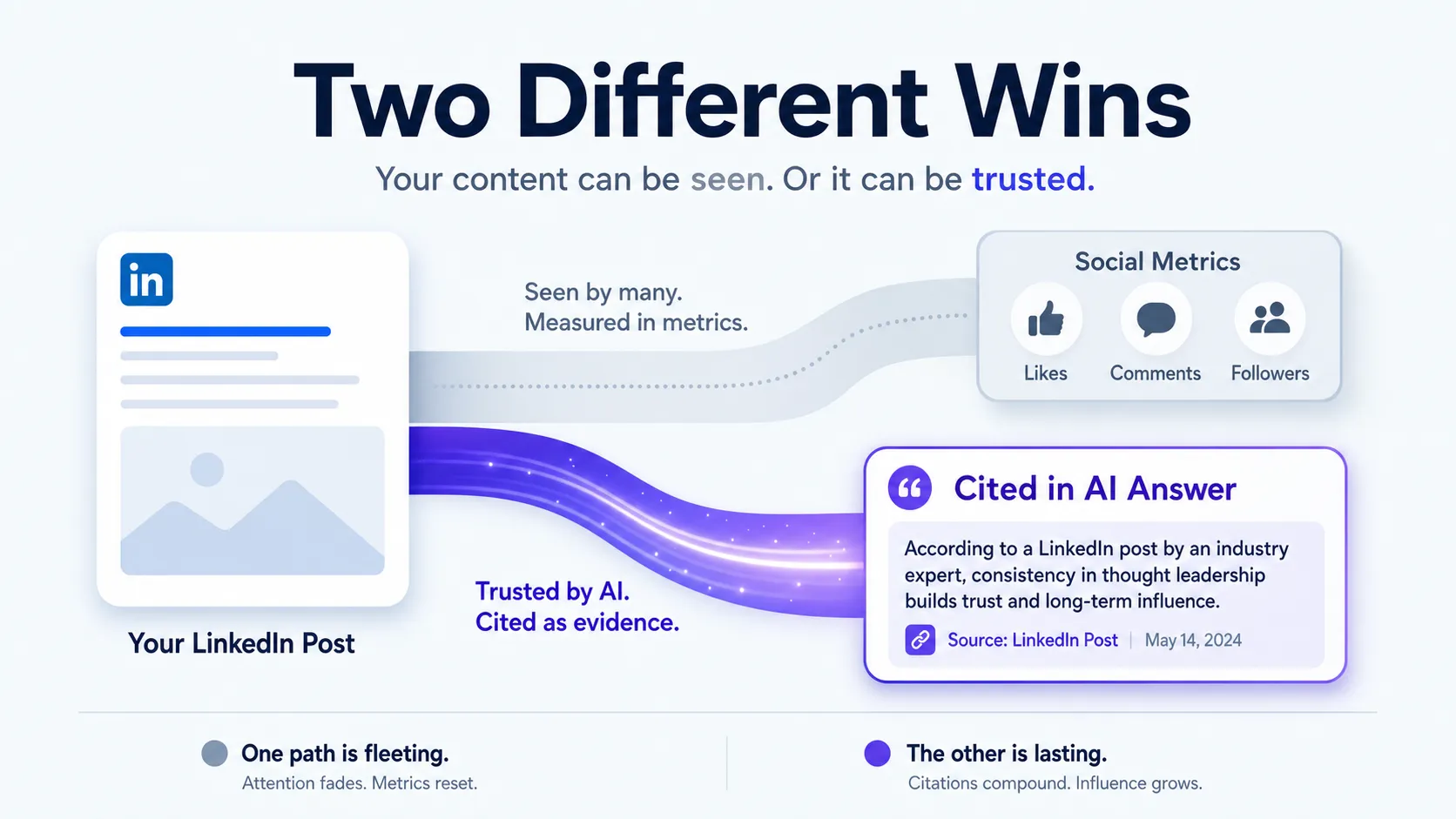
Several LinkedIn surfaces can become citation sources. Public personal profiles, original posts, long-form articles, newsletter issues, and company pages all qualify, with public commentary as a weaker and less frequent source.
The common thread is that the content must be public and crawlable. Anything gated behind a login wall or buried in a private group doesn’t enter the picture.
One point trips up teams constantly: an individual expert profile and a company page are not the same source in AI systems. The model reads them as different entities with different authority. A named person who works in the field carries a different kind of trust than a corporate account, and the research pattern shows it.
| Aspect | AI Brand Citation | Social Reach |
|---|---|---|
| What it measures | An AI answer uses your LinkedIn content as evidence | How many people see or react to your post |
| Where it shows up | Inside ChatGPT, Perplexity, Gemini, and AI Overviews | Inside the LinkedIn feed and notifications |
| What drives it | Public access, topic match, author authority, originality | Posting time, hooks, network size, engagement bait |
| Who it reaches | Buyers researching your category through AI | People already in your network |
| Why it matters | Enters the consideration set before a site visit | Builds awareness inside the platform |
This whole conversation is mainly relevant for professional, B2B, vendor-selection, and decision-stage queries. If your buyers ask AI which tools solve a problem, who the credible voices in a space are, or how a category works, LinkedIn enters the answer. For consumer search about products and prices, other sources dominate.
Why LinkedIn Matters for B2B AI Visibility
AI tools now shape early-stage vendor discovery, and that changes where your brand needs to be present. Buyers ask ChatGPT or Perplexity to name the players in a category, compare approaches, or explain a concept before they ever open a search tab. If your brand and your experts are absent from those answers, you’re not in the shortlist that forms.
LinkedIn is a natural source for these professional queries because it concentrates exactly what models look for: named experts with stated roles, current viewpoints, and category-specific commentary. A model answering a B2B question wants credible human expertise tied to a real professional identity, and LinkedIn is built around that signal.
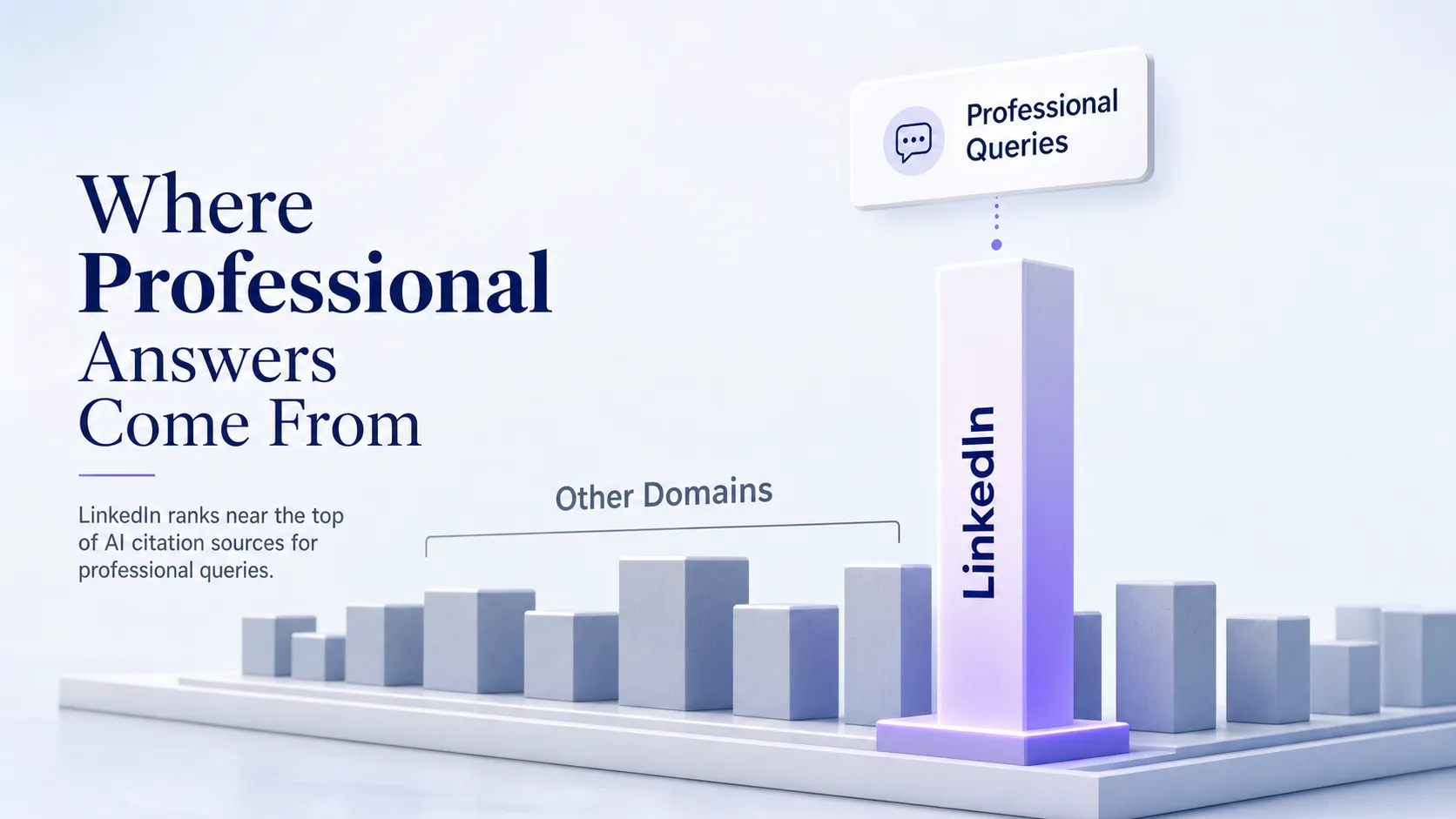
Independent research backs this up. Meltwater’s analysis of roughly 9.5 million AI citations across six platforms found LinkedIn ranked second overall behind YouTube in citation share, with about 75 percent of LinkedIn citations coming from individual member profiles rather than company pages. The signal is clear: AI systems favor sources that look like credible professional experts, not high-reach brand accounts.
The strategic implications run deeper than visibility alone. Being cited builds credibility, because the model is effectively vouching for your expertise, and it improves discoverability, because you appear in answers your buyers already trust.
It also establishes category authority: the sense that your brand belongs in the conversation when AI explains your space. Together, those things decide whether you enter the AI-generated consideration set at the moment a buyer is forming one.
One caveat worth stating plainly: LinkedIn’s own data suggests follower count correlates with citation likelihood, with members above a few thousand followers showing a stronger pattern. Correlation isn’t the mechanism, though.
Followers tend to grow alongside consistent, substantive posting, and it’s the consistency and substance that the model rewards, not the follower number itself.
How AI Systems Surface LinkedIn as a Source
AI systems surface LinkedIn through retrieval: when answering a query, the model favors public, crawlable pages whose content closely matches the question’s topic. LinkedIn pages that are public, specific, and recent are strong candidates, while pages behind a login or off-topic aren’t.
The mechanism is probabilistic, so the same query can surface different sources across models and update cycles.
Understanding the signals at play helps you focus effort where it counts. Each one below shifts the odds that a given piece of content gets pulled into an answer.
Author Identity Signals Expertise
LinkedIn profiles function as machine-readable evidence of who someone is and what they know. The role, the company, the history, and the stated focus all tell a model that this person has standing in a field.
That’s why a named practitioner’s post often outperforms an anonymous blog or a faceless corporate update for the same claim. The profile is the credential.
Freshness Matches Current Questions
Recent posts, articles, and newsletter issues match current professional questions better than content from two years ago. Professional topics move, and models surfacing answers to “what is happening now” in a category lean toward recent material. A profile that posted last week on a live topic has a real edge over one that went quiet.
Topic Specificity Beats Generic Content
Focused, decision-oriented commentary is more citation-worthy than motivational posts or repurposed marketing copy. A post that explains how a specific category actually works, or takes a clear position on a real trade-off, gives the model something concrete to cite. Vague inspiration gives it nothing to anchor to.
Originality Outranks Reshared Content
Original posts and authored articles are stronger signals than reshares or low-substance reposts. The research pattern is striking here: in one large analysis of cited LinkedIn content, the overwhelming majority of cited posts were original rather than reshared.
When you add your own analysis, you become the source. When you reshare, you’re just pointing at someone else’s.
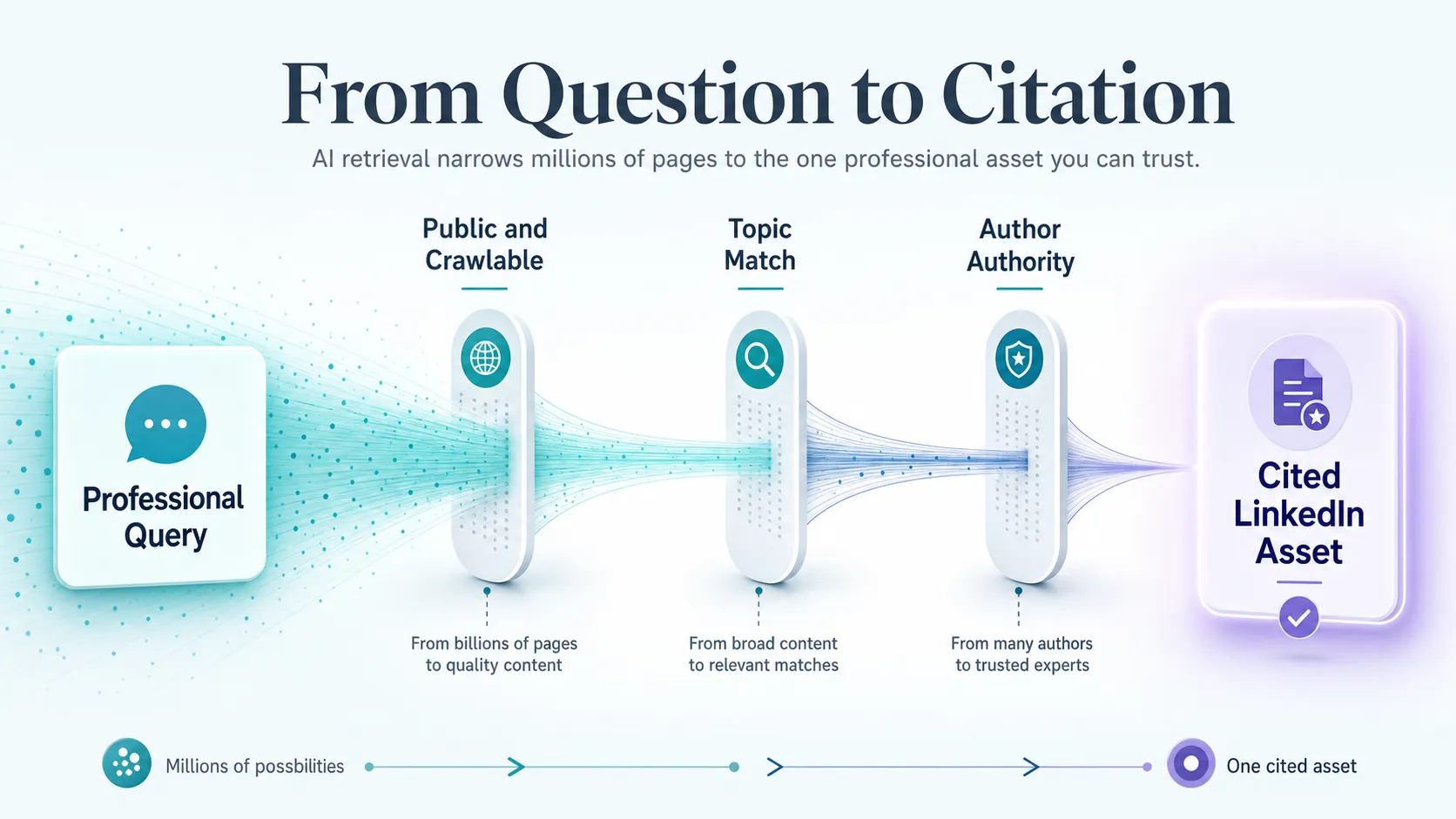
Hold the whole picture loosely. These signals raise or lower the odds; they don’t guarantee a citation. The model decides per query, and what gets cited today can shift after the next update.
You can read more on the broader signals in our breakdown of what shapes AI citation rankings, and on how engines choose between competing pages in our guide to how AI crawlers pick sources.
Which LinkedIn Assets Have the Highest Citation Potential
Not every LinkedIn asset earns citations equally. The strongest performers are named expert profiles and the original content attached to them.
Company pages help, but they rarely carry an answer alone. Here is how the asset types stack up and why.
| Asset Type | Citation Potential | Why |
|---|---|---|
| Named expert profile | Highest | Signals a real person with verifiable role and domain expertise |
| Long-form article | High | Full context and clear positioning on complex topics |
| Original post | High | Fresh, specific, attributed to a named voice |
| Newsletter issue | Medium to high | Recurring, owned, topic-focused content with depth |
| Company page | Medium | Reinforces official positioning but reads as a brand account |
| Reshared employee posts | Low | Weak originality signal, points at another source |
Member profiles often beat company pages because they signal a real human with a stake and a track record. A model weighing two sources on a vendor question tends to trust the practitioner who works in the field over the corporate account that markets to it. This is the single most counterintuitive thing for brand teams to accept.
Articles and newsletters can outperform short posts on complex topics for a simple reason: they carry more context. A 200-word post states a view. A long-form article explains the reasoning, covers the trade-offs, and positions the idea clearly, which gives a model more to extract and cite when the query is detailed.
Company pages still do real work. They reinforce official brand positioning, confirm what your company says about itself, and support the broader authority picture.
They just rarely win the citation on their own, so treat them as supporting evidence, not the lead.
Employee advocacy expands the footprint. When several named experts publish original commentary on your category, your brand surfaces across more profiles and more queries than a single account ever could.
The catch is that this only works with original content from active people, not coordinated reshares of the same corporate post. Consistency matters more than volume bursts, especially when the content is public and tightly aligned to a topic.
Common Mistakes and Misconceptions About LinkedIn Citations
Most teams misread this channel in predictable ways, and the misreads cost real visibility. Here are the ones worth correcting before you build a strategy on them.
Treating Follower Count as the Citation Driver
Followers correlate with citations, but they don’t cause them. Both grow from the same root: consistent, substantive, original posting on a clear topic. Chasing followers as the goal puts effort into reach metrics instead of the content signals that actually earn citations.
Making the Company Page the Primary Target
The research consistently shows individual profiles drive the majority of LinkedIn citations. Pouring everything into the corporate account, while your experts stay quiet, optimizes for the weaker source. Activate named people first, then let the company page support them.
Seeing LinkedIn Only as a Distribution Channel
LinkedIn is now a source layer, not just a place to broadcast. Posting purely to drive traffic back to your site misses the point that the LinkedIn content itself can be the cited evidence. The post is the asset, not just the billboard pointing at one.
Believing Backlinks Alone Decide AI Citations
Backlinks still matter for traditional ranking, but AI citations lean heavily on brand mentions and credible source signals. The pattern in citation research points to web mentions correlating far more strongly with AI visibility than backlinks do. Our breakdown of how brand mentions drive AI visibility covers why third-party presence outweighs link counts here.
Expecting Instant and Permanent Results
Citations take time to build, and they don’t hold steady forever. Models update, query patterns shift, and what gets cited this month can change next. This is compounding work, not a switch you flip once.
Publishing Promotional or Recycled Content
Promotional copy, heavily recycled marketing language, and AI-fluffed filler make weak citation material. Models surface content with substance and a clear point of view.
The most common failure mode is a brand publishing generic thought leadership from only the corporate account, seeing no citations, and concluding LinkedIn doesn’t work. The channel works; the approach didn’t.
Building LinkedIn Into Your AI Visibility Strategy
Treat LinkedIn as one offsite authority surface inside a broader AI visibility strategy, not a standalone play. It earns its place because it concentrates the named expertise and current commentary models trust for professional queries. But it works alongside your website, your PR, and your third-party mentions, not instead of them.
The winning mix is consistent: active expert profiles publishing original public commentary, supported by company-page positioning. Tie that content to the questions buyers actually ask AI about your category, your competitors, and your space. Write to answer those questions with substance, and your experts become the source the model reaches for.
Measure the right things. Citation presence, citation share against competitors, and query coverage tell you whether the strategy works. Likes and follower growth don’t.
If you want a structured way to read your standing, our AI visibility diagnostic framework walks through what to assess, and our guide to tracking your brand across AI engines covers the measurement side across platforms.
Here is the short version of what to focus on.
- Activate named experts before optimizing the company page.
- Publish original, topic-specific content, not reshares or marketing copy.
- Favor articles and newsletters for complex topics, posts for current takes.
- Stay consistent over months rather than posting in bursts.
- Track citation share and query coverage, not engagement metrics.
This is an opportunity window. The space is still relatively uncrowded for professional queries, so brands that move early build a footprint before competitors do.
It’s not a shortcut, though. LinkedIn is one signal among several, and it rewards depth and patience more than activity. Pair it with the same approach on adjacent surfaces like our Reddit authority playbook and Quora authority for AI citations, and the offsite picture compounds.
Frequently Asked Questions
Does LinkedIn help with AI citations?
Yes. LinkedIn is one of the most-cited domains for professional and B2B queries in AI search. Public profiles, original posts, articles, and newsletters can become source evidence that models like ChatGPT and Perplexity use when answering questions about categories, vendors, and expertise. The effect is strongest for professional topics, not consumer search.
Are LinkedIn profiles or company pages more likely to be cited by AI?
Individual member profiles are more likely to be cited. Research across millions of AI citations found that roughly three-quarters of LinkedIn citations came from personal profiles rather than company pages. A named expert with a verifiable role signals a kind of credibility that a corporate account does not, so models lean toward people over brand accounts for professional answers.
What LinkedIn content gets cited most often in ChatGPT or Perplexity?
Original, topic-specific content from active named experts gets cited most. Long-form articles and newsletters tend to win on complex questions because they carry full context, while original short posts perform well on current takes. Reshared posts and recycled marketing copy are weak citation material. A consultant who posts an original analysis of a category will usually be cited over a brand page that reshares it.
Does follower count matter for LinkedIn AI citations?
Follower count correlates with citation likelihood but is not the cause. Larger followings tend to come from consistent, substantive posting, and it is that consistency and substance the model rewards. Focus on publishing original, decision-oriented content on a clear topic rather than chasing the follower number itself.
How long does it take for LinkedIn content to show up in AI answers?
There is no fixed timeline, and it varies by model, topic, and update cycle. Citations build as you publish consistent, public, topic-aligned content over weeks and months, and they shift as models refresh. Treat it as compounding work rather than an instant result, and expect citation patterns to move rather than stay fixed once you appear.
LinkedIn has quietly become one of the surfaces AI engines reach for when buyers ask professional questions, and the brands cited there are the ones whose experts publish original, specific work consistently. The window is open because most companies still treat LinkedIn as a feed to fill, not a source to be. Ask ChatGPT or Perplexity the top question your buyers ask about your category, and see whether your people are named. See where your brand stands in AI search and start from what the answers actually say.