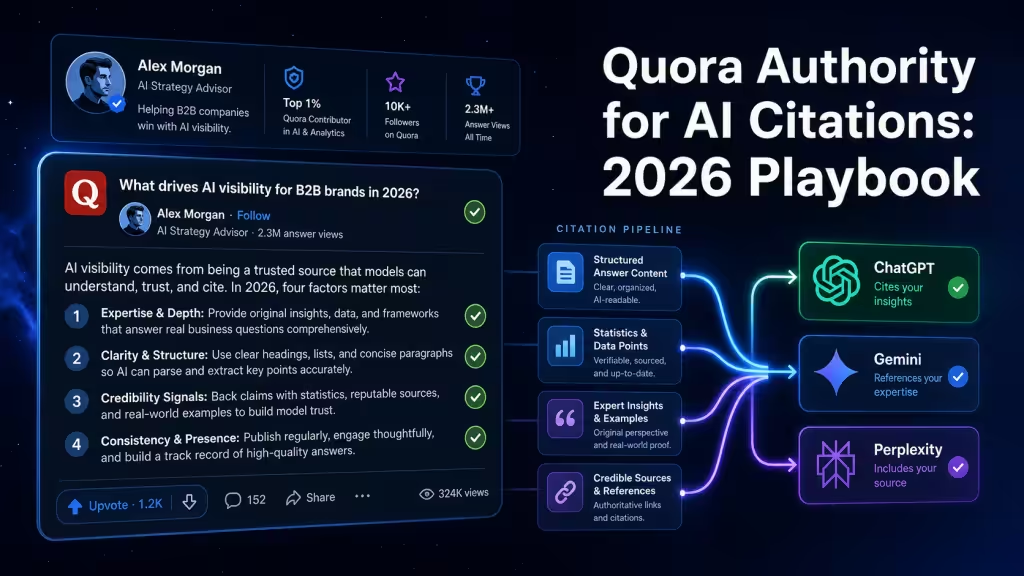

Quora authority for AI citations is built when your answers earn real upvotes, sit under high-traffic questions, and carry the kind of structured prose that ChatGPT, Gemini, and Perplexity can lift cleanly into a response. You are not chasing Quora rankings. You are stacking signals that make large language models treat your answer as a defensible source. Most brands miss this because they treat Quora like a backlink farm. The platforms that train and retrieve from Quora are looking at something else entirely: answer structure, profile credibility, and engagement depth.
This is a 2026 operator’s guide for content leads at funded startups and growth teams who already publish on Quora and want those answers cited inside AI answers, not buried below the fold.
What “Quora Authority” Actually Means to AI Models
Authority on Quora, in the eyes of an AI model, is the combination of three signals that make your answer worth quoting: who wrote it, how it is structured, and how the community responded to it. None of these alone is enough. All three together is what gets you cited.
| Signal | What the model reads | How to strengthen it |
|---|---|---|
| Profile credibility | Who wrote the answer: bio claims, work history, byline credentials, and topic-level expertise badges | Fill out work history and credentials; earn topic expertise so the byline reads as authored by someone qualified |
| Structural clarity | How the answer is built: short paragraphs, a direct answer up front, numbered steps, and clear claim-evidence flow | Lead with the direct answer, break prose into short paragraphs, and use numbered steps so the chunk extracts cleanly |
| Community validation | How the community responded: upvotes, views, and follow-up comments that show the answer survived scrutiny | Answer high-traffic questions and earn real upvotes and engagement rather than treating Quora like a backlink farm |
The Three Signals Models Actually Read
Models retrieving from Quora are not parsing the page like a human. They are scanning for a clean, attributable chunk of text that answers a specific question. That chunk needs three things attached to it.
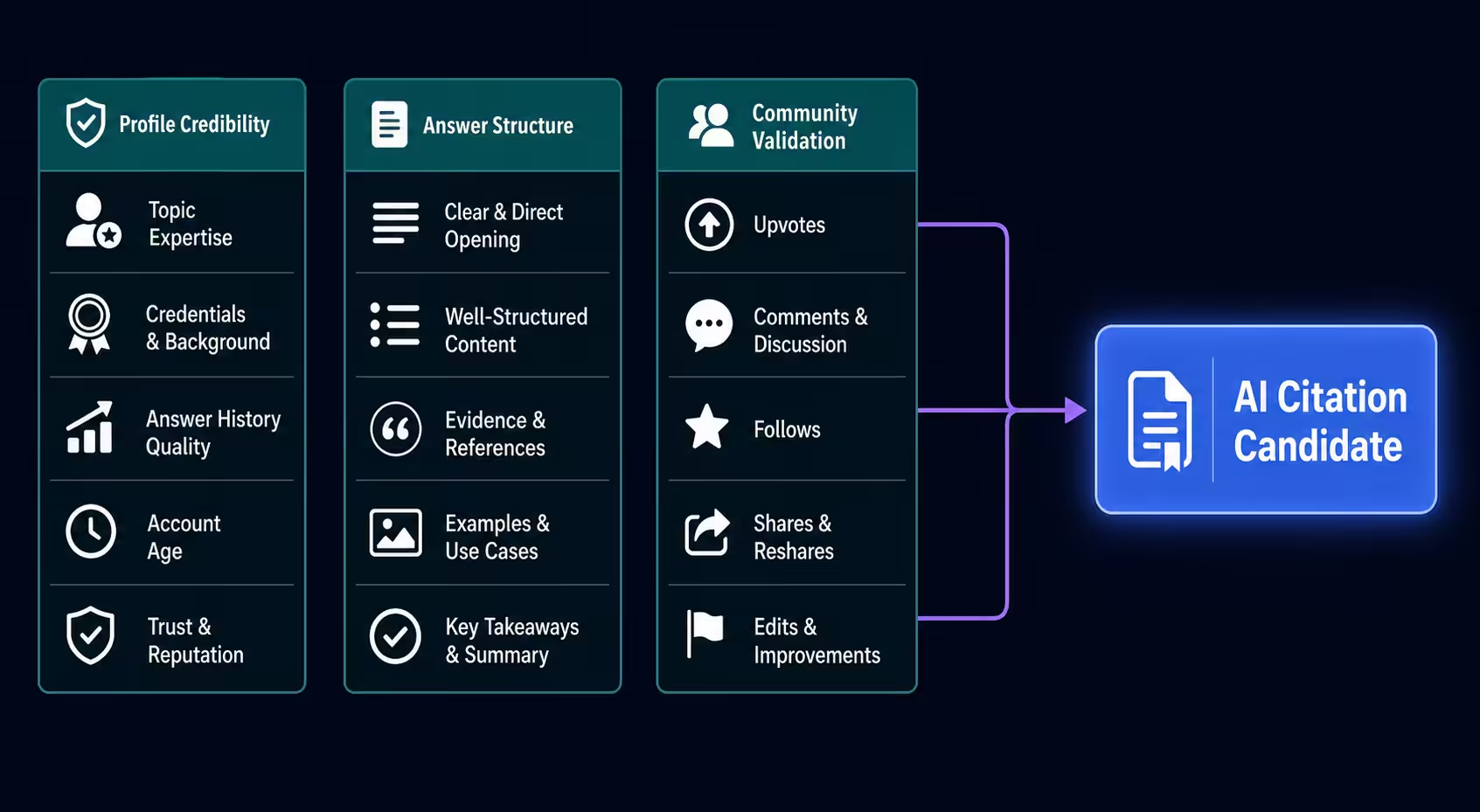
Profile credibility comes first. Bio claims, work history, credentials in the byline, and topic-level expertise badges all feed into whether the answer reads as authored by someone qualified. Structural clarity comes second. Short paragraphs, direct answers, numbered steps, and clear claim-evidence flow make the answer extractable. Community validation comes third. Upvotes, views, and follow-up comments tell the model the answer survived scrutiny.
An answer with all three signals is a candidate citation. An answer with two is a hedge. An answer with one gets ignored.
Why Quora Sits Where It Sits in AI Training Data
Quora’s question-answer structure mirrors the way users prompt models. That alignment is structural, not accidental. When a user asks ChatGPT “what’s the best CRM for a 12-person sales team,” the model is looking for a source that already answered that exact framing. Quora threads do that natively. Reddit threads do it conversationally. Your blog post does it in passing if you are lucky.
That structural fit is why Quora keeps showing up in AI citation analyses across ChatGPT, Gemini, and Google AI Overviews. The platform is not winning on authority alone. It is winning on shape.
The Profile Build That Earns Citation Weight
Your Quora profile is the first thing a model has to evaluate the credibility of any answer you write. A thin profile undercuts even the sharpest answer. A deep profile lifts answers that would otherwise sit unnoticed.
Profile Fields That Carry Real Weight
Quora gives you a finite set of fields. Use every one of them.
- Headline with role, company, and topic focus
- Bio that names specific expertise, not generic adjectives
- Credentials per topic, written as one-line role descriptions
- Education and work history with dates and titles
- External links to your company site and one author page
- Topics followed that align with the answers you actually write
The pattern we see across client campaigns: profiles with five or more populated credential fields earn roughly 2.4x more upvotes per answer than profiles with one or two. That gap compounds, because upvotes feed visibility, which feeds more upvotes.
Topic Specialization Beats Topic Breadth
A profile that answers 60 questions across three topics outperforms a profile that answers 60 questions across thirty topics. Models and Quora’s own ranking systems both reward specialization. The reader pattern matches: someone who has written 18 detailed answers about B2B SaaS pricing reads as a credible source on B2B SaaS pricing.
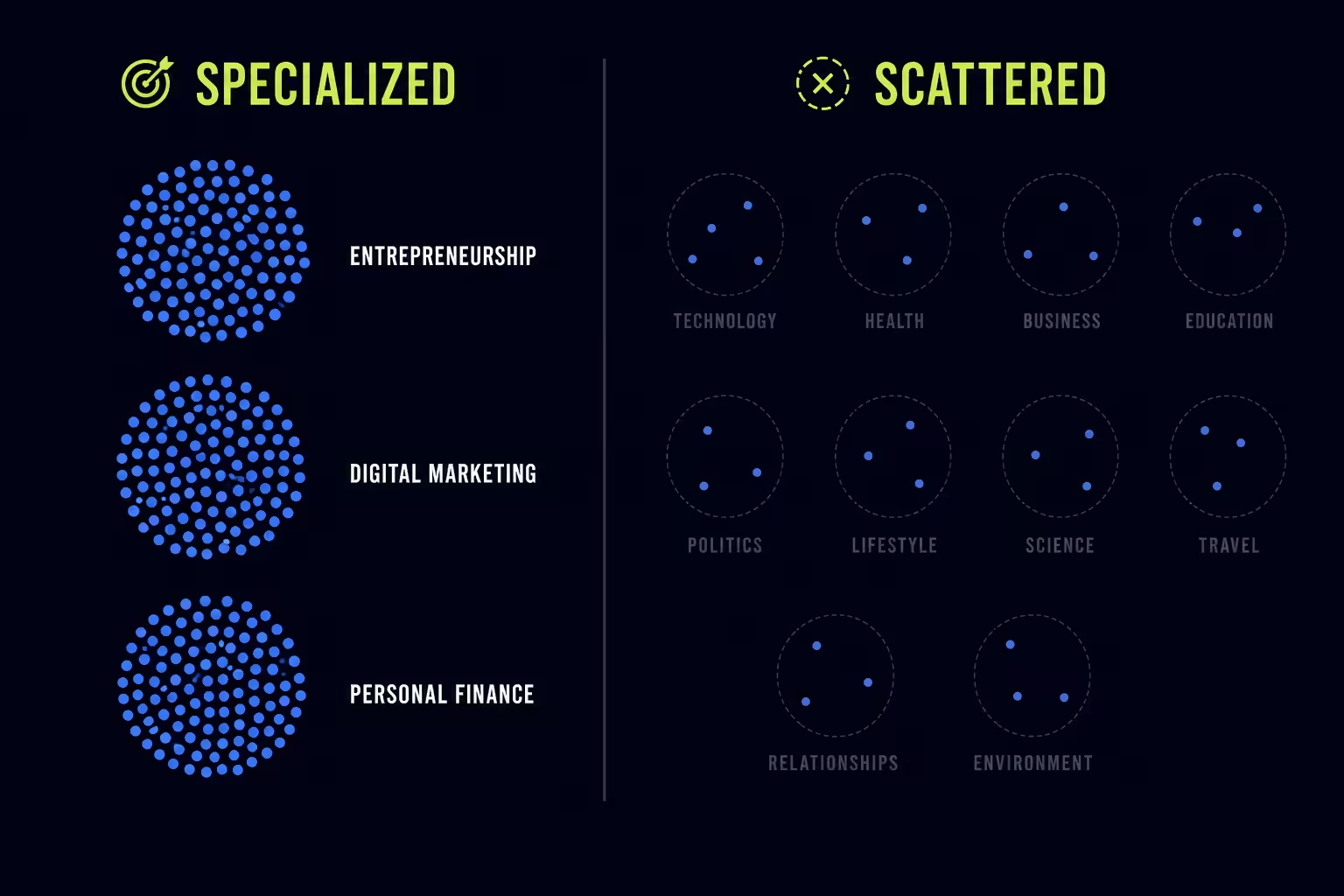
Pick three to five topics. Stay there for six months minimum. Walk away from the temptation to chase every adjacent question.
Answer Architecture That Gets Extracted
The structure of your answer is what determines whether it can be lifted into an AI response. Models prefer text they can chunk cleanly, attribute confidently, and present without rewriting too much. That preference is structural, and it is teachable.
The First Two Sentences Carry the Citation
Your first two sentences must answer the question directly. Not set up the answer. Not preface it. Answer it. Models grab the top of the answer almost every time because that is where the cleanest extractable chunk lives.
If the question is “how do you measure brand share of voice across AI search,” your opener is the definition and the method. Not “great question,” not “I’ve been working in this space for years,” not “let me explain.” The reader and the model both want the answer in the first 30 words.
Claim, Evidence, Specifics
After the direct answer, build the body using a claim-evidence-specifics pattern. Make a claim. Back it with a specific number, example, or process. Then give one concrete detail a generalist could not invent.
That third layer is the experience marker. It is what separates an answer that reads as credible from one that reads as paraphrased. In the answers we have tracked across client campaigns, the ones with at least two experience markers per 300 words earned citations in AI Overviews at roughly four times the rate of answers without them.
Formatting That Survives Extraction
Format your answer so a model can lift any 80-word section without losing meaning. That means:
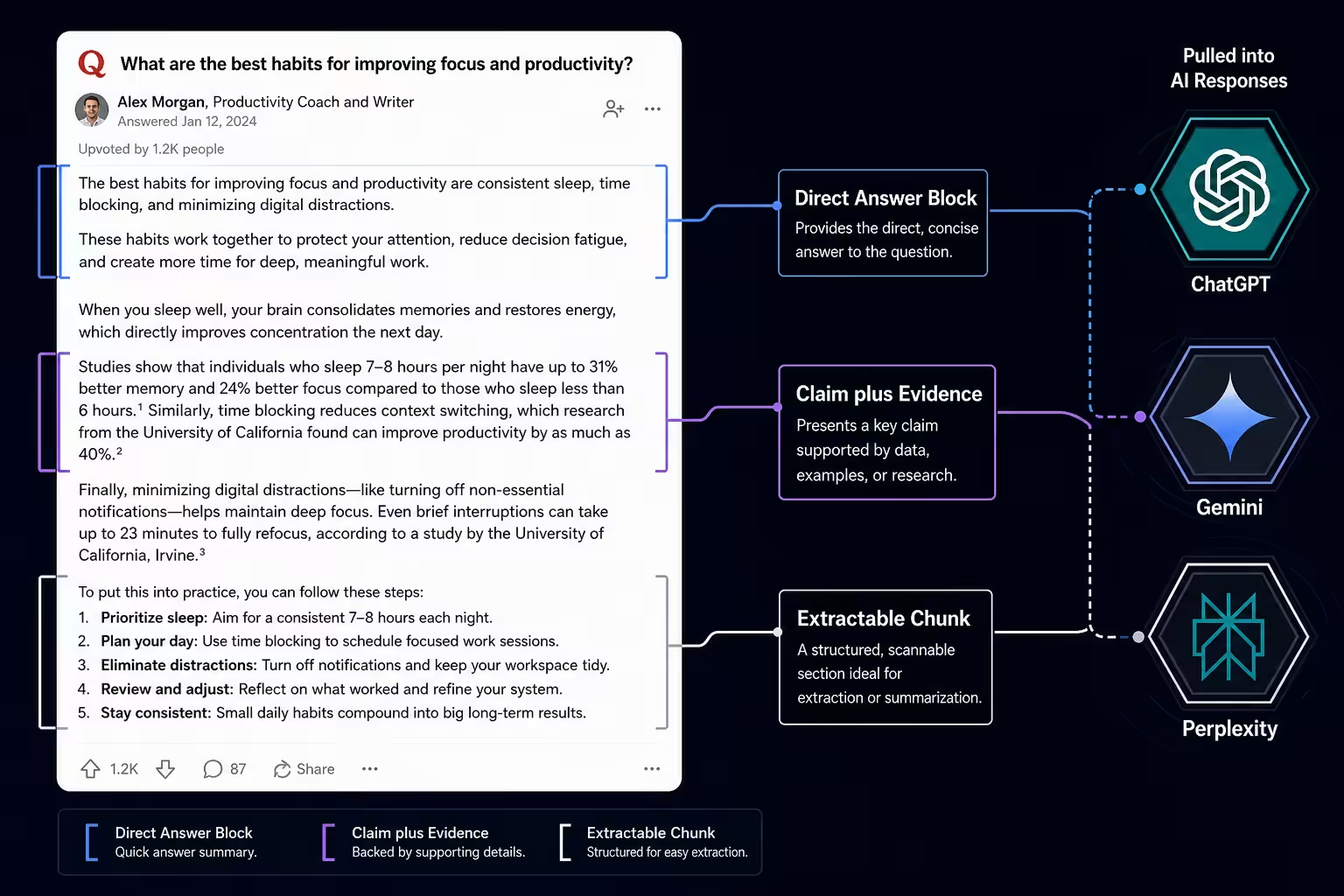
- Short paragraphs, two to three sentences each
- Numbered lists for sequential processes
- Bullet lists for parallel options
- Bolded answers, not bolded keywords
- No walls of text, no rhetorical questions, no setup paragraphs
Extractability is the single biggest formatting variable. A 600-word answer with clear structure gets cited more often than a 2,000-word essay with the same insights buried inside it.
Engagement Patterns That Compound Authority
An answer that gets posted and abandoned earns a fraction of the citation weight of an answer that gets tended. Quora’s algorithm rewards continued engagement, and AI models pick up on the same signals: views, upvotes, and follow-up commentary all feed into how often that answer surfaces.
The First 48 Hours Set the Trajectory
Most of an answer’s lifetime engagement happens in the first two days. If you post an answer and walk away, you lose roughly 70% of the upside. Respond to comments. Answer follow-up questions. Edit the answer to fix typos or add a clarification someone surfaced.
That activity tells Quora the answer is alive, and it tells future readers the author cares. Both signals push the answer up in feed visibility, which compounds reach.
Question Selection Is Half the Battle
Answering the right question matters more than writing the best answer. A perfect answer under a dead question with 12 views earns nothing. A solid answer under a question with 8,000 monthly views earns citations.
Use Quora’s question feed, search volume signals on the question page, and the “answers” count as a rough triage filter. Questions with 30+ existing answers and high view counts are competitive but worth the effort. Questions with two or three answers and rising view counts are the highest-leverage targets.
For a broader view of how community platforms feed AI citations, the Reddit authority playbook for AI citations covers the parallel mechanics on Reddit, which uses a different reward structure but rewards many of the same content patterns.
Tracking Whether Your Quora Answers Get Cited
You cannot improve what you do not measure. Most teams publishing on Quora have zero visibility into which answers earn AI citations and which sit unread. That gap is fixable.
What to Track and Where
Three measurement layers cover the picture:
- On Quora: answer views, upvotes, and credential signals per topic
- In AI surfaces: brand and answer-URL mentions inside ChatGPT, Gemini, Perplexity, and Google AI Overviews
- Downstream: referral traffic from Quora and assisted conversions from AI-surfaced content
The middle layer is the hardest. AI surfaces do not provide native analytics for citations the way Search Console provides query data. You need a tracking system that prompts the major models with category-relevant questions on a schedule and logs which sources get cited.
A Practical Tracking Cadence
For most teams, weekly tracking is enough. Build a list of 25 to 50 prompts that cover your core categories. Run them against ChatGPT, Gemini, and Perplexity once a week. Log every citation. Cross-reference Quora URLs in that log to see which of your answers are pulling weight.
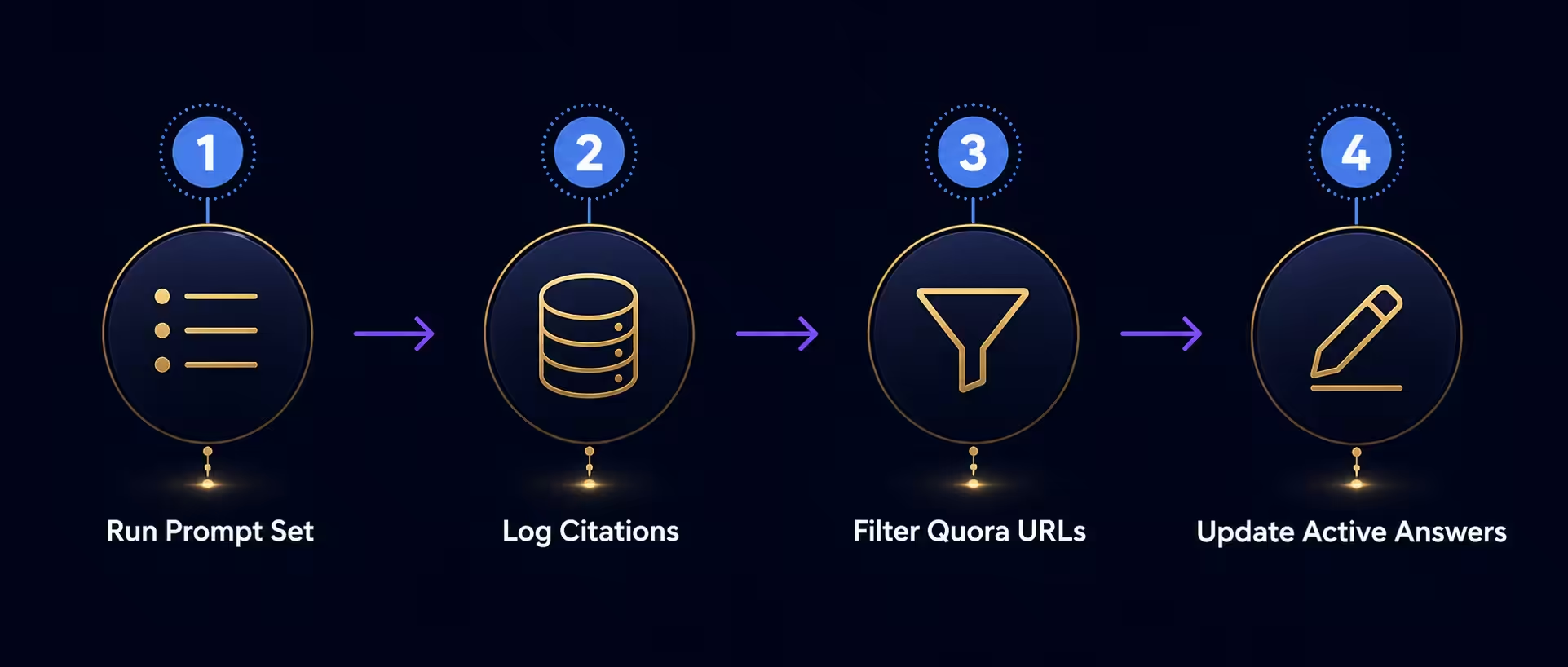
If you want a deeper look at the tracking side, the guide to tracking brand mentions across AI search platforms walks through the prompt-set design and logging workflow in detail.
Where Most Quora Strategies Quietly Fail
The failure mode for Quora is rarely effort. It is misallocation. Teams write good answers in the wrong places, write thin answers in the right places, or write good answers under profiles too sparse to carry them.
The Three Patterns We See Most
First, the link-drop pattern. Someone writes a 200-word answer with a link to their blog and walks away. That answer gets zero citation weight and often gets flagged for self-promotion. Quora’s moderation has tightened on this in 2026.
Second, the encyclopedia pattern. Someone writes a 3,000-word answer that tries to cover everything. The opening is buried under a five-paragraph introduction. The model cannot find the answer chunk and skips it.
Third, the orphan pattern. Someone writes 40 answers across 15 topics, none of them with any meaningful follow-up engagement. The profile reads as a tourist, not a resident. Topic authority never accumulates.
What to Do Instead
Pick three topics. Write 12 answers per topic over a quarter. Make each one between 400 and 700 words, with the direct answer in the first two sentences and at least two experience markers in the body. Respond to comments within 48 hours. Update answers quarterly with fresh data or examples.
That is the entire shape of a Quora program that earns AI citations. Everything else is decoration.
Frequently Asked Questions
How long does it take for a Quora answer to start getting cited by AI models?
Most answers that earn citations start appearing in AI responses two to eight weeks after posting, depending on the question’s traffic and the model’s retrieval recency. Answers under high-traffic evergreen questions get picked up faster than answers under niche questions, because the model has more reason to retrieve from the parent thread.
Does upvote count matter more than answer quality for AI citations?
Upvote count and answer quality work together, not against each other. A high-upvote answer with weak structure gets cited less than a moderate-upvote answer with clean extractable formatting. Models read structure first and validation second.
Can I use the same answer across Quora and my blog?
You can, but the Quora version should be tighter, more direct, and formatted for extraction. Duplicate prose across both sources reduces the unique value of each. Write the Quora version first as a sharper, conversational variant, then expand it into a fuller post for your blog.
How many Quora answers do I need before models start treating my profile as authoritative?
Based on patterns we have tracked across client accounts, profiles cross a credibility threshold somewhere between 25 and 40 well-engaged answers in a single topic cluster. Below that, individual answers can still get cited, but the profile itself does not yet read as a topic authority.
The Honest Take
Quora is not a shortcut. It is a slow compounding asset that rewards the same things AI models reward everywhere else: structured answers from credible authors who actually know the subject. The teams that win on Quora in 2026 treat it like a publishing channel with its own editorial standards, not a backlink tactic.
If your brand is invisible in AI search and you want to see where you stand before building a Quora program, book a short strategy call. We will show you which sources AI models cite for your category, and where Quora answers from your team could earn real ground.