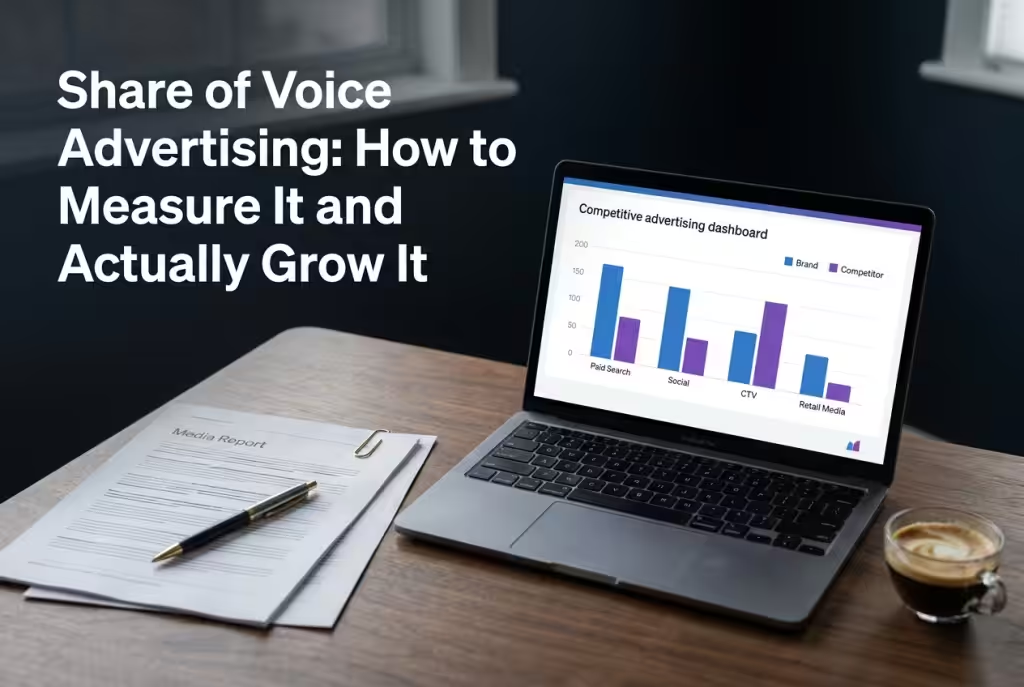

Share of voice advertising,
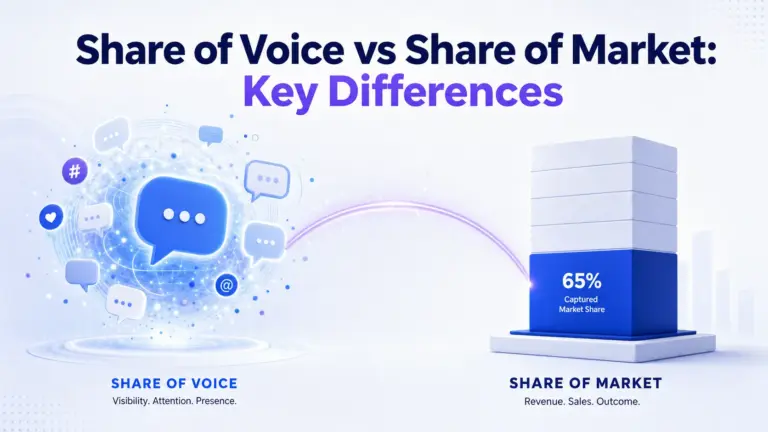
Share of voice in advertising is the percentage of total advertising exposure your brand owns within a defined market, compared to your competitors. It’s calculated by dividing your brand’s advertising activity (spend, impressions, or mentions) by the total advertising activity in your category, then multiplying by 100. A brand spending $2 million in a market where total category ad spend is $20 million has a 10% share of voice.
That’s the textbook answer. But in 2026, advertising SOV has expanded well beyond media budgets. It now spans paid search impression share, social ad visibility, programmatic display, connected TV, retail media networks, and even how often your brand appears in AI-generated shopping recommendations. If you’re only measuring spend, you’re measuring an input, not the outcome that actually matters, which is whether your audience sees you more than they see your competitors.
This guide breaks down how to calculate advertising SOV across every channel that matters right now, what benchmarks to aim for, where most measurement approaches fall short, and the specific tactics that move the number without just throwing more budget at it. There is now a channel that did not exist for any of these benchmarks: paid placement inside AI answers, which we cover in running ads inside ChatGPT.
What You’ll Learn
- The advertising SOV formula and how it changes by channel
- Why the relationship between SOV and market share still holds, with caveats
- Channel-by-channel measurement methods for paid search, social, display, CTV, and retail media
- How to set realistic SOV targets based on your growth stage
- Five tactics that grow advertising share of voice without proportional budget increases
The Advertising SOV Formula, And Why One Formula Isn’t Enough
The classic share of voice formula is simple:
SOV = (Your Brand’s Advertising Metric ÷ Total Market Advertising Metric) × 100
The problem is that “advertising metric” means something different on every channel. Spend-based SOV was fine when brands competed mainly across TV, radio, and print. You’d compare your media budget to total category spend and get a clean picture.
That picture is now incomplete. A brand could outspend competitors on linear TV and still lose advertising share of voice in the channels where their buyers actually make decisions, paid search, social feeds, retail media placements, streaming pre-rolls.
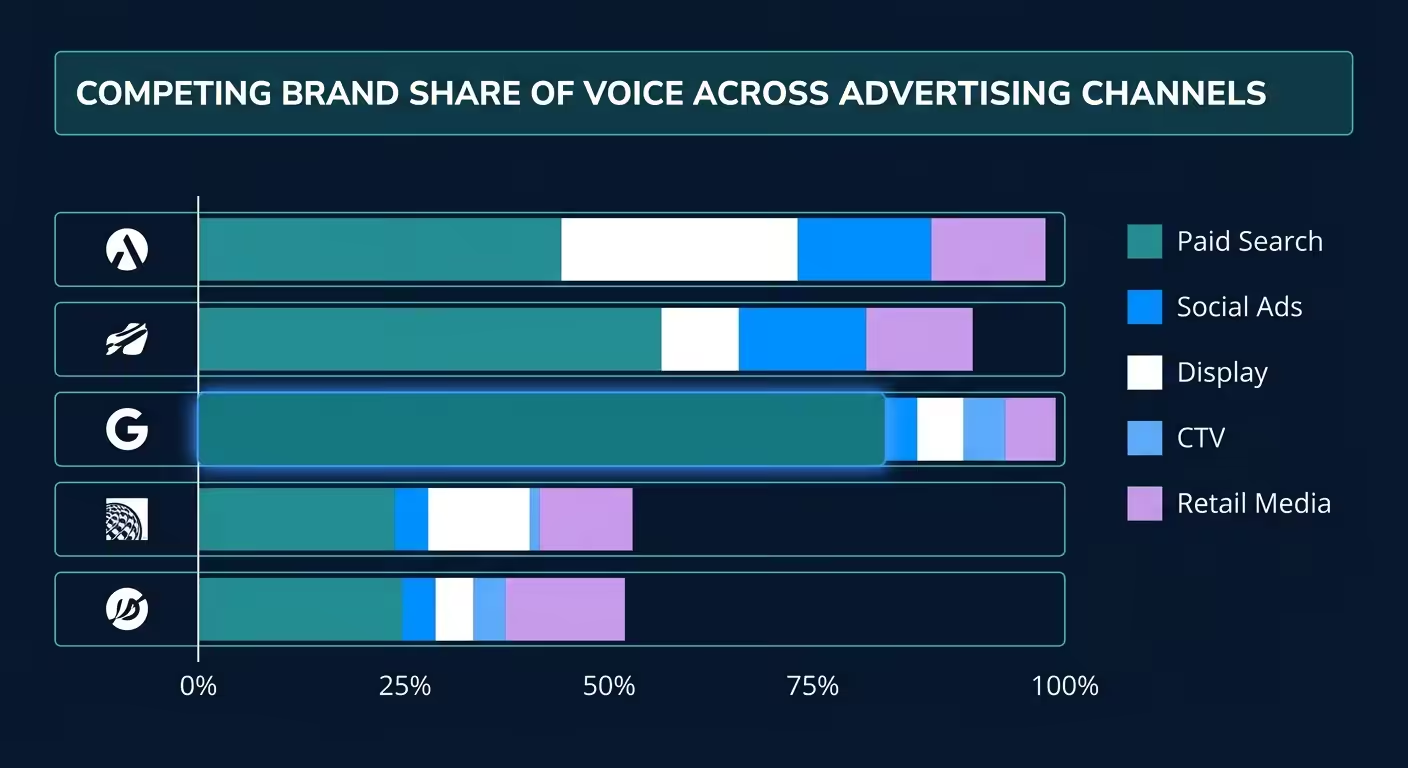
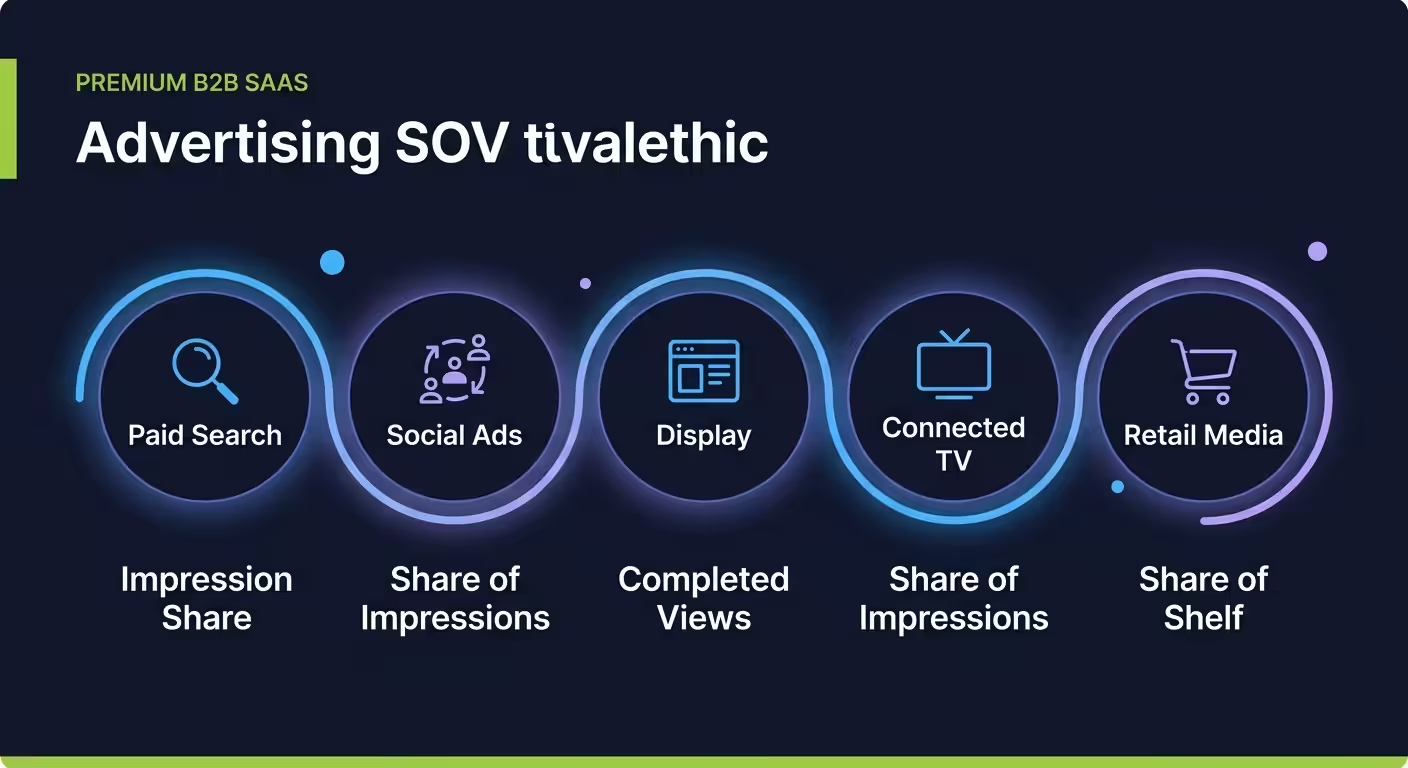
Advertising share of voice in 2026 should be measured by the metric that reflects actual audience exposure on each channel: impressions for display and social, impression share for paid search, completed views for CTV, and share of shelf for retail media.
Here’s what that looks like in practice:
| Channel | Best SOV Metric | Where to Find It |
|---|---|---|
| Paid search (Google/Bing) | Impression share | Google Ads Auction Insights, Microsoft Ads |
| Social ads (Meta, LinkedIn, TikTok) | Share of impressions in category | Ad library scraping tools, competitive intelligence platforms |
| Programmatic display | Share of impressions served | DSP reporting, Moat, DoubleVerify |
| Connected TV / streaming | Share of completed views | Platform dashboards, Nielsen Ad Intel, iSpot |
| Retail media (Amazon, Walmart) | Share of shelf / share of search | Profitero, Pacvue, Skai |
| Traditional (TV, radio, print, OOH) | Estimated spend share | Nielsen Ad Intel, Vivvix, MediaRadar |
Using the wrong metric for a channel is a quiet way to deceive yourself. High spend on connected TV means nothing if your completion rates are low and a competitor’s pre-rolls are running uninterrupted. Measure what the audience experienced, not what you paid for.
SOV and Market Share: The Relationship That Refuses to Die
The most-cited finding in advertising effectiveness research comes from Les Binet and Peter Field. Their analysis of IPA Databank campaigns found that brands with excess share of voice, where SOV exceeds current market share, tend to grow, while brands whose SOV falls below their market share tend to shrink. The rate: roughly 0.5% market share gain for every 10 percentage points of ESOV, based on their study of 171 campaigns from 1980-2010.
That finding is over a decade old. Does it still hold?
Mostly, yes, but with sharper conditions than most summaries acknowledge. The effect varies by category maturity, brand size, and media mix. Challenger brands in fast-moving categories tend to see stronger returns from excess SOV. Market leaders in stable categories often see diminishing returns. And the original research measured traditional media; the principle extends to digital, but the multiplier isn’t guaranteed to transfer cleanly across programmatic display or retail media.
The practical takeaway for 2026: ESOV is a useful growth signal, not a law of physics. If your advertising SOV is 12% and your market share is 18%, you’re probably coasting on existing brand equity. If it’s 22% and your market share is 14%, you’re investing ahead of the curve. Neither situation tells you whether you’re spending in the right channels. That’s where the channel-level breakdown earns its value.
How to Calculate Advertising SOV by Channel
Paid search impression share
Google Ads provides impression share directly in the Auction Insights report. It’s the percentage of impressions your ads received out of the total impressions you were eligible for. You can segment by campaign, ad group, or keyword.
This is one of the cleanest SOV signals available because Google does the denominator math for you. If your impression share on your top 20 brand and category keywords is 65%, you’re visible for about two-thirds of eligible searches. Your competitors split the remaining 35%.
Two things to watch: impression share lost to budget (you ran out of money) versus lost to rank (your ad quality or bid wasn’t competitive enough). They require completely different fixes. Budget constraints need budget reallocation or tighter targeting. Rank losses need better landing pages, ad relevance, or bid strategy.
Social advertising SOV
No social platform serves up a native “share of voice” dashboard for ads. Measuring social ad SOV requires combining your own campaign data with competitive intelligence from tools like Pathmatics, Socialbakers, or manual monitoring through Meta’s Ad Library and TikTok’s Creative Center.
The most practical approach: compare your brand’s estimated impressions across a defined keyword or product category against the estimated total impressions from all advertisers in that space. It won’t be precise to the decimal, but directionally, it reveals whether you’re being outspent or out-targeted.
Social ad SOV matters most for consideration-stage visibility. If three competitors are running retargeting sequences against your audience and you’re not, their brands are getting repeated exposure while yours fades. That gap compounds.
Connected TV and streaming
CTV ad spend is growing faster than any other channel in 2026. Measuring SOV here means tracking share of completed views, not just spend. A brand buying cheaper inventory with high skip rates may spend more but still lose share of voice to a competitor running fewer, unskippable placements on premium inventory.
Nielsen Ad Intel, iSpot.tv, and VideoAmp are the primary data sources. CTV SOV matters because this channel drives upper-funnel brand recall in a way that display rarely achieves. Losing share here shows up months later in organic search volume and consideration-set data.
Retail media networks
For brands selling through Amazon, Walmart, Instacart, or other retail platforms, share of voice increasingly means share of shelf, the percentage of search results and product listing pages where your brand’s sponsored placements appear versus competitors.
This is one of the fastest-growing SOV battlegrounds. When a shopper searches “wireless earbuds” on Amazon and your competitor’s sponsored products occupy three of the top five slots, their advertising SOV on that query is 60%. Yours might be zero. Tools like Pacvue, Skai, and Profitero track this across retail platforms.
Traditional media
TV, radio, print, and out-of-home SOV still relies primarily on estimated spend share. Nielsen Ad Intel and Vivvix are the standard sources in the U.S. The data is lagged (often by weeks or months), but it’s still the most reliable view of how your budget stacks up against category competitors in traditional channels.
Traditional media SOV is increasingly a supporting signal rather than the primary one. But for brands in categories where TV still drives significant reach, automotive, insurance, furniture, QSR, it remains a core competitive benchmark.
What “Good” Looks Like: Setting SOV Targets
One of the biggest gaps in most SOV guides is benchmarking. Everyone explains the formula. Almost nobody tells you what number to aim for.
The honest answer: it depends on whether you’re defending or attacking.
Market leaders (top 3 in category) should target SOV that roughly matches their market share. If you hold 25% market share, an advertising SOV between 22-28% maintains your position without overspending. Dropping significantly below market share signals vulnerability, competitors are investing to take what you have.
Challenger brands (outside top 3, actively growing) need excess SOV. The Binet and Field research suggests that ESOV of 8-15 percentage points above your current market share is the growth corridor. So if you hold 8% market share, you’d aim for 16-23% SOV. That sounds expensive, and it is. The question is whether you can achieve it through smarter channel allocation rather than raw budget increases.
Niche or startup brands (under 5% market share) shouldn’t think about total category SOV at all. You can’t win the whole market. Instead, measure SOV within specific subcategories, geographies, or audience segments where you can credibly dominate. A brand with 2% national market share can achieve 40% SOV in a single metro area or product subcategory, and that concentrated visibility drives disproportionate growth.
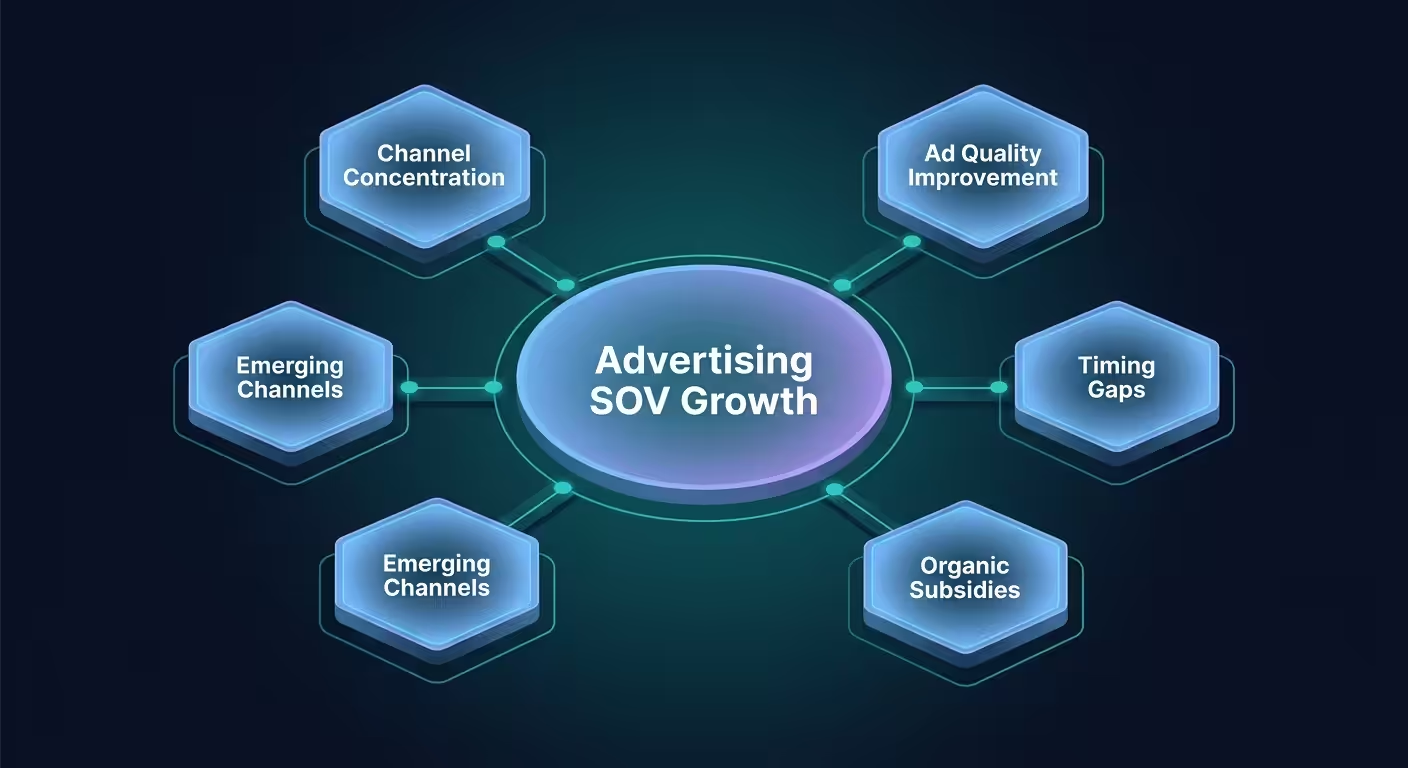
Five Ways to Grow Advertising SOV Without Just Spending More
Most SOV advice boils down to “increase your budget.” That’s technically correct and practically useless for the vast majority of marketing teams. Here’s what actually moves the dial.
Concentrate spend on fewer, higher-impact channels
Spreading budget across seven channels guarantees mediocre SOV on all of them. Pick two or three channels where your audience is most reachable and your competitors are weakest, and build dominant share there. A 35% SOV on paid search and social for your core category keywords does more work than a 7% SOV spread across everything.
This requires knowing where your competitors are spending, and where they’re not. Competitive analysis isn’t optional here. It’s the foundation of every channel allocation decision.
Improve ad quality scores and relevance
On paid search, higher Quality Scores mean lower costs per impression. On Meta, higher relevance scores mean more efficient delivery. On programmatic, better creative performance means your budget stretches further. All of these effectively increase your SOV without increasing your spend.
This is where most brands leave the most money on the table. A 15% improvement in ad quality scores across your Google Ads account can increase your impression share by 10-20% at the same budget. That’s free SOV.
Target timing gaps
Most competitors run ads during the same hours, days, and seasons. If you can identify periods when competitive intensity drops, early mornings, weekends, off-peak months, you can buy more share of voice at lower cost.
Dayparting analysis across your paid search and social campaigns often reveals that impression share jumps significantly during off-peak hours simply because fewer competitors are bidding. Schedule your spend to exploit those gaps.
Use organic to subsidize paid
Strong organic search visibility reduces the pressure on paid search to carry your entire SOV. If you rank organically for 60% of your target keywords, you can concentrate paid spend on the 40% where organic visibility is weak. The combined effect, paid plus organic, gives you a higher total advertising and search presence than either channel alone.
This is why SEO competitor analysis feeds directly into advertising SOV strategy. They’re not separate workstreams. They’re the same visibility goal measured in two ways.
Build share of voice in emerging channels before competitors catch up
Retail media networks, CTV, and audio advertising are still underpenetrated relative to search and social. Early investment in these channels can deliver disproportionate SOV because the auction dynamics are less competitive. The brands building CTV share of voice right now are locking in audience familiarity that will be far more expensive to buy in two years.
See where AI answers put your brand
Twenty minutes with a senior strategist: where the major engines point buyers in your category, who gets named instead of you, and a straight read on what a programme would change.
Book a strategy callCommon Measurement Mistakes That Distort Advertising SOV
Getting the formula right is easy. Getting the inputs right is where most teams fail.
Mistake 1: Defining the market too broadly. If you sell enterprise project management software and you measure SOV against the entire “SaaS” category, your number will be tiny and meaningless. Define your competitive set tightly, the 5-10 brands your buyers actually compare you against. SOV is only useful relative to a meaningful denominator.
Mistake 2: Mixing metrics across channels. You can’t add paid search impression share to social media estimated impressions to CTV completed views and get a “total SOV.” These metrics have different scales, different denominators, and different meanings. Report channel-level SOV separately. If you need a blended view, weight each channel by its contribution to pipeline or revenue.
Mistake 3: Measuring only spend. Spend-based SOV tells you who’s buying more ads. Impression-based SOV tells you who’s being seen more. These can diverge dramatically based on targeting efficiency, ad quality, and inventory selection. A brand spending 30% less than a competitor can still have higher impression-based SOV if their media buying is sharper.
Mistake 4: Ignoring time windows. SOV fluctuates weekly. Measuring it once per quarter gives you an average that hides the periods when competitors surged past you during a product launch, seasonal campaign, or promotional push. Monthly measurement is the minimum. Weekly is better for high-competition categories.
How Advertising SOV Connects to Broader Brand Measurement
Advertising share of voice is one slice of a larger picture. Your brand’s total visibility includes organic search presence, social media conversation share, earned media coverage, and, increasingly, how often AI platforms mention your brand when users ask category-level questions.
The relationship between these layers matters. High advertising SOV with low organic SOV suggests you’re buying attention without earning trust. High organic SOV with low advertising SOV suggests you’re relying on existing authority without investing in growth. The most durable brands maintain strong share of voice across multiple layers simultaneously.
The gap between SOV and market share remains the single most useful diagnostic for brand health. When advertising SOV drops but market share holds steady, you’re living on borrowed time, existing customers are keeping revenue stable, but new customer acquisition is slowing. When advertising SOV rises and market share doesn’t follow, something in the funnel below awareness is broken.
The brands that measure both, and track the lag between them, make better allocation decisions than brands that optimize either metric in isolation.
Building an Advertising SOV Report That Drives Decisions
An SOV report that just shows percentages is a dashboard. A report that drives decisions connects SOV to business outcomes and competitive shifts.
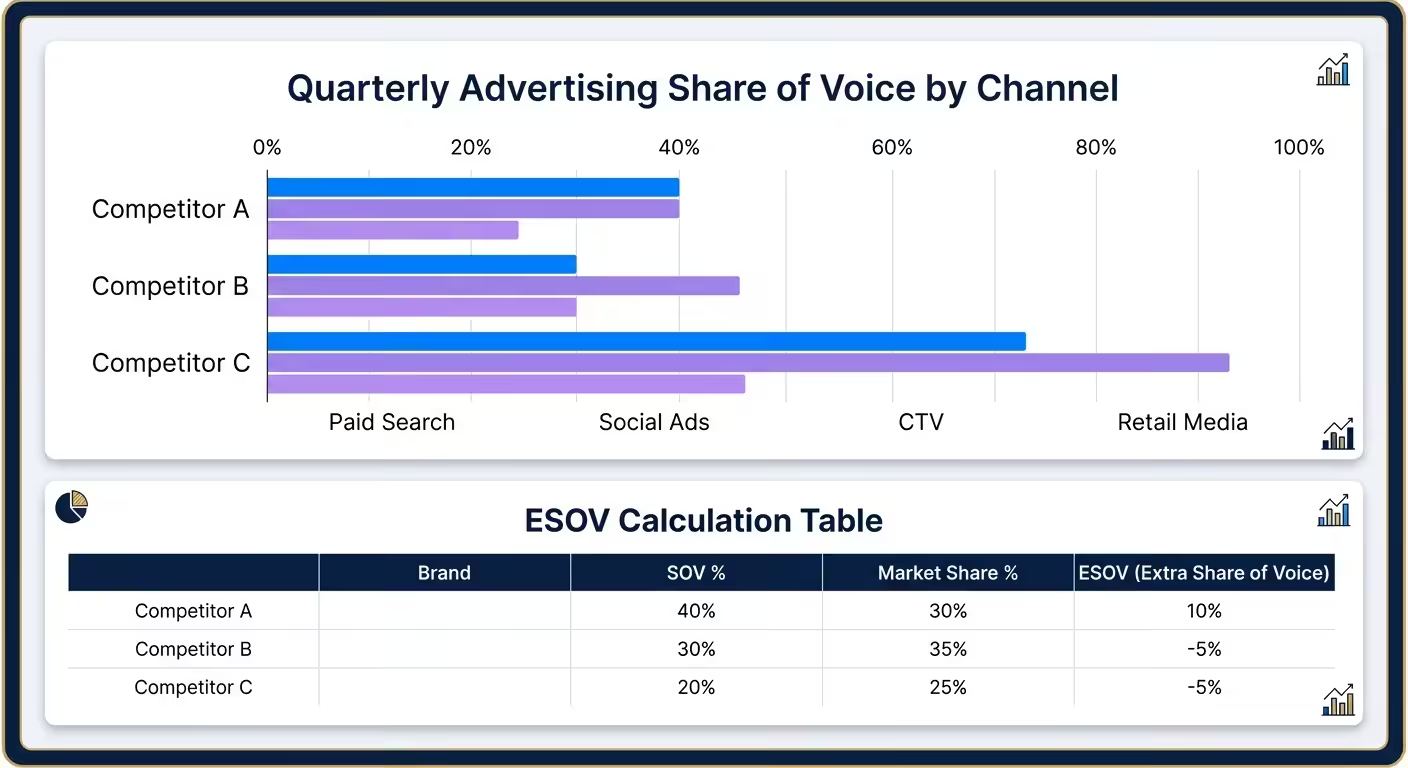
Here’s what belongs in a monthly advertising SOV report:
- Channel-level SOV, your brand vs. top 3-5 competitors, per channel, with month-over-month trend
- ESOV calculation, advertising SOV minus current market share, showing whether you’re investing ahead or behind
- SOV by sub-category or keyword cluster, where you’re winning and losing at the product level, not just the brand level
- Cost efficiency metrics alongside SOV, are SOV gains coming from better efficiency or just higher spend?
- Competitive movement flags, highlight any competitor whose SOV jumped more than 5 points in a month, with a hypothesis on why
Skip vanity aggregations. Nobody needs a “total blended SOV” number. Channel-specific data with competitive context is what makes the report useful. If you need a template for structuring this kind of reporting, our guide to measuring share of voice covers the framework in detail.
Earned vs Paid Share of Voice
Advertising share of voice measures paid media weight, but earned mentions — press coverage, organic citations, unlinked brand references — increasingly carry weight that paid spend can’t buy, particularly for AI-generated answers that don’t factor in ad spend at all. A brand can hold strong advertising SOV and still be invisible in the answers buyers now research through before ever seeing an ad. Earned mention-building is the complementary lever paid budgets alone don’t cover.
Frequently Asked Questions
What is the difference between share of voice and impression share?
Impression share is a platform-specific metric, Google Ads tells you what percentage of eligible impressions your ads captured. Share of voice is a broader competitive metric that compares your brand’s total advertising visibility against all competitors in your category. Impression share feeds into SOV, but SOV includes channels beyond search, like social, CTV, and retail media. Think of impression share as one input; share of voice as the full picture.
How often should you measure advertising share of voice?
Monthly at minimum. Weekly if you’re in a high-competition category like insurance, fintech, or consumer electronics where competitors shift budgets rapidly. Quarterly measurement is too slow, by the time you spot a competitor’s surge, they’ve already captured mindshare you’ll spend months recovering.
Can a small brand compete on share of voice against bigger competitors?
Not across the entire market, and you shouldn’t try. Concentrate SOV measurement and spending on a narrow segment: one product subcategory, one geographic market, or one audience persona. A DTC skincare brand with a $200K monthly ad budget can’t touch L’Oréal’s national SOV. But it can dominate SOV for “clean retinol serum” on paid search and Instagram in three target metros. That focused dominance drives real growth.
Does higher advertising SOV guarantee market share growth?
No. It increases the probability of growth, but doesn’t guarantee it. The Binet and Field research found a tendency for excess SOV to correlate with market share gains, not a certainty. Product quality, pricing, distribution, and brand perception all mediate the relationship. A brand with 30% SOV and a terrible product will still lose share. SOV amplifies whatever your brand actually delivers.
What Comes After Measuring Advertising SOV
Knowing your share of voice number is the starting point, not the finish line. The real value comes from what you do with the data: reallocating budget toward channels where competitors are weak, improving ad quality to stretch existing budgets further, timing campaigns to exploit seasonal gaps, and tracking ESOV against market share over quarters to see whether your investment strategy is actually working.
If your advertising SOV tells you one story but your social media share of voice and brand awareness metrics tell a different one, that dissonance is the signal. It means your paid visibility isn’t translating into organic conversation, earned attention, or brand recall, and that’s a strategic problem worth solving before the next budget cycle.
The brands that win aren’t the ones that measure SOV once. They’re the ones that build it into monthly rhythm, channel by channel, competitor by competitor, and adjust faster than the market moves around them.