
This guide covers modern share of voice strategies, the tracking tools and methods teams now adopt, and the social media monitoring practices leaders apply when AI surfaces and traditional channels both factor into reach.
Share of voice on social media is the percentage of total audience conversation your brand captures compared to competitors within a defined market. It tells you whether people are talking about you, or about everyone else. The formula is straightforward: divide your brand’s mentions by the total mentions across all tracked competitors, then multiply by 100. A brand with 300 mentions in a category where all competitors combined generate 3,000 mentions holds a 10% social share of voice.
But the number alone isn’t the point. What matters is the trend, the sentiment behind it, and whether your share is growing in the places that influence buying decisions. In 2026, those places include not just Instagram, LinkedIn, and X, but also AI-generated answers that pull social signals into their recommendations. Your social SOV now feeds visibility far beyond the platforms where conversations happen.
This guide covers how to calculate social share of voice accurately, which tools actually deliver useful data, where most brands miscalculate, and what to do once you have a number worth acting on.
What You’ll Learn
- The exact formula for social share of voice, and the three variables most brands get wrong
- How social SOV connects to market share growth, with data on excess share of voice
- Which measurement tools work for different budgets and team sizes
- Five specific tactics to increase your share of voice on social media without inflating ad spend
- Why social SOV now influences AI search visibility, and what to do about it
What Social Share of Voice Actually Measures
Social share of voice quantifies how much of the public conversation in your category belongs to your brand. It counts mentions, tags, hashtags, reposts, comments, and organic discussion across social platforms, then compares your total against the combined totals of your competitors.
Social share of voice measures the proportion of audience-generated and brand-generated social conversation that a specific brand owns relative to all competitors in a defined category, time period, and platform set.
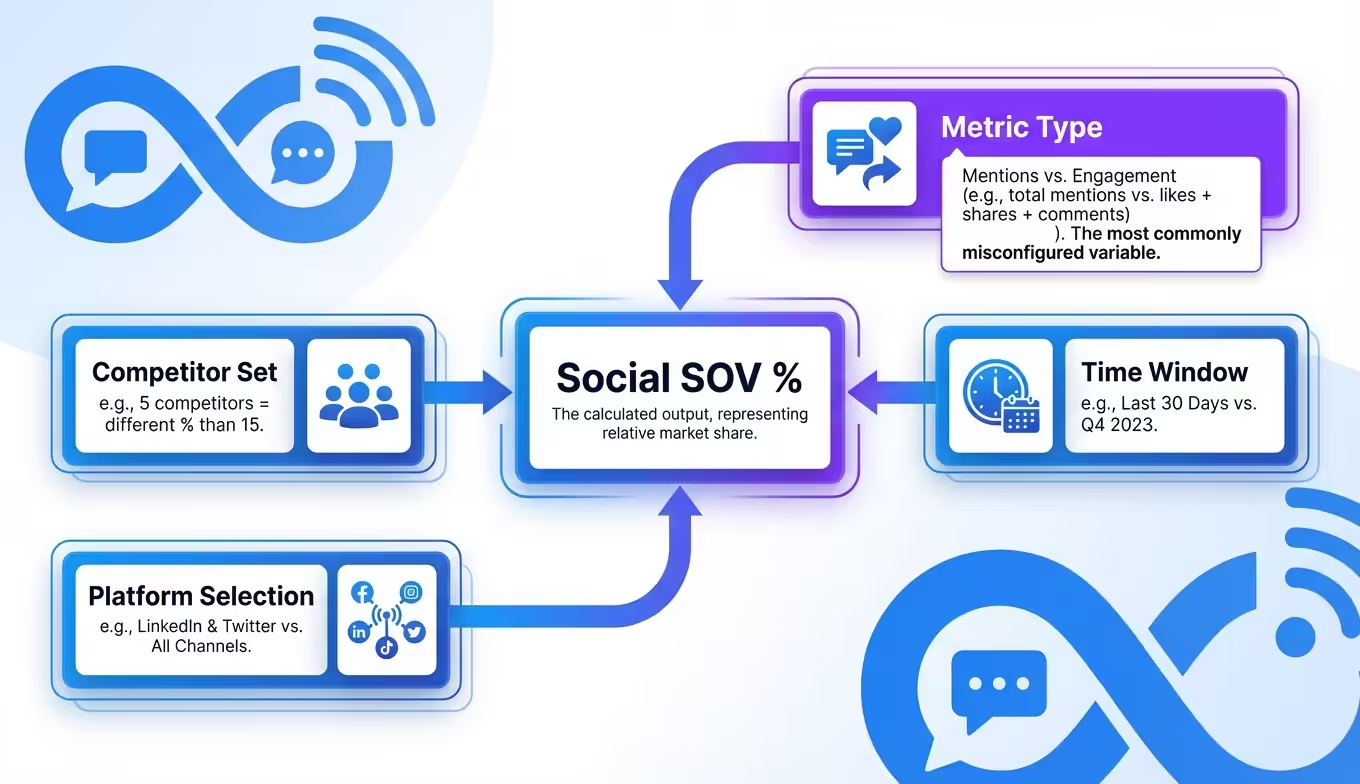
That definition matters because each variable changes the result. Measure across all social platforms and your SOV might look different than it does on LinkedIn alone. Measure over 90 days and you’ll smooth out spikes that a 7-day window would amplify. Choose five direct competitors and your percentage shifts dramatically compared to tracking fifteen.
Most brands treat SOV as a vanity metric, a number for the quarterly deck. It becomes useful only when you control the inputs: which competitors, which platforms, which time window, and whether you’re measuring raw mentions or weighted engagement.
The Social SOV Formula (And Where Brands Miscalculate)
The math is simple. The inputs are where teams make mistakes.
Social Share of Voice = (Your Brand Mentions ÷ Total Market Mentions) × 100
“Total market mentions” means the sum of your brand mentions plus every tracked competitor’s mentions within the same time period and platform set. If you track four competitors and your own brand, the denominator is the combined total across all five.
Mistake 1: counting only @mentions and hashtags
People talk about brands without tagging them. A LinkedIn post saying “We switched from Salesforce to HubSpot last quarter” mentions both brands, neither gets an @tag. Any tool that only captures tagged mentions will undercount every brand in the set, but it’ll undercount some more than others. Brands with strong organic word-of-mouth get hurt most by this blind spot.
Mistake 2: ignoring platform weighting
A mention on LinkedIn carries different weight than a mention on TikTok, depending on your market. B2B SaaS companies measuring social SOV across TikTok, Instagram, and LinkedIn without weighting by audience relevance end up chasing numbers that don’t connect to pipeline. If 80% of your buyers live on LinkedIn, a 15% SOV on LinkedIn matters more than a 40% SOV on Instagram.
Mistake 3: including sentiment-blind totals
A brand crisis generates massive mention volume. Raw SOV would spike, but that’s not share of voice you want. The best measurement approaches layer sentiment on top of volume. A competitor might have 35% of total mentions but 60% of those are negative. Your 20% with 85% positive sentiment is the stronger position. (Yes, this changes the story completely.)
Why Social SOV Predicts Market Share Growth
Share of voice isn’t just a brand health indicator. Research by Binet and Field across 171 campaigns spanning three decades found that brands with excess share of voice, meaning their SOV exceeded their current market share, gained roughly 0.5 percentage points of market share for every 10 points of ESOV. Brands whose SOV fell below their market share tended to shrink.
That research focused on advertising spend as the SOV measure. But the principle holds for social conversation too, and arguably more so now. Paid media reach is capped by budget. Social conversation is capped by relevance.
When your brand owns a disproportionate share of organic social discussion relative to your current market position, it signals that mindshare is moving in your direction before revenue does. SOV is a leading indicator. Market share is the lagging one.
The strategic question isn’t “what’s our SOV?” It’s “is our SOV larger or smaller than our current market share?” Excess share of voice is the gap that predicts growth.
This is where most quarterly reports fall short. They report SOV as a standalone number, 22% this quarter, 24% last quarter. Without anchoring it against market share, the number floats without meaning.
How to Measure Social Share of Voice Step by Step
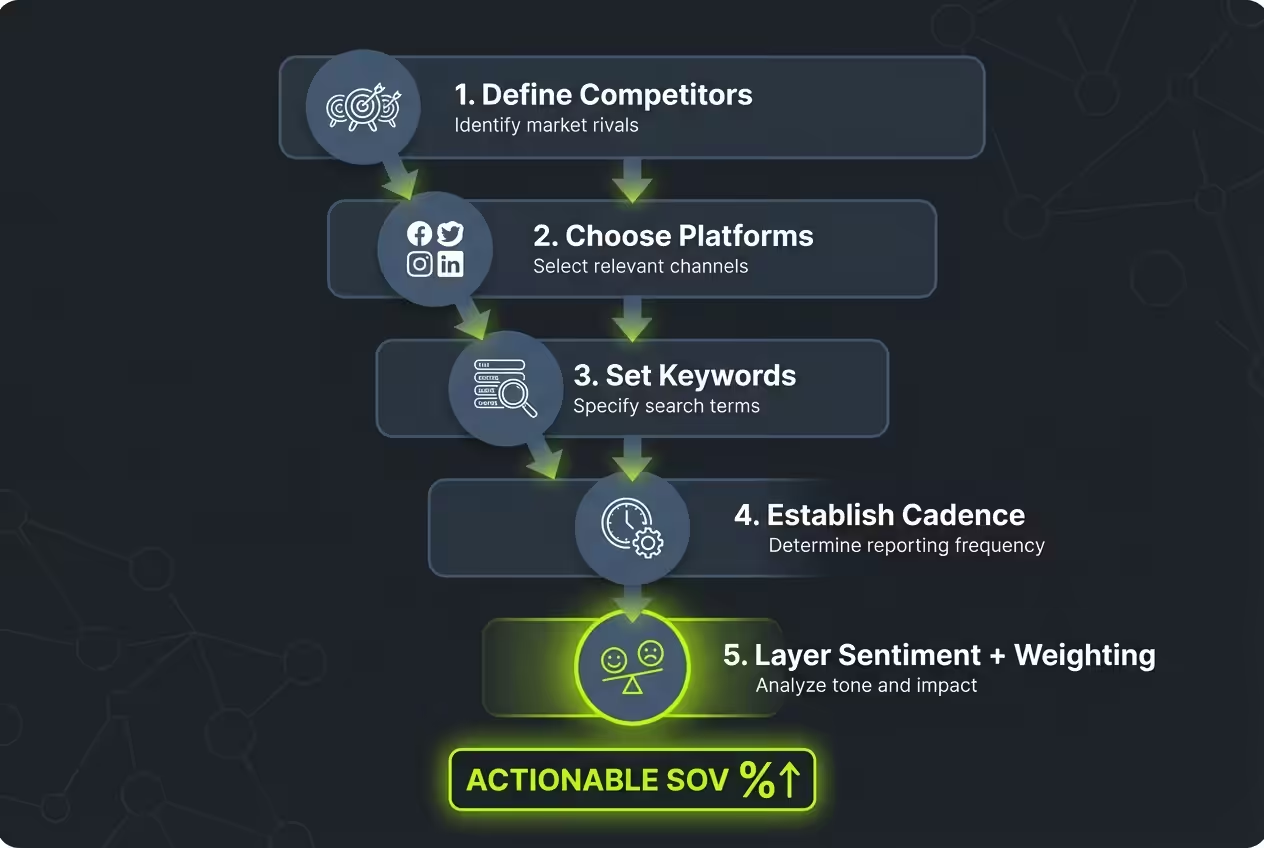
Getting a reliable SOV number requires deliberate setup before any tool generates a dashboard. Here’s the process that produces data worth acting on.
Step 1: define your competitive set
Pick 4-6 direct competitors. Not aspirational competitors. Not adjacent categories. The brands your buyers actually evaluate alongside yours. If you sell project management software, your set might be Monday.com, Asana, ClickUp, Notion, and Wrike, not Salesforce or SAP. A tighter set gives you a percentage that reflects real competitive dynamics.
Step 2: choose platforms by buyer behavior
Map where your target buyers spend time and talk about solutions in your category. B2B typically means LinkedIn, X, and YouTube. DTC consumer brands might prioritize Instagram, TikTok, and Reddit. Don’t track platforms where your buyers aren’t active, you’ll dilute the signal.
Step 3: set keyword and mention parameters
Track brand names, common misspellings, product names, branded hashtags, and key employee handles for each competitor. Exclude irrelevant homonyms. “Apple” the tech company needs filters to separate it from apple the fruit. “Monday” the tool needs filters to avoid every casual use of the word.
Step 4: establish your measurement cadence
Weekly snapshots for tactical monitoring. Monthly roll-ups for trend analysis. Quarterly comparisons for strategic decisions. Avoid measuring SOV daily, single viral posts or PR incidents will distort the picture.
Step 5: layer sentiment and engagement weighting
Raw mention counts are your baseline. Then add sentiment classification, positive, negative, neutral, so you know whether your share consists of praise or complaints. If your tool supports it, weight by engagement (likes, reposts, comments) rather than treating every mention equally. A post with 2,000 engagements carries more conversation weight than one with 3.
Tools That Measure Social Share of Voice (Honest Assessment)
Every social listening vendor claims to measure SOV. The difference is in how they handle mention discovery, sentiment accuracy, and competitor benchmarking. Here’s what actually works at different price points.
| Tool | Best For | SOV Capability | Limitation |
|---|---|---|---|
| Brandwatch | Enterprise teams needing cross-platform depth | Automated SOV dashboards with sentiment overlay, competitor panels, historical trending | Price starts high; onboarding takes weeks |
| Sprout Social | Mid-market brands wanting listening + publishing in one tool | Listening topics with SOV comparison, sentiment classification, share of engagement | Competitor tracking limited on lower tiers |
| Talkwalker | PR and comms teams tracking media + social together | Multi-channel SOV including news, blogs, forums, and social; AI-powered sentiment | UI complexity; takes time to configure well |
| Mention | Small teams and startups needing affordable monitoring | Basic SOV by mention volume; competitor comparison dashboard | Sentiment accuracy weaker; limited platform coverage |
| Google Alerts + Manual Tracking | Bootstrapped teams or early validation | No automated SOV; requires manual spreadsheet calculation | No sentiment, no engagement weighting, no real-time data |
One opinion worth stating: most brands outgrow manual tracking within the first quarter of trying it. The time cost of manually aggregating mentions across platforms and running competitor comparisons in spreadsheets exceeds the cost of a mid-tier tool by month two. Start with free social listening tools to validate the concept, then invest once you’ve proven the metric matters to your team.
Social SOV vs. Other Share of Voice Channels
Social is one lens. It’s not the only one, and confusing them leads to misallocated budgets.
Media SOV measures your share of press coverage, earned mentions in publications, news outlets, and industry media. It’s about editorial visibility, not conversation volume. A brand with 5% social SOV but 30% media SOV in its category has strong PR but weak community engagement.
SEO SOV measures your organic search visibility across a set of target keywords relative to competitors. Tools like Ahrefs and Semrush calculate this as “visibility score” or “share of SERP.” It tells you who owns the search results page, not who owns the social conversation.
PPC SOV is Google’s impression share metric, the percentage of available ad impressions your campaigns captured. It’s budget-driven and platform-specific.
Social share of voice reflects organic conversation and audience-generated discussion, making it the closest proxy for genuine brand mindshare among the four SOV channels.
The real power shows up when you track all four together. A brand gaining social SOV while losing SEO SOV is usually building buzz but failing to convert that attention into search visibility. The pattern we see across SOV audits is that the brands growing fastest build social and media SOV in tandem, because editorial placements fuel both AI visibility and the social conversations that reference those placements.
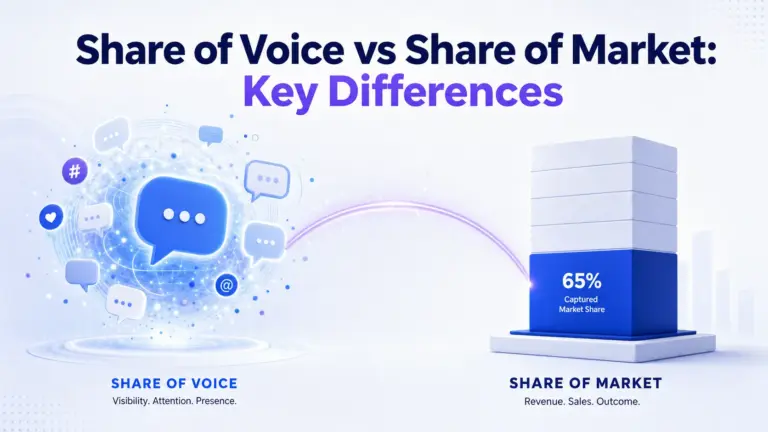
For a deeper look at how these channels interact, our breakdown of share of voice vs. share of market covers the relationship between SOV as a leading indicator and market share as the outcome it predicts.
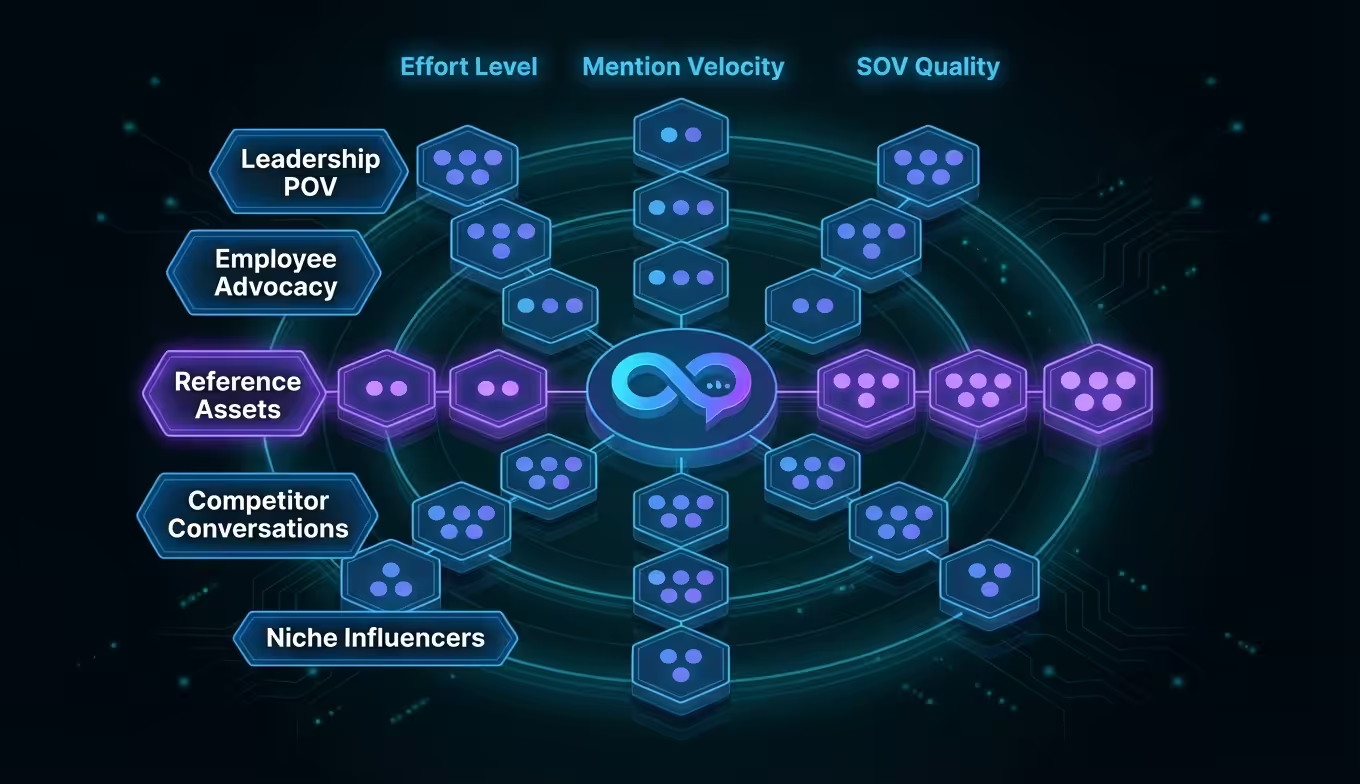
Five Tactics to Increase Social Share of Voice
The social-SOV tactic we see deliver the biggest lift in audits isn’t more posting, it’s more quoting. When you publish one genuinely quotable data point or framework per quarter, the social shares you earn from industry voices referencing it typically move share-of-voice further than six weeks of branded content. Prioritize the one quotable artifact before the content calendar.
Growing social SOV doesn’t require doubling your ad budget. It requires making your brand more talkable, the kind of presence people reference without being prompted.
Build visible points of view on category-defining topics
Brands that generate organic mentions have something to say. Not content for content’s sake, a clear, stated position on where your industry is heading. When a VP of Marketing at a SaaS company posts “We don’t believe in gated content anymore, here’s why,” that generates discussion. When they post “Check out our latest blog,” it doesn’t. Your leadership team’s willingness to take public positions on LinkedIn, X, and industry forums directly increases mention velocity.
Activate employees as distribution channels
Employee advocacy isn’t a nice-to-have anymore. One pattern we’ve observed across campaigns: companies that equip 15+ employees with shareable talking points see 3-4x the mention volume compared to brands that rely solely on corporate accounts. The math is simple, 20 employees with 500 followers each reach 10,000 people organically. Your corporate account with 5,000 followers reaches maybe 250 after algorithmic filtering.
Create assets designed for reference, not consumption
Some content gets consumed and forgotten. Other content gets referenced. Original research, benchmark data, and proprietary frameworks generate mentions because other people cite them in their own posts. If you publish a “State of [Your Category] 2026” report with original data, every industry commentator who references it creates a mention. That compounds.
Monitor and join competitor conversations
When someone asks “Has anyone used [Competitor]? Looking for alternatives”, that’s an SOV opportunity. Not to pitch aggressively, but to show up with a useful perspective. Brands that monitor competitor mention streams and respond thoughtfully capture mentions that would otherwise default entirely to the competitor. Tools that support brand monitoring on social media make this systematic rather than accidental.
Partner with niche voices, not celebrity influencers
A micro-influencer with 8,000 followers in your exact buyer persona generates more relevant SOV than a macro-influencer with 500,000 followers across mixed audiences. The mention from a respected industry practitioner carries weight because their audience overlaps with yours. The mention from a general-purpose influencer adds volume without relevance, and relevance is what converts SOV into pipeline.
The Dark Social Problem (And What You Can Do About It)
A significant share of social conversation happens where no monitoring tool can see it. Slack channels. WhatsApp groups. iMessage threads. Email forwards. Private LinkedIn DMs. This is dark social, and it distorts every SOV calculation.
Research from RadiumOne found that 84% of consumers’ outbound sharing happens through private channels rather than public social feeds. That means the public mentions you’re tracking represent a fraction of actual brand conversation. And there’s no guarantee the fraction is proportional across competitors, brands with stronger word-of-mouth may have higher dark social ratios.
You can’t measure what you can’t see, but you can triangulate. Pair your social SOV data with direct traffic trends in analytics (sudden spikes in direct visits often correlate with dark social sharing), branded search volume changes, and survey-based brand awareness data. None of these are perfect proxies. Together, they help you estimate whether your visible SOV understates or overstates your real position.
Worth acknowledging: this limitation doesn’t make social SOV useless. It makes it incomplete. Every competitor faces the same blind spot. Your relative position, the comparison, still holds value even if the absolute numbers are low.
Social SOV Now Feeds AI Search Visibility
For the AI-visibility side of that feedback loop, see the ChatGPT brand mention check workflow and monitoring brand mentions in LLMs, which walk through how social conversations translate into AI citations platform by platform.
Here’s what changed in 2026 and 2026: social signals now influence how AI search engines represent brands. ChatGPT, Gemini, and Perplexity pull from web-crawled content that includes social discussions, Reddit threads, forum posts, and published social media content. When your brand appears frequently in public social conversations, especially in contexts that associate you with specific capabilities or categories, AI models learn those associations.
This means social share of voice isn’t just a brand health metric anymore. It’s an input to how AI models learn brand-category associations. A brand that dominates social conversation around “enterprise project management” is more likely to surface when someone asks ChatGPT “What’s the best enterprise project management tool?”
The connection isn’t direct, AI models don’t count your mentions and rank you accordingly. But the content that mentions your brand on social platforms gets crawled, indexed, and included in training data or retrieval systems. More high-quality mentions in more relevant contexts build stronger entity associations. And those associations drive AI recommendations.
BrandMentions works with companies to build these associations deliberately, not through inflated social activity, but through strategic placements on high-authority publications that AI models are known to index. Social SOV and editorial citation strategy work in parallel. One builds conversation. The other builds the structured references that AI models weight most heavily.
What to Include in Your Social SOV Report
A useful SOV report doesn’t just show the number. It shows what the number means and what to do next.
The core metric: Your social SOV percentage, measured monthly, compared against the same competitor set. Show the trend line, direction matters more than any single data point.
Competitor breakdown: Individual SOV percentages for each tracked competitor. Identify who’s gaining and who’s losing. A competitor whose SOV jumped 8 points in a month likely launched a campaign, went viral, or had a PR event worth investigating.
Platform-level SOV: Break your total down by platform. You might hold 25% SOV on LinkedIn but only 8% on X. That tells you where to invest, and where to stop wasting effort.
Sentiment overlay: What percentage of your mentions are positive, negative, neutral? A growing SOV with declining sentiment is a warning sign, not a win.
Top mention drivers: Which specific posts, campaigns, or events drove the biggest mention spikes? This connects SOV movement to specific actions your team took, making future planning possible.
ESOV calculation: If you can estimate your market share, calculate excess share of voice. Are you above or below the line? This single data point tells you whether your current trajectory predicts growth or contraction.
For a deeper framework on building these reports, our guide to measuring brand awareness covers how SOV fits within broader awareness tracking.
Measuring share of voice well requires consistent monitoring infrastructure, our overview of social media monitoring services compares the agency models that handle this for B2B teams.
Teams measuring brand presence on social should also track campaign-level performance, see our framework for influencer marketing KPIs that prove real ROI.
Social-channel SOV is one slice of the broader metric. Our complete share of voice guide covers SOV across search, social, and AI surfaces.
Why Social SOV Alone Undercounts Your Real Share
The 5-channel social calculation above captures conversation volume, but social mentions are increasingly just one input AI systems use to determine which brands to cite in generated answers. A brand with strong social share of voice but weak press and citation presence can still lose ground in AI-driven discovery. Treat social SOV as one input to a broader mention-building strategy, not the full picture.
Frequently Asked Questions
What is a good share of voice percentage on social media?
There’s no universal benchmark, it depends entirely on your market position and competitive set. A category leader might hold 30-40% SOV among five tracked competitors, while a challenger brand might target 15-20% as a growth milestone. The more useful question is whether your SOV exceeds your current market share. If it does, research suggests you’re on a growth trajectory. If it doesn’t, you’re likely losing ground.
How often should I measure social share of voice?
Monthly is the sweet spot for most brands. Weekly monitoring helps you catch spikes from campaigns or competitor activity, but weekly SOV percentages fluctuate too much for strategic decisions. Monthly gives you a stable trend line. Quarterly is too slow, by the time you spot a decline, you’ve lost three months.
Can I measure social SOV without paying for tools?
Technically, yes. You can search each competitor’s brand name across platforms, count mentions manually, and build a spreadsheet. In practice, this breaks down after the first attempt. Manual counting misses misspellings, untagged mentions, and cross-platform data. Even free tools like Google Alerts capture only a fraction. If you’re serious about tracking SOV, budget for at least a mid-tier social listening tool within your first quarter.
Does negative mention volume count toward share of voice?
By default, yes, raw SOV counts all mentions regardless of sentiment. That’s why pure volume-based SOV can mislead. Imagine a competitor goes through a data breach. Their mentions spike. Their raw SOV jumps. But none of that attention is beneficial. The solution is to track two versions: raw SOV (all mentions) and positive SOV (only positive and neutral mentions). The gap between them tells you something important about brand health.
How does social share of voice relate to AI search visibility?
Social conversations create content that AI models can crawl and learn from. When your brand is frequently mentioned in relevant social discussions, especially on indexable platforms like Reddit, LinkedIn public posts, and forums, those mentions contribute to the brand-category associations that AI models build. Higher social SOV in the right contexts increases the probability that AI search engines reference your brand in relevant answers. It’s one input among many, not a direct ranking factor.
Connecting Social SOV to Editorial and AI-Citation Work
Social share of voice is the metric that tells you whether your brand is gaining ground in the conversations that matter, before the revenue data confirms it. But the brands pulling ahead in 2026 aren’t treating social SOV as a standalone metric. They’re connecting social conversation to editorial placements, AI citations, and search visibility in a single compounding system.
Start with the five-step measurement process. Get your baseline. Identify whether you’re above or below the excess share of voice line. Then invest in the tactics that build both social mentions and the structured editorial references AI models rely on.
If you want a baseline before committing to a tool or process, book a short strategy call. We’ll run 25 category-relevant prompts across ChatGPT, Perplexity, Gemini, and Google AI Overviews so you can see exactly which sources each platform trusts for your category, and which competitors are capturing citations you’re not.
Written by the BrandMentions editorial team. AI tools were used during drafting. Final review, strategy input, and editorial judgment by human editors.
[ , ]
Frequently Asked Questions
How do you calculate share of voice on social media?
Share of voice on social media is calculated as: SOV = (Your Brand Mentions ÷ Total Industry Mentions) × 100. For example, if your brand is mentioned 500 times and the total industry conversation is 5,000 mentions, your social media share of voice is 10%. In 2026, this calculation is expanding to include AI-generated mentions in ChatGPT, Gemini, and Perplexity, not just traditional social platforms.
What tools measure share of voice on social media?
The best social media share of voice tools in 2026 include Brandwatch, Mention, Sprout Social, and BrandMentions. These tools track brand mentions across social platforms, forums, and news sites to calculate your relative share of conversation. For brands that also want to measure share of voice in AI search engines like ChatGPT and Gemini, a dedicated AI visibility and share of voice platform is required.
What is a good share of voice on social media?
A healthy share of voice on social media varies by industry and competitive landscape. In most B2B categories, a share of voice above 20% is strong. Market leaders typically hold 30-50% SOV in their category. For AI search channels (ChatGPT, Perplexity, Gemini), most brands start near 0%, so even 10% AI share of voice puts you ahead of most competitors in 2026.