
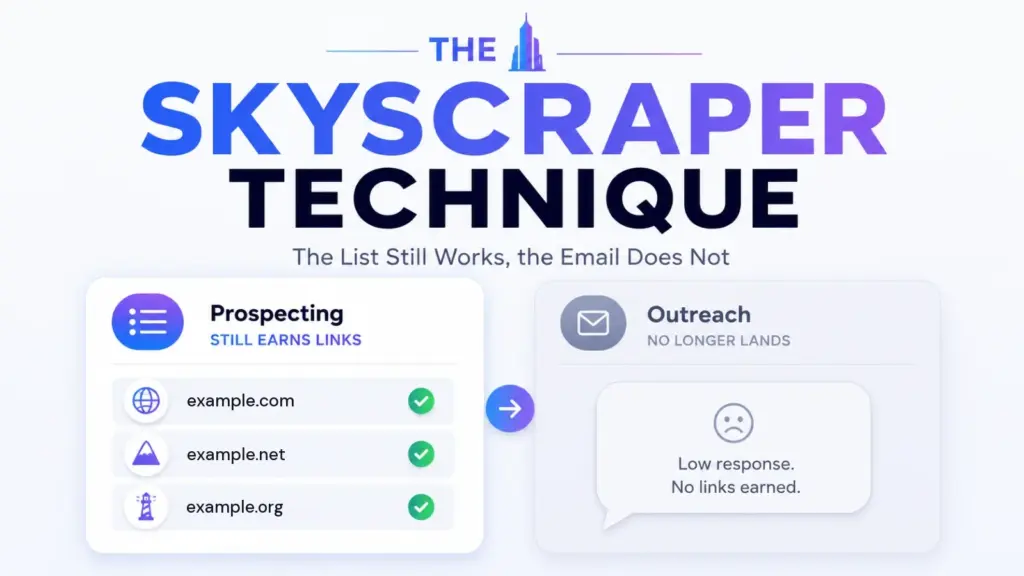

The skyscraper technique had two halves, and only one of them aged well. The research half still holds up. The outreach half is the part that stopped returning replies.
That split matters because the tactic is usually judged as a single thing. People either defend all of it or dismiss all of it, and both positions throw away something useful.
Here’s what each half was for, which one broke, and what to send in place of the email that used to work.
What the Technique Was
The original recipe had three steps. Find content that already earns links, make something better than it, then email the people linking to the original.
The logic underneath step three was sound. A site that already linked to a piece on your subject has proved it links to pieces on your subject. That makes it a qualified prospect rather than a cold one.

That qualification logic is still the best thing about the method, and it is the part people forget when they call the tactic dead.
Which Half Stopped Working
The outreach did. The pitch was “I wrote something better than the thing you linked to, please swap it”, and that request asks an editor to do work for your benefit.
It worked when the volume was low. Once the technique spread, every publisher with a well-linked article started receiving the same email, and the reply rate fell to where the effort stopped paying.
Our own guide already files it under the tactics that no longer earn their time. How to do link building lists generic skyscraper outreach among the things to stop sending.
Why the Pitch Fails Now
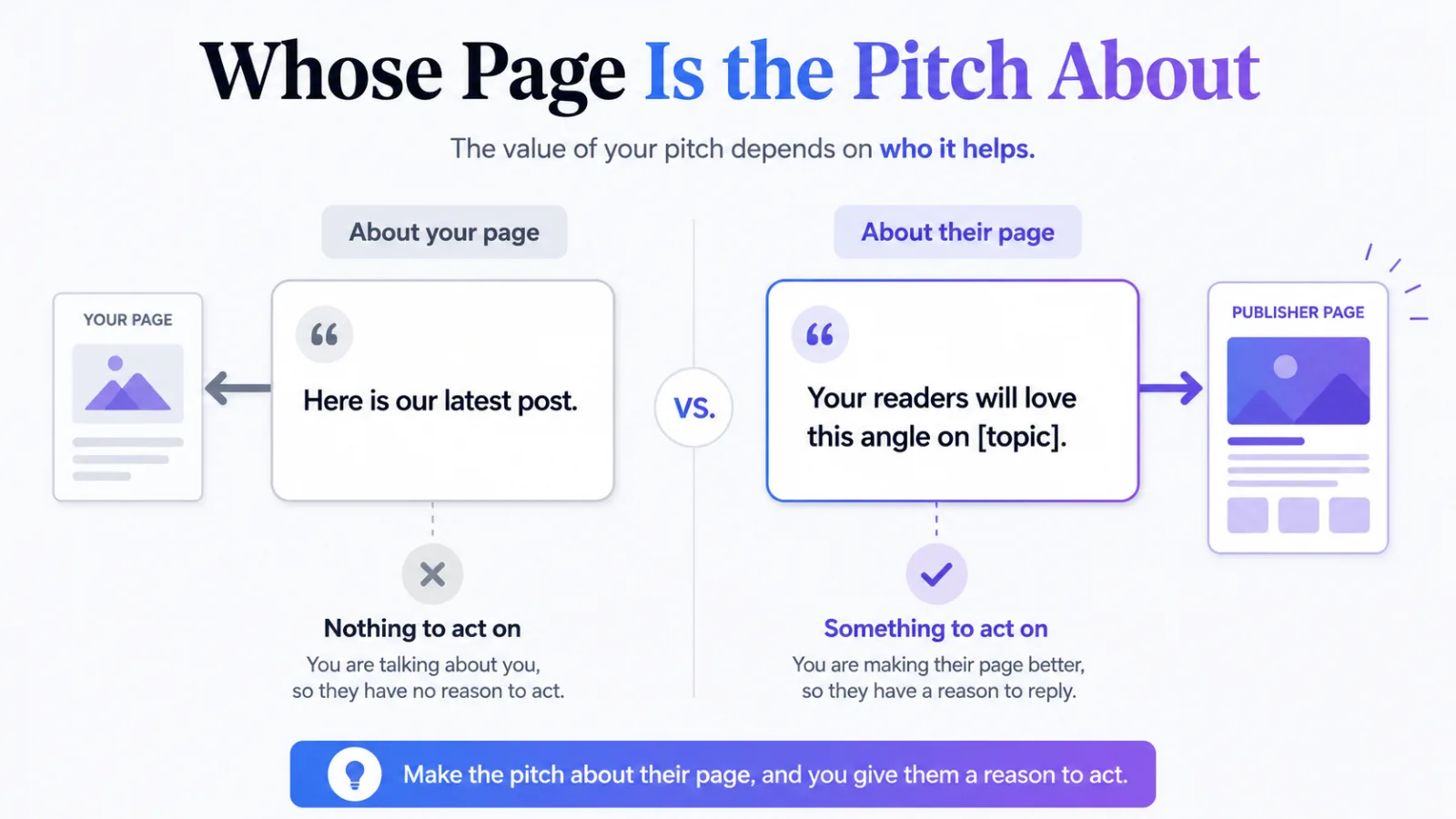
It fails because the argument is about you. “Mine is better” is a claim the recipient has no reason to test and no obligation to act on.
There’s a second problem underneath it. Length and comprehensiveness were the proxies the method optimised for, and both stopped being differentiators once every competitor produced the same exhaustive piece.
| What the pitch offered | What the editor hears |
|---|---|
| Mine is longer and more thorough | You want me to edit a working page |
| Mine is more up to date | Prove the current one is wrong |
| Mine covers more subtopics | My readers did not ask for more subtopics |
| You linked to something similar | So did a hundred people who emailed me |
Every row fails the same test. None of them gives the publisher a reason that is about their page rather than yours.
What Still Works From It
Two things survive, and they’re worth separating from the email that killed the method’s reputation.
The prospecting logic
Sites linking to an established piece on your subject remain the best-qualified list you can build. They’ve demonstrated the behaviour you want, on the topic you want, in public.
That’s the same reasoning behind most credible tactics in link building methods, and it doesn’t depend on the skyscraper pitch at all.
The asset discipline
Making something genuinely better is not wasted, provided better means different rather than longer. An original dataset, a real teardown or a tool earns links because it gives a writer something to cite.
The failure was never the asset. It was expecting the asset to make the argument on its own.
What to Send Instead
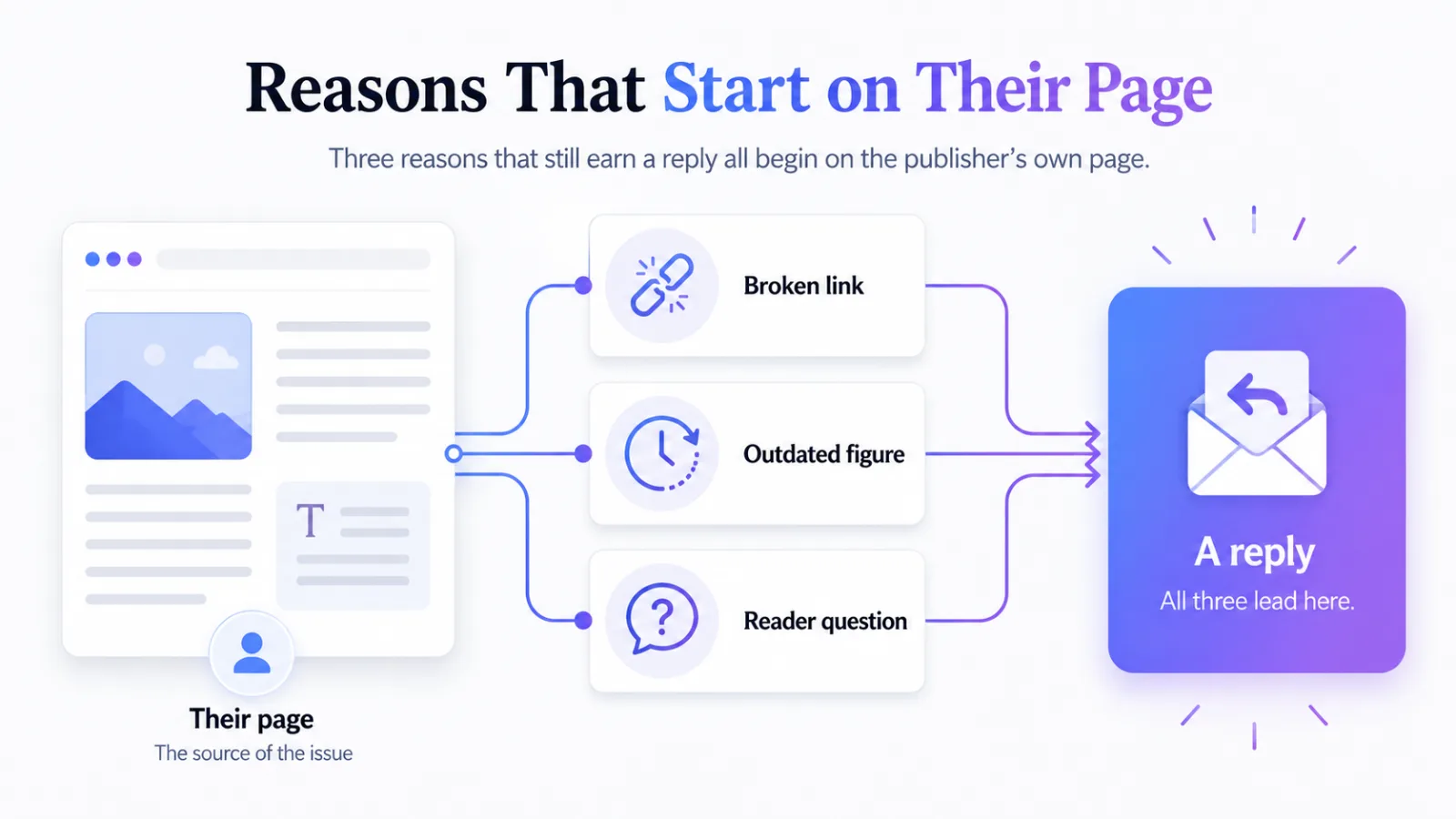
Give the publisher a reason that concerns their page. Three hold up.
- The link they have is broken. You’re reporting a fault on their page and offering a replacement, which is a favour rather than a request.
- The figure they cite is out of date. Name the specific number and where the current one comes from, and let them decide.
- Their readers ask something their page leaves open. Point at that question, not at your word count.
All three start from the recipient’s page. That’s the whole difference, and it survives the volume problem because it cannot be sent at scale without being wrong.
Why scale is the tell
It’s the tell because a reason specific to one page cannot be mail-merged. If the same email works for four hundred prospects, it says nothing about any of them, and editors have learned to read that instantly.
When the Technique Is Worth Running
You should run it where the asset genuinely does not exist yet. A subject with heavy linking and no current, accurate resource is the case the method was built for, and it still fits.
Where a good resource already exists and you plan to make a longer one, the economics no longer work. You’d be funding an asset whose only argument is size, then paying to send an email that argument cannot carry.
Teams that would rather not run the outreach themselves can hand the earning half to a managed contextual link building programme and keep the asset work in house.
Frequently Asked Questions
Is the skyscraper technique dead
The outreach is. The prospecting logic and the asset discipline both still work. One third of the method retired, and the rest was never the problem.
Does longer content still earn more links
Not on its own. Length was a proxy for depth back when depth was rare, and it stopped separating anything once every competitor published the same exhaustive piece.
What replaced skyscraper outreach
Reasons that belong to the recipient’s page: a broken link, an outdated figure, a gap their readers ask about. Each one is harder to send at volume, which is exactly why it still lands.
Can I still email people who linked to a competitor
Yes, and you should. That list is well qualified. Change what you say to them rather than who you contact.
How do I make an asset worth citing
You give a writer something they cannot get elsewhere. Original data, a genuine teardown or a working tool all hand somebody a reason to reference you in a sentence they were already writing.
Keep the List, Change the Email
The prospecting was always the valuable half. Everything that went wrong with this technique went wrong in the message, and that’s the cheapest part to replace.