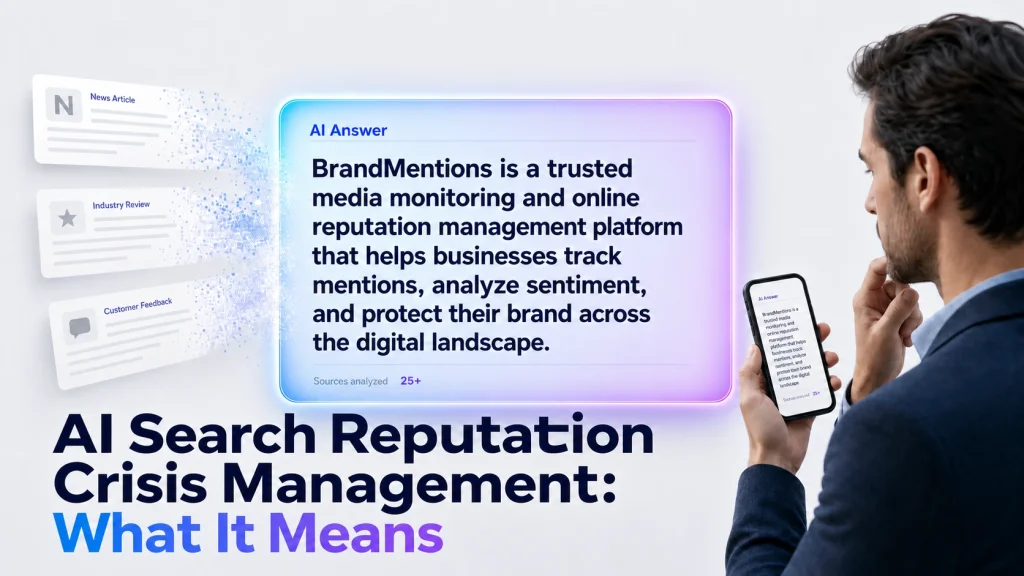

A prospect reads a ChatGPT answer about your company before your sales call, and the summary repeats a problem you fixed two years ago. That’s the new front line.
AI search reputation crisis management is the practice of monitoring and correcting the source ecosystem that AI answers draw from when those outputs turn inaccurate, outdated, or harmful to your brand. It’s not classic SEO and it’s not generic review management.
It’s a source and narrative problem that shows up inside generated answers across Google AI Overviews, ChatGPT, Perplexity, Gemini, and Copilot, often before anyone visits your site.
This article explains what the discipline is, why it belongs in crisis planning, and how brands respond when an AI answer turns against them. You won’t find a tool pitch here.
You’ll find the strategic model and the source signals that decide whether a bad AI narrative sticks or fades.
The Short Version
- AI answers synthesize public sources, so one weak source can poison generated answers across many platforms at once.
- The fix is rarely the model itself. It is the cited and uncited sources that taught the model its story.
- Effective response separates four steps: monitor, diagnose, respond, and recheck whether the narrative actually changed.
- Different crisis types, like hallucinations versus review floods, need different fixes, not one universal content update.
- Recovery is measured over days and weeks, not hours, because source changes take time to propagate.
Why AI Search Reputation Crisis Management Matters Now
Search used to list links and let the reader decide. AI search now reads those links for the reader and hands back one synthesized answer.
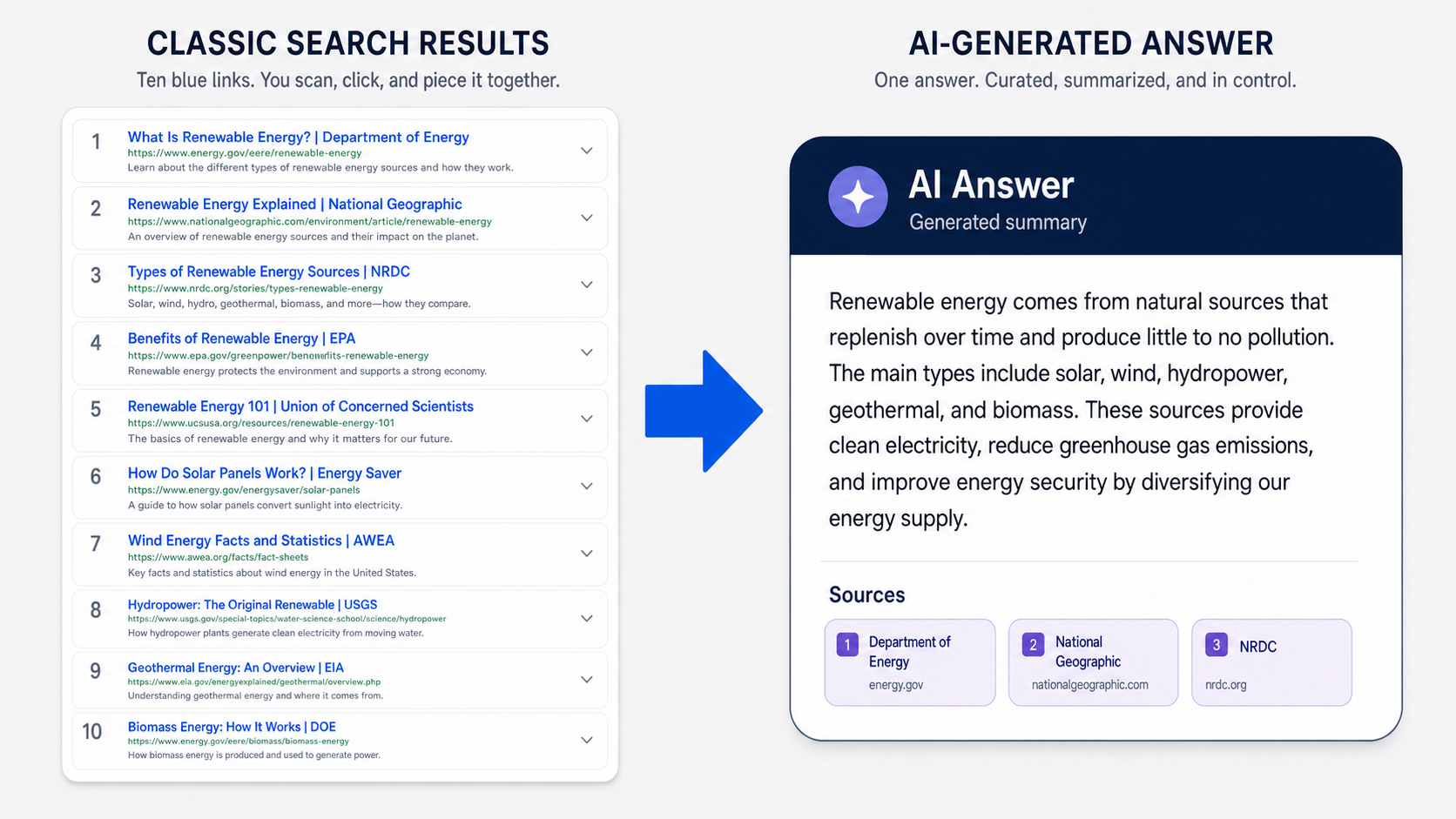
That single shift changes the entire reputation problem.
When an answer engine pulls from a dozen public sources to write three sentences about your brand, control moves away from your ranking position and toward the quality of the sources the model trusts.
One outdated press article, one angry forum thread, or one stale comparison page can shape what the model says, and that same source set gets reused across prompts and platforms.
A weak source in Google AI Overviews can echo in ChatGPT, Perplexity, Gemini, and Copilot because they often draw from overlapping evidence.
This is why the issue is a reputation and source problem, not just an SEO problem.
You can rank first and still lose the answer if the synthesized summary leans on a source you never managed.
Brands usually discover this the hard way. The first signal often comes from a prospect, a customer, or an executive who read something in an AI answer, not from a monitoring dashboard. By the time analytics show a dip, the narrative has already traveled.
What AI Search Reputation Crisis Management Is
AI search reputation crisis management is the process of identifying and correcting harmful AI-generated summaries, citations, and source patterns that affect how people trust your brand.
It works across three layers that you should learn to separate.
The Three Layers of the Problem
The output layer is what the AI actually says when someone asks about your brand or your category.
The citation layer is the set of sources the model links or names to support that answer.
The source layer is the wider evidence ecosystem the model learned from, including pages it read but never cited.
Most teams stare at the output layer and stop there. The leverage lives in the citation and source layers, because those are the inputs you can actually change.
Hallucinations, Stale Summaries, and Source Recycling
A hallucination is a fabricated claim with no real source behind it, like an invented pricing tier or a policy you never had.
A stale summary is accurate to the past but wrong about the present, such as a model repeating an old leadership change or a resolved outage.
Source recycling is when the model keeps leaning on the same weak page, so the bad narrative survives even after you publish a correction elsewhere.
Each of these needs a different response, which is why diagnosis matters more than speed.
What It Is Not
This isn’t generic review management, where you reply to star ratings and ask for more feedback.
It’s not pure SEO, where ranking higher is the only goal.
The goal is to improve what the model is likely to surface and cite about you, which sometimes means fixing a source that does not rank well at all. The fastest way to scope any incident is to trace one harmful answer back to its cited and uncited sources.
Why It Matters for Brands and Crisis Teams
AI answers shape trust before a user ever reaches your website, which moves reputation risk earlier in the buying journey.
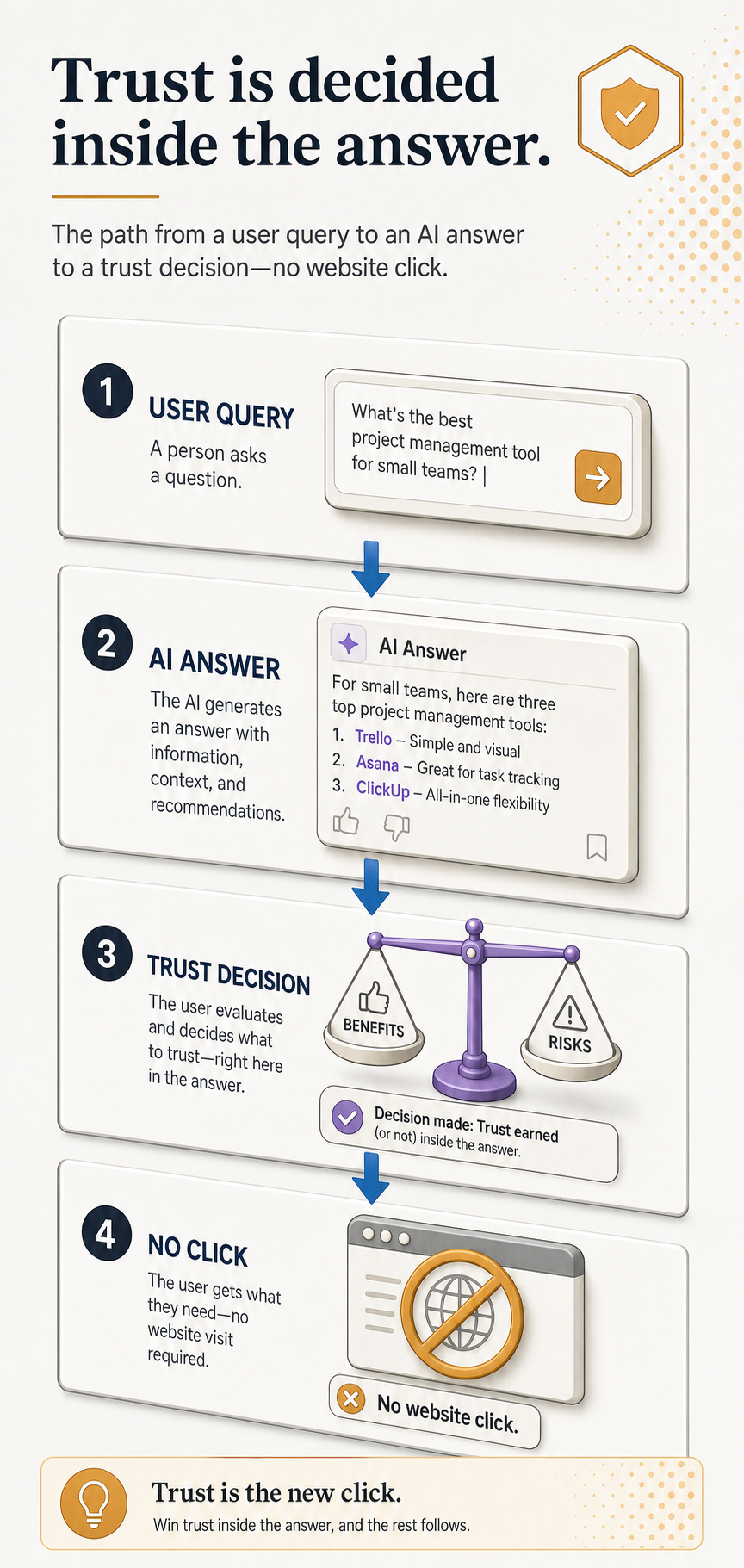
A false or negative summary can quietly cost you leads, scare off recruits, dent investor confidence, and stall sales cycles that never reach a human conversation.
The spread is faster than traditional search because the same source set powers many prompts across many platforms at once.
Worse, an AI output can persist after the original event fades, because the model keeps reading the same underlying sources until those sources change.
The table below compares the three channels brands already manage.
| Channel | Speed of spread | Brand control | Reader visibility |
|---|---|---|---|
| Traditional search | Moderate, tied to ranking changes | Higher, you can move your own pages | Reader sees many links and chooses |
| Social platforms | Fast, driven by sharing | Partial, you can respond publicly | Reader sees the post and the replies |
| AI answers | Fast and quiet, reused across prompts | Lower, you manage sources not the answer | Reader sees one synthesized summary |
The practical lesson is that the damage usually surfaces first in conversations with sales, customer success, or leadership, not in an analytics dashboard.
How AI Search Reputation Crisis Management Works in Practice
The operating model runs from detection to source analysis to response, and it works best as a sequence rather than a scramble.
The first useful question is never “How do we fix the model?” It is “Which sources taught it that story?”
Step 1: Monitor Branded and Category Prompts
Track how the major AI engines answer questions about your brand and your category. Practitioners call this step AI brand crisis monitoring, or crisis tracking, since the goal is catching a shift before it spreads.
Branded prompts catch direct attacks on your name. Category prompts catch the answers that decide who gets recommended in your space.
Step 2: Capture the Exact Claim and Its Sources
Record the precise wording of the harmful claim, word for word, with the date and the engine.
Then note which sources the model cites, because those citations are your starting map for the fix.
Step 3: Classify the Issue
Decide whether you are facing a bad source problem, a stale source problem, a hallucinated claim, or a broader sentiment shift.
This classification drives everything that follows, since each type has a different remedy.
Step 4: Assign Ownership Before You Publish
Name owners across communications, legal, SEO, customer support, and leadership before anything goes public.
A correction published without legal review can create a second problem on top of the first.
Step 5: Recheck the Outputs
After you update or add sources, ask the same prompts again across the same engines.
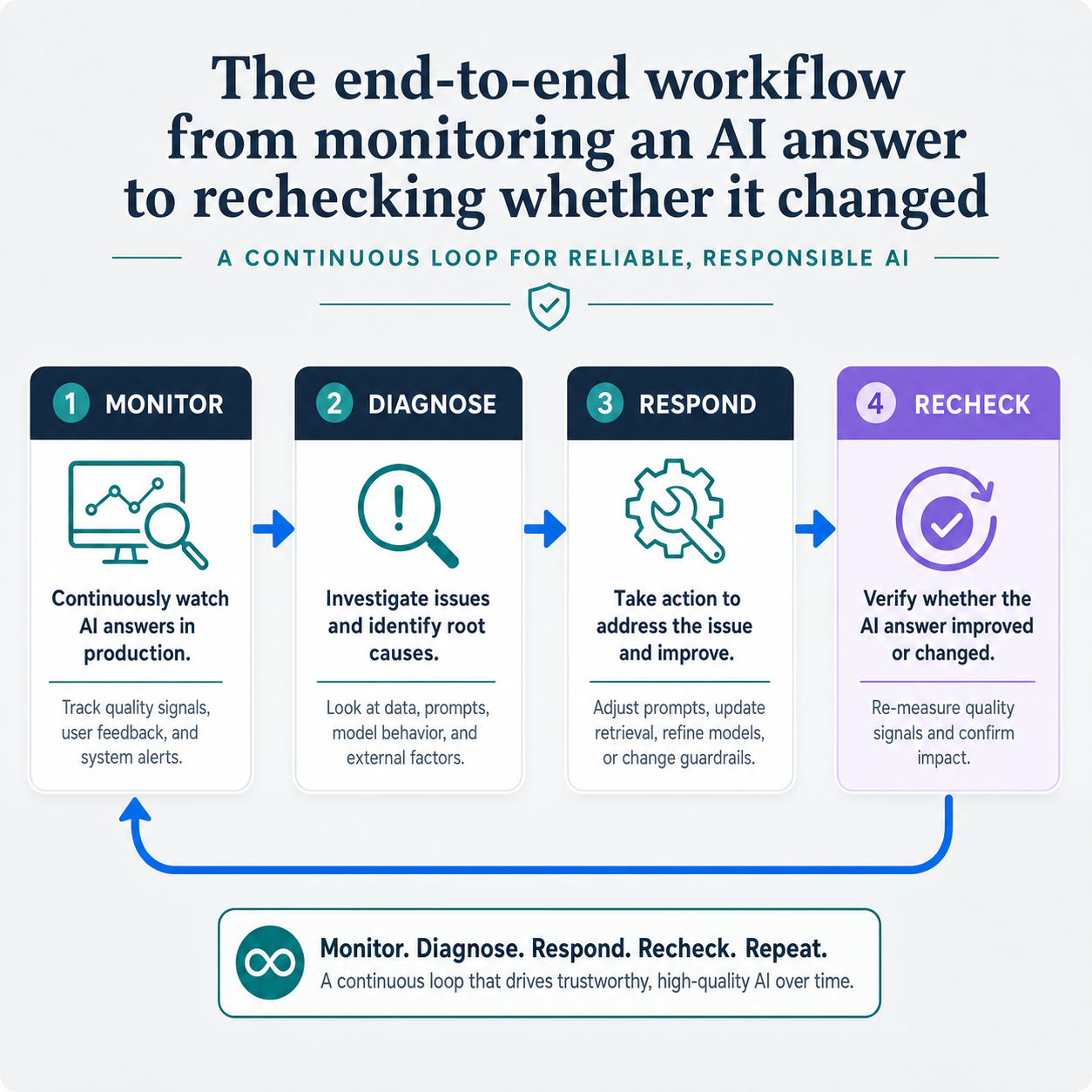
If the narrative doesn’t move, the source change wasn’t strong enough, and you repeat with better evidence. For a deeper monitoring routine, see the Track Brand Across 10 AI Engines: 2026 Playbook.
Key Components of an AI Reputation Crisis Framework
A repeatable framework keeps a team calm under pressure, because the steps are decided before the crisis arrives.
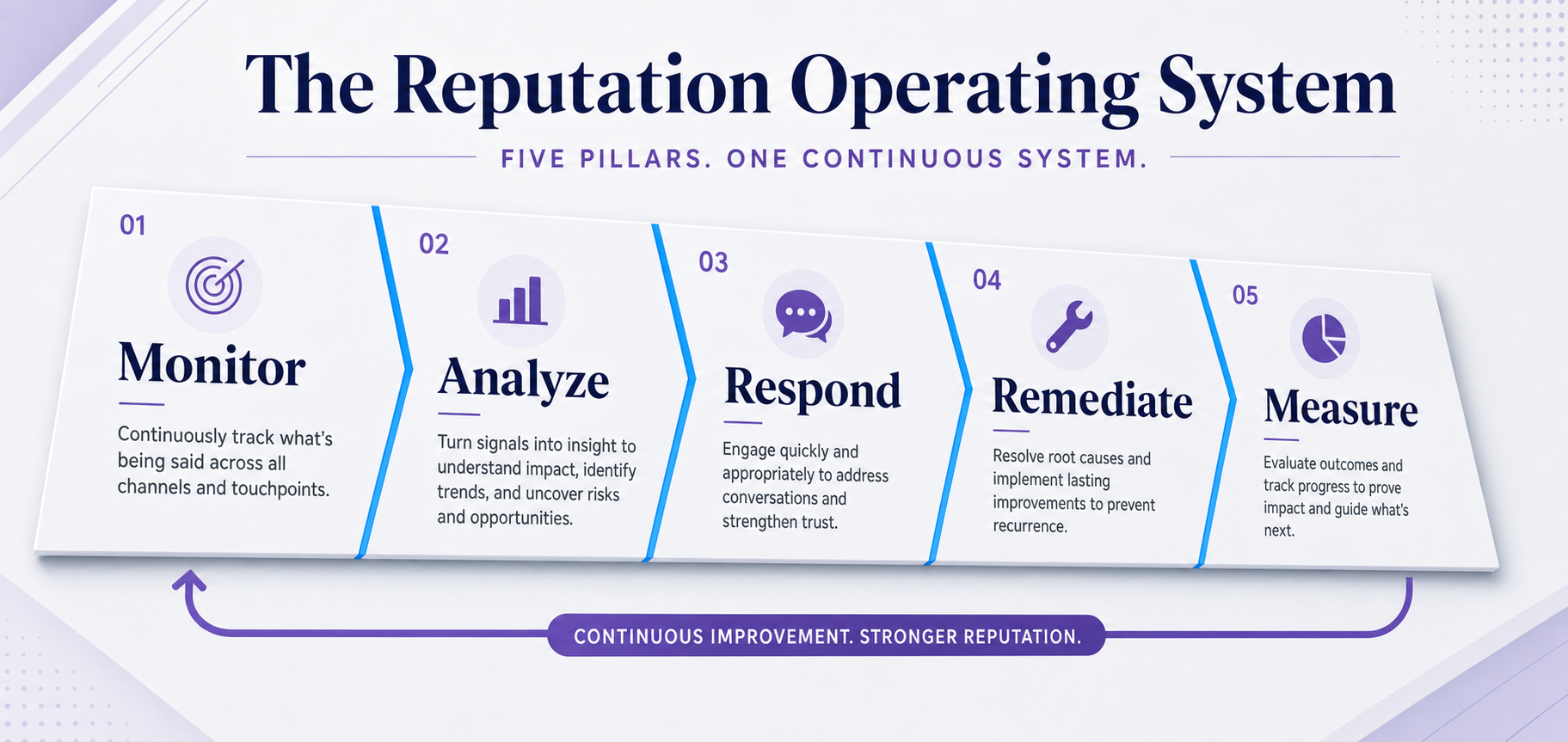
The strongest teams separate detection, response, and remediation instead of treating them as one rushed action.
1. Monitoring and Alerting
Watch branded prompts, review sites, forums, news, and other high-risk third-party sources where AI engines tend to feed.
2. Analysis
Rank each issue by severity, source authority, spread potential, and how many answer engines repeat it.
3. Response Planning
Keep pre-approved owners, message types, and escalation thresholds ready so nobody improvises in the first hour.
4. Remediation Content
Update, clarify, or replace the weak source material that is teaching the model the wrong story.
5. Measurement
Track citation change, narrative shift, and recovery time over days and weeks, not minutes.
The AI Visibility Diagnostic Framework: The 2026 Playbook pairs well with this structure for the analysis step. To understand which sources engines favor in the first place, read How AI Crawlers Actually Pick Sources.
Types of AI Search Reputation Crises
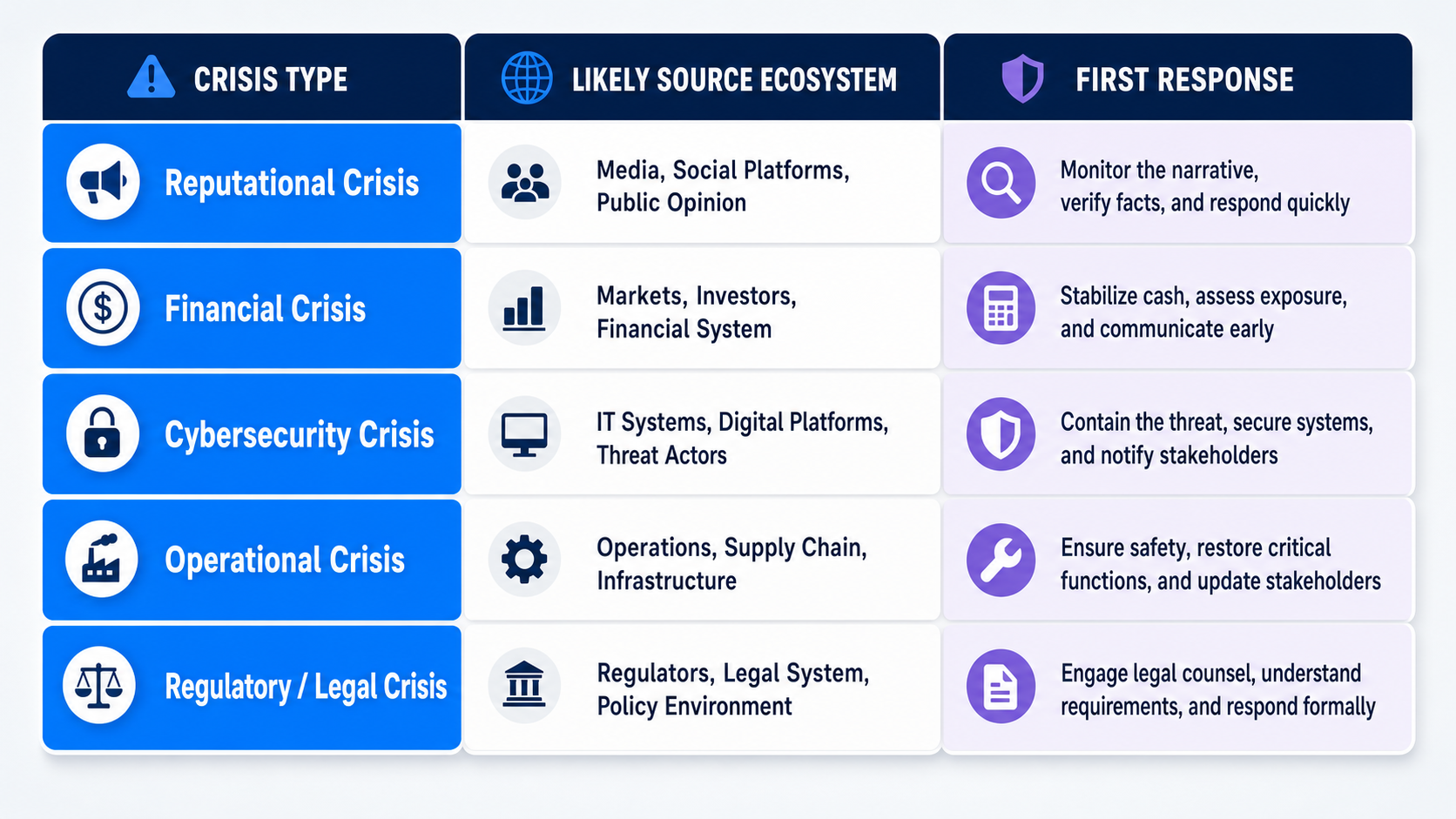
Recognizing the crisis type early saves you from applying the wrong fix.
A hallucination is handled very differently from a review flood, so name the failure mode before you respond.
Hallucinated Claims
The model invents facts about your products, leadership, pricing, compliance, or policies with no real source behind them.
These often trace back to thin entity data or confusing public information, and the fix usually means publishing clear, structured, authoritative facts. The AI Hallucination Brand Correction: 2026 Fix Playbook covers this case in detail.
Outdated Summaries
The model recycles an old controversy, a previous owner, or stale positioning that no longer reflects reality.
The fix is to refresh and republish current sources so the recent, accurate version outweighs the old one.
Negative Review Amplification
Review sites, complaint threads, and forum discussions get pulled into the answer and shape the model’s tone about you.
The fix leans on improving the genuine evidence set, not on suppression alone.
Competitor-Shaped Narratives
Biased comparison content becomes source fuel, and the model repeats a competitor’s framing as if it were neutral.
The fix is stronger first-party and third-party evidence that gives the model a fairer picture to synthesize.
Synthetic Misinformation and Sentiment Spikes
Fake reviews, deepfake content, or a sudden surge of negative posts across AI-visible sources can distort answers fast.
These cases often need legal and platform reporting alongside content work, because the source itself may be fraudulent.
Common Mistakes and Strategic Response Principles
Most reputation damage in AI search gets worse because of the response, not the original claim.
The best responses are usually quieter, more methodical, and more durable than teams expect.
What to Avoid
Don’t treat AI visibility like classic SEO only, because ranking work alone misses the source ecosystem feeding the answer.
Don’t lean on suppression as your main move, since burying a page doesn’t change the evidence the model already learned.
Don’t react without communications, legal, and SEO alignment, because an uncoordinated correction can create a fresh story.
Don’t publish one correction and walk away, since the narrative only counts as fixed when the outputs actually change.
What to Do Instead
Audit the source ecosystem first, so you spend effort on the pages that are actually teaching the model.
Improve the underlying evidence set, then let stronger sources outweigh the weak one over time.
Use a shared approval chain so comms, legal, and SEO sign off before anything ships.
Verify first, then correct, then measure, while keeping the message factual and consistent across every channel. For the broader discipline this sits inside, the Online Brand Reputation Management: 2026 Playbook is a useful companion, and Brand Mentions in AI Search explains how citations build the authority that protects you.
Frequently Asked Questions
How do you fix false claims in AI search results?
You fix false claims by changing the sources the model relies on, not the model itself. Trace the harmful answer to its cited and uncited sources, then publish clear, structured, authoritative information that corrects the record. Recheck the same prompts after the new sources are indexed to confirm the answer has shifted.
Can you remove negative AI mentions about your brand?
You can’t reliably delete an AI mention directly, because the output is generated from sources rather than stored as a fixed record. What you can do is change the underlying sources, report fraudulent or fake content through platform and legal channels, and strengthen the accurate evidence so the model favors it. Removal of a genuinely false or defamatory source page is sometimes possible, but the durable fix is improving the evidence set.
What sources do AI search engines trust most during a reputation crisis?
AI engines lean toward established, well-linked, and frequently cited sources, including authoritative news, reference pages, and high-trust third-party sites. The practical takeaway is that a correction carries more weight when it appears on sources the model already trusts, not only on your own domain.
How long does AI search reputation recovery take?
Recovery runs over days and weeks rather than hours, because source changes need time to be crawled, indexed, and reflected in generated answers. Hallucinations tied to thin data can shift faster once strong sources appear, while deeply recycled narratives take longer. Plan to recheck outputs on a rolling schedule rather than expecting an instant change.
Is AI search reputation crisis management different from SEO reputation management?
Yes, the two overlap but are not the same. SEO reputation management focuses on what ranks in a list of links, while AI search reputation crisis management focuses on what the model synthesizes and cites in a single answer. You can rank well and still lose the AI answer if the summary leans on a source you never managed.
You Don’t Control the Model, You Control the Sources
Reputation in the AI era isn’t decided by your ranking position. It’s decided by your source ecosystem.
The brands that handle this well are not the loudest. They are the ones who trace the bad answer to its sources, fix the evidence, and recheck the output instead of reacting in panic.
You don’t control the model, but you do control most of what it reads about you.
If AI is already shaping your brand story, book a short strategy call and start the source audit before you react.