
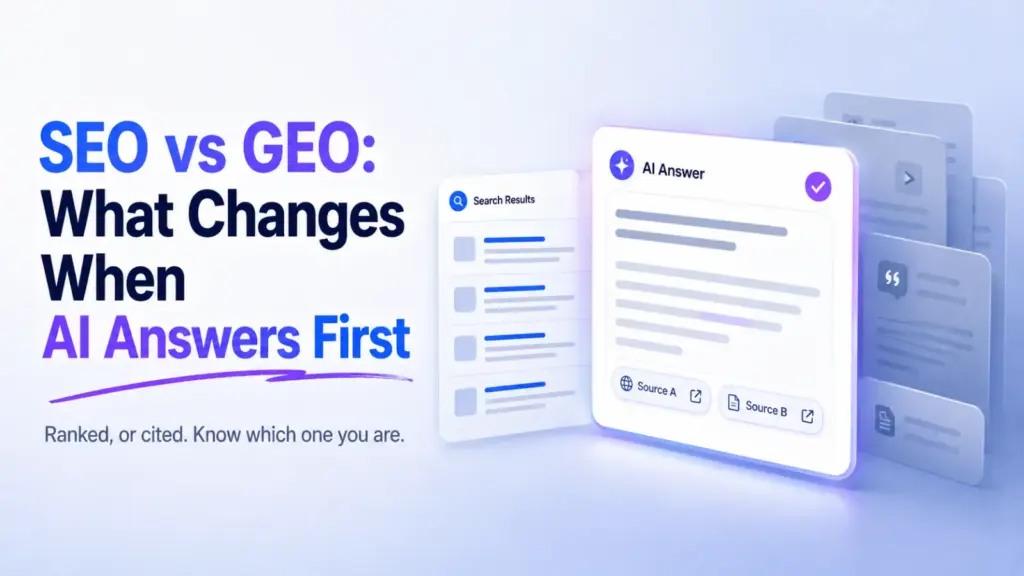

Your rankings are holding. Your organic traffic isn’t.
That gap is where GEO lives. Generative engine optimization is the work of getting cited inside an AI answer, rather than ranked on a page of links.
It isn’t a replacement for SEO. It’s a second discipline that shares almost all of SEO’s inputs and keeps a completely different scoreboard.
Here’s what changes, what doesn’t, and how to tell which one your problem belongs to.
The Short Version
- There’s no position one in an AI answer. You’re cited or you aren’t, and that’s decided per phrasing.
- A citation without a click leaves no trace in your analytics.
- Backlinks aren’t a ranking factor inside a language model, but independent mentions still decide what gets retrieved.
- Rank tracking is replaced by prompt coverage, citation share, and your own server logs.
- The foundations don’t change. Crawlability, accuracy, and depth still gate everything.
SEO and GEO Side by Side
The two disciplines pull on the same inputs and measure completely different things.
| Dimension | SEO | GEO |
|---|---|---|
| What resolves the query | A ranked list of documents | One synthesised answer |
| What you compete for | A position on the page | A passage inside the answer |
| Primary metric | Rank and click-through rate | Citation share across prompts |
| Unit of demand | The keyword | The phrasing, and there are dozens per intent |
| Content that wins | Comprehensive pages | Extractable, attributed claims |
| Role of off site mentions | Authority through links | Corroboration across independent sources |
| Where you measure it | Search Console and analytics | Prompt testing and server logs |
| Visible in analytics | Yes, every click | No, a citation without a click leaves nothing |
How a Generative Engine Resolves a Query
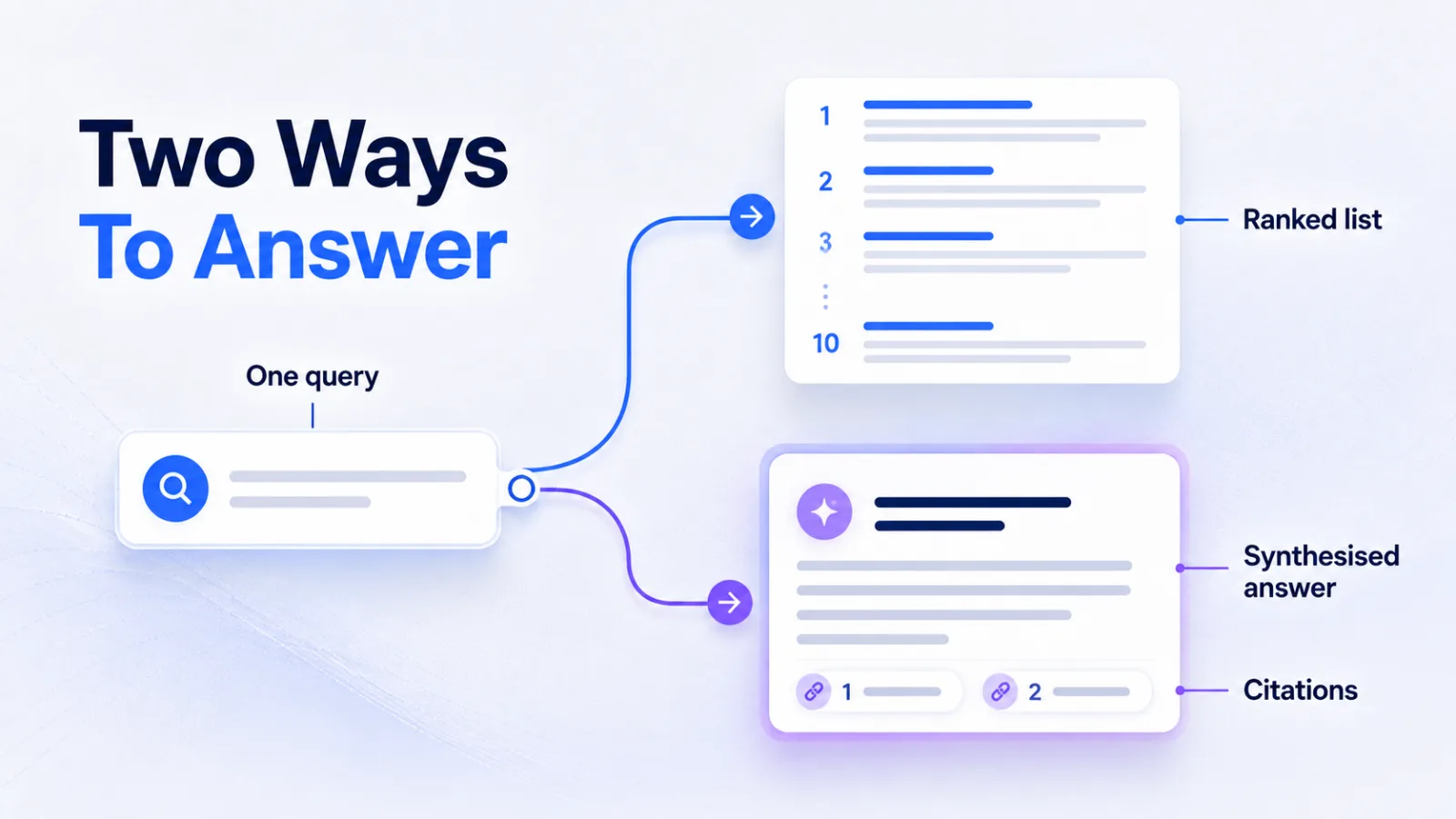
A generative engine retrieves a set of sources, writes one answer from them, and cites only some of what it used.
Classic search does something different. It returns a ranked list and lets you choose.
Two things follow from that, and they’re the whole reason GEO needs its own name.
There’s no position to hold
A source is either used or unused for a given prompt. That decision gets remade for every phrasing of the same question.
You can be the cited source for “best brand monitoring tools” and absent from “what should I use to track brand mentions.” Same intent. Different retrieval.
You can be cited without ever being visited
The answer satisfies the reader. Your name appears in it. No click gets recorded anywhere.
That’s why traffic dashboards understate AI visibility so badly. Most teams find out they’ve been cited months after it started.
What Makes a Claim Citable
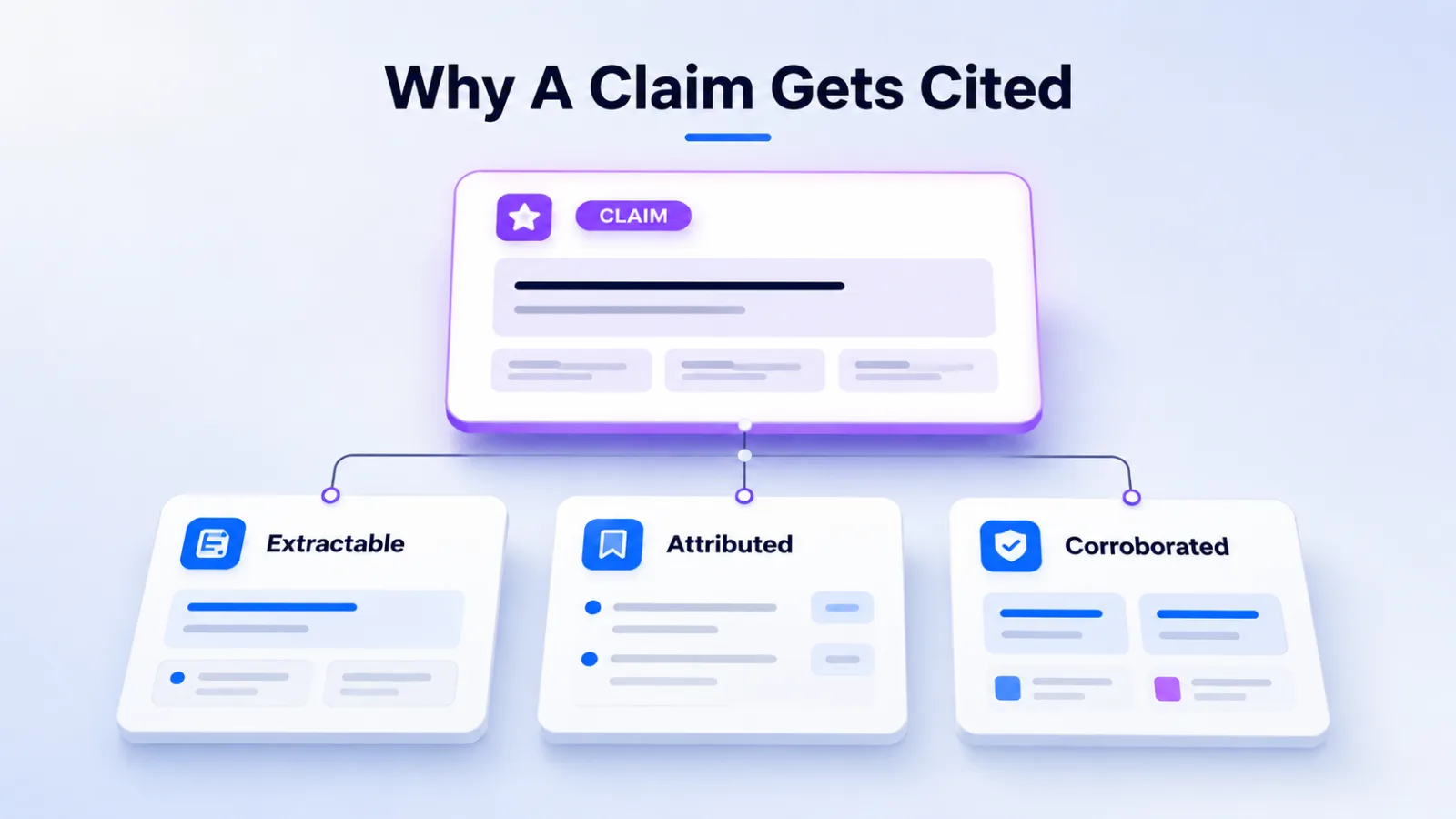
A model citing your claim is putting its own answer behind it. So it favours sources it can stand on.
Three properties decide that, and all three are writing decisions.
Extractable
The claim is complete in one or two sentences. A claim spread across four paragraphs usually can’t be lifted.
Attributed
Numbers carry a named source and a date. Numbers without one get dropped, because the model has nothing to stand on.
Corroborated
A claim that appears only on your own site has one witness. Models weight agreement across independent sources.
That last one is the mechanism that makes off site mentions matter here. We covered the retrieval side of it in how AI crawlers pick sources.
What a Cited Answer Looks Like
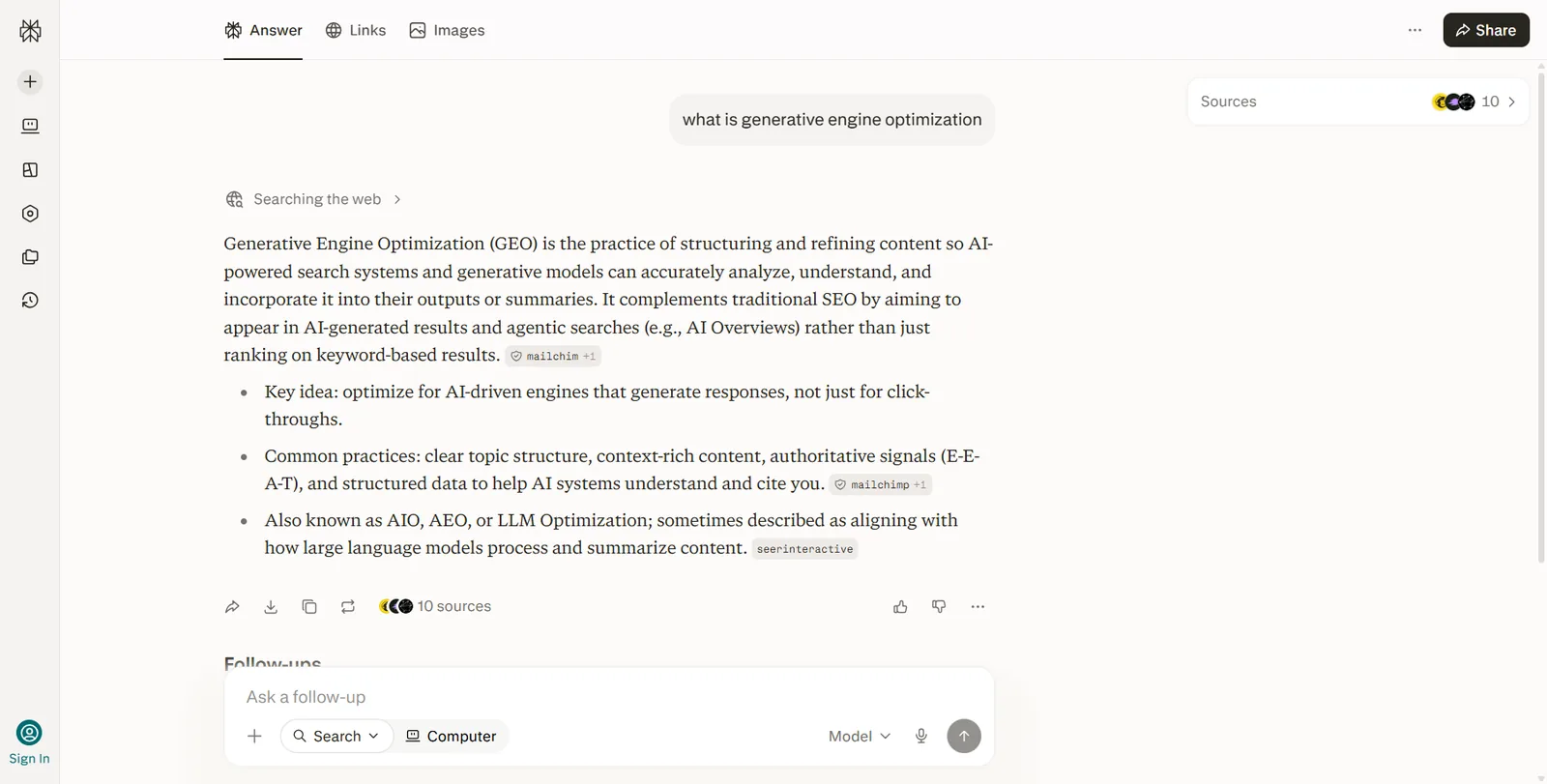
The screenshot above does more than the explanation can.
Notice what the engine did. It answered in prose, attached a handful of citations, and never showed a ranked list.
The cited pages aren’t necessarily the pages ranking first for the same words. That gap between who ranks and who gets cited is the opportunity, and it’s measurable.
What Changes in the Work
Keyword research becomes prompt coverage
Keywords are still the raw material. The unit of measurement is what moves.
Nobody types keywords at an assistant. They describe a situation, and one commercial intent fans out into dozens of phrasings.
So the question stops being which keyword you rank for. It becomes how many of those phrasings you show up in.
Position becomes citation share
There’s no position one, so the equivalent metric is the share of relevant prompts where you’re cited at all.
Track it against the competitors appearing instead of you. We wrote about reading those numbers in what a good GEO score means.
Links still matter, for a different reason
Backlinks aren’t a ranking factor inside a language model. That part is true.
But models retrieve from pages other people reference, and a brand described consistently across a dozen independent sources is a brand the model has seen corroborated.
The link isn’t the signal. The independent mention is, and links usually travel with it.
That’s also why unlinked mentions became worth chasing on their own. Finding them is mostly tooling, which we walk through in finding unlinked brand mentions. Converting them takes outreach.
What Doesn’t Change
Worth stating plainly, because “SEO is dead” framing implies otherwise.
Stay crawlable
A page a bot can’t fetch can’t be cited by anything.
Stay correct
Models propagate errors. A wrong number of yours can survive in answers long after you’ve fixed the page.
Stay deep
Thin pages didn’t rank, and they don’t get cited either.
Stay referenced
Being cited elsewhere mattered before. It matters more now.
GEO adds a measurement layer and a structural discipline on top of work most teams were meant to be doing anyway.
How to Measure GEO Without a Rank Tracker
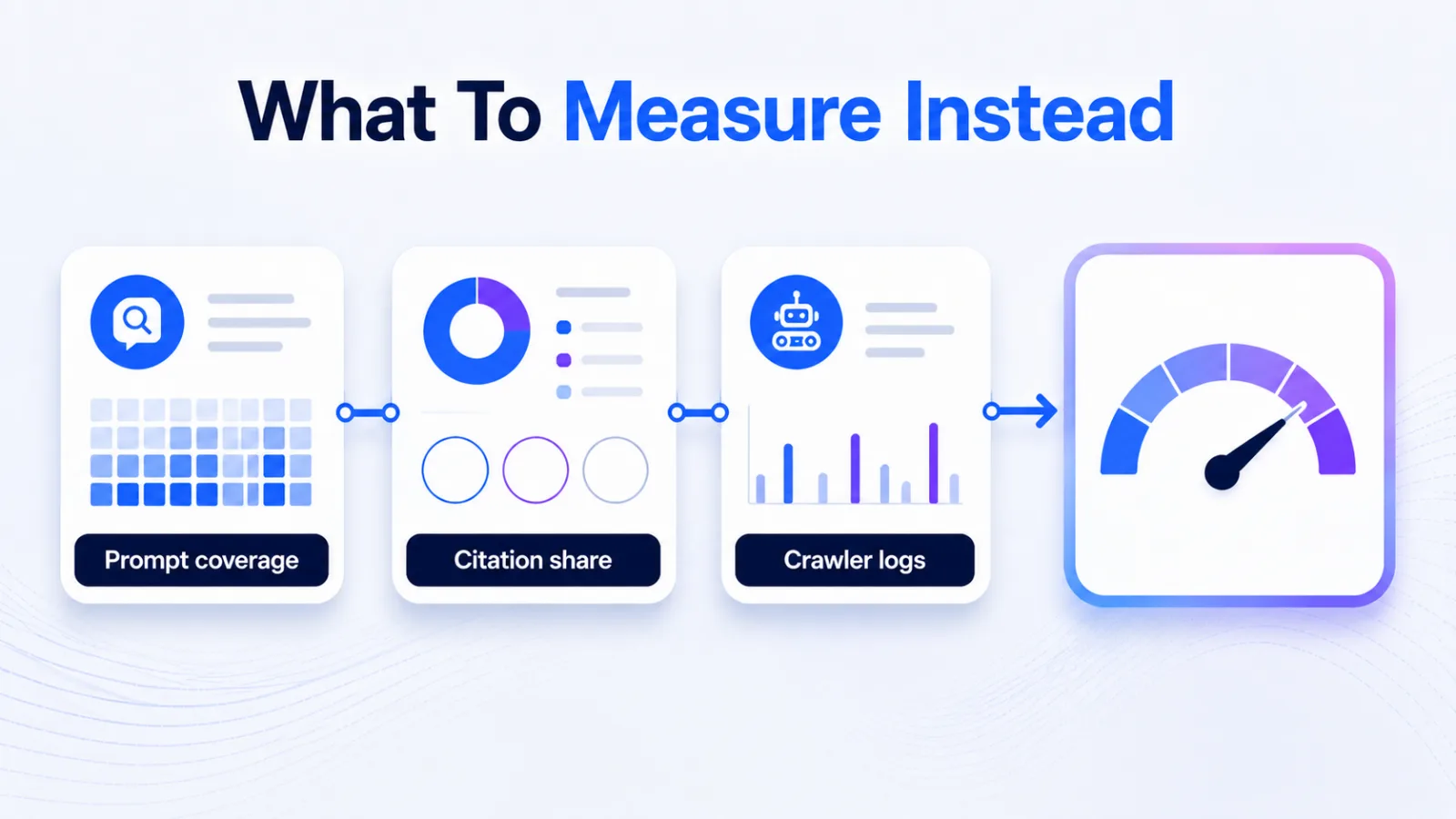
To measure GEO without a rank tracker, use three measurements in place of the rank report. None of them come from your analytics.
Prompt coverage
Take the questions a buyer actually asks. Run them across the engines that matter to you and record where you appear.
Repeat on a schedule, because answers drift.
Citation share
Being absent matters less than who’s present instead of you. Track named competitors, not only your own presence.
Crawler behaviour from your own logs
Which AI agents fetch your site, how often, and which pages they take.
This is the only first party measurement of the three, and it’s the one nobody looks at.
Accuracy is a separate problem. An engine stating something false about you is a correction job, not a visibility job, and we treat it separately in correcting AI hallucinations.
Do You Need Both
Yes, and the split is less dramatic than the marketing suggests.
You’ve got an AI answer problem, and GEO is where the work is, if rankings hold while organic traffic falls.
You’ve got a foundations problem, and it’s still SEO, if you’re neither ranking nor cited.
You’ve got a positioning problem that neither discipline fixes, if you’re cited but never chosen.
The one genuinely new dependency is off site. A model can’t cite a consensus that doesn’t exist, which is why earned mentions in sources the engines already read have become the constraint for most brands. That’s the work we do, and you can see the approach on our AI citation service page.
Frequently Asked Questions
Is GEO replacing SEO
No. GEO adds a second scoreboard.
The technical foundations, content quality, and off site authority SEO depends on are the same inputs a generative engine retrieves from. Teams that abandoned SEO to chase GEO lost both.
What is the difference between GEO and AEO
The difference between GEO and AEO is mostly vocabulary.
Answer engine optimization usually describes getting into direct answers, including featured snippets. Generative engine optimization usually describes being cited by language models. The work overlaps heavily.
Do backlinks help with AI citations
Not directly, and yes indirectly.
They aren’t a ranking factor inside the model. But models retrieve from widely referenced pages and weight claims that three or more independent sources agree on, so the mentions links travel with do the work.
How long does GEO take to show results
One well placed mention in a source an engine already reads can change an answer within weeks.
Building enough corroboration to hold that across dozens of phrasings takes months.
Can I track GEO in Google Analytics
Only partially, and misleadingly.
Citations without clicks leave no trace at all. Prompt level testing plus server log analysis of AI crawler traffic covers what analytics can’t see.
Start With One Buying Question
Pick the single question your best customers ask before they buy.
Run it through ChatGPT, Perplexity, and Google’s AI Overviews this week. Write down who gets cited.
That list is your real competitive set in AI search, and it’s usually not the one in your rank tracker.