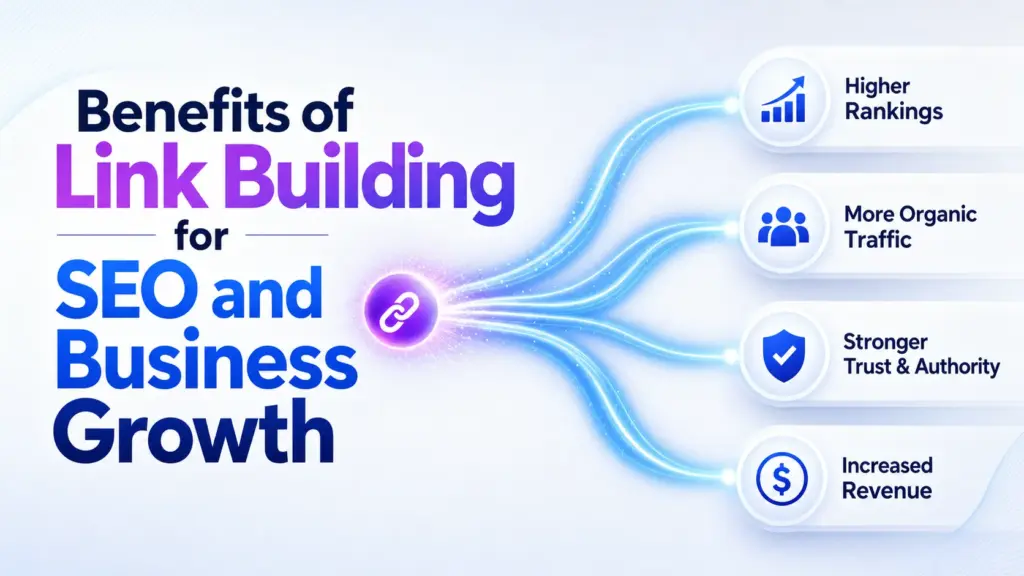

Despite constant algorithm changes, the benefits of link building still show up where businesses feel them most: rankings, traffic, trust, and revenue. Link building still matters because search engines read links as signals of relevance and credibility, and those signals move visibility, qualified visits, and pipeline. The catch is that not every link earns its keep. A single editorial link from a trusted site in your niche usually outperforms a dozen weak placements from unrelated pages. This guide explains what you actually get from link building and why quality decides the return.
What Link Building Is
Link building is the practice of earning or acquiring links from other websites that point to your pages. Each of those inbound links is a backlink, and the value it carries depends on where it comes from and how it sits on the page.
A backlink is a single link pointing to your site. A referring domain is a unique website that links to you, so ten links from one blog count as one referring domain. That distinction matters because search engines value breadth: links from many trusted sources say more than repeated links from a single site. If you want the full mechanics, the practitioner guide to link building covers the foundations in depth.
Two more terms shape everything that follows. An editorial link is placed because another site chose to reference your content on its own, not because you paid for a slot or dropped it yourself. Link equity is the value or signal a link passes to the page it points at. A relevant editorial link from a respected niche site carries far more equity than a footer link on an unrelated directory, even though both technically point to you.
Why Link Building Still Matters
Backlinks still work as trust, relevance, and discovery signals for search engines. When a credible site links to your page, it acts like a third-party vote that your content is worth surfacing. That signal feeds directly into how your pages compete for visibility.
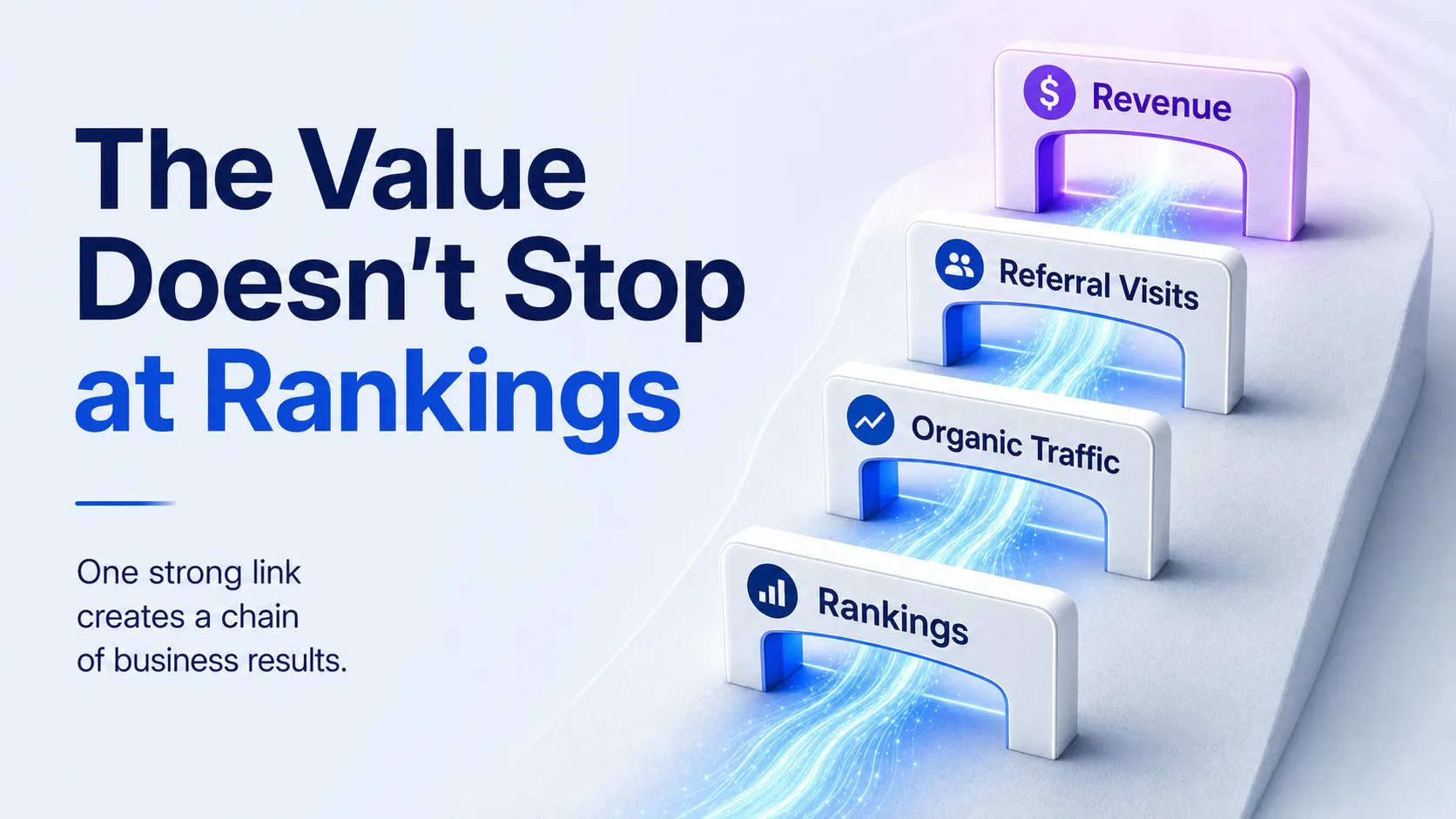
The SEO value is direct. Strong links help your pages rank for more competitive terms, and higher rankings pull in more organic traffic. That traffic arrives without paid spend and keeps compounding as your link profile grows.
The value does not stop at search, though. A link on a busy industry site sends its own readers to you directly, so you get referral traffic from people who never touched a search engine. Those visitors often arrive with more intent because they clicked from a source they already trust.
Links also build credibility. When respected publishers reference your content, they are effectively endorsing you, and that endorsement shapes how buyers perceive your brand. In real campaigns, the payoff is rarely one dramatic ranking jump. It’s a broader lift across visibility, qualified visits, and eventually the outcomes that matter to the business:
- Higher rankings for the terms your buyers actually search
- More organic and referral traffic from trusted sources
- Stronger brand credibility from third-party endorsement
- More leads and conversions as visibility and trust grow together
How Link Building Works
Search engines crawl links to discover pages and understand how sites relate to each other. A link is both a path a crawler follows and a hint about what the destination page is about. That dual role is why links influence discovery and ranking at the same time.
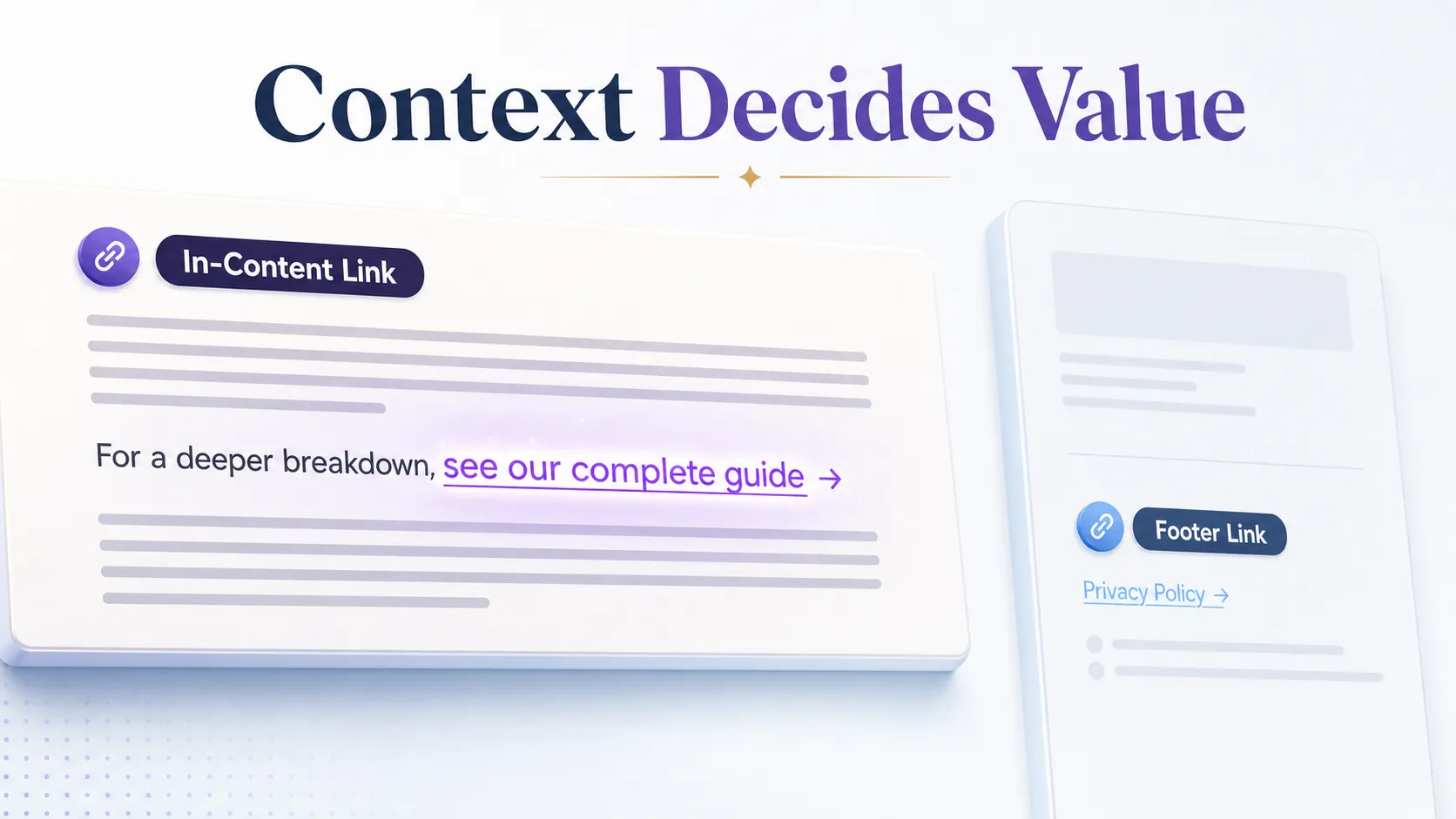
Source quality decides how much a link is worth. A link from a trusted, relevant page passes a stronger signal than one from a thin or unrelated site. This is why raw link volume is a poor thing to chase: a hundred low-value placements can move less than a handful of well-earned ones.
Context matters just as much as the source. A link sitting inside relevant content signals more than the same link stuffed in a footer, sidebar, or unrelated page. The anchor text, the surrounding topic, and the trust of the linking site all shape how useful the link turns out to be. A well-placed contextual backlink often beats dozens of generic placements, because it’s both more credible to a search engine and more clickable to a reader.
Key Benefits of Link Building
The benefits of link building fall into seven outcomes that connect search performance to business results. The best campaigns are measured in those outcomes, not in domain metrics or backlink counts.
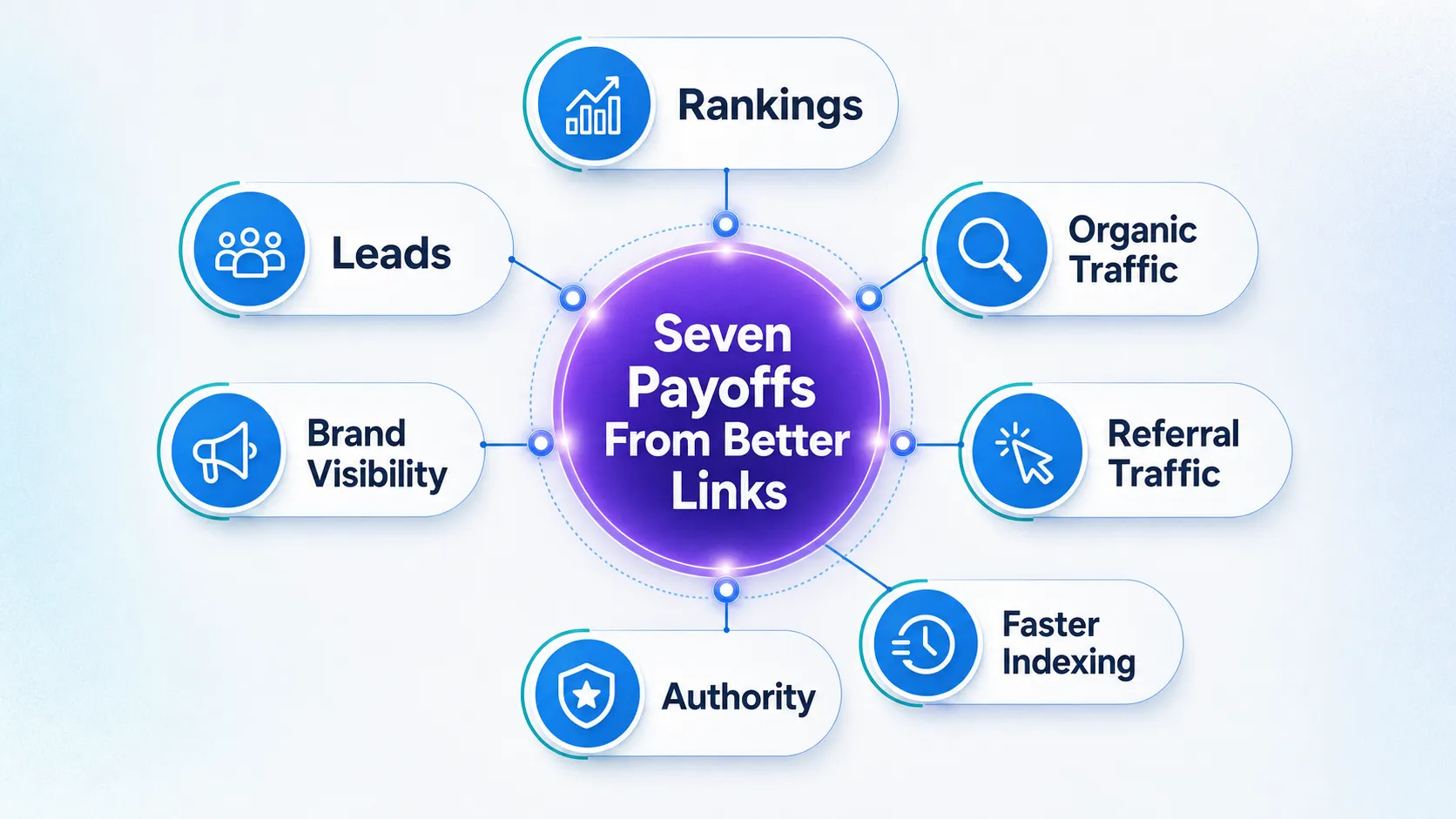
- Improved rankings. Links help your pages compete for more visible positions on the terms your buyers search.
- More organic traffic. Higher rankings usually mean more non-paid search visits, month after month.
- Referral traffic. Links on active sites send you direct visitors who never opened a search engine.
- Faster discovery and indexing. Links help search engines find new or updated pages sooner.
- Stronger authority and trust. Links from relevant, credible sites lift how expert your brand looks to both readers and algorithms.
- Greater brand visibility. Being cited on respected sites builds recognition and recall you cannot buy with ads alone.
- More leads and conversions. Visibility and trust translate into pipeline, not just page views.
Notice that only the first four items live inside search. The last three reach into brand and revenue, which is why treating link building as a pure ranking tactic sells it short.
Key Link Types That Affect Results
Not every link is worth caring about, and knowing which types move the needle keeps you from wasting effort. The differences come down to how a link is placed, where it sits, and whether it passes ranking signals at all.
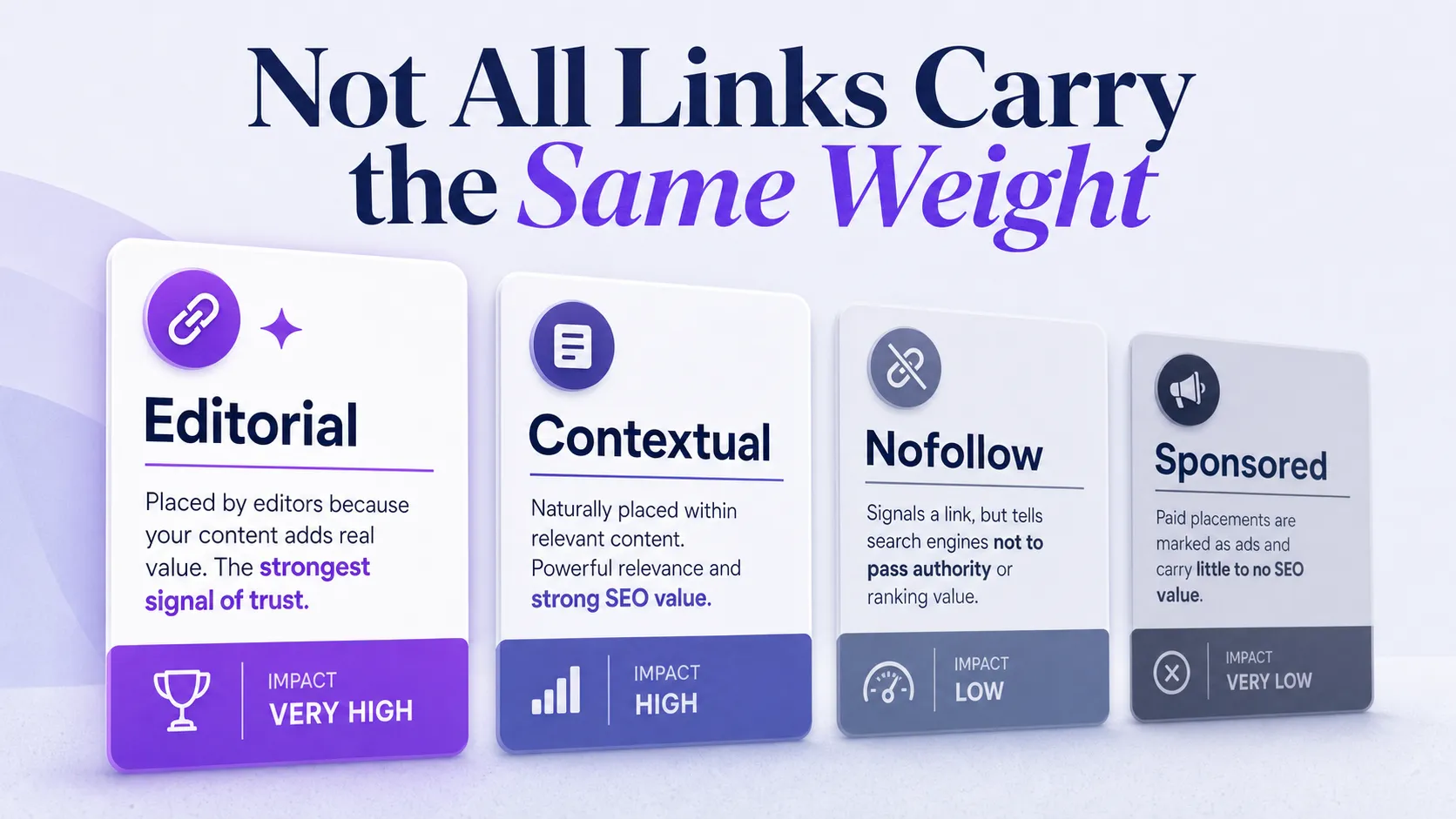
Editorial links, the ones a publisher chooses to place, are usually the most valuable because nobody forced them. Contextual links sit inside relevant copy, and that placement raises their value over links stranded in a footer or author box. Referring domains matter more than raw link counts, since a link from a new site says more than another link from a site that already links to you. For a deeper look at how earned placements build lasting authority, see how editorial link building earns real authority.
| Link type | Typical value | Why it matters |
|---|---|---|
| Editorial link | Highest | Placed by choice, so it reads as a genuine endorsement |
| Contextual link | High | Sits in relevant copy, which raises credibility and clicks |
| Follow link | Passes signal | Transfers link equity to the destination page |
| Nofollow link | Limited signal | Signals less directly but still drives awareness and traffic |
| Sponsored or UGC link | Situational | Labeled paid or user-generated links, useful for reach not ranking lift |
Source relevance and trust usually beat a famous name. A contextual editorial link from a smaller site in your exact niche tends to outperform a non-contextual placement on a bigger but unrelated domain, both in ranking impact and in the quality of the clicks it sends.
See where AI answers put your brand
Twenty minutes with a senior strategist: where the major engines point buyers in your category, who gets named instead of you, and a straight read on what a programme would change.
Book a strategy callCommon Mistakes and Misconceptions
The most common way link building underperforms is chasing cheap volume or quitting before links have time to compound. A realistic view of what links do, and do not do, saves months of wasted budget.
More Links Do Not Automatically Mean Better Results
The myth is that stacking links lifts rankings on its own. The reality is that link quality decides sustainable growth. A pile of low-value placements can sit inert or even drag on trust, while a few relevant, credible links move the pages that matter.
Link Building Is Not Instant
The myth is that a batch of links pays off next week. The reality is that links take time to influence performance, often weeks to a few months, as search engines recrawl and reweight the signals. Patience here is not passive: it’s the cost of durable results.
One Backlink Is Not Equal to Another
The myth is that a link is a link. The reality is that context, authority, and relevance change the value dramatically. A footer link on an unrelated site and an in-content link from a trusted niche publisher are not the same asset, even if both point to the same page. Understanding the difference between white hat and grey hat approaches keeps your profile on solid ground.
Link Building Is Not a One-Time Task
The myth is that you hit a link count and stop. The reality is that link building works best as an ongoing process, because competitors keep earning links and old signals fade. For smaller teams working with tight resources, a steady cadence beats a one-off push, which is why a practical plan for small business link building focuses on consistency over bursts.
Link Building Is Not Only an SEO Tactic
The myth is that links matter only for rankings. The reality is that they also carry brand visibility and revenue value, since a link on a respected site puts your name in front of buyers and sends qualified visitors your way. If you want to compare approaches by fit and effort, the overview of tested link building methods lays out the options.
FAQs
Does link quality matter more than quantity?
Yes. Link quality matters more than quantity when the goal is sustainable growth. A handful of relevant, credible links from trusted sites typically moves rankings and traffic more than a large batch of low-value placements, which can add noise or drag on trust.
How long does link building take to work?
Link building usually takes weeks to a few months to influence performance. Search engines need to recrawl the linking pages, reweight the signals, and apply them to your rankings. Say you earn three strong editorial links this month: you would watch for movement over the following one to three months rather than the next few days.
Is link building still important in 2026?
Yes. Link building is still important in 2026 because backlinks remain trust, relevance, and discovery signals for search engines. Algorithm updates change how signals are weighted, not whether links count, so relevant editorial links continue to support visibility and credibility.
What is the difference between backlinks and referring domains?
A backlink is a single link pointing to your site, while a referring domain is a unique website that links to you. Ten links from one blog count as ten backlinks but only one referring domain. Referring domains often matter more, since links from many distinct sites signal broader trust.
Are nofollow links useful for SEO?
Yes, in a supporting role. Nofollow links pass less direct ranking signal than follow links, but they still drive referral traffic, build brand awareness, and create a natural-looking link profile. A profile made only of follow links can look manipulated, so a mix is healthier.
What Better Links Actually Buy You
Link building keeps earning its place because it supports rankings, traffic, authority, brand visibility, and revenue at once. Quality and relevance are the filters that decide the return, not the number in your backlink report. The pattern that holds across campaigns is simple: better links support both search performance and brand trust, and they compound the longer you sustain them. If you want stronger SEO outcomes, focus on earning a few relevant, editorial links instead of chasing raw volume, and let them build over time.