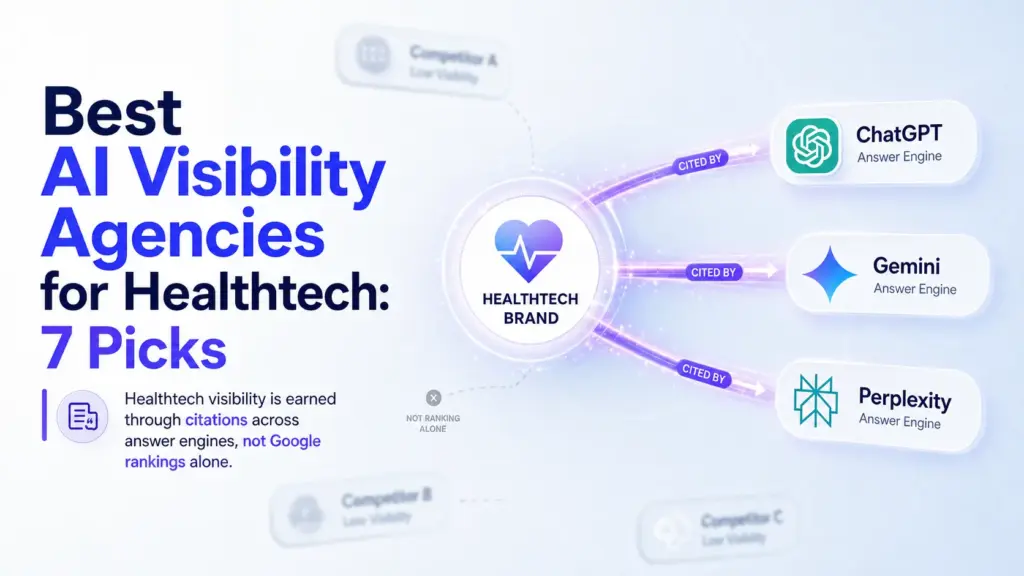

Healthtech buyers now build vendor shortlists inside AI answers, not just Google results. A hospital procurement lead or a digital health founder asks ChatGPT for the best telehealth platform, and the model names a handful of brands before anyone opens a single website.
The best AI visibility agencies for healthtech are the ones that can earn those citations, handle healthcare compliance, and match your company stage, which is a narrower skill than general SEO.
This guide ranks five agencies by how well they solve the citation problem in regulated healthcare, then closes with a verdict by use case so you can shortlist fast.
Why Healthtech Needs a Different AI Visibility Shortlist
Generic “top SEO agency” roundups miss what actually decides healthtech visibility in AI search. Healthcare is your-money-or-your-life territory, so answer engines apply a higher burden of proof before they name a brand. A model will summarize a clinical workflow vendor only when it can verify the entity, find corroborating evidence, and trust the source.
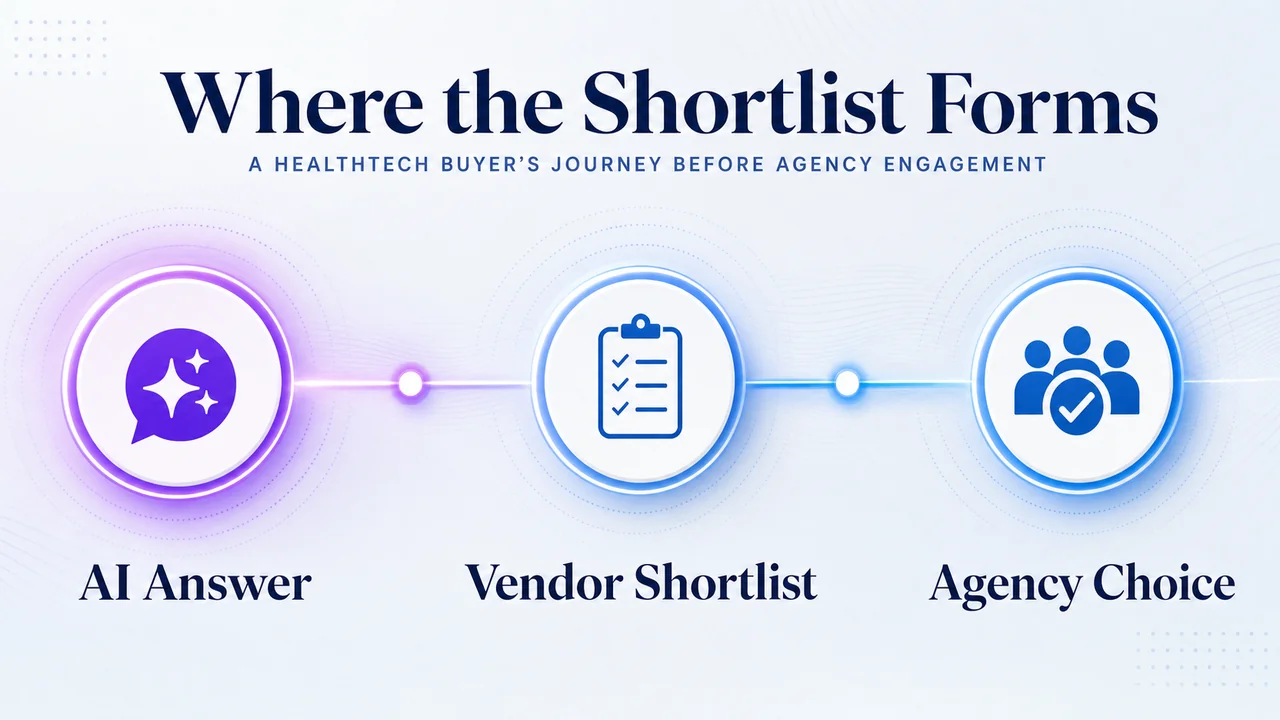
Most healthtech brands stall here. In the audits we run, a company often ranks fine on Google yet rarely gets named in AI answers, because its proof sits buried in PDFs, scattered across orphan subpages, or attached to a fuzzy brand entity that the model can’t resolve.
The clinical evidence exists. The answer engine just can’t read it.
AI visibility isn’t a ranking. It’s whether a model can confidently name your brand, summarize what you do, and repeat that across queries. An agency that chases traffic but ignores entity clarity, machine-readable crawler guidance, and citation readiness will move your sessions and never move your citations.
So this list covers agencies that can improve AI visibility for healthtech companies specifically. Not general SEO firms with a healthcare landing page. The ones that understand clinical-grade citation work and the regulatory friction that slows it down.
How We Ranked the Best AI Visibility Agencies for Healthtech
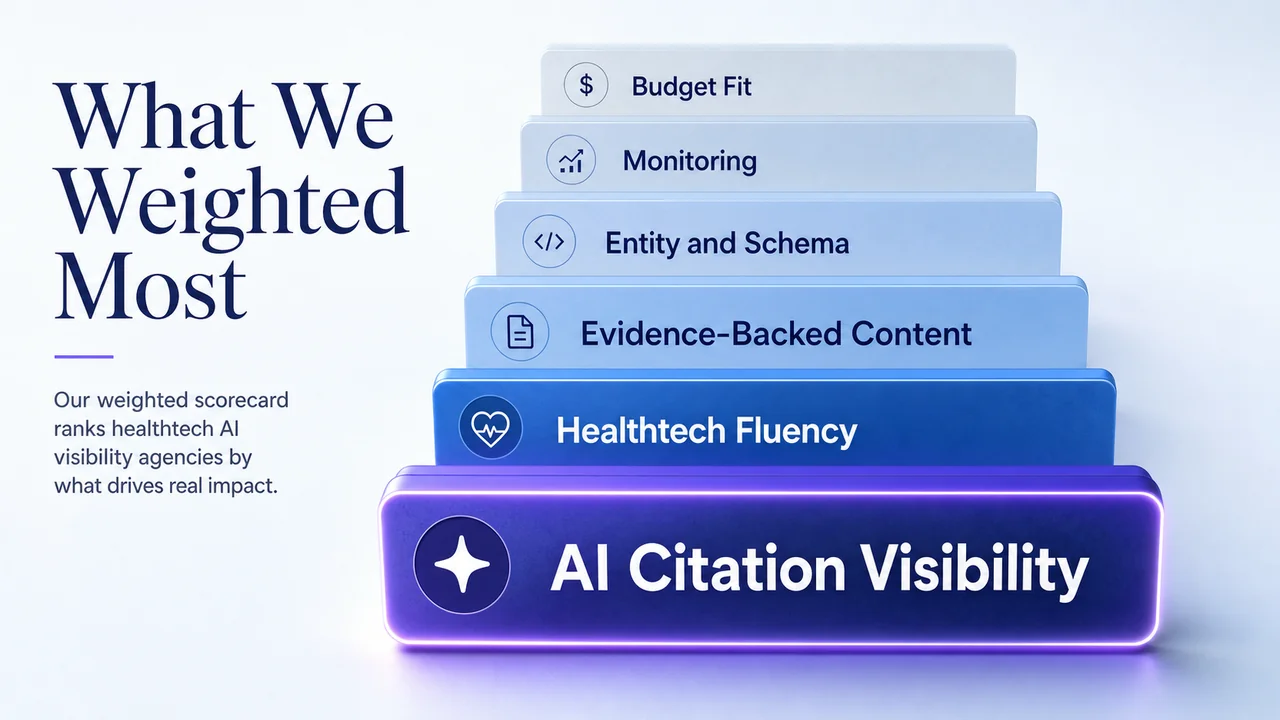
We weighted the ranking around what actually changes healthtech AI visibility, then scored each agency against it. The framework puts citation influence first, because an agency that can’t move AI answers makes everything else academic.
| Criterion | Weight | What we looked for |
|---|---|---|
| AI citation visibility | High | Can the agency show brands it has gotten named in ChatGPT, Gemini, Perplexity, or Google AI Overviews |
| Healthtech and regulatory fluency | High | HIPAA awareness, FDA sensitivity, clinical review workflows, comfort with high-stakes claims |
| Evidence-backed content strategy | Medium | Turning clinical proof into extractable, citable answer content |
| Entity and schema capability | Medium | Structured data, entity optimization, crawlability, rendering, llms.txt understanding |
| Monitoring and reporting | Medium | Tracking citations across multiple answer engines, not just rankings |
| Budget and commercial fit | Lower | Startup versus enterprise, project versus retainer, support for compliance stakeholders |
AI citation visibility carries the most weight for a blunt reason. If a model never names your brand, your patient-engagement copy and your schema tidiness don’t matter to the buyer who just asked ChatGPT for a shortlist.
The strongest healthtech agency is usually the one that can prove how it earns citations, not the one that talks loudest about “SEO.” Ask for the proof, and the field narrows quickly.
Healthtech fluency is the second gate. An agency that doesn’t understand why clinical-claim language needs legal review, or why a model distrusts an unsourced outcome stat, will produce content that either stalls in your compliance queue or never gets cited. The technical checks and the commercial fit matter, but they’re downstream of those two.
Best AI Visibility Agencies for Healthtech
Here are five agencies ranked from strongest overall fit for healthtech AI visibility to more specialized options. Each entry names who it suits, the specific problem it solves, and where it may not be the right call. Match the profile to your own gap before you shortlist.
1. WG Content: Best Overall for Healthtech AI Visibility Strategy
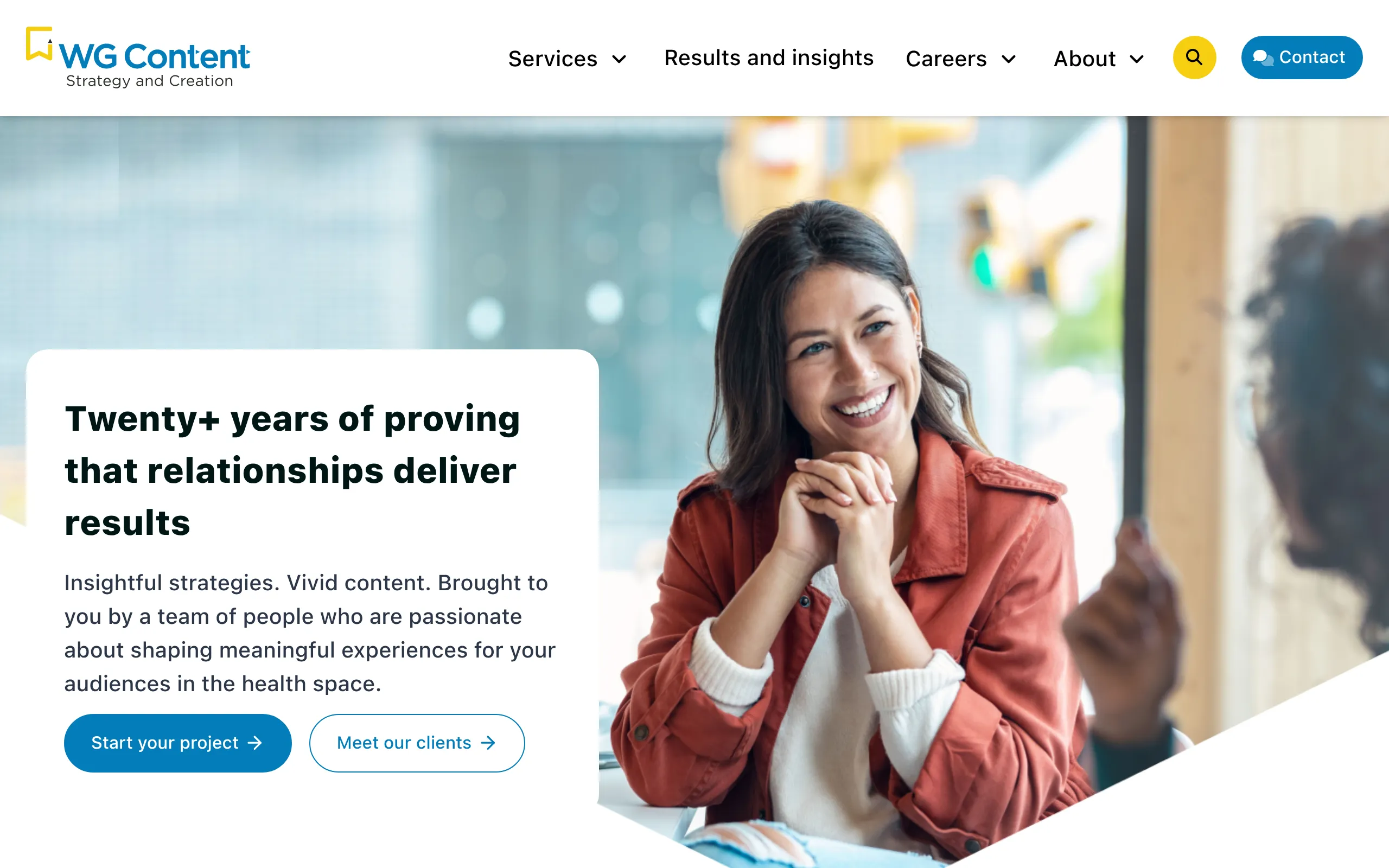
WG Content is a healthcare content agency that has built a structured methodology for AI visibility, aimed at healthcare marketers and content leaders. Its work centers on a clear thesis: AI selects trusted entities first, then writes the answer, so the job is making your organization identifiable, explainable, and repeatedly citable.
That framing matters in healthtech because the failure mode is rarely thin content. It’s content shaped like marketing pages instead of decision support, proof buried where a model can’t repeat it, and a fragmented brand entity.
WG Content treats answer-shaped content, credibility signals, and entity coherence as one system, which is exactly the gap most healthtech brands carry. The limitation is depth on hard technical work: if your core problem is broken rendering or schema architecture, you may want a technical partner alongside it.
- Best for: Healthtech teams that need a citation-focused content strategy and entity maturity
- Pricing model: Custom engagement
- Standout strength: Answer-shaped content and entity-confidence framework for AI citations
2. Onely: Best for Enterprise Technical and Entity Architecture
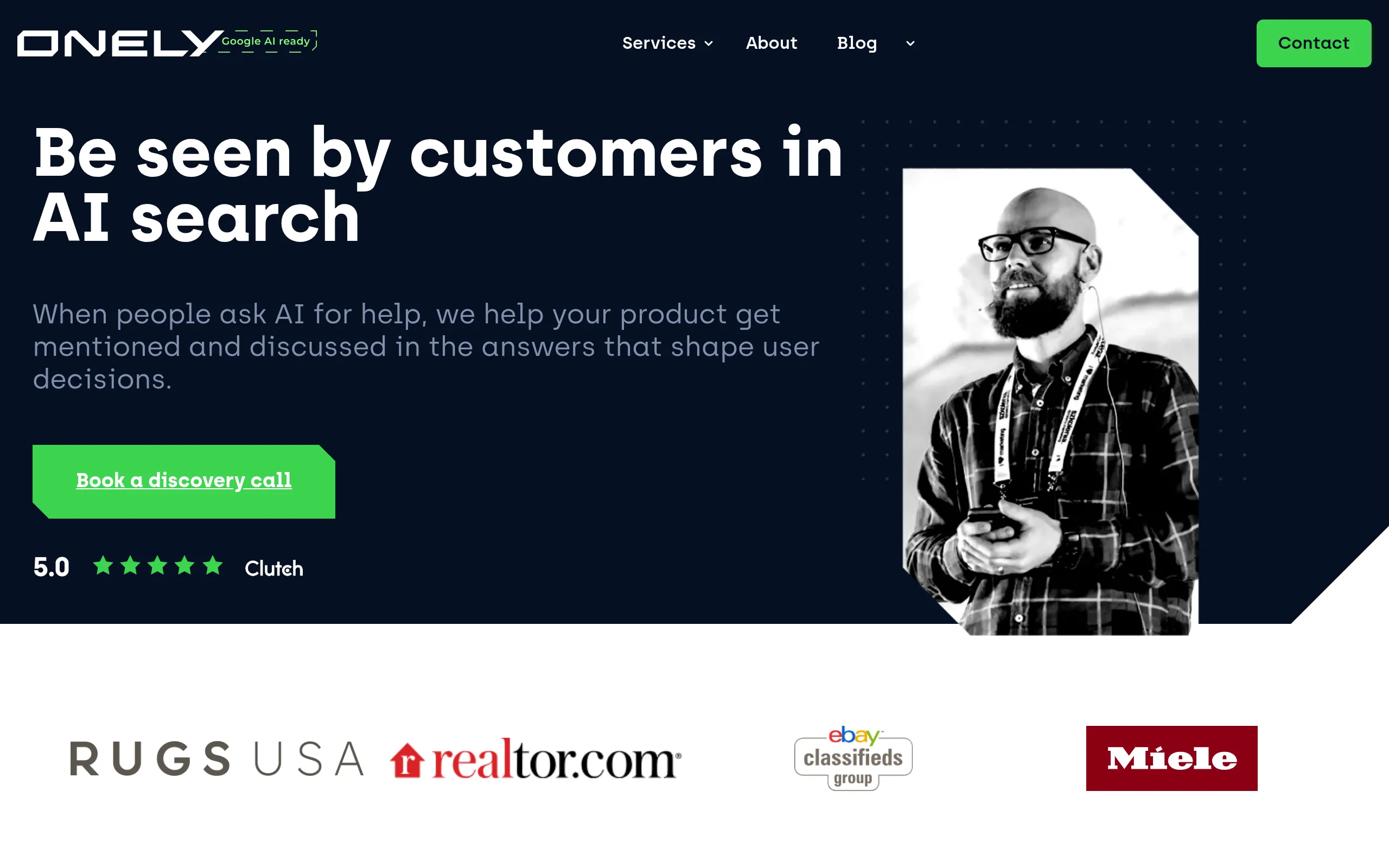
Onely is an engineering-led search agency built for enterprise healthcare architectures with complex technical demands. It treats AI visibility as a crawlability, rendering, and entity-architecture problem before it’s a content problem.
For large healthtech platforms, that order is often correct. When JavaScript rendering hides your clinical evidence from crawlers, or your entity signals are scattered across acquired sub-brands, no amount of content fixes it.
Onely is strong where the machine-readability layer is broken. It’s less the right fit for an early-stage telehealth startup whose real problem is weak third-party authority rather than a technical wall.
- Best for: Enterprise healthtech with complex technical and entity architecture
- Pricing model: Custom enterprise engagement
- Standout strength: Crawlability, rendering, and entity architecture at scale
3. Onspire Health Marketing: Best for Hospitals and Health Systems
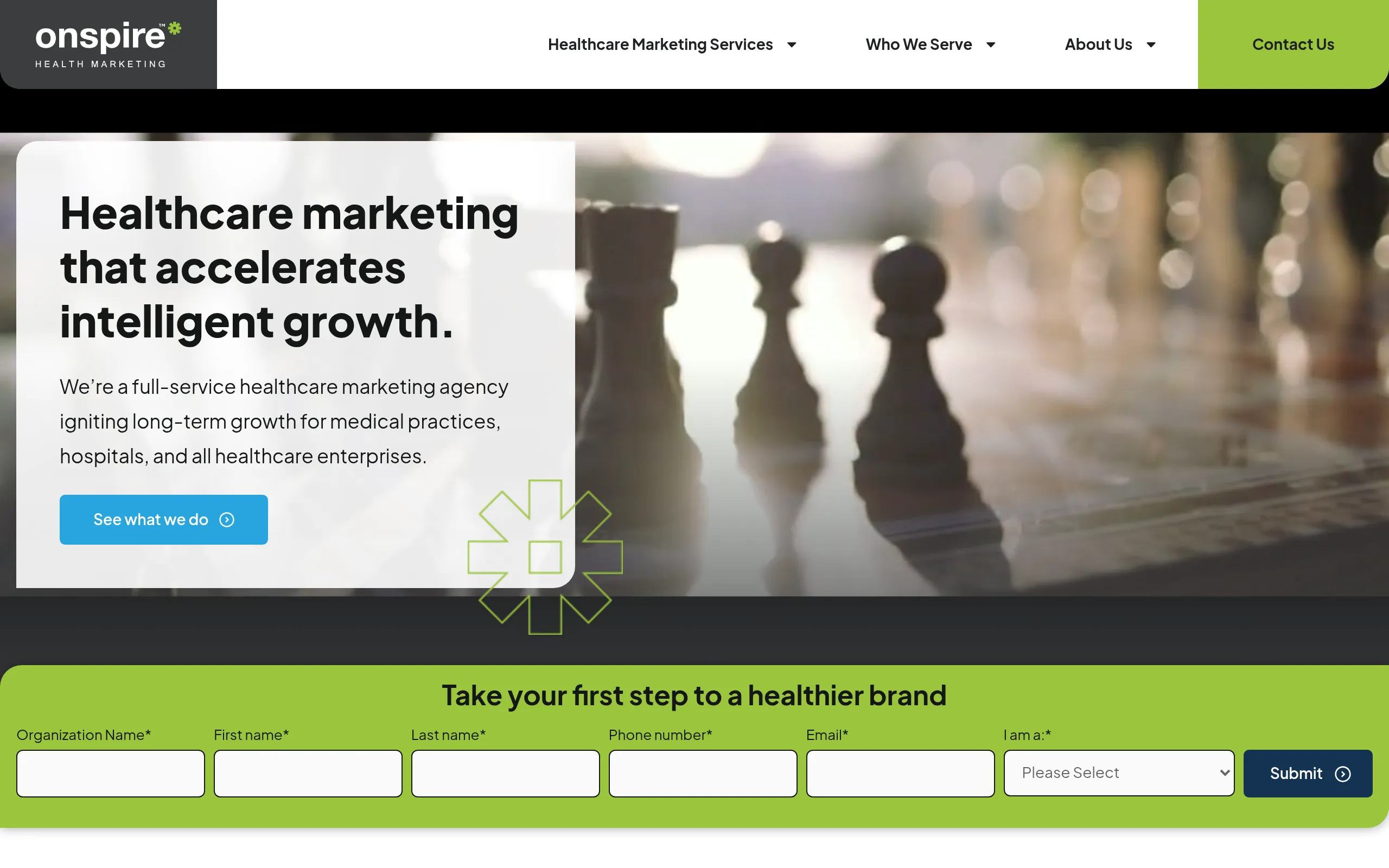
Onspire Health Marketing runs an AI visibility program built specifically for hospitals and health systems, bundling SEO, answer engine optimization, Google Business Profile work, and review management. Its focus is patient-facing discovery rather than healthtech vendor sales.
That makes it a strong fit for provider organizations and multi-location systems where local signals and reviews shape AI answers. It’s a weaker match for a B2B healthtech vendor selling EHR or clinical-workflow software, because the buying motion and the citation sources are different.
Its published materials lean promotional and light on measurement detail, so ask how it attributes AI visibility to outcomes.
- Best for: Hospitals, health systems, and patient-facing provider brands
- Pricing model: Custom program
- Standout strength: Integrated SEO, AEO, GBP, and reviews for provider discovery
4. Insivia: Best for Compliance-Aware Healthtech SEO and Demand Gen
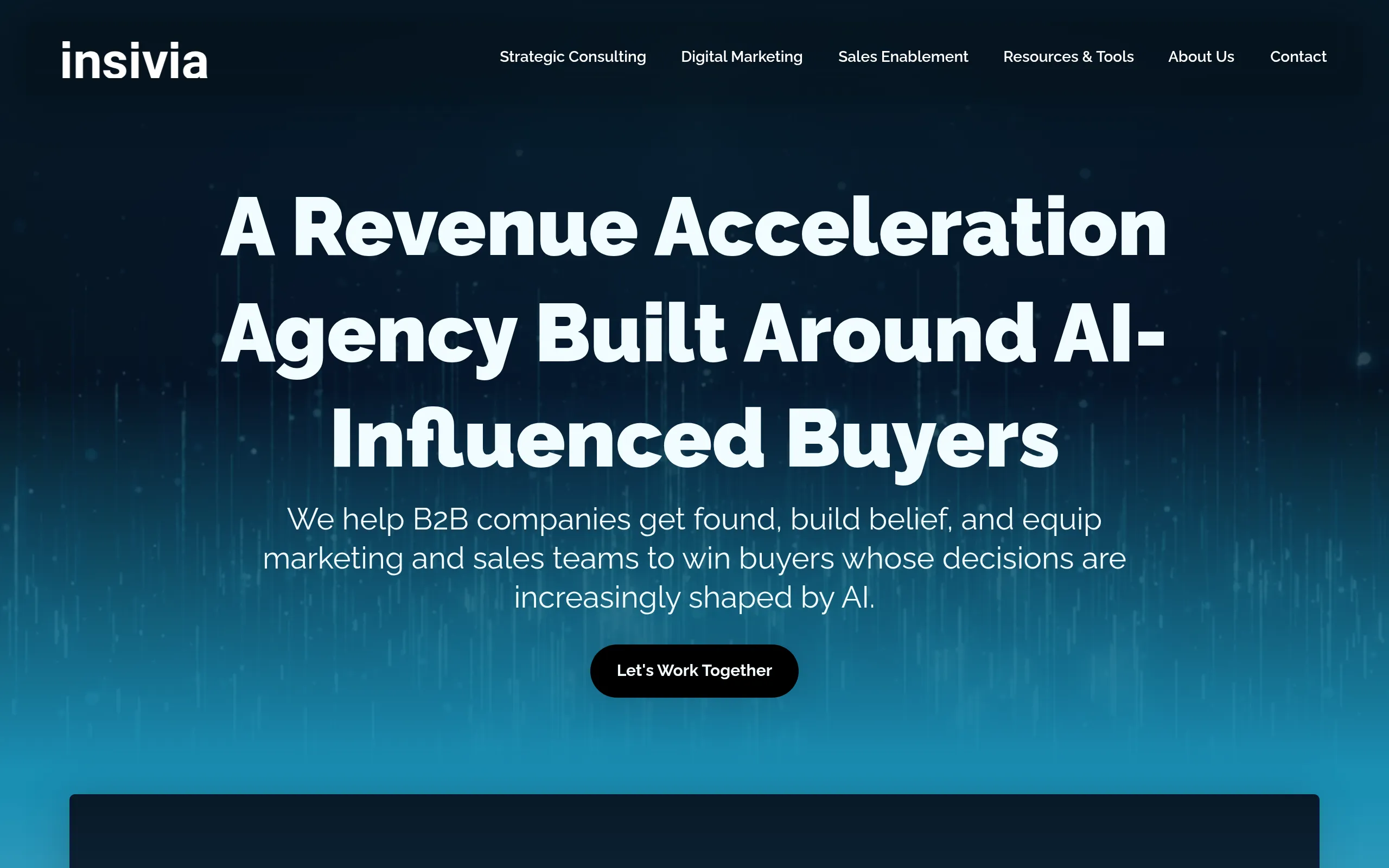
Insivia is a B2B agency with healthtech, medtech, and biotech experience, blending compliance-aware SEO with buyer-centric demand generation. It maps content to the people who actually decide: administrators, clinicians, payers, and investors.
For a healthtech company that wants AI visibility tied to pipeline, that buyer mapping is valuable. The work spans technical SEO, evidence-based content hubs, and outreach to medical and tech publications.
The honest limit is that its public materials are stronger on positioning than on AI-citation proof, so confirm it can name brands it has gotten cited in answer engines, not just ranked.
- Best for: Healthtech, medtech, and biotech vendors blending SEO with demand gen
- Pricing model: Custom engagement
- Standout strength: Buyer-centric, compliance-aware content across the decision committee
5. Growtika: Best for Smaller Teams Needing Scalable Technical SEO
Growtika serves the healthcare sector with technical SEO and scalable execution, aimed at smaller or leaner teams that need reliable output without enterprise overhead. It’s the accessible entry point on this list.
For an early-stage healthtech company that needs foundations done well, crawlability, structured data, and consistent content, that practicality is the draw. It isn’t the agency to call when your problem is heavyweight clinical-claim governance or a citation-PR push into top-tier medical publications. Treat it as a strong execution partner, not a strategy-led citation specialist.
- Best for: Smaller healthtech teams needing dependable technical SEO execution
- Pricing model: Custom engagement
- Standout strength: Scalable technical SEO and content execution for lean teams
Where BrandMentions and Outreach Desk Fit
BrandMentions publishes this guide and Outreach Desk is run by the same team, so neither is ranked above. BrandMentions earns citations in the publications AI engines read, and Outreach Desk builds the authority links behind them. If either fits your brief, hold it to the same compliance and proof checks as every agency above.
See where AI answers put your brand
Twenty minutes with a senior strategist: where the major engines point buyers in your category, who gets named instead of you, and a straight read on what a programme would change.
Book a strategy callComparison Table: The Fastest Way to Shortlist
Use this table to compare the five agencies at a glance, then read back into the profile that matches your gap. The order mirrors the ranking above.
| Agency | Best for | Core strength | Healthtech fit |
|---|---|---|---|
| WG Content | Citation-focused content strategy | Entity-confidence content system | High |
| Onely | Enterprise technical architecture | Crawlability and entity engineering | High |
| Onspire Health Marketing | Hospitals and health systems | SEO, AEO, GBP, reviews bundle | High for providers |
| Insivia | Healthtech SEO and demand gen | Buyer-centric content mapping | High |
| Growtika | Lean teams needing execution | Scalable technical SEO | Medium |
Early-stage healthtech usually moves faster with Growtika for foundations or WG Content for citation-ready content. Enterprise teams lean toward Onely when the technical layer is broken. Compliance-heavy vendors get the most from Insivia or WG Content, where clinical-claim handling is built into the process.
How we picked: each agency was scored against the six weighted criteria above, with AI citation visibility and healthtech fluency carrying the most weight. We drew positioning and strengths from each agency’s public materials and the search results that surface them, so confirm any specific outcome claim directly before signing.
Which Agency Fits Your Healthtech Company
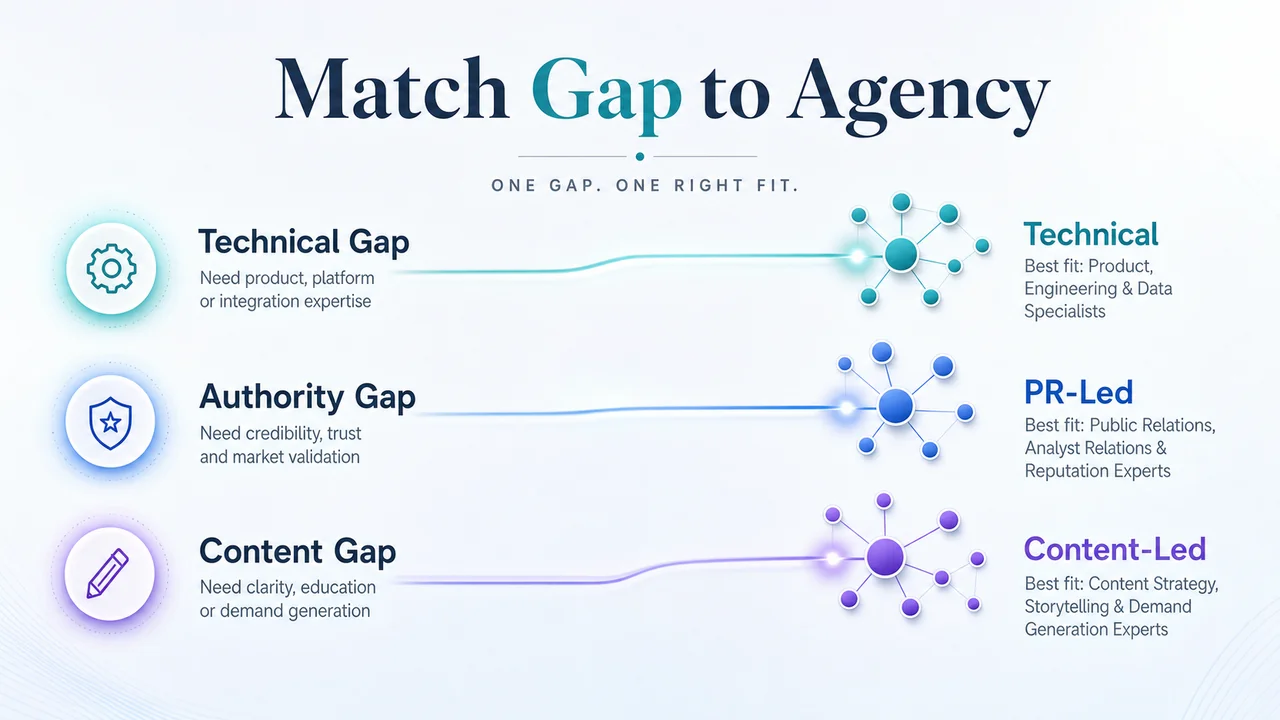
There’s no single winner, because the right agency depends on which gap is blocking your citations. The pattern we see most often: complex healthtech platforms need a technical audit first, while brands with weak authority need content plus PR before AI citations move at all.
An early-stage startup is usually best served by Growtika for clean foundations or WG Content for citation-ready content. An enterprise healthtech vendor with a tangled architecture should look at Onely first.
Telehealth and patient-facing systems fit Onspire. Medtech and compliance-heavy vendors get the most from Insivia or WG Content, where clinical-claim review is part of the workflow.
A brand starved of third-party coverage has an authority gap first, and it closes with earned citations plus the links behind them, whichever partner delivers them.
Whichever way you lean, judge on proof. The best agency can show current AI citations, name real healthtech experience, and report against actual answer engines.
Be wary of any firm selling traffic, backlinks, or generic “AI SEO” without naming platforms, metrics, or a clear workflow. Before you sign, ask for a sample audit, a citation-monitoring example, and a plain explanation of how it earns mentions.
If you want a baseline first, our breakdown of what drives AI citations and the tradeoffs of an agency versus an in-house team will sharpen the questions you bring to each call.
Frequently Asked Questions
What makes an AI visibility agency different from a healthcare SEO agency?
An AI visibility agency optimizes for whether models name and cite your brand in answers, while a healthcare SEO agency optimizes for where you rank on Google. The work overlaps on technical foundations, but AI visibility adds entity clarity, citation-ready evidence, and cross-platform monitoring.
A healthtech brand can rank on page one and still go unnamed in ChatGPT, which is exactly the gap an AI visibility agency closes. Ask any agency how it tracks named mentions, not just rankings.
How do AI engines choose which healthtech brands to cite?
AI engines cite healthtech brands they can confidently identify as a trusted entity, then corroborate against credible sources. In healthcare, that bar is higher because the topic is high-stakes, so models favor brands with clear entity signals, named clinical evidence, and third-party coverage.
A brand with proof buried in PDFs or scattered across sub-brands often gets skipped even when it ranks. Coherent entity structure and extractable, sourced content do the most to earn the citation.
Do healthtech companies need HIPAA-compliant content for AI visibility?
Yes, healthtech companies need compliance-aware content, because publishing material that violates HIPAA or overstates clinical claims creates legal and trust risk that outweighs any visibility gain. The practical approach is turning compliance-safe evidence into structured, citable answers rather than avoiding the topic.
The right agency builds clinical review into its workflow instead of treating compliance as an afterthought. If an agency can’t explain its review process, that’s a red flag in regulated categories.
Which AI platforms matter most for healthtech visibility?
ChatGPT, Google AI Overviews, Perplexity, and Gemini matter most for healthtech visibility, because they cover the bulk of buyer and patient research queries. ChatGPT and Google AI Overviews carry the broadest reach, while Perplexity surfaces sources prominently for research-heavy buyers.
A healthtech vendor running a 12 to 18 month buying cycle wants coverage across all four, since a procurement lead may use a different engine than the clinician who first asked about your category. Track citations on each rather than guessing.
How do I choose between a technical SEO agency and a healthcare PR agency?
Choose based on which gap is blocking citations. If models can’t read or resolve your brand because of rendering, schema, or entity problems, a technical agency like Onely fixes the foundation.
If your brand is technically clean but no respected publication has covered you, a citation-PR approach builds the authority models look for. Many healthtech brands need both in sequence: fix the machine-readability first, then build third-party signals.
A quick audit will tell you which problem you’ve.
Shortlist two or three agencies, request an AI visibility audit from each, and choose the one that matches your healthtech stage, compliance needs, and budget. The right partner will show you exactly where your brand stands in AI answers today and what it takes to get named.
Start by asking ChatGPT your top buying question and seeing whether your brand appears at all. For the fuller playbook behind this shortlist, see our guide to AI visibility for healthtech companies.