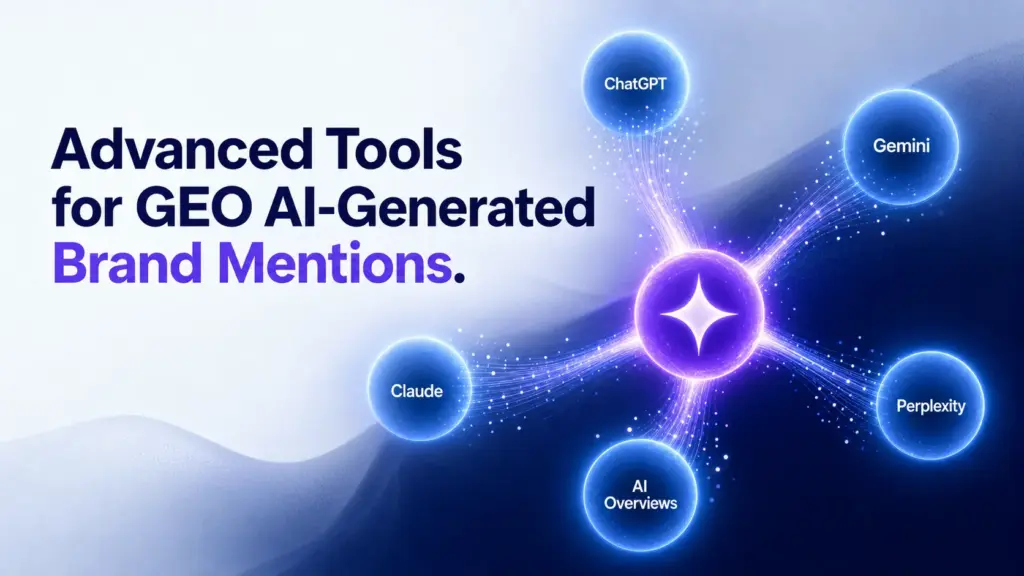

AI brand mentions are no longer confined to one search result page. They now surface across ChatGPT, Gemini, Perplexity, Claude, and Google AI Overviews, often saying different things about you in each. If you’re shopping for advanced tools to track and improve those mentions, the best platforms are the ones with multi-engine coverage, deep citation tracking, and alerts you’ll actually use. This is a shortlist, not a GEO primer. Below are five tools worth evaluating in 2026, with what each one wins at, where it falls short, and the kind of team it fits.
How We Selected These Advanced GEO Tools
The list prioritizes tools that track AI-generated brand mentions across multiple engines, not just one chatbot. A platform that watches ChatGPT alone leaves Gemini, Perplexity, and AI Overviews unmonitored, and that’s where half your buyers now start.
Mention depth matters more than a polished dashboard. The tools that earn a place here can separate three different things: a raw mention, a real citation with a linked source, and the framing or sentiment around your brand. A pretty visibility score that can’t tell you which prompt triggered a mention isn’t actionable.
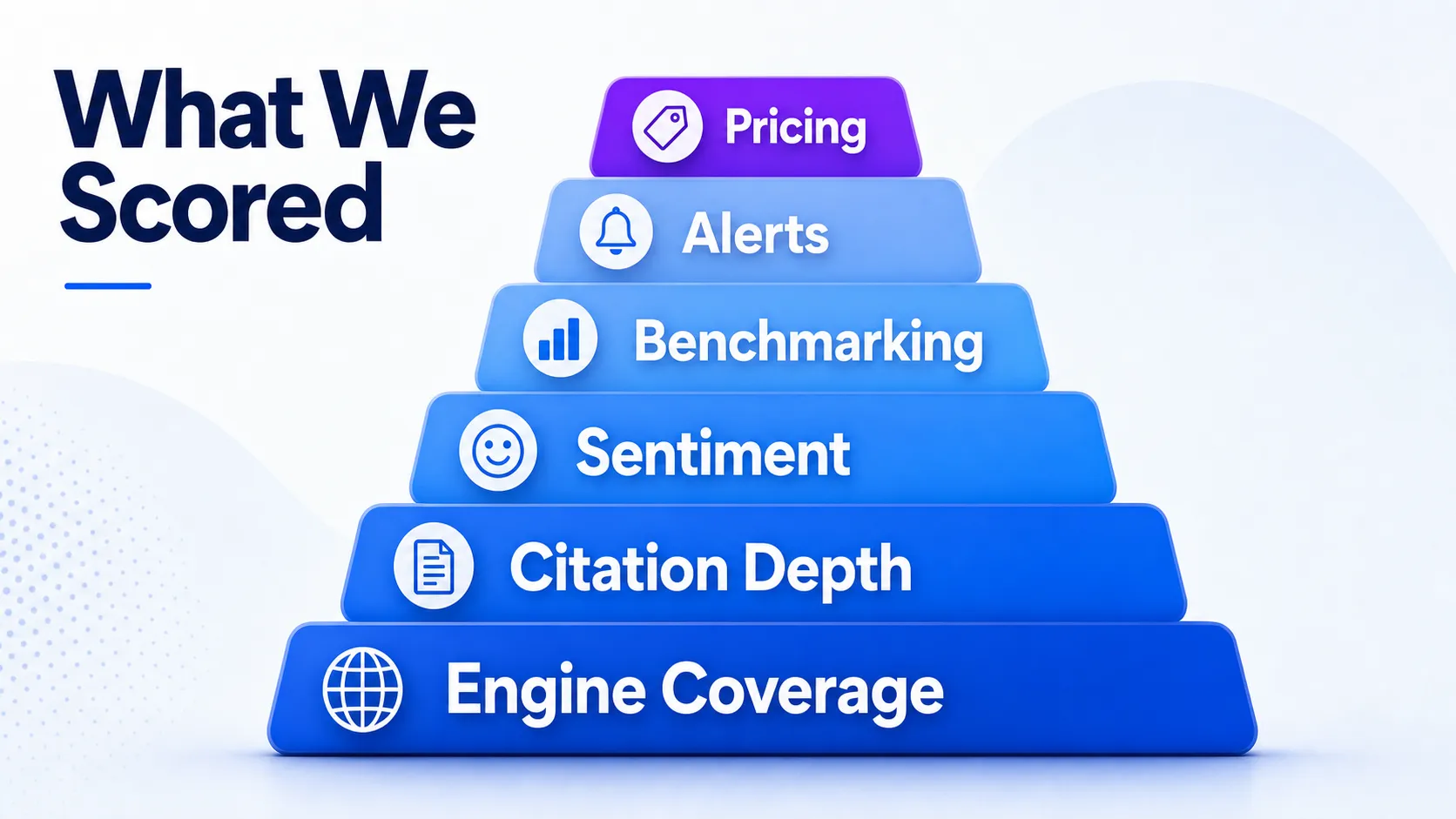
The criteria are straightforward: AI-engine coverage, citation and mention tracking depth, sentiment and narrative analysis, competitor benchmarking, alerts, reporting, integrations, and pricing or accessibility. Tradeoffs were judged on two axes that decide most purchases: enterprise depth versus ease of use, and pure visibility monitoring versus tools that also help you act. Broad coverage is useless if the tool can’t show which prompts, queries, or narratives triggered the mention, so that capability weighed heavily.
The 5 Best Advanced Tools for GEO AI-Generated Brand Mentions
Each tool below follows the same structure: what it is, why it matters for GEO brand mentions, one standout strength, one honest limitation, and a pricing note. Depth and price vary across the five, from platforms tied to an existing SEO suite to standalone trackers, so you can self-select by budget and team maturity. Use the “best for” labels to skip straight to your fit.
1. GetMint: Best All-in-One GEO Platform
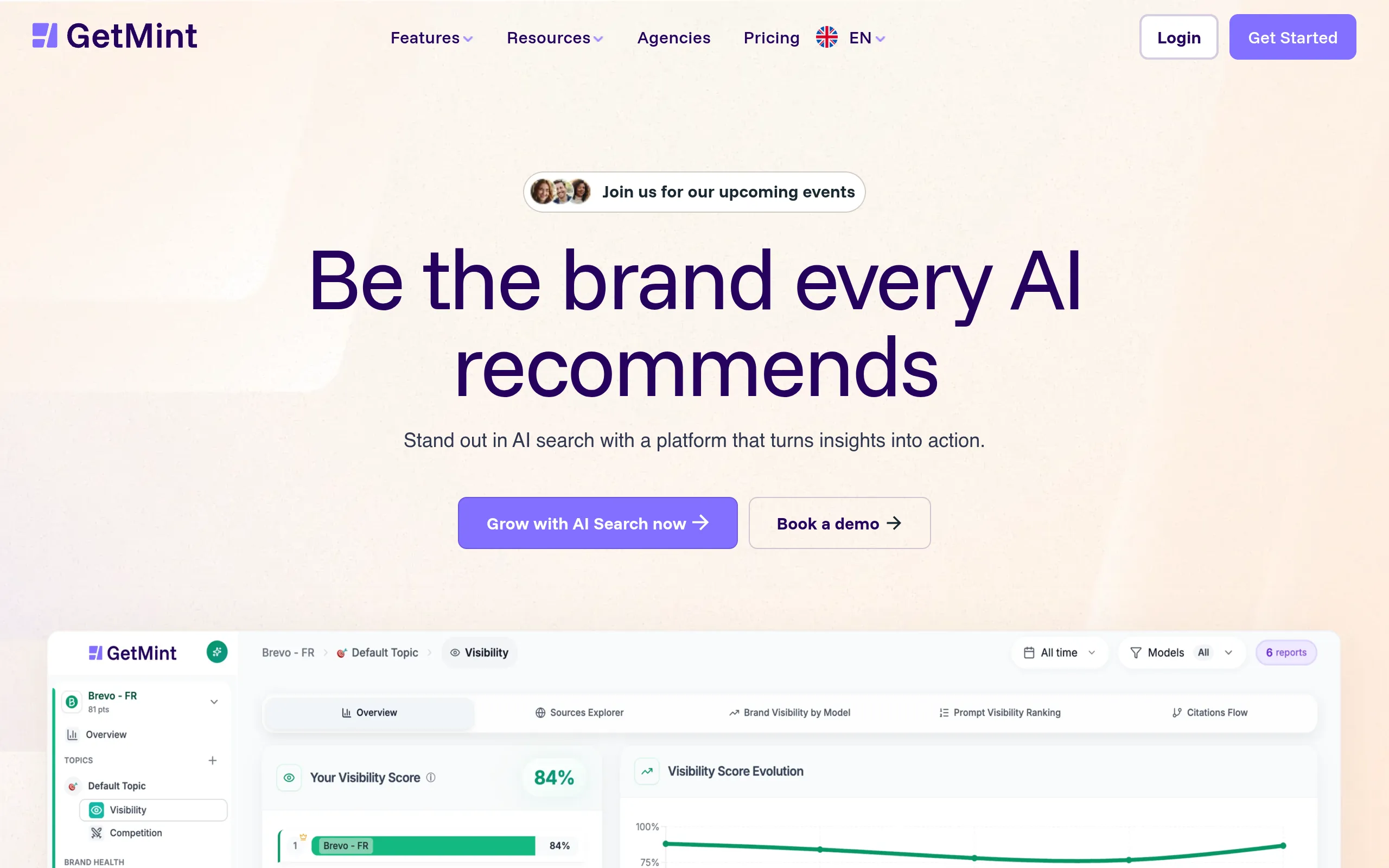
GetMint is an all-in-one GEO platform that combines visibility tracking, sentiment analysis, share of voice, alerts, and a content studio. It suits brands that want one place to both watch AI engines and improve their output.
The reason it earns a spot is the loop it closes. Most tools tell you where you stand; GetMint pairs that with a content workflow so the same team can act on what it finds. For very small teams, though, the full suite can be more than you need, and the all-in-one breadth means you pay for capabilities you may not touch at first.
- Best for: Brands wanting monitoring and optimization in one workflow
- Starting price: 99 euro/month Starter
- Standout feature: Visibility tracking plus a built-in content studio
2. Ahrefs Brand Radar: Best for Existing Ahrefs Teams
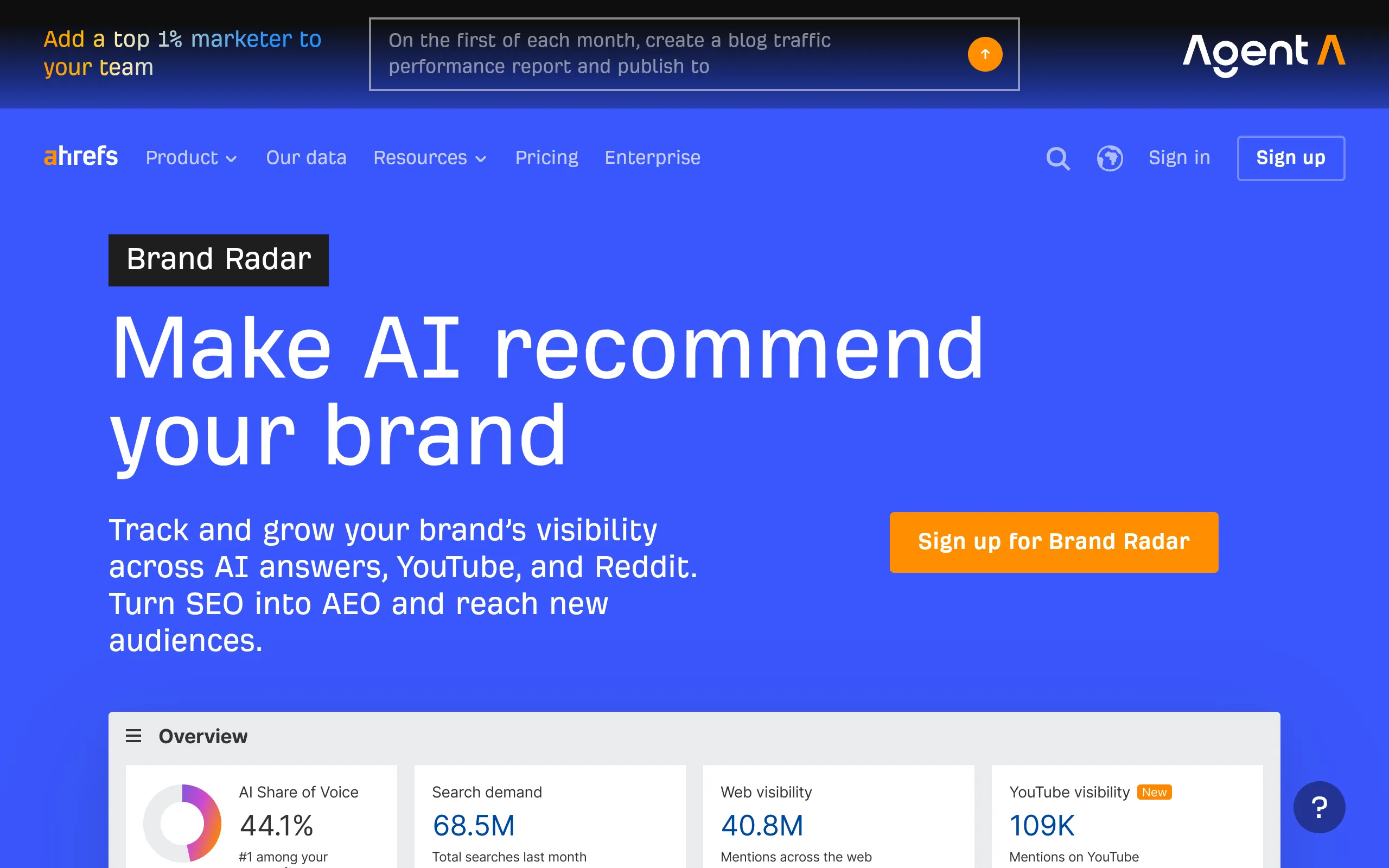
Ahrefs Brand Radar is the strongest fit for teams already inside the Ahrefs ecosystem that need large-scale query coverage. It layers AI visibility onto a workflow your SEO team already lives in.
It matters because of the underlying data: a massive query database, share-of-voice reporting, and real-time alerts. If you run SEO through Ahrefs, adding AI mention tracking without learning a new tool is a real advantage. The limitation is focus. It’s less specialized for GEO-only work than the dedicated AI visibility platforms here, so deep narrative analysis isn’t its center of gravity.
- Best for: Enterprise-scale tracking inside an existing Ahrefs stack
- Pricing: Needs an Ahrefs base plan from $129 per month, AI indexes $199 each or $699 bundled
- Standout feature: Massive query database with share-of-voice reporting and alerts
3. Semrush AIO: Best for SEO-Led Marketing Stacks
Semrush AIO is the broad-suite choice for brands already using Semrush for SEO and competitor research. It lets you connect AI visibility to a larger marketing and search stack instead of running a separate tool.
The value is consolidation. Agencies and in-house teams that want one vendor for search benchmarking and AI visibility get cross-LLM market-share and ranking reports in a familiar interface. The honest tradeoff: AI visibility is an add-on capability here, not always the deepest standalone GEO product. If answer-engine tracking is your single priority, a specialist may go further.
- Best for: Agencies and in-house teams wanting one vendor for SEO and AI visibility
- Starting price: $139.95/month
- Standout feature: Cross-LLM market share and ranking reports
4. AthenaHQ: Best for Authority Gap Analysis
AthenaHQ is a more advanced GEO platform built around authority analysis, citation lift, and competitive gap discovery. It helps B2B and enterprise teams understand where AI engines prefer a competitor and why.
That diagnostic angle is what sets it apart. Instead of only counting your mentions, it shows the authority gaps that explain them, which makes the reporting useful for strategy rather than vanity. Two cautions: public pricing is inconsistent across sources, and setup is heavier than an entry-level monitor, so plan for onboarding time.
- Best for: B2B and enterprise teams needing structured visibility reporting
- Pricing: About $295 per month self-serve, $595 Growth, Enterprise custom
- Standout feature: Authority gap analysis with citation-focused recommendations
5. Brandi AI: Best for Narrative and Sentiment Tracking
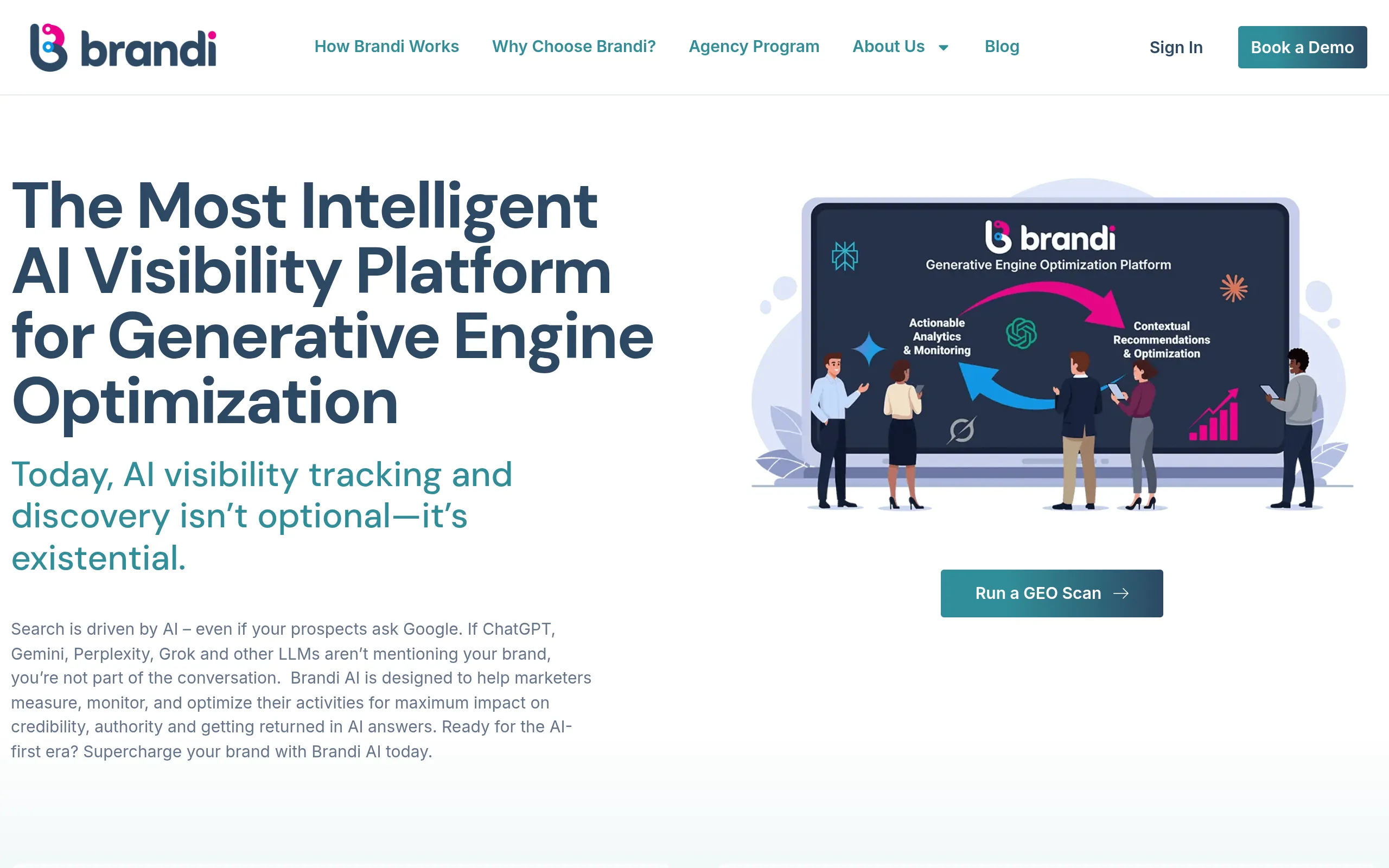
Brandi AI is a narrative-level visibility platform for brands that care about how AI describes, frames, and compares them. It suits PR, brand, and marketing teams focused on perception, not just raw citation counts.
Sentiment and framing are often the difference between a mention and a useful mention. A brand named alongside a competitor as the “more expensive option” has a visibility problem a citation counter would miss, and Brandi AI is built to catch exactly that. The downside is buyer confidence: pricing isn’t public, so expect a sales conversation rather than a self-serve signup.
- Best for: PR and brand teams focused on perception and framing
- Pricing: Basic AI visibility plan from about $349.99 per month
- Standout feature: Narrative and sentiment analysis across major AI engines
Comparison Summary Table
Here is the shortlist at a glance, sorted from deeper enterprise and all-in-one platforms down to lighter, specialist tools. Tracking depth uses plain labels so you can see the tradeoffs instead of generic “best” claims.
| Tool | Best for | Tracking depth | Starting price |
|---|---|---|---|
| GetMint | All-in-one monitoring and content | Deep | 99 euro/mo |
| Ahrefs Brand Radar | Existing Ahrefs teams | Deep | Ahrefs plan tied |
| Semrush AIO | SEO-led marketing stacks | Moderate | $139.95/mo |
| AthenaHQ | Authority gap analysis | Deep | Self-serve and up |
| Brandi AI | Narrative and sentiment | Moderate | Not public |
How we picked: each tool had to track AI-generated brand mentions across more than one engine, separate mentions from citations where possible, and show either monitoring depth or a clear path to action. We weighed enterprise depth against ease of use and noted pricing only where the research supported a figure.
How to Choose the Right Platform for Your Team
The right tool depends less on its feature list and more on your team’s size, budget, and whether you want to measure, act, or both. Work through these steps in order.
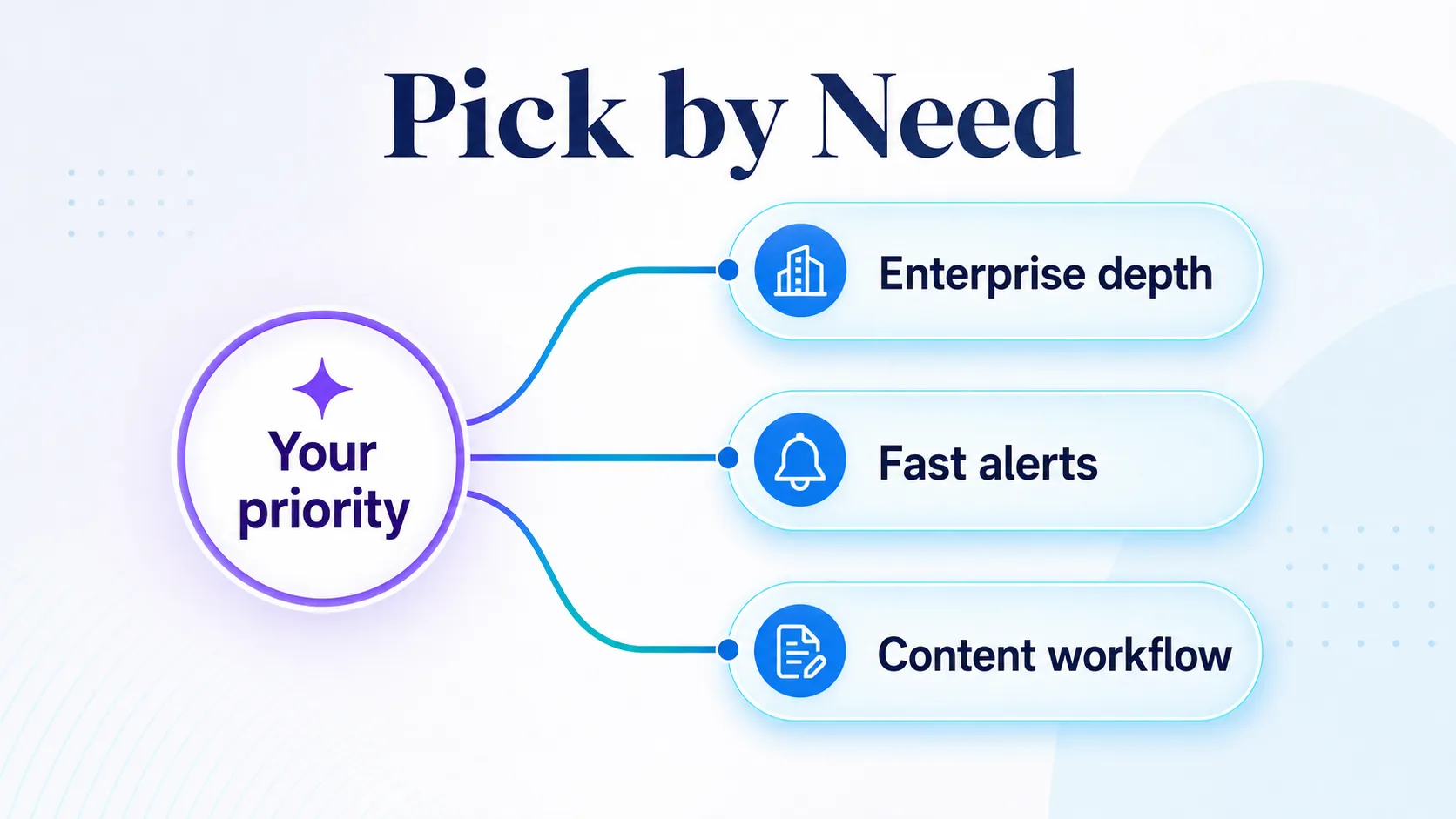
Step 1: Name Your Primary Goal
Decide whether you mainly need monitoring, optimization, or narrative control before you compare features. A team that wants alerts has a different shortlist than one that wants to rewrite content for citability. Most buyers skip this and end up paying for breadth they never use.
Step 2: Match the Tool to Team Maturity
Enterprise teams should prioritize query coverage, reporting depth, collaboration, and integrations, which points toward AthenaHQ or Ahrefs Brand Radar. SMBs and consultants should prioritize speed, alerts, and a low-friction setup, which favors the lower-priced end of this list, starting with GetMint at 99 euro a month. Content-led teams should pick a platform that connects mention tracking to optimization, which is what an all-in-one platform is built for.
Step 3: Test Multi-Engine and Mention Separation
Before you buy, confirm the tool can track the same brand across several AI engines and that it separates mentions from citations and framing. Run your top buying query through it and see whether it tells you which prompt triggered each result. If it can’t reproduce and explain the mention, the dashboard is decoration. The same discipline applies whether you build the workflow in-house or with a tool, which is why a clear method for tracking mentions across AI platforms matters more than any single feature.
Step 4: Pressure-Test the Real Price
Advanced GEO tools often look affordable at the entry tier, then scale with seats, prompts, engines, and reporting needs. A $29 monitor and a $499 enterprise platform aren’t really competing for the same job, so price against the workflow you’ll actually run, not the headline number.
See where AI answers put your brand
Twenty minutes with a senior strategist: where the major engines point buyers in your category, who gets named instead of you, and a straight read on what a programme would change.
Book a strategy callChoosing the Tool That Fits Your Workflow
The honest read is that none of these tools is best for everyone, and the longest feature list rarely wins. If you need defensible reporting and multi-brand governance, pay for enterprise depth like AthenaHQ or Ahrefs Brand Radar. If you mainly need alerts and a competitive snapshot, a moderate-depth tracker like Semrush AIO does the job for a fraction of enterprise pricing.
If your goal is to get cited, not just measured, a content-first or all-in-one tool earns its place. Pick the one that matches how your team actually works, then prove it against your own buying queries before you commit a budget. To go deeper on what these platforms measure, compare the field of generative engine optimization tools compared for 2026.
Frequently Asked Questions
What are the best AI platforms to track for brand mentions?
The core five are ChatGPT, Gemini, Perplexity, Claude, and Google AI Overviews, because they hold the bulk of AI answer traffic. Coverage matters because each engine cites different sources and can frame your brand differently, so a tool that watches only one leaves real gaps. If your buyers skew technical, add Microsoft Copilot. For a deeper setup, see how to track your brand across 10 AI engines.
How accurate are GEO tools at tracking AI citations?
Accuracy varies by tool and is never perfect, because AI answers shift between runs and models update without notice. The stronger platforms reduce false positives by tracking specific mention patterns rather than loose keyword matches. Treat the numbers as directional trends over time, not exact counts, and favor tools that show you the underlying prompt and answer so you can verify a mention yourself.
What is the difference between GEO tools and traditional brand monitoring tools?
Traditional brand monitoring tracks where your name appears across the web and social media, while GEO tools track whether AI engines mention or cite you inside generated answers. The difference is the surface: one watches published pages, the other watches synthesized responses that may never link back to you. As more buyers start in AI answers, the second category becomes harder to ignore.
Do I need more than one GEO tool?
Most teams don’t, at least to start. One platform with strong multi-engine coverage answers the main questions: where you appear, how you’re framed, and where competitors beat you. A second tool only earns its cost when you have a distinct need the first can’t cover, such as a deep content workflow alongside enterprise reporting. Begin with one and add only when a real gap shows up.
Can GEO tools also help improve visibility, not just measure it?
Yes, several do. All-in-one platforms like GetMint pair mention tracking with optimization, so you can act on what you find inside one workflow. Pure monitors tell you where you stand but leave the fixing to you. If acting matters as much as measuring, prioritize a tool that closes that loop. You can also compare AI visibility analytics tools for brand mentions to see which lean toward action.
Shortlist the tools above, test the one that covers your priority AI engines, and choose the platform that gives you the clearest mention and citation data. The best pick is the one that fits your workflow today, not the one with the longest spec sheet. Start with a single buying query, see whether your brand gets named, and let that gap set your priorities.