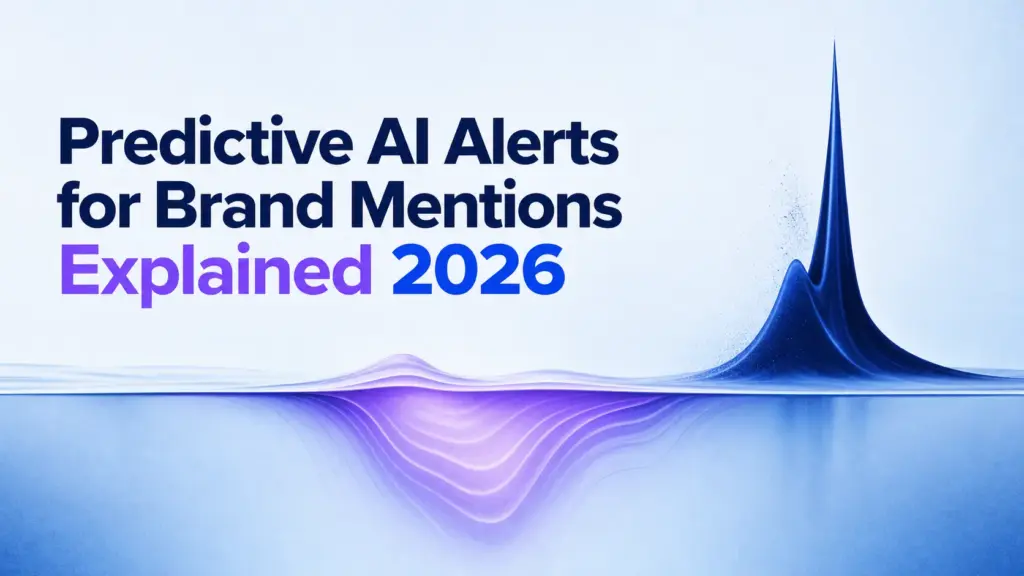

Predictive AI alerts for brand mentions work best when they warn you before the spike is obvious. They are AI-driven alerts that flag unusual changes in mention volume, sentiment, source mix, or platform visibility before a full spike or drop shows up on a dashboard. That is the line that separates them from standard real-time alerts, which only fire after the mentions already happened. This guide walks through what these alerts are, why they matter for reputation and visibility, how the mechanics actually work, and where teams get them wrong.
What Predictive AI Alerts for Brand Mentions Are
A predictive AI alert reads patterns in your live and historical mention data, then flags a likely change in direction before the change becomes visible. It watches four signals: volume, sentiment, source mix, and platform visibility. A standard keyword alert tells you a mention exists. A predictive alert tells you the pattern around your mentions is starting to break from normal.
The difference is timing and inference. “Mentions are happening now” is reactive. “The pattern suggests something is about to change” is anticipatory. A Reddit thread that starts accelerating faster than its usual replies-per-hour, a news cluster forming across two outlets, or a creator post picking up unusual early engagement can all trip a predictive signal hours before the dashboard count looks alarming.
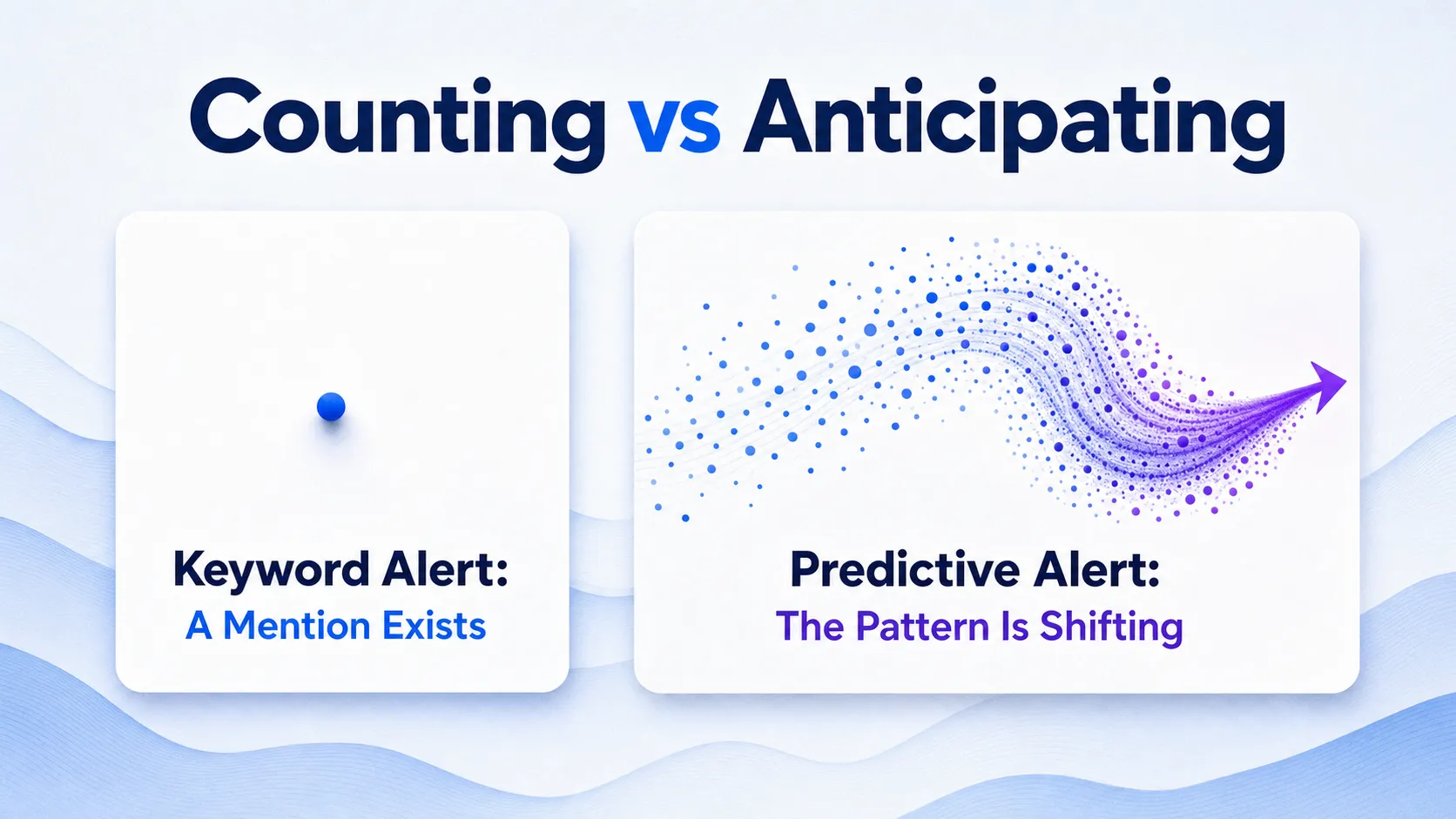
Here is the practitioner reality. A brand’s mention pattern can look completely normal for six to twelve hours while a single channel quietly accelerates. The team sees nothing on the main count because the volume is still inside the daily range. Then sentiment turns and the cluster breaks from baseline, and by the time anyone notices, the conversation has already shaped itself. Predictive alerting exists to compress that gap.
Predictive does not mean perfect. It means earlier and more context-aware. You still get false positives, and you still need a human to read the signal. What you gain is lead time, and lead time is the entire point. If you want to understand the broader operating layer these alerts sit inside, our guide to brand mention monitoring setup covers the full dashboard.
Why Predictive Alerts Matter for Reputation and Visibility
Early alerts shorten your response window. When a product complaint, a misinformation thread, or a viral criticism starts moving, the cost of the response rises with every hour the narrative hardens. Catching the shift while it is still in one channel gives PR and comms a chance to respond before the story is fixed in public memory.
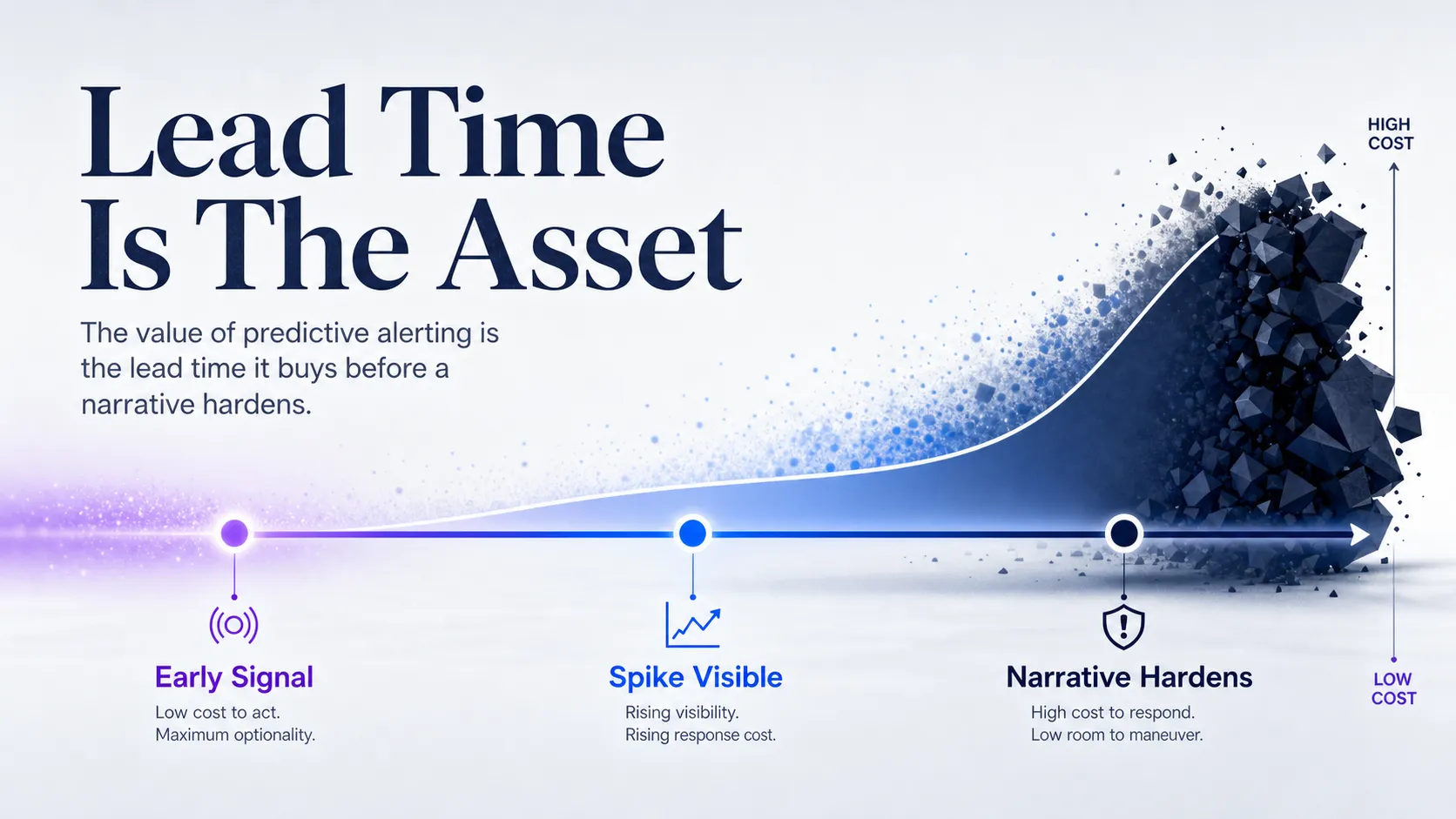
The most common failure pattern is reacting only after the spike, even though the warning signs were already present in one channel first. The signal was there. The team just was not watching the right early indicator.
Predictive alerts also connect directly to AI and search visibility. A small shift in your source mix can change how a model describes you. Your presence in AI-generated answers can erode quietly, if your most-cited sources start being outranked by lower-quality coverage. That kind of drift rarely announces itself in a volume chart, which is why a structured AI visibility framework pairs well with predictive signals.
There is a competitive angle too. Early movement in mention patterns can reveal a competitor launch, a campaign ramping up, or a share-of-voice shift before any of it is obvious. Modern monitoring spans social, news, forums, and AI-generated answers, so the earliest tremor often shows in a channel you are not actively watching. Tracking share of voice across channels turns those tremors into a competitive read.
How Predictive Alerting Works
Predictive alerting follows a repeatable sequence. The system learns what normal looks like, watches for meaningful deviation, scores how confident it is, fires only above a threshold, and routes the alert to a human. Each step matters, and skipping one is where most setups go noisy.
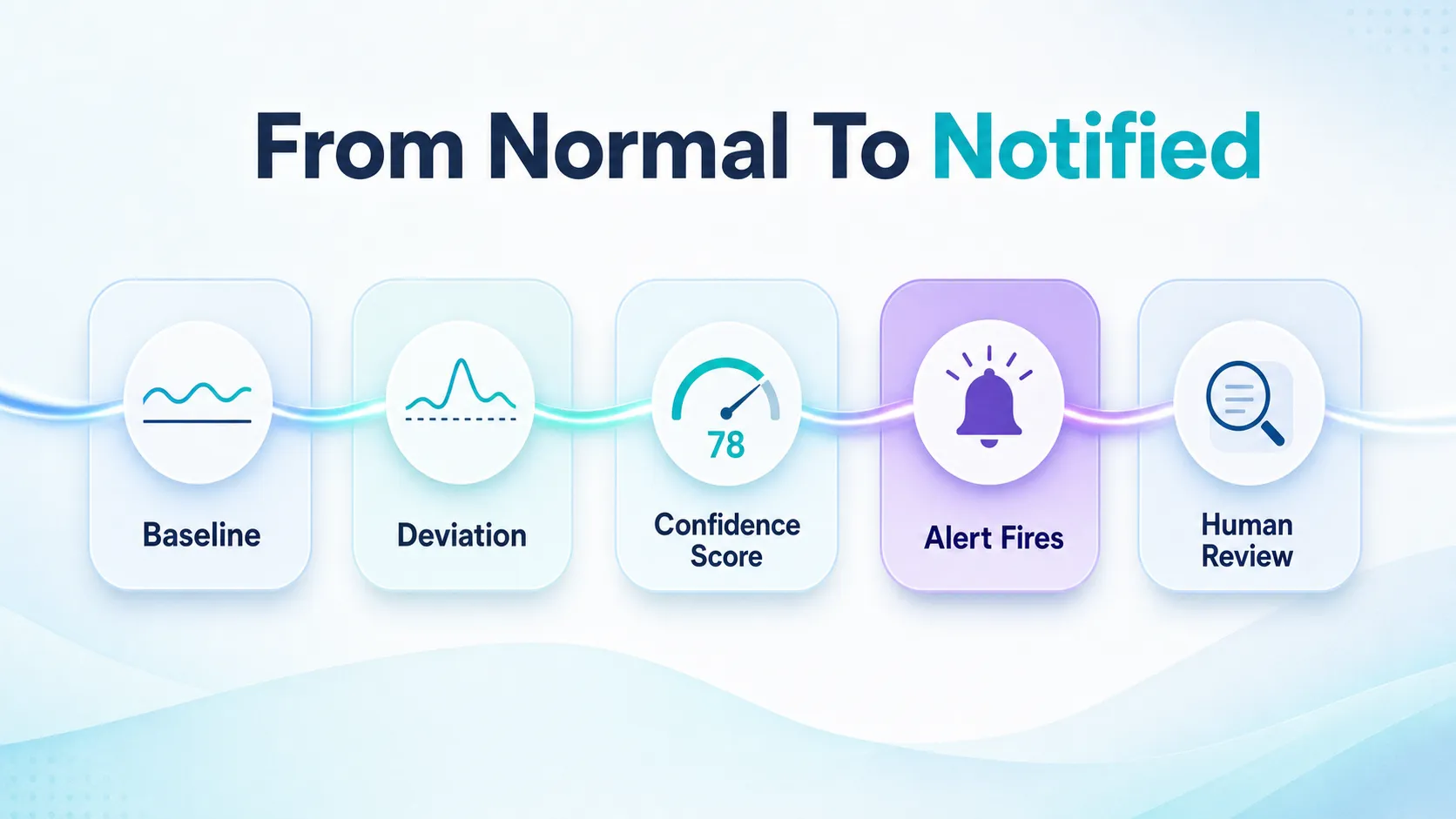
Step 1: Build a Baseline
The system learns what your normal mention activity looks like over a defined historical window. That baseline covers typical daily volume, the usual sentiment split, and the channels that normally carry your name. Without a baseline, every fluctuation looks like an event, and the alerts become useless.
Step 2: Detect the Anomaly
Anomaly detection flags deviations from the baseline that are statistically unusual or contextually important. The platform is not just asking “is this number higher than yesterday.” It is asking “is this pattern outside what this brand normally does at this hour, on this channel, with this sentiment.”
Step 3: Read the Acceleration
Trend acceleration often matters more than raw counts. Mention velocity, engagement velocity, and how fast a source is growing can all signal a shift while the absolute number is still small. A thread doubling its replies every hour is a stronger early signal than a flat cluster of fifty mentions.
Step 4: Apply a Threshold
Alerts should fire only when the signal crosses a meaningful threshold, not on every small wobble. The threshold is your defense against noise. Set it too loose and the team drowns. Set it too tight and you miss the early movement the system was built to catch.
Step 5: Score Confidence and Route It
The strongest systems combine context, sentiment, source authority, and timing rather than leaning on one metric. They attach a confidence score, then route the alert to a person who decides what happens next. A practitioner note from real monitoring work: a thirty to ninety day baseline keeps planned campaign spikes from being misread as crises, because the system already knows your launch weeks look busy.
The Core Alert Types and Channels to Monitor
Predictive monitoring becomes useful when you split it into specific signal types and the channels each one covers. The signals answer “what kind of change is happening,” and the channels answer “where to look first.” The table below maps the two.
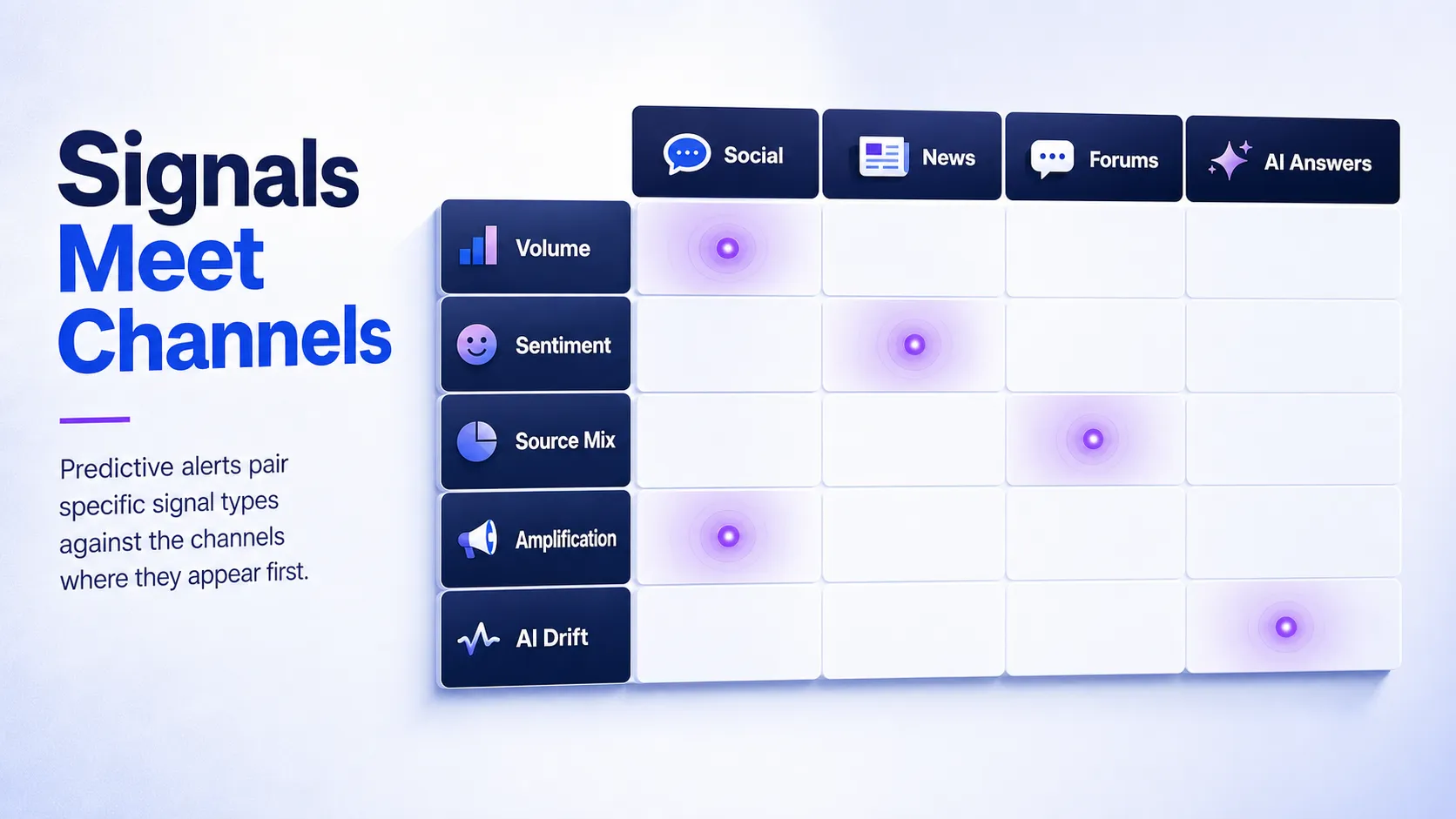
| Signal type | What it catches | Where it shows first |
|---|---|---|
| Mention volume anomaly | Sudden lifts or drops, especially faster than normal | Social, forums |
| Sentiment shift | Stable volume but worsening tone | Forums, reviews |
| Source mix change | Conversation moving from blogs to Reddit or news | News, forums |
| Authority amplification | One credible account or outlet changing trajectory | News, social |
| AI visibility drift | Brand presence rising or falling in AI answers | ChatGPT, Perplexity, Gemini, Copilot |
Sentiment shifts deserve special attention. A brand can hold steady volume while its tone quietly worsens, and that tone change is often the earlier warning than any count. Tracking it well requires more than positive-negative tagging, which is why reading sentiment data correctly is its own discipline.
Source mix changes carry a signal that pure volume hides. When the conversation about your brand shifts from friendly blog coverage to a heated forum thread, the risk profile changes even if the total number stays flat. And here is the practitioner insight that holds up across cases: source quality matters more than raw volume when a brand is entering a sensitive conversation. Ten mentions from authoritative outlets move your trajectory more than a hundred low-signal reposts.
AI visibility drift is the newest category and the easiest to miss. Your presence in AI-generated answers can fall even when your web mentions stay flat, because the models lean on a shifting set of sources. That drift only surfaces if you are actively watching how ChatGPT, Perplexity, Gemini, and Copilot describe you.
Common Mistakes and Misconceptions
Predictive alerts fail in predictable ways, and most failures trace back to how the system is configured rather than the technology itself. These are the misreadings that cost teams the lead time the alerts were supposed to buy.
Treating More Alerts as Better Monitoring
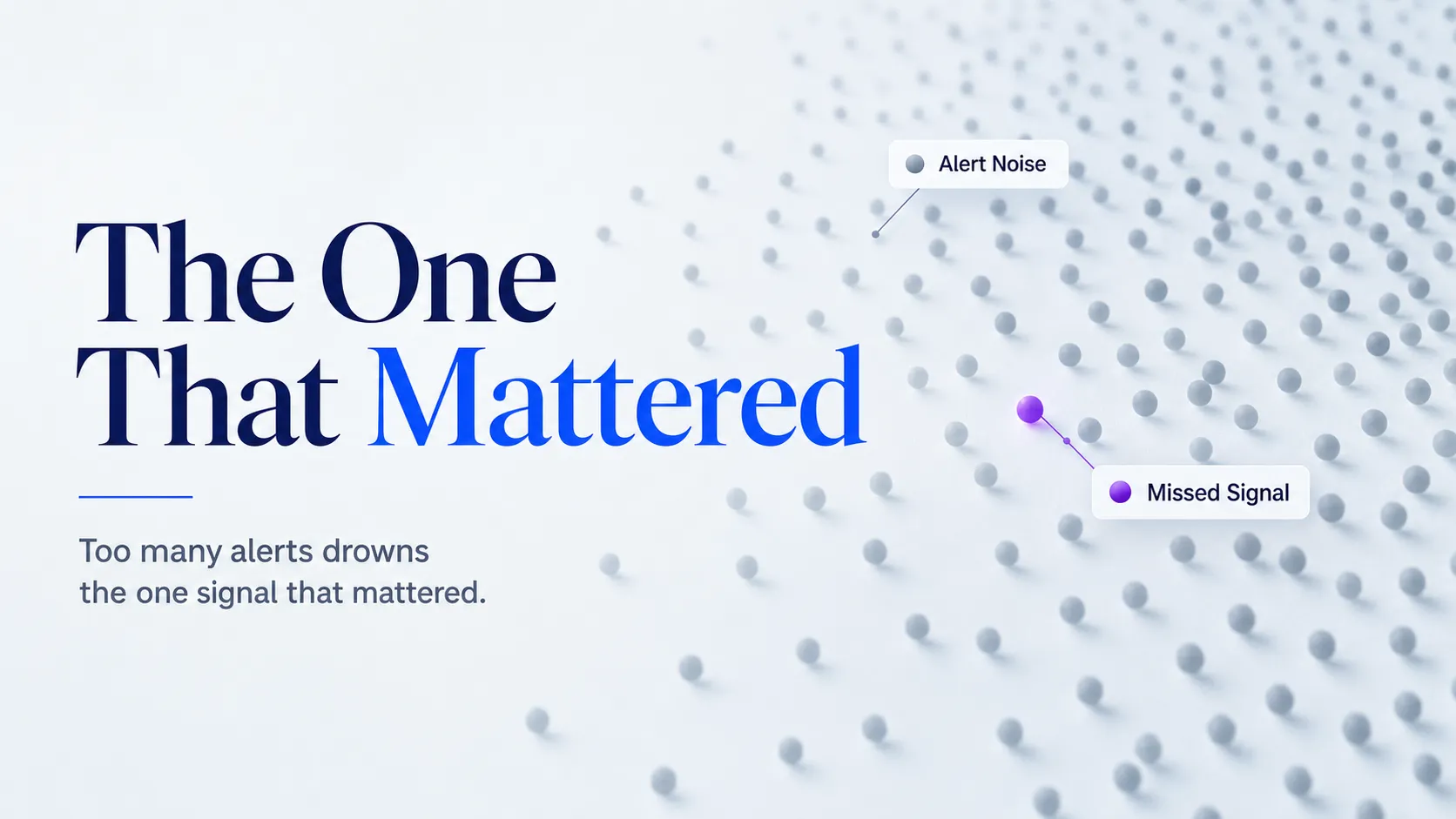
Noisy alerting creates alert fatigue, and fatigue makes teams ignore the alert that actually mattered. A common failure mode: a team sets thresholds too loose, reacts to every minor mention spike, then misses the real shift because they had stopped reading the notifications. Fewer, sharper alerts beat a constant stream.
Confusing Predictive Alerts With Keyword Alerts
A keyword alert reacts to a hit that already happened. A predictive system infers direction from a pattern. They are not the same tool, and treating a keyword alert as predictive leaves you reacting late while believing you are early.
Trusting the AI Without Validation
AI is helpful, but every alert needs a human read before action. The model can flag a deviation it cannot interpret, and acting on an unvalidated signal can manufacture a crisis where none existed. Validation is not optional friction. It is the safeguard.
Ignoring False Positives and Coverage Gaps
False positives and blind spots are normal, so alerting has to be tuned and reviewed on a schedule. A system you set once and never revisit drifts out of calibration as your baseline changes. The review cadence is part of the setup, not an afterthought.
Assuming Predictive Alerts Are Enterprise-Only
Predictive monitoring is not reserved for large brands. Smaller teams can run it well by focusing on fewer, better signals. You do not need to watch everything. You need to watch the handful of patterns that actually change your decisions.
Turning Predictive Alerts Into a Response System
Predictive alerts are about anticipating what brand mention changes mean, not just counting them. The technology is only half the work. The other half is the operating model that decides what happens when an alert fires.
A working model has four parts: a clean baseline, tuned alert thresholds, human validation, and an escalation playbook. The baseline tells you what normal is. The thresholds decide what is worth your attention. The human read confirms the signal is real. The playbook names who acts and how.
Monitoring is strongest when the team knows who reviews an alert, who decides on a response, and what happens after a trigger. Without that, even perfect alerts produce hesitation instead of action. The goal is faster decisions, not more dashboards. A response system that pairs prediction with a reputation monitoring playbook moves from passive watching to actual protection.
Prediction is only useful if it leads to action. An alert that no one acts on is a notification, not a safeguard.
Who Provides Predictive AI Alerts, and How Fast Can They Fire?
Three kinds of provider cover this today. Listening and media monitoring suites such as Meltwater, Brandwatch and Brand24 ship spike alerts for news and social.
AI visibility platforms provide automated alerting on mention changes across ChatGPT, Perplexity, and Gemini. Managed services layer human review on top, so an alert arrives with context and a recommended response instead of a raw diff.
Speed depends on the surface. News and social alerts arrive within minutes, while AI-answer tracking refreshes every 24 to 48 hours.
Can alerts fire when an AI description of my brand changes tone?
Yes. The reliable setup baselines the verbatim description an engine gives for your core prompts, then diffs each new run against it. Changes that materially alter the description get flagged whether the shift reads positively or negatively, so you catch a cooling narrative before it hardens into the default answer.
Can I route real-time alerts to Slack?
Yes. Most platforms send alerts via webhook or a native Slack integration, so news and social alerts reach the team within minutes. Pair the alert with sentiment analysis and a named owner, because an alert nobody acts on does not manage anything.
What about incorrect mentions in AI responses?
Alerting also covers accuracy. If your brand is described incorrectly, wrong pricing, a retired product name, a misattributed feature, the diff against your baseline surfaces it. Fixing the sources the model cites is then the durable correction.
Frequently Asked Questions
What are predictive brand signals?
Predictive brand signals are AI-generated insights drawn from real-time monitoring of mentions, sentiment, and source patterns that flag a likely change before it becomes obvious. They differ from standard reports because they point at where your brand activity is heading, not just where it has been. The signals usually combine volume, sentiment, source mix, and platform visibility into one early read.
How are predictive AI alerts different from real-time alerts?
Real-time alerts fire after a mention already happens, while predictive alerts flag a likely shift before the spike or drop is visible. A real-time alert says “you were just mentioned on this forum.” A predictive alert says “this conversation is accelerating in a way that usually precedes a larger event.” The practical gain is lead time, which lets you respond while the situation is still small.
What metrics should predictive AI alerts track for brand mentions?
The four core metrics are mention volume, sentiment, source mix, and platform visibility. Volume catches sudden lifts or drops, sentiment catches worsening tone even when volume is flat, source mix catches a conversation moving to higher-risk channels, and platform visibility catches drift in how AI engines describe you. Velocity matters across all four, since how fast a signal moves often beats its size.
Can small teams use predictive alerts, or are they only for enterprise brands?
Small teams can use predictive alerts effectively by focusing on a few high-value signals instead of monitoring everything. A two-person marketing team does not need enterprise coverage to catch a sentiment shift on the channels where its buyers actually talk. The discipline is choosing fewer, better signals and tuning the thresholds so the alerts stay readable.
How do predictive alerts help with AI search visibility?
Predictive alerts catch AI visibility drift, where your presence in AI-generated answers rises or falls even when web mentions stay flat. Because models lean on a shifting set of sources, a change in which outlets cite you can quietly reshape how engines describe your brand. Watching that source mix early gives you a chance to reinforce the coverage that AI systems pull from before your visibility erodes.
Start by auditing your current mention baseline so you know what normal actually looks like, then set predictive alerts around the patterns that change your decisions. Prediction without a baseline is guessing, and a baseline without an action plan is just a chart. See where your brand stands in AI search and build the early-warning layer around it.