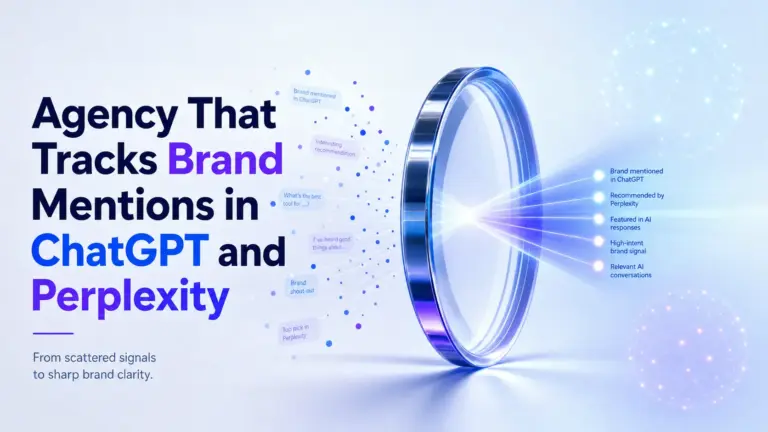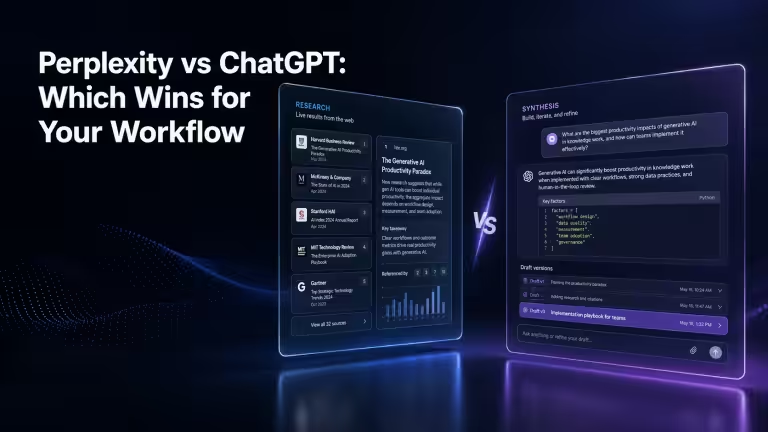

Once you’ve decided you need ChatGPT and Perplexity mention tracking, there’s a second decision most guides skip: should you hire an agency, or build the capability with an in-house hire? This is a different question from “agency vs software platform” — you can pair either an agency or in-house team WITH a tracking tool. The real trade-off here is staffing cost and speed-to-competence versus control and long-term cost. For the agency-vs-software-platform comparison, see agency that tracks brand mentions in ChatGPT and Perplexity.
The Real Cost Comparison
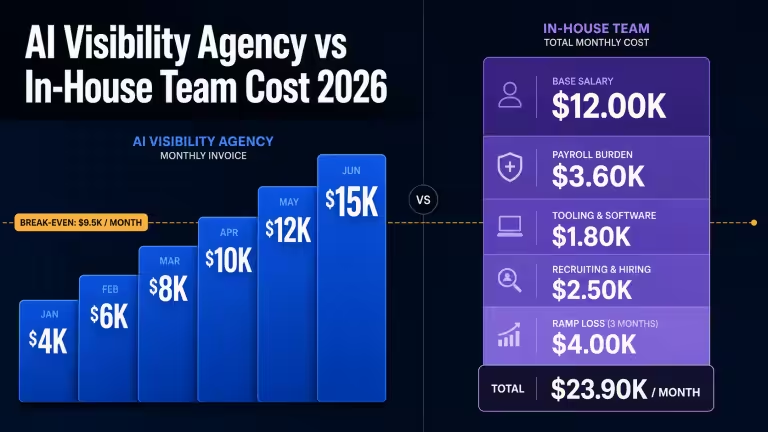
An in-house hire dedicated to AI visibility tracking typically costs more in fully-loaded salary than a mid-tier agency retainer, before accounting for ramp time. A specialist who already runs this workflow across multiple clients reaches useful output in week one; an in-house hire — even a strong one — needs 4-8 weeks to build the prompt libraries, source tracking, and reporting cadence from scratch.
When In-House Wins
Build in-house when AI visibility tracking needs to plug directly into a broader content or product strategy team that already exists, when data sensitivity rules out sharing brand and competitor query data externally, or when the tracking volume is large enough that a dedicated hire is fully utilized rather than working a few hours a week on it.
When an Agency Wins
Choose an agency when speed matters more than ownership, when the team doesn’t have bandwidth to manage a new hire’s ramp-up, or when the tracking need is one piece of a broader mention-building and AI visibility program rather than a standalone function. Agencies also absorb the tooling cost and platform-switching risk as AI search platforms change — a real advantage as ChatGPT, Perplexity, and Gemini all continue shifting how they cite sources.
The Hybrid Middle Ground
Many growth-stage teams land on a hybrid: an agency runs the tracking and reporting, while one internal owner interprets the data against product and content roadmaps. This avoids the full ramp-up cost of an in-house hire while keeping strategic decisions in-house. If that fits your team, done-for-you AI visibility tracking is built around exactly this handoff model.
What You Are Actually Choosing Between
The market splits into three solution types, and that split decides your purchase more than any feature list. A full-service agency tracks mentions for you, reads the data, and tells you what to fix. A software platform gives you a dashboard and leaves the interpretation to your team. A hybrid model pairs platform access with an analyst who runs the program alongside you. This is not an explainer on how AI search works. You already know ChatGPT and Perplexity surface brands inside answers. The question is operational: who keeps the prompts current, who checks whether a mention is real or a false positive, and who turns a visibility dip into an action.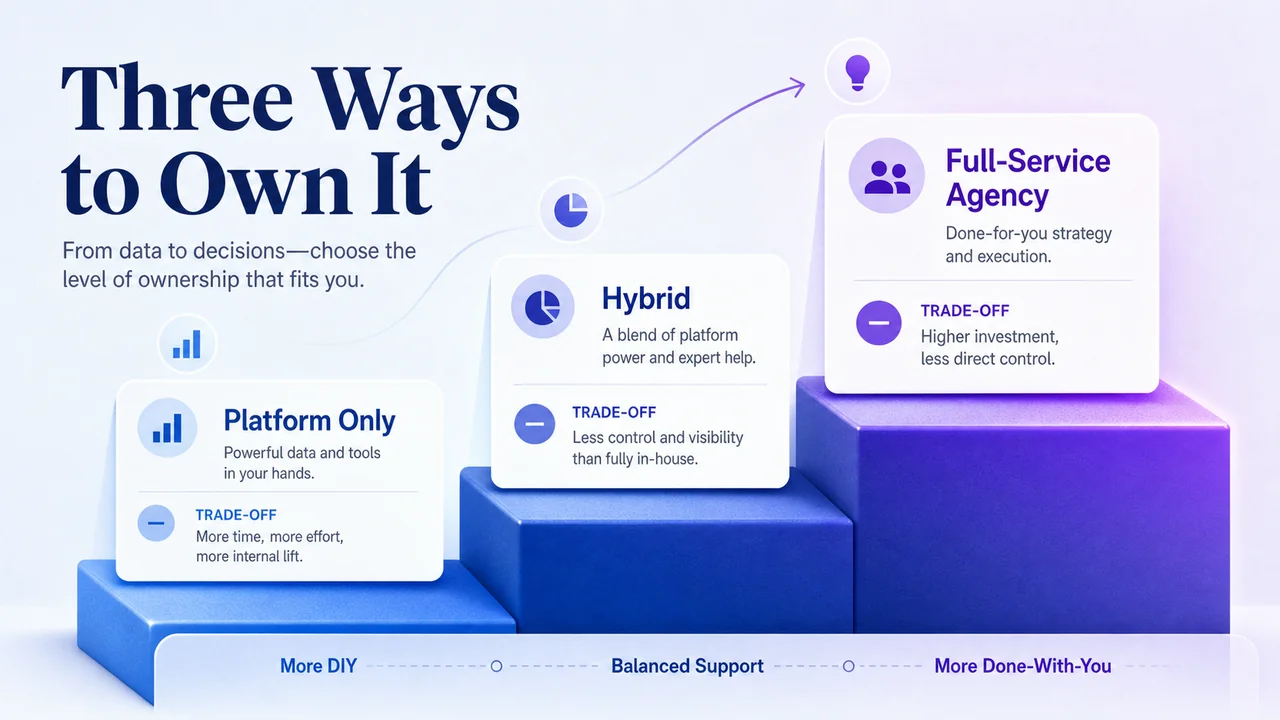 The representative options you will likely compare include Profound, Siftly, Keyword.com, SE Ranking, and LLM Pulse on the platform side, with managed providers wrapping similar data in service. Treat these as category examples, not a ranked verdict. What matters is which type fits your role: SEO leads want prompt-level data, PR teams want sentiment and source lists, demand gen wants share of voice, and agency account managers want white-label reports they can hand to clients.
The most common buyer pattern is expecting a dashboard and then discovering you actually needed a repeatable reporting workflow and someone who can read it. A live AI feed is easy to buy. A recurring leadership report that survives scrutiny is the harder thing, and it is usually where teams underbudget. If you want a deeper breakdown of running this internally versus paying a provider, the cost of agency versus in-house tracking lays out the labor math.
The representative options you will likely compare include Profound, Siftly, Keyword.com, SE Ranking, and LLM Pulse on the platform side, with managed providers wrapping similar data in service. Treat these as category examples, not a ranked verdict. What matters is which type fits your role: SEO leads want prompt-level data, PR teams want sentiment and source lists, demand gen wants share of voice, and agency account managers want white-label reports they can hand to clients.
The most common buyer pattern is expecting a dashboard and then discovering you actually needed a repeatable reporting workflow and someone who can read it. A live AI feed is easy to buy. A recurring leadership report that survives scrutiny is the harder thing, and it is usually where teams underbudget. If you want a deeper breakdown of running this internally versus paying a provider, the cost of agency versus in-house tracking lays out the labor math.
The Criteria That Decide a Good Fit
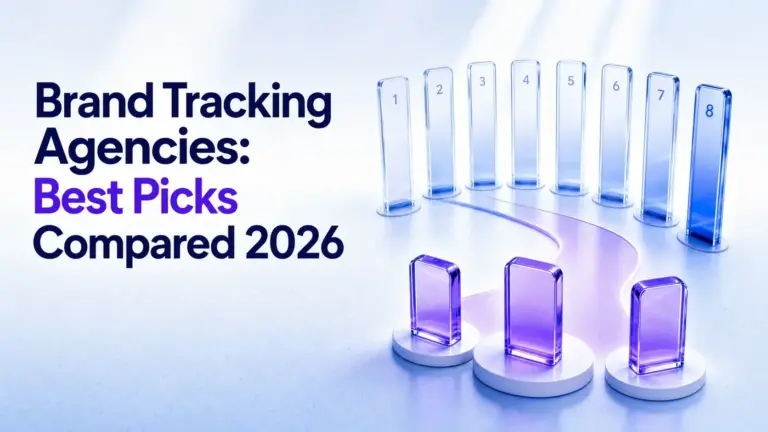
Use one scorecard so the comparison stays honest. These criteria reflect what marketing, SEO, PR, and agency teams need from AI mention tracking, not just what is technically possible to measure.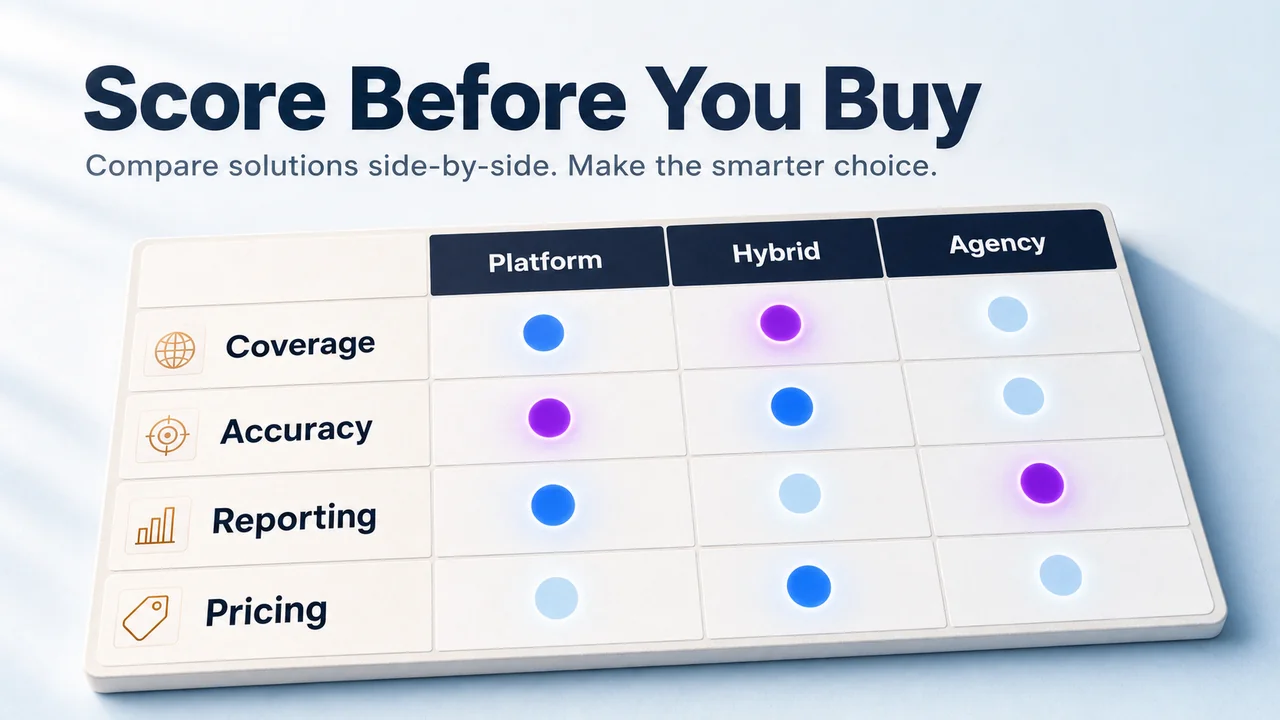
| Criterion | What to check | Why it matters |
|---|---|---|
| Platform coverage | ChatGPT and Perplexity first, then Gemini and AI Overviews | Single-engine tools miss where buyers actually ask |
| Mention accuracy | False-positive handling, source transparency | A wrong count erodes trust in every report after it |
| Competitor benchmarking | Share of voice, historical trend lines | One brand’s number means little without context |
| Reporting depth | Exports, alerting, white-label delivery | Decides whether data reaches leadership intact |
| Service depth | Analyst access versus software-only | Determines who interprets and acts on the data |
| Pricing model | Retainer, subscription, onboarding, usage caps | Sticker price rarely equals total cost |
Coverage, Tracking Methodology, and Data Quality
The options differ most in what they actually track and how trustworthy the data is. Coverage starts with ChatGPT and Perplexity, but the methodology underneath decides whether you can trust a single report. Prompt-level monitoring beats keyword-only tracking. AI engines answer prompts, not keywords, so a solution that tracks “best project management software for agencies” tells you more than one tracking the bare phrase “project management.” Prompt design is the work most teams underestimate, because the prompts you choose define the entire visibility picture you see.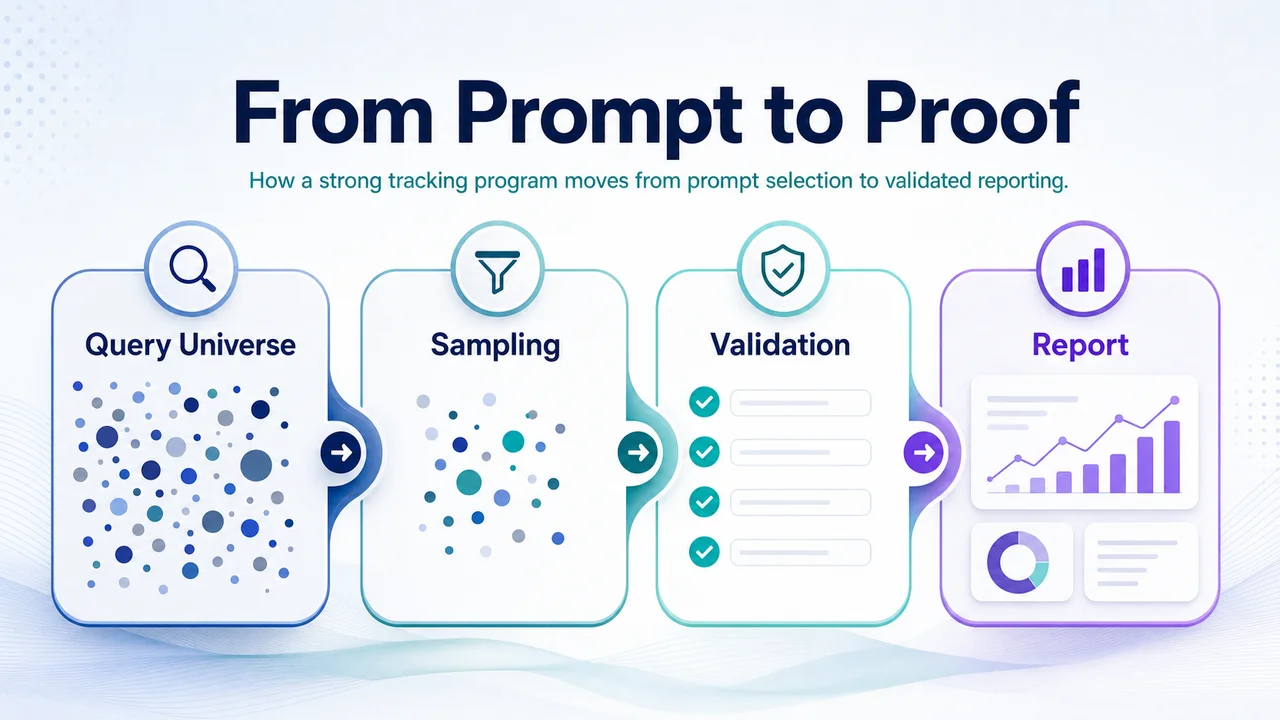
Multiple Models, Regions, and Languages
Coverage is not one number. Perplexity runs several models, and ChatGPT behaves differently with browsing on or off, so a brand can appear in one configuration and vanish in another. Strong platforms track across models and let you segment by region and language. If you sell in three markets, a US-only check hides two thirds of your real visibility.Extending Past ChatGPT and Perplexity
Gemini and Google AI Overviews carry their own buyer traffic, and most serious tracking now reaches into both. A solution locked to two engines is fine for a narrow audit, but it caps how complete your picture can get. Check whether the provider treats these as core coverage or an upsell.How the Data Gets Validated
This is where platforms and managed programs separate. Raw collection is easy; collecting, normalizing, deduping, and validating mentions is the hard part. A mention of “Apple” in a fintech answer may be the wrong Apple, and a deduped count keeps one answer from inflating your numbers three times over. Ask how false positives are caught and whether the same prompt returns a stable result across repeated runs. Manual spot-checking has a place. For a one-time audit of ten prompts, opening ChatGPT and Perplexity yourself is honest and cheap. For an ongoing program across dozens of prompts and several engines, manual checks break down fast and automated tracking earns its cost. The strongest programs define a query universe up front, then measure whether results hold up across runs, models, and markets. If you want the manual baseline first, here is how to monitor ChatGPT brand mentions and how to track brand mentions in Perplexity by hand.Reporting, Benchmarking, and Client Value
Raw mentions are not the deliverable. The deliverable is a report that tells someone what changed, why, and what to do next. This is where many platforms stop and where agency-led offers earn their margin. At the data layer, you want dashboards, CSV and PDF exports, and historical trend tracking so you can show movement over quarters, not just a snapshot. Share-of-voice views and competitor comparison reports give the numbers context, because a 30 percent mention rate reads very differently when the category leader sits at 70.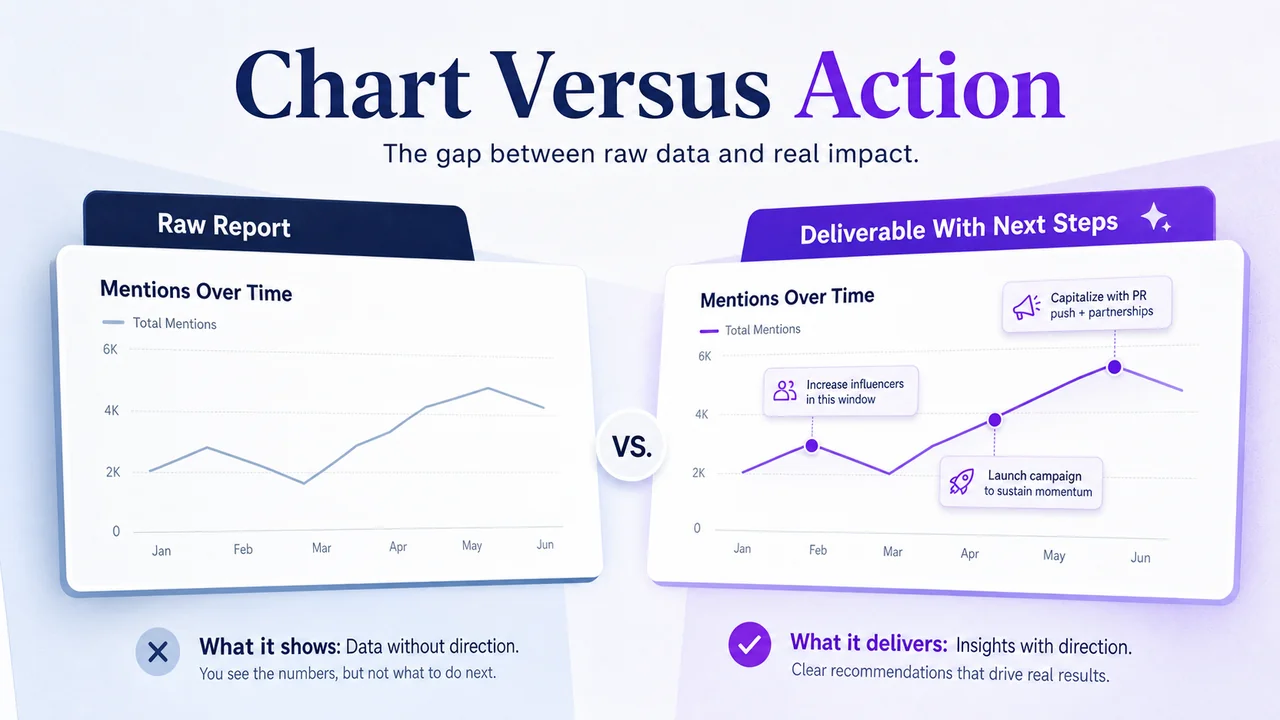 For agencies, white-label reporting and client-facing dashboards are not a nice-to-have. They are the product. A tool that exports your logo and a clean client view lets you sell AI visibility as a managed service rather than reselling someone else’s screen.
The real divide is explanation. A software report shows that visibility dropped. An agency deliverable shows why it dropped, which competitor took the citation, and what content or PR move recovers it. The best agency-led offers do not just show charts; they translate a visibility change into an action the team can take before the next review. That is what makes a report usable in a quarterly business review, an exec update, or a PR briefing rather than just informative. For a side-by-side of the data tools themselves, the brand mention monitoring tools compared guide goes deeper on dashboards and exports.
For agencies, white-label reporting and client-facing dashboards are not a nice-to-have. They are the product. A tool that exports your logo and a clean client view lets you sell AI visibility as a managed service rather than reselling someone else’s screen.
The real divide is explanation. A software report shows that visibility dropped. An agency deliverable shows why it dropped, which competitor took the citation, and what content or PR move recovers it. The best agency-led offers do not just show charts; they translate a visibility change into an action the team can take before the next review. That is what makes a report usable in a quarterly business review, an exec update, or a PR briefing rather than just informative. For a side-by-side of the data tools themselves, the brand mention monitoring tools compared guide goes deeper on dashboards and exports.
Agency Versus Tool: Service Depth and Pricing
A managed agency is worth the retainer when interpretation and action matter more than access. Software-only is enough when you have the people and time to run the program yourself. The agency value is hands-on: prompt strategy, content fixes, PR guidance, and ongoing monitoring with an analyst who owns the account. You get someone who notices a dip, diagnoses it, and proposes the fix. A platform gives you the screen and expects your team to do that work.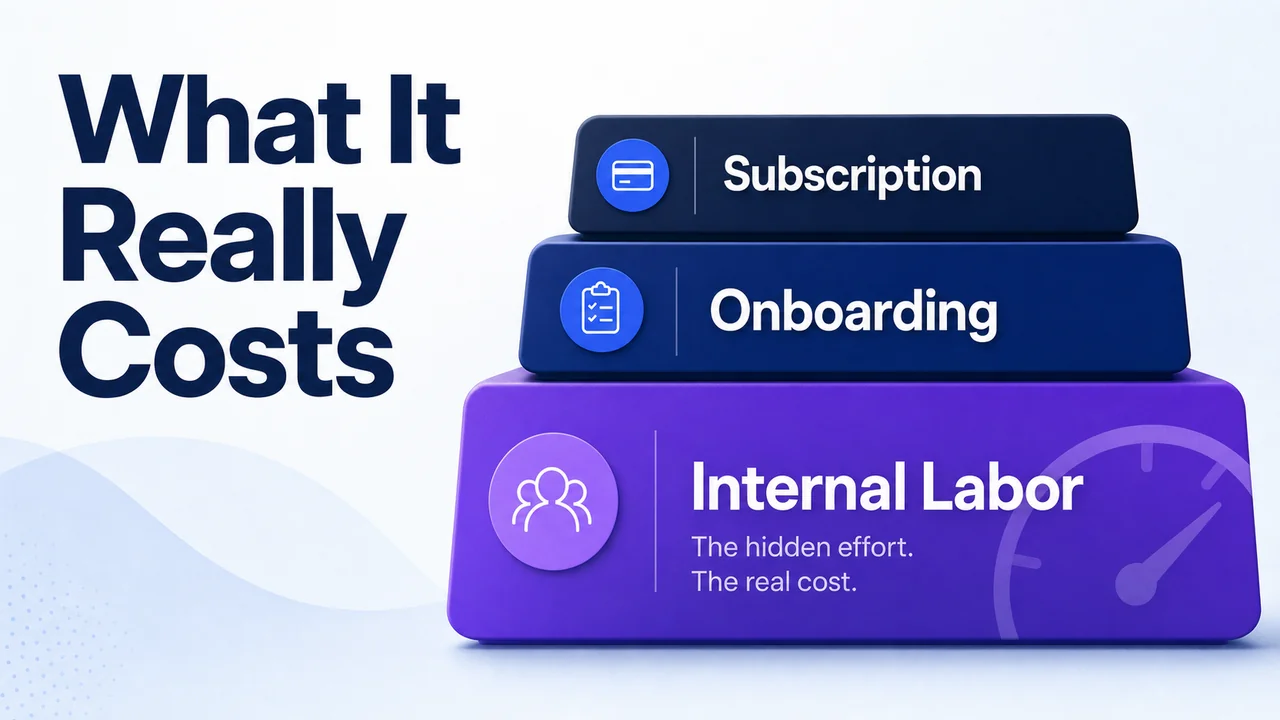
| Cost element | Platform-only | Agency or hybrid |
|---|---|---|
| Pricing shape | Monthly subscription, usage caps | Monthly retainer, sometimes onboarding fee |
| Onboarding | Self-serve setup | Guided setup and prompt design |
| Who reads the data | Your team | An assigned analyst |
| Internal labor | High: prompts, triage, analysis, reporting | Low: provider runs the workflow |
See where AI answers put your brand
Twenty minutes with a senior strategist: where the major engines point buyers in your category, who gets named instead of you, and a straight read on what a programme would change.
Book a strategy callBest Fit by Use Case
Match the option to your situation rather than the loudest feature set. Most teams outgrow pure monitoring once AI visibility becomes a recurring leadership report rather than an occasional check.- B2B SaaS teams that need both tracking and optimization recommendations are best served by a hybrid or agency model, because the value is in fixing visibility, not just measuring it.
- Enterprise buyers needing reporting depth, governance, and multiple stakeholders should weight reporting and service depth heavily, since a single dashboard rarely satisfies several teams.
- Agencies managing many clients need white-label deliverables and portfolio views, so prioritize platforms with strong client reporting or a partner program.
- Lean in-house teams with the time and skill to run the process do well with software-only access and a tight prompt universe.
- Brands that need tracking plus optimization, not monitoring alone, should choose the model that includes content and PR action, which points to an agency or hybrid.