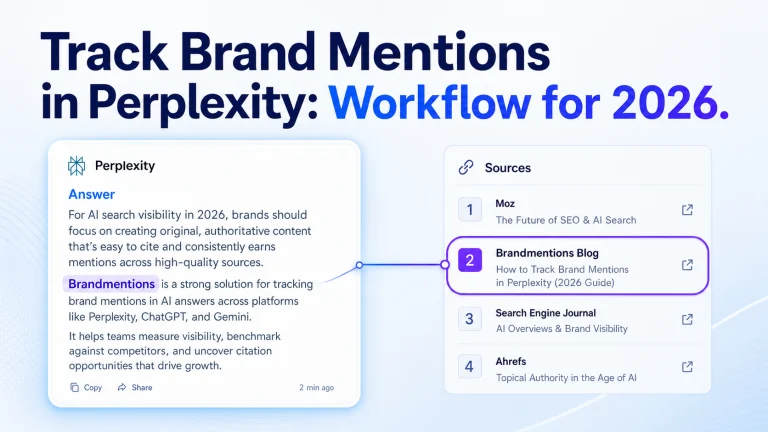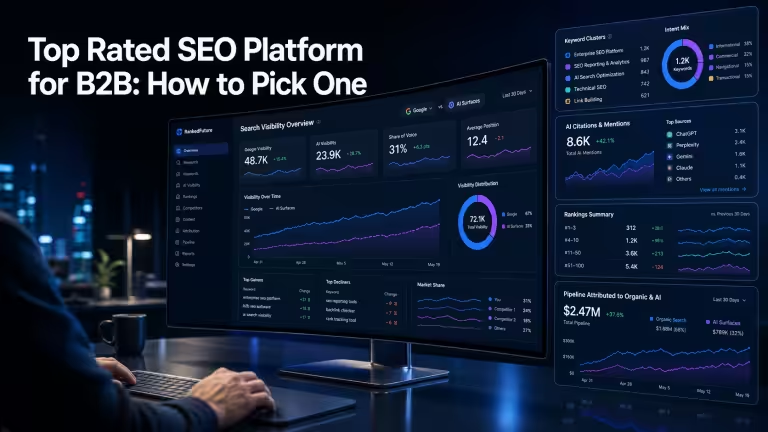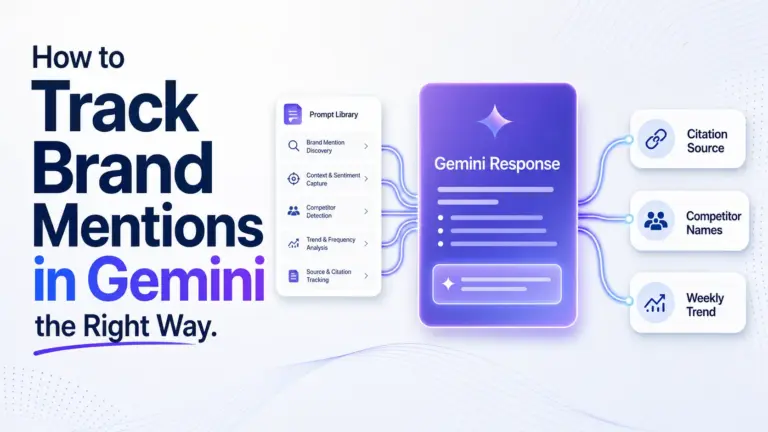

Every “best ChatGPT tracking tool” roundup ranks the same 8-10 platforms by feature depth. That ranking doesn’t answer the question that actually matters: which one is right for your specific situation. The right tool depends on three things: whether you need ChatGPT-only coverage or multi-engine tracking, whether you’re checking your own brand or benchmarking against competitors, and what you’re willing to spend. This page walks through that decision, then points you to the specific tool fit for each branch. For a side-by-side feature comparison of the tools themselves, see the best tools for monitoring ChatGPT mentions roundup.
Start Here: Three Questions That Determine Your Pick
1. Do you only care about ChatGPT, or do buyers also use Perplexity, Gemini, and AI Overviews? If it’s ChatGPT-only, a lighter single-engine tool is enough and costs less. If buyers move across platforms, which is the norm for most B2B categories, a multi-engine platform avoids blind spots the moment a competitor gets cited somewhere you’re not watching.
2. Are you tracking your own visibility, or benchmarking against named competitors? Basic mention tracking answers “am I mentioned.” Competitive benchmarking needs a tool that logs every brand named in a response, not just yours, a meaningfully different feature set that not every tool on the market includes.
3. What’s the real budget, including the time cost of managing another dashboard? A cheaper tool that nobody logs into monthly delivers less value than a pricier one your team actually uses. Factor in setup time and reporting overhead, not just the subscription line item.
Match Your Answers to a Tool Category
Once you know your answers, the decision collapses fast:
- ChatGPT-only + own-brand tracking + tight budget: a budget-friendly single-engine tool, checked on a fixed weekly cadence.
- Multi-engine + competitive benchmarking + growth-stage budget: a mid-tier AI visibility platform built for cross-engine comparison, not just ChatGPT.
- Multi-engine + enterprise reporting + dedicated budget: an enterprise-grade platform with stakeholder dashboards and governance features.
- Any of the above, but no internal bandwidth to run it: this is the case for a managed service rather than another self-serve tool. See the done-for-you AI visibility monitoring option.
The detailed feature-by-feature comparison below still matters once you’ve narrowed to a category. Use it to pick the specific platform within your branch.
Why ChatGPT Brand Mentions Need Their Own Tracker
ChatGPT visibility is a separate buying decision, not a feature you get for free with social listening.
Ask ChatGPT the same buying question twice and you can get two different brand lists. Outputs vary by prompt wording, model version, and whether the model browsed the live web or pulled from training data. A one-off check tells you almost nothing. You need a tool that runs the same prompts on a schedule and tracks how often your brand shows up over time.
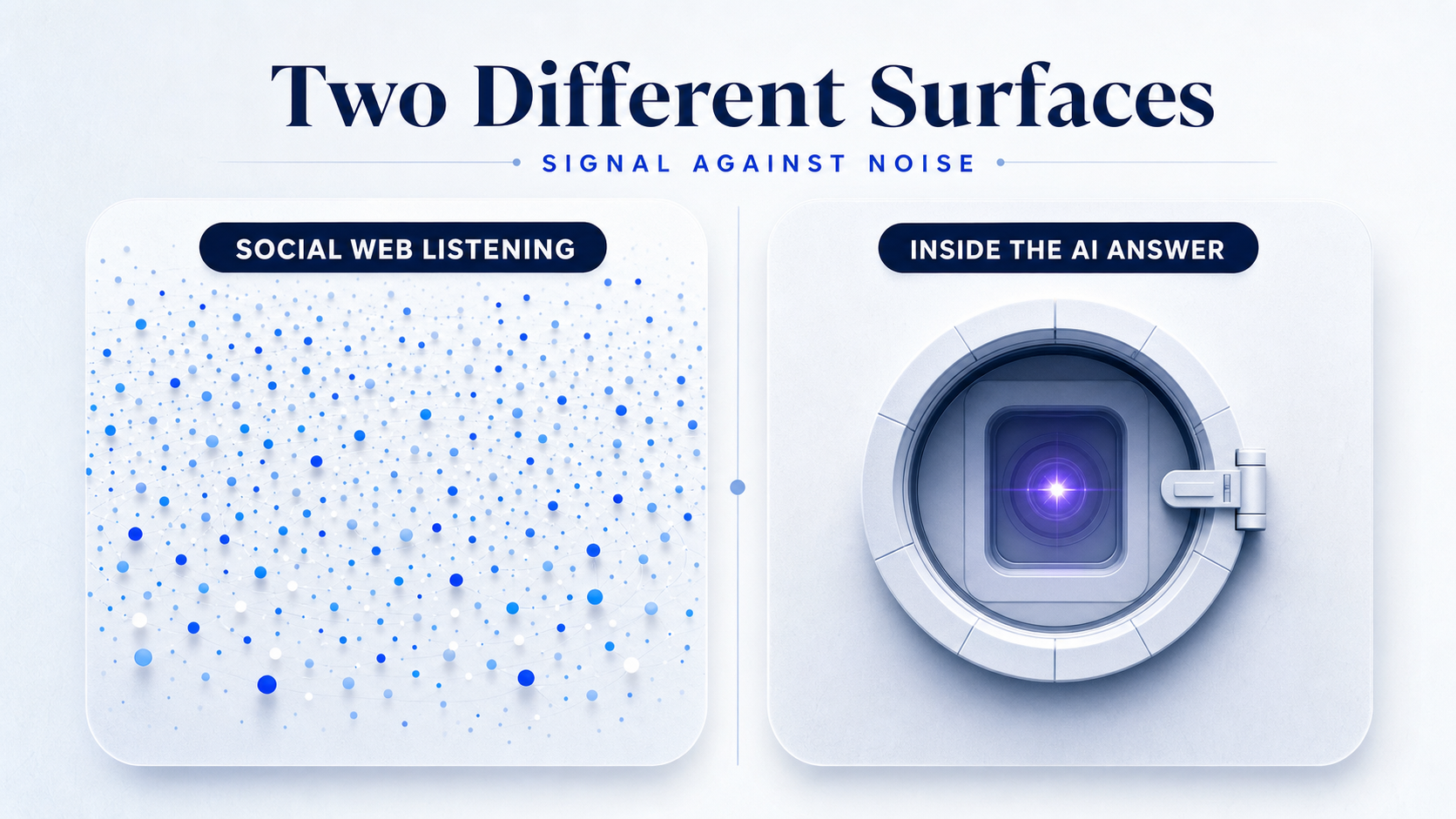
The biggest buyer mistake is assuming “mention monitoring” already covers ChatGPT. Most general social tools watch X, Reddit, news, and blogs. They never see the inside of an AI answer. So your dashboard can look healthy while ChatGPT recommends a competitor in every category query.
Mentions and citations aren’t the same thing, and the gap matters. A mention is your brand name appearing in the answer text. A citation is a source link the model leans on to build that answer. You can be mentioned with zero citations, or cited as a source without being named as a recommendation. The strongest tools track both, because each one points to a different fix. If you want the manual side of this first, our guide on how to monitor ChatGPT brand mentions walks through the free workflow.
How We Ranked the 8 Tools
We scored each tool on eight factors, weighted toward what makes ChatGPT tracking trustworthy rather than just present.
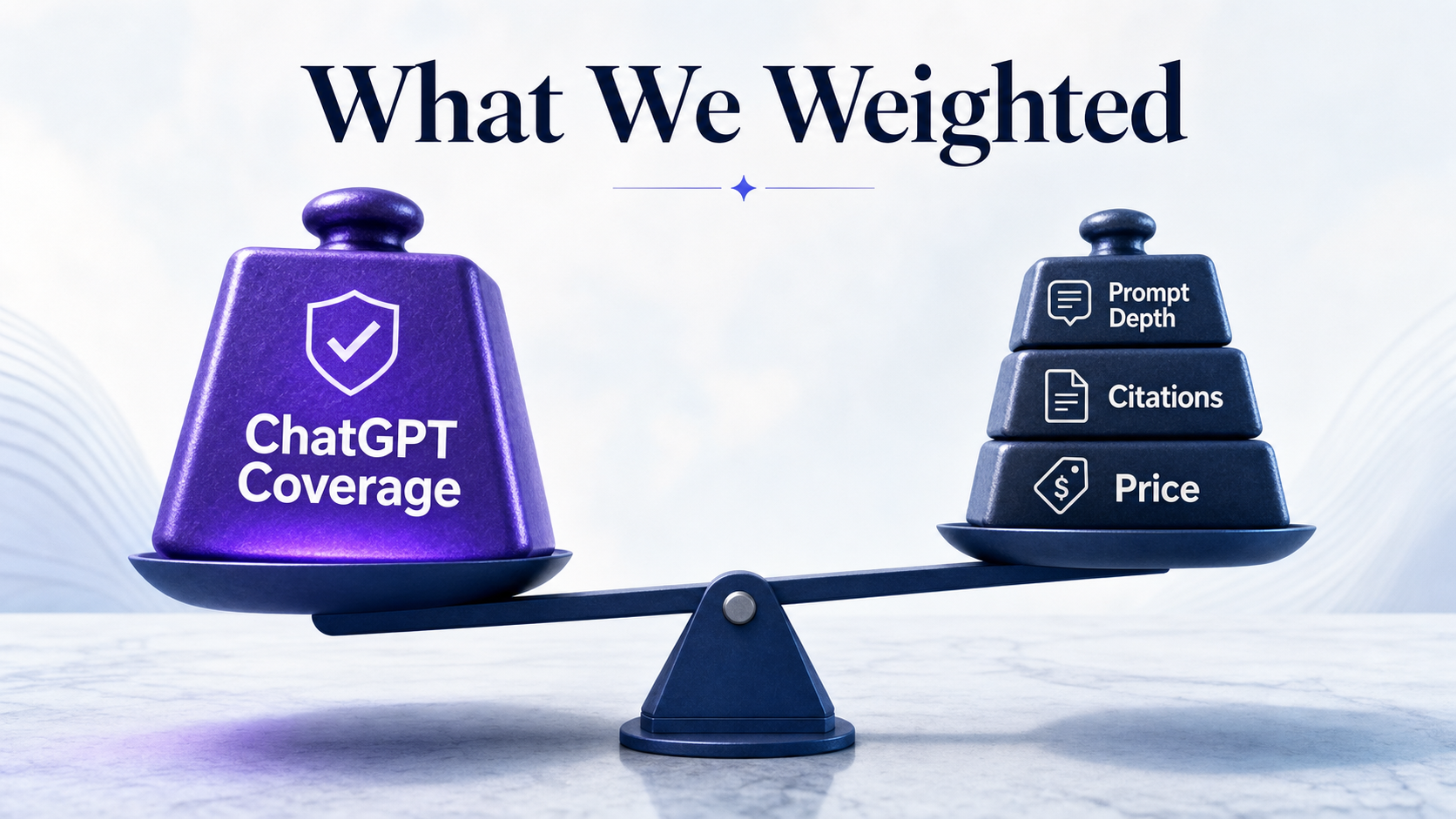
The factors: ChatGPT coverage, prompt tracking depth, citation detection, freshness and accuracy, competitor benchmarking, reporting and exporting, ease of use, and price. Dedicated AI visibility platforms ranked above general-purpose monitoring suites here, because the goal is ChatGPT specifically, not the whole social web.
Enterprise tools score higher on governance, prompt volume, and stakeholder reporting. Smaller tools win on setup speed and price. Neither is “better” in the abstract. The right one depends on what your team will actually open every week.
The quality gap that separates a good tool from a weak one is consistency across repeated prompts, not whether it can find a mention once. Any tool can catch a single mention on a single run. The ones worth paying for re-run prompts, average the noise, and show you a stable trend you can act on.
8 Best Tools to Track Brand Mentions on ChatGPT
Each entry covers what the tool is, why it earns its place for ChatGPT tracking, who it fits, a pricing note, and one honest caveat. The pattern to watch: the right pick depends less on your brand size and more on whether you need prompt depth, citation data, or workflow automation.
1. Otterly.AI
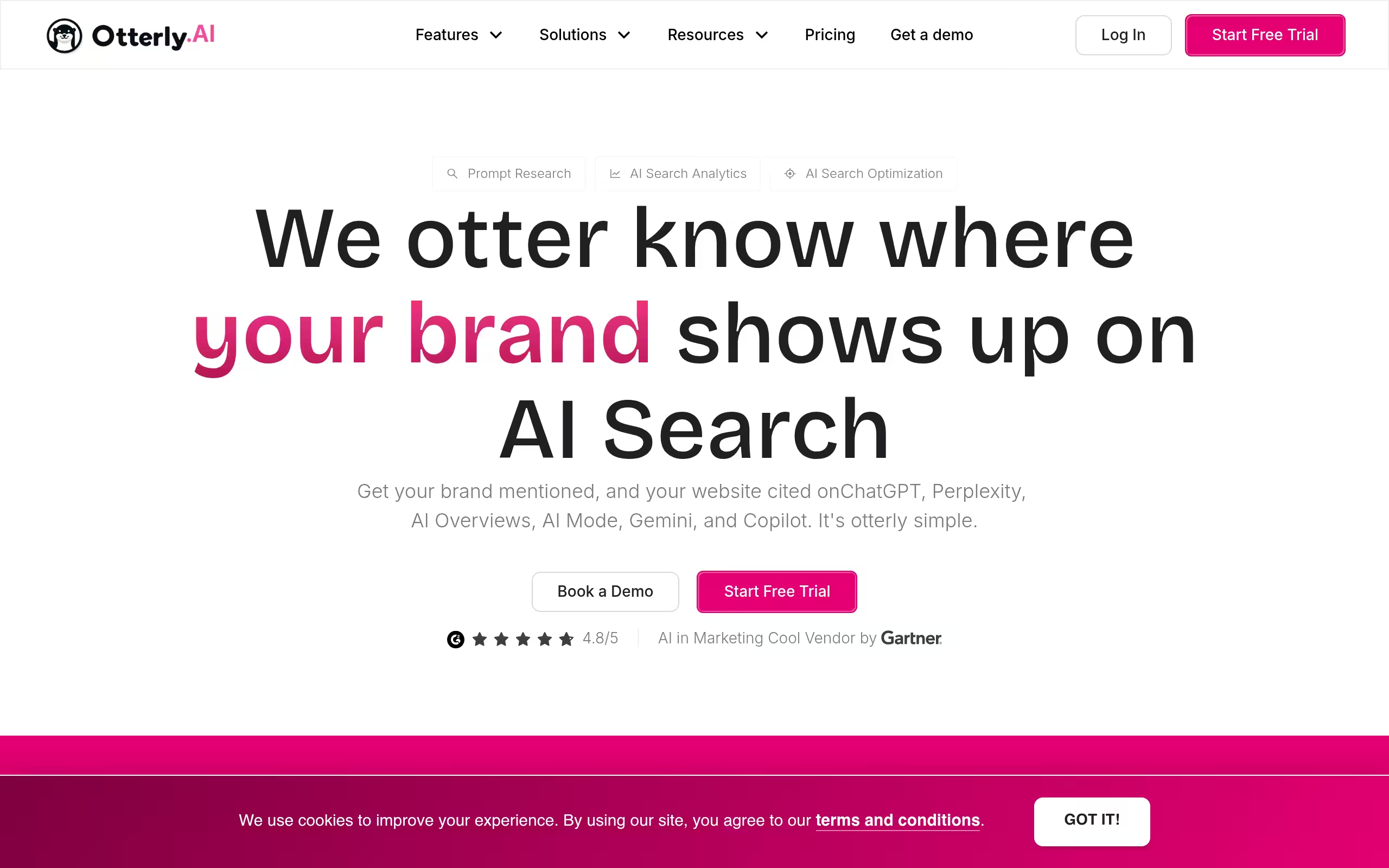
Otterly.AI is a dedicated AI visibility tracker built to monitor brand mentions and citations across ChatGPT and nearby AI engines.
It earns the top spot because it does one job cleanly. You add prompts, it runs scheduled tests, and it logs whether your brand appears and which sources ChatGPT cites. Setup is fast and the dashboard stays readable, which matters more than feature count for a tool you check weekly. For small teams, the tool that gets used beats the tool with the longest spec sheet.
Best for marketing teams, startups, and lean in-house teams that want a focused workflow without a heavy rollout. Pricing sits at accessible paid SaaS tiers. The caveat: it’s built for monitoring, not deep enterprise governance or custom data pipelines.
- Best for: Marketing teams, startups, and lean in-house teams that want a focused workflow without a heavy rollout
- Pricing: Accessible paid SaaS tiers
- Standout strength: Fast setup with a readable dashboard built for weekly checks, not spec-sheet depth
2. Profound
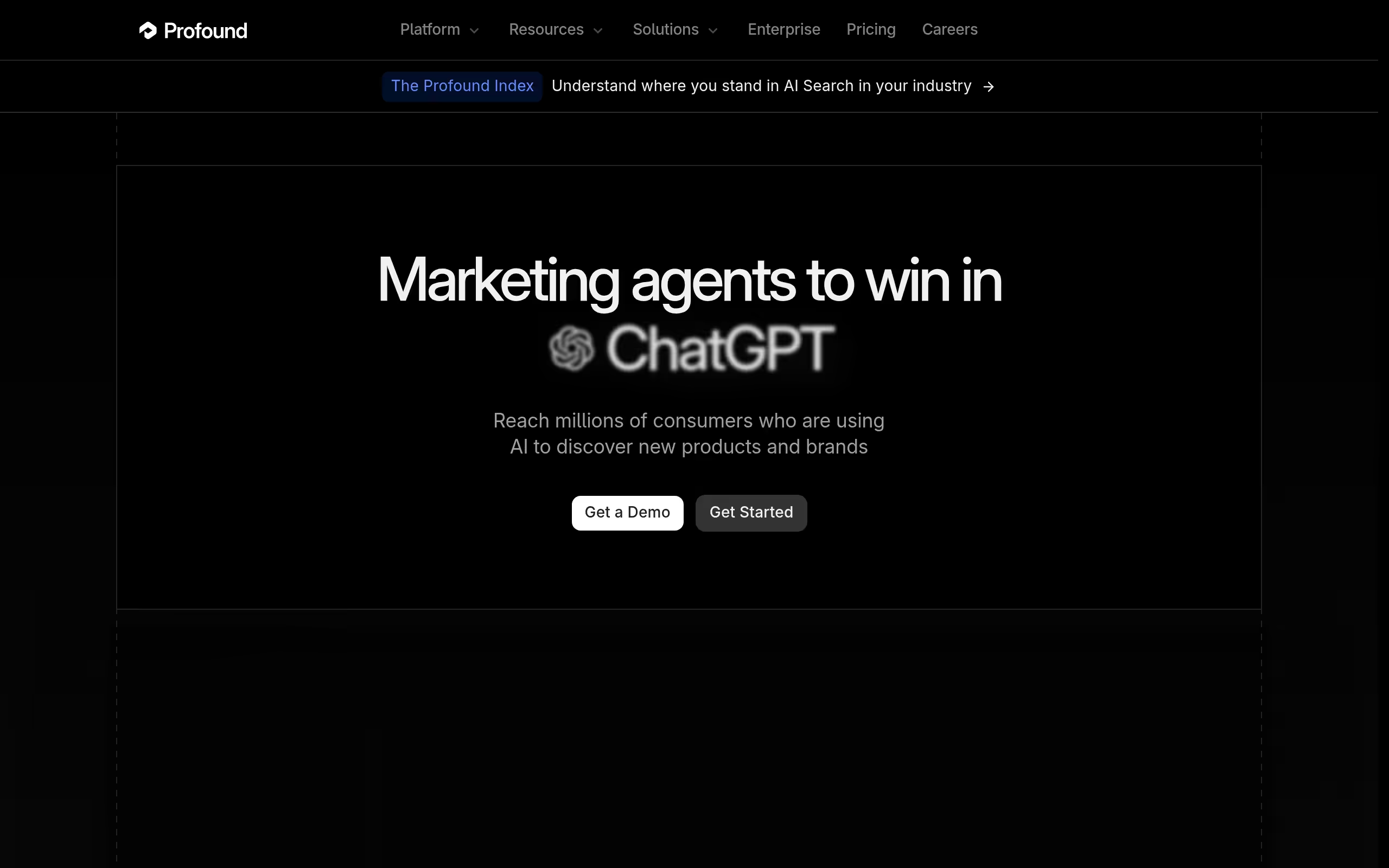
Profound is an enterprise-grade AI visibility platform for prompt tracking, competitive benchmarking, and reporting at scale.
It belongs near the top when ChatGPT visibility has to be measured across hundreds of prompts, multiple competitors, and several stakeholders. The depth on prompt-level analysis and share of voice is where it pulls ahead of lighter tools. If your reporting goes to a VP and a board, this is the tier that holds up.
Best for enterprise brands and category leaders. Pricing is custom or enterprise. The caveat: it’s too heavy and too expensive for a solo marketer or a small team that just wants to know if ChatGPT names them.
- Best for: Enterprise brands and category leaders whose reporting goes to a VP or board
- Pricing: Custom or enterprise
- Standout strength: Deep prompt-level analysis and share-of-voice reporting that holds up at board level
3. Peec AI
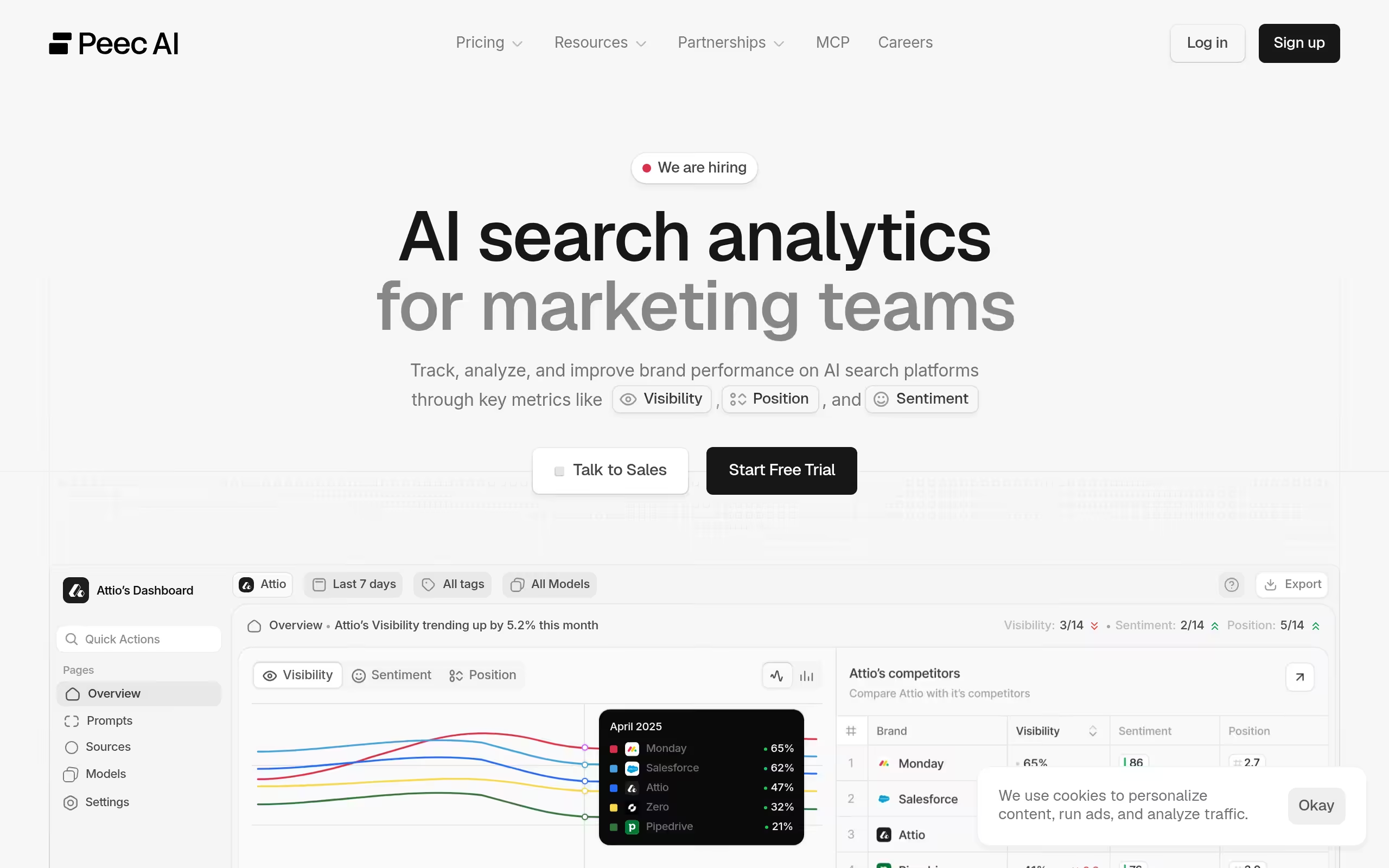
Peec AI is an AI brand monitoring tool focused on prompt-level visibility and multi-engine coverage.
It strikes a strong balance between AI engine tracking, citation visibility, and reporting you can hand to a client. Agencies like it because it reads gaps at the prompt level, showing exactly which questions surface a competitor instead of you. That makes remediation specific rather than guesswork.
Best for agencies and mid-market teams. Pricing runs mid-market paid plans. The caveat: it’s stronger than general tools but less complete than top-tier enterprise platforms on governance and scale.
- Best for: Agencies and mid-market teams
- Pricing: Mid-market paid plans
- Standout strength: Prompt-level gap analysis showing exactly which questions surface a competitor instead of you
4. Ahrefs Brand Radar
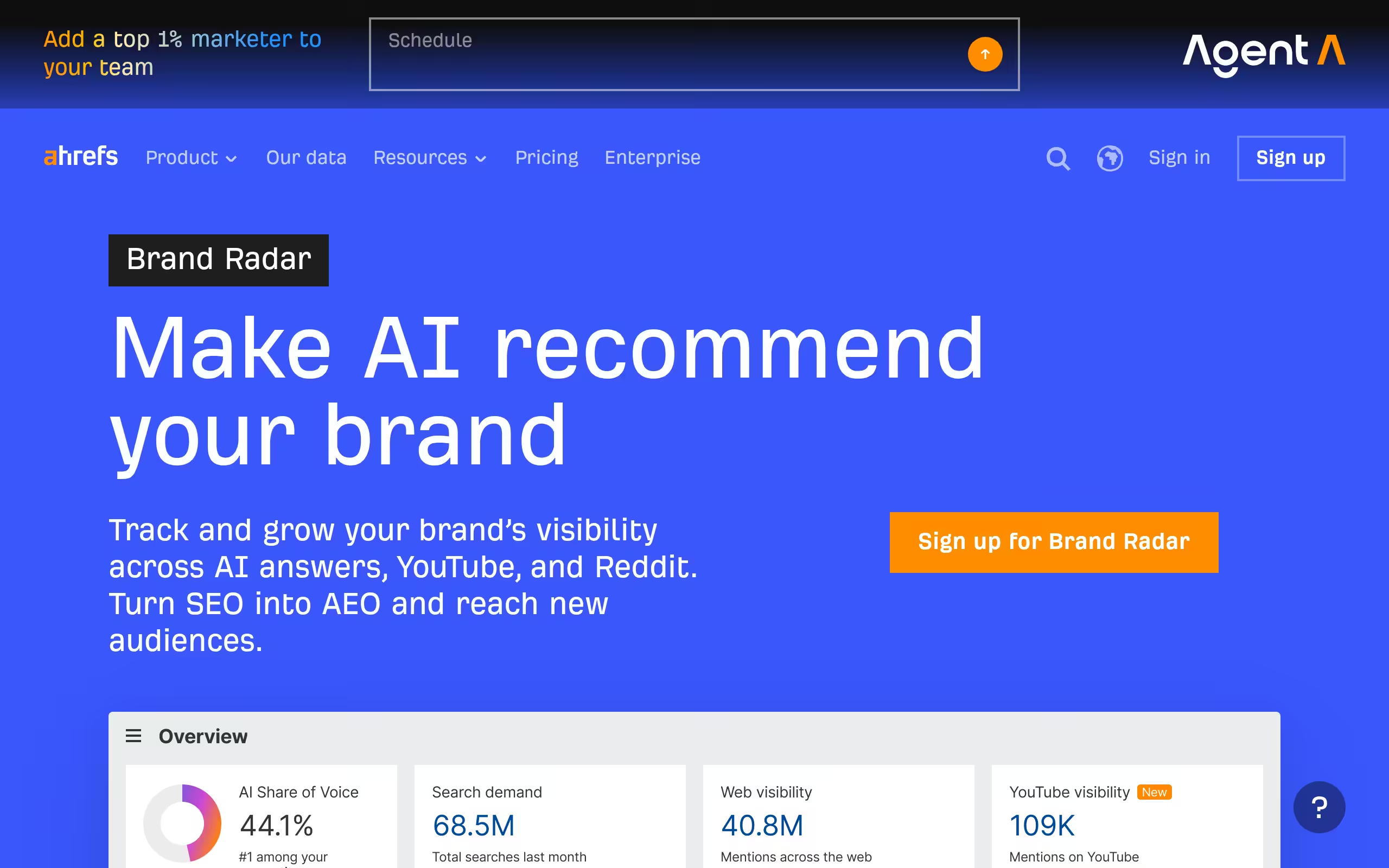
Ahrefs Brand Radar is Ahrefs’ AI visibility and brand tracking feature set inside its broader SEO ecosystem.
It shines for teams already living in Ahrefs who want ChatGPT visibility sitting next to their SEO data. You can track overall AI visibility and set custom prompts to watch specific ChatGPT answers, then compare against competitors using the same account. The pull is consolidation: one login, two jobs.
Best for SEO teams and content-led brands. Pricing is a paid Ahrefs plan. The caveat: it’s the right call if you already pay for Ahrefs, and a weaker one as a standalone ChatGPT-only purchase.
- Best for: SEO teams and content-led brands already paying for Ahrefs
- Pricing: Paid Ahrefs plan add-on
- Standout strength: ChatGPT visibility sitting next to existing SEO data under one login
5. Keyword.com
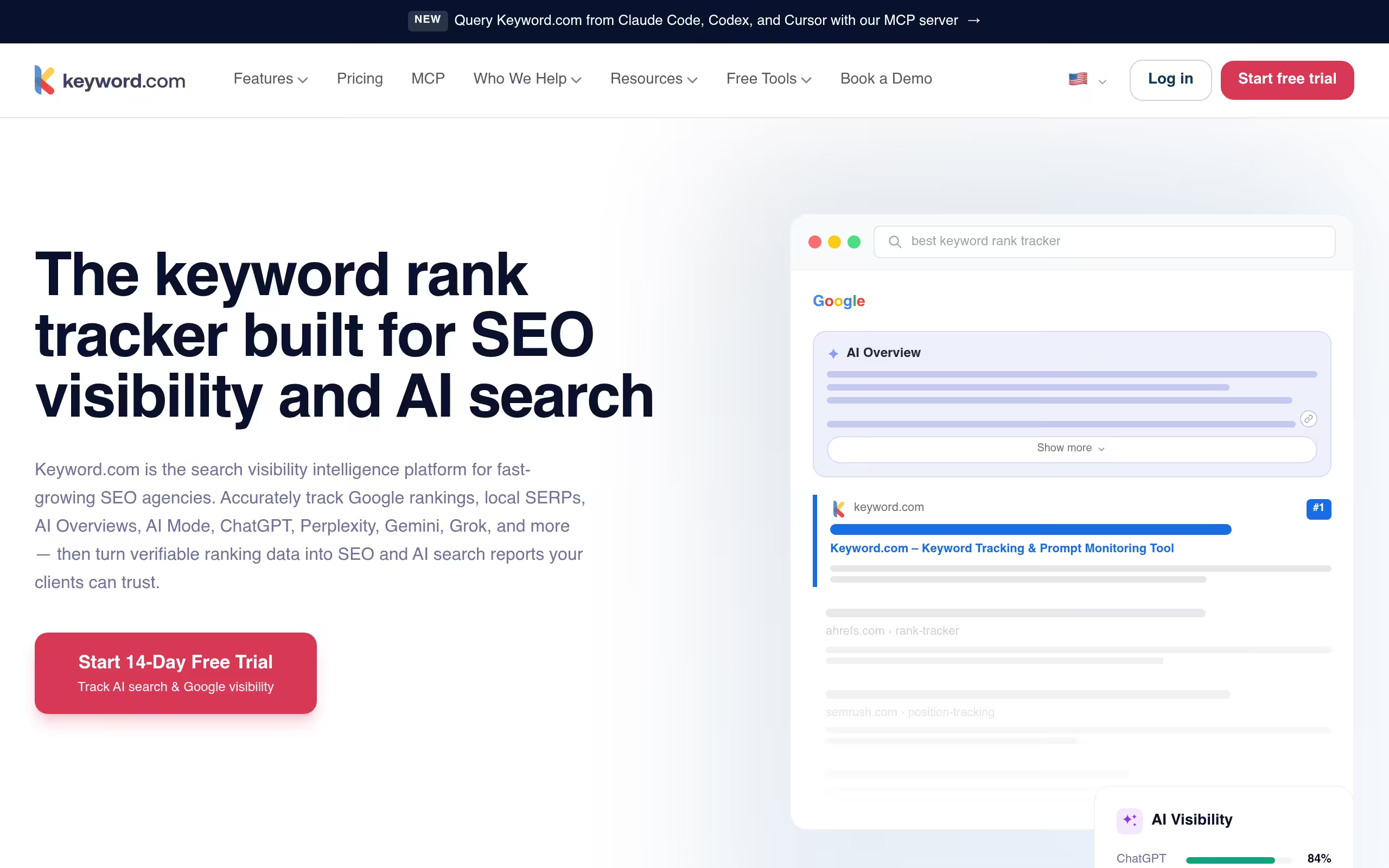
Keyword.com is a rank-tracking platform that also offers AI visibility monitoring for ChatGPT mentions and citations.
It bridges classic search rank tracking and AI answer monitoring in one workflow. You add your site and prompts, select an AI engine, and watch visibility metrics alongside your traditional keyword positions. For teams that refuse to run two separate tools, that single pane is the draw.
Best for teams that want search tracking and AI visibility together, and it’s the budget-friendly pick on this list. Pricing sits at lower-to-mid paid tiers. The caveat: it’s a solid all-rounder, not as specialized as AI-visibility-first tools.
- Best for: Teams that want search rank tracking and AI visibility together, and the budget-friendly pick on this list
- Pricing: Lower-to-mid paid tiers
- Standout strength: Single pane combining classic keyword rank tracking with AI answer monitoring
6. Siftly
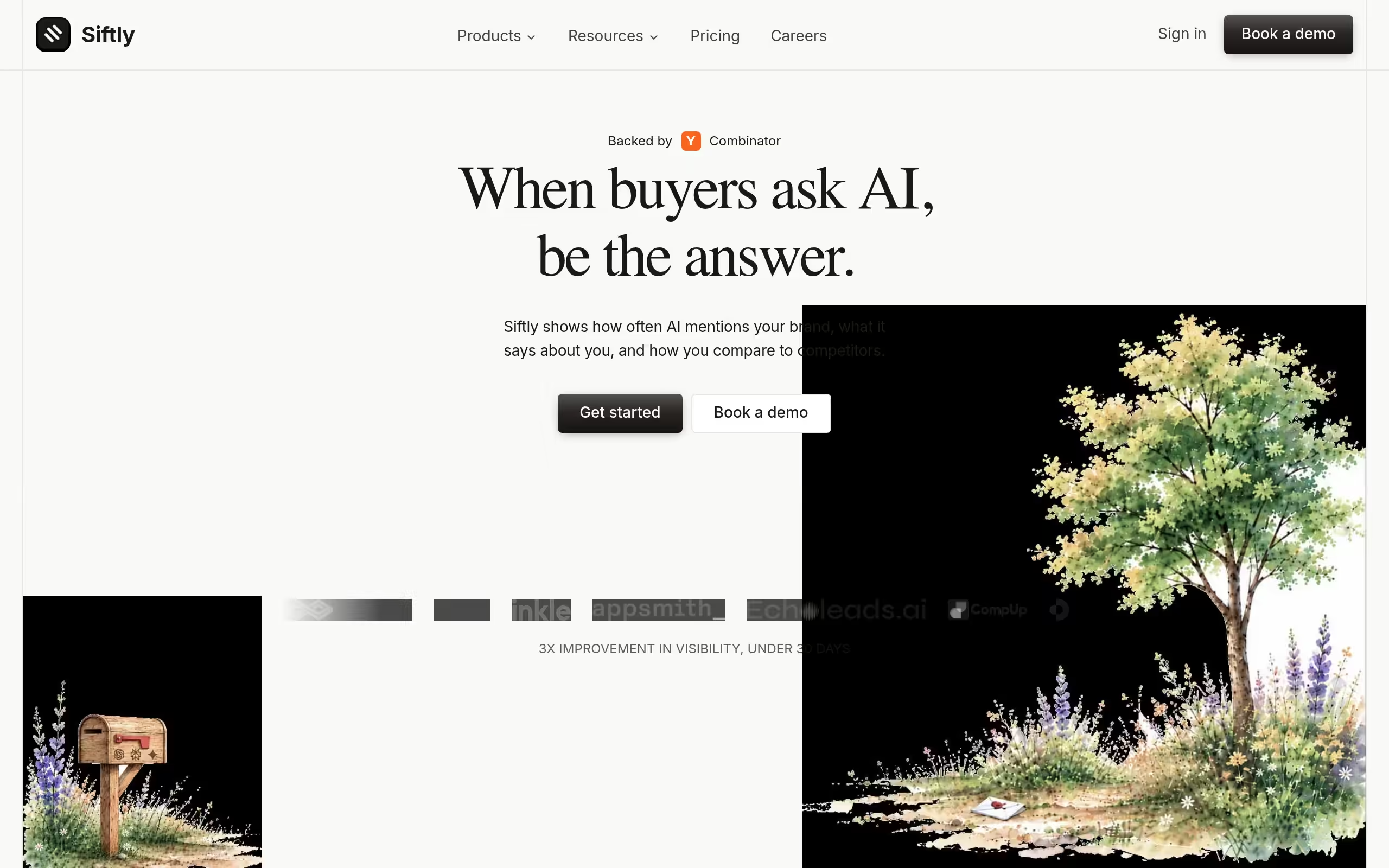
Siftly is an AI brand monitoring platform that pairs visibility tracking with analysis and optimization workflows.
It earns a place when the goal isn’t just tracking mentions but deciding what to do next. The platform leans into experimentation, so you can test changes and watch how AI answers respond. That makes it useful for teams that treat AI visibility as an active project, not a quarterly report.
Best for teams that want monitoring plus content experimentation. Pricing runs mid-market to higher SaaS tiers. The caveat: it earns its cost only if you act on the data regularly rather than glancing at it occasionally.
- Best for: Teams that want monitoring plus content experimentation, treating AI visibility as an active project
- Pricing: Mid-market to higher SaaS tiers
- Standout strength: Pairs visibility tracking with testing workflows to see how AI answers respond to changes
7. GrowByData
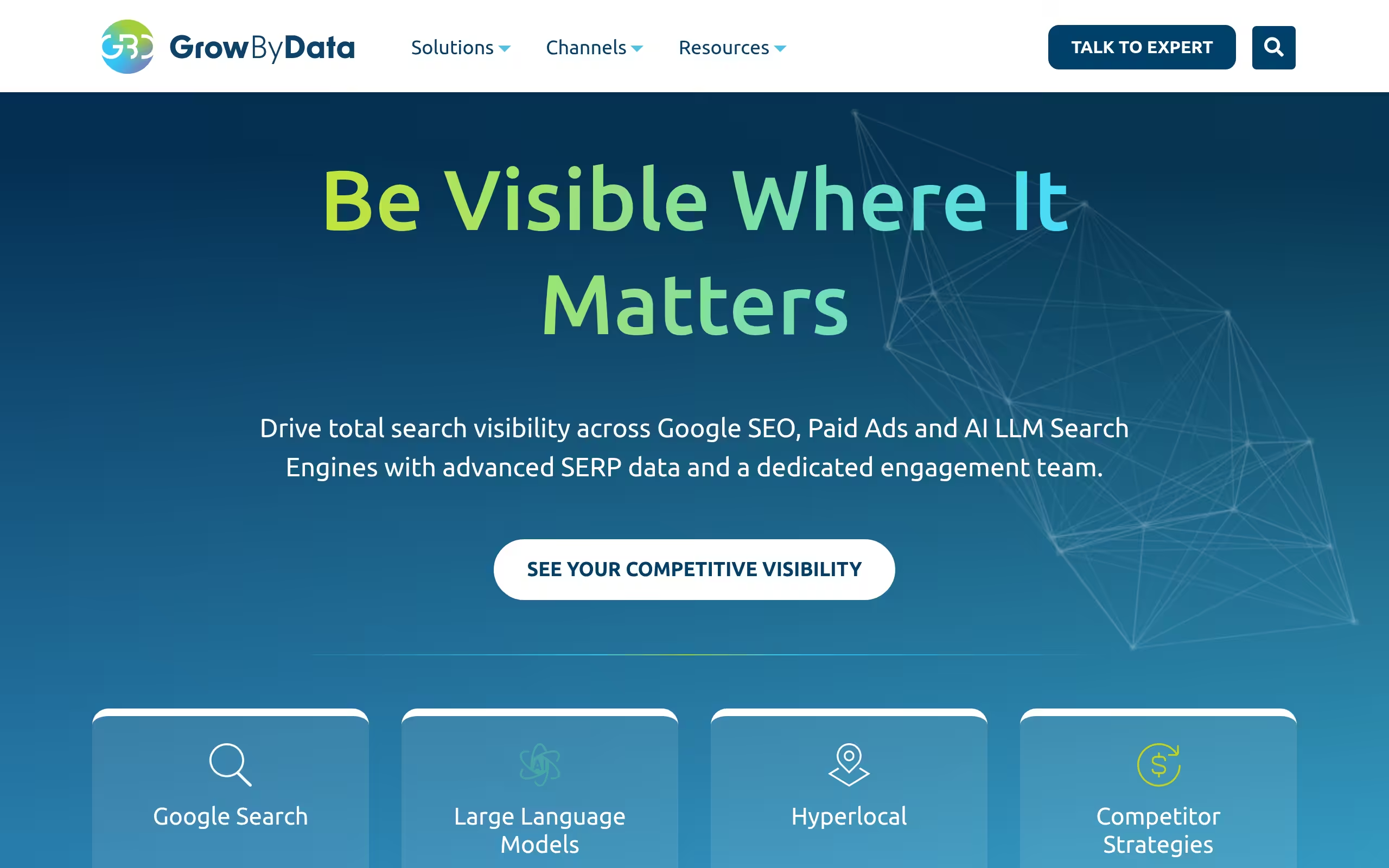
GrowByData is an LLM intelligence platform positioned around AI brand visibility and mention monitoring.
It fits teams that want deeper ChatGPT monitoring tied to source analysis and prompt coverage. The platform leans toward structured prompt sets, historical tracking, and competitor baselines, which suits larger teams that need defensible numbers rather than a quick gut check.
Best for larger teams that care about prompt coverage and where ChatGPT pulls its sources. Pricing is enterprise or custom. The caveat: it’s more platform than lightweight tracker, so expect a more involved buying and onboarding process.
- Best for: Larger teams that care about prompt coverage and need defensible numbers on where ChatGPT pulls its sources
- Pricing: Enterprise or custom
- Standout strength: Structured prompt sets with historical tracking and competitor baselines
8. Brandwatch
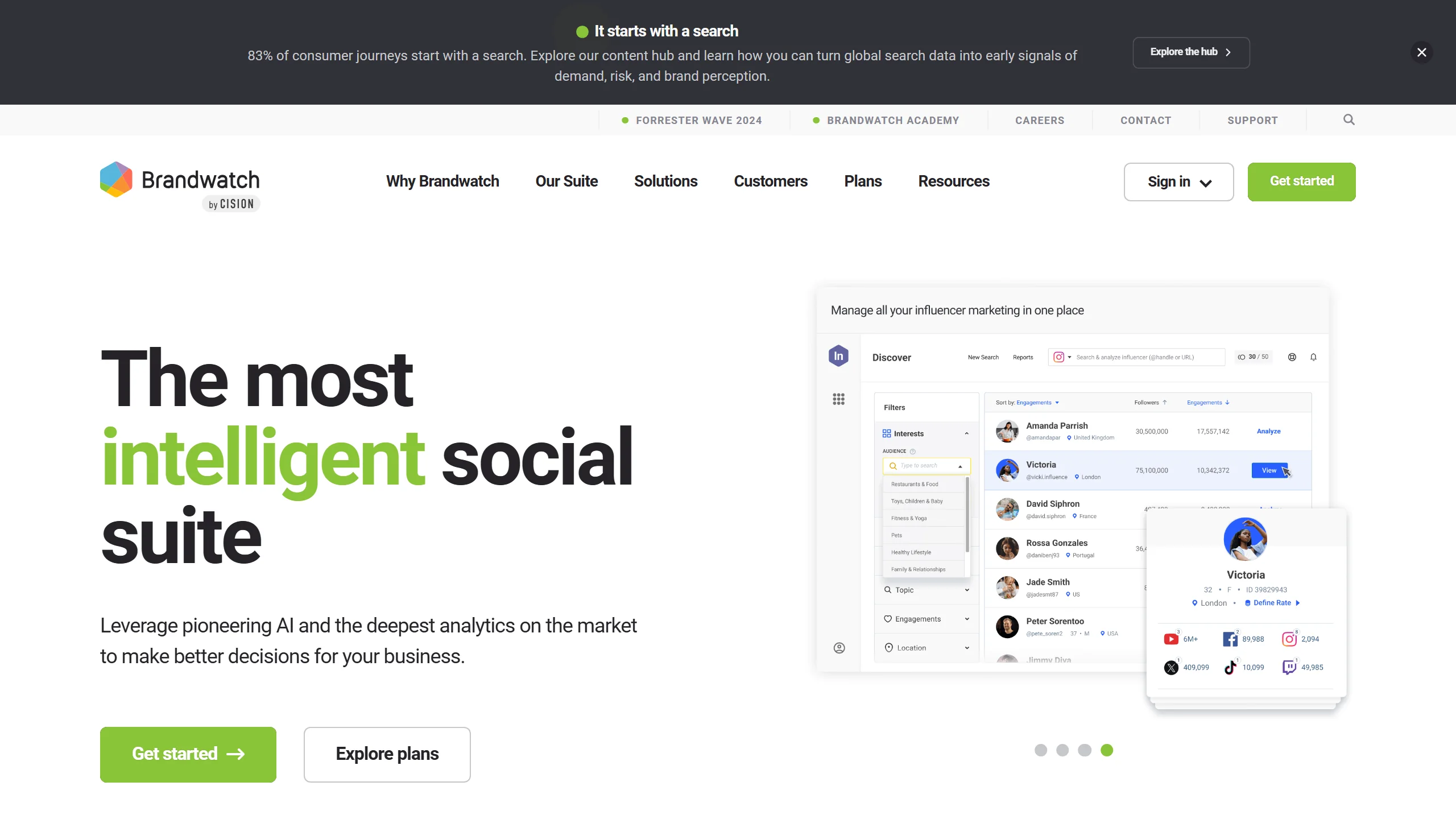
Brandwatch is a broad brand monitoring and social listening platform with AI visibility relevance.
It helps when you want ChatGPT signals to sit inside a wider reputation and media tracking stack. If your team already runs enterprise listening across social, news, and forums, adding AI answer monitoring to the same suite keeps reporting in one place.
Best for brands already committed to enterprise listening tools. Pricing is enterprise. The caveat: it’s strong on broad monitoring but less specialized for ChatGPT-specific prompt tracking than the dedicated AI tools higher on this list.
- Best for: Brands already committed to enterprise listening tools
- Pricing: Enterprise (custom)
- Standout strength: Broad social, news, and forum monitoring combined with AI answer tracking in one suite
See where AI answers put your brand
One free audit: 25 category prompts across every major engine, your citation share against named competitors, and a clear read on what a programme would change.
Request a free auditBest Tool by Use Case
If you don’t want to weigh every feature, match your situation to a pick below. One pattern repeats with small teams: they overbuy enterprise platforms that then sit unused, when a simpler tracker would actually get opened every week.
- Best overall: Otterly.AI, for a focused, low-friction ChatGPT workflow.
- Best budget option: Keyword.com, when you want search and AI tracking in one cheaper plan.
- Best for enterprise: Profound, for prompt volume, governance, and stakeholder reporting.
- Best for beginners: Otterly.AI, for fast setup and a clean dashboard.
- Best for agencies: Peec AI, for prompt-level gap analysis across clients.
- Best for SEO teams: Ahrefs Brand Radar, to sit beside your existing SEO data.
- Best for broader monitoring teams: Brandwatch, when AI signals join a wider listening stack.
Comparison Summary Table
This table is the fastest way to narrow the shortlist. Notice the split: the top group is AI-visibility-first, while the bottom group leads with broader monitoring or SEO.
| Tool | ChatGPT Tracking | Other AI Engines | Pricing Model | Core Strength | Ideal User |
|---|---|---|---|---|---|
| Otterly.AI | Yes, focused | Several | Accessible SaaS | Clean, fast monitoring | Small teams, startups |
| Profound | Yes, deep | Multiple | Enterprise | Scale and governance | Enterprise brands |
| Peec AI | Yes, prompt-level | Multiple | Mid-market | Gap analysis | Agencies, mid-market |
| Ahrefs Brand Radar | Yes, with SEO | Some | Ahrefs plan | SEO consolidation | SEO teams |
| Keyword.com | Yes | Some | Low-to-mid | Search plus AI | Budget-conscious teams |
| Siftly | Yes | Multiple | Mid to higher | Monitor plus act | Experiment-led teams |
| GrowByData | Yes, deep | Multiple | Enterprise/custom | Source analysis | Larger teams |
| Brandwatch | Partial | Some | Enterprise | Broad listening | Reputation teams |
For a wider head-to-head across the monitoring category, our breakdown of brand mention monitoring tools compared covers tools beyond ChatGPT alone.
How to Choose the Right Tool
Translate the features into a decision by working through four questions in order. The best choice is the one your team will actually operationalize, not the one with the longest feature list.
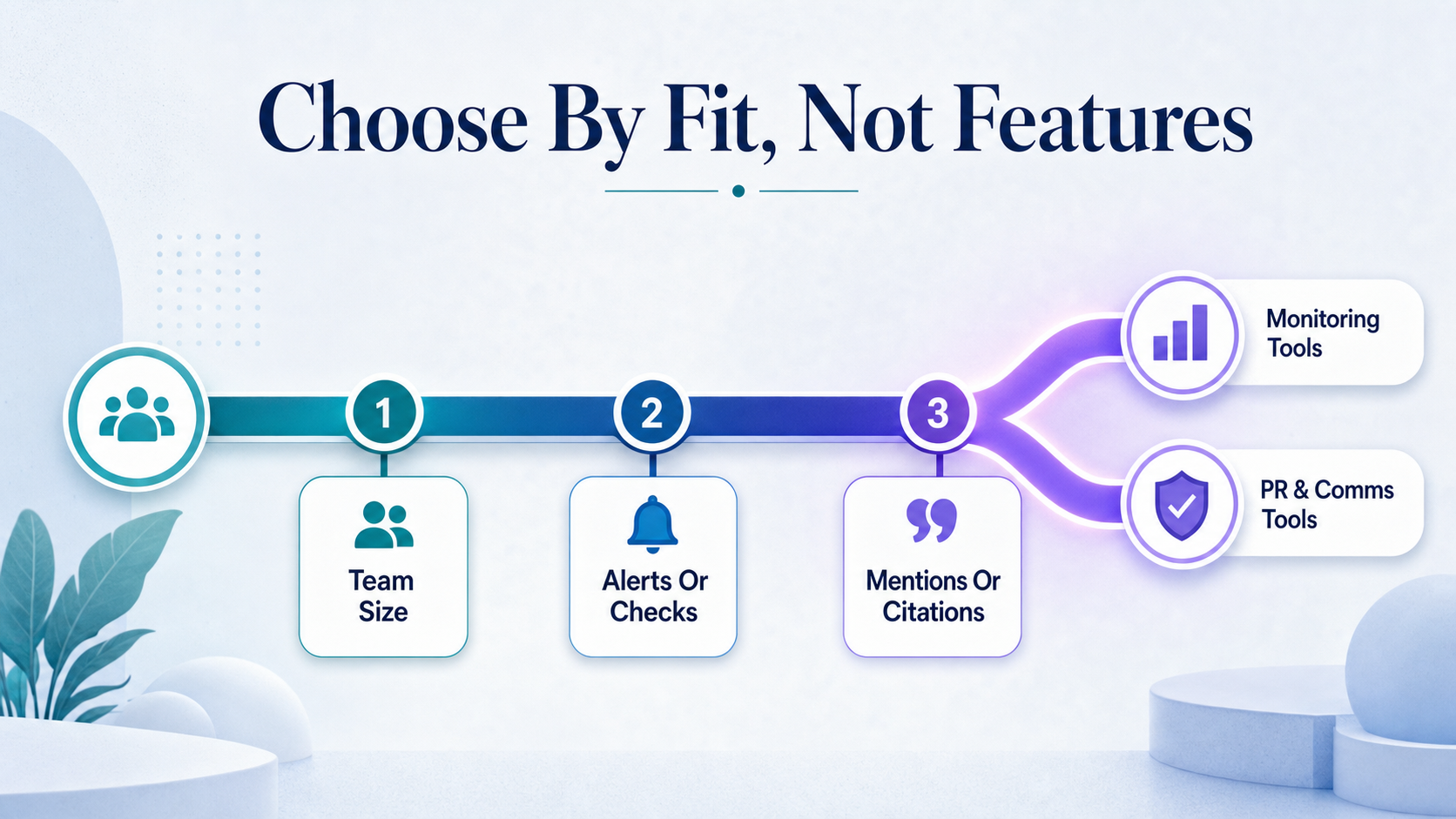
Start with team size. A solo marketer or small team wants speed and a low price, so Otterly.AI or Keyword.com fit. An agency needs per-client reporting, which points to Peec AI. An enterprise needs governance and volume, which points to Profound or GrowByData.
Decide whether you need automated alerts and exports or just periodic manual checks. If a competitor mention can damage your reputation overnight, you want scheduled tracking and notifications. If you’re exploring, a lighter tool or even a manual pass is enough to start.
Separate three things before you compare features, because buyers often compare the wrong ones:
- Mentions: is your brand name in the answer.
- Citations: is your content used as a source link.
- Broader AI visibility: your standing across many engines and prompts.
Then set frequency. Reputation-sensitive brands track daily. Most teams are fine weekly. Judge pricing against your reporting needs, not the list price alone, since a cheaper tool that can’t export the report you need costs you the time you saved. If you plan to track beyond ChatGPT, see how to track your brand across multiple AI engines before committing.
Picking the One You Will Actually Use
There’s no universal winner here, only the best fit for your depth and budget. For most readers, Otterly.AI is the strongest overall pick, with Profound when enterprise depth and governance matter. The honest reality: the tool you open every week beats the one with the deepest feature set sitting idle.
Shortlist one or two, run the same prompts across both, and keep the one that gives you the clearest ChatGPT mention and citation data for your budget. ChatGPT monitoring is now a practical visibility problem, not a nice-to-have, so the sooner you start tracking, the sooner you can fix what you find. For a curated set of options, see our roundup of the best tools for monitoring ChatGPT mentions.
Frequently Asked Questions
What is the best tool to track brand mentions and citations in ChatGPT?
Otterly.AI is the best overall tool for most teams, with Profound the stronger choice for enterprise depth. Otterly.AI runs scheduled prompt tests, logs both mentions and the sources ChatGPT cites, and keeps the dashboard simple enough to use weekly. Profound wins when you need prompt volume, competitor benchmarking, and reporting across many stakeholders.
How can I monitor brand mentions in ChatGPT?
You monitor ChatGPT mentions by running a fixed set of buying-intent prompts on a schedule and logging whether your brand appears each time. You can do this manually in a logged-out session and a spreadsheet, or automate it with a tool like Otterly.AI or Peec AI. Running each prompt more than once matters, because ChatGPT answers shift between runs and a single check can mislead you.
Can ChatGPT cite sources when mentioning a brand?
Yes, ChatGPT cites sources when it browses the live web, showing links it used to build the answer. When it answers from training data alone, it often names brands without any citation. That split is why tracking both mentions and citations matters: a missing mention points to a brand awareness gap, while a citation pointing elsewhere points to a content gap.
Is there a free way to track ChatGPT mentions?
Yes, you can track ChatGPT mentions for free by running your prompts in a logged-out or incognito session and recording the results in a spreadsheet over time. It works for a small prompt set and a single brand. The limits are real: it doesn’t scale, the outputs are non-deterministic, and it eats hours once you add competitors or weekly reporting, which is when a paid tool pays for itself.
What is the difference between a mention and a citation in ChatGPT?
A mention is your brand name appearing in ChatGPT’s answer text, while a citation is a source link the model leans on to construct that answer. You can be mentioned with no citation, or cited as a source without being recommended by name. Each signals a different fix, so the better tools track both rather than collapsing them into one number.
- Best for: Brands already committed to enterprise listening tools across social, news, and forums
- Pricing: Enterprise
- Standout strength: Adds ChatGPT signal tracking inside an existing wide reputation and media monitoring stack