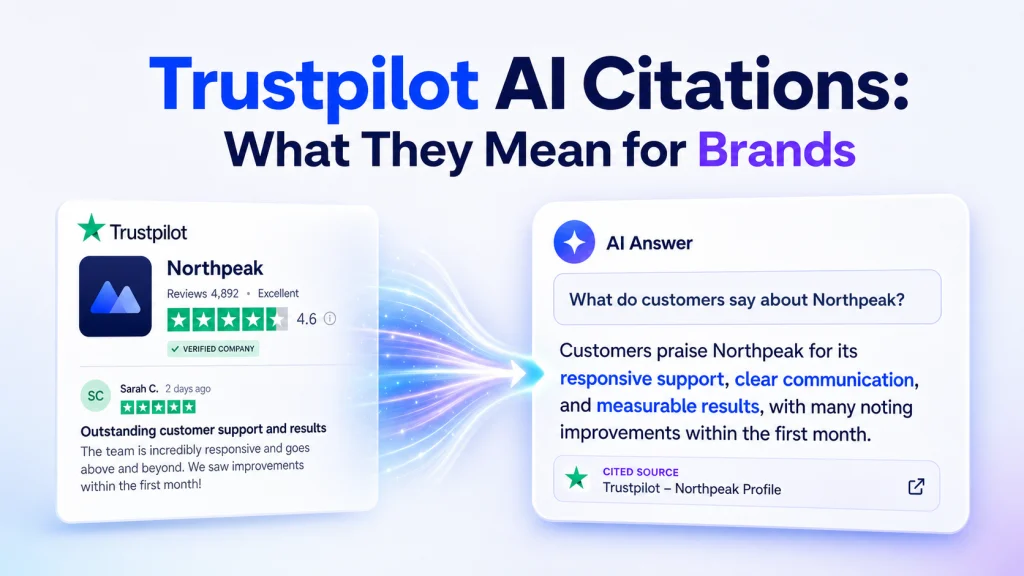

Trustpilot’s 2026 “What AI Says About You” report breaks the citation gap into three steps. A brand with no review presence gets cited in just 1% of AI answers. An active Trustpilot profile pushes that to 53.5%, and 80-plus reviews with regular responses climb it to 75.3%.
That single comparison turned review pages into an AI visibility story. It’s why “Trustpilot AI citations” keeps surfacing in marketing chatter and search.
Trustpilot AI citations are AI-generated answers that reference a brand’s Trustpilot reviews, profile, or review data when an engine like ChatGPT or Perplexity answers a buying question. The phrase matters because AI tools sit at the front of product research today, and their trusted sources decide whether your brand shows up at all.
Key Takeaways
- Citation rates climb from 1% with no Trustpilot profile to 75.3% with an active, frequently-updated one.
- An AI citation can be a visible link, a named mention, or a silent trust signal baked into the answer.
- Review volume, freshness, response activity, and consistent sentiment drive whether an engine reuses a profile.
- The data shows correlation, not proof that reviews alone cause the citation lift.
- Trustpilot is one of several review sources AI models pull from, alongside G2, Capterra, and Reddit.
- Treat a citation as an awareness signal, not confirmation that AI endorses your brand.
What Trustpilot AI Citations Actually Are
A Trustpilot AI citation is an AI answer that draws on Trustpilot review content, whether by linking the profile, naming it, or summarizing what the reviews say. It’s a visibility outcome, not a Trustpilot product you buy.
The confusion usually starts in dashboards. One team calls any appearance a “citation,” while another reserves the word for a source the AI actually links to.
A third team counts it for sentiment an AI paraphrases with no link at all. Those are three different things, and treating them as one number leads to bad decisions.
Mentioned, Cited, and Used as a Trust Signal
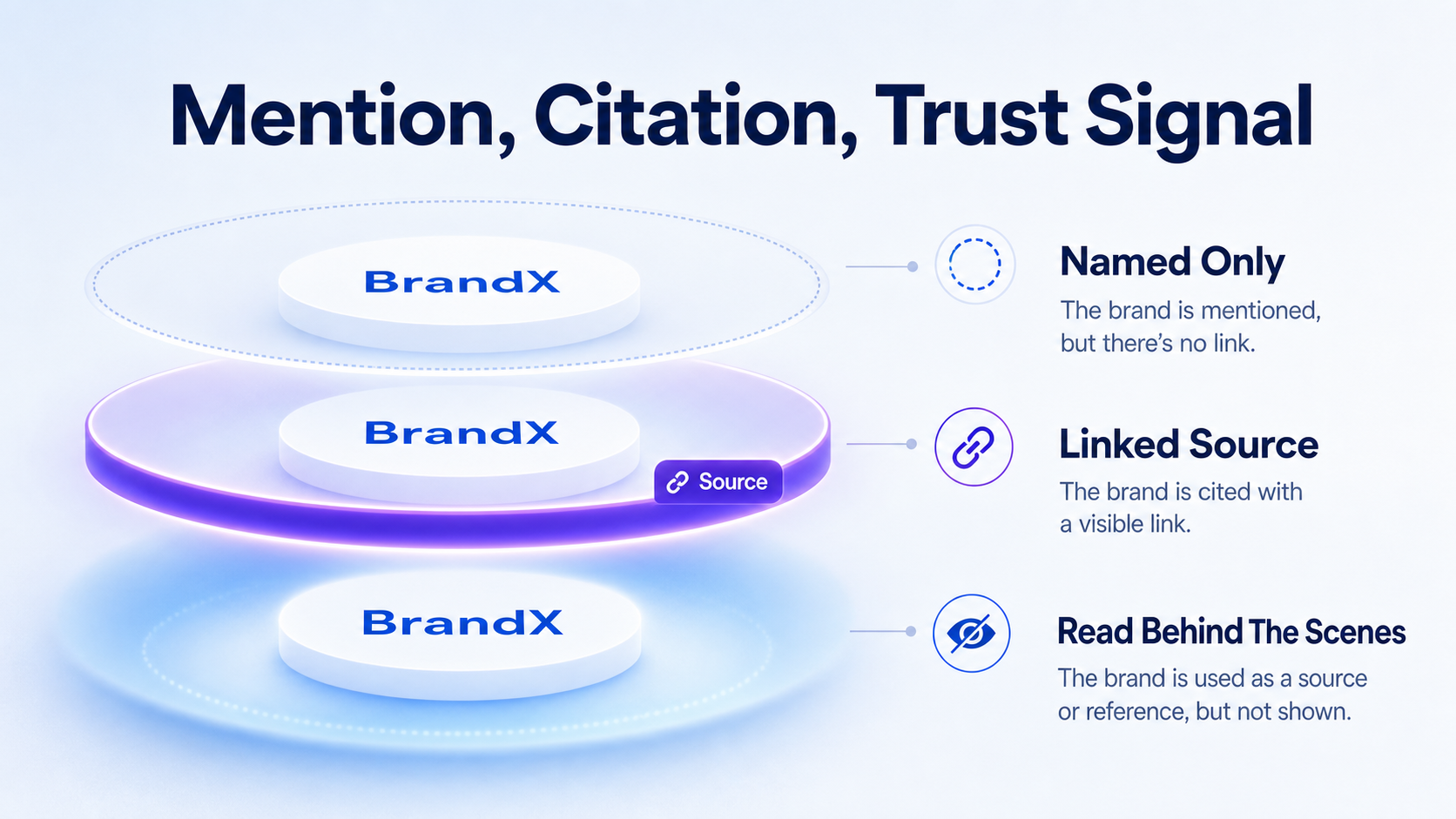
A mention is when an AI names your brand in its answer without pointing to where the claim came from. A citation is when the engine attributes the claim to a specific source, often with a visible link to your Trustpilot page. A trust signal is quieter: the model reads your review profile, factors it into how it describes you, then never quotes a single line.
That last case is the one most teams miss. An AI can lift your overall rating, summarize a recurring complaint about onboarding, or describe your support reputation, all sourced from Trustpilot, without ever showing the page. You’ve been used, just not credited.
So when someone says “Trustpilot AI citations,” they usually mean visibility in AI search that traces back to review data, in any of those three forms. It’s closer to a discoverability concept than a formal label, and that nuance changes how you read the numbers people quote. If you want the underlying mechanics across all sources, our breakdown of what drives AI citation rankings covers the factors beyond reviews.
Why Trustpilot AI Citations Matter Now
AI tools have shifted from answer layers to discovery layers. People don’t just ask them to explain a concept anymore.
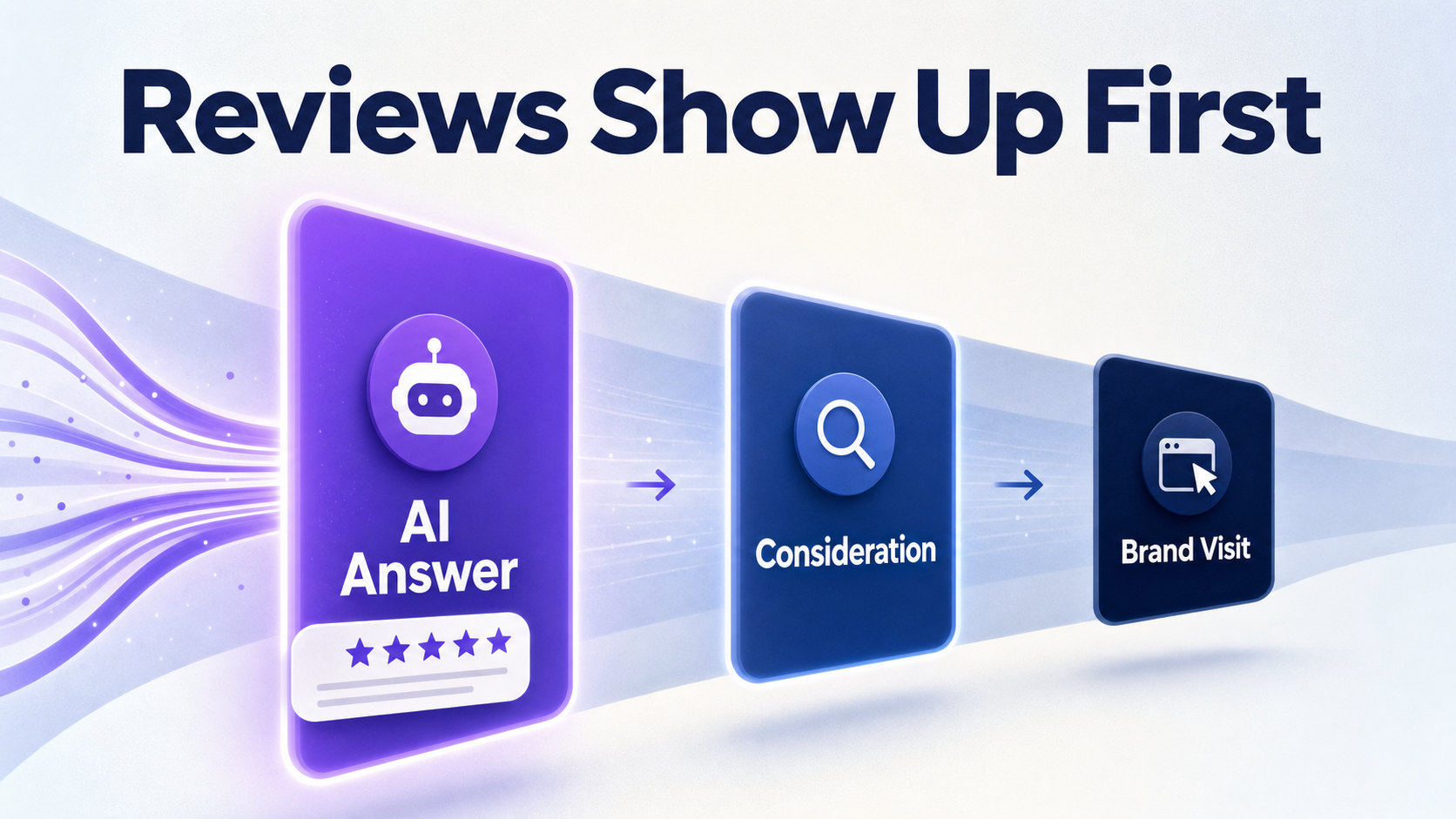
They ask which vendor to pick, which tool fits a small team, and whether a company is worth trusting. That moves third-party validation to the front of the buying journey, often before anyone visits your site.
Trustpilot reports that 58% of consumers already use AI tools while researching products and services. Treat that as Trustpilot’s own analysis rather than independent fact, but the direction is hard to argue with. If a buyer asks an engine to shortlist three options and your review profile shapes that shortlist, the review platform influenced the deal before your homepage ever loaded.
When AI shortlists vendors, the brands with visible third-party reviews show up first, and the ones without them rarely make the list at all.
This is a reputation and visibility issue, not only a reviews issue. The marketing team optimizing the website, the customer experience team handling reviews, and the public relations team earning coverage are now feeding the same machine.
That’s why the trend pulls attention from people who never thought about Trustpilot before. For the wider shift in how engines surface brands, see how brand mentions drive visibility in AI search.
How AI Systems Likely Choose Trustpilot Sources
Nobody outside the engine teams has the full ranking formula, so treat the mechanics as correlational, not confirmed. What the available evidence does show is a handful of signals that make a review page easier for an AI to find, trust, and reuse. Those signals include review volume, freshness, structured review pages, the platform’s domain authority, and the general weight engines give third-party trust sources.
Trustpilot’s reported figures sketch a clear gradient. The lift is not binary; it scales with activity, which is exactly what you’d expect if engines reward freshness and depth.
| Profile state | Reported AI citation rate | What it suggests |
|---|---|---|
| No active profile | 1% | Almost no review data for an engine to surface |
| Profile present | 53.5% | Existence alone gives the engine something to read |
| Active review management | 75.3% | Volume, freshness, and responses compound the signal |
Read those numbers as Trustpilot’s own study, drawn from a sample of brands across activity tiers. The jump from 1% to 53.5% is the eye-catching part. But the harder work sits between 53.5% and 75.3%, where steady reviews and active responses do the lifting.
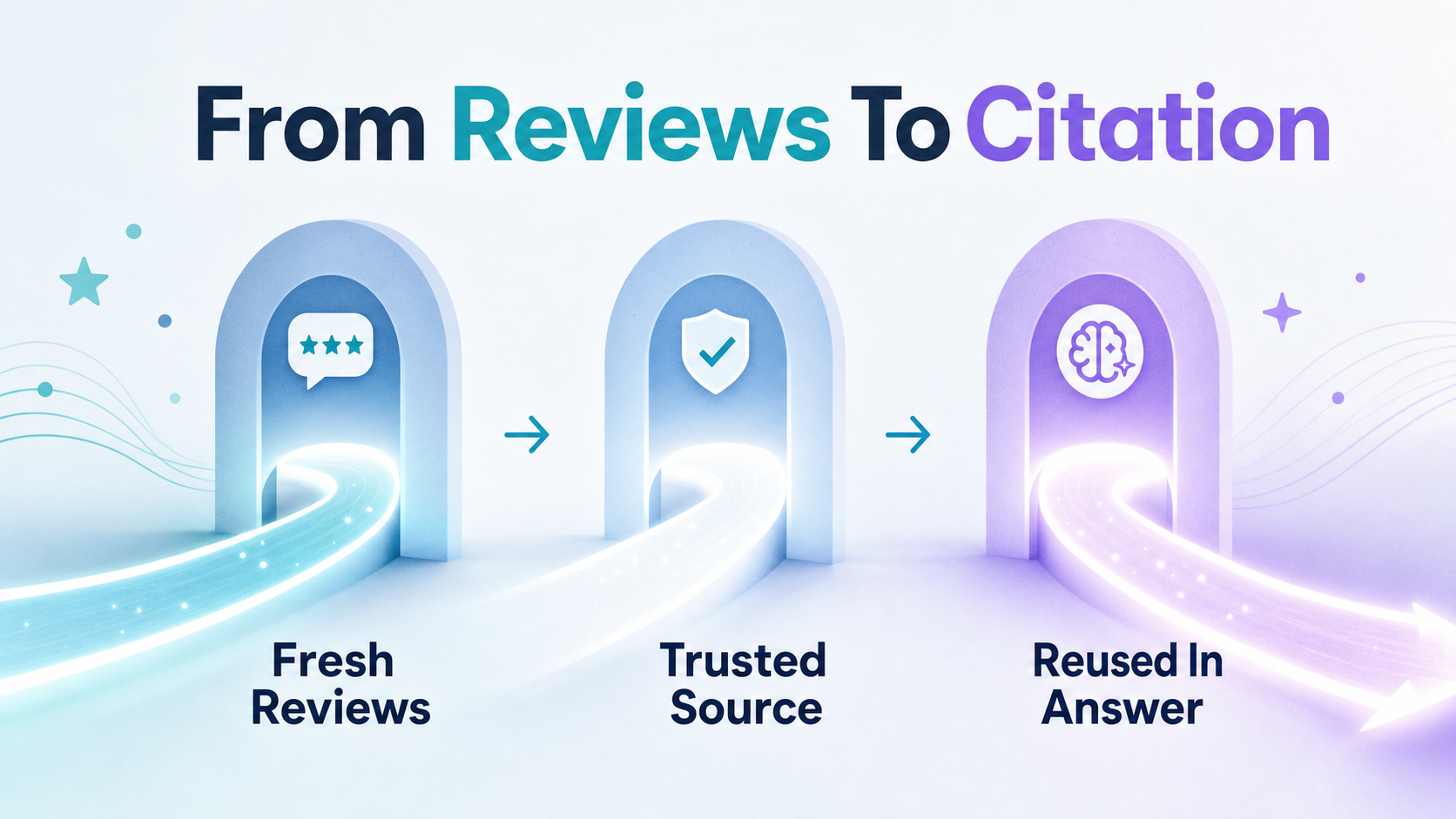
One pattern worth holding onto: citations often shift when source freshness and authority move, not when you rewrite a sentence on your own site. An engine that re-crawls a busier review page may start surfacing it within weeks, while a stale profile quietly drops out.
Review and trust sites were reported as a major citation source in AI answers, but the weighting shifts by platform and by the kind of question asked. For the broader picture of how engines select what they pull, read how AI crawlers actually pick sources.
The Key Signal Types Behind Trustpilot Relevance
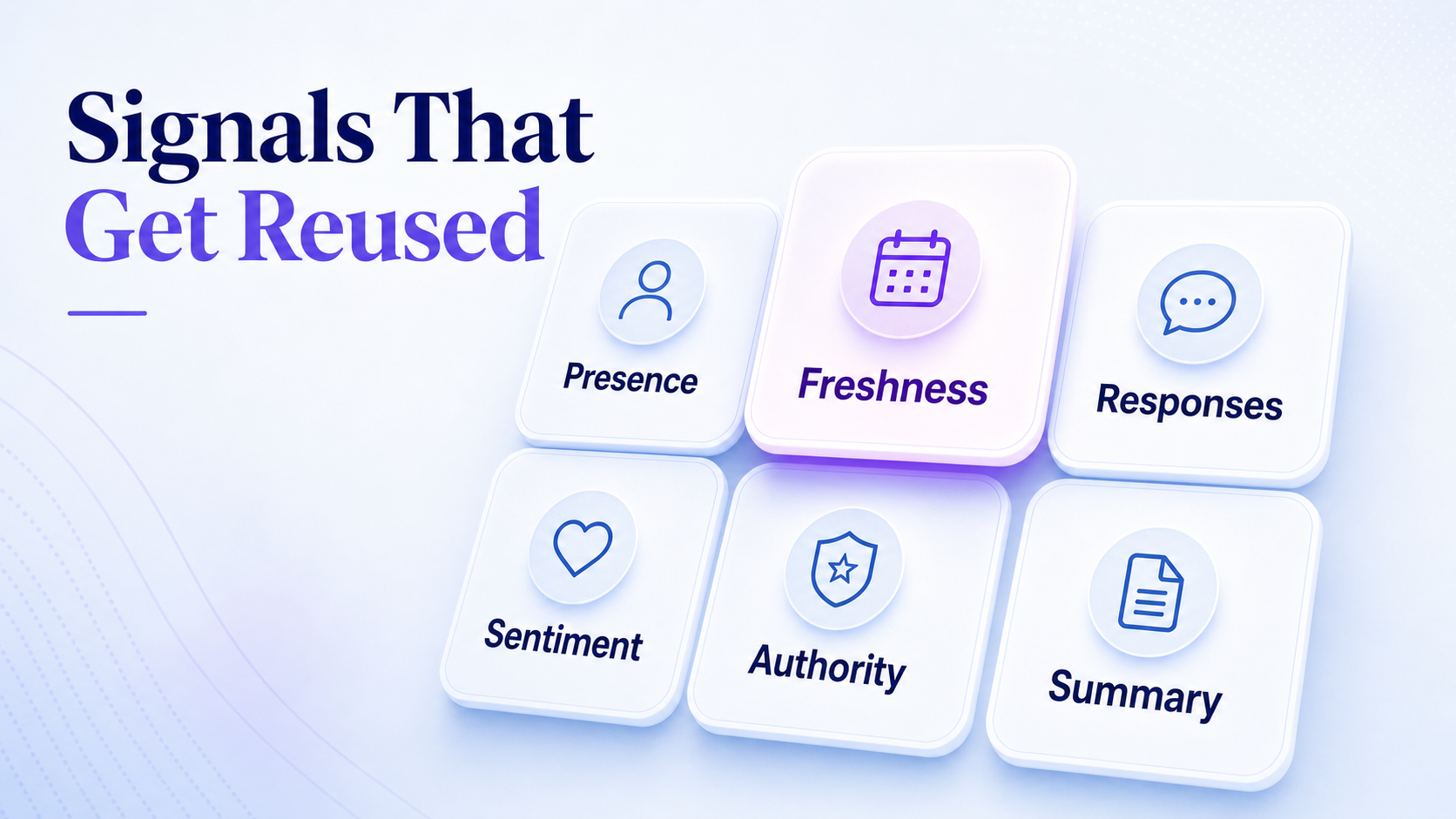
Six ingredients explain why one brand’s review profile gets reused by AI and another’s gets ignored. None of them works alone, and each carries a caveat that keeps the picture honest.
| Signal | Why it matters | The caveat |
|---|---|---|
| Profile presence | A live, complete profile gives the engine real data to read instead of a blank page | Presence alone is the floor, not the ceiling |
| Review volume and freshness | Recent reviews and steady velocity signal the data is current and worth trusting | A one-time burst fades fast and reads as gamed |
| Response activity and moderation | Public replies and active moderation make the profile look accountable | Responses help appearance, not the underlying product experience |
| Sentiment patterns and recurring themes | Engines summarize consistent praise or complaints rather than single reviews | A loud minority theme can distort the summary |
| Domain authority and source trust | A well-linked, high-authority platform is easier for an engine to reuse confidently | This benefits the platform, and your profile rides along |
| Summarization behavior | AI paraphrases themes, so consistency matters more than any one quote | You cannot control which theme the model decides to surface |
In reputation work, the weakest links in this chain are almost always the same three: a thin profile, stale reviews, and near-zero response activity. Fix those three and you move from the bottom of the gradient toward the top.
That’s not because you tricked anything. It’s because you gave the engine something current and credible to read.
The same logic shows up on other review platforms, which is why our look at the signals AI models read from a G2 page mirrors much of this. The platform changes; the underlying behavior does not.
Common Misconceptions and Where the Data Stops
The numbers are persuasive, and that is exactly why they get over-read. A few corrections keep the trend in its proper place.
A Citation Is Not an Endorsement
A citation only proves you were visible, not that the engine vouched for your quality or that the buyer trusted what they saw. One Reddit thread of practitioners put it plainly: AI citations look more like awareness than trust. A high citation rate can sit next to flat conversions.
Correlation Is Not Causation
Correlation is not causation here. Brands with active review profiles tend to also invest in marketing, customer experience, and content all at once. The reviews may correlate with citations without being the lever that moves them, and the study doesn’t isolate reviews as the cause.
Trustpilot Is Not the Only Source
Trustpilot is one input among several an engine can read. Models pull from G2, Capterra, Reddit, editorial coverage, and your own structured pages, and Trustpilot’s share of the mix varies by category.
Results Vary by Category and Platform
Results shift with category, query intent, geography, and platform, and a consumer product in a review-heavy vertical behaves nothing like a niche enterprise tool. The methodology has real limits too: it’s Trustpilot’s own analysis, with platform-specific sampling and limited visibility into how each citation got scored. Strong enough to take seriously, not strong enough to treat as a formula.
What This Trend Says About AI Search Visibility
The honest read of Trustpilot AI citations is that review platforms have joined the AI visibility stack. They’re no longer a reputation afterthought sitting downstream of the sale. They now sit close to discovery, which is a meaningful shift in where brand perception gets formed.
This doesn’t make Trustpilot uniquely powerful in every market. What it shows is how heavily AI answer engines lean on third-party validation before naming a recommendation.
They blend brand data, review data, and earned signals, then surface whatever combination reads as most credible. Your homepage is one voice in that mix, usually the least trusted one because it’s self-authored.
The practical implication is organizational. Public relations earning coverage, customer experience managing reviews, and search teams structuring content are all feeding the same visibility logic now.
Teams that still treat those as separate functions are optimizing pieces of a system without seeing the whole. For where this fits against traditional measurement, compare AI visibility against the SEO metrics you already track.
What the Trustpilot Signal Does and Doesn’t Prove
Trustpilot AI citations are best understood as a signal that review platforms are becoming part of how AI search decides who gets named. The trend matters because engines appear to reward visible, recent, third-party trust signals, and review pages supply exactly that.
But no single platform determines your visibility, and the current evidence proves correlation, not control. Take it seriously, act on the signals you can verify in your own category, and resist the urge to read 75.3% as a guarantee.
Frequently Asked Questions
Why is Trustpilot showing up in ChatGPT recommendations so often?
Trustpilot appears often because it combines a high-authority domain, a huge volume of structured reviews, and timestamped, moderated data that engines find easy to trust and reuse. ChatGPT favors third-party sources with verifiable structure over self-authored brand claims, and Trustpilot fits that profile across thousands of categories. That’s why it ranks among the most-cited domains.
Does Trustpilot improve AI search visibility for brands?
Trustpilot can improve visibility, but the evidence is correlational rather than proven. Trustpilot’s own study reports citation rates climbing from 1% with no profile to 75.3% with active review management. That gradient suggests an active, fresh profile gives engines more to surface. But brands investing in reviews usually invest in other visibility work too, which muddies the cause.
Are Trustpilot reviews verified?
Trustpilot uses automated and manual checks to remove fake reviews, but it operates as an open platform where anyone can leave feedback. Trustpilot reports removing millions of fake reviews a year and catching most automatically. That moderation is part of why AI engines treat the data as accountable. Still, no open review platform is fully immune to manipulation.
How much did Trustpilot’s AI search traffic grow in 2025?
Trustpilot reported that click-throughs from AI search soared 1,490% year-on-year, and it ranked as the fifth most-cited domain globally on ChatGPT, per Promptwatch data. The company also reported sharply higher profitability, which it tied partly to this AI-driven traffic rise.
Can AI citations be trusted as a measure of authority?
Not on their own. A citation tells you a source was visible enough to surface, not that the engine endorsed it or that a buyer trusted it. Visibility lift and real business impact are different measurements, and many practitioners read AI citations as awareness signals rather than proof of authority. Pair citation tracking with conversion data before drawing conclusions.
The real question for your brand isn’t how to game citations. It’s which trust signals AI already chooses in your category, and whether your review profile is one of them. Book a strategy call to see where those gaps sit today.