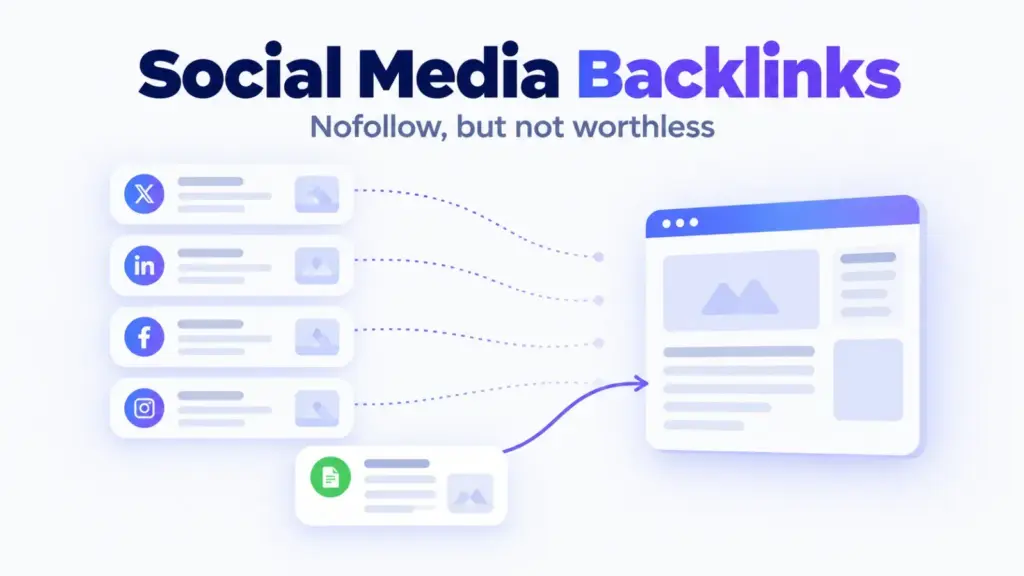

Social media backlinks pass almost no direct ranking value, because platforms like X, LinkedIn, Facebook and Reddit tag outbound links as nofollow or ugc. They're still worth having. The value comes indirectly: social posts get your content in front of writers, editors and communities who later link to it or mention your brand.
How Social Platforms Tag Outbound Links
Social platforms add rel attributes to the links users post, which tells Google the platform doesn't vouch for them. Profile links and post links usually carry nofollow, ugc, or both, though the exact attributes vary by platform and change over time, so check the live link markup on each platform before counting on it.
Google treats these attributes as hints, not strict rules. Its documentation on qualifying outbound links describes rel="ugc" for user-generated content and rel="nofollow" for links a site won't endorse. Google's 2019 announcement on evolving nofollow explains the shift to treating them as hints.
So a hint isn't zero, but you can't count on it. Don't plan a ranking strategy around links that the host site has told Google to discount.
Where Social Links Still Earn Their Keep
Social links earn their keep through reach, not link equity. A post that reaches the right people turns into editorial coverage, and that coverage is what search engines and AI assistants weigh.
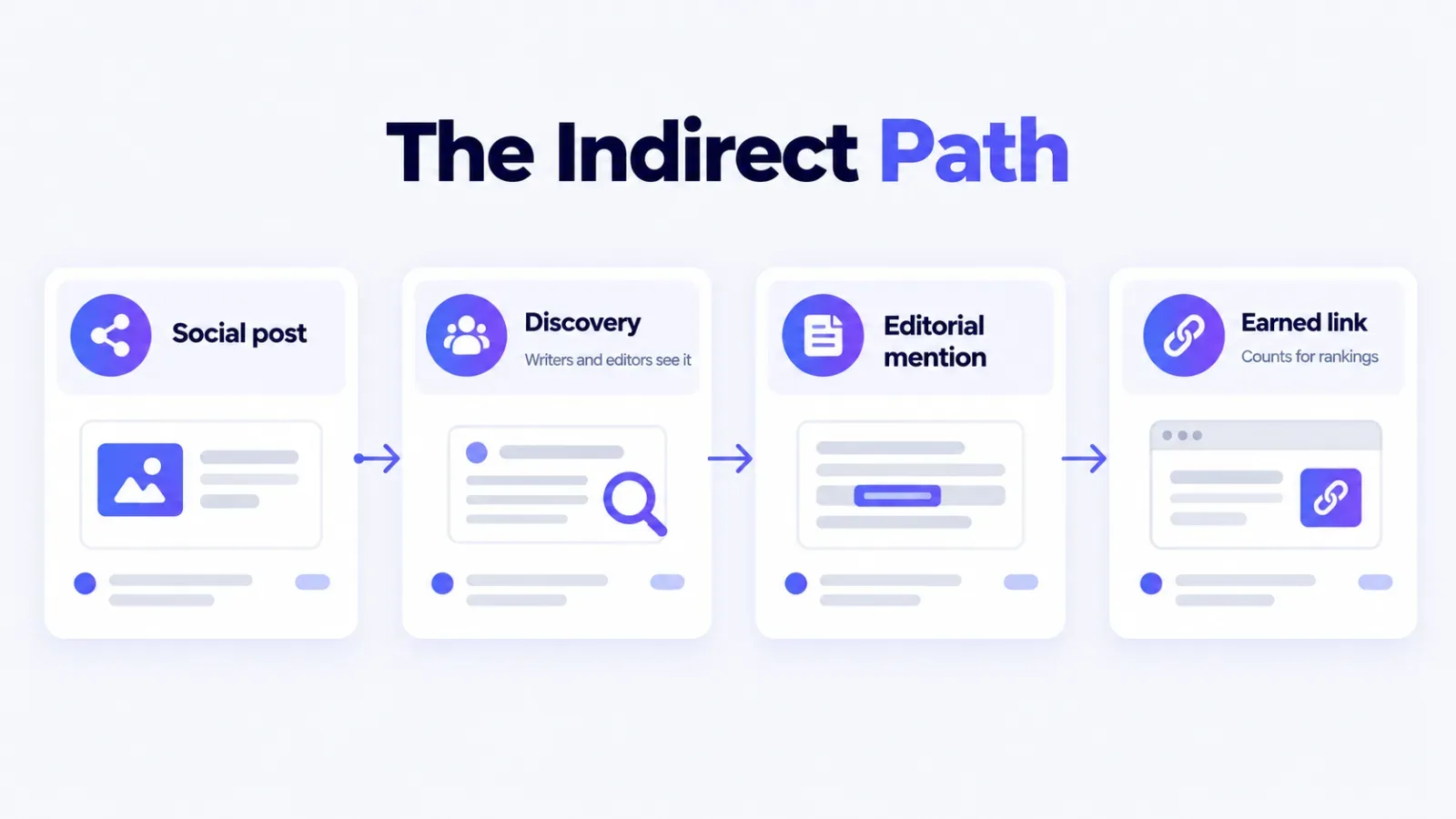
Here's the chain that matters. A journalist sees your data post on LinkedIn, quotes it, and links the original study from their article. That article link is a normal editorial backlink, and it's the one that counts. If you want the mechanics of that last step, read up on contextual backlinks and why they matter.
Social conversation also creates brand mentions without a link. Google and AI assistants like ChatGPT, Perplexity and Gemini read brand names in context, so brand mentions for SEO carry weight even when nobody hyperlinks you.
Profile Links vs Post Links
Profile links and post links do different jobs, and only one of them is worth tidying up regularly.
| Link type | Typical attribute | What it does for you |
|---|---|---|
| Profile bio link | nofollow or ugc | Confirms your brand's official accounts |
| Company page website field | nofollow | Ties the page to your domain |
| Link in a post | nofollow or ugc | Sends visitors, sparks shares |
| Link in a comment or thread | ugc | Little, unless it's useful to the thread |
Profile links help Google and AI tools connect your accounts to your website. Keep them consistent: one brand name, one domain, matching descriptions.
A Decision Rule for Your Social Effort
Social effort pays for search when it puts your work in front of people who publish. Use this rule to sort what you're doing now.
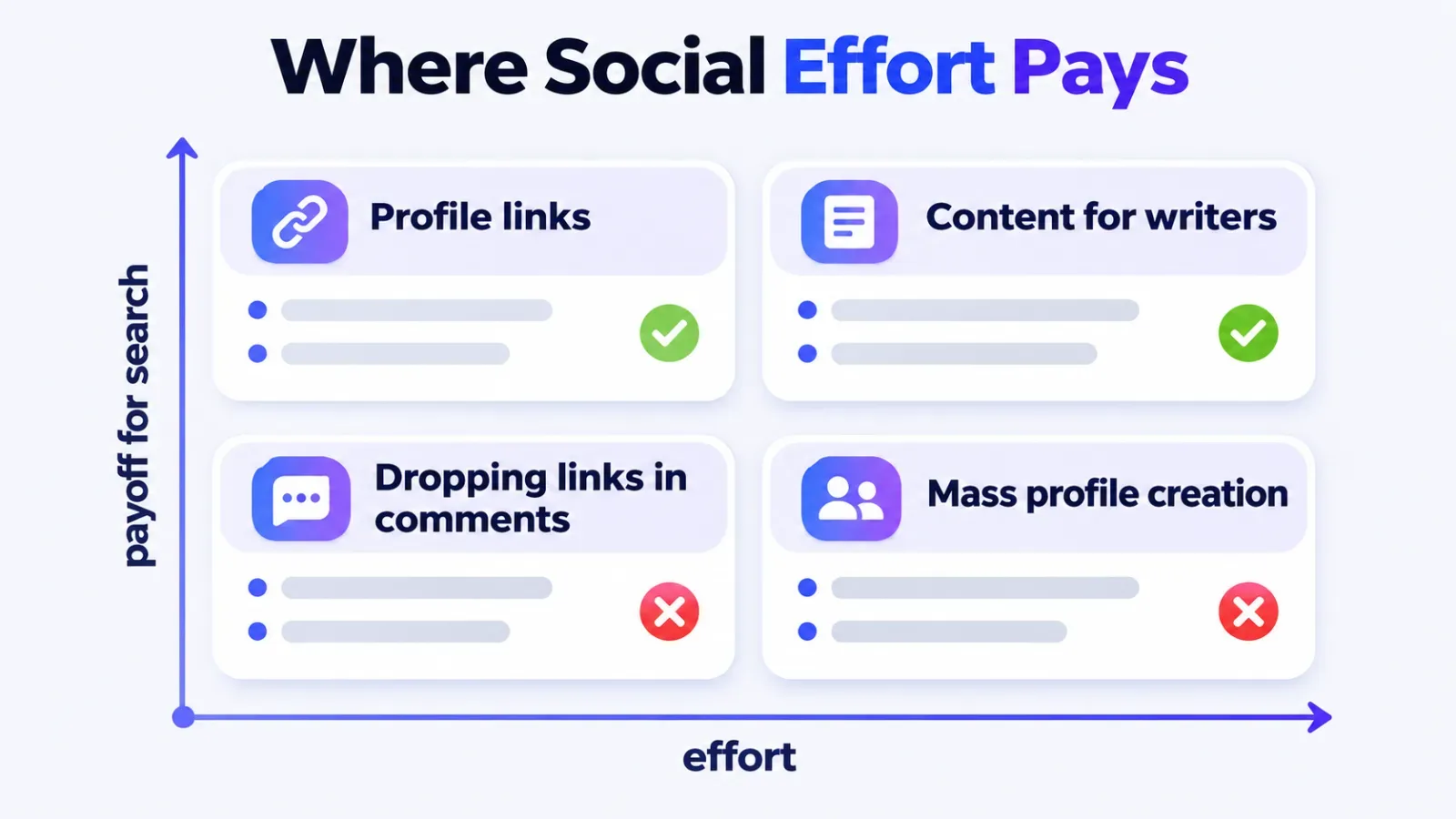
- With original data, research or a strong opinion: post it where writers in your category read, then track who picks it up.
- With a small team and no new content: fix profile links once and stop there.
- With an active community presence: answer questions well and link only when the link answers the question.
- With a plan to drop links across forums and comments: skip it. It costs more time than it returns.
To see whether your social activity actually gets noticed, measure it against competitors with a share of voice calculation for social.
Run a 20-Minute Profile Link Check This Week
Open every official account your brand runs and check the website field, the bio link, and the brand name spelling. Fix anything that points to an old domain, a redirect chain or a tracking URL that's broken. Then pick your one strongest piece of original content and share it where the writers in your space actually spend time. That single post will do more for your links than any number of profile URLs.