
Your next buyer may learn about your SaaS from an AI answer before they ever see your homepage. AI visibility for B2B SaaS is how often and how prominently your brand appears, gets cited, or gets recommended inside AI-generated answers across ChatGPT, Perplexity, Claude, Gemini, and Google AI Overviews. It now shapes which vendors make a buyer’s shortlist during research, long before a demo request.
Rankings and traffic still matter, but they no longer describe your full discoverability. When a buyer asks an AI assistant which tools solve their problem, either your brand is in that answer or a competitor’s is.
What AI Visibility for B2B SaaS Is
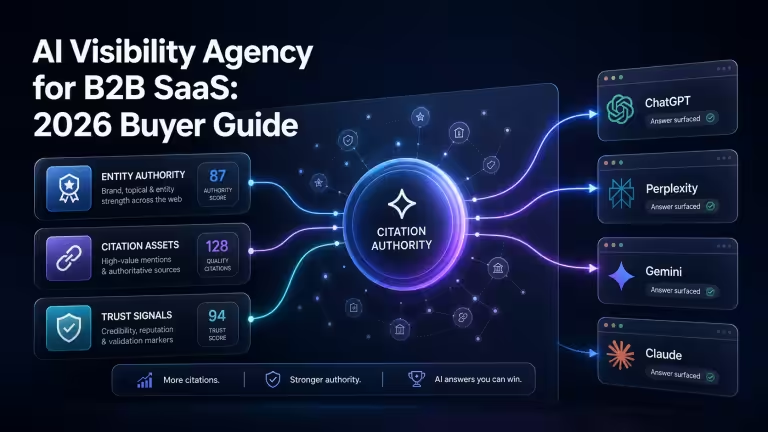
AI visibility is the measure of how present your SaaS brand is inside answers that AI systems generate, whether that means being named, cited as a source, or recommended when a buyer asks a category question. It spans several surfaces at once: ChatGPT, Perplexity, Claude, Gemini, and Google AI Overviews each generate answers, and each can include or exclude your brand independently.
This is not one universal score. Your brand can dominate one engine and be invisible in another, because each platform draws on different sources and weights them differently. A single-number “AI visibility score” hides that unevenness, which is why cross-platform tracking matters more than any one figure.
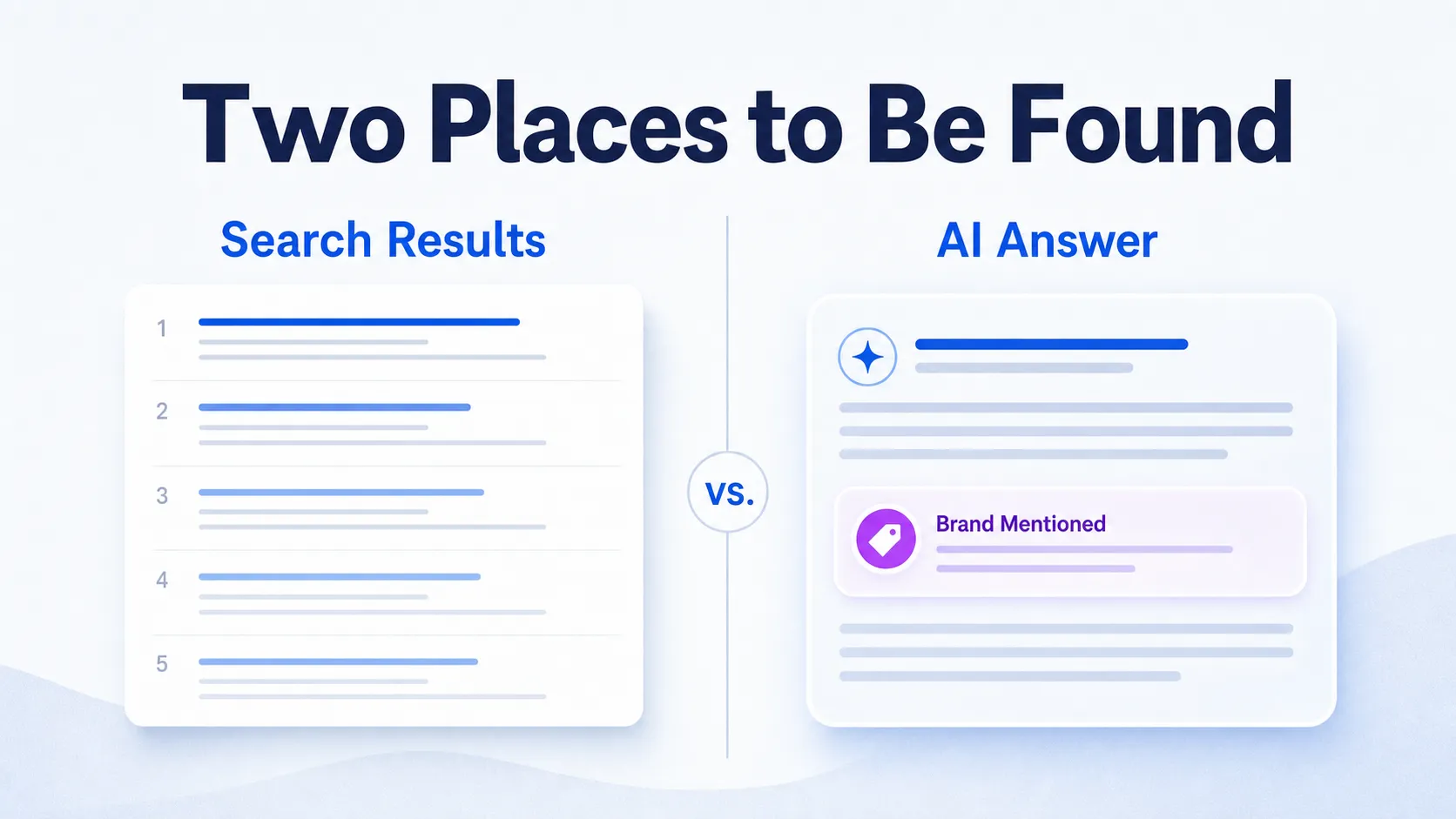
Here is a definition you can reuse internally: AI visibility is your brand’s presence and prominence inside AI-generated answers, measured by mentions, citations, and recommendations rather than clicks. The behavior driving all of this is simple. B2B research now happens inside AI answers before a buyer visits any site, so the answer itself becomes the first impression. If you want to see where that presence lives across engines, start with tracking brand mentions in large language models.
Why AI Visibility Matters for SaaS Growth
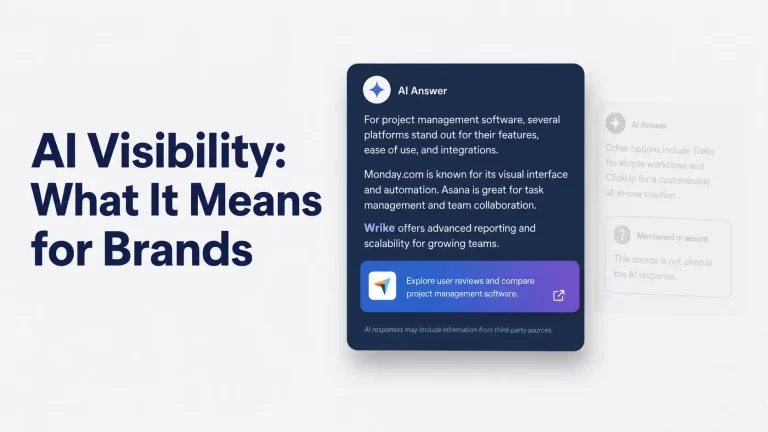
AI visibility matters because it decides whether your brand enters the buyer’s consideration set at the moment they ask an AI for options. When a buyer types “best tools for X” into an assistant, the answer becomes a de facto shortlist. Miss that answer and you miss the shortlist, no matter how strong your product is.
The shift in buyer behavior is real and measurable. A G2 survey of more than 1,000 B2B software buyers found that 50% now start their software buying journey in an AI chatbot, and 47% pick ChatGPT as their preferred assistant. That is not a fringe channel anymore. It is where consideration begins.
Three business outcomes ride on this presence:
- Shortlist inclusion when a buyer asks an AI to name vendors in your category
- Category authority when the answer frames you as a serious option, not an afterthought
- Demand capture at the consideration stage, before the buyer has picked a favorite
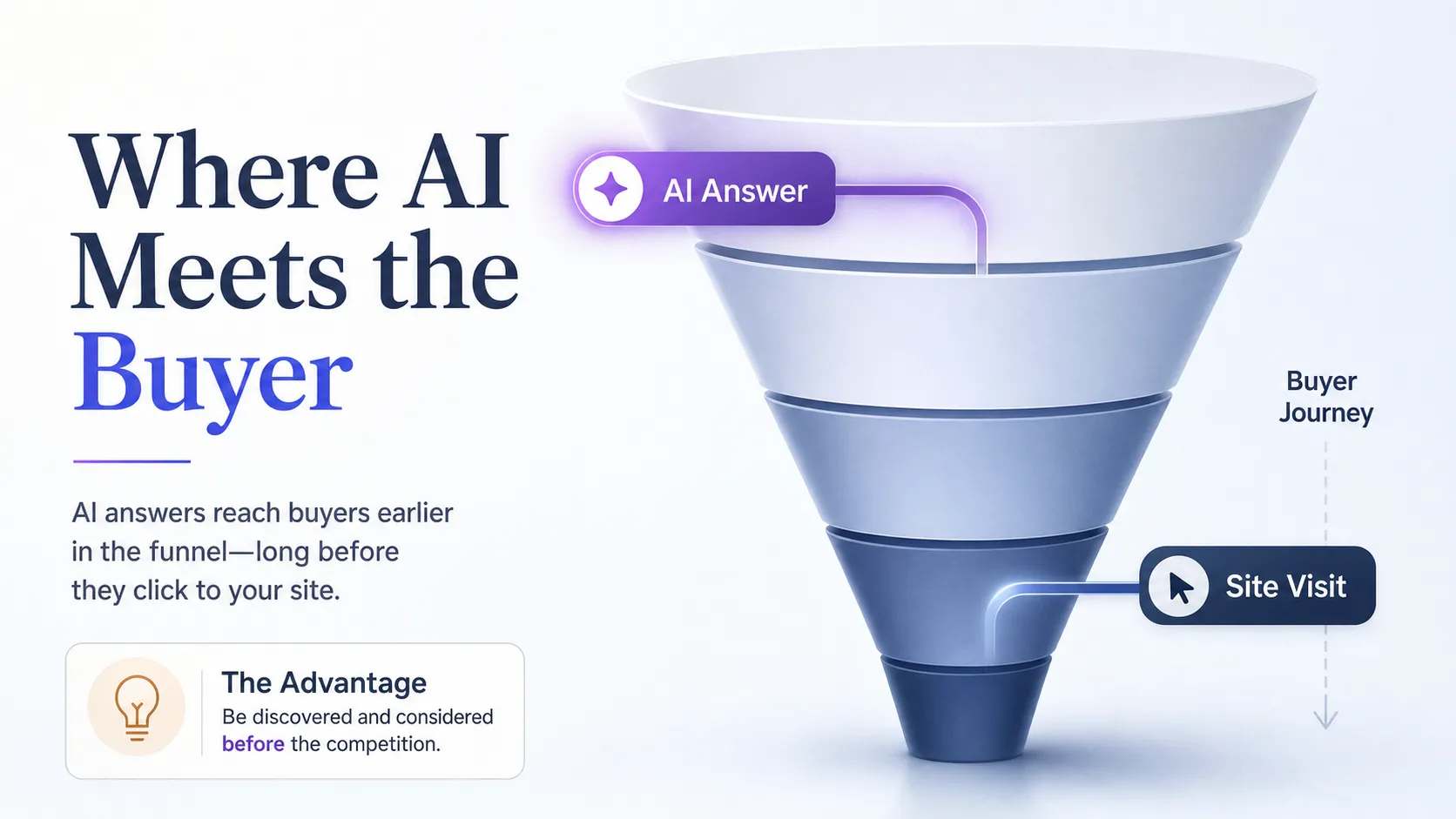
Traffic and rankings alone no longer capture this. A page can rank first and still go unnamed in the AI answer for the same query, because the engine assembles its response from a broader mix of trusted sources. That gap is exactly why AI visibility and SEO metrics now measure different things. AI-referred visitors also tend to arrive later in their research with higher intent, which makes presence in those answers worth more per exposure, not less.
How AI Visibility Works in ChatGPT, Perplexity, Claude, and Gemini
AI answers are assembled from a mix of sources, not a single database. Each engine pulls from some combination of training data, live search or indexed pages, trusted third-party mentions, structured content it can parse cleanly, and entity signals that tell it who you are. The blend differs by platform, which is why the same brand surfaces in one engine and disappears in another.
Freshness carries different weight across engines. Perplexity leans hard on recent, live sources, so content and mentions from the past year influence it quickly. ChatGPT and Claude update more slowly, which means a mention can take longer to shape their answers. Understanding this contrast keeps you from expecting identical results everywhere. For the underlying mechanics of how these systems choose what to include, see how AI crawlers pick sources.
| Platform | Main source behavior | Freshness weight |
|---|---|---|
| ChatGPT | Training data plus live web with source citations on most answers | Slower to reflect new mentions |
| Perplexity | Live web index with several sources per answer | High, recent content moves fast |
| Claude | Structured retrieval, precision-focused responses | Slower, rewards clean structure |
| Gemini | Google-connected sources and AI Overviews-style signals | Moderate, tied to index refresh |
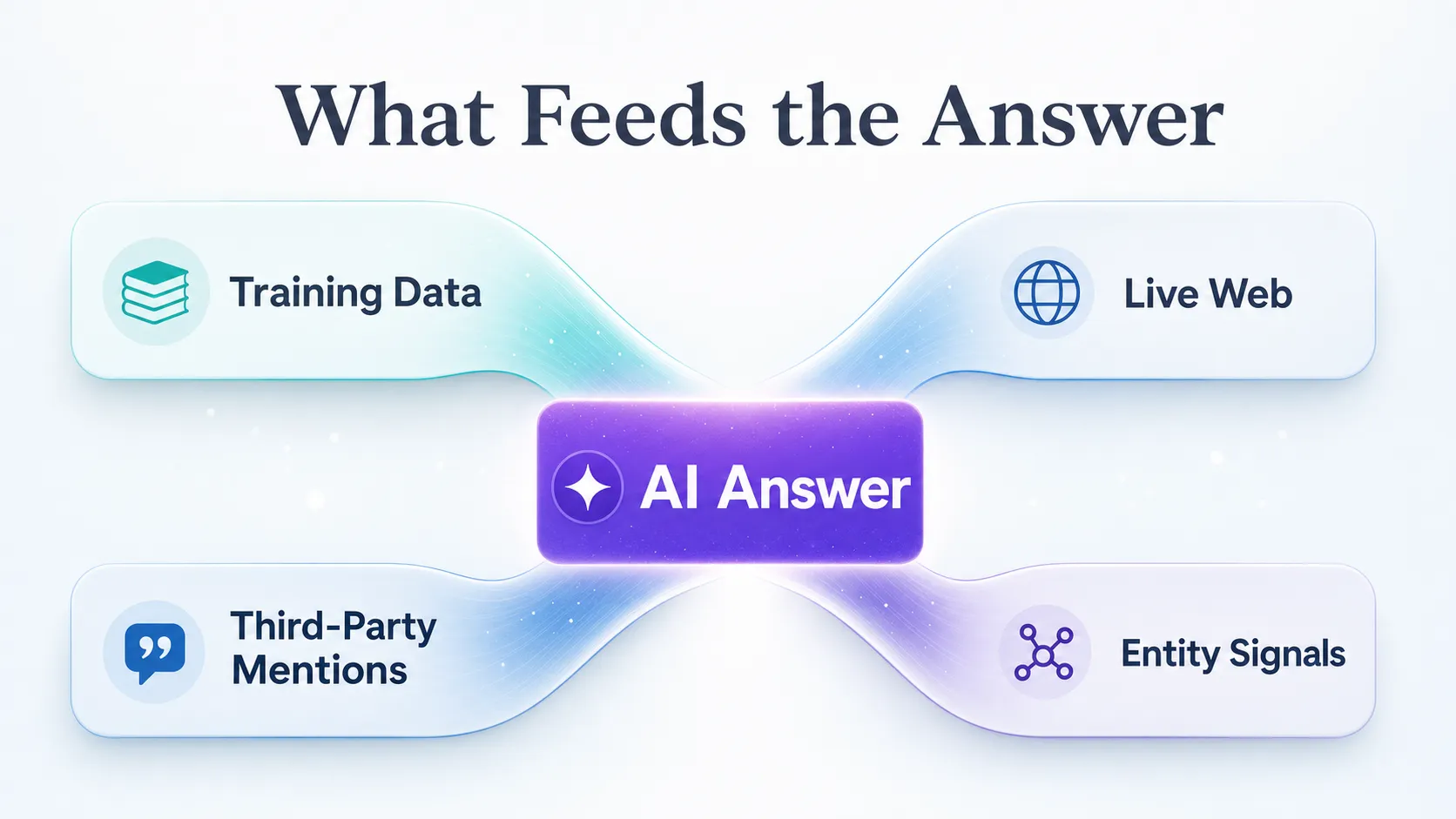
The practical takeaway is uneven coverage. A brand can be named in every Perplexity answer for a query and absent from ChatGPT for the same one, because each engine weighs mentions and recency on its own terms. That is why treating all AI engines as a single target fails, and why cross-platform tracking is the only honest way to read your position.
Key Components That Shape AI Visibility
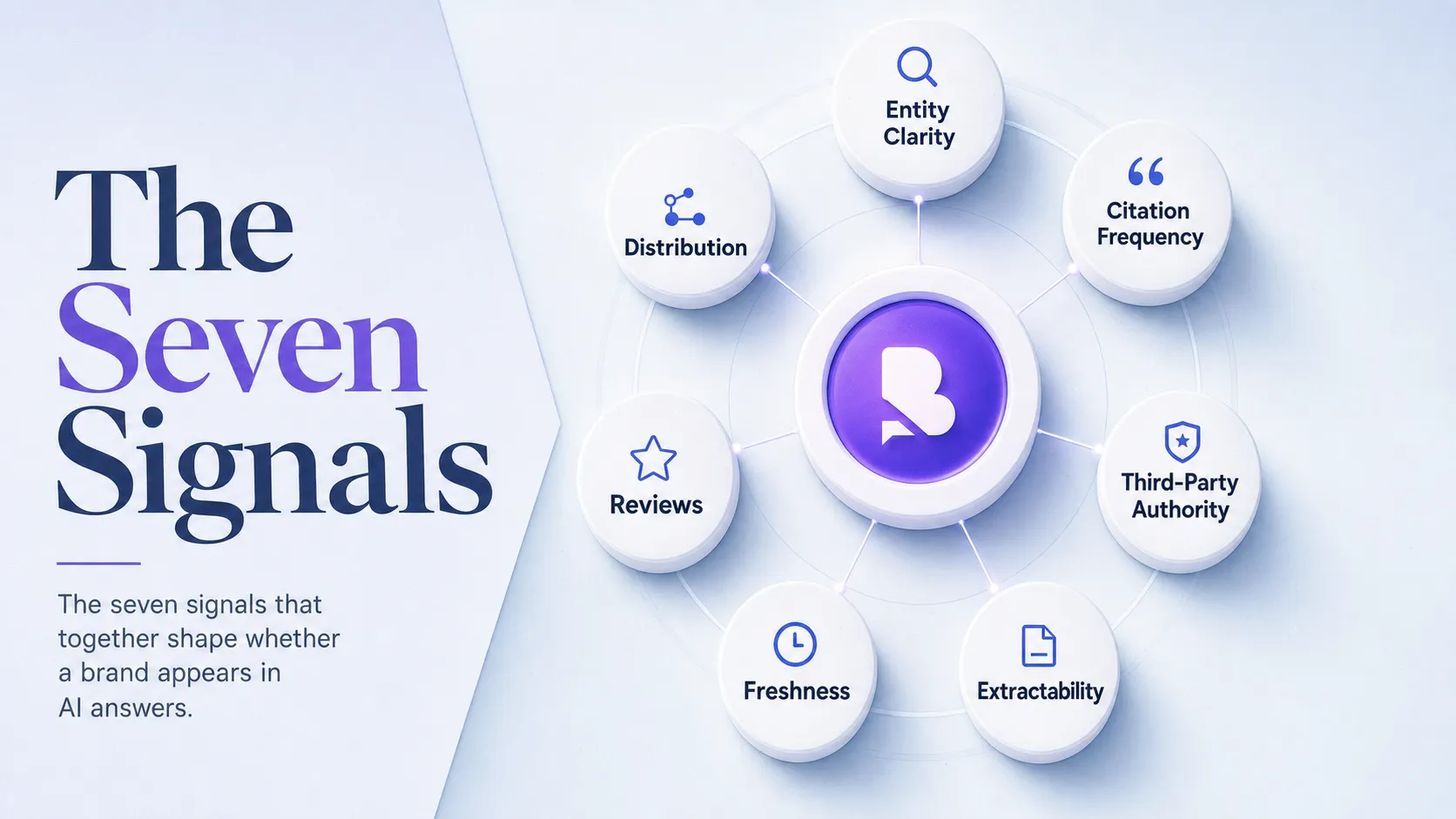
Seven components decide whether your SaaS brand shows up in AI answers. Each one is a lever you can strengthen, and brands with clearer entities and broader third-party coverage surface more consistently across engines.
Brand and Entity Clarity
Entity clarity is how confidently an AI model can identify who you are and which category you belong to. When the model is unsure whether “Acme” is your SaaS product, a hardware maker, or a cartoon reference, it hedges or omits you. Clear, consistent entity signals across the web resolve that ambiguity. This is the foundation, and entity SEO is how you build it.
Citation Frequency
Citation frequency is how often trusted sources mention your brand in content the engines read. More mentions across independent sources give the model more evidence that you belong in the answer. One mention is noise. Repeated mentions across sources become a pattern the model trusts.
Third-Party Authority
Third-party authority is the strength and reputation of the sources naming you. A mention on a respected industry publication carries more weight than one on a thin, unknown page. Earned coverage from sources AI engines already trust does more for visibility than any volume of self-published content.
Content Extractability
Content extractability is how easily an AI can lift, summarize, and quote your content. Clear headings, direct answers, and structured data make your pages easy to parse. Content buried in dense prose or locked inside images and PDFs is harder to extract, so it gets skipped.
Freshness
Freshness is whether your content and the mentions around it are current. Some engines, Perplexity in particular, favor recent material heavily. Stale pages and aging mentions lose ground to competitors who keep their content and coverage active.
Review and Reputation Signals
Review and reputation signals are what platforms like G2 and Capterra and community sources say about you. AI models read these as consensus evidence about your product’s quality and fit. Strong, current reviews reinforce your presence in recommendation-style answers.
Distribution Across Trusted Sources
Distribution is whether your visibility spreads across many source types rather than concentrating in one domain. A brand cited across editorial coverage, forums, review sites, and industry roundups shows up more reliably than one whose entire footprint sits on its own blog. Breadth signals that the market talks about you, not just that you talk about yourself.
AI Visibility Signals B2B SaaS Teams Should Track
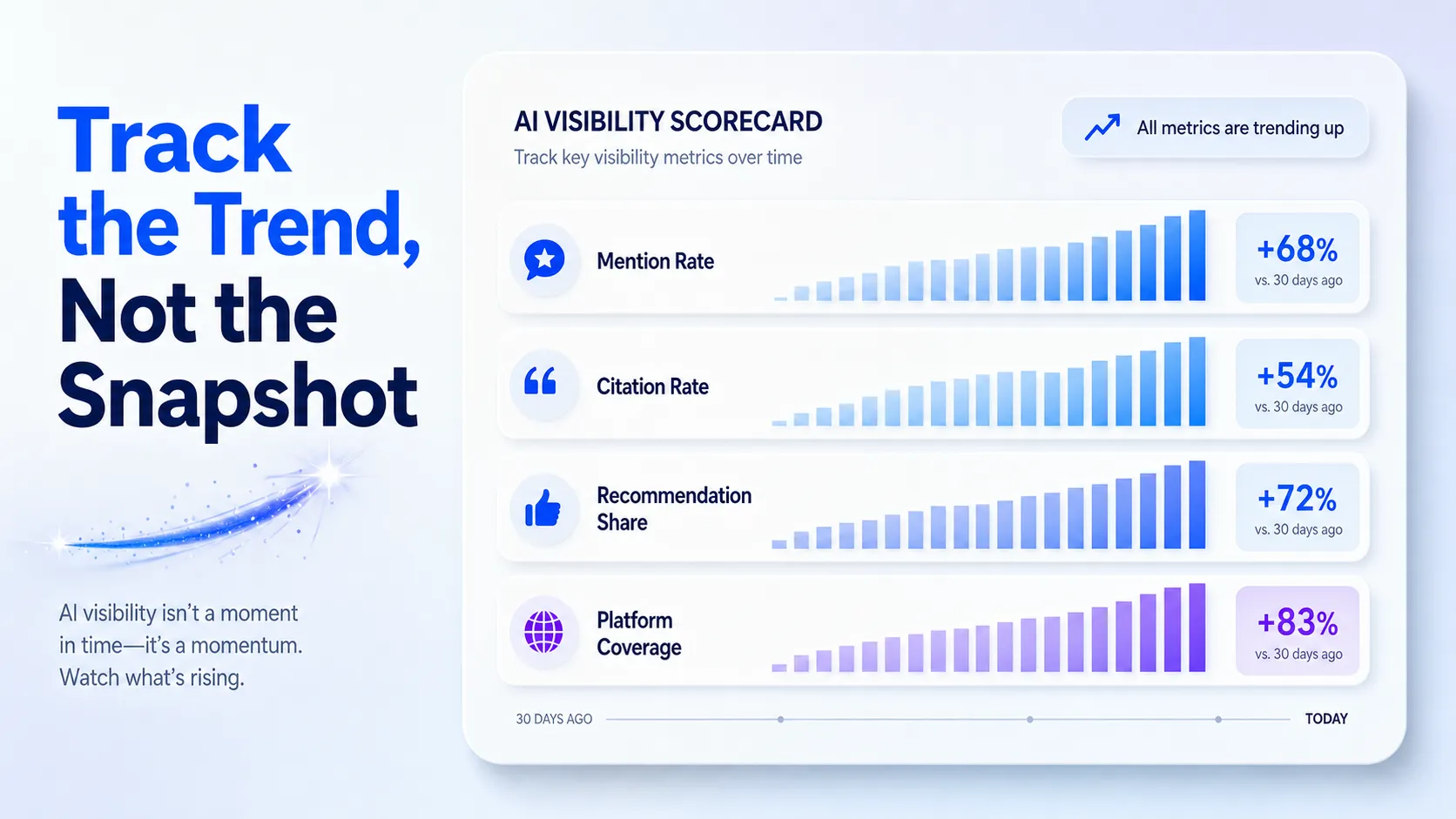
To manage AI visibility, turn the concept into measurable buckets and watch them as trends, not one-off snapshots. A single check tells you where you stand today. A tracked trend tells you whether your work is compounding.
| Signal | What it means | Why it matters | What to watch over time |
|---|---|---|---|
| Brand mention rate | How often your brand is named in relevant AI answers | Presence is the baseline for everything else | Rising share across your target queries |
| Citation rate | How often you are linked or credited as a source | Sourcing signals trust, not just awareness | More answers citing you as evidence |
| Recommendation share | How often you are recommended versus competitors | This is the shortlist you actually want | Your position relative to named rivals |
| Platform coverage | Whether you appear across multiple engines | Coverage in one engine is not coverage everywhere | Gaps closing across ChatGPT, Perplexity, Gemini |
| Sentiment and context | Whether mentions are positive, neutral, or qualified | How you are described shapes buyer trust | Consistent, accurate framing |
| Conversion influence | Whether AI exposure ties to traffic, signups, or demos | Connects visibility to pipeline | Downstream lift from AI-referred sessions |
Distribution reveals a trap worth naming. A benchmark study of 50 B2B SaaS companies found ten brands with perfect sentiment scores of 20 out of 20 but very low mention rates. Buyers and AI models liked them fine. The models just did not name them often enough, because their coverage was too thin. Strong sentiment with weak mention frequency is a distribution problem, not a reputation problem, and you only see it when you track both. To build the ongoing view, work from an AI visibility diagnostic framework.
Common Mistakes and Misconceptions
Most teams stumble on AI visibility in predictable ways. Naming the mistakes upfront sets realistic expectations and keeps you from wasting effort on the wrong lever.
- Treating AI visibility like traditional SEO with a new label. It shares some inputs, but answers are assembled from source consensus, not ranked by page position.
- Assuming one platform strategy works everywhere. Each engine weights sources and freshness differently, so a single approach underperforms on at least one.
- Chasing traffic alone. Mentions, citations, and recommendations are the real currency, and many happen with no click at all.
- Relying only on owned content. Third-party sources carry the trust signal, and self-published pages cannot substitute for earned coverage.
- Expecting instant results. Visibility depends on source diversity and recency building up, which takes weeks to months, not days.
- Assuming a positive reputation guarantees visibility. Good sentiment without enough mentions leaves you liked and unnamed.
The through-line across these is the same benchmark lesson: being well-regarded is not the same as being frequently mentioned or broadly covered. Tone alone does not put you in the answer. Distribution does.
Making AI Visibility an Operating System, Not a Campaign
AI visibility is now a discovery layer for B2B SaaS that sits alongside search, not inside it. It spans content, third-party authority, and measurement, and it rewards teams who treat it as a running system rather than a one-time push. The brands that win here are the ones tracking their position across engines and steadily strengthening the signals that put them in answers. If you’d rather hand that work off, start with our buyer guide to AI visibility agencies or the GEO agencies we rank for SaaS.
The direction is clear. As more buyers open their research inside an assistant, the answer becomes the shortlist, and the shortlist becomes the pipeline. Teams that establish a baseline now, then improve it month over month, build a lead that compounds while competitors are still measuring clicks.
Start with one concrete step: establish where you stand before you optimize anything. Book a strategy call to see where your B2B SaaS brand appears in AI answers today, and where competitors are getting named instead.
Frequently Asked Questions
What is AI visibility in B2B SaaS?
AI visibility in B2B SaaS is how often and how prominently your brand appears, gets cited, or gets recommended inside AI-generated answers on ChatGPT, Perplexity, Claude, Gemini, and Google AI Overviews. It is measured by mentions, citations, and recommendation placement rather than clicks or rankings. It matters because buyers increasingly ask AI assistants for vendor options before visiting any website.
How do you measure AI visibility without a paid tool?
You measure it by running a fixed set of buyer-intent prompts across each engine and recording whether your brand is named, cited, or recommended, then repeating that on a regular cadence to track the trend. A simple spreadsheet with one row per query and one column per platform captures mention rate, citation rate, and recommendation share over time. The key is consistency: same prompts, same schedule, so month-over-month change is real signal, not noise.
Is AI visibility just SEO under a new name?
No. SEO optimizes a page to rank in a list of links, while AI visibility works to get your brand named inside an assembled answer built from source consensus. A page can rank first and still go unmentioned in the AI answer for the same query, because the engine draws on training data, live sources, and third-party mentions rather than page position alone. They overlap in inputs but measure different outcomes.
Which AI platforms matter most for SaaS brands?
ChatGPT matters most for reach, since a G2 survey found 47% of B2B buyers pick it as their preferred assistant, but Perplexity, Claude, Gemini, and Google AI Overviews each carry weight depending on your buyers. Because coverage is uneven across engines, the right answer is to track all of them rather than betting on one. Prioritize the engines where your specific buyers start their research.
Why is my SaaS brand showing up in Perplexity but not ChatGPT?
Because the two engines weight sources and freshness differently. Perplexity leans on recent, live web content, so new mentions and updated pages influence it within weeks, while ChatGPT reflects mentions more slowly and draws more heavily on established, repeated coverage. If you have recent third-party mentions but limited long-standing citation history, Perplexity will surface you first and ChatGPT will catch up as your coverage deepens and ages into its sources.