

Most AEO tool comparisons rank platforms by feature depth. The question buyers actually ask first is different: what does my budget actually buy? AEO tool pricing splits into four real tiers, and the jump between them is not gradual — each tier unlocks a genuinely different capability, not just more of the same. This page breaks down what you get at each price point. For a ranked comparison of specific platforms by monitoring depth, see the AEO tools tested for improving ChatGPT mentions.
The Four AEO Tool Pricing Tiers
Free / Manual (No Cost)
Running your own prompt list directly in ChatGPT on a fixed schedule, logging results in a spreadsheet. Zero subscription cost, real time cost — expect 2-4 hours monthly for a basic 10-15 prompt set. This tier answers “am I mentioned at all” but produces no trend data, no competitor benchmarking, and no alerting.
Entry ($0-$100/month)
Budget-friendly single-purpose tools that automate the manual process above: scheduled prompt runs, basic mention logging, simple trend charts. This tier is the right fit for a single brand tracking its own ChatGPT presence with no competitive benchmarking need.
Mid-Tier ($100-$500/month)
Multi-engine platforms covering ChatGPT plus Perplexity, Gemini, and AI Overviews, with competitor tracking, sentiment tagging, and citation-source analysis. This is where most growth-stage B2B teams land — enough depth to act on the data, not enough overhead to need a dedicated analyst.
Enterprise ($500+/month)
Full AI visibility suites with custom prompt libraries, stakeholder-ready dashboards, API access, and dedicated support. The jump here isn’t more monitoring — it’s monitoring built for reporting to leadership and integrating into existing BI tooling.
Which Tier Is Actually Worth It
The free/manual tier is a legitimate starting point to validate that ChatGPT visibility matters for your category before spending anything. Once you’ve confirmed it does, the entry tier rarely justifies itself for long — most teams outgrow single-engine tracking within a quarter as they realize buyers check more than one AI platform. The mid-tier is where the real decision lives for most companies. Enterprise only pays off once AI visibility reporting needs to reach a board or executive team on a recurring basis.
Why This Shortlist Matters for ChatGPT Brand Mentions
The AEO tool market is noisy because four categories blur together. AEO tools, GEO tools (generative engine optimization, tracking visibility across AI search), AI visibility platforms, and classic brand monitoring software all claim to watch ChatGPT, but they solve different problems. A social listening tool tells you who tweeted your name. It does not tell you whether ChatGPT recommends you when a buyer asks for the best option in your category.
Manual checking will not hold up either. Ask ChatGPT the same question twice and you can get two different answers, with your brand named once and skipped the next time. That variance is the whole reason tool-based tracking exists.
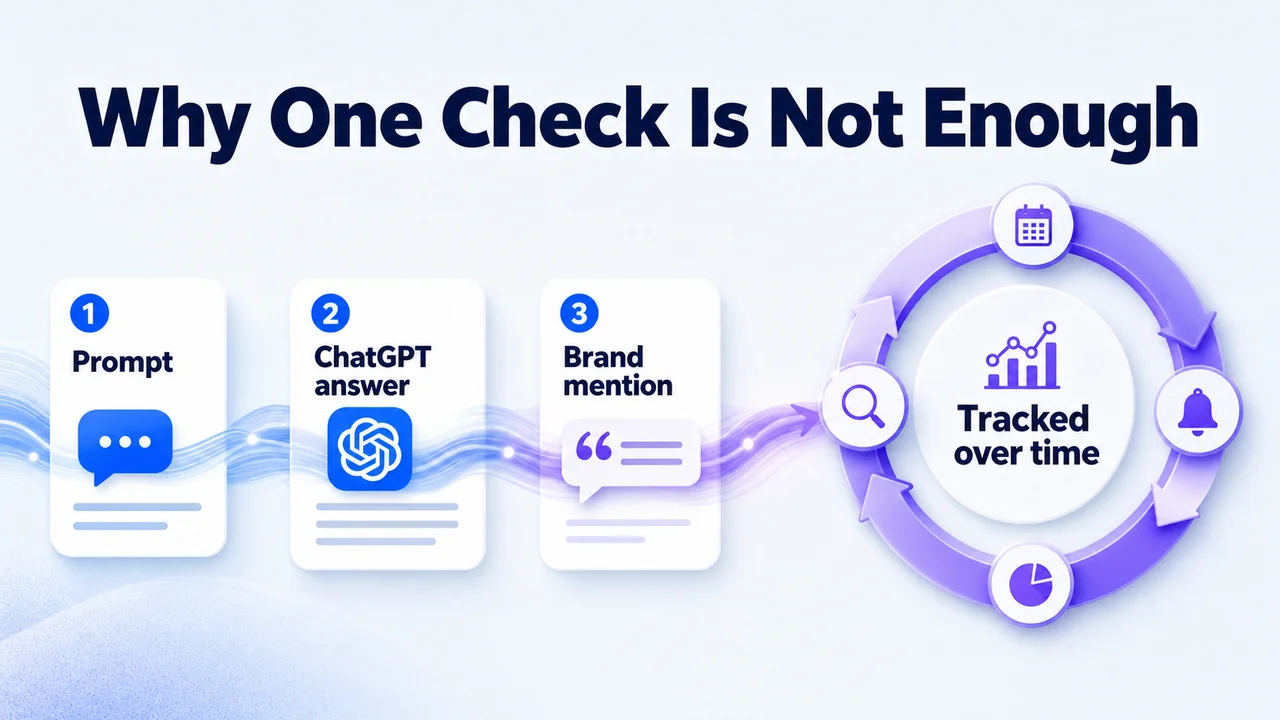
The real job is not “does ChatGPT mention us” on any given day. It is which tool can reliably track mentions, citations, and competitor movement over weeks. In real monitoring programs, the same brand surfaces in one prompt set and vanishes in another, so a single screenshot proves nothing. ChatGPT is the focus here, but most of these tools also touch Perplexity, Gemini, or broader AI visibility, which matters if you want one dashboard instead of five.
How We Ranked the Best AEO Tools
The ranking leans on a simple rule: the best tool is the one your team will actually open every week, not the one with the longest feature list. Here are the criteria that shaped the order, weighted toward what matters for ChatGPT specifically.
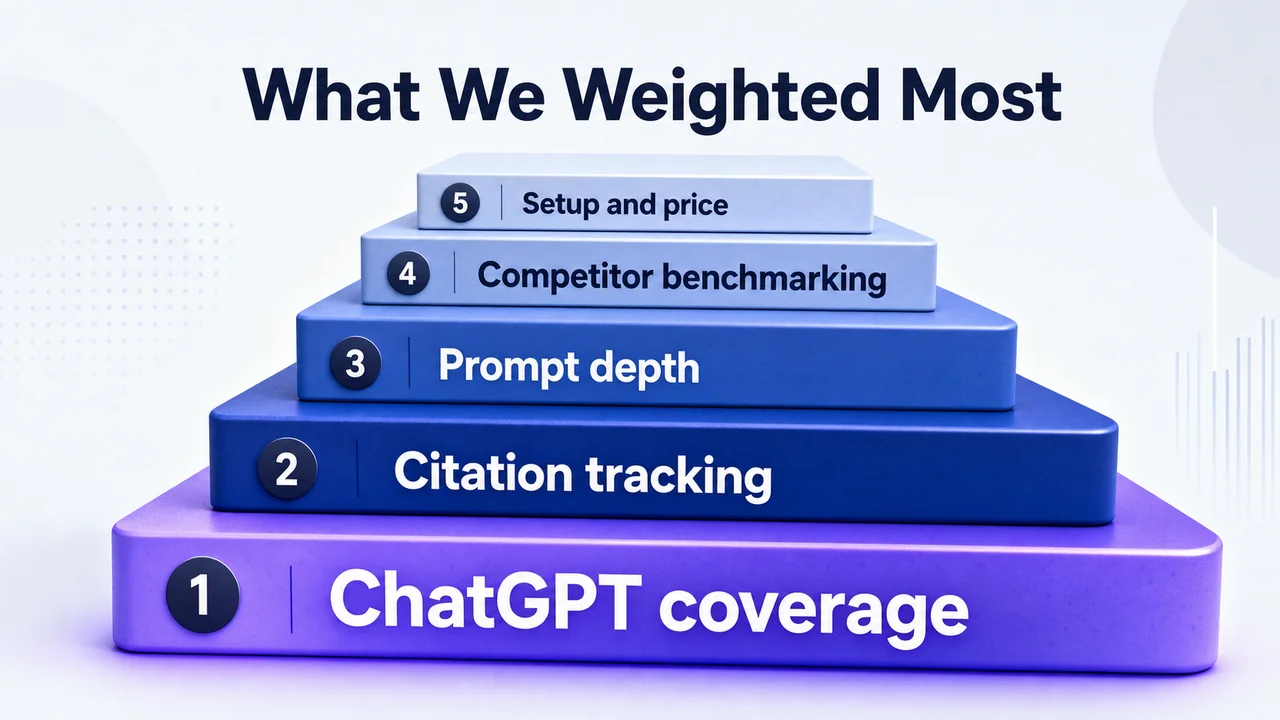
- ChatGPT coverage, weighted highest because this guide is about brand mentions in ChatGPT.
- Citation tracking and mention tracking, scored separately because a tool that does one is not interchangeable with one that does both.
- Prompt testing depth, including repeated runs, saved prompt sets, and trend lines.
- Competitor benchmarking, so you can see share of voice against rivals.
- Reporting quality, setup effort, and budget fit.
A brand mention is ChatGPT naming you in its answer. A citation is ChatGPT linking to a source. Tools that only catch one miss half the picture, which is why both sit near the top of the list. Generic SEO monitoring with a thin AI add-on ranks lower here, because it rarely answers the question you came with.
The 7 Best AEO Tools for Brand Mentions in ChatGPT
Each tool below gets one clear reason to choose it and one honest limitation. The field set is identical across every item so you can compare like for like, and the strengths are deliberately different so the ranking means something.
1. Hall: Best for Deep Cross-Engine Monitoring
Hall is an AI visibility platform built for teams that need deep, repeatable monitoring across ChatGPT and other answer engines. It tracks where your brand shows up in AI-generated answers, scores citations, and lets you compare visibility across engines instead of guessing from a single prompt. The strength here is consistency: you get trend data you can take to a leadership review, not a one-off snapshot. The candid limitation is weight. Setup and ongoing use ask more of your team than a quick grader does, so it rewards teams with a real monitoring cadence.
- Best for: Teams that need deep, cross-engine ChatGPT monitoring
- ChatGPT monitoring: Strong
- Citation tracking: Strong
- Standout feature: Cross-engine visibility comparison
- Pricing: Subscription, paid plans
2. Ahrefs Brand Radar: Best for Existing Ahrefs Teams
Ahrefs Brand Radar is the natural pick for SEO teams already living inside Ahrefs. It monitors brand visibility, tracks citations, and benchmarks competitive positioning without forcing you into a separate tool and a separate login. The benefit is adoption speed. If your content and competitor analysis already run here, ChatGPT mention tracking slots into a workflow your team knows. Where it falls short is specialization. It is not as deep on prompt research or AI-specific reporting as a dedicated AEO platform, so heavy prompt testers will feel the ceiling.
- Best for: In-house SEO teams and agencies already using Ahrefs
- ChatGPT monitoring: Strong
- Citation tracking: Strong
- Standout feature: Cited Domains report alongside Brand Radar
- Pricing: Included in Ahrefs subscription
3. Keyword.com: Best for a Simple Monitoring Workflow
Keyword.com is the simplest way to track ChatGPT visibility and brand mentions without a complicated rollout. Its AI Visibility Tracker lets you add prompts, select OpenAI GPT as the engine, and watch mention and sentiment metrics in outputs that read clearly. The benefit is the low learning curve: a growth team can see whether ChatGPT names the brand within an afternoon. The tradeoff is depth. It is less advanced than enterprise platforms for broad benchmarking and cross-engine AI search reporting, so it fits the “are we even mentioned” question better than a full competitive program.
- Best for: Growth and smaller marketing teams wanting a clear workflow
- ChatGPT monitoring: Strong
- Citation tracking: Moderate
- Standout feature: Prompt-level ChatGPT visibility tracking
- Pricing: Paid subscription, monthly or annual
4. Peec AI: Best for Prompt-Centric Testing
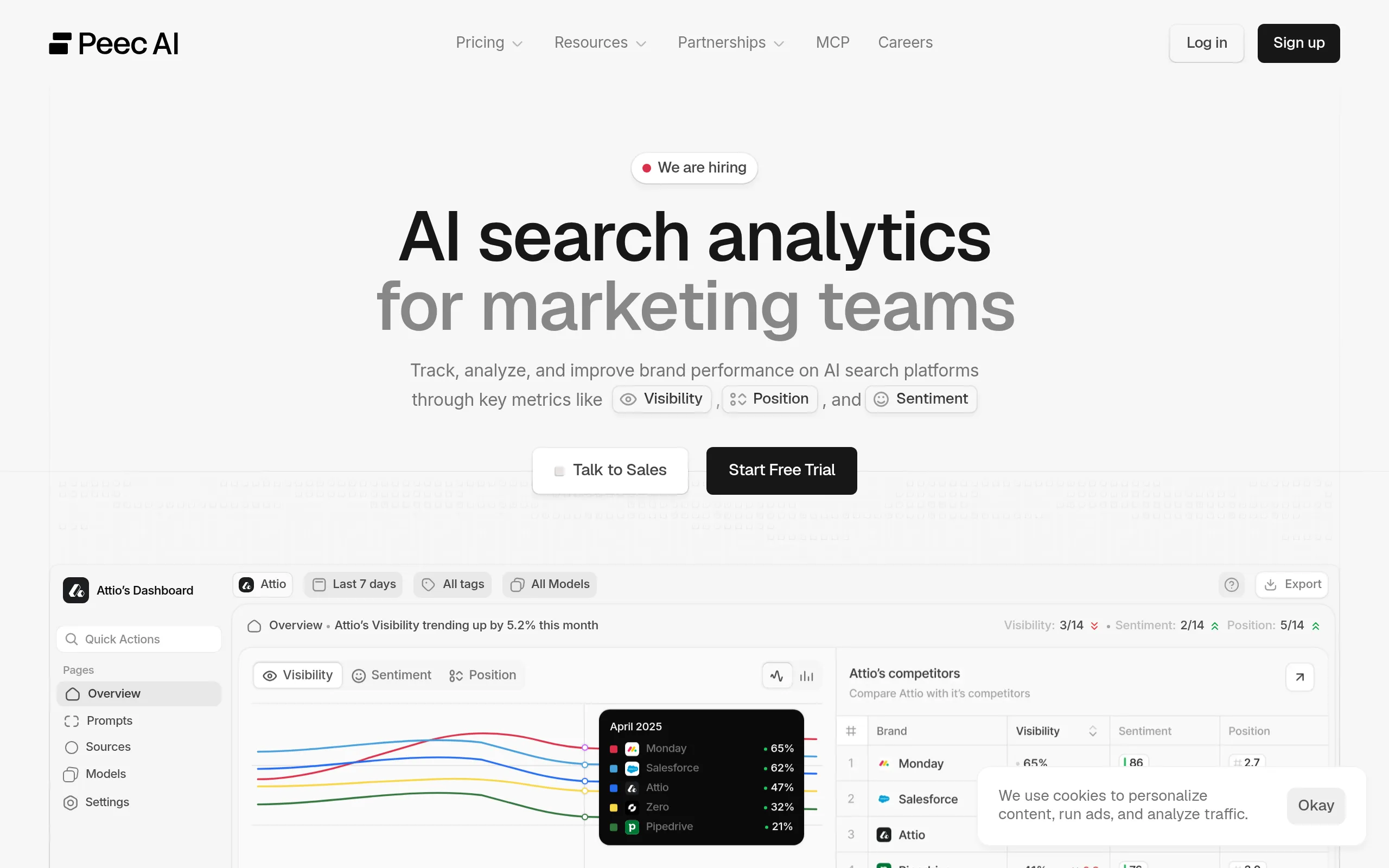
Peec AI is a prompt-centric AEO tool for teams that care more about prompt performance than broad brand monitoring. It leans into prompt monitoring, cross-engine visibility, and competitive comparisons across AI answers, so you can see how a brand surfaces as prompts shift. The benefit shows up when you are testing variations and watching which queries name you and which skip you. The limitation is scope. It can feel specialized next to an all-in-one SEO suite, and it will not replace your broader reporting stack, so most teams run it alongside something else.
- Best for: Agencies and strategy teams needing prompt-level insight
- ChatGPT monitoring: Strong
- Citation tracking: Moderate
- Standout feature: Cross-engine prompt comparison
- Pricing: Subscription, paid plans
5. Otterly.ai: Best Budget Entry Point
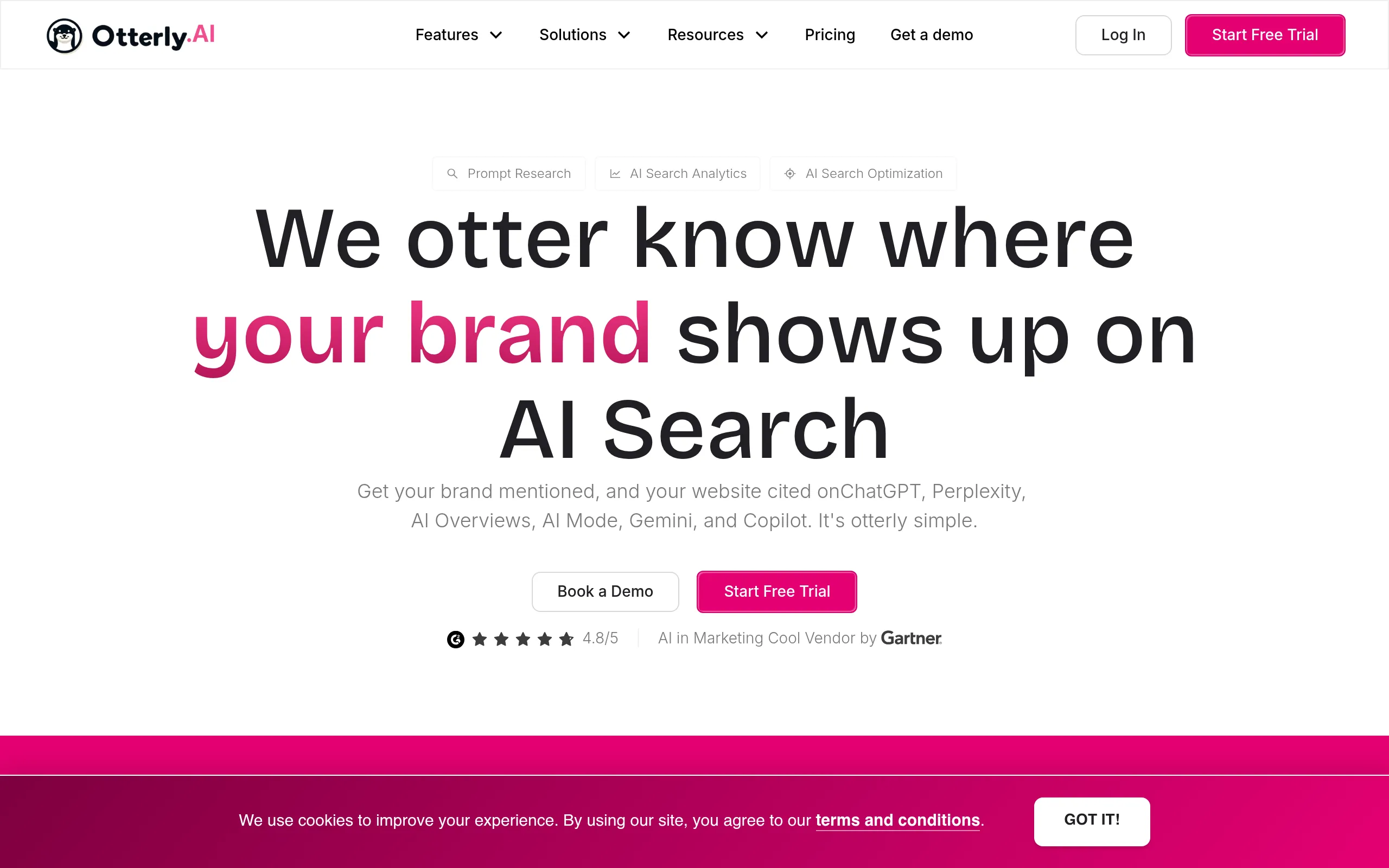
Otterly.ai is the lightweight, lower-cost option for teams that want to start monitoring fast. It handles recurring checks, quick visibility baselines, and low-friction prompt tracking, which makes it a sensible first step before a bigger investment. The benefit is the simple setup paired with enough functionality to prove that AI visibility monitoring earns its keep. The honest limitation is that reporting and analytical depth are thinner than the higher-ranked tools, so as your program matures you will likely outgrow it.
- Best for: Startups, freelancers, and small teams on a budget
- ChatGPT monitoring: Moderate
- Citation tracking: Moderate
- Standout feature: Low-friction recurring prompt checks
- Pricing: Starts around 20 euros per month
6. HubSpot AEO Grader: Best for a Fast Free Diagnostic
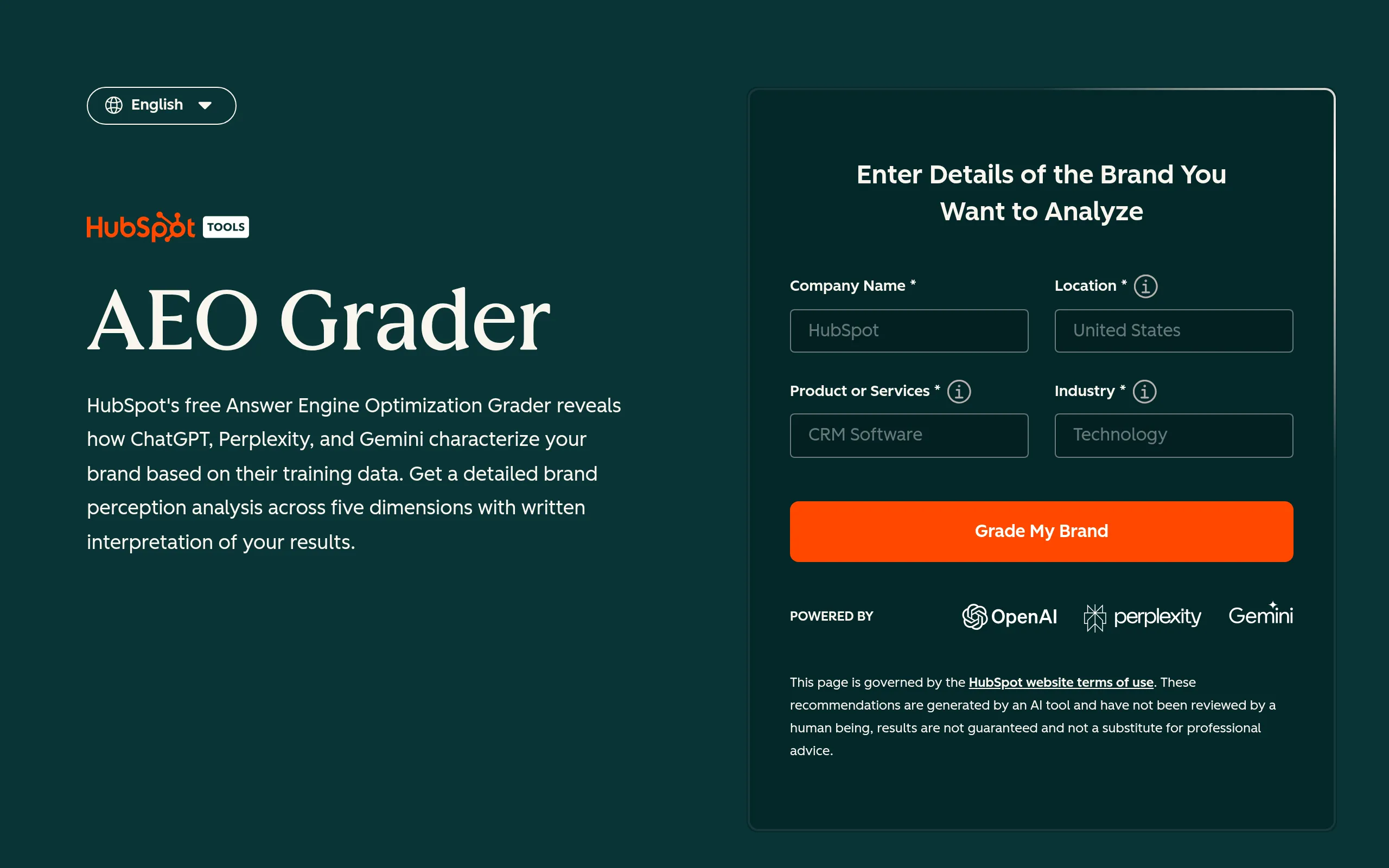
The HubSpot AEO Grader is the low-friction entry point for a baseline read on AI visibility. It scores how answer engines including ChatGPT, Perplexity, and Gemini represent your brand across five dimensions, then returns a composite grade out of 100. The benefit is speed: it is easy to run and useful for a first-pass audit or an executive-friendly benchmark. The limitation is that it is a snapshot, not a monitoring system. It will not carry serious ongoing AEO work on its own, so treat it as the starting line rather than the finish.
- Best for: Teams needing a quick diagnostic or demo-friendly benchmark
- ChatGPT monitoring: Moderate
- Citation tracking: Light
- Standout feature: Five-dimension composite AEO score
- Pricing: Free grader; paid HubSpot AEO from 50 dollars per month
7. BrandMentions: Best for Wider Brand Context
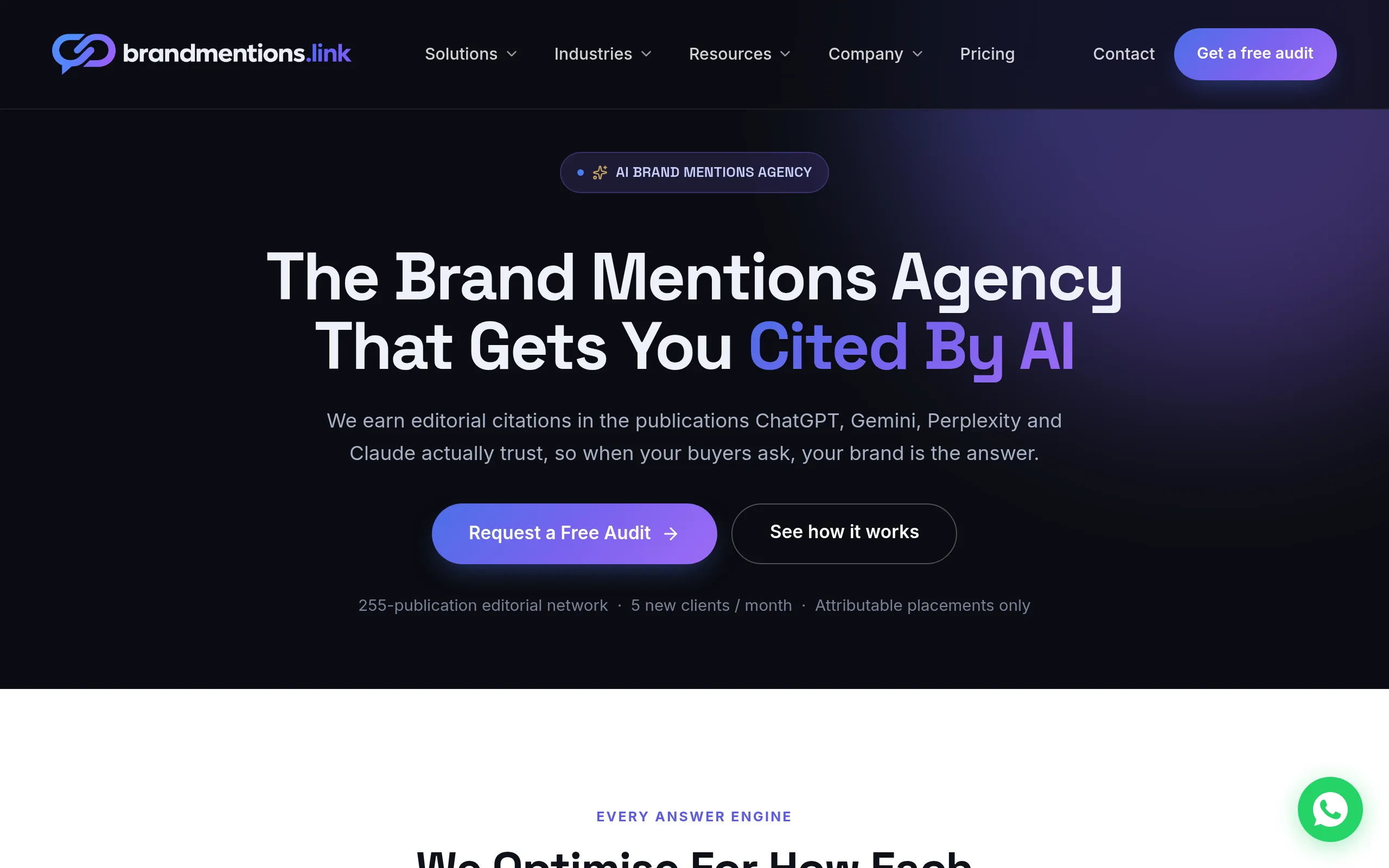
BrandMentions is the broader brand monitoring option that complements dedicated AEO tools rather than replacing them. Wider web and brand monitoring helps you see the context around mentions, the reviews, threads, and editorial coverage that feed how AI answers describe you. The benefit lands when you want AI-adjacent brand monitoring plus broad mention coverage in one place, since the same third-party signals that shape sentiment also shape what ChatGPT repeats. The limitation is focus: it is less specialized for ChatGPT citation analytics than an AEO-first platform, so pair it with one when citation depth is the priority.
- Best for: Teams extending brand monitoring into AI visibility
- ChatGPT monitoring: Moderate
- Citation tracking: Moderate
- Standout feature: Web-wide mention coverage that feeds AI context
- Pricing: Tiered monthly, from $1,997
Comparison Summary Table
Here is the full shortlist at a glance, so you can narrow it fast. Read the “Best for” column first, then check ChatGPT monitoring strength against your main need.
| Tool | Best for | ChatGPT monitoring | Citation tracking |
|---|---|---|---|
| Hall | Deep cross-engine monitoring | Strong | Strong |
| Ahrefs Brand Radar | Existing Ahrefs teams | Strong | Strong |
| Keyword.com | Simple monitoring workflow | Strong | Moderate |
| Peec AI | Prompt-centric testing | Strong | Moderate |
| Otterly.ai | Budget entry point | Moderate | Moderate |
| HubSpot AEO Grader | Fast free diagnostic | Moderate | Light |
| BrandMentions | Wider brand context | Moderate | Moderate |
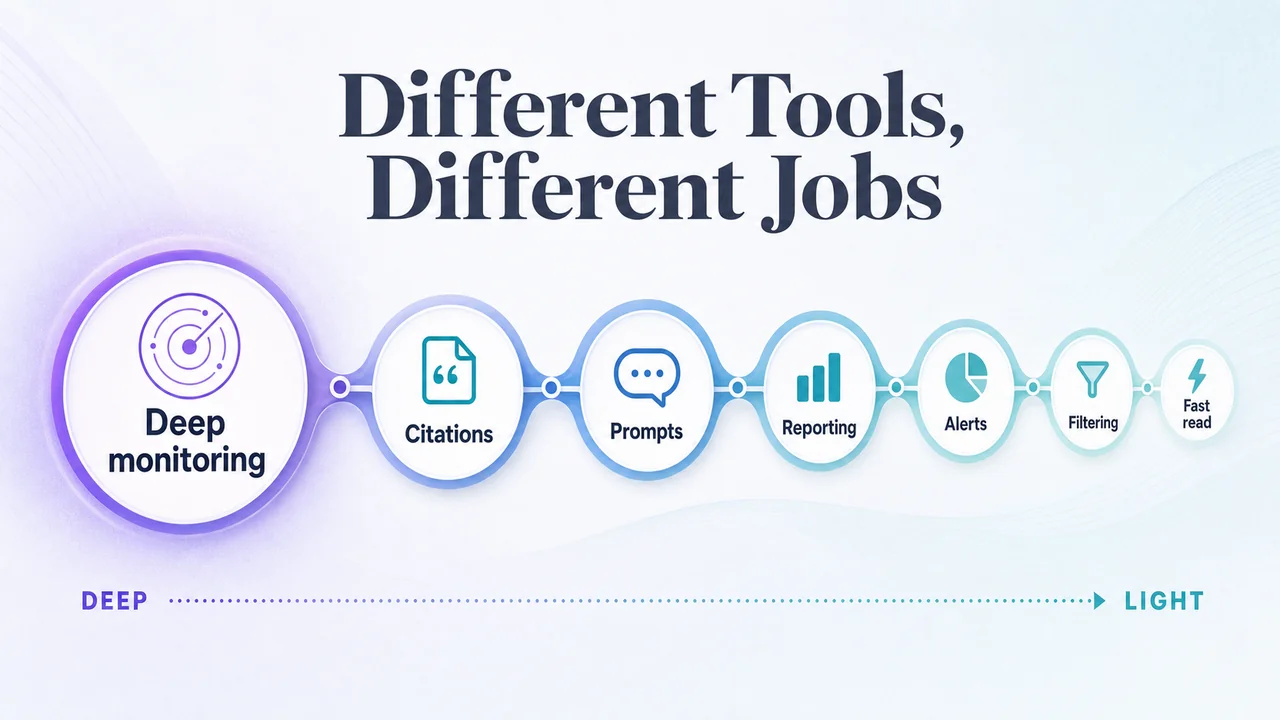
How we picked: tools were ranked on ChatGPT coverage first, then citation and mention tracking, prompt testing depth, competitor benchmarking, reporting quality, and setup and budget fit. Teams usually shortlist by reporting depth first, then price, then setup speed, which is the order to walk the table in. The top of the list rewards monitoring depth, the bottom rewards speed and low cost.
Which Tool Fits Which Team
The right pick changes with team size, budget, and what you are optimizing for. Here is the recommendation by use case, made explicit so you can decide today.
- Enterprise SEO and AI visibility teams: Hall, for the deepest cross-engine monitoring and repeatable reporting.
- SEO teams already in Ahrefs: Ahrefs Brand Radar, so ChatGPT tracking lives where your other work already does.
- Growth and small marketing teams: Keyword.com for a clear workflow, or Otterly.ai when budget is the hard constraint.
- Agencies and strategy teams: Peec AI for prompt-level insight across engines.
- Teams that just need a baseline: the HubSpot AEO Grader for a fast read before investing.
A lower-cost tool is enough when your main question is simply whether ChatGPT names you for a handful of buying prompts. An enterprise platform earns the extra spend when you need trend data, competitor share of voice, and citation analytics you can defend in a quarterly review. The buyer pattern worth noting: small teams tend to overbuy reporting and underbuy ease of use, while enterprises do the reverse. The practical rule is to choose the smallest tool that reliably answers your main prompts, then upgrade only when you outgrow it. If you want the manual baseline first, our guide on how to monitor ChatGPT brand mentions walks through the free checks before you commit to a tool.
FAQs About Tracking Brand Mentions in ChatGPT
How do I monitor brand mentions in ChatGPT?
You monitor brand mentions in ChatGPT by running a fixed set of buying prompts on a schedule and recording whether your brand is named each time. Manual checks give you a rough baseline, but ChatGPT answers vary run to run, so a tool like Keyword.com or Hall gives you the repeatable trend data you can trust. For a deeper walkthrough, see our guide on tools for monitoring ChatGPT mentions.
What is the best tool for tracking ChatGPT brand mentions?
There is no single best tool; the right one depends on depth and budget. Hall fits teams needing deep cross-engine monitoring, Keyword.com suits smaller teams wanting simplicity, and the HubSpot AEO Grader works for a fast free baseline. Start with the question you most need answered, then pick the smallest tool that answers it reliably.
Are brand mentions and citations the same thing in ChatGPT?
No. A brand mention is ChatGPT naming your brand inside its answer, while a citation is ChatGPT linking to a source. They need separate tracking and different fixes, which is why the criteria above score them apart. You can be mentioned without being cited, and cited without being mentioned by name.
Can I track ChatGPT brand mentions for free?
Yes, partly. The HubSpot AEO Grader gives a free composite read, and you can manually prompt ChatGPT at no cost. The catch is reliability: free and manual methods miss the run-to-run variance that a paid tracker captures, so they work as a starting point rather than an ongoing system. Our guide on how to check brand mentions in ChatGPT covers the manual workflow step by step.
Which AEO tool is best for agencies or enterprise teams?
Agencies usually do best with Peec AI for prompt-level testing or Ahrefs Brand Radar for client work that already uses Ahrefs. Enterprise teams lean toward Hall for cross-engine depth and defensible reporting. The deciding factor is whether you need prompt-level granularity or broad, repeatable monitoring across many engines.
The cleanest way to choose is to stop comparing feature lists and start running your own prompts. Take the three buying questions your customers actually ask, run them through ChatGPT, and see whether your brand shows up. That single test tells you more than any spec sheet, and it shows you which tool you need to track what happens next. Start with the shortlist above, run your top ChatGPT prompts, and pick the tool that gives you the clearest mention and citation data.