
Competitor analysis is the process of identifying businesses that compete for the same customers you do, then systematically evaluating their products, pricing, marketing, and positioning to find strategic advantages for your own company. It turns assumptions about your market into evidence, and evidence into smarter decisions.
But here’s the part most guides skip: as of 2026, competitor analysis isn’t just about tracking what rivals do on their websites and social media. AI search engines like ChatGPT, Perplexity, and Google’s AI Overviews now recommend brands to users in conversational answers. If your competitors show up in those recommendations and you don’t, traditional analysis alone won’t close the gap.
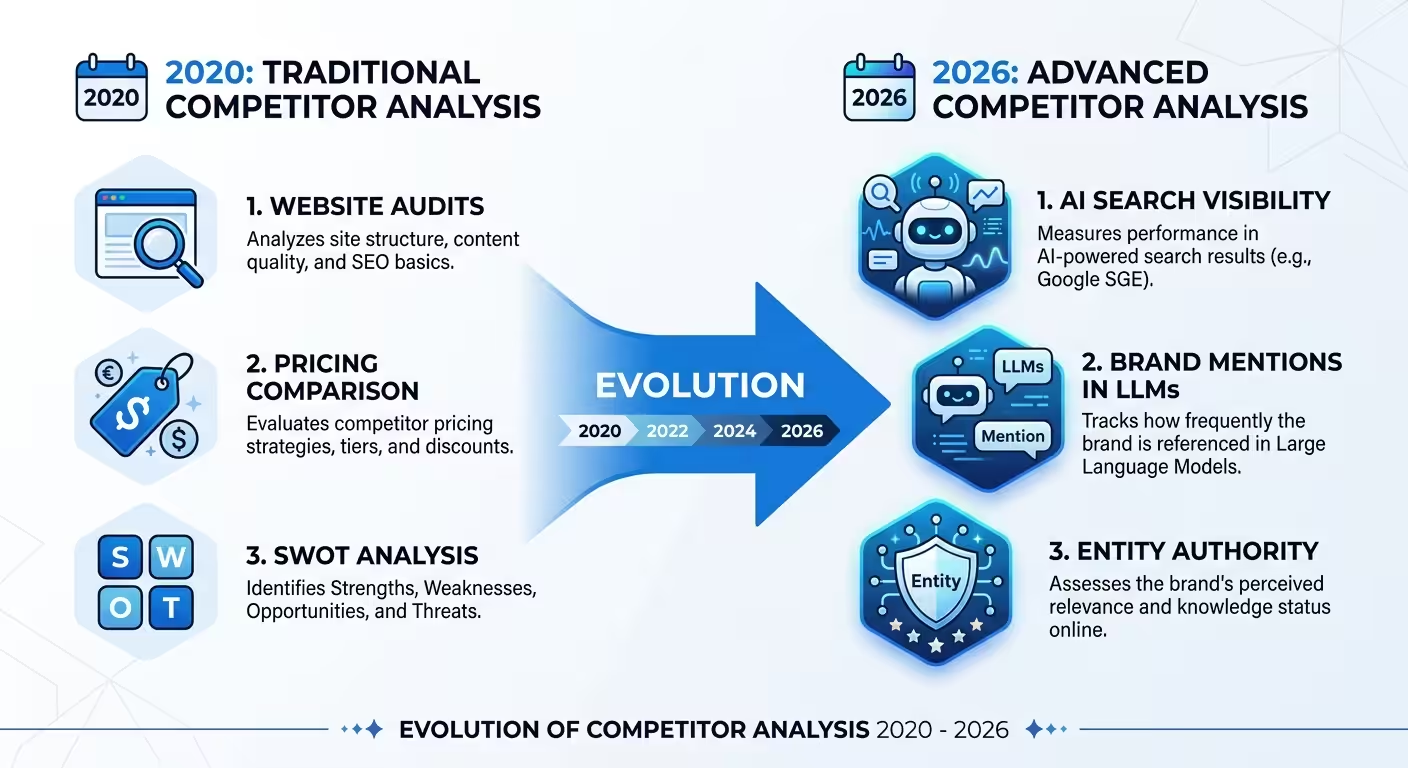
This article breaks down how competitor analysis works, why it matters more now than it did even two years ago, and how to run one that accounts for both traditional and AI-driven visibility.
What Competitor Analysis Actually Involves
Competitor analysis is a structured evaluation of the strengths, weaknesses, strategies, and market positions of businesses that serve the same audience you do. It covers products, pricing, distribution, marketing tactics, brand positioning, and, increasingly, digital visibility across both traditional and AI search surfaces.
The process typically examines three types of competitors:
Direct Competitors
Companies selling similar products or services to the same target customers. A CRM platform competing with another CRM platform.
Indirect Competitors
Companies solving the same problem with a different type of solution. A CRM platform competing with spreadsheet-based project management tools.
Replacement Competitors
Companies or alternatives that could eliminate the need for your category entirely. An AI assistant that automates the workflows your CRM manages.
Most businesses focus only on direct competitors. That’s a mistake. Indirect and replacement competitors often pose the greatest long-term threat because they shift how customers think about the problem itself.
Why Competitor Analysis Matters More in 2026
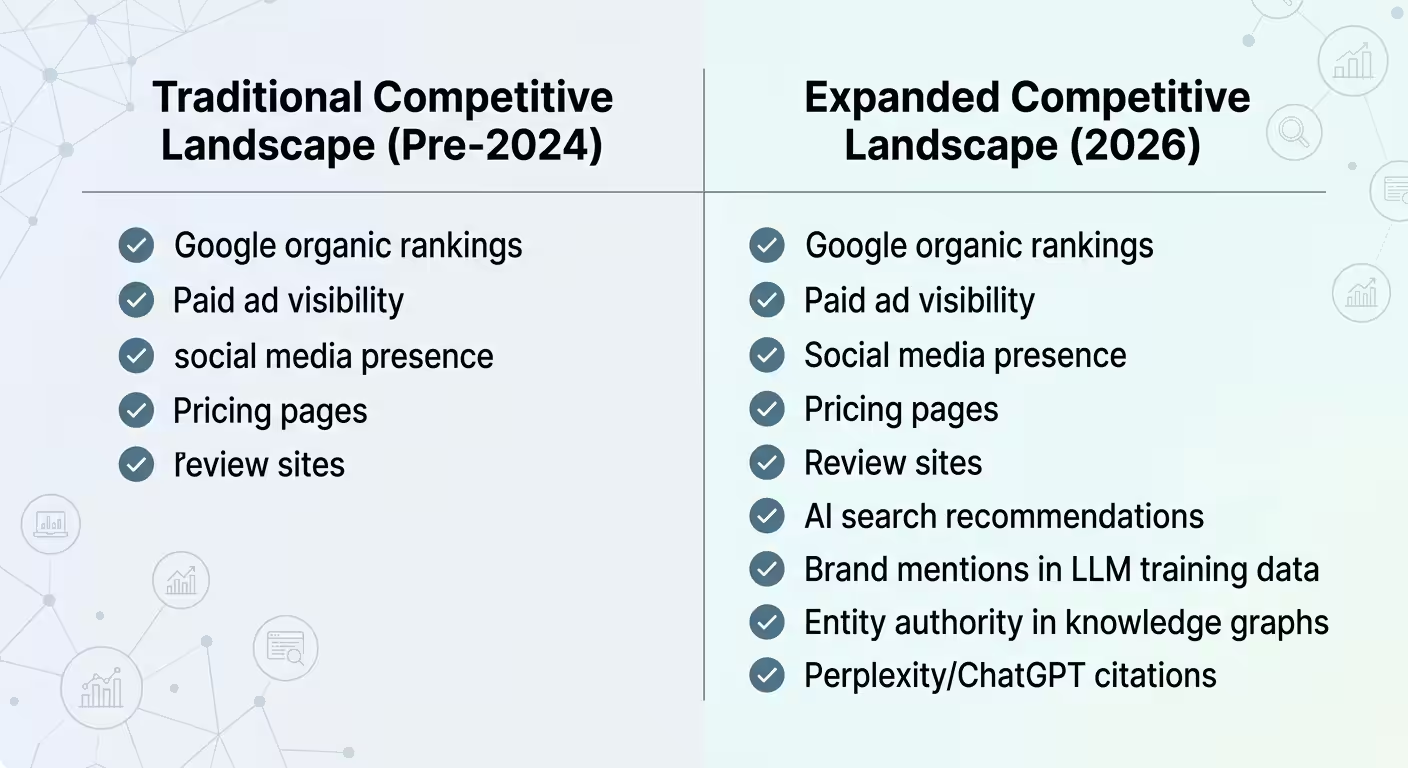
Competitor analysis has always been foundational to business strategy. What has changed since 2024-2025 is where competition plays out.
In February 2024, Gartner forecast that search engine volume would drop 25% by 2026 as AI chatbots and other virtual agents take over more queries. That means your competitive position isn’t just shaped by Google rankings anymore, it’s shaped by whether AI assistants recommend your brand when users ask for solutions in your category.
Here’s what a thorough competitor analysis helps you accomplish in this environment:
Identify Gaps Your Competitors Haven’t Filled
Underserved customer needs represent your clearest path to differentiation.
Understand Pricing Dynamics
Knowing how competitors structure pricing, subscriptions, tiers, bundles, free trials, helps you position your own pricing with confidence.
Spot Marketing Channels That Are Working
If a competitor generates significant engagement from a specific channel you haven’t invested in, that’s a data-driven signal worth acting on.
Benchmark Your Performance
You need external reference points to know whether your growth rate, customer acquisition cost, or content performance is strong or lagging.
Discover AI Visibility Gaps
Your competitors may already appear in AI-generated recommendations. If they do and you don’t, you’re losing a new category of organic demand.
Competitor analysis isn’t a one-time project. Markets shift. New entrants appear. AI models update their training data. The brands that treat this as an ongoing discipline, quarterly at minimum, stay ahead of those that revisit it only when they feel threatened.
How to Conduct a Competitor Analysis: Step by Step
The process below works for B2B and B2C companies at any stage. Adapt the depth of each step to your resources, a startup can complete a useful analysis in a few days, while an enterprise team may spend weeks on a comprehensive version.
Step 1: Identify Your Competitors
Start by listing every company a potential customer might consider instead of you. Use multiple sources to build this list:
- Search engines: Search your product category, primary keywords, and core problem statements on Google, Bing, and DuckDuckGo. Note which brands appear consistently.
- AI assistants: Ask ChatGPT, Perplexity, Gemini, and Claude to recommend solutions in your category. The brands these models mention are your AI-visible competitors, and their presence signals strong entity authority.
- Customer conversations: Ask current customers what alternatives they evaluated before choosing you. Ask churned customers what they switched to.
- Review platforms: Check G2, Capterra, Trustpilot, and industry-specific review sites for brands your customers compare.
- Industry reports: Analyst reports from firms like Gartner, Forrester, or CB Insights often map competitive landscapes you might miss.
Aim for 5-10 competitors initially. Categorize each as direct, indirect, or replacement. Then rank them by relevance, the degree to which they compete for the same customers with the same value proposition.
Pro Insight: Don’t skip AI assistants during competitor identification. According to a 2025 analysis published by Search Engine Journal, brands that appear in AI-generated answers capture an average of 15-20% higher click-through rates to their websites compared to brands that only appear in traditional organic results. If a competitor shows up in these answers and you don’t, that’s a competitive gap worth understanding.
Step 2: Organize Your Research With a Competitor Matrix
Before researching, create a structured document, a spreadsheet, Notion database, or shared doc, with a row for each competitor and columns for every category you plan to evaluate. This prevents scattered notes and makes comparison straightforward later.
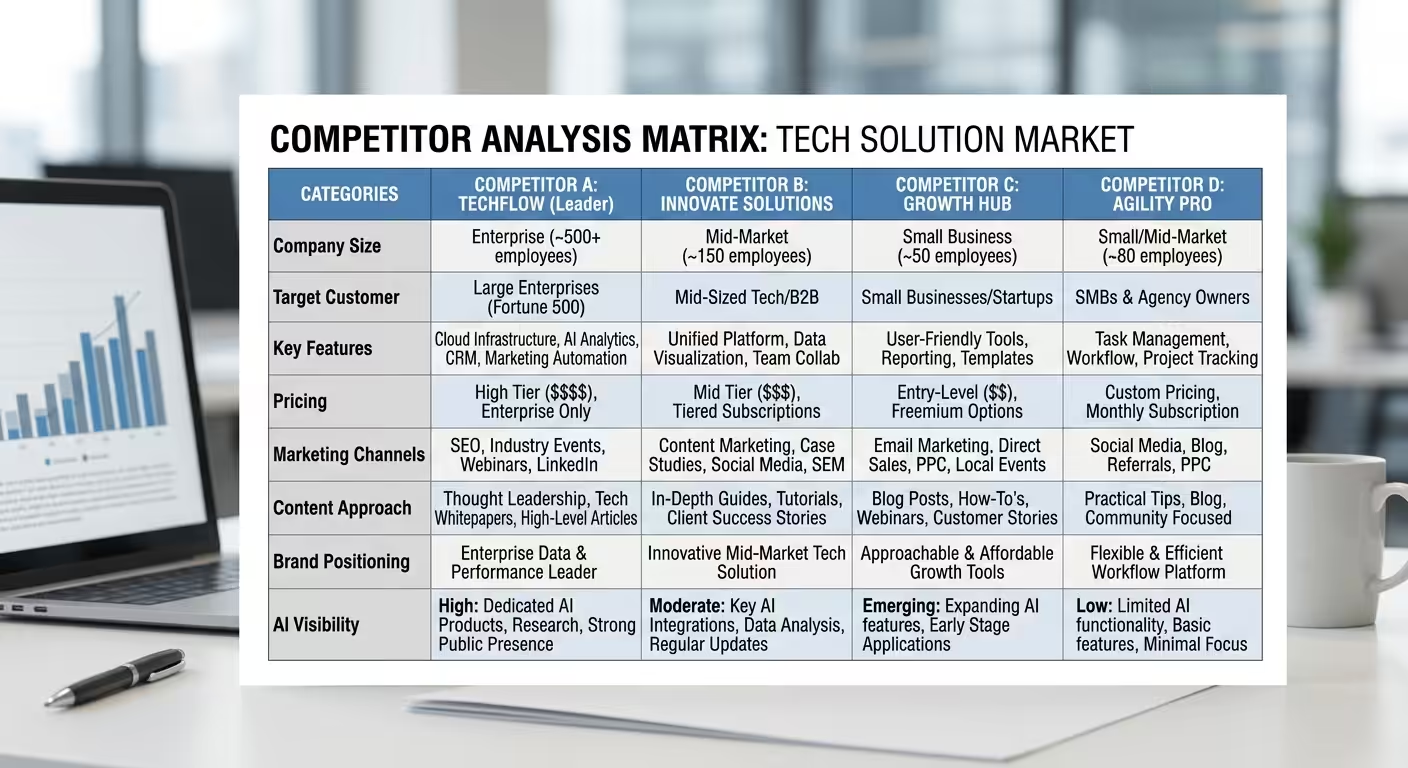
Common column categories include:
- Company overview (size, location, funding, founding year)
- Target customer profile
- Core product features
- Pricing structure
- Marketing channels
- Content strategy
- Brand positioning and messaging
- Customer sentiment (reviews, NPS if available)
- AI search visibility (which AI platforms mention this brand)
This matrix becomes a living document. Update it quarterly.
Step 3: Analyze Their Products and Value Propositions
Examine what each competitor sells, how they describe the value, and what customers say about the experience.
Product features: List core features and compare them to yours. Identify what they offer that you don’t, and what you offer that they lack. Gaps in either direction represent strategic opportunities.
Value proposition: Read each competitor’s homepage, “About” page, and primary landing pages. What problem do they promise to solve? What outcomes do they emphasize? How do they differentiate from alternatives?
Customer feedback: Review sites, social media comments, and support forums reveal what customers love and what frustrates them. Pay special attention to recurring complaints, these are opportunities for your product to stand out.
Action step: Write a one-paragraph summary of each competitor’s core value proposition. Then write one sentence describing the gap between what they promise and what customers report. This gap is your competitive opening.
Step 4: Evaluate Pricing and Packaging
Pricing analysis goes beyond knowing the number on a competitor’s pricing page. You need to understand the structure.
Key questions:
- Do they use subscription tiers, flat-rate pricing, or usage-based billing?
- What’s included at each tier? What costs extra?
- Do they offer free trials, freemium plans, or money-back guarantees?
- How does their pricing compare to the perceived value customers describe in reviews?
- Do they discount aggressively, or do they protect their pricing?
For B2B companies with opaque pricing, you can estimate costs through customer reviews, sales conversations (sign up for their free trial or demo), or third-party comparison sites.
Step 5: Study Their Marketing and Content Strategy
Marketing strategy reveals how competitors attract, engage, and convert customers. This step requires the most detective work, but it yields some of the most actionable insights.
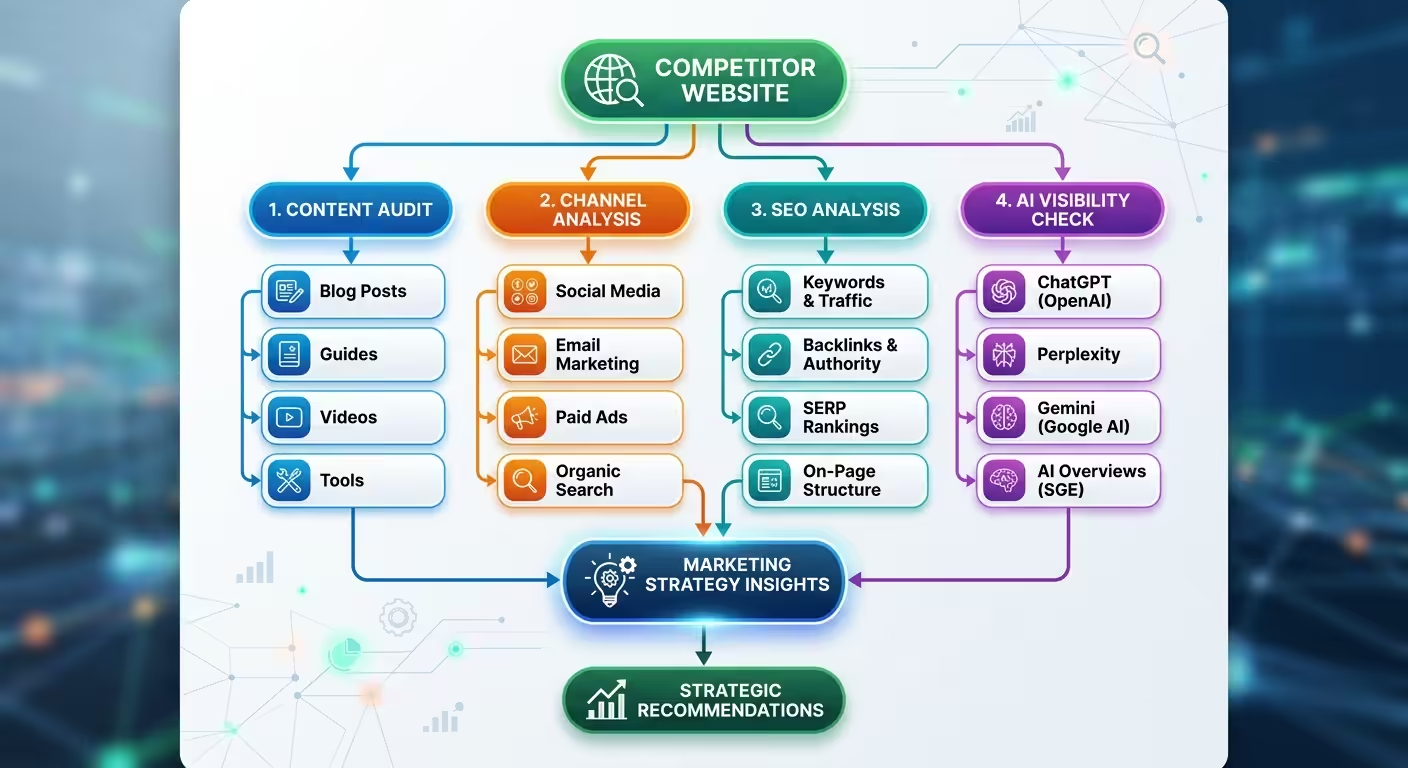
Channels: Where are they most active? Check their website blog, email newsletter (sign up), social media profiles, YouTube channel, podcast presence, paid advertising (use Meta Ad Library and Google Ads Transparency Center), and any offline marketing like events or sponsorships.
Content: What types of content do they publish, blog posts, guides, case studies, videos, webinars, tools? How frequently do they publish? What topics do they focus on? How deep is their coverage?
SEO positioning: Tools like Ahrefs and Semrush can show which keywords drive traffic to competitor sites, which pages rank highest, and where their backlink profile is strong. For a detailed walkthrough on this specific angle, see our guide on analyzing rival sites.
Social media presence: Evaluate not just follower counts but engagement rates, the types of content that generate discussion, and how competitors interact with their audience. Social media monitoring tools can automate this tracking.
AI visibility: This is the dimension most 2026 competitor analyses still miss. Query AI assistants with prompts like “What are the best [your product category] tools?” or “Which companies should I consider for [your service]?” Note which competitors appear in the responses. Brands that show up in AI-generated answers have built what’s known as entity authority, a strong enough presence across high-quality sources that AI models recognize and recommend them. You can check whether AI mentions your brand and compare that visibility against competitors.
Step 6: Assess Brand Positioning and Reputation
Brand positioning defines how a company wants to be perceived. Brand reputation reflects how customers and the market actually perceive it.
Evaluate each competitor’s positioning by examining:
- Messaging tone: Are they formal or casual? Technical or accessible? Premium or budget-conscious?
- Core promise: What transformation or outcome do they emphasize?
- Visual identity: How does their design, color palette, and imagery reinforce their positioning?
- Reputation signals: What do review sites, social media mentions, and press coverage reveal about how the market perceives this brand? Tools for sentiment analysis for brands can quantify this.
The gap between a competitor’s intended positioning and their actual reputation is strategically valuable. A brand that positions itself as “premium” but receives frequent complaints about customer support has a vulnerability you can exploit.
Step 7: Run a SWOT Analysis
A SWOT analysis consolidates your research into a decision-ready format. For each competitor, and for your own company, document:
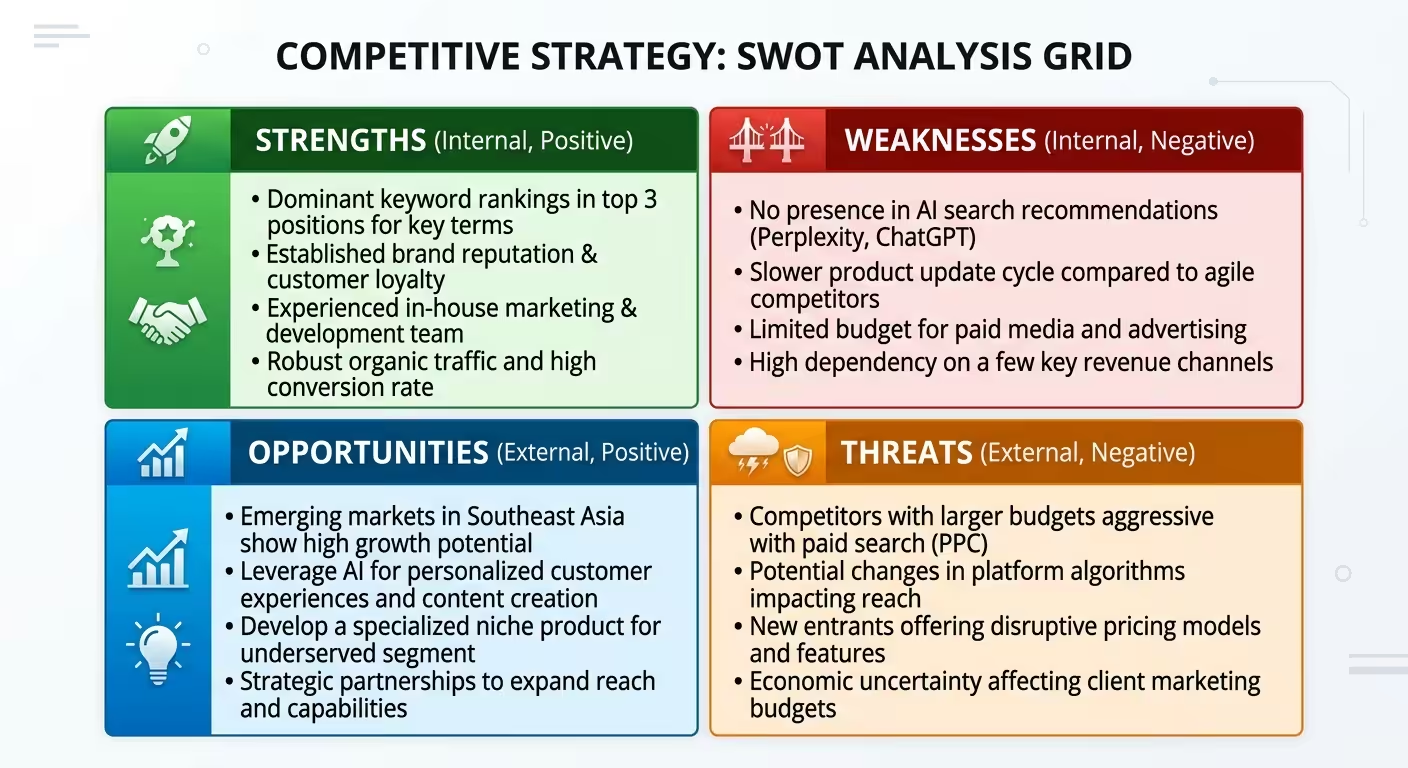
- Strengths: What does this company do well? Where do they have clear advantages?
- Weaknesses: Where do they fall short? What do customers complain about?
- Opportunities: What gaps in their approach create openings for you?
- Threats: What moves could they make that would challenge your position?
The most useful SWOT analyses are specific. “Strong brand” is vague. “Strong brand recognition among enterprise IT buyers, reinforced by consistent mentions in Gartner Magic Quadrant reports” is actionable.
Step 8: Turn Insights Into Action
Analysis without action is just a document. Convert your findings into specific strategic moves:
- Product development: Which competitor weaknesses can you address with product improvements or new features?
- Pricing strategy: Does your pricing need adjustment based on competitive benchmarks and the value you deliver?
- Content and marketing: Which topics, channels, or formats are underserved by competitors? Build a content calendar that fills those gaps.
- AI visibility: If competitors appear in AI-generated recommendations and you don’t, invest in building brand mentions on high-authority publications that AI models learn from during training. This builds the entity authority that drives AI discoverability over time.
- Messaging: Refine your positioning to emphasize the advantages your analysis revealed.
Assign ownership, set timelines, and revisit your competitive matrix quarterly to track changes.
The AI Visibility Dimension Most Companies Still Miss
For the per-platform detail behind the AI-visibility layer of competitor analysis, see how ChatGPT shows your brand and how Perplexity surfaces brands, which walk through the workflows you’d re-use to benchmark competitors on each platform.
Traditional competitor analysis covers what happens on websites, search engines, social media, and review platforms. But as of 2026, a significant and growing share of purchase research happens through AI assistants.
When a VP of Marketing asks ChatGPT, “What are the best brand monitoring tools for B2B companies?” the brands mentioned in that response gain visibility that no Google ranking can replicate. Those recommendations are shaped by the AI model’s training data, which includes content from high-authority publications, industry blogs, news outlets, and editorial platforms.
This means competitor analysis in 2026 should include a specific step: audit which competitors appear in AI-generated recommendations for your category.
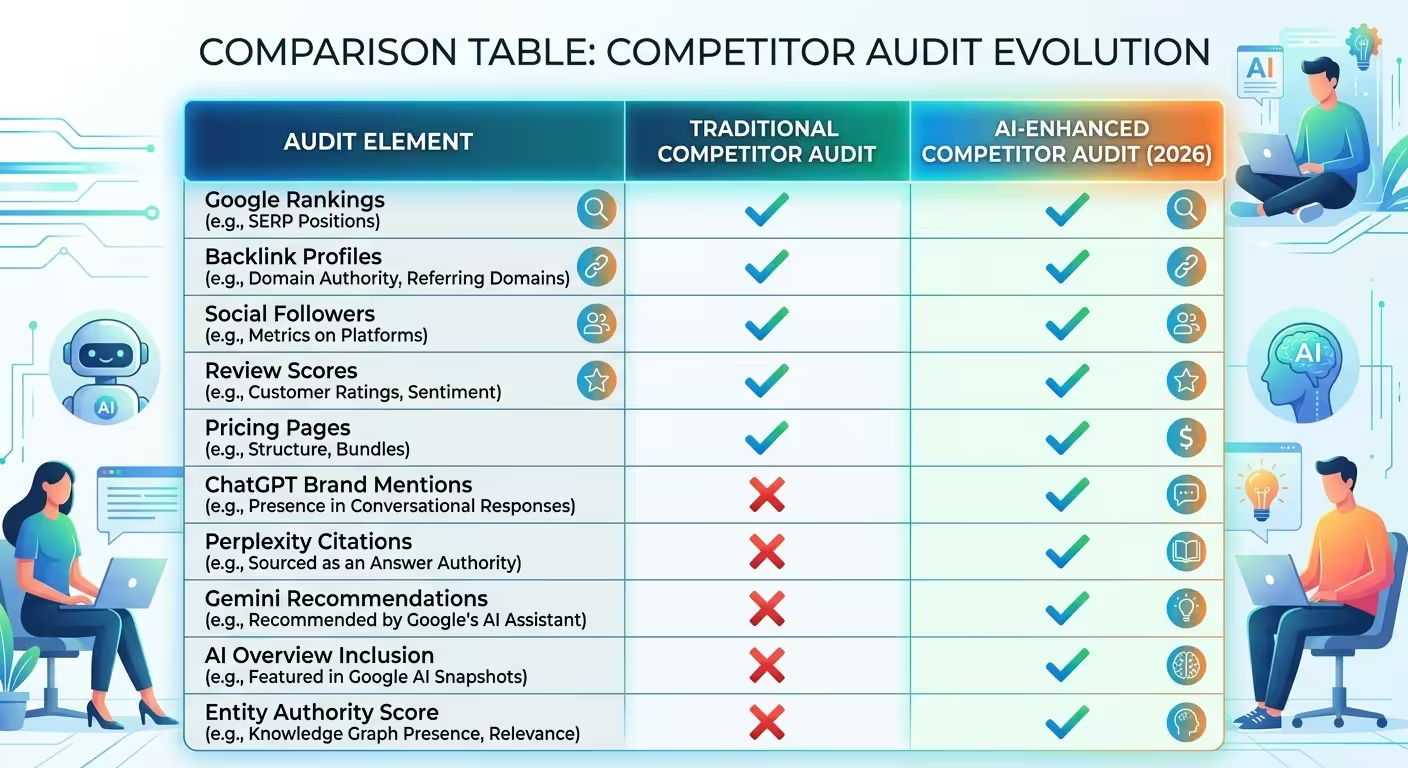
Here’s how to do it:
- Query ChatGPT, Perplexity, Gemini, Claude, and Copilot with 5-10 prompts relevant to your product category.
- Record which brands each AI assistant mentions, and in what context (recommended, compared, cautioned against).
- Note patterns, are the same competitors showing up across multiple AI platforms? That signals strong entity authority.
- Compare this AI visibility against your own. If competitors appear and you don’t, you have an AI visibility gap.
Closing that gap requires consistent, contextual brand mentions on category-relevant publications. The pattern we see repeatedly in competitive audits is that brands with sustained editorial coverage on the right outlets show up in AI answers far more reliably than competitors relying on traditional SEO alone, which is usually the single biggest swing factor between who gets cited and who doesn’t.
For a deeper dive into how this works, explore our explanation of how brand mentions impact visibility in AI search.
Common Mistakes That Undermine Competitor Analysis
The competitor-analysis mistake we catch most often in audits is teams picking their comparison set based on who’s loudest on LinkedIn rather than who actually shows up in buyer consideration. Pull your AI-mention data first, then pair it with recorded sales calls: the real competitor list is the set of brands your prospects (and the LLMs) name when asked who else they considered, which is usually only a partial overlap with the “obvious” five.
Even experienced teams make errors that reduce the value of their competitive research. Avoid these:
Only Tracking Direct Competitors
Indirect and replacement competitors often reshape markets faster than direct rivals. Include them.
Relying on Assumptions Instead of Data
Your instincts about a competitor’s strengths may be outdated. Verify with current evidence, reviews, traffic data, AI queries.
Doing It Once and Filing It Away
Competitive landscapes change quarterly. A static analysis loses value fast.
Focusing Only on Weaknesses to Exploit
Competitor strengths teach you what customers value. Learn from what works, not just what doesn’t.
Ignoring AI Search Entirely
As of 2026, omitting AI visibility from your competitive analysis leaves a significant blind spot. AI-generated recommendations influence purchasing decisions for a growing share of B2B buyers.
Copying Competitors Instead of Differentiating
The goal is to find your unique advantage, not to mirror what everyone else does.
Tools That Strengthen Your Competitor Analysis
The right tools reduce manual effort and surface insights you’d miss otherwise. Here’s a practical breakdown by function:
| Function | Recommended Tools | What They Reveal |
|---|---|---|
| SEO and keyword analysis | Ahrefs, Semrush, Moz | Competitor keyword rankings, backlink profiles, organic traffic estimates |
| Social media monitoring | Brandwatch, Sprout Social, SparkToro | Competitor audience demographics, engagement patterns, content performance |
| Brand monitoring and sentiment | monitoring software for brands, Google Alerts | Where competitors are mentioned, how they’re perceived, share of voice |
| Web traffic and behavior | Similarweb, BuiltWith | Traffic sources, technology stack, engagement metrics |
| AI visibility tracking | analytics for brand citations in AI | Which brands AI models recommend, how frequently, and in what context |
| Review and reputation | G2, Capterra, Trustpilot | Customer sentiment, feature praise and complaints, competitive positioning from the customer’s perspective |
Frequently Asked Questions
How do I run AI brand visibility competitive analysis in 2026?
AI brand visibility competitive analysis means measuring how often your brand vs competitors appears in AI search responses across ChatGPT, Gemini, Perplexity, and Claude. The standard workflow: define 20 to 30 buyer queries in your category, query each AI engine weekly with those prompts, log which brands appear in answers, then compare citation share over time. Dedicated AI visibility tools automate this. For DIY analysis, a Google Sheet plus weekly manual queries gives you baseline data in two weeks.
You don’t need every tool on this list. Choose based on your competitive analysis goals and the areas where you’ve the least visibility today.
For monitoring brand mentions specifically, including tracking how competitors are discussed across the web, our roundup of the best monitoring platforms covers the leading options.
How Often Should You Update Your Competitor Analysis?
Frequency depends on how fast your market moves, but these benchmarks apply to most B2B companies:
- Quarterly: Full competitive analysis refresh, update your matrix, check AI visibility, review pricing changes, and assess new entrants.
- Monthly: Lightweight check on competitor content output, social media activity, and any public announcements (funding, product launches, leadership changes).
- Weekly: Scan competitor blogs, social feeds, and industry news for early signals of strategic shifts.
Setting up automated alerts through Google Alerts and brand-monitoring tools reduces the manual effort for weekly and monthly checks.
Competitor Analysis in Practice: A B2B Example
Here’s how a mid-market B2B SaaS company might apply this framework:
Situation: A project management SaaS company notices declining trial sign-ups over two quarters despite steady website traffic.
Step 1: , Identify Competitors
Google search, G2 category pages, and AI assistant queries reveal three direct competitors, two indirect competitors (workflow automation platforms), and one replacement competitor (an AI-powered task management assistant).
Step 2: , Research
The competitor matrix reveals that two direct competitors recently launched AI-powered features. The replacement competitor appears in ChatGPT and Perplexity recommendations when users ask about project management solutions. The company’s own brand doesn’t appear in any AI-generated answers.
Step 3: , Analysis
SWOT analysis shows the company has stronger integrations and better customer support ratings than competitors, but weaker AI feature set and zero AI search visibility.
Step 4: Action Plan
- Accelerate AI feature development on the product roadmap.
- Build brand mentions on high-authority publications to establish entity authority across AI platforms.
- Update messaging to emphasize integration depth and customer support, proven differentiators that competitors haven’t matched.
- Launch a comparison content series addressing the specific switching triggers identified in customer interviews.
This example illustrates the full cycle: from identifying the competitive threat to converting research into measurable strategic moves.
Frequently Asked Questions
What is the difference between competitor analysis and market research?
Market research examines overall market conditions, customer demographics, demand, pricing sensitivity, and industry trends. Competitor analysis focuses specifically on the businesses competing for those customers. Market research tells you who your customers are. Competitor analysis tells you who else is trying to reach them and how.
How many competitors should you include in a competitor analysis?
Most analyses work best with 5-10 competitors, including a mix of direct, indirect, and replacement competitors. Fewer than five may miss important market dynamics. More than ten often creates data overload without proportional insight. Start with your most immediate threats and expand as needed.
What is a SWOT analysis in the context of competitor analysis?
A SWOT analysis evaluates Strengths, Weaknesses, Opportunities, and Threats for both your company and your competitors. Applied to competitor analysis, SWOT helps synthesize research into a structured format that reveals where you’ve advantages, where you’re vulnerable, and where you should focus strategic effort.
Does competitor analysis help with AI search visibility?
Yes. Competitor analysis in 2026 should include an AI visibility audit, querying AI assistants to see which competitors appear in recommendations for your product category. This reveals whether competitors have built stronger entity authority than you’ve. Understanding that gap is the first step to closing it through strategic brand mention building.
How is competitor analysis different from competitive intelligence?
Competitor analysis is a periodic, structured evaluation of competitors’ strategies and positions. Competitive intelligence is an ongoing, real-time function that monitors competitor activity, market shifts, and emerging threats continuously. Competitor analysis is a project. Competitive intelligence is a process. Most growing companies need both.
Turning Competitor Analysis Into a Quarterly Operating Cadence
The companies that win market share aren’t the ones with the longest competitor spreadsheets. They’re the ones that convert competitive insights into specific decisions, about product development, pricing, content, and increasingly, about AI visibility.
If your analysis reveals that competitors appear in AI-generated recommendations and you don’t, that’s not a minor detail. It’s a structural disadvantage that compounds over time as more buyers shift toward AI-assisted research.
Start with the framework outlined here. Build your competitor matrix. Run the AI visibility audit. And treat the whole process as a discipline, not a one-time exercise.
If you want a baseline before committing to a tool or process, book a short strategy call. We’ll run 25 category-relevant prompts across ChatGPT, Perplexity, Gemini, and Google AI Overviews so you can see exactly which sources each platform trusts for your category, and which competitors are capturing citations you’re not.