
Brand monitoring social media means tracking every mention, comment, and conversation about your company across social platforms, then acting on what you find. It sounds straightforward. But as of 2026, the landscape has shifted in ways that make traditional monitoring insufficient on its own, particularly because every AI brand mention surfaced in social conversations now feeds back into ChatGPT, Perplexity, and Gemini recommendations.
AI search engines now pull brand sentiment data from social conversations to inform their recommendations, so brand mention monitoring on social platforms is no longer separate from AI visibility, it’s one of the best ways to keep track of AI brand mentions before they land in an LLM answer. Your social media footprint doesn’t just shape public perception anymore, it shapes whether AI assistants mention your brand at all.
This article breaks down how brand monitoring on social media actually works in 2026, what’s changed since the rise of AI-powered search, which features matter most in monitoring tools, and how to build a monitoring workflow that protects your reputation and strengthens your visibility across both traditional and AI search surfaces.
What You’ll Learn
- How brand monitoring on social media differs from social listening, and why you need both
- What changed in 2026: how AI search engines use social signals to evaluate brands
- The seven features that separate effective monitoring tools from noise collectors
- How to set up a monitoring workflow that catches reputation threats and growth opportunities
- Where social media monitoring fits into broader AI visibility strategy
- Common mistakes that cause brands to miss critical conversations
What Does Brand Monitoring Social Media Actually Mean?
Brand monitoring social media is the process of tracking mentions of your company name, products, executives, and related keywords across social platforms like X (formerly Twitter), LinkedIn, Instagram, TikTok, Reddit, Facebook, and niche forums. The goal is to capture what people say about you, tagged or untagged, so you can respond, analyze sentiment, and inform strategy.
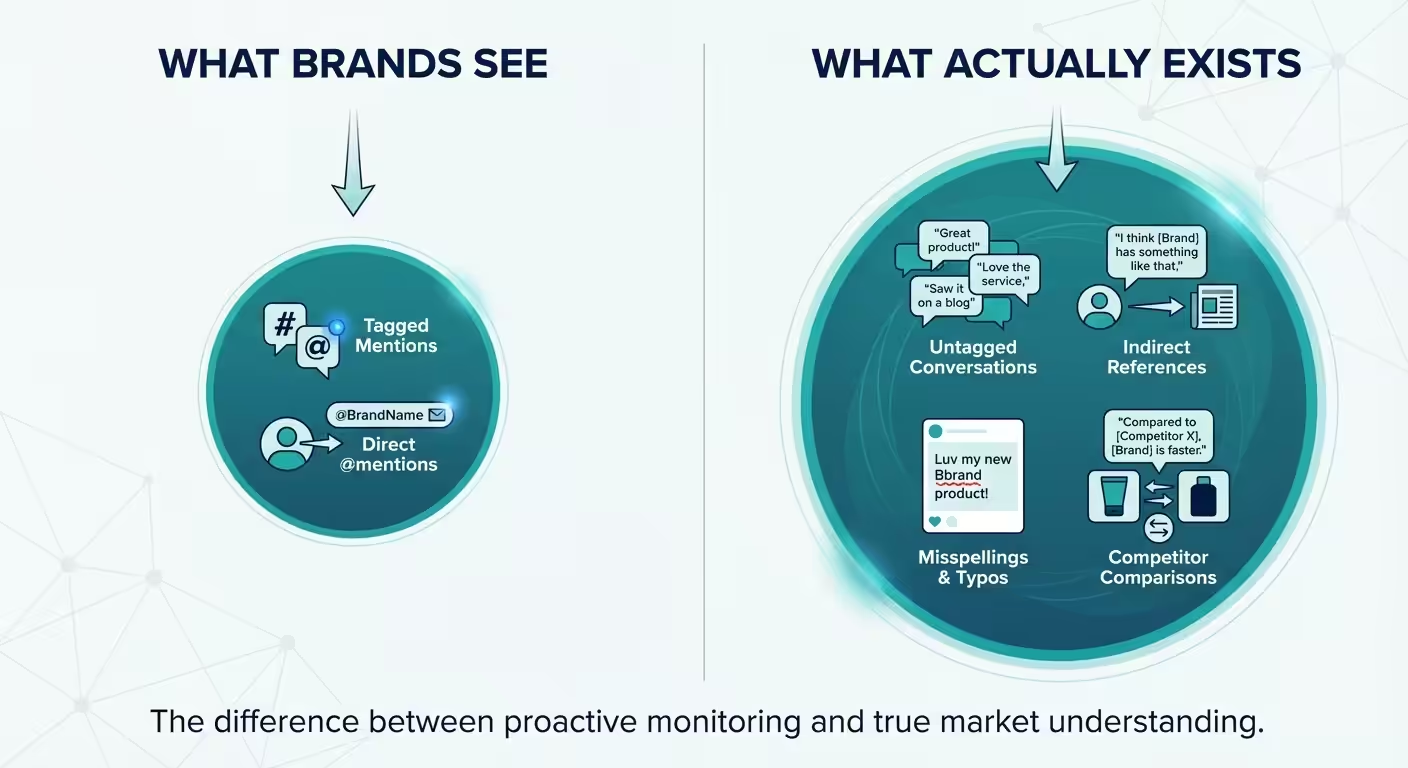
This goes beyond checking your notifications. Most brand mentions on social media happen without tagging the brand directly. According to a recent Brandwatch analysis, roughly 70% of online brand conversations occur without an @mention or hashtag, meaning brands that only track direct tags miss the majority of relevant discussions.
Brand monitoring vs. social listening: Where’s the line?
These terms overlap, but they serve different functions:
- Brand monitoring tracks specific mentions, your brand name, product names, campaign hashtags, key personnel. It answers: “What are people saying about us right now?”
- Social listening analyzes broader conversations, sentiment trends, and industry themes. It answers: “How does our audience feel about this category, and where do we fit?”
In practice, you need both. Monitoring catches the fire. Listening tells you why it started, and whether the next one is coming. The most effective brand monitoring tools in 2026 combine both capabilities in a single platform.
What Changed in 2026: Social Signals Now Feed AI Search
Here’s the shift most marketing teams haven’t fully absorbed yet: AI search engines like ChatGPT, Perplexity, Gemini, and Google AI Overviews don’t just index web pages. They evaluate brand reputation across sources, and social media is one of those sources.
When a user asks an AI assistant, “What’s the best project management tool for remote teams?” the model draws on training data and real-time retrieval that includes social platform discussions, Reddit threads, LinkedIn posts, and review site conversations. If your brand has consistent positive sentiment across these surfaces, you’re more likely to appear in AI-generated recommendations. If negative sentiment dominates, or if you’re simply absent, the AI skips you.
A Stanford HAI research on retrieval-augmented generation (RAG) systems confirmed that AI models weigh source diversity when selecting brands to cite. Brands mentioned positively across editorial content, social media, forums, and review platforms received higher confidence scores than brands with coverage concentrated in a single channel.
Key implication: Brand monitoring social media is no longer just a reputation management activity. It’s a direct input to your AI brand visibility.
How AI models process social media data
AI models encounter social data in two primary ways:
1. Training Data Inclusion
Large language models (LLMs) are trained on massive datasets that include publicly available social media content, particularly Reddit, X, and public forums. Brand-category associations formed during training persist for months until the next model update.
2. Real-Time Retrieval
AI search engines with live web access (Perplexity, Google AI Overviews, Copilot) pull recent social conversations into their answers. A surge of negative Reddit threads about your product could appear in an AI response within hours.
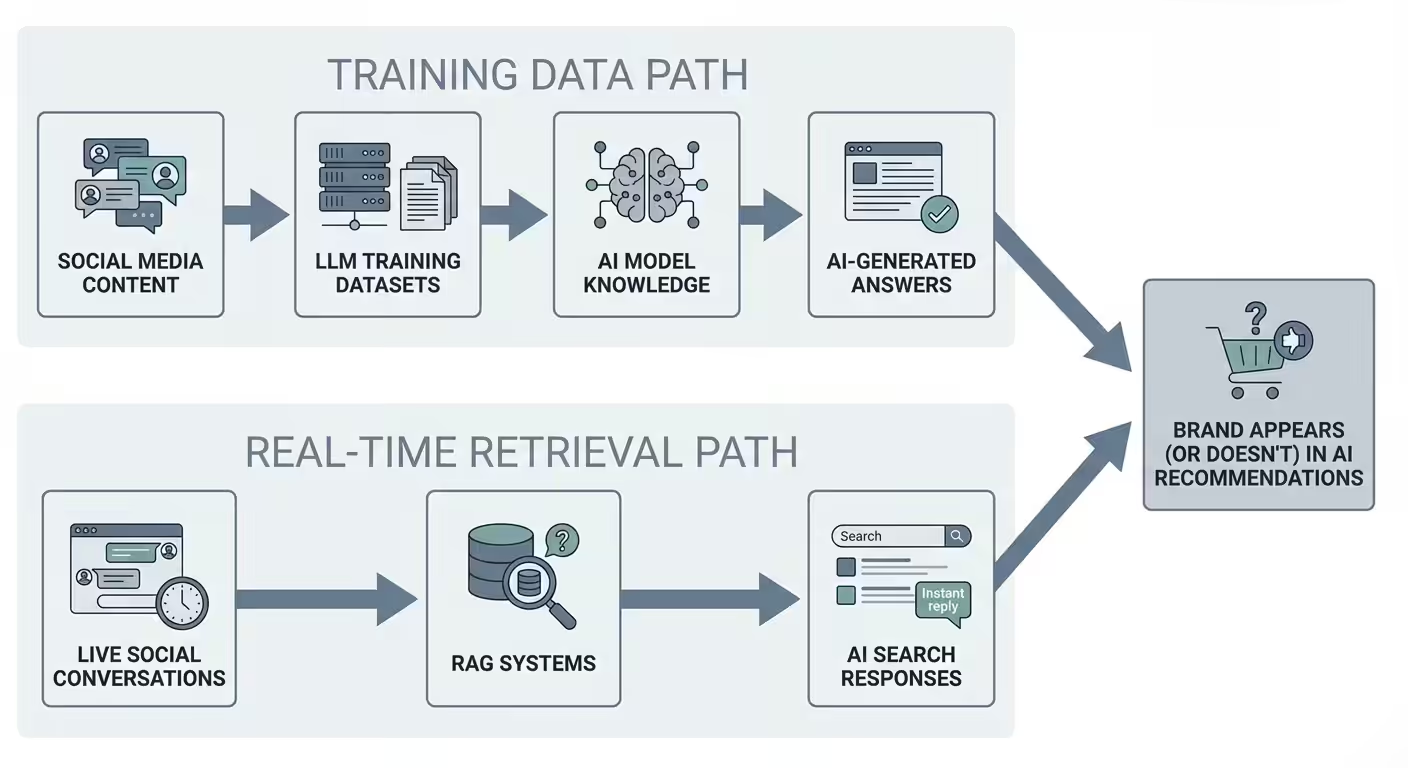
This means your social media monitoring strategy has a dual purpose: protecting reputation in real time and ensuring that the long-term social footprint AI models learn from reflects your brand accurately.
Seven Features That Define Effective Monitoring Tools in 2026
The social monitoring market has consolidated significantly since 2024. Enterprise platforms like Brandwatch, Sprout Social, and Hootsuite (with Talkwalker) dominate at the high end, while tools like Brand24 and Mention serve mid-market teams. Regardless of which tool you choose, these seven features determine whether your monitoring actually protects and grows your brand, or just generates noise.
1. Untagged mention detection
If your tool only catches @mentions and hashtags, you’re seeing a fraction of the conversation. Effective monitoring tools use keyword matching, fuzzy matching for misspellings, and natural language processing to surface conversations where people discuss your brand without tagging you.
Action step: Set up keyword rules for your brand name, common misspellings, product names, CEO name, and branded phrases. Test results weekly to refine filters and reduce false positives.
2. Sentiment analysis with contextual accuracy
Basic positive/negative/neutral classification isn’t enough. In 2026, AI-powered sentiment analysis can detect sarcasm, mixed sentiment, and emotional intensity. This matters because a post that says “Love how [Brand] managed to make their checkout even slower” reads as positive to a simple classifier, but it’s clearly negative.
Look for tools that let you manually reclassify sentiment and train the system over time. Sprout Social and Brandwatch both offer this capability, according to their 2026 product documentation.
3. Cross-platform coverage including Reddit, TikTok, and niche forums
Brand conversations in 2026 increasingly happen on Reddit, TikTok comments, Discord servers, and industry-specific forums, not just X and Facebook. A Search Engine Journal reporting found that Reddit brand discussions were cited in AI search responses 3.2x more frequently than equivalent Twitter/X conversations, likely because Reddit threads tend to be longer, more detailed, and structured as Q&A.
Your monitoring tool must cover these platforms. If it doesn’t, you’ve a blind spot in exactly the places AI models look most often.
4. Real-time alerts with severity filtering
Speed matters, but not every mention deserves an alert. The best monitoring setups use severity tiers:
- Critical: Sudden spike in negative mentions, potential PR crisis, viral complaint, instant notification to leadership and PR team
- High: Influencer mention, media coverage, competitor comparison, alert within one hour to social and marketing team
- Standard: General brand mention, positive customer comment, daily digest for community management
Action step: Configure alert rules based on mention volume anomalies (e.g., 3x your daily average within two hours), specific negative keywords paired with your brand name, and mentions from accounts with over 10,000 followers.
5. Competitor benchmarking and share of voice
Share of voice measures how much of the total conversation in your category involves your brand compared to competitors. It’s one of the most actionable metrics in brand monitoring because it directly correlates with market awareness, and, increasingly, with AI recommendation frequency.
Track share of voice monthly. If a competitor’s share is growing while yours plateaus, investigate what’s driving their mentions, new product launch, influencer campaign, viral content, and adjust your strategy accordingly.
6. Integration with your existing marketing stack
Monitoring data is only useful if it reaches the right teams. Look for tools that integrate with your CRM (HubSpot, Salesforce), project management tools (Asana, Jira), and communication platforms (Slack, Microsoft Teams). This ensures that a customer complaint surfaced through monitoring routes directly to your support team, not to a dashboard nobody checks after the first week.
7. AI search visibility tracking
This is the feature most monitoring tools still lack, and the one that matters most for forward-thinking brands. Beyond tracking social mentions, you need visibility into how AI search engines reference your brand. Does ChatGPT mention you when users ask about your category? Does Perplexity cite your content? Does Gemini recommend your product?
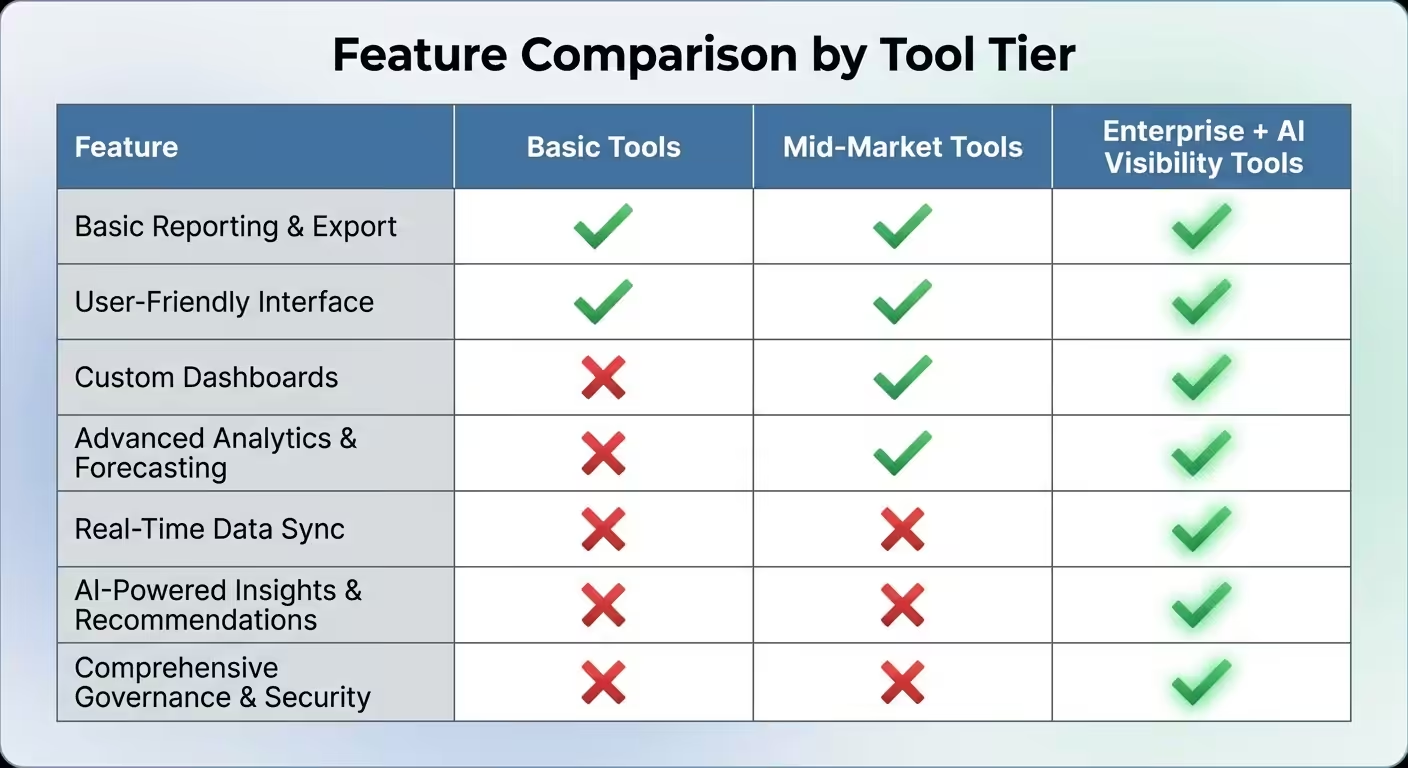
Dedicated AI visibility analytics tools now exist to fill this gap. Combining traditional social monitoring with AI search tracking gives you the full picture of your brand’s discoverability in 2026.
How to Build a Brand Monitoring Workflow That Drives Results
Most brands set up monitoring tools and then fail to act on the data consistently. The tool itself isn’t the bottleneck, the workflow is. Here’s a practical system for turning monitoring into measurable outcomes.
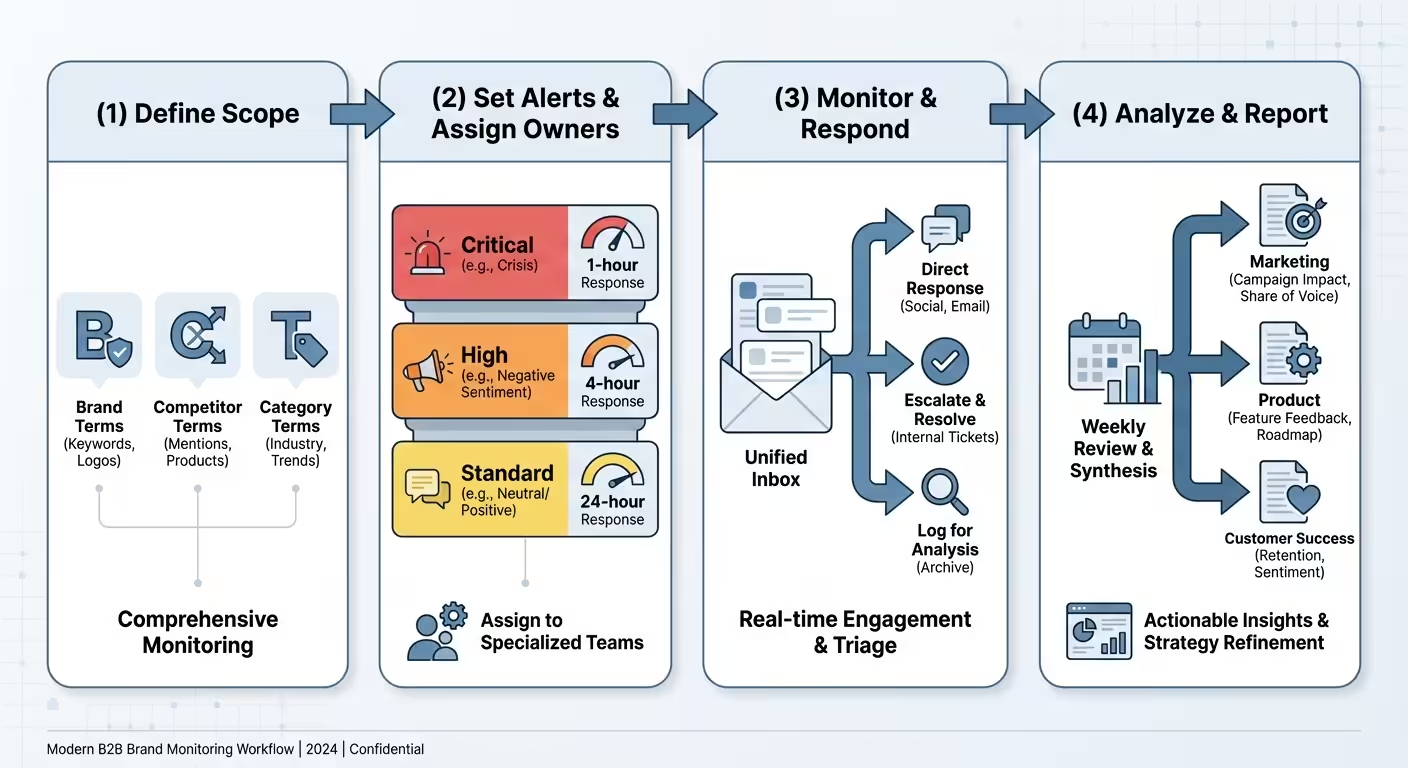
Step 1: Define your monitoring scope
Create a keyword master list organized into four categories:
- Brand terms: Company name, product names, abbreviations, common misspellings, campaign hashtags
- Executive terms: CEO name, founder name, key spokesperson names
- Competitor terms: Top 3-5 competitor brand names, their product names
- Category terms: Industry keywords where your brand should appear (e.g., “project management software,” “B2B marketing platform”)
Start with 15-25 tracked terms. Expand only after you’ve confirmed your tool handles the initial set without excessive false positives.
Step 2: Assign ownership and response protocols
Every alert tier needs a designated owner and a maximum response window:
- Critical alerts: PR lead or VP of Marketing, respond within one hour
- High-priority alerts: Social media manager, respond within four hours
- Standard mentions: Community manager, engage within 24 hours
Document these protocols in a shared playbook. Include pre-approved response templates for common scenarios (product complaint, feature request, positive review, influencer outreach). According to the 2025 Sprout Social Index, nearly three-quarters of consumers expect a brand response within 24 hours. Faster response times correlate with higher customer retention.
Step 3: Run weekly analysis reviews
Raw mention volume is a vanity metric. The insights that drive strategy come from weekly analysis of:
- Sentiment trends: Is overall sentiment improving, declining, or stable? What caused any shifts?
- Topic clusters: What are people actually discussing, product quality, customer service, pricing, a specific feature?
- Competitor comparison: How does your share of voice compare to last week? Who gained ground?
- AI search implications: Are any negative conversations gaining enough traction to influence AI model responses?
Capture these findings in a brief weekly report. Share it with marketing, product, and customer success teams, not just the social media manager.
Step 4: Feed insights into content and AI visibility strategy
This is where monitoring becomes a growth engine rather than a defensive tool. Use your monitoring data to:
Identify Content Gaps
If customers repeatedly ask the same question on social media, create content that answers it, on your blog, in your knowledge base, and in formats AI models can easily extract.
Strengthen Positive Signals
When you spot brand advocates or satisfied customers, amplify their voices through resharing, case studies, and testimonials placed on high-authority publications.
Correct Misinformation
If inaccurate claims about your product circulate on Reddit or X, address them directly and create authoritative content that counters the narrative, because AI models will learn from whichever version has more editorial support.
Where Social Monitoring Fits in the AI Visibility Stack
For the dedicated AI-monitoring layer that sits above social listening, our guide to the best ChatGPT monitoring tools compares 10 platforms that track brand citations inside AI-generated responses.
Social media monitoring is one layer of a broader brand discoverability strategy. In 2026, the brands that show up consistently in AI search results are the ones with strong signals across multiple surfaces, not just social, and not just traditional SEO.
Here’s how the layers connect:
- Social media monitoring, tracks real-time brand perception and catches reputation threats
- Wider reputation tracking, extends beyond social to news, reviews, and editorial coverage
- Brand mentions for SEO, tracks citations across the web that build topical authority and entity recognition
- AI search monitoring, tracks how and where AI assistants reference your brand in their responses
- Strategic brand citation building, proactively placing brand mentions on high-authority editorial sites that AI models learn from during training
Each layer informs the others. Social monitoring reveals what people say about you. AI search monitoring reveals what AI tells people about you. The gap between those two is where strategic action lives.
Five Mistakes That Make Brand Monitoring Ineffective
The social-specific mistake we see most often in practice: teams configure monitoring, look at the first week of data, and then quietly stop checking because volume is “manageable.” Volume always grows as monitoring rules settle in, but the signal-to-noise ratio doesn’t automatically improve. Prune noisy alert rules monthly, not annually. Without pruning, most social monitoring programs silently decay into inbox clutter by month four.
Even well-resourced teams make these errors. Avoiding them puts you ahead of most competitors.
1. Monitoring only tagged mentions
As noted earlier, most brand conversations happen without a direct tag. If your monitoring tool or configuration only captures @mentions and hashtags, you’re missing the conversations that shape public perception, and AI training data.
2. Treating all mentions equally
A complaint from a customer with 200 followers and a negative thread from an industry analyst with 50,000 followers require fundamentally different responses. Without severity-based filtering, teams waste time on low-impact mentions and miss high-impact ones.
3. Siloing monitoring data in the social team
Brand monitoring insights should reach product teams (feature complaints), sales teams (competitive intelligence), and leadership (reputation trends). If only your social media manager sees the data, you’re underusing the most real-time customer feedback channel your company has.
4. Ignoring Reddit and niche communities
Reddit conversations carry disproportionate weight in AI search results. A 2025 analysis by SparkToro found that Reddit was the third most-cited social source in AI-generated answers, behind only LinkedIn articles and X threads. If your monitoring tool doesn’t cover Reddit, or if you haven’t set up subreddit-specific keyword tracking, you’ve a significant blind spot.
5. Not connecting social sentiment to AI visibility
This is the most common gap in 2026. Teams monitor social sentiment in isolation without considering how that sentiment influences what AI models say about their brand. Positive social buzz won’t help your AI visibility if it doesn’t translate into the editorial and structured content that LLMs prioritize. Negative social sentiment, on the other hand, can quickly surface in AI responses if it gains traction on platforms AI models index heavily.
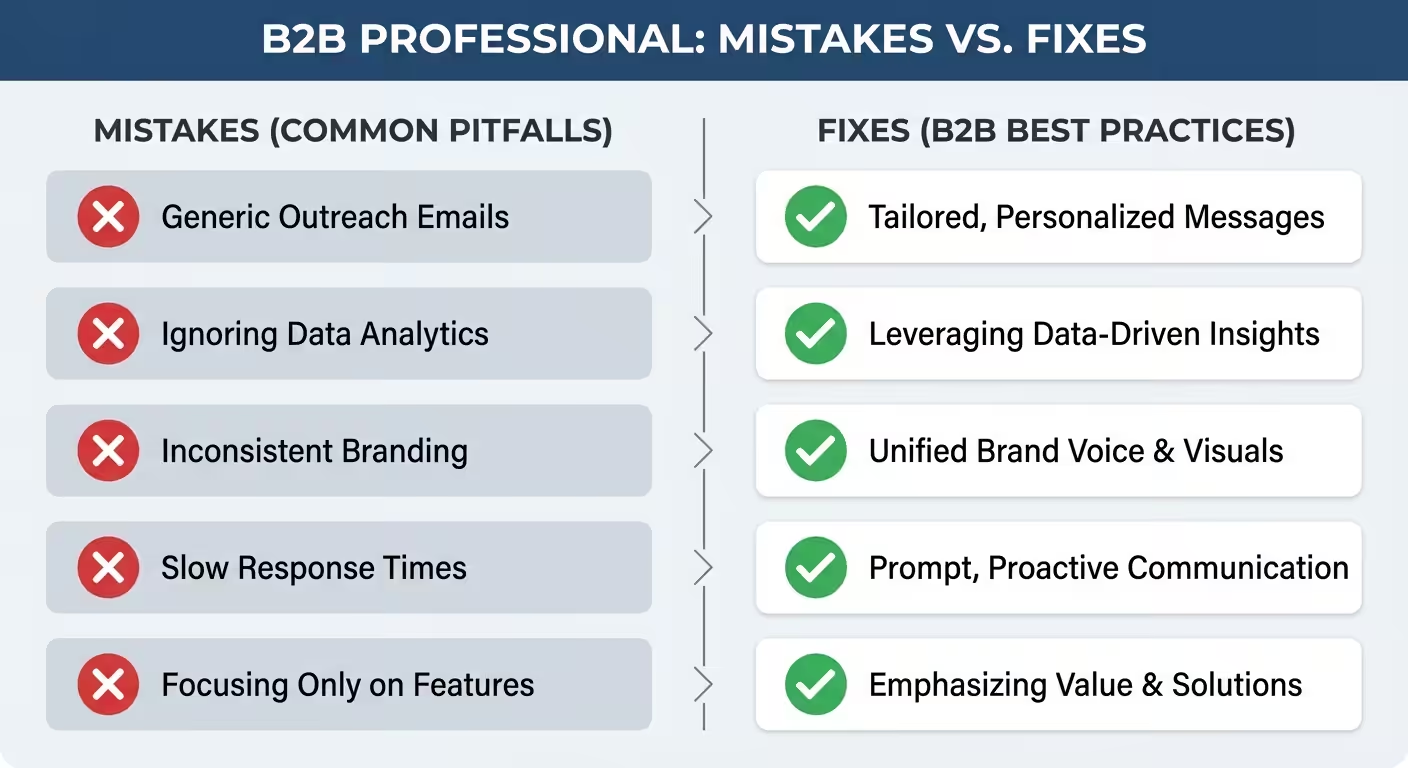
The solution is to track brand sentiment alongside AI search monitoring. When you see a gap, strong social sentiment but weak AI visibility, you know where to invest next.
How to Choose the Right Monitoring Approach for Your Team Size
If you’re also evaluating the no-budget end of the stack, the 9 best free social listening tools covers what’s still usable at zero cost in 2026 and where each free plan breaks first.
Your ideal monitoring setup depends on your team’s resources, not just your budget.
| Team Size | Recommended Approach | Tool Examples | Estimated Monthly Cost |
|---|---|---|---|
| Solo marketer or startup (1-3 people) | Single mid-market tool covering social + basic web mentions. Google Alerts for supplementary coverage. | Brand24, Mention, BrandMentions (the monitoring tool) | $49, $99 |
| Growth-stage team (4-15 people) | Dedicated social monitoring + separate AI visibility tracking. Weekly analysis rhythm. | Sprout Social or Hootsuite + AI visibility tool | $200, $500 |
| Enterprise marketing team (15+ people) | Enterprise listening suite with custom dashboards, API integrations, and dedicated AI search monitoring. | Brandwatch, Sprinklr, or Meltwater + dedicated AI search analytics | $1,000+ |
Regardless of team size, the principle is the same: monitor, analyze, act, and connect social insights to your broader visibility strategy. The tools scale, the workflow doesn’t fundamentally change.
Connecting Brand Monitoring to Long-Term Discoverability
Brand monitoring social media is a real-time activity. But its long-term value comes from how you use monitoring insights to shape your brand’s presence across the surfaces AI models learn from.
Every negative conversation you address, every customer question you answer publicly, every competitor gap you identify, these feed into a virtuous cycle. Positive social engagement builds brand advocates. Advocates create organic mentions on blogs, podcasts, and forums. Those mentions become part of AI training data. And that training data determines whether AI assistants recommend you when your ideal customer asks for help.
In our own campaigns, the brands combining active social monitoring with a steady cadence of editorial placements consistently outperform brands that only monitor. Monitoring tells you what to do; the placement work is what actually shifts AI recommendations over the next 60-90 days.
If you’re monitoring your brand’s social presence but haven’t assessed how AI search engines currently describe your company, that’s the next step. Understanding the gap between how people talk about you and how AI talks about you reveals exactly where your strategy needs to focus.
If you want a concrete baseline for how ChatGPT, Perplexity, and Gemini currently describe your brand in the same spaces your buyers discuss you socially, book a short strategy call. We’ll run 25 category-relevant prompts so you can see where social conversations and AI recommendations are already aligned, and where they’re not.
Frequently Asked Questions
What is the difference between brand monitoring and social media management?
Brand monitoring tracks what others say about your company across social platforms, news, and forums. Social media management covers your own posting, scheduling, and engagement activities. Monitoring is about listening and analyzing. Management is about publishing and responding. Most teams need both, and many tools now combine both functions in a single platform.
How often should you review brand monitoring data?
Check critical alerts in real time, these should trigger automatic notifications. Run a detailed analysis weekly to identify sentiment trends, share of voice shifts, and emerging topics. Monthly, review broader patterns and share insights across marketing, product, and leadership teams to inform quarterly strategy decisions.
Can brand monitoring on social media improve your AI search visibility?
Yes, indirectly. Social monitoring identifies reputation gaps, customer questions, and brand perception issues. Addressing these through strategic content creation and editorial placements strengthens the signals AI models use to decide which brands to recommend. Monitoring alone doesn’t build AI visibility, but it provides the intelligence you need to build it strategically. Learn more about how brand mentions impact AI search visibility.
Do free brand monitoring tools provide enough coverage?
Free tools like Google Alerts and limited-tier plans from Brand24 or Mention can cover basic needs for very small teams or early-stage startups. However, they typically lack sentiment analysis, cross-platform coverage (especially Reddit and TikTok), and real-time alerting. If brand reputation is a business priority, investing in a mid-market tool, even at $79, $199 per month, delivers significantly more actionable data.
Which social platforms matter most for brand monitoring in 2026?
This depends on your industry, but for B2B brands, LinkedIn, X, and Reddit consistently generate the most strategic brand conversations. For B2C, add TikTok, Instagram, and Facebook. Reddit deserves special attention across both segments because its threaded, detailed discussions carry disproportionate weight in AI search citations, according to multiple 2025 studies on AI retrieval behavior.